Blog

  • “We’ve been cursed with the ability to imagine the future without being able to see it” – Ian Leslie

    The quote above is one of my favourites from Ian Leslie, a humorous and informed author of a range of books in which he sets out to identify how we/society can change for the better. I await the arrival of “Conflicted: Why Arguments Are Tearing Us Apart and How They Can Bring Us Together” for a read-through this weekend once again, because put simply, both the UK and US democracies have chosen their new leaders and governments for the next 4/5 years and as a school principal and business owner, I’ve just got to get on and live with the consequences. In truth, the best I can do is just to work hard, “be the best we can be” and in 4 to 5 years’ time, I hope the decisions made in 2024 have actually helped us, our society and the wider world.

    As the fall-out from the UK Budget proposals continue, I thought it wise to draw to your attention the correspondence all headteachers received last Friday, from the Education Secretary, Bridget Philipson. In it, she reminds schools that a very large number, £63.9bn is to be made available for education in state schools in 2025-26, that being an increase of £2.3bn on this year, plus an additional £3.5bn for school building repairs and RAAC concrete recovery emergencies; I can only assume that means the majority of the education increase is to come from the £1.725bn due to be taken from the private sector through the imposition of VAT. Apparently, all the money being made available to is to be spent at National level, to cover shortfalls otherwise in teacher provision, salary raises and SEN. The clear message from Ms Phillipson in her conclusion is as follows: “This Budget is about fixing foundations of this country. Whether it’s a brilliant early years, free breakfast clubs or rising standards in our schools, all children should receive the best possible start to life, no matter what their background is. There will undoubtedly be challenging times ahead, but you can be assured that this government will support you and that we’re putting education back at the forefront of national life.”

    As no doubt her colleagues from around the cabinet table are reminding her and Rachel Reeves, the Chancellor of the Exchequer, “Actually, you seem to have forgotten you are raising the NI contributions for employees, lowering the NI floor and as a consequence almost certainly school/college budgets are going to be even more stretched than ever”. Even if there is additional revenue entering the system at National level, the chances of that filtering down to the local school level any time soon is as close to zero, because if nothing else, we don’t have a national education system at all, just an extraordinary complex web of free schools, academies, local state council schools & colleges and a host of alternative provisions, independently owned but fully funded by local authority funding – the latter alone has an estimated hole of £2.5bn, but so dispersed and allocated in a myriad of ways including by court tribunal hearings, there is no chance of that landscape changing until whole scale reform takes place.

    Yesterday and today, I’ve spent talking with over 150 prospective parent groups looking at entry into our senior school and sixth form for next September and beyond, and all the key drivers are the same. Their interest is not about securing ‘privilege’ for their children but something much simpler and understandable – opportunity for provision and a ‘joined-up service delivered in a competent, exciting and innovative manner, ensuring that every child and young person is included and recovers from the set-backs that in the main have impacted upon their education to date. I listened to the BBC Moral Maze on Radio 4 on Tuesday night, in which the private sector was scrutinised, pummeled and otherwise criticised for separating out and as a consequence ‘winning all the best seats at the table’ in the decades to come, be that university, work, celebrity etc. A leading professor from Newcastle University was asked by Michael Buerk what he would recommend. “Sort out the diverse nature of the state sector – we simply don’t have a national education system, and blaming & blaming the private sector won’t improve UK education at all.

    Whilst it’s true none of us can see the future for education, what I do know is that it can be readily imagined. Just spend a few hours within the boundaries of Claires Court, listen to the children talking about the school, see the extraordinary capabilities of very normal young people that can be developed to the max if only they can be given the time and opportunity to ‘learn to fly’. I am sorry the country can’t afford to offer a full day of school, that it’s only just working out that learning to swim needs more than 6 weeks in Year 3 on water safety, that art, drama, music and sport are as essential as the 3Rs. It’s not enough to use rhetoric to improve schools, politicians have little understanding of what makes children love school. All hot air ever does is dry up support, whereas they could go be cheerleading the amazing achievements our schools bring to UK PLC.

    This proprietor can only applaud the decisions made by parents to choose the right school for their child. I hope mine is one in which everyone feels both welcome and chosen. Perhaps if nothing else, on this grey Friday evening in winter, cheers yourself up with Simon Sineks’s story on Nike… https://youtube.com/shorts/yTotCREiTRU?si=ZvJcBfjRpCHQxVRd

    As the Academic Principal of Claires Court, I don’t even think of my role as a curse, but a responsibility I am more than delighted to exercise every day. “We’ve got this!”

  • Academic Principal’s half-term report ♦ part 2

    As part 1 of the half-term report published at the start of half-term emphasised, the School has been in great heart to date, and the various activities, Holiday Club and trips away at half-term have gone really well. Whilst you can read and see the news stream on our website or via other social media, please consider loading the Claires Court app directly onto your device which carries our news as it is made. I have some immediate good news to report to our junior parents, with a temporary car park being installed on Tuesday 5 November in the overflow area by the sports hall, accompanied by regular road sweeping twice a week. Hopefully, this will keep the area clear of mud and grime.

    This week’s budget on Wednesday confirmed the imposition of VAT on private school fees from 1 January 2025. Chancellor Reeves has not minced her words, and she clearly doesn’t care what people think of her policy choices. Since every business has been affected in some way by the major changes to taxes and national insurance imposed from January and April, I won’t plead any special cases in this update. The Independent Schools Council (ISC) and its constituent school associations have agreed to take legal action to challenge this measure, and you can read that statement here. ISC expects the case to proceed quite rapidly, initially at the King’s Bench, and will receive much press interest.

    The HM Treasury response to the recent consultation was published on Wednesday to coincide with the Budget announcement, 44 pages in all which our associations will check through over the next 4 days before publishing wider advice to schools in our sector. As of 30 October, Claires Court is one of about 2,500 schools now required to register for VAT, a process that normally takes between 6 to 8 weeks. As we cannot conduct VAT business until we have our VAT number, it’s difficult to imagine a more chaotic, ill-planned set of rule changes, expecting all to be settled down in time for 2025. If as parents, you receive any media interest about VAT and tuition fees, please let me know (jtw@clairescourt.net); most of the time I will share such commentary with Sarah Cunnane, head of comms at ISC, but you can directly email her as well sarah.cunnane@isc.co.uk.

    Having HM Treasury’s final guidance does mean we can now complete our impact and risk assessments as well as recovery plans for past and current VAT spending, as well as work through what the implementation pathway looks like for fee-paying parents, with formal publication of invoices required after 1 January 2025. Our finance department will liaise closely with parents, with information forthcoming in coming days. Please do not think that either my brother or I are complacent about this matter because we are not. As with so many other schools in the area and now wider business concerns particularly in Health, Care and Hospitality (because of the change in National Insurance contributions), we will be examining everything we can do to keep costs down.

    We find ourselves in very good company in terms of our resistance to the mendacious and deceptive approach the Labour Party has taken since forming government at the beginning of July. The diplomatic row that has erupted between the UK and other European nations whose embassy children are educated here in schools their country funds is really serious, with Prime Minister Starmer’s wish to improve relations with the EU now in jeopardy. And it is quite clear that whatever money is raised won’t feed into local state school budgets anytime soon; as the Secretary of State for Education’s email to me and all headteachers in England made clear on Friday, the crisis in SEND, school building disrepair and pay settlements is such that other developments are going to have to wait their time. Our sector genuinely wishes to play its part in the recovery and growth of the country’s economy. We contribute massively to the respect the world has for the British education system, and we do hope that even at this late stage, reason is possible.

    Further and Higher Education now find themselves in the same place as our sector, with new and unforgiving taxation further damaging their financial viability. However, it is quite clear that employers more generally and farmers in particular across the country face similar challenges. Apparently, this is the mandate the new government feels they were given at the election; there is sufficient national press coverage of business and wider societal reaction disagreeing with their judgment without my adding to the ‘noise’. In this part 2 report, I do wish nevertheless to make clear that Claires Court will continue to provide the amazing opportunities that you as our parents ask us to make available for your children.

    The many and various infrastructure improvements planned for the half-term have proceeded at pace, involving flooring, decorating, electrical and builders everywhere, and the site/cleaning teams have made particular efforts to ensure we are good to go for the next half up to Christmas. The senior boys are already making good use of the new Food Tech Studio in advance of its official opening on Monday 18 November by chef Wesley Smalley who runs the amazing Seasonality Restaurant in Queen Street. Wesley has been a familiar face at school for a while, helping with our ‘Futurechef’ activities and associated skills. With the Multi-User-Games-Area (MUGA) due to open for use to follow shortly thereafter, we’ll keep the good news flowing!

    James Wilding

    Academic Principal

    3 November 2024

  • “Everything that needs to be said has already been said. But since no one was listening, everything must be said again.”André Gide.

    I was saddened to hear this Wednesday of the closure of one of our local independent schools, Highfield, part of the long-term network of provision for families in Maidenhead and the surrounding area. Highfield’s owners, Chatsworth Schools, have made it clear that the combination of declining school roll, imposition of the new tax of VAT on school tuition fees and the increase in employer contributions to National Insurance have been the cause of the closure. Chatsworth schools have asked us to provide support where we can, and of course, we will do our level best to support those children and parents as they seek a suitable next step for their education.

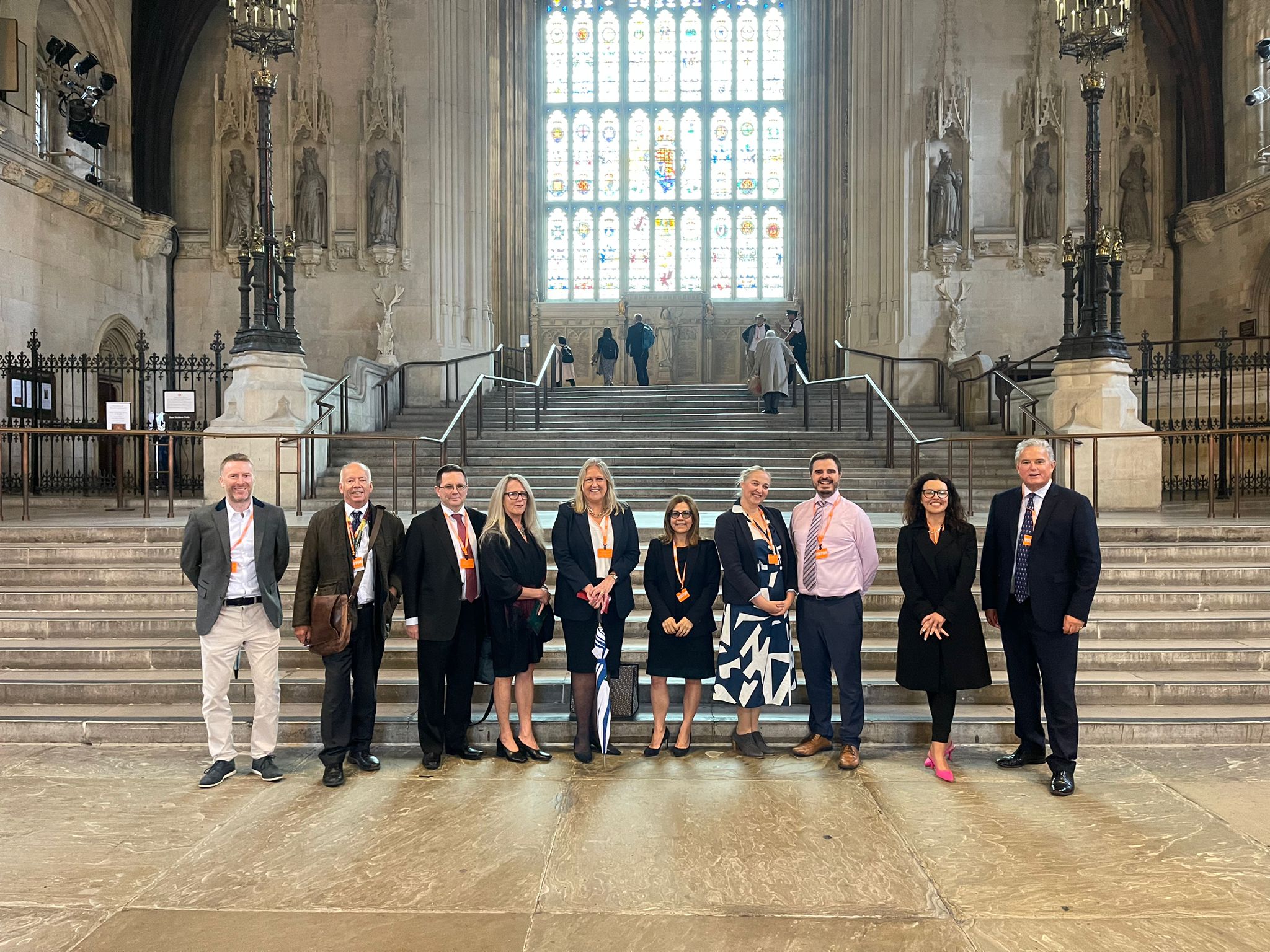
    I chose the quote by André Gide, possibly the greatest French writer of the 20th century, because it seemed so apt in the current circumstances. When new governments enter power, as the Labour Party did last Summer, they have the opportunity to deliver their mandate to the electorate, but they also do bear the responsibility for the wellbeing of all children concerned, specifically of course because they are from where our future wealth and prosperity are going to arise. I have been representing the voice of our sector as strongly as I can, in person in parliament, in writing, canvassing and even most recently via video on X. Whilst there seems great strength in the arguments we have given about the inappropriate speed and longer-term unfairness of this tax, it is clear that political dogma is to rule.

    As last week’s post makes clear, and the publication of our own community questionnaire to parents and guardians early next week enables further, I do accept that we have to get on with the new ‘réalité’. But that’s not to say we should lose empathy for those caught up in the ‘blight’ that government policy is causing in our sector, and Maidenhead as a town is all the poorer for the closure of a school that’s been here a century. And we as its neighbour will do all we can to make real for its girls, should they join us, their school’s motto “Empower. Discover. Succeed”.

  • Academic Principal’s Half-Term Report October 2024 – Part 1

    After 43 days of the Autumn term, I am delighted to close this half with my first Half-Term report on my sole role as Academic Principal. Below you will find some lovely stories, some examples of #CCMakingHistory, new on our current and upcoming physical site improvements and developments and to close, some commentary on the 100+ days under the new Government and the 80 days of ‘VATnoise’ since Rachel Reeves announced her decision on a 1 January 2025 implementation of a new tax solely for parents with children at Independent schools to pay.  This is a Part 1 newsletter, with Part 2 to follow at the close of half-term reporting back on the host of sporty and cultural things taking place in the school, some of which are still to happen over the next fortnight.

    The header image of Mr Hope and our incoming Sixth Form scholars taken at their Celebration assembly with parents on 17 October was inspired by the image of Franz Benz and his employees posing outside the Manheim motor factory in 1897, wherein the first internal combustion engine was being mass manufactured. I wonder whether any then could have imagined the extraordinary and world-changing impact that technology would bring, and I asked this generation of Sixth Formers, empowered now of course by the new emerging tools of Generative AI whether they are going to rise to the challenge of repurposing those tools to their advantage, and as a consequence ensure they controlled ‘tech’ and not the other way round. 

    Last weekend, some 1200 or so members of our school’s community attended the 2024 PTA Fireworks event, sort of Claires Court’s Oktoberfest, with added sparkle and fundraising thrown in. The PTA Foundation sits alongside the school’s work, its aims and objectives are advertised on the school’s website, and the trustees and elected representatives from the parent body work incredibly hard to enable such events to happen and sometimes, as a consequence raise additional funds for the very specific projects identified by the two committees (Juniors & Nursery, chaired by Mrs Gabi Williamson and Seniors & Sixth Form, chaired by Mrs Nicky Kelly). The Trustees, chaired by our President, Mrs Phyllis Avery MBE are meticulous in the care they take to ensure that the funds raised by the charity are not covering works/projects that should be funded by the school. Sometimes the trustees will approve to accelerate the development of facilities and provision that would otherwise need to wait their turn sometime in the future, or as in the case of the ongoing support they have given to our refugees from Ukraine, where no other obvious source of finance is available.

    This term, our Combined Cadet Force is 3 years old, and a new vibrant part of our school life is very clearly established from Year 8 through to Year 13. The CCF is an educational partnership between the Ministry of Defence and schools that include an Army section, its purpose being to develop leadership skills, personal responsibility, and self-discipline in young people. It also aims to prepare cadets for their role in the wider community, and there is no greater honour for any cadet themselves than to be selected by the Lord Lieutenant of Berkshire to be one of his 4 cadets to support his work on behalf of the King in our county. I have every hope that next year we will have some excellent candidates to offer for this role, something for us to look forward to. This week, I attended the Awards presentation at Sandhurst by Andrew Try, His Majesty’s Lord-Lieutenant of the Royal County of Berkshire, accompanying many of the local dignitaries, Mayors, Civilians and Military, and it’s a great honour to be present every time!

    As this half-term concludes, I can report that we have 950 pupils on roll, with a 96.3% attendance rate, recognisable strong both within our sector and the wider Education sector. One of the most important reasons why our school community is ‘healthy’ is of course because of the support families give, the affluence of background being a major factor. In addition, we have made as sure as we can that the other supporting factors are readily available, including strong pastoral care, great nursing and emotional literacy support, counselling services and the support of visiting clinical psychology services. What enables children to be healthy above all is coming into school knowing that it is a really safe space for them, that physical activity, screen-free time and achievable goals every day. In establishing the feature that #CCMakingHistory is a real thing, steadily throughout the school images highlighting that are appearing in corridors and walls. 

    Our weekly bulletins always highlight the successes of course, but there are some things we do that are utterly world-class. Throughout the Juniors, we now have Generative AI embedded in every teacher desktop, specifically Merlyn Origin designed to be completely safe in the school environment. We have 10 sports that we now coach with a view to reaching international standards, and few day schools can boast court, field and water sports as strong as at Claires Court. We are so delighted that our cricket fields at Taplow and Ridgeway are now accredited for Thames Valley League cricket, that we share our facilities with so many of our area’s sporting clubs. It is for these reasons we have been nominated for the ISA Award for Outstanding Sport (Large School) 2024, read more here. For me, what’s more important than the outcomes is the process by which they are achieved, and the ongoing physical development of our school facilities remains a vital component of our success. The building of a new multi-use-games-area for our Juniors guarantees an even better surface for children to acquire speed, agility and quickness skills, whatever the weather, and I look forward to the MUGA opening for use towards the end of this term.

    Anyone who ever asks me why they should send their child to Claires Court will always be met by the starting point that we are an ‘academic centre of excellence’, in which we teach well, by which children are given the skills, knowledge and opportunity to develop the agency they need to make a huge difference as young adults when they enter the world of work. Our latest academic results at GCSE and A level highlight just how well we do, given of course that parents and children select us, and not the other way around. Writing at publication time of state selective 11+ results, where 80% of the population will be deemed not good enough for grammar schools, I celebrate the successes of my staff and students in achieving so well at GCSE, A level, and University entrance. I am delighted to confirm that we return to be a partner school for Bucks 11+ assessments from 2025, and at the same time continue to encourage the excellent local prep schools around to see us as the most obvious partner school for onward education from 11+ or 13+. Despite that happens elsewhere in the world, Claires Court knows full well its job is to shine, be a beacon of excellence for RBWM and the villages around, and 6 weeks in, the new Academic year is indeed going well.

    I’ll close as promised on the planned imposition of VAT on our sector by the Labour government in their forthcoming budget on 30 October. Those who follow me on Linked-In will know just how closely I have been working with other school leaders to challenge the core premises that underpin Labour’s case. The latest guidance published last week by HMRC is an object lesson on how NOT to explain in simple terms what schools need to do. In the 5 questions HMRC asked in its foreshortened consultation, it had to prove that VAT was readily applicable to the 4 nations of the United Kingdom, and within England its effect would not adversely impact upon the state juristrictions. Both Scotland and Northern Ireland authorities have made clear it is not readily applicable in their schools, and Norfolk also declared just how damaging such an immediate imposition would be to their services. 

    Legal cases against the plans have already been launched, and private schools have been firmly advised by our associations that we should do nothing until the proposals are announced. Those schools that have gone early, already registered for VAT will have to impose the tax from November 1 come what may, as advised by HMRC. All of my work in the background has been to provide the necessary information, challenge and support to the sector, and I am realistic in how little that might mean to the government, yet optimistic that my voice has emboldened our association and the sector as a whole. This government unpicks Article 26 of the Universal Declaration of Rights (1948) at its peril; the parents’ right to choose the type of education is inalienable and sacrosanct.

  • Why developing a sense of Agency in children and young people is one of the main purposes of Education.

    Over recent years in England and across the Western World, there has developed an epidemic failure of the mental well-being of our children and young people. Employers talk openly about how young graduates entering the workplace have a sense of entitlement without an appropriate work ethic, and yet young graduates find themselves with a weight of university debt yet no obvious channels or opportunities to enter the workplace at an appropriate level proportionate to the qualifications gained at University.

    I am very grateful to Sir Anthony Seldon for his recent reference to Professor Sylvie Delacroix, Chair in Digital Law at Kings College, London and her warning about our growing subservience to AI and Large Language Models (LLMs). I am probably just as grateful to Malcolm Gladwell for his first optmistic treatise for business culture, ‘The Tipping Point’ (2002) and his most recent review of the same ‘Revenge of the Tipping Point’ published this month.

    Claires Court left the National Curriculum for Reception to the end of Key Stage 3 (ages 4 to 14) in 2006, and did so because in our pursuit of perfection to be the best at meeting UK Government’s expectations of a modern curriculum, their required approach was clearly failing our children. The loss of choice, sense of purpose and direction, particularly the children’s growing unwillingness to take risks, write creatively and collaborate with others had become the major block to perhaps the most important purposes of education, above all giving the children and young people that sense of Agency they need to make choices and decisions that impact the world around them. Helping children understand agency can help them build a strong identity, feel a sense of belonging, and develop resilience. Here’s what that looks like for very young children and here for young people and adults why they too might need to take a look at their lives and how to build a greater sense of Agency.

    Everything we now do in our school work is question-based, promoting a positive sense of inquiry and increasing engagement. Our curriculum is as diverse as our co-curricular activities, permitting choice and extension as often as possible. What we have learned is that a very good amount needs to happen at group/collaborative level, and it’s clear that plenty of non-judgmental engagement is needed to ensure groups of neurally diverse children can work effectively together. The arts, creative and sporting activities are essential to provide those common opportunities for engagement, whether that be kicking through the puddles together on the way to our forest area at Ridgeway, or the class-based, child-led drama activities leading to Commedia del Arte or Shakespeare reinterpretations at lower secondary.

    Education in the UK has been led by ‘Bad Actors’ for a decade or more, leading politicians forcing a massive reduction in curriculum choices on schooling in England, Wales and Scotland, promoting the importance of a mechanistic narrow set of subject choices and dispensing with great rafts of subjects on which our British economy thrives no longer available in the state sector. University subject-based departments have shut throughout the UK for 15 years and continue to do so in 2024. It’ll be no surprise to learn that we have an extraordinary shortage of Chemistry teachers already, which is only going to get worse. Driven by the government, the host of practical elements of exam subjects that can only really be marked in situ have been reduced hugely and then marked so harshly that grade differences arise only from written answers in timed exams. No wonder our engineers and medics have lost the opportunity to develop the dexterity needed for practical craft skills. AI is going to help in all sorts of ways across the host of industries now adopting it, but the robots to repair jet engine nozzles or carry out microsurgery without a supervising human are still a long way off.

    Inevitably our sector has been shaken to the core by the ‘bad faith’ shown by the new Labour government now choosing to levy VAT on private school fees. The golden thread that runs through our sector is the core understanding that developing agency for our pupils is essential, particularly if you want them to develop their skills and talents to the extreme. Just today we’ve witnessed England cricketer Joe Root become the greatest English batsman ever (262), well supported by Harry Brook (317), Ben Duckett (84) and Zac Crawley (78) in scoring collectively 823-7 against Pakistan in the first test in Multan. Whilst all were talented cricketers at the outset, they honed their skills in private schools because the teachers and facilities are funded, of course, but also because the time is made available as well. It’s not just about sport, but in every aspect of what our schools offer, above all what private schools offer the children is the time to develop in school all of the life skills they need. I watched my grandson and year 2 swimming this afternoon, everyone in the pool swimming 2 lengths using the crawl stroke. The pool was built at the same time as all the other swimming pools in the local primary schools; ours is the only one left, because the state primaries might have swimming & water safety required on the curriculum, but no funds from the local authority now to support same, and now released from local authority as academies or free schools, they are exempt from this requirement, and thus don’t set out to meet in in the first place.

    In our junior school, we have now deployed Merlyn Origin, an AI assistant for teachers that uses large language models (LLMs) to generate content and provide voice control for classroom technology. We’ve been one of the few lead schools in the world to embrace AI with Merlyn, and now as generative AI becomes commonplace in the workspace, our children will learn how to live with and gather Agency when using this new computing power that is now available across every dominion. One of the leading AI thinkers is Professor Sylvie Delacroix and she has warned that we have perhaps only 2 or 3 years to gather our wits together to stay ahead of AL and LLMs – in short, we can see the AI revolution coming, but can we make it socially acceptable, and will humans maintain the lead as we need to, so that we ensure we keep the skills we need to develop onwards. https://www.kcl.ac.uk/events/beyond-ai-safety-can-we-make-the-ai-revolution-socially-sustainable

    AI has been with us since the dawn of computing and the Big Bang saw the loss of huge volumes of human work as the machines took over; IBM invested massively in trying to develop AI to replace teachers – they recognised many years ago that they could not, but what they could develop were LLM AI tools to enhance the work of teachers further. Hence Merlyn was born, its data-set reserved, clean and suitable for the use of children. When we ask Merlyn now who is the British Prime Minister, it will tell us Rishi Sunak, as its knowledge within takes about 3 months to scrub up and update. Ask Merlyn more correctly to check with Google who’s in charge, back will come the correct response of Sir Kier Starmer (apparently). Children and teachers using LLMs will inevitably learn not to ask the ‘what’ but better still ‘how’ to ask the right questions and in time, to check the ‘why’ they need to use AI for the specific purpose in hand.

    Here’s Gemini’s take on why the state sector national curriculum is letting down its schools and children:

    The concern that the English National Curriculum doesn’t adequately foster agency and self-worth in young people stems from several key factors:

    Standardized Testing and Narrow Focus: The increasing emphasis on standardized testing can lead to a curriculum that prioritizes rote learning and memorization over critical thinking and creativity. This can limit students’ opportunities to explore their interests and develop a sense of personal agency.
    Lack of Personalization: A one-size-fits-all curriculum may not cater to the diverse needs and interests of all students. This can make it difficult for students to feel connected to their learning and develop a sense of ownership over their education.
    Limited Emphasis on Social-Emotional Learning: While academic subjects are important, social-emotional learning (SEL) is also crucial for developing a sense of agency and self-worth. If SEL is not given sufficient attention, students may struggle to build confidence, resilience, and the ability to navigate challenges.
    Lack of Opportunities for Choice and Autonomy: A curriculum that is overly structured and leaves little room for student choice can limit students’ sense of agency and control over their learning.
    Teacher Workload and Pressure: High teacher workloads and external pressures can make it difficult for teachers to provide personalized attention and support to all students. This can impact students’ sense of belonging and value.

    It’s important to note that these are concerns and not necessarily definitive statements about the English National Curriculum. Many schools and educators are working to address these issues and create more student-centered and personalized learning environments. We’ve some great state schools in our locality, but in so many ways they are hamstrung by the required narrowness, lack of human and cash resource.

    This week Claires Court hosted the ISA London West Areas Art exhibition at the Norden Farm centre, aimed at the 100 private schools in our region. From the host of entries across a myriad of fine art, 3 dimensional, textile and digital offerings, winning entries travel up to the national exhibition just after half-term. The Independent Schools Association Autumn Study conference supports the work of its 670 private school members, covering many special needs, specialist, faith and other foreign language schools as well as mainstream partners such as ours. ‘We’ are not the schools featured in the national press with ‘boaters’ and ‘tailcoats’; with over 200 of our schools smaller than 100 and covering the age ranges 2-11 or less, such schools are intimately embedded in their local community, arising from the needs therein and shaping part of the jigsaw our towns and villages need. With over 125,000 children in our schools gathering a core sense of Agency from their ‘work and play’, we form the major ‘raison d’etre’ for why UK Education is being exported throughout the world – it works and serves the needs of its children and families really well.

    Regular readers know I follow Simon Sinek’s work carefully, hence the regular reference to the ‘Why’. In his 2019 book, The Infinite Game, Sinek identifies the following: “We can’t choose the game. We can’t choose the rules. We can only choose how we play. In finite games, like football or chess, the players are known, the rules are fixed, and the endpoint is clear. The winners and losers are easily identified. In infinite games, like business or politics or life itself, the players come and go, the rules are changeable, and there is no defined endpoint. There are no winners or losers in an infinite game; there is only ahead and behind.” I believe my principalship is formed around ‘architect leadership’, and frankly I’ve never been interested in a narrow finite game for education either, because we can’t afford for our children to be ‘losers’. Humanity deserves greater things than that, in which we can always learn from the past but understand we are all have a stake in shaping our future, that’s where Agency-for-All comes in to bat – hoping of course to do as well as Root & Co!

  • Work in Progress 4 – What the future holds!

    This blog is about the research and subsequent efforts I and my colleagues continue to conduct to ensure that ‘why, how and what we do’ works.

    Circa 30 years ago, the Mast Organisation based in Taplow introduced me to 2 amazing study skills tutors, Joan Dennis and Linda Greetham. Joan was a current parent at the time, Robert and Simon with me at Senior Boys, with Simon going on to win Rowing Gold at the Sydney Olympics in 2000, and even more importantly open the sports hall at Juniors 6 years later. Whilst fads can come and go, at Senior School we have continued to concentrate on the explicit teaching of study skills, and this last week has seen Linda back in school, working with the new ‘troops’. I asked Linda to carry out a value-added analysis specifically on the teaching effect of her work, and the consequences when willing volunteers choose to stick with her mentoring are stellar, performing way above the predicted outcomes from their assessed native abilities1. By the way, we don’t just rely on Linda, and the whole faculty from 5 to 18 is skills focused these days. But for the few, that different voice yet supportive and relentless support for a few days makes a difference no parent could make in a lifetime.

    Back in 2012, Google invited me and school colleague Paul Robson, then ICT specialist teacher and Head of Outdoor Education to their Teacher Academy (GTA) here in the UK, since when we have retained our Certified Teacher/Innovator status. Being a graduate of GTA is a big thing, but only if you use what you’ve been given selflessly and give those skills to others. We’d all had to submit videos, participant hopes and CVs, and of course be recommended by the industry with which we had already engaged. Paul and I took CC to the cloud, implemented what we now know as Google Workspace, continued to collaborate with C-Learning along the way, who sourced Chromebooks from Samsung and the rest as they say is History. We influenced over 300 other schools, state and independent to go Google then, and we continue to evangelise for the right tools to use in schools for children and young people. Oh, and we’ve never been monetised for that work. Not even a pair of glasses.

    7 years ago, I first made contact with Professors Megan Sumeracki and Yana Weinstein, who had just founded the Learning Scientists – this link takes you to their first-anniversary story. 2 young but amazing Professors who chose to tear up the 1001 rules books on how people (don’t learn) and start afresh. From 2010 to 2017, we’d all had to cope with an Education ‘giant’, Michael Gove, who’d torn up the latest set of GCSE and A level syllabi and sent us all back to the dark ages. Rote learning was required to return, authors younger than the Victorian era consigned to the ‘too trendy’ dustbin, and the EBacc applied to school performance measures (2010), which slowly and steadily drove artistic, creative and physical skill subjects out of the core curriculum. What the work of the Learning Scientists permitted me to do was sweep away the ‘Gove/Ofsted’ noise, here’s their email to me giving permission. Making this choice enabled our Deputh Heads Academic to lead proactively, make choices, design the appropriate curriculum, asking the right questions and leaving the students to design the best answers.

    From 1960 to the present day, 3 October 2024, Claires Court has stood for hands-on learning.Year 6 have been away studying on a residential this week, the Year 9s go off on Rugby tour to Bath and the CCF are away in Tangier Woods over the weekend too. Whatever the activity, children need to be together, making mistakes, winning, losing, and building resilience along the way. Just check out our fixture list for the term here or of course our multi-verse of social media channels for Rowing and Sailing, and I think our purpose is made very clear. This week was MasterChef week for Year 10 boys and girls, with the incredibly impressive Chef Wesley Smalley (from Seasonality, Queen Street) helping my brother, others and myself select the school ‘winning chef’ to pass through to the next round. I was part of the team for period 4 on Tuesday, and I learned this from Wesley along the way: “You can teach presentation skills to anyone, but you can’t teach taste!”

    Claires Court sets out to provide a child-centred, modern and relevant education for the future we find ourselves in. The latest research arising from #lockdown highlights just how damaging it has been for children (of any age) to navigate their childhood without other children present. I completely understand that children can be mean to each other, yet the reality of the tales from Literature across the centuries is that growing up is a collaborative effort, not one left to children on their own (Lord of the Flies) but one in which children together can figure it out, with or without the help of the grown-ups (Harry Potter and all).

    So what do I know then – let’s assume the worst, that I know nothing despite 49 years as a teacher. Here’s a young maths Teacher, Dan Meyer, 14 years ago telling you the same story then as you’ll hear now: if you build teacher dependency in your students, they’ll eagerly do nothing and await the answers you give them. The challenge for teachers, for schools and communities is to be brave, not stupid, to be values-driven not cause change for the sake of it, but whenever and wherever, look for the good things arising – still in 2024, opportunities are everywhere, but keep your eyes open. The future lies ahead, and we make it!

    #CCMakingHistory.

  • My Week: “Any name in the headlines” as told to Claires Court SchoolTV

    This blog is all about the brilliant support work that our SchoolTV service provides. But I can’t help include in these introductory 3 paragraphs that some of the headline leaders in the Press have been having a right go at Sir Kier Starmer, his wife Lady Victoria, Chancellor of the Exchequer Rachel Reeves and Deputy Leader Angela Rayner, because of the ‘Freebie culture’ they seem all to have been enjoying recently. All have children, lots of them, all of school age. I can’t imagine the difference a few weeks have made to the life of these 3 and other lead politicians, but the dramatic change in their presence in the ‘Public Eye’ will certainly have impacted upon their home life. I suspect the PM remembers speaking about how come Friday nights, he’ll put the government iPad down at 6pm, and get on with having a nice night in. Honestly, as if!!! Apart from facing a barrage of criticism on the salary levels of his top staff, on the way to the Labour Party conference, no doubt with some jet setting across the pond to deliver his first Speech to the UN stuck into his diary at the last minute.

    The Times newspaper writes a lovely weekly diary, lampooning the latest ‘star’ caught in the headlights, Sir Kier and Donald Trump being the most recent targets for journalist Hugo Rifkind’s acid wit. Last week’s diary spoke of Sir Kier’s Monday as follows: “Monday: I’ve just finished brushing my teeth with the toothbrush bought for me by Lord Alli, then rinsing my mouth out with the enamel mug bought for me by Lord Alli, when I pick up the iPhone bought for me by Lord Alli and give him a call. “Listen,” I say. “I’m off to Italy in a minute. But first we need to talk about all these silly stories that you’re giving me loads of free stuff.” “No need to ring,” he says, striding into the bathroom. “Because I haven’t given back my Downing Street pass.” And then we go into the kitchen and use the coffee machine he bought us to make a couple of flat whites. “It’s just a smear,” says my wife Vic, who is here, too. “All this. We’ve done nothing wrong.”

    Now I am just running the school as Academic Principal, rather than also covering the day job of leading Senior Boys, it’s fair to say my week could not have been busier, though in a nice way, because it’s been filled with leadership work, across the sites and the last 2 days at a major conference ISPN South, working with Independent school leaders from across the country. We will not be giving the PM or his team any credit for their first 2 months in office. Announcing that 20% VAT was to be added to private school fees from January 2024 on 29 July meant that most of us had to cancel our holiday plans and renew the fire fighting. You can read the Independent Schools Council submission to HM Treasury’s VAT consultation here: it’s a fabulous read and covers the whole spectrum of schools in our sector. Quite how our PM can speak at the United Nations this week about how his government is bringing back “Britain’s return to responsible global leadership”, whilst choosing to dismantle one of the fundamental tenets of the UN, Article 26 of the 1948 Universal Declaration of Human Rights is a grave example of such Labour party hypocrisy on steroids.

    Back to the present – what Claires Court SchoolTV offers is a very sane, sensible set of directions to adults and for adults to investigate concerns they might have about family life and school. I’ve added this week the module on Respectful Relationships (I can only imagine what the kids are saying to their parents as the adults return from Liverpool and the Labour Party conference, but if my house was anything to go by when my 2 were at home, it would have been a genuine mix of concern and leg-pulling. Whatever happens at work, for stable family life’, it’s probably best to leave the workplace at the front door if you can. CC Past pupil Will Ballntyne runs an excellent local set of brilliant offices here in Maidenhead, MyWorkPlace, busier than ever because whilst work can of course take place anywhere, being able to separate work from home is essential.

    Here’s the link to the Claires Court SchoolTV Positive Parenting Series. Id recommend you to check out the particular Topic on ‘Respectful Relationships’, covering as it does some great groundwork, if you’re unfamiliar with the subject. The copy is written by experts from the UK and Australia, and I capture some below to give you a flavour of its common sense approach:

    Teaching children to respect themselves and others will open up avenues for both personal growth and academic achievement. Fostering an environment where respect is not just a word, but a practiced behaviour, will empower young people with essential life skills. Effective communication, active listening, and the art of compromise, will provide your child with a solid foundation that will transcend family interactions and help them collaborate effectively with peers, teachers and the broader community.

    The point is with SchoolTV is that’s it’s not a good read – it’s made up of a series of great video clips which can be watched or listened to, quickly and simply – because it is copyright protected, I can’t show clip embedded in my blog, BUT do go look and check out what it has to offer. The worldwide team from SchoolTV are coming to visit us at Claires Court in a week or so. As with so many of the resources we fund and share, such as Going to the Cloud with Google in 2012 or Investing in AI 3 years ago for a safe school-based tool, being early adopters means the lessons we help a service provider gain assists everyone in the longer term. In short, CC knows stuff and we are always keen to share that.

    After the party conferences, Parliament returns and on Tuesday morning, 8 October, James Wilding will be back in Parliament Square, queueing with the Education not Taxation pressure group to attend the House of Commons debate on the same Topic as the Lords 2 weeks ago. All the leaders of the Independent Schools groups have to be very circumspect in dealing with government.politicians, particularly in Parliament can be as rude as they like, but if we ever chose to disrepect a government department, you can be very certain they would not speak to us again! Some groups were very rude when the last government swapped in 2010, only to wait in the Abyss for 14 years before being able to ‘jaw-jaw’ once more. That’s why of course I’ve checked in with SchoolTV on ‘Respectful Relationships‘ – you should do so too!!!

  • “MaidenheadisourCampus” Work in Progress 5 – from August 2019 to September 2024!

    Over the past 5 years, as Principals of Claires Court, my brother Hugh and I have sought how best to develop the school, despite the failure of our ‘One Campus’ proposals at the planning and appeal stages in 2019 and 2020 respectively.

    Our first resolution was perhaps inevitable; in the face of advice received from the Department of Education (DfE) and our own RBWM Education service that updating the existing campus sites in Ray Mill Road East and College Avenue would be too challenging to meet current needs, that’s what we set out to achieve. Like the painting of the Forth Bridge, those steps will never really be concluded, but we are delighted to have completed the latest phase of physical development at Senior Boys, with the new Food Studio opening for business this week. 

    At College Avenue, now primarily focussed on Senior Girls and Sixth Form students, planning applications for improved PE facilities and a Sixth Form pavilion (to meet additional study and examination needs) were lodged in June, and, subject to approval, will follow in due course. These additions are to meet an expansion in numbers as well as new Sixth Form courses in Sociology and Travel & Tourism. 

    Also based at College Avenue is our Nursery School, central to Maidenhead’s needs and, since its transformation in 2021, the first stage in a child’s educational journey..

    Major developments at our Ridgeway campus to renew classrooms and other infrastructure were required before it could become home to all our children aged 4 to 11. Over the summer, an entirely new sewage system has been installed (no glamour there at all) but this was to enable work to begin on the Multi Sports Games Area (MUGA) for which we finally received planning approval on 12 July, the day after the end of last term. This week Berkshire Archeology service completed their investigatory excavation and work now commences in earnest to provide us with the much-needed addition of a weather-proof outdoor surface, sufficient for 3 tennis, netball and football/hockey courts! 

    Our adjoining playing fields and multiple cricket facilities there have now been approved after 2 seasons for the new Thames Valley Cricket League, providing the main home for Maidenhead Royals Cricket Club, plus teams from Binfield, Maidenhead & Bray and other junior cricket sides. The sewer and MUGA developments have enabled us to create a new Forest School area in the grounds, distinct from the school, where in due course, the planting of 36 mature trees will provide an ‘orchard’. Our Junior PTA celebrated the school’s return after the Summer break last Friday, the setting was simply glorious and there’s clearly now so much to look forward to in 2025 and beyond.

    Our embedding of Claires Court in the community has been a long term strategic aim, and this autumn we celebrate 40 years of collaboration with Maidenhead Rowing Club and Phoenix Rugby Football club. The high point to date this term was working with The Friends of Maidenhead Waterways and participating in their third festival last Saturday. This major project has helped bring a little of our river Thames back into the heart of Maidenhead, with Chapel Arches becoming a destination food and beverage area for our town. Our school stall on Saturday celebrated our commitment to service in this respect, with our rowing, sailing and CCF groups represented, and Claires Court Outdoor Education (CCOE) kayakers on the water displaying their talents.

    CCOE expansion has not just included the canoe/kayak centre of Boulter’s Island, where we also host Paddleboard Maidenhead but also now includes Duke of Edinburgh waterways expeditions, and I was very pleased to assess our inaugural SIlver Paddling expedition around Oxford over the summer break.

    Of course the Independent School landscape isn’t all rosy at all, with the Labour government’s proposals to remove the exemption from VAT of both private school and further education college fees. I’ve written elsewhere my views on this policy, and I was delighted to be in attendance at the House of Lords for their 3 hour debate on the matter. Lord Lexden (ISA President and a very good friend of Claires Court) closed the debate which ‘carried’ the following motion: “Many who have been watching this debate and follow these controversial matters will be disappointed by what the Minister has said. I do not think that the great concern that exists has been in any way significantly alleviated by her comments. We who have sought to represent the difficulties feel, above all, that VAT should not be introduced without, as I said at the start, a full and independent assessment of the implications  of our first-ever education tax. This is the essential point on which nearly all speakers agreed. We must ask the Government to think again.”

    Throughout the term ahead, we will continue to demonstrate just how interwoven are the interests of the school and the wider town, villages and community groups. It’s not just the education of almost 1,000 local children or the employment of 400 adults that’s at stake, but the wider investment we bring into the many amazing centres of excellence such as Norden Farm and the many sports and community groups with which we collaborate. As so many commentators in the House of Lords and wider press have noted, the Government’s position that our sector only benefits 7% of the nation’s population is an arbitrary number chosen to belittle our sector’s contribution to British society. From data collected annually via the DfE’s school census, the Office of National Statistics  regularly reports that circa 20% of children of school age (i.e. 5 to 16) resident in RBWM are in independent education. As our school serves a community throughout the school age range from 2-18, we clearly reach far more than that, with families choosing us for the needs they have at any given age and stage. With half of the boy and girl footballers under the age of 11 playing on our pitches this weekend and for the rest of the season, it’s pretty obvious Claires Court’s involvement in the wider provision of learning facilities for children has a major positive impact on the well-being of our young Maidonians too. 

  • Work in Progress 3 – Decades of investment in SL6 has helped us become our ‘best selves’!

    My blog this week covers:

    1. Why long-term stable investment in relationship building is how Education succeeds
    2. A call to action for those who wish to respond to the government’s consultation on the imposition of VAT on private school fees
    3. A reminder that Education, Health and Care in all societies are intimately linked, and what Lord Darzi’s review should not be used as a ‘proxy’ for State Education, but an explanation of why national education resources have become so stretched because of the disappearance of the connections between the 3 services in the UK

    I’ve written many times before that Claires Court is surrounded by many amazing schools, both state and independent. Inevitably, growing up a new private senior school to Sixth Form in 1993 (when boys and girls came together as CC ) under the twin shadows of two of the greatest public boarding schools of the land, Eton College and Wycombe Abbey, we chose a very different pathway for our school. Here’s AI Gemini’s take on that – link. All day pupils, aged 2-18, diamond education, inclusive, committed to fill engagement with our town and surroundings, with ‘SL6’ as a major strategy for ongoing investment. Claires Court is not a ‘Public School’ per se for many reasons, not least because of this Principal’s overarching mission to be inclusive, and to seek to serve our community as an organic dynamic part, and wish to contribute to the town in which we are situated, and the surrounding villages and communities. Over the past 25 years, what’s become really evident is that the great public schools have been put under severe pressure to do more locally and essentially offer a closer model to CC – and not the other way round!

    That detailed philosophy, ‘don’t build our own, but work with others to become a better whole’ has made a huge difference. and it really does show in the Why, How, What, Who and Where we are. Just the other day, a new friend of the school mentioned that they had started working with our major Youth Counselling Service in Maidenhead, known as ‘number22‘. They were proud to learn from their new employer that CC was their first corporate customer, guaranteeing them the start of financial life-lines outside of state funding/taxation.

    There is an enormous amount coming from the Labour press machine currently that the independent-state school partnership schemes are largely froth. For me, it’s never been a competition between our local schools, one of those great ‘red herrings’ from actually being ‘the right stuff to do right for the betterment of all’. We’ve always paid our rates and taxes, so we’ve never had the straight jacket of ‘charitable status’ which in return for 90% discount on rates and zero corporation tax, forces schools to charge higher fees, hold much higher reserves to offset risk and in recent years spend more and more to offer even more tuition subsidies for the ‘needy’. Having looked after refugee & ‘hard landing’ placements in our school all this century, Claires Court has always understood its place in the Education Not Business sphere.

    Take a look at Maidenhead Rowing Club for example, and our income stream for 40+ years has added the 3rd bay to the clubhouse back in the 1990s and kept the club’s facilities up to the mark, whilst providing for their juniors their major winter training centre in our own campus at Senior Boys without charge of any kind. Since the building was constructed all at the same time, we can’t actually say which bay is ours, and that doesn’t matter, because it was our gift freely given.

    All our partnerships, old and new, have led to our nomination this year as a finalist in the ISA Award for Outstanding Sport (Large School), which in itself of course is NOT a destination, just recognition of our great journey to develop and support our young people’s progress into finding a sport they love. Take a look at the photo in the header: Teachers Heather Frost and James Hammerton have 38 players every Wednesday and Friday at the home of Claires Court Golf, Huntswood. It’s a great course, privately owned but publicly accessible, good value and a great model on how to add to a wider public good.

    Winning the ISA National Award last year for Outstanding Engagement in the Community, won previously in 2017 is a great testament to the longevity of our work in this field. The very nature of outreach is that as a school principal, I don’t actually know next where the priorities will come from. The Ukrainian crisis was the last major example of this, but as JFK once reminded us, crisis provides both a warning of imminent danger but also of opportunity.

    There is absolutely no doubt that the Labour Government’s proposals to charge VAT on private school tuition fees is the biggest threat our independent schools like Claires Court have faced this century. Whilst in the main the great public schools already have VAT management mechanisms embedded in their finance structures, to cover those many revenue streams generated to expand the use of their premises and indeed internationally their brand, the vast majority of schools in the 2 associations, ISA and IAPS do not. Between the 2 groups we cover 80% of the sector, and in every school, proprietors, heads and bursars are mobilising to make councillors, their MP county councils and the national parliaments of Northern Ireland, Scotland and Wales (not just Westminster) aware of the in-coming threats to our schools, which look after the very substantial number of special needs pupils and those serving in the military, foreign office and international business families. Those parents can as a consequence (knowing their children are well cared for) get about their duties as military, citizens, ambassadors and entrepreneurs, promoting and protecting the vital interests of our country and of course as The United Kingdom, a founding member of the United Nations and one of five permanent members of the UN Security Council.

    In our school’s letter to parents this week, we highlighted why we as a school have no chance of working out what mitigations could be put in place when 20% VAT is added. One of the major reasons why we need to be incredibly cautious if of course that Rachel Reeves prior to winning her seat at the last election had flagged that VAT would not be introduced until September 2025. All breathe a sigh of relief, time to plan. Not so fast: her colleagues had made clear that every possible way to prevent private schools from claiming back VAT either historic capital (10 years) or running costs (4 years) perhaps would be blocked. Now Chancellor, the Rt Hon Member for West Leeds and Pudsey chose wholly differently, on 29 July introducing the Tax from 1 January, but schools can’t see the detail until the budget and can’t register (unless already registered) until after then. There will be a host of work we have already done and will be able to do, but for private schools, the implementation of VAT will be as catastrophic a process as Brexit has been, and certainly as long-lasting, 4 years, 9 months and counting – we have 10 November 2024 and ETIAS to look forward to. If you feel moved to write to make comment on the Government’s consultation, you can find that here, and of course always email me direct (jtw@clairescourt.net) period to Sunday midnight 15 September) for an additional help sheet if you need it.

    This week’s public letter to Secretary of State for Health and Social Care by Lord Darzi on the state of the NHS makes bleak reading. Lord Darzi’s Conclusion: the NHS is in critical condition, but its vital signs are strong.

    As with the NHS, the 4 Nations Education budget is simply not big enough to cover the needs of its schools and community outreach responsibilities. Too little is available, and yet there are state schools in the same authority who are hoarding millions whilst others are bankrupt. You can’t nationalise the Education system by creating the Multi Academy Trusts and divorce them from the communities the schools serve. The RAAC fiasco for schools is Grenfell Tower writ large – just how long is it going to take to put those problems right? As with the NHS there is a complete dearth of capital investment to permit the building of new state schools, and whilst some areas have a wealth of teacher human resource available, other towns and neighbourhoods just can’t fill their vacancies. As a consequence of the consultation on VAT now launched, both Northern Ireland and Norfolk have already made it quite clear that the proposals as given will badly damage their provision. Other uninended consequences will follow, the most obvious being that the Government’s own Office of Budget Responsibility should state that the Chancellor’s proposals to be announced in the October 30 budget won’t raise the funds projected. This week we see the idiocy forced on Bristol city council who now have to fund a place in a private school for the child of a mother seeking a place in a state school where there are no vacancies.

    To conclude, as with the NHS the creation of the State Education service after the Second World War brought the patchwork of schools across the nation into common ownership, and with many independent schools brought into the mix. Successive changes, such as the removal of Direct Grant status in 1976 by the Labour Government sought to damage our sector, yet as things have turned out, actually enhanced and promoted private education by furthering the divide between the 2 sectors. When the creation of Foundations schools in the 1990s permitted state schools to be financially independent from their local authority, some flourished and are now amazingly affluent and others bankrupt. Forcing so many SEN schools to become self-governing at the same time swapped paid for management with volunteers; in many ways for our SEN schools in ISA that’s permitted them to flourish and new schools to open to meet needs very quickly. But, as the Common’s debate showed last week, SEN funding is broken – another blackhole the new government has inherited BUT not one they did not know about. As with the NHS, there have been umpteen reports on the National Education system, the latest conducted by the Times which have made it quite clear the sector needs £Billions to make up the shortfall. Trouble is, we don’t have the billions to hand, and providing more money is not the solution. Raiding the private sector of £1.5 million will turn round to be a cost to the Treasury of over £2billion, mark my words. This government has an opportunity to engage with our sector and tax our knowledge and willingness to partner, promote and make the changes needed… will it ‘Take it instead of Tax it’?

  • Work in Progress 2 – Integrity above all?

    Work in Progress 2 – Integrity above all?

    As readers of my previous blog will know, last Thursday I was part of the sector’s deputation at the House of Lords, to support the debate on the Labour Government’s proposals to impose 20% vat on private school fees.

    Whilst there was overwhelming support in the Lords for Lord Lexden’s proposals, first and foremost the suggestion to delay the VAT imposition until September 2025, one Labour Baroness in support of Government policy told the heart rending story of her own daughter’s first day at her secondary state school in Dulwich, squashed into a site too small to permit free movement because it had had to sell its playing fields off to neighbouring Dulwich College. As with all schools in our sector, Dulwich is as ‘rich as Croesus’, with pupils ‘basking in the privilege of their upbringing’.

    Baroness Ramsey’s spoken words in the house, using this as exemplar, were used to prove that our sector deserves all that’s coming to it. The words said bear no relationship to the reality down in Dulwich. The research suggests we have been told deep lies and more, now uncovered and submitted to the Commissioner for Standards. It was over 30 years ago when the sleeze that undermined the Major government caused Parliament to set up this office. I genuinely want to believe Sir Kier Starmer and his cabinet have set out to show Respect, Responsibility, Loyalty and Integrity – sadly it looks like conviction politics, decision over need and the actual reality in the ground.

    The letter expressing complaint can be read here: it’s difficult to accept that a newly appointed Peer of the Realm could make such statements so far from the truth and reality of Dulwich life.

    What’s so worrying is that the messages coming out of the Civil Service have currently yet to surface; that’s the problem with apparatchik appointments at the top, Boris had Dominic Cummings, Kier has Sue Grey – they both know they are ‘right’ and can ‘bend the rules’ – here’s one of many crass errors made, in public, on the TV and on public record.

    Please comment on this blog or make direct contact to JTW@clairescourt. We ‘have this’, but I need your work too!