
I’ve written the following thought piece to illustrate there are no easy answers for anyone in the education space in 2026. Probably true for most ‘human’ providers, from farmers, through care and health to pubs and the hospitality trade.
The state of the UK independent sector in early 2026 feels a bit like waking up the morning after a particularly rowdy party: the initial shock of the 20% VAT policy has finally moved into the rear-view mirror, but we are now left surveying the carpet stains and wondering where the furniture went.
We have moved from outrage and blind panic to a more sober phase of taking stock. Most leaders are no longer head-butting the inevitable; instead, they are trying to lean into each bend of a new and still unsettled reality. This is less ‘heroic’ transformation and more careful ‘driving in the rain’.
The View from the Rollercoaster
It has not been all doom and gloom, though “gloom-adjacent” remains a fair description. There are flashes of light in the storm. The QED Schools Group’s acquisition of Wycliffe College is a reminder that parts of the sector remain resilient and, crucially, investable. Schools with a genuinely premium proposition, or with a loud and credible public-benefit footprint, are holding their ground. And there is still dependable demand from international families, whose enduring affection for elite UK boarding suggests that the Hogwarts aesthetic is, for now at least, VAT-resistant. If nothing else, British boarding still photographs extremely well.
Another constructive development has been the arrival of the Association of Parents in Independent Schools (AFIS). This new advocacy group gives parents a collective voice in debates that have often felt remote and top-down. At a time when VAT hikes and funding pressures are reshaping family choices, AFIS converts individual frustration into organised representation. Its importance lies not just in amplifying parental concerns, but in reminding policymakers—particularly MPs—that these parents are also voters, spread across constituencies nationwide. By helping to bridge the gap between schools and families, AFIS may yet play a role in nudging the debate towards more balanced and workable reforms.
That said, the sector-wide rewiring is well under way, and the ride remains bumpy.
- The enrolment cliff: Some 11,000 and 13,000 pupils have already left the sector, circa round a 3% drop Clearly the exodus can only grow, as no doubt the 2026 ISC census will show. The impact has fallen disproportionately on middle-income families, many of whom have concluded that independent education is a discretionary luxury they can no longer justify—particularly when the weekly shop itself has begun to feel like a luxury item.
- The Hunger Games: A number of schools, including well-known Rendcomb College, Palmers Green and Longacre School, plus prep school elements of other schools/groups have already announced their exit from the market or consolidations onto one site as rising costs collide with falling rolls.
- The shared-pressure club: Independent schools are not alone. Universities, state academies and nurseries are grappling with the same workforce shortages, affordability constraints and cost inflation. Pension pressures, recruitment and retention challenges, energy costs and employer National Insurance and minimum wage rises are hitting across the system. It is not quite solidarity, but it is at least shared discomfort.
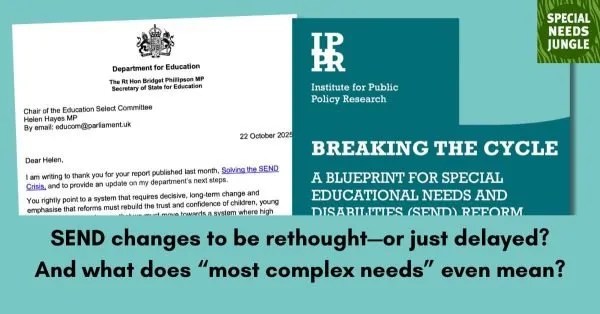
- Policy headwinds: The Secretary of State for Education, Bridget Phillipson, has maintained a sustained focus on independent provision, particularly within SEND, arguing that some placements are high-cost and ineffective while advocating a “mainstream-first” model. These pressures sit alongside a wider policy agenda that continues to increase financial strain across both state and independent sectors. There is a notable tension here: while domestic provision faces VAT and regulatory headwinds, the government’s International Education Strategy actively encourages leading independent schools to expand overseas as part of a £40bn education-exports ambition by 2030. The contrast has not been lost on the sector.
- The legal cliffhanger: In January 2026, the Court of Appeal heard arguments that the VAT policy is disproportionate and incompatible with human-rights obligations. A written judgment is expected in late March or April. A declaration of incompatibility would place real pressure on the government to revisit the Finance Act, leaving the next twelve months pencilled in rather than set in stone.
Survival Tips for the Time-Poor Head
For leaders of small junior schools in particular, “time-poor” barely does justice to the reality. The ambition for 2026 is not grand transformation, but operational resilience: rebuilding enough of the school’s operating spine to withstand sustained pressure without snapping. This is not the year for glossy strategy decks.
What follows is a deliberately pragmatic survival guide, built around delegation rather than heroics.
- Lean on your board: If you have an effective chair, hand over long-term strategic projects—digital transformation, estate rationalisation, structural partnerships. Your focus should be on running the school day to day, not designing a vision for 2030.
- Redeploy proprietors: Where schools have owners, their energy is often better spent rebuilding community relationships and external partnerships than micromanaging operational detail.
- Explore co-operative back offices: Shared IT, HR, finance or estates services within a trust or local cluster can materially reduce costs without undermining autonomy.
- Adopt a hybrid staffing model: Employ teachers where scale justifies it, but partner with high-quality online providers for low-demand or niche subjects. Preserve in-person capacity for the experiences that genuinely require it.
- Sweat the assets: Grounds and facilities are frequently under-used. From summer camps to short-stay accommodation or specialist programmes, ancillary income can be generated without wholesale reinvention.
- Approach SEND strategically: Expanding into SEND provision can help fill capacity and attract local-authority funding, but it must be done with political awareness and genuine quality. Current policy rhetoric favours mainstream inclusion and remains sceptical of independent special provision. Any move in this direction should therefore be framed as collaborative, regionally integrated and outcomes-driven.
- Support advocacy: Encourage staff and parents to engage with AFIS and similar bodies. Schools can facilitate participation, but parental voices carry particular weight. In a charged policy environment, coordinated advocacy matters.
The year ahead is about surviving demographic contraction and maintaining operational viability. It is unlikely to be elegant. But then, survival rarely is—and it is still preferable to shutting the gates.


















 A Principled view