Tag: Teaching

  • Acts of Purpose – why teachers come to school.

    It’s a year since our PTA AGM 2024, and we’ve just held our update for 2025. Over the past 12 months, during one of the more unstable periods of world history I’ve experienced, I’ve significantly changed my focus as a school leader, leaving the minutiae of running the secondary section of my school to another (thanks Steve) to focussing on the big picture work of being a school principal facing the many challenges now reaching the shores of Claires Court Schools Ltd. I’ll publish the AGM update after the event, because there’s an  incredible new facility opening as part of the celebrations tomorrow.

    The electorate in the UK voted in a Labour government intent on raising funds to benefit the state education system by adding VAT to tuition fees from January, removing business rates relief from schools that are charitably constituted from April and clobbering employers with the lowering of National Insurance, raising its rate and increasing minimum pay rates. If that’s not enough, a further Act is being considered by Parliament which will change further the face of state education, introducing yet more change, churn and central control. In 2 weeks time, parliament will almost certainly be asked for approval to change more statutes to claw back money from the public spend to increase the public purse as the country gears up to face its international responsibilities in the light of decisions made by the new Republican President in the US.

    Confucius (551–479 BCE) as a scholar and teacher and lived in a chaotic and violent time in China. He wished to see peace and harmony restored and a return to order. Despite the passing of time and the umpteen centuries, humanity has chosen hate, conflict and personal gain over love, peace and harmony. In 2025, we see even our perception of what is true being twisted on Live TV in the White House, an object lesson reminder of what went wrong in the 1930s when the League of Nations ignored the threat of the rise of Fascism in Europe. We do well now to remember what Confucius introduced all those centuries ago, that being the value of Teachers and the vocation we have when called to the classroom. 

    I’ve 2 brothers, former pupils in their twenties whose time in schools assisted them in forming their choices for University and their career path beyond. After Uni, James went to Sandhurst to become a soldier, and last year James’ troop were tasked to provide a demonstration to the King of their bridging capability as part of His Majesties State visit to Germany, seen here talking to his Majesty. James is heavily involved with 23 Amphibious Engineering Squadron, Royal Engineers as a Lieutenant in charge of his Troop of 30-plus Men and Women permanently based in Germany, and was subsequently deployed to Poland as part of “Dragon24” and “Steadfast Defender” the biggest NATO exercise in 30 years. 

    His brother Oliver followed on after A levels 2 years later, and chose a completely different route, inspired by biology and geography field trips here at school, he studied Marine Biology at Plymouth University and from there has made a successful career as a wild-life photographer – a more recent film being with Disney and National Geographic…. in ‘A Real Bugs Life’!

    The Director had him appear in a very cold pond in the film as Disney/National Geographic actually wanted a Marine Biologist in the water, which saw him individually named in the credits!

    Here’s a sample of the photographer’s skill:

    More recently, Ollie has been working with Orcas and pilot whales who have similar social structures, forming strong, long-term bonds between mother and offspring, and he’s hoping to film them care-giving between the species, a real possibility.

    Every day in school I run with my brother Hugh, I remain acutely aware just how complementary our skills are. Where I find the current direction of education so depressing is that the focus seems to be on levelling down not up, making more similar rather than valuing individuality and those best schools that do this, in the state or independent sector simply aren’t being visited by the current Secretary of State for Education, Bridget Phillipson MP, because we model a completely different way by which excellence can be achieved by valuing diversity not homogeneity. 

    The story of brothers Wilding and Moore spans 50 years of course. They are but 2 of hundreds of tales I see every day in school, which cause my ‘hope arising’, my cheerleaders being the children in whom bright new lights are dawning. I’m with so many other national headteachers in standing for inclusion and wisdom in all we do. We are teachers; Confucius is known as the first teacher in China who wanted to make education broadly available and who was instrumental in establishing the art of teaching as a vocation. Please stand with us, work with us and listen. Teachers know stuff, we don’t need yet more Acts of Parliament, just more Acts of Purpose – whether that be in being in an army brigade or film crew – the world is both a safer and exciting place because of the skills they’ve chosen and put to such good use.

    Confucius would indeed say “Wheresoever you go, go with all your heart!”

  • Proprietorial governance in times of change

    All Independent Schools exist by permission of Parliament, and are responsible to the DfE for meeting what are known as the 8 Regulatory Standards (the regs) covered by the 2019 Guidance plus a plethora of policies for which we are to have due regard. Ultimately, individual proprietors are responsible for ensuring standards are met. Where the ‘owner’ is replaced by a Governing Body, it still remains for the new proprietor (the board) to take responsibility, an incredibly important protection for the Heads and their staff.

    As proprietors, my brother Hugh and I also choose to be key workers in the school, covering administration and academics respectively, hence the titles Administrative and Academic Principals. It is required of us to ensure that the school’s leadership has the necessary skills and resources to enable the heads and colleagues to meet both the regs AND the aims, key values and offers of the school. We choose to employ professional experts who advise the school in matters of governance covering law, accountancy, finance & pensions, alongside visiting consultants who bring their insights in academic, health & safety, safeguarding, planning & building areas to complete (and complement) the knowledge and experience the Principals have gained over their 40+ years in post.

    The evolving landscape of single-sex education in the UK is governed by DfE guidance, and where secondary schools choose to offer single-sex education because of the clear benefits for both girls and boys, we are required to provide comparable facilities and opportunities for both genders. As a consequence, the significant building investments in facilities including the refurbishment of both main secondary teaching wings, the provision of new Design & Technology, Food & Nutrition, and computer science classrooms concludes with the construction of new music and fitness centres this summer. To have completed this work within the 3-year time period has been a significant achievement for all involved.

    Regulations keep moving, and most UK readers will have seen the immense fuss being created by the increasing poor attendance in the state sector across the country. Claires Court is required to report attendance information to RBWM and then DfE, and today’s figure shows that in the year to date, we are @94.6%  which, as we’ve been midst ‘of winter bugs, Covid and all sorts’, is on target to be 95% or more (5* performance). Thank you, parents & guardians, you’ve done your bit, and well done to our nurses too for offering that professional yet sympathetic voice and diagnosis when appropriate. It is interesting too to see the public discourse on the mobile phone ‘good/bad dialogue’; the issue is well managed in many schools (handed into school for safekeeping during the day for under 15s).  Screen time on scrolling clickbait videos and interpersonal relationships connected via social media are the current generational problems after hours (and not just for teenagers). Whilst we can’t prevent phone access at home, the school’s provision of secure, protected Chromebooks for 12+ years now is a remarkable success story for CC.

    One of the advantages of my age and experience is that as well as serving on national and regional ISA Headteacher groups, I get asked to connect with some of the people with power and influence who are or may be driving public policy. Yesterday, I met up with Professor Francis Green, a social economist at UCL, whose work led to the Labour Party’s manifesto promise to levy 20% VAT on all private school fees. I spent a useful hour with the Professor, and he has taken the point that policymakers and those impacted need to meet to consider the outcomes of the policy now its negative impact on private school viability is becoming more visible. 

    Later yesterday and still in London, I met as part of the Association’s Equality, Diversity and Inclusion committee in the offices of the Independent Schools Council, a really forward-thinking group who are well ahead of the government on assessing the impact of policy and the provision of successful education in England and informed by colleagues working elsewhere in Europe and the USA. 

    A good finish to the day was to return to school to attend the Juniors Parents evening to 6 pm and then the Senior Boys event to 8 pm. Genuinely it is with great pleasure that I ‘man the tea urn’ and catch up with parents, and it’s always good to hear how we are doing, ‘what’s going well’ and ‘even better if!’ What made the day perfect was catching this video from broadcaster and commentator, Ana Boulter, whose leading mission right now is to assist the government in changing its policy on VAT, and to use the authority of senior headteachers in the country to make her case. As Boulter proposes Wilding and Birbalsingh to share the job of sorting out education for the private and state sectors, I thought, dear reader,  to draw it to your attention… 

    These are indeed times of change, yet ‘twas ever thus, and as the header, this week shows the early spring sunshine rising over Claires Court fields circa 7.45 am, we do need to look to the future and make sure our well-laid plans are realised for the benefit of pupils, parents and teachers. After half-term, I’ll be publishing the outcomes from the Parents Questionnaire 2025, and of course, will be inviting parents and guardians to offer their insights to aid our direction for 2026-2030. We couldn’t possibly have guessed Covid 19, Austerity and a Labour Government this time 5 years ago – does anyone have a crystal ball that works a bit better now?

  • “Make Your Bed” – Admiral William H. McRaven

    In his book, published in 2017, McRaven makes 10 suggestions, the subtitles being ‘Little things that can change your life…and maybe the world’. 7 years earlier, when he gave the commencement address to 8000 graduating students at the University of Texas UT. Rather than read the book, the video of his speech is worth watching here.

    I’ve been reminded of these simple messages recently, which sit in direct contrast to the incredibly complex set of instructions we face every time we wish to cause the creation of something new. And though I continue to do my best to understand and then accelerate those next steps, actually, sometimes only time is needed, and there is nothing I can do to short-circuit the calendar. In many ways, that’s the nature of the school curriculum itself, which is carefully paced through each year to ensure there is time for the breadth of cognition to develop, knowledge AND skills to be acquired.

    This year, I have completed 4 years of service for the Independent Schools Association as the chair of their Inspections committee and as their representative on the cross-association Universities committee checking in with universities and colleges on their processes and requirements, and causing them at the individual University level to consider carefully the concerns the schoolwide sector has about student management and well-being. It’s been an enormous privilege, being the representative of almost 700 independent schools in these 2 forums, and whilst my contribution has been genuinely valued by my colleagues in ISA, I am delighted to have drawn to an end those 2 elements of work-flow. Having recently been re-elected to serve on ISA Exec Council for a further 3 years, I’m pleased my voice has not been silenced completely, yet returning just to work in my school is hugely rewarding in turn.

    As my previous posts this term have made clear, we have no choice other than to look for the positives and celebrate the successes, not just for ourselves but everyone else concerned in our society, because it’s team, collaborative work that will make the difference for us all. When as a headteacher I am asked to engage with any national government consultation, I will make that contribution rather than set it aside. During the recent HMRC consultation on the introduction of VAT to our sector, it’s clear to those MPs directly involved that the huge volumes of correspondence that followed made no difference to the roll-out of policy, but that does not mean we can’t hold HMRC to account when the process falls over and fails to deliver the outcomes (6500 more teachers) predicted.

    It’s worth mentioning that the new government’s review of the curriculum content of our state schools is coming to a close, and there’s considerable focus from pressure groups on the need to reform once more the public examination system and the extraordinary and bureaucratic beast it has become. I urge the utmost caution on everyone currently hoping for a dramatic transformation quickly – don’t go there yet! Dame Christine Ryan, formerly Chief Inspector of the Independent Schools Inspectorate made very clear to the government 7 years ago that Michael Gove’s wholesale changes to the then National Curriculum at both GCSE and A Level simultaneously would place the country’s ability to check the nation’s progress into limbo for 5-7 years – that’s how long it would take to assess whether the changes had made an impact, and if so, was that a good one. It’s also worth saying that the Scottish Government did the same thing, and so now we can for the first time see the results rolling in. Yes, in principle, England’s system is improving, but we need 4 more years to check that the improvements are making the ‘change in practice for the better’ permanent.

    England’s reading, writing and science progress has been very strong indeed, the latest evidence of which comes from the TIMMS 2023 assessments for Maths and Sciences. What’s important to appreciate is that it takes teachers also a very good deal of time to get used to new mechanisms for teaching, learning and assessment, and I certainly approve of the academic focus that has returned to the teaching of the sciences, and the importance of Literature in our lives as ways of learning about emotional regulation and change. It’s genuinely nice to see that our ‘recovery’ from the pandemic has been quicker than other countries, and for Science we are now placed at the very top of expectations, so well done fellow science teachers for that. Scotland adopted a far more modern approach, diluting rigour with relevance, the latter sadly being ‘opinion’ and with little actionable content. The Curriculum for Excellence has proven not to be, which saddens so many I know where once Scottish Education was held in the highest esteem.

    Where the English system works at the 18+ and graduation process to work or University remains the most efficient process, permitting young adults to move on into apprenticeships, college or University with graduation beyond expected in 3 years. As our higher education qualifications incur the acquisition of serious debt, the last thing we should currently be thinking of is a migration to a 4 or even 5 year pathway prior to graduation, at an adjusted debt cost of £100,000. One of the brilliant innovations in the private University sector is the willingness to compress this process into 2 years, mostly in the music and fashion business because it’s the work that follows that aligns work experience to skill and knowledge already acquired.

    What’s not working anywhere in the UK is the availability for planned support for those whose learning difficulties are not being met, the funding for diagnostic assessments that need to be carried out and the subsequent skilled support, counselling and other therapies ensuring intervention happens in a timely manner. Apparently there is an investigation by JCQ underway to explore why there is such a difference between the state and independent sector in terms of reasonable adjustments to be made to meet disability requirements for public exams. As anyone who has worked with out school has found, we conduct rigorous assessments towards the end of Year 9 to assess those needs prior to commencing GCSE courses, and again at the start of Year 12 and Sixth Form courses. These routine activities cost money, time and resources, teacher-feedback and then ongoing assessment to check that the concessions awarded are actually being used. Whilst I certainly support this review, I don’t expect to read that our sector has been too generous – as it is very clear just how under-resourced the state sector has become. Not wishing to sound facetious, but the lack of National Health dentistry is not down to the over-provision of dentists in the private sector!

    In McRaven’s short book (p122), he describes the Wednesday of ‘Hell Week’, during which the SEAL trainees spent 15 hours after dark up to their necks in mud. All that was needed was for 5 of the trainees to quit and the whole squad would be released from the slime. Just as it looked the squad would fail, one brave voice began to sing, then a second until of course the whole troop joined in. Bit by bit the mud seemed a little warmer, the wind a little tamer and the dawn a little nearer.

    “If you want to change the world, start singing when you are up to your neck in mud!”

    I’ve just watched Sherborne’s rugby video of our U14 side beating their A team away in the quarter-final of the South West Rugby Cup by the narrowest of margins, 17-15, and the last 5 minutes epitomise the strength that a team can draw from when no-one gives up! Throughout this term, I’ve seen that spirit of teamwork shine through, evident in the classrooms, the arts, music and drama events, and indeed in the relationships evident at the PTA events such as Fireworks and Christmas Fair. Despite the complexities to be found in the ‘game of life’, we can make things a whole lot easier if we do the simple things well. Here’s to completing the term in such style, singing well whatever the weather!

  • “Those who say it can’t be done are usually interrupted by others doing it’ – James Baldwin

    The author of this quote, James Baldwin (1924-1987), was an American writer and civil rights activist. He was a prominent voice in the American Civil Rights Movement and is considered one of the greatest writers of the 20th century. His work pushed so many literary boundaries. 

    In last week’s blog, I highlighted the series of events in the week, most if not all were both impressive and important. This week, I aim to highlight just how forward-thinking Claires Court continues to be, at a time when the wider media seems to be suggesting that nothing useful is happening, other than chaos abounds around. Whilst so many systems, both in the UK and worldwide are indeed feeling heat and confusion, knowing that in the case of Education, schools have had to be adaptable for decades now, that’s been a real help for leadership in our school.

    This week has seen the Government call for another full-scale curriculum review, some 10 years after the Gove’s agenda which rolled back the education developments of the ‘noughties’, in part to reduce teacher workload and to establish a core benchmark of what the ‘classic’ British curriculum should look like. ‘Do we need another curriculum review’ I hear you ask? I can give two answers to that; for the state sector I don’t serve, and for our own independent school, which I devote my working life to (answers are Yes and No, and in that order).

    As with the introduction of the new National Curriculum by Kenneth Baker, Gove’s review was honourable, back in the 80’s, the introduction of coursework highlighted the need to stretch a child’s experience in school to test what they knew, understood and could do from just high stakes public examinations. The introduction of Curriculum 2000 encouraged students to follow a wider range of courses in the Sixth Form than just three A levels, including modular steps along the way, and gathered GCSEs as well in this spread of assessment. The trouble was that high-stakes exams only increased, and a student’s passage through GCSEs took over 100 exams in 18 months. Returning to terminal exams only with a modicum of coursework as appropriate has been a success over the past 10 years. But, where Gove got it entirely wrong was introducing the English Baccalaureate which forced children to study languages and humanities at the expense of the arts and practical subjects over this period. This signalling that practical skills and working together were not to be valued has increased the sense of isolation that young people experience, at a time when mental resilience has been challenged for other reasons too. 

    The photograph above shows the President of the CCPTA Foundation, Phyllis Avery MBE, celebrating the Biennial presentation of the King’s Colours to our CCF troop, accompanied by Principals James and Hugh Wilding. The current government has decided that the National Cadet Service is to have its funding cut by 50%, a decision that is deplored by all connected to the CCF. In an open letter, the group of Honorary Colonels and the presenter Lorraine Kelly, the National Honorary Colonel, said: “The Army Cadet Force has inspired and transformed the lives of countless young people. Providing essential life skills, a foundation for their adult life and enhanced career prospects.” It added: “For our cadets, the taxpayer and society as whole, we ignore opportunity cost at our peril and we implore both Government and the Ministry of Defence to ensure that funding for our cadet forces are restored and, as we move forward, are increased to match the commitments made. Not just because it is in the interest of the taxpayer, but for the enduring benefit of our cadet forces and the societal impact they deliver.” The letter continued: “Although sponsored by, and funded through the Ministry of Defence, and despite the clear role of defence in addressing the issue going forward, Government too must play a role in ensuring the positive impact of our cadet forces is not degraded or lost.”

    Measuring things in school is often far harder than the lay observer might think. Why are so few young people leaving school and not wanting to enter the ‘hard, vocational professions’ such as engineering?Take for example ‘Checking whether an engineering student can weld successfully’; is really the best form of assessment to make sure they can write about it? Down at the primary level, whilst swimming is a clear priority of the national curriculum (NC), it seems the only state school requirement to meet Ofsted standards is that children spend six weeks on swimming and water safety. The NC Intentions are clear, it’s the implementation that is the problem –  that and of course, the requirement that English and Maths standards must meet international PISA league table improvements by age 11, a priority set by UK Gov. These standards don’t give any recognition of the need for children to gather all the appropriate soft skills in addition, to collaborate, to learn to listen, debate and show compassion for the views of others, all need to be acquired during childhood. 

    When our application to create a new campus for our school was being considered during 2019, it included a support paper by Peter Swift, Head of Independent Education and School Safeguarding Division at the DfE, which made clear that it was unlikely the school would be able to meet the requirements imposed on schools by the Equality Act 2010 unless this migration onto one site was enabled. Refusals by planning in 2019 (RBWM) and 2020 (National) and then Regulatory failure by ISI in 2022 for failing to correct the imbalance in provision for boys and girls placed the Principals between a rock and a hard place, baulked by planning who prevented development and yet failed by regulators for not developing as required. Wrap that up in a pandemic taking place across the world at the same time, what on earth could we do? Just get on with it was our answer!

    Where are we now, just under three years on? 

    • Leadership in the school is united across the whole age range.
    • We have a common curriculum suitably facilitated and an increase in breadth of offer, not diminution.
    • We’ve ensured equality of access to all buildings & facilities fit for purpose either with us or just about to arrive. 
    • D&T and Food Tech on both senior sites
    • Agility, Conditioning, Fitness and Strength sessions are a priority provision
    • Juniors united on one site with common programmes for Forest School and an amazing new astroturf at the final stages of completion to further enhance our PE lessons. And yes, everyone swims. 
    • And as measured by destination output at 18, our young people are not just making the destinations they hoped for, but able to pursue their dreams as well.
    • And if you read this in time to vote, our short movie contribution (Y10-12 category), “Love You to Death” is up for Young Film Academy School Oscars – vote here .

    And whilst education provision is at the central heart of what we do, we’ve built out all the other vocational and recreational opportunities as well. All of our playing fields are approved for league sports, and our sports opportunities cover every child, yet permit us to be considered one of the best schools for sport in England, as demonstrated with our nomination as a finalist in the ISA Large Schools awards 2024. It’s not just about the certificate, it’s on the ground results too. The 1st XV have just won the rugby league they play in, the U15 and 14s both through to the Berkshire finals, whilst our U15 footballers through to the quarter-finals of the ISFA trophy, and our tennis squads competing amongst the Top 16 in the UK in 2024. Here’s where Yacht’s and Yachting call our sailing “the illustrious Claires Court School”, likewise where Junior Rowing News talk about our rowing boat club’s “wealth of experience, front-runners and flaunts an impressive record”

    As listed outcomes for students are better than ever. With 87 Year 13 students applying for University and degree apprenticeships just now, we have those preparing for Oxford interviews alongside those looking for career opportunities in engineering with British Aerospace, including of course a Ukrainian refugee, one of 11 still supported at Claires Court. Her Sixth Form colleagues have reached in to provide support for the online Svitlo school, giving academic support and a lifeline for less fortunate peers in Ukraine, unable to attend school to pursue their studies because of the war with Russia there.

    It’s truly a brutal world for all, with our refugees’ mothers now directed that their visas will end in 18 months and they and their children will need to go home. I guess that’s appropriate, so long as the war is over. I hope it’s not just an easy set of known refugees ready for deportation to improve the statistics, which so recently have shamed the Home Office. I welcome the call across the houses of parliament to reduce the noise and increase the debate to ensure ‘we do the right things right’. it is our underpinning values at Claries Court that provide the lodestone and the centre of gravity we need – to know the difference between ‘Right’ and ‘Wrong’. Responsibility for our actions, Respect of others, Loyalty to our school and families and Integrity above all are embedded throughout Claires Court and will stay so. In conclusion, James Baldwin expresses how best we should work together in the following, and perhaps most famous quotation:

    “For nothing is fixed, forever and forever, it is not fixed; the earth is always shifting, the light is always changing, the sea does not cease to grind down rock. Generations do not cease to be born, and we are responsible to them because we are the only witnesses they have. The sea rises, the light fails, lovers cling to each other and children cling to us. The moment we cease to hold each other, the moment we break faith with one another, the sea engulfs us and the light goes out.”

    Read next: My childhood as per Charlie Brown

  • Why developing a sense of Agency in children and young people is one of the main purposes of Education.

    Over recent years in England and across the Western World, there has developed an epidemic failure of the mental well-being of our children and young people. Employers talk openly about how young graduates entering the workplace have a sense of entitlement without an appropriate work ethic, and yet young graduates find themselves with a weight of university debt yet no obvious channels or opportunities to enter the workplace at an appropriate level proportionate to the qualifications gained at University.

    I am very grateful to Sir Anthony Seldon for his recent reference to Professor Sylvie Delacroix, Chair in Digital Law at Kings College, London and her warning about our growing subservience to AI and Large Language Models (LLMs). I am probably just as grateful to Malcolm Gladwell for his first optmistic treatise for business culture, ‘The Tipping Point’ (2002) and his most recent review of the same ‘Revenge of the Tipping Point’ published this month.

    Claires Court left the National Curriculum for Reception to the end of Key Stage 3 (ages 4 to 14) in 2006, and did so because in our pursuit of perfection to be the best at meeting UK Government’s expectations of a modern curriculum, their required approach was clearly failing our children. The loss of choice, sense of purpose and direction, particularly the children’s growing unwillingness to take risks, write creatively and collaborate with others had become the major block to perhaps the most important purposes of education, above all giving the children and young people that sense of Agency they need to make choices and decisions that impact the world around them. Helping children understand agency can help them build a strong identity, feel a sense of belonging, and develop resilience. Here’s what that looks like for very young children and here for young people and adults why they too might need to take a look at their lives and how to build a greater sense of Agency.

    Everything we now do in our school work is question-based, promoting a positive sense of inquiry and increasing engagement. Our curriculum is as diverse as our co-curricular activities, permitting choice and extension as often as possible. What we have learned is that a very good amount needs to happen at group/collaborative level, and it’s clear that plenty of non-judgmental engagement is needed to ensure groups of neurally diverse children can work effectively together. The arts, creative and sporting activities are essential to provide those common opportunities for engagement, whether that be kicking through the puddles together on the way to our forest area at Ridgeway, or the class-based, child-led drama activities leading to Commedia del Arte or Shakespeare reinterpretations at lower secondary.

    Education in the UK has been led by ‘Bad Actors’ for a decade or more, leading politicians forcing a massive reduction in curriculum choices on schooling in England, Wales and Scotland, promoting the importance of a mechanistic narrow set of subject choices and dispensing with great rafts of subjects on which our British economy thrives no longer available in the state sector. University subject-based departments have shut throughout the UK for 15 years and continue to do so in 2024. It’ll be no surprise to learn that we have an extraordinary shortage of Chemistry teachers already, which is only going to get worse. Driven by the government, the host of practical elements of exam subjects that can only really be marked in situ have been reduced hugely and then marked so harshly that grade differences arise only from written answers in timed exams. No wonder our engineers and medics have lost the opportunity to develop the dexterity needed for practical craft skills. AI is going to help in all sorts of ways across the host of industries now adopting it, but the robots to repair jet engine nozzles or carry out microsurgery without a supervising human are still a long way off.

    Inevitably our sector has been shaken to the core by the ‘bad faith’ shown by the new Labour government now choosing to levy VAT on private school fees. The golden thread that runs through our sector is the core understanding that developing agency for our pupils is essential, particularly if you want them to develop their skills and talents to the extreme. Just today we’ve witnessed England cricketer Joe Root become the greatest English batsman ever (262), well supported by Harry Brook (317), Ben Duckett (84) and Zac Crawley (78) in scoring collectively 823-7 against Pakistan in the first test in Multan. Whilst all were talented cricketers at the outset, they honed their skills in private schools because the teachers and facilities are funded, of course, but also because the time is made available as well. It’s not just about sport, but in every aspect of what our schools offer, above all what private schools offer the children is the time to develop in school all of the life skills they need. I watched my grandson and year 2 swimming this afternoon, everyone in the pool swimming 2 lengths using the crawl stroke. The pool was built at the same time as all the other swimming pools in the local primary schools; ours is the only one left, because the state primaries might have swimming & water safety required on the curriculum, but no funds from the local authority now to support same, and now released from local authority as academies or free schools, they are exempt from this requirement, and thus don’t set out to meet in in the first place.

    In our junior school, we have now deployed Merlyn Origin, an AI assistant for teachers that uses large language models (LLMs) to generate content and provide voice control for classroom technology. We’ve been one of the few lead schools in the world to embrace AI with Merlyn, and now as generative AI becomes commonplace in the workspace, our children will learn how to live with and gather Agency when using this new computing power that is now available across every dominion. One of the leading AI thinkers is Professor Sylvie Delacroix and she has warned that we have perhaps only 2 or 3 years to gather our wits together to stay ahead of AL and LLMs – in short, we can see the AI revolution coming, but can we make it socially acceptable, and will humans maintain the lead as we need to, so that we ensure we keep the skills we need to develop onwards. https://www.kcl.ac.uk/events/beyond-ai-safety-can-we-make-the-ai-revolution-socially-sustainable

    AI has been with us since the dawn of computing and the Big Bang saw the loss of huge volumes of human work as the machines took over; IBM invested massively in trying to develop AI to replace teachers – they recognised many years ago that they could not, but what they could develop were LLM AI tools to enhance the work of teachers further. Hence Merlyn was born, its data-set reserved, clean and suitable for the use of children. When we ask Merlyn now who is the British Prime Minister, it will tell us Rishi Sunak, as its knowledge within takes about 3 months to scrub up and update. Ask Merlyn more correctly to check with Google who’s in charge, back will come the correct response of Sir Kier Starmer (apparently). Children and teachers using LLMs will inevitably learn not to ask the ‘what’ but better still ‘how’ to ask the right questions and in time, to check the ‘why’ they need to use AI for the specific purpose in hand.

    Here’s Gemini’s take on why the state sector national curriculum is letting down its schools and children:

    The concern that the English National Curriculum doesn’t adequately foster agency and self-worth in young people stems from several key factors:

    Standardized Testing and Narrow Focus: The increasing emphasis on standardized testing can lead to a curriculum that prioritizes rote learning and memorization over critical thinking and creativity. This can limit students’ opportunities to explore their interests and develop a sense of personal agency.
    Lack of Personalization: A one-size-fits-all curriculum may not cater to the diverse needs and interests of all students. This can make it difficult for students to feel connected to their learning and develop a sense of ownership over their education.
    Limited Emphasis on Social-Emotional Learning: While academic subjects are important, social-emotional learning (SEL) is also crucial for developing a sense of agency and self-worth. If SEL is not given sufficient attention, students may struggle to build confidence, resilience, and the ability to navigate challenges.
    Lack of Opportunities for Choice and Autonomy: A curriculum that is overly structured and leaves little room for student choice can limit students’ sense of agency and control over their learning.
    Teacher Workload and Pressure: High teacher workloads and external pressures can make it difficult for teachers to provide personalized attention and support to all students. This can impact students’ sense of belonging and value.

    It’s important to note that these are concerns and not necessarily definitive statements about the English National Curriculum. Many schools and educators are working to address these issues and create more student-centered and personalized learning environments. We’ve some great state schools in our locality, but in so many ways they are hamstrung by the required narrowness, lack of human and cash resource.

    This week Claires Court hosted the ISA London West Areas Art exhibition at the Norden Farm centre, aimed at the 100 private schools in our region. From the host of entries across a myriad of fine art, 3 dimensional, textile and digital offerings, winning entries travel up to the national exhibition just after half-term. The Independent Schools Association Autumn Study conference supports the work of its 670 private school members, covering many special needs, specialist, faith and other foreign language schools as well as mainstream partners such as ours. ‘We’ are not the schools featured in the national press with ‘boaters’ and ‘tailcoats’; with over 200 of our schools smaller than 100 and covering the age ranges 2-11 or less, such schools are intimately embedded in their local community, arising from the needs therein and shaping part of the jigsaw our towns and villages need. With over 125,000 children in our schools gathering a core sense of Agency from their ‘work and play’, we form the major ‘raison d’etre’ for why UK Education is being exported throughout the world – it works and serves the needs of its children and families really well.

    Regular readers know I follow Simon Sinek’s work carefully, hence the regular reference to the ‘Why’. In his 2019 book, The Infinite Game, Sinek identifies the following: “We can’t choose the game. We can’t choose the rules. We can only choose how we play. In finite games, like football or chess, the players are known, the rules are fixed, and the endpoint is clear. The winners and losers are easily identified. In infinite games, like business or politics or life itself, the players come and go, the rules are changeable, and there is no defined endpoint. There are no winners or losers in an infinite game; there is only ahead and behind.” I believe my principalship is formed around ‘architect leadership’, and frankly I’ve never been interested in a narrow finite game for education either, because we can’t afford for our children to be ‘losers’. Humanity deserves greater things than that, in which we can always learn from the past but understand we are all have a stake in shaping our future, that’s where Agency-for-All comes in to bat – hoping of course to do as well as Root & Co!

  • Work in Progress 4 – What the future holds!

    This blog is about the research and subsequent efforts I and my colleagues continue to conduct to ensure that ‘why, how and what we do’ works.

    Circa 30 years ago, the Mast Organisation based in Taplow introduced me to 2 amazing study skills tutors, Joan Dennis and Linda Greetham. Joan was a current parent at the time, Robert and Simon with me at Senior Boys, with Simon going on to win Rowing Gold at the Sydney Olympics in 2000, and even more importantly open the sports hall at Juniors 6 years later. Whilst fads can come and go, at Senior School we have continued to concentrate on the explicit teaching of study skills, and this last week has seen Linda back in school, working with the new ‘troops’. I asked Linda to carry out a value-added analysis specifically on the teaching effect of her work, and the consequences when willing volunteers choose to stick with her mentoring are stellar, performing way above the predicted outcomes from their assessed native abilities1. By the way, we don’t just rely on Linda, and the whole faculty from 5 to 18 is skills focused these days. But for the few, that different voice yet supportive and relentless support for a few days makes a difference no parent could make in a lifetime.

    Back in 2012, Google invited me and school colleague Paul Robson, then ICT specialist teacher and Head of Outdoor Education to their Teacher Academy (GTA) here in the UK, since when we have retained our Certified Teacher/Innovator status. Being a graduate of GTA is a big thing, but only if you use what you’ve been given selflessly and give those skills to others. We’d all had to submit videos, participant hopes and CVs, and of course be recommended by the industry with which we had already engaged. Paul and I took CC to the cloud, implemented what we now know as Google Workspace, continued to collaborate with C-Learning along the way, who sourced Chromebooks from Samsung and the rest as they say is History. We influenced over 300 other schools, state and independent to go Google then, and we continue to evangelise for the right tools to use in schools for children and young people. Oh, and we’ve never been monetised for that work. Not even a pair of glasses.

    7 years ago, I first made contact with Professors Megan Sumeracki and Yana Weinstein, who had just founded the Learning Scientists – this link takes you to their first-anniversary story. 2 young but amazing Professors who chose to tear up the 1001 rules books on how people (don’t learn) and start afresh. From 2010 to 2017, we’d all had to cope with an Education ‘giant’, Michael Gove, who’d torn up the latest set of GCSE and A level syllabi and sent us all back to the dark ages. Rote learning was required to return, authors younger than the Victorian era consigned to the ‘too trendy’ dustbin, and the EBacc applied to school performance measures (2010), which slowly and steadily drove artistic, creative and physical skill subjects out of the core curriculum. What the work of the Learning Scientists permitted me to do was sweep away the ‘Gove/Ofsted’ noise, here’s their email to me giving permission. Making this choice enabled our Deputh Heads Academic to lead proactively, make choices, design the appropriate curriculum, asking the right questions and leaving the students to design the best answers.

    From 1960 to the present day, 3 October 2024, Claires Court has stood for hands-on learning.Year 6 have been away studying on a residential this week, the Year 9s go off on Rugby tour to Bath and the CCF are away in Tangier Woods over the weekend too. Whatever the activity, children need to be together, making mistakes, winning, losing, and building resilience along the way. Just check out our fixture list for the term here or of course our multi-verse of social media channels for Rowing and Sailing, and I think our purpose is made very clear. This week was MasterChef week for Year 10 boys and girls, with the incredibly impressive Chef Wesley Smalley (from Seasonality, Queen Street) helping my brother, others and myself select the school ‘winning chef’ to pass through to the next round. I was part of the team for period 4 on Tuesday, and I learned this from Wesley along the way: “You can teach presentation skills to anyone, but you can’t teach taste!”

    Claires Court sets out to provide a child-centred, modern and relevant education for the future we find ourselves in. The latest research arising from #lockdown highlights just how damaging it has been for children (of any age) to navigate their childhood without other children present. I completely understand that children can be mean to each other, yet the reality of the tales from Literature across the centuries is that growing up is a collaborative effort, not one left to children on their own (Lord of the Flies) but one in which children together can figure it out, with or without the help of the grown-ups (Harry Potter and all).

    So what do I know then – let’s assume the worst, that I know nothing despite 49 years as a teacher. Here’s a young maths Teacher, Dan Meyer, 14 years ago telling you the same story then as you’ll hear now: if you build teacher dependency in your students, they’ll eagerly do nothing and await the answers you give them. The challenge for teachers, for schools and communities is to be brave, not stupid, to be values-driven not cause change for the sake of it, but whenever and wherever, look for the good things arising – still in 2024, opportunities are everywhere, but keep your eyes open. The future lies ahead, and we make it!

    #CCMakingHistory.

  • “I’ve got a feeling we’re not in Kansas anymore.” – Dorothy to Toto in the Wizard of Oz

    One of the most brilliant films I saw early in my childhood was the re-released film “The Wizard of Oz” (originally 1939). Put simply, in a world that was still largely black and white, TV absolutely and a lot of film too, the extraordinary and lavish nature of Oz was something else and genuinely transported us all into a mystical world, in which it must be said, not all was good.

    The phrase “I’ve got a feeling we’re not in Kansas anymore” has developed a different meaning since Oz has become a universal feature of life, a way in which we as adults can fret a little that the world we were born and brought up in doesn’t actually make sense. That helpful utility Quora says it straight:

    As this is a blog with an educational slant, I’ll fess up that it was receipt of an urgent email from the DfE on Monday last directing me to check a host of ‘Do Now’ activities to ensure school was ready to return to work this summer term that has moved me to go political. Now the email was not personal to CC but a generic message to the whole of the School Sector – “Update to all education and childcare settings and providers”. You can read that here if you want to see what I mean. Please don’t though, because I am just using this penultimate message received last week to illustrate the point that “The DfE does not run schools”! 4 days later, another message from DfE arrived, a start of term card from the Secretary of State for Education, the Rt Hon Gillian Keegan highlighting the need for schools to improve attendance, celebrated the arrival of additional nursery places for 2 year olds, invited all Headteachers to join her for a live broadcast chat last Wednesday and finally, highlighting the need for Headteachers to remember ‘Thank a Teacher’ day.

    Call me an old cynic if you like, but the reality 2 weeks later is that Independent Schools simply are not permitted to comply with the government’s wishes to share attendance data, the video link to Gillian’s Keegan was unwilling to be found as were the funds for the additional nursery places and finally, I really don’t know of a headteacher that doesn’t thank their teachers every day – we need to do just that, as the profession is under incredible pressure over the country because the teaching role has expanded so massively to include almost full wrap-around responsibility for everything to do with children plus engagement with a bureaucracy imposed on schools by the government over the past 14 years which has exploded beyond reason. It’s almost impossible to overstate just how complex the public exam system has become; Claires Court has 3 senior school centres to run, covering both GCSEs and A levels, to stretch over 8 weeks this summer, occupying of course all of our big halls in College Ave and Ray Mill Road East. Our Deputy Head Curriculum and her exam manager and 2 additional officers have to start the planning for the Summer term from 1 January, 20+ additional independent adults recruited to support all of the exams including Art to keep teachers out of temptation.

    It’s not just education that faces this explosion of bureaucracy; everyone now suffers from the local planning system that has gone the same way. When we applied for our new sports hall, with associated roadway and car park at Ridgeway 21 years ago in 2003, the application to approval time took exactly 3 months and required 3 documents, attracted a correspondence summary and a 5th paper to document approval. Our current application to install a small multi user all weather surface covering 3 tennis courts has attracted 28 documents to include multiple specialist reports to date and still counting, and almost 6 months later still no approval confirmed. I won’t go on any more…

    A successful, democratic system needs stable government but also stable and reasonable expectations that education, health and care can be delivered in a well coordinated matter. There is nothing visible any time soon that suggests national government will bring these matters under control, and the last thing Education needs is the continuous on-going creep of the DfE to take charge of everything over in our state schools, the complete antithesis of the freedoms the Thatcher, Major and Blair reforms brought for them from the previous 30 years. Access to children and Adolescent care services and funding has never been so rationed, almost certainly linked to the impossibly tight control the government has placed on funding for the training for future professionals in education, health, care and above all, public service in the emergency services and the military.

    I’ve worked since the age of 18, including before and during my student years. At that time, we faced the 3 day week, strikes and a time of similar despair on the failure of national government to get its house in order, but we knew then that the disruption to normal was just that. My wife and I could buy a 2 bed flat as soon as we started work, and opportunities quickly opened up in the years that followed. Now, I don’t see that landscape at all, nor do the alternative Politicians waiting expectantly to take over offer anything like that, just more of the same. The Labour Party’s position to introduce a 20% tax on our tuition fees is completely unreasonable, runs in the face of all other Western democracies and will have a huge and disproportionate impact on over 100,000 children whose parents have chosen our sector because their special needs cannot be met by the state, Much the same is the case for boarding schools; of course it seems that for some families they used boarding to buy access to privilege, but in the main, parents seek residential placements for their children’ schooling because it meets those other needs that the children or parents might have, such as expert coaching in Academic disciplines, Performing Arts, Music and Sports (which cannot be delivered in a day school) or safe care for children whose parents are in the military or work abroad for UKPLC to further support our interests overseas.

    Dorothy didn’t recognise Kansas, after she and her pet dog Toto had been swept over in to the magical land of Oz. Fortunately, as the story unfolds, and with the help of her 4 friends, the scarecrow, the tin woodman, the lion and the wizard, they defeat the wicked witch of the West. We too have been swept into a political landscape we no longer recognise; those that lead our country lied to us about the benefits of austerity, compounded the felony by taking us out of Europe fueled by further lies, have failed in their stewardship of our water, transport and energy services and above all in choosing to grab central control of the finances for education, health and care destroyed the local government’s powers to make a difference for the better. Strong public investment is essential to resolve the issues I have highlighted – you can’t rely on the market to return us back to ‘Kansas’; trickle down economics might eventually repave our roads and rebuild our hospitals, but it’s the investment in will, time and intellect to reduce again the waiting list for everything back from years to months to weeks and as soon as possible to days. That way we might get back to Kansas after all!

  • Digital Newsletter Monday 3 March 2014 – The Journeyman edition

     http://goo.gl/raOwBF

    In this edition – In praise of Journeyman

    Seeking a new job

    What Good Assessment looks like

    Teaching Modern Foreign Languages at Primary Level

    The best way to have good ideas.

    The world’s worst Teacher CPD surely

    Preamble

    Whether you use the word artisan or journeyman (probably not in every day conversation it must be said), you might accept that in education this is where most of us are. As the website definition thingy shows use, a Journeyman is a skilled worker who practices some trade or handicraft. This newsletter is in praise of the journeyman professional, the artisan educator, who has no time for my web chatter, and who nevertheless gets on with delivering the goods in schools, up and down the country, unencumbered by the very obvious sense that I bring to the workplace. Or not as you and they might think.

    Ok – let’s put my digital cards on the table. When I was invited to join the Google Certified Community in 2012, after application and conference, I (and those with me) was asked to commit to a range of activities that supported the concept of supporting a community, I set out a limited game plan which in my own view was achievable and then let me off the hook (because I did what I said I would do). Now google certified teachers (GCTs) join a community that I now know simply never sleeps, works 24/7, asks questions, chases solutions, doesn’t lie down, shows its ignorance, and shares solutions. And with every throw of the dice, something new comes up, some issue or innovation that requires input or challenge pops up in the gmail stream, and guess what, GCTs from all over the globe pick up and run with the problem and try to help. Sometimes, it would appear that the ‘poster’ has received the attention of an ‘idiot savant’ – “shouldn’t the police be told”, I hear you say – and actually all that has happened is that a complex question has been translated into plain common sense, to which a variety of solution are posed. Slaphead (memo to self) – why did I not think of that?

    Message

    It is that time of year when teachers are at bursting point. Yes, we may have had a short break to regather the threads (of family and survival), but it is now that we have no option but to gently but steadily bring our students to the boil, simmer for 8 or so weeks, and then release into the exam halls for (primary or secondary BTW) the little darlings to bring valedictory salutation to the work we have engendered through the year. Now is not the time to bring up some new initiative for now, some virtual machine gun loaded with magic bullets which will solve the problems of humanity – or for that matter Y6 and making sense of the ‘waste of time’ the rest of the year is going to be, now they know their secondary school placement.

    Teaching as a profession

    The thing is Teaching is not about what others can do, but what yours (children) can achieve. This last week, after the dark nights are waved away by the half-term break, it is your own students that look to you for the inspiration and perspiration to make it to the successful conclusion of the course. In my case as School Principal, that statement is just as much about the grown-ups as the children. That means now is the time for me to just do things right, check the messages, support the events, ensure teachers and students feel supported, and ‘stay with the programme’. For good and all, the stall has been set out, and the most loyal of those I work with simply have their heads down working hard, and they need that of me (and you too). http://goo.gl/s8KsUl for a poem, Jouneyman.

    Seeking a new job, or seeking a new teacher

    Tom Sherrington, head of KEGS has posted this helpful advice to staff looking for new posts – http://goo.gl/GJw8zd – and do read if you are in this position.

    I know that Tom’s words are helpful, specifically the pitfalls section. My own experience tells me very quickly whether teachers fit our ethos or not, but often I am nowhere near the interview process.

    Given the shortish period of time I may I have, I will ask them something important about their current situation/school and about our vacancy/school. Our core values of Responsibility, Respect, Loyalty and Integrity need buy-in. It is amazing how the wrong kind of people let the cat out of the bag – all about how their current employer lets them down, and all about how you are going to make them shine.

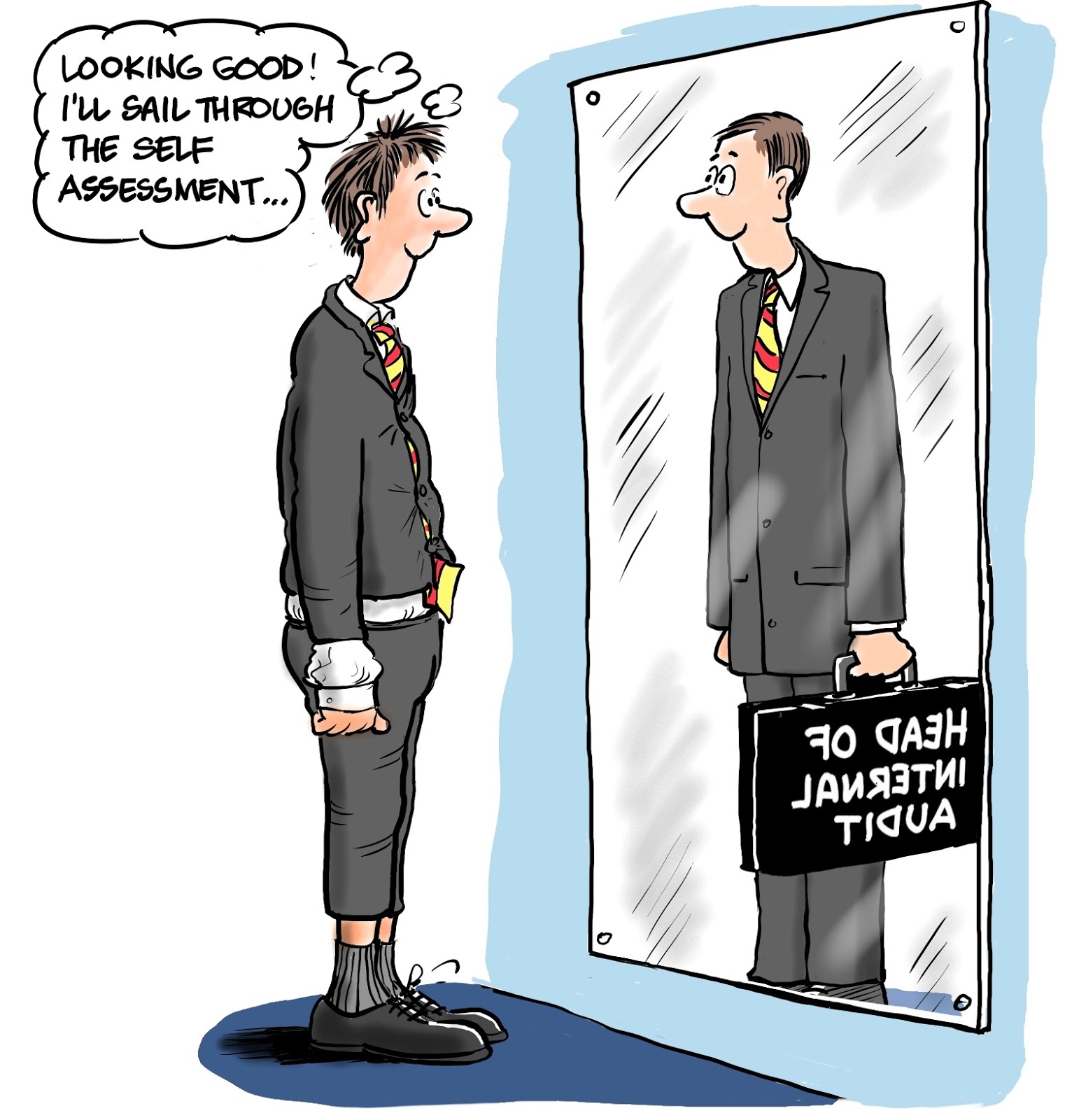
    What Good Assessment looks likeLooking-good-Ill-sail-through-the-self-assessment.jpg

    Last week, courtesy of ISA Professional Development, Liz Green and I presented our new course on Assessment and Tracking up at Lady Barn School in Cheadle. As part of my contribution, I updated my audit of What Good Assessment looks like with the recent recommendations from the NAHT commission on the same, published 13 February 2014. Please let me know if you find it useful!

    Up and coming changes in Teaching of Modern Languages at Primary school

    From this September, all state Primary Schools are expected to teach MFL for KS2. My concerns about this initiative are not that in principle we should not be adding some energy to ensure the English focus a little more on the acquisition of other languages, but the practicalities of ensuring that a whole nation of youngsters are not switched off learning languages by an inept implementation. Last Autumn, Peter Downes, Project Director, ‘Discovering Language’ for the Association of School and College Leaders spoke at the Languages Show live on Implementing Foreign Languages in the Primary curriculum from September 2014. You can find his presentation here, and my text version here.

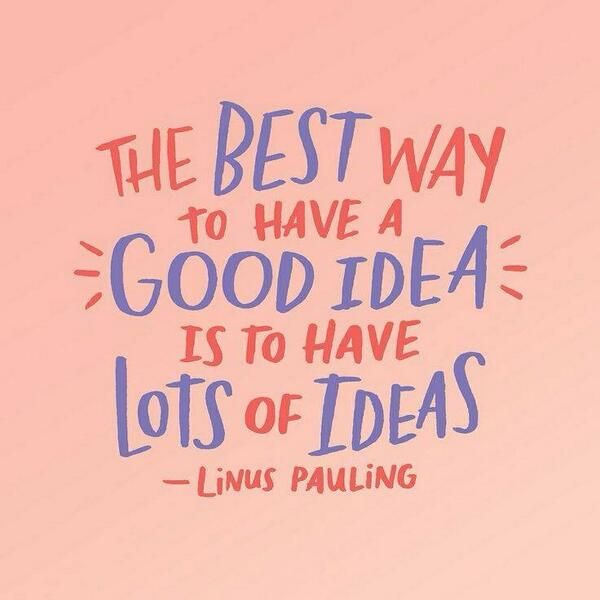
    It is all about Good Ideas

    Nice poster, from the pen of double Nobel Prize winner and Educator, Linus Pauling. It keeps me working hard.

    Here are some I picked up over the last week…

    Why sharing ideas – tips using Twitter

    A Guidebook to social media in the classroom

    Why daydreamers will save the World – an interesting take on Musing.

    And finally,  How awful can teacher CPD look like – a parody surely of Teacher training.

    Have a good week and look after yourself and your colleagues.

    James Wilding

    jtw@clairescourt.net jameswilding.wordpress.com