Category: Possibly related posts

The various letters sent to the wider school community during the school year.

  • Keeping life in perspective

    “We can complain because rose bushes have thorns, or rejoice because thorn bushes have roses.” Abraham Lincoln

    Since my last blog about the refugee crisis, appalling tragedies in the Lebanon, France and Mali have taken place. Because we hear so often about indiscriminate violence in parts of the middle east and africa, the shock value has been diminished. Not so that of the Paris bombings, not just because of the extraordinary and callous nature of the crimes, but also because of the apparent failure of the various European security forces to react to very good and timely warnings of intelligence.

    I returned to work last Monday and set about notifying all in our community by email that we were having to reassess the risks around our various trips and residentials planned for the next few weeks. In consulting with my colleagues in leadership, I had to bear in mind not just what was safe to do given the change in circumstances, but what was morally right as well. As our Prime Minister made clear at the time, to give into to terror is an admission of defeat.

    The trouble is of course, that as an individual, I can be brave, and stand shoulder to shoulder with others in our country and community. That’s a legitimate choice I can make, and down to me. It has certainly been more awkward to consider how best to act when the government risk factors get lifted to the highest level, because of course I am authorising decisions that affect others, both adults and children. So in postponing a planned trip to Lille, on the very edge of the man-hunt for one of the missing terrorists from the Paris assaults, whilst it seemed highly unlikely anything would happen, it is quite a comfort subsequently to receive advice from government that travel to France at this stage is unwise.

    As the days progress, we find that our day trips to London and elsewhere have resumed safely. It is still much more difficult to manage evening visits, simply because our own community at school is expressing considerable concern and disquiet as well. The consequences, should an incident happen are too terrible to think about; like many other schools and colleges, we have to think not just of our students but of our staff as well, who themselves have their safety and those of their families to consider as well.

    Lincoln’s aphorism helps perhaps give a suitable perspective to the problems we face; we have been reintroduced to the notion that life actually has rather too many barbs about it for comfort just at the moment. As time passes and the security forces enable us to feel a greater sense of safety, I am sure our sense of adventure will grow once more. But for the time being, I’ll stay cautious for our adults and children, because I do take my responsibilities to care and safeguard others really seriously.

  • 21st Century Learning – “Whoever saves one life saves the world entire.”

    For most people wherever they are in the world, this is a time of greater uncertainty than usual. For those of us based in the UK, so long as we stay at home, then perhaps the unexpected is largely explainable. But any traveler going abroad now faces a world in which a very good deal is not yet know. I copy alongside an infographic from the Daily Mail reminding pilots of the places they cannot fly over once leaving our shores; lots of red and big bold lines makes the image seem really quite threatening.  It’s quite obvious that pilots and air traffic controllers need to be very alert, not just because there are thousands of planes up there in the airspace, but because there is so much more now to concern them.

    The growing threats caused by instability around the world  is bringing severe challenges to learning communities, such as those found in schools, colleges and universities. Rolling out here at Claires Court amongst our staff and for use with our pupils is work wrapped around the ‘Prevent’ strategy, through which we hope we can raise our community’s consciousness and ability to respond to the ideological challenge of terrorism and the threat from those who promote it. I quote further from the government’s own Prevent publication: “In doing so, we must be clear: the ideology of extremism and terrorism is the problem; legitimate religious belief emphatically is not. But we will not work with extremist organisations that oppose our values of universal human rights, equality before the law, democracy and full participation in our society. If organisations do not accept these fundamental values, we will not work with them and we will not fund them”. 

    The introduction to this document was written by the Home Secretary, Theresa May MP, our own representative for Maidenhead in the House of Commons. She has a challenging job, made less easy I dare say since she has to manage substantial ongoing change in the Police Force, to take costs out whilst maintaining or indeed enhancing the provision of law and order. I see Police Forces are beginning to deploy drones to assist with law enforcement along with other high performance technologies such as heat seeking and movement detection. Such rapid technology change will require new skills to be acquired, not just a reduction into lowly paid security guard work, and there’s the rub. Are our security forces of the calibre to be trained? Where once we had policemen patrolling our streets, we now have council uniforms with full fluorescent flashes to cover this mundane activity. So long as we are a law abiding society, that’ll work I guess.  But I fear the plans to cut back even more sharply on our public services just now are ill-judged, and here’s why.

    Seeing now the settling of very substantial groups of Syrian and other nationality refugees in other European countries, training educational communities to look out for needles in a hay-stack (spotting radicalisation) seems very much off the mark. Austria, Germany and Sweden are preparing local towns for a mass influx of hundreds and thousands, displaced children and lone adults, as well as families or friends, This new population is going to be there into the medium/long term. As one headline this week (again from the Mail on-line) makes clear, “First of 750 migrants arrive in tiny German village with a population of just 102 (including a neo-Nazi councillor) bracing itself for 700 PER CENT population hike”.
    Read more here.

    In the living memory of the oldest German citizens, these mass migrations they are seeing now are on a similar scale to those that arose at the end of World War 2. Some 2 million Germans for example left Czechoslovakia, and on most borders in the Baltic and the Balkans between 10,000 and 20,000 Germans were being unceremoniously ousted from their adopted homes.  Some 500,000 alone had to leave Yugoslavia. At the same time of course, the departing Germans left homes, land, jobs etc. needing to be filled; the Russians now in occupation of Poland forcibly removed 2 million to the west, whilst moving almost as many Ukrainians and Belorussians eastwards to take up the work available in the USSR. Anyone able to move to the ‘free’ world west of Germany did, some 900,000, and the UK took its fair share.  For example, the ex-pat  polish population local to Maidenhead and Slough grew heavily as a result.  I’ll not extend the History lesson further – feel free to read more on this BBC refugee article; suffice it to say my own father’s post war experiences as a tank commander in Germany included witnessing the mass repatriation movements both west and east.

    I take seriously my responsibilities to ensure that our school community learns and understands how to manage the risks we face from unprecedented terrorist threats, and to do our best to prevent radicalisation in the first place. However, because the political damage would be so great, currently I see no leadership from our government or parliament in how we are going to assist the northern hemisphere with the largest forced migration seen this century,  bigger even dare I say than that of the Second World War.

    The EU predict some 3 million refugees will be with us in Europe by this time next year, and ‘batten down the hatches and don’t let them in’ simply won’t work as an educational message for the children in our school and in the UK more generally. There are vast numbers of displaced children alone who will need care and accommodation. We have precedent set on our country’s willingness to assist refugee children. In the 9 months prior to the outbreak of the second world war, the UK accepted 10,000 Jewish children from the Nazi regime (Kindertransport), and as events turned out, most were the only members of their family to survive the Holocaust that then swept through the Jewish community during Hitler’s rein of terror. What we as a nation did then brought us much international regard later on. Likewise, largely because of the remarkable 1993 film starring Liam Neeson, Schindler’s List, 7 times Oscar winner, we have learned that brave men and women living in Nazi occupied territories that assisted in the successful evacuation of Polish-Jewish refugees. The film depicts the real life story of Oskar Schindler’s life in Krakow, where as a businessmen he managed to save the lives of 1200 jews, by providing them with work in his ceramics factory.  The close of the film shows Schindler travelling to the West away from the advancing Russians,  hoping to surrender to the Americans. Wikipedia’s entry close on the film says this:

    “As a Nazi Party member and war profiteer, Schindler must flee the advancing Red Army to avoid capture. The SS guards have been ordered to kill the Jews, but Schindler persuades them not to so they can “return to their families as men, not murderers.” He bids farewell to his workers and prepares to head west, hoping to surrender to the Americans. The workers give Schindler a signed statement attesting to his role saving Jewish lives, together with a ring engraved with a Talmudic quotation: “Whoever saves one life saves the world entire.” Schindler is touched but is also deeply ashamed, as he feels he should have done even more”.

    I am actually much more challenged by the impending Refugee crisis soon to be with us. No amount of technology, nor the smooth words of politicians will hide from our country the very real challenge it will be asked to face to engage with and support the relocation of its fair share of 3 million refugees. Unless I am very much mistaken, the statistics already show we are relocating some 600,000 a year into the UK, and if in public we don’t accept the refugees, we’ll be having to home those in Europe displaced by that refugee flood nevertheless. It happened before in my parents’ life time, and it’s coming back now. I wonder who will deserve the plaudits this time?

    “Whoever saves one life saves the world entire.”

  • Educating the heart…

    Listening to the radio, I heard recently that wisdom is lost to the young because they cannot see. I was somewhat taken aback by this statement, because my regular contact with children at Claires Court provides me with an awful lot of evidence to the contrary. It’s fair to say that children’s experience is driven very much by their family, school, faith and community channels; for example, if they spend their Sunday mornings at Mini Rugby for 7 years, their thinking about the purpose of Sunday is going to be very different from those that go to Morning Service or Shul. Nevertheless, the vast majority of the children here reach out to support and protect others in ways that are typical of the generosity of young minds. However, I do see problems. Firstly, as children enter their adolescent years, their growing desire for independence from the adult ideas that surround them does become noticeable. Separately, there is a paucity of agenda of many adults who lead education who seem to focus solely on the academic outcomes for children, without thinking about the broader skill base learners need to acquire in order to live successful lives as independent adults.

    Others speak in similar negative ways – here’s the Dalai Lama’s take on the matter: “Real change is in the heart, but in modern education there is not sufficient talk about compassion,” the Dalai Lama told a conference entitled Educating the Heart held in Vancouver, British Columbia, during his 2015 fall tour of North America. “Through education, through training the mind and using intelligence, we can see the value of compassion and the harmfulness of anger and hatred.” You can find a much fuller article by Melvin McLeod on the Dalai Lama’s thinking on UK tour here.

    I guess I am particularly lucky to work in a family of some 370+ independent schools where the education of the whole child is paramount, where year by year our biannual conferences focus on that common language that brings educators into the profession, to teach, to make a difference, to lead learning for all not just for those that find it easy. As Chair of Professional Development for ISA, I have made it my mission to promote the essence that underlies successful education, to place children at the heart of what we do and support their growth of intellectual and spiritual development using tools honed by evidence and ethics. The latter is important by the way, as we do not permit corporal punishment for example as many of the more successful far eastern education systems still do.

    It’s interesting to distinguish what I mean by children at the heart, and what perhaps others pejoratively describe as child-centred theories of education. I am not connected for example to the principle that children need to learn at their own speed, for if that were true, we would not have age-related boundaries for driving, alcohol usage and sex, and we know that intellectual development is only part of the growth in wisdom we see as adolescents mature. Emotional intelligence is important too, as is the ‘fledging process’ that human families take their children through as they seek to leave home and set up home for the first time. The genuine success the English Middle class have in using the University destination for 3 years is really notable; as a country we are much more successful in graduating our own children (as measure in the conversion time to degree award and chronological age of graduation) compared with our counterparts in the USA and Europe. In short, there is a dynamic balance between pace of education and achievement; many more able children need time too to catch-up before moving on. This is Singapore’s positive gift to the world, ‘do less, and do it better, and don’t move on until that’s so’.

    Years ago, one of the great Professors of Education, Tedd Wragg of Exeter University was contracted by Singapore to identify why their students were so good at passing Accountancy part 1 and so bad at passing part 2s. Part 1 was all about adding up the

    spreadsheet on a business (let’s say a leisure centre, his example),and part 2 was a test of the advice the accountant could give the business based on the evidence the numbers showed. To his audience (ISA Annual conference 1990s) this came as no surprise, experienced as many of us were in educating multiple nationalities in our school. There is something innately British about being a shopkeeper, and our children almost from the very start are taught how to set up and run businesses. Nursery schools around the land have make-believe as part of the children’s play, and this is embedded in the Early years Foundation stage and we should be hugely proud as a nation that we have this as our starting point. Singapore noted that from an early age their own curriculum was jam packed with content at the expense of skill acquisition, reacted really positively to Professor Wragg’s advice, and we can all reap that benefit of the changes they made for example to their maths programme now.

    Back in April of 2010, the Icelandic volcano of Eyjafjallajokull erupted with such ferocity that Europe’s airlines were grounded for 6 days. Claires Court had just returned to work for the summer term

    and our Boys Reception classes had just started using their new outdoor garden, complete with hundreds of wooden blocks. Within minutes of their occupation, and unrelated to any adult intervention, the boys were building roads across the bark laden floor in an East West location. “What are you doing, chaps?” asked the Head, Jeff Watkins. “Building runways, so the airplanes can land safely” came the reply. This is brilliant anecdotal evidence that children can see challenges the rest of us can’t and respond and learn. We don’t have to proscribe the learning opportunities available, though do need to prescribe that we have breadth, diversity and challenge.

    The danger is that external pressures on teachers and school leaders to ensure they perform and deliver against targets becomes the reason why they come to work. The measurement of outcomes at the expense of process is one of the great corrupting features visible in education and we are served very badly if schools are monetised by these principles. The growing permanent exclusion of unwell children from more successful schools for fear their presence damages their educational statistics is well known in England, and as one of the more influential state headteacher think tanks, the Headteachers Round Table make clear, schools need better accountability systems than just counting who gets the best pass rates in national exams.

    It’s Fireworks night at Claires Court on Saturday, SL6 4QQ, and we expect as

    ever a fantastic turnout of our community for our first mass bash of 2015-16. Year 10 and 11 are very much in charge of the extra fundraising stalls, and we have interesting innovations from the STEM club and Young Enterprise to experience. For the first time we have Metcalfe*’s skinny popcorn to run alongside our Children’s film showing and live Rugby World Cup. Yep, I might be OK about children’s empathy for other’s less fortunate, but I am not yet convinced all are completely sound on sweet and sticky.

    *www.metcalfesskinny.com

  • Principal for the Day – my work through the eyes of a boy aged 13 and three-quarters…

    It is a well know fact that the Headteachers within Claires Court have on occasion had their ‘lives’ auctioned to the highest bidder at the PTA Summer Ball; and my esteemed colleagues have then returned to the ranks whilst their ‘Headteacher for the Day’ has ruled the roost. To be frank, nothing as yet has gone wrong; the displaced headteacher has stayed close to the new incumbent, and made sure that only good things have happened as outcomes from their tenure.

    For the first time in June 2015, the role of Academic Principal was also in the Auction room, and pleasingly (for my ego at least) it sold really well. The winning bid was for Nathan, aged 13 and three-quarters, and on Tuesday 29 September, Nathan was able to take up his role for the day. Nathan visited all three of our sites and all divisions; it was most noticeable that he felt most at home with the Year 9 girls, who captured him at lunchtime and squirrelled him into a Biology lesson for the afternoon. I must confirm that at no stage during my career have Year 9 girls, or indeed any other group of children captured me for an afternoon, so more power to them for their powers of persuasion.

    The day commenced at Senior Boys, with Nathan (AP4D) acquiring a suitable ‘Voldemort’ style Gown to give him a sense of my normal ‘noble and dignified air’ (ahem), prior to travelling across Maidenhead to present to Mr Rowan at CCJB a case of Samsung tablets for his work with computing and digital literacy. AP4D then worked with Year 6 as they practiced their manoeuvres prior to acting as Open Day guides, before returning to SB to take part in a video morning with the team from Discovery Education. Pleasingly Discovery Education were content to video me asking of the AP4D his views on the role, as well as his use of digital technologies. I hope to post a clip of the interview once it has been processed by their crew.

    We then ‘teleported’ via my iQ to College, where Year 5 girls awaited to share with the AP4D their practice for Harvest Festival for Thursday and of course Lunch. Meanwhile, I was sent back to SB with some female Discovery ambassadors so they could be interviewed, so I am less aware perhaps of the antics  of my ‘doppelganger’.  In my absence it appears AP4T was persuaded to award the Head of Sixth Form and his team substantial pay rises, and to command that a regular commemorative day off named in Nathan’s honour was to be founded.

    The AP4D then encountered my brother Hugh, Administrative Principal at Claires Court, and both enjoyed a photocall.  At the end of the day, I ‘chauffeured’ Nathan home to meet with his proud parents, who had not in their wildest hopes for Nathan seen him appointed as a headteacher at such a tender age.  Actually, that’s why they bid for the ‘placement’ at the Summer Ball in the first place.

    A short film of Nathan’s day can be found here – a mash-up from the real APs camera!

    P.S. Sadly for the Head of Sixth Form, those salary changes were reversed the next morning, and AP4D’s annual holiday has been permanently rained off.

    Short video of Nathan, Academic Principal for the Day

  • “Nothing is really work unless you would rather be doing something else” James M. Barrie

    It is that time of year again, dear Reader, when it really is very difficult not to enjoy what I do. The sun is thankfully out, in every crevice of school and diary there is something happening that is both a celebration of our children’s skills and achievements and a testament to the dedication of teachers and parents, whose hard work and moral support has ensured that ‘something’ was in place come what may.

    You may have read an earlier blog in which I mourned the loss from my weekly schedule of every single one of the activities that brought me into teaching in the first place. I love both the immediacy and urgency of the classroom and playing field; what we do today has a real impact upon a child’s engagement and willingness to learn, share and lead. The classroom is that private space in which the rest of the business of school and life can’t get to you, and where, shorn of those worldly connections, you can learn of children’s dreams and how to assist them to possibilities beyond their imaginations.

    Yet perhaps the thing I am more proud of is the quality of the Faculty, those adult employees be they teachers, support staff, caterers or cleaners, who every day come together to make what I aspire for personally in my classroom becomes a very definite probability in most classrooms. You can have the shiniest gear stick, but if all of the moving parts of your education vehicle are not moving in harmony, then all is but vanity. Perhaps the only thing the shiny knob is worth then is as a mirror to reflect your embarrassment.

    Last weekend saw both Art on the Street in central Maidenhead during the day and the PTA Summer Ball in the evening, both remarkable events in their own right, the like of which we don’t often see. As one of the proud sponsors of Art on the Street, I notice that pretty much every political party in RBWM announced just how proud they were to support AOTS; funny that in passing, because in its entire lifetime, the local politicians have never passed over even £1 towards meeting the financial costs that AOTS requires so that this 6 monthly Art market ‘pops’ up in our town. It requires herculean afforts, weeks of planning and specifically on Friday and then from 7am Saturday morning, to set up gazebos and display walls the length of the High Street, and additionally to take-over some of the empty shops, in our case to run hands-on art sessions for younger children, who inspired by the Market want to get their hands on paint and start creating their own .work of art’. The most inspiring thing for me was the ‘teaching’ given by our young Art award leaders to so many other young children. It seemed that long after interest in the market itself had waned, the artists of the future were still ‘hard at painting’ – now that makes me a little proud.

    Over recent years, the PTA  Ball has been hosted out to professional venues such as the Holiday Inn, Crowne Plaza or further back even at LegoLand. This year, the College PTA committee took the Art on the Street approach, popped up a Marquee for 300, but big enough for 900, in which we were able to celebrate the vibrancy of our own parent teacher community and additionally raise considerable funds to support the PTA in their broader work. I know I speak for all those involved with the Ball just how proud we are to have been led by Mrs Towell; her willing Ball committee partners want to do it all over again next year, and one of our best events has at long last been brought home to the school grounds. Now that makes me feel proud too.

    And so this week continues with sports events, theatre trips, Medieval pageants, Sixth Form Art and Photography exhibiton and so very much more, and last weekend’s Ball was of course just a curtain raiser for this Saturday’s Summer Fete, a multiple splash of everything for everyone, with perhaps an attendance of 1500 or so expected to try the Pimms, experience the fair stalls and converse and commune with family, friends, old and new (Football tourney for younger boys starts much earlier in the day), but we’ll be opening the Fete proper at 12 noon. I know just how much effort CCJB PTA Chair, Emma Robertson and her team have put into the event, with excellent support from the other PTA groups also guaranteed, most notably those that run the BBQ and Bar, and the Sixth Form who directly manage so much of the grunt we need on the 24 hours before the Fete opens.

    In place of labs (I used to teach Science) and pupils, I seem to have swapped into that bigger learning space outside the classroom in which I am able to interact with the weft and weave of our wider learning community, indeed with many other schools and colleges across the country too. Yes I have been at school this week, and in addition I have also been training 40+ School leaders in how to inspect and be inspected, and my adult ‘students from across schools in the UK seem to have been really appreciative of my work, freely given it must be said as our way of collaborating to help all schools improve. My brother Hugh and I have been working too with architects and builders as we nudge further forwards towards our final plans for realising a new school on the CCJB campus. We have been at this planning malarkey for almost 2 years now, and it becomes increasingly obvious to everyone we work with that:

    “Not only do you and your brother know what you want, you also know what you are talking about”. That’s nice to hear other professionals ‘take’ on our work, and yes that make me a little proud too.

    J.M Barrie wrote the quote that heads this blog, and there is definately a Peter Pan somewhere in me when I give other people advice on how to find their way in the world. Peter said when he directed others in how to get to Neverland, “Second star to the right and straight on ’til morning”; I know that if those that listened understood and believed what Peter said,  they could not go wrong.  Now I know its a fairy story I’m talking about here, but it is also famously a metaphor for the real world that adults and children find themselves, all too often constrained by the social and economic realities of life. As George Bernard Shaw wrote of Barrie’s book that it was on the surface a holiday entertainment for children, but deeper down, really a serious play for grown-ups.

    My closing quote aligns with last week’s blog, because I truly believe what works best is to just get on with things and get them done; that’s how to succeed on purpose. That fact that actually, in the last 7 days everyone around me has done so many amazing things too does rather more than nourish my vanity and pride; it supports my eternal, relentless optimism that good things happen in handfuls for those that get stuck in.

    “Dreams do come true, if only we wish hard enough. You can have anything in life if you will sacrifice everything else for it.” Peter Pan.

  • Closing thoughts at the end of our Summer Term 2011

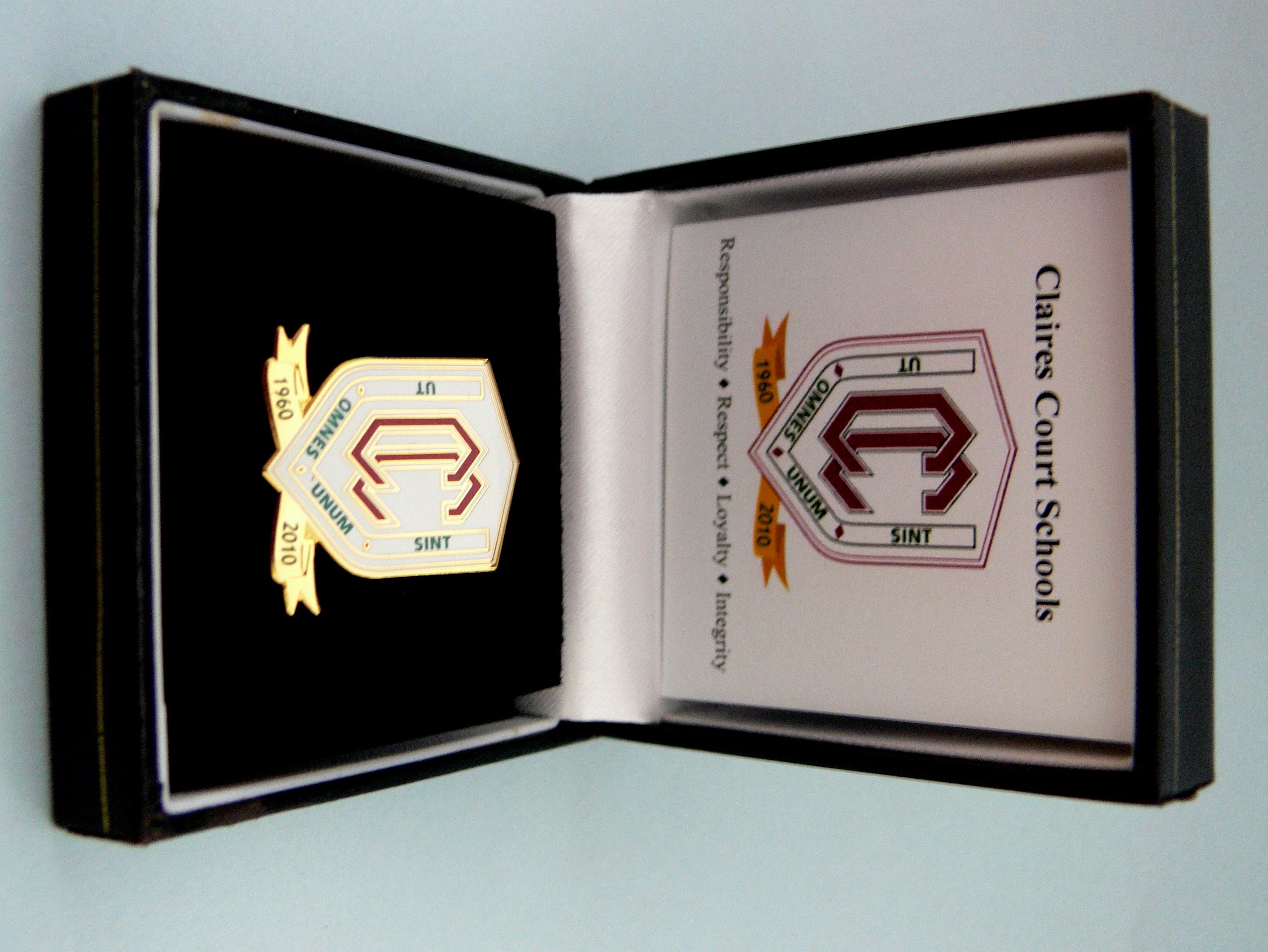
    As our Golden Jubilee year comes to an end, it’s nice to reflect on the many events enlivened by our celebrations, from the formal occasions such as Speech Days and Concerts, through to the major social events of the school year. Many of the staff and pupils have become very closely attached to their Jubilee Pins too, made possible thanks to the generosity of our two Parent/Teacher bodies.

    This term, three major events have helped bring our school community closer together: the May Ball, the Summer Fete and most recently, the Golden Jubilee Finale at our Taplow playing fields last Saturday. The College PTA and the Claires Court & Ridgeway Society have worked extraordinarily hard on our behalf this term, organising events, clothing sales and fund raising in equal measure. I am delighted to report that their efforts have been rewarded, not just by the enthusiasm with which you have supported their work through ticket sales and attendance at events, but also in raising some £25,000 to provide medals, other prizes and awards, and considerable capital for the provision of new sailing boats, computer trolleys and floodlights to come while more safeshades, a scull, cricket nets and sewing machines are just a few of the myriad contributions made over the past year. At the end of this academic year, Amanda Howman and Dermot Woolliscroft, the Chair and Treasurer of the College PTA, and Chris Basley, vice-chair of the Ridgeway Committee, are standing down having served with great distinction for a number of years. Vacancies on our PTA committees exist, their Annual General Meetings will take place in September at Ridgeway and all parents interested in assisting this valuable work are invited to put their names forward for election. The AGMs are followed by a short combined social event at which the Society Award is presented to those pupils or parents who have made a significant contribution to our development as a school.

    With the reporting of public examination results still to come, I am sure there will be good news for many. Meantime, one of our Year 9 girls at the College, Amber Hill, has performed with such distinction with her shotgun that she has been selected to shoot for the England Ladies Skeet team this autumn. Fellow College Year 9 athlete, Ellie Rayer, has continued in outstanding form after winning the U15 National Indoor Multi- Event Championship at Sheffield; is now ISA U15 champion at 200m, Javelin and Relay, came 2nd in the Southern Multi-Event Championship and will compete in the All England Schools finals in September. Despite the copious rain since half term, the boys have been able to shine at their cricket with the Under 15 side winning the County Vase, defeating Newbury’s Park House in the final. Congratulations must also go to our past pupils now graduating from University; to Phil Clapp (Reading) and Guy Swadling (Loughborough) persevering with Rowing and Rugby (championship side Esher) respectively as they seek further sporting honours, and most notably to Josh Cremin (Southampton) and Luke Selzer (Warwick) who have both gained firsts in their Biochemistry and Physics Degrees. Josh is moving on to the University of Cambridge where he has won a salaried research post, studying mitochondrial proteins for his PhD while Luke is staying at Warwick, where he has a Doctorate research post into Solar Flares. Before then, Luke who is also a talented artist, will be stewarding our summer exhibition of Claires Court Art and Photography in the Nicholsons Centre in Maidenhead alongside former pupils, Amanda Frith and Peter Robinson.  

    It seems that no week goes by without the various weekly bulletins carrying announcements of some extraordinary achievement or other by our pupils. For many, this can only happen because of the work of exceptional teachers and coaches across our sites. I have already written at length of Mrs Lizbeth Green’s retirement after 7 years of distinguished service as Head of the College. Already, her successor, Paul Bevis, has become a well known face as he has eased himself in to various gatherings and meetings this term, and we look forward to a new chapter in the College’s History from September. Mrs Green departs in particularly good company this summer. Richard Milner-Smith, one of her assistant heads and a figure well known across the secondary year groups and the Sixth Form for his outstanding Geography teaching and sports coaching, departs to take up the deputy headship of another independent school, Moyles Court, in Hampshire. Mrs Margaret Taylor is retiring after 20 years as class teacher of Year 4. Mrs Sally Woodhead is also retiring from her position as ICT teacher. Stepping down from Ridgeway after 28 years as Special Needs Co-ordinator is Eileen Goford, an institution in her own right for leading learning, Eileen also founded and has continued to lead Ridgeway’s extraordinary chess provision, bringing on county and national champions with the best playing for England. Ridgeway has won the Berkshire Primary Schools Chess Association’s ‘A’ League for seven of the last nine years, and is the only name on the Under 9 cup! Also retiring from Ridgeway are Marion Bintcliffe, another remarkable teacher, after 13 years’ service most recently of Year 5 and founder of our Chembakolli day, and Louise Walker after 8 years leading our Reception class and an ace athletics and cross country specialist. From Claires Court, Chris Hill retires after 7 years teaching English and Fishing, one of the stalwarts of the Claires Court kitchen gardening fraternity and lead chef on the Year 9 outdoor education week. Also moving to develop his career in new directions is Julian Bown after 19 years of instructing our tyro and more experienced drummers and director of our accomplished Samba Band. A full list of those leaving us from each site can be found on the relevant end of term bulletin that accompanies this newsletter.

    Given the concern currently being expressed about the ethics and morals of British journalism, I hope those in our own community feel that we do our best to live up to the values that we promote – we certainly try hard! Schools are learning places and that does not happen without failing – win or lose, our teachers and administrators have provided brilliant support throughout the year and for this Hugh and I are extraordinarily grateful. In particular, we appreciated the call of duty to remain at work this last month when the consultation over publicly funded retirement benefits lapsed into confrontation at national level. Please be sympathetic to both sides of the argument when discussion comes to a head later this year – in the meantime, I know we can continue to rely upon the loyalty of our staff to work your sons and daughters to their very best! You can find more about our school life and matters educational from my blog, A Principled View, (see http://www.clairescourt.com for links) in which I have some fun as well as express some cogent views on my educational life. This Jubilee year closed with a wonderful celebration at our Taplow playing fields, in which 800 or so families, teachers and support staff enjoyed the atmosphere, the music, the food and all the side shows and activities, blessed by some welcome sunny weather. The event gave many a first sight of our new playing fields, coming on nicely in this warm but wet summer.  Among more immediate projects planned for the summer break include the enclosing of the courtyard at Claires Court to give more internal floor space off the dining room and an expanded Room 8 above, a remodelling of the top floor at Ridgeway to house a revamped library and an ICT provision for a full class, and at College the completion of the Hall refurbishment, replacement of the screen to the Lower School ground floor entrance from the Junior playground, and a remodelling of the lobby, dining room and first floor in the main house of the College.

    It is worth pausing here to reflect that the main house of the College celebrates its 120th birthday in the autumn. When opened in September of that year, it provided purpose built accommodation for the then Principal, Andrew Millar-Inglis, who ran Norfolk Park School from his premises at Inglewood on The Crescent. The College main house, Library and IT classroom are therefore probably the oldest school buildings in Maidenhead still in use. If this is not reason enough for  celebration, then consider the advertising in the autumn of 1891 of the “new” Maidenhead College which stated that it was “established as Norfolk Park School [in] 1861.” We have not yet been able to verify this claim (the Maidenhead Advertiser only began publication in 1869) but if true, then September sees us with a 150th celebration on our hands! The copy also boasts of “Modern Premises. Experienced Teaching. Individual Attention. Moderate Terms.” claims that we believe we continue to deliver today.

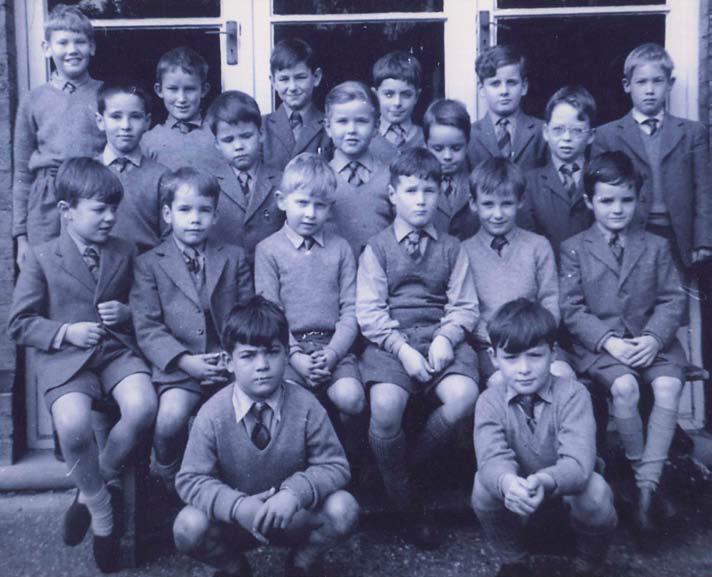
    So we close this year with 1005 pupils, 116 teachers, 124 support staff and last but not least, two very proud School Principals; as 2 of the first 19 pupils attending Claires Court Preparatory School for Boys in 1960, we have seen how far our enterprise has travelled, from small boarding school to major independent spanning all ages and abilities, over the intervening years. Our aim for the next 50 is to become the finest non-selective independent school in the world; and with the incredible support of you, our parents, our pupils and our staff, I hope we’ll get there rather more quickly than that!  

  • The gap between the UK and the USA just widened a little more…

    Oscar Wilde wrote: “We have really everything in common with America nowadays except, of course, language.” (The Canterville Ghost – 1887).

    124 years later, I suspect that we are also separated by our literacy.  In my recent reading around the use of ICT in education, I have become unnerved by the news that so many schools, colleges and education districts stateside have removed hardbacks from their offer, because they have switched to eBooks instead. Some US Independent schools have paid for their move to iPads by removing the cost of text book provision.  Obviously because I blog, I am used to reading and writing on-line, I love the fact that eMaterial is easy to search, mark up and link. But that does not mean that such skills and utilities replace the printed word, merely supplement it.  Across the globe now, University research is showing that proper books are needed for deep reading, and their students report that with screen alone, they have trouble “learning, retaining, and concentrating” – see here for one such study – http://goo.gl/oLOII.

    It gets worse of course.  Now the same authorities are not using pen and ink in the classroom, they don’t believe junior school should teach handwriting. I understand that over 40 states have now removed this from a requirement in their taught curriculum.  I can’t understand why responsible authorities would remove the acquisition of such a skill as a requirement.  If children don’t learn to write, how on earth are they going to work in the real world, particularly when they are ‘powered’ down.  Typing is simply not the same as writing; the fine motor control we develop as we learn to shape letters and characters is essential in all disciplines, practical as well as academic. No learning activity is successful unless it has purpose; the huge benefits that are gained by acquiring scripting skills far exceed just the skill of writing information down. For me, probably the most important benefit of teaching handwriting is that it links directly to ‘disciplined learning’ – in which children are rewarded by the quality and accuracy of outcomes.  As a post on the American website “Teach handwriting” concludes “The lack of teaching proper handwriting from elementary school first grade is just one major mistake in education; the prevailing attitude seems to be that school is “fun”, let’s just not challenge those “poor kids” As a result it is obvious they have no discipline, no focus, no desire , can’t write, can’t read, can’t calculate, can’t retain information”.

    Following a BBC Newsround report this week that that pupils living in Indiana in America don’t have to do handwriting lessons anymore, children were asked to give comment to this news.  I have cropped the replies up to 15 July 2011 here – http://goo.gl/MuEml . The almost universal response from children encourages me hugely – it’s not just about the importance of writing itself, but about what your writing says about you too! As one young correspondent, Duan concludes: “In China handwriting skills are even more important than in other countries- handwritten Chinese words look more beautiful than words typed on computers”.  Many years ago in the sixties, my mother Josephine Wilding moved Claires Court from cursive hand to italic; perhaps not so good for flourishing signatures, but excellent in terms of efficiency and time-management. The jury will remain out on which is the best for speed and accuracy – cursive, italic or block; partly because as we know, the more academically high achieving  you are, the less readable your hand – this must be true because no-one can read the handwriting of Doctors in general practice :0)!

    If books are gone, and handwriting practice is ‘off’ the curriculum, then what’s the position on teaching spelling stateside? The obvious answer is that teachers have given up on this too, but that’s not right. Teachers in US schools remain serious about teaching spelling, I think because it better fits their psyche to test, it’s easy to demonstrate that a ‘good job’ is being done.  Ny the way, there are approximately 600,000 words in the English language. That  means, if the average person uses 10,000 words on a regular basis, there are about 590,000 words which he uses less frequently, which usually means they won’t be spelled well.  “It clear that establishing an effective spelling curriculum requires an integration of the three basic approaches to spelling instruction: Phonetics instruction, memorization of high frequency word lists, and using functional writing to master spelling words and skills. It is not simply a matter of combining one or two of these approaches, it requires a balanced integration of all three approaches” or so writes Beverly L. Adams-Gordon, Washington-based teacher and author, mainly on writing and spelling, Whilst there may be good focus on the acquisition of spelling skills now, in the 1990s there was a huge push to reduce the ‘pain’ for children, based it seems on the all-conquering arrival of the electronic spell-checker. As a humorous warning to users not to put too much faith in them , Jerrold H. Zar had this to say in 1991 (subsequently expanded in 1992 with help):

    Candidate for a Pullet Surprise

    I have a spelling checker,

    It came with my PC.

    It plane lee marks four my revue

    Miss steaks aye can knot sea.


    Eye ran this poem threw it,

    Your sure reel glad two no.

    Its vary polished in it’s weigh.

    My checker tolled me sew.


    A checker is a bless sing,

    It freeze yew lodes of thyme.

    It helps me right awl stiles two reed,

    And aides me when eye rime.


    Each frays come posed up on my screen

    Eye trussed too bee a joule.

    The checker pours o’er every word

    To cheque sum spelling rule.


    Bee fore a veiling checker’s

    Hour spelling mite decline,

    And if we’re lacks oar have a laps,

    We wood bee maid too wine.


    Butt now bee cause my spelling

    Is checked with such grate flare,

    Their are know fault’s with in my cite,

    Of nun eye am a wear.


    Now spelling does knot phase me,

    It does knot bring a tier.

    My pay purrs awl due glad den

    With wrapped word’s fare as hear.


    To rite with care is quite a feet

    Of witch won should bee proud,

    And wee mussed dew the best wee can,

    Sew flaw’s are knot aloud.


    Sow ewe can sea why aye dew prays

    Such soft wear four pea seas,

    And why eye brake in two averse

    Buy righting want too pleas.


    by Mark Eckman and Jerrold H. Zar

    Back here in Blighty, good schools still take all three aspect of teaching literacy seriously, and real books continue to live at the heart of our work. At the end of term speech days, the prep. School audiences received two treats; at the boys’, headmaster Jeff Watkins read extracts from It’s a book in which a big ape clarifies for a clever donkey what you can and can’t do with a book (get a taste of that here – http://goo.gl/yVVF7 ), whilst at the girls’, Author Helen Pielichaty warned our leaving Year 6s of what lies ahead at secondary school, by reading from her ‘Simone’s diary’ , a perspective from a sharp Year girl following the transition. Marvelously Helen blogged about her impending arrival at the College, and gave feedback too – read that here:  http://goo.gl/3l36K .

    The English Language, whether of the US or UK variety, wriggles about left, right and centre. I have absolutely no doubt that on both sides of the pond, good schools teach English, the acquisition of its skills and the understanding of its literature seriously well.  When whole states decide to eliminate curriculum essentials, it has to be a worry.  I’ll close with a serious warning from Charles Duncombe, one of Britain’s serious entrepreneurs given last Thursday “Poor spelling is costing the UK millions of pounds in lost revenue for internet businesses”.  His fears are backed up across the CBI and industry at large – “42% of employers are not satisfied with the basic reading and writing skills of school and college leavers and almost half have had to invest in remedial training to get their staff’s skills up to scratch”.  Sadly, I am not surprised!

  • Ever tried. Ever failed. No matter. Try Again. Fail again. Fail better.

    Samuel Beckett, the Irish poet and playwright penned these words in 1983 (Worstward Ho), and I can’t say they caught my attention then. Beckett as a writer seems to me someone you have to keep trying until you develop the taste, like Campari or Green olives. I first came across Beckett when my Sixth Form Society at school read “Waiting for Godot” whilst drinking Retsina with the Head of English, Billy Bell, and to be honest, both seemed unpalatable, but we persevered.  After all, Greek or otherwise, wine is wine.

    My point at using ‘Fail again, Fail better’ at assembly and at meetings the last few weeks has been to highlight to children and their teachers, that life does not start out perfect, there has been no divine right to receive success, and from conversations had over the years, those who in the end succeed have done so having first learned to cope with failure, and to handle that outcome really rather frequently.  The latest example is of course another man of Ireland, Rory Mcilroy, whose extraordinary failure to convert a 4 shot lead at the Masters this year required just one more attendance at a major to be dispelled.

    It seems particularly important to put across this view in Education, to work with colleagues to ensure that it is hard wired into a teacher’s psyche. Children will come and go (they always grow up on us); a teacher’s career is like ‘Groundhog day’, a cycle of repetitious activity which we hope should lead to transformative activity for a child’s life expectations. I have been watching all of my Heads of Department teach this month, and what they all have in common (so far) is an extraordinary patience with their pupils. Meticulous planning does not mean inflexible scheduling, and the many great lessons I have seen have had the children mainly in charge, being given the responsibility for their learning and in taking it, making real progress.

    The latest report on the 11+ SATs in England by Lord Bew comes to the conclusion that its creative writing test for children should be scrapped, something that has been self-evident to their teachers since the implementation of KS testing over 20 years ago. I remember attending a seminar on teaching creative writing in school at the time, and the structures children were expected to put in place to score heavily led teaching to become formulaic and quite obviously stifle the very creativity it sought to promote. As previous reviews have identified, the major requirement teachers need to meet if they are to develop this talent is to find sufficient time for their young charges to write.  In short, like pretty much everything else in the classroom, the rationing of time to an activity is likely to lead to underperformance. I remember the great irony for most state primary schools as their curriculum was expanded, was that their numeracy hour was reduced to 50 minutes to fit it all in.

    Beckett’s life story seems straight out of the creative writer’s top draw; a man who excelled at school and University in Dublin, and at cricket to the extent that he was mentioned in Wisden, managed a mental breakdown in his twenties whilst publishing his first novels, and almost stabbed to death in Paris in 1939, before joining the resistance during the war for which he won the Croix de Guerre.  A couple of decades of eminence follow in which his greatest works were written, in both French and English, before his career was almost fatally damaged by the award of the Nobel Prize for Literature in 1969. Anticipating that her intensely private husband would be saddled with fame from that moment on, his wife, Suzanne  called the award a “catastrophe”!  He died shortly after her death, in 1989 from emphysema.

    In researching about Beckett, I came across a nice quote from his brother, no doubt trying to encourage Samuel out of his doldrums in the ‘30s, during which period success was relative, suffering too perhaps a little in the shadow of his great friend, James Joyce, when publishers preferred to leave Beckett’s minimalist writings unpurchased.  Francis wrote “Why can’t you write the way people want?” And there’s the rub, now as then. If only children did as we asked, their (and our) lives would be so much easier, and success, fame and fortune would be assured. As if…Beckett’s own story reminds us all that nothing comes easily, and that life is there to be lived despite an unpromising background. A fellow Irishman, our previous Registrar, Anita Roberts, taught me long ago that “Life’s hard and then you die” – said of course with that twinkle in the eye that all of their nation share.

  • When Headlines aren’t News!

    There is no one way to improve schools, and since the time of Socrates and Plato, those who think about teaching and learning have known this. After every election when there is a change of party in power, the ‘new brooms’ come out to ‘sweep and clean and housekeep’.  The current coalition government’s education policy is steered by Michael Gove, who seems intent on radical change without necessarily checking whether such ‘improvements’ are supported by appropriate empirical evidence.

    So yesterday, when the Headlines appeared on the BBC that ‘Teacher comments ‘more effective than smaller classes’, followed by the clarification that ‘Quality feedback from teachers is more effective in raising grades than homework, uniforms and smaller classes, a Durham University study says’, you might have been forgiven for thinking that some new, earth shattering discovery had been made.  Today’s papers such as the Telegraph and Guardian amplify the story too, but in different ways. The latest research has been funded by the Sutton Trust, who contracted Steve Higgins, Professor of Education at Durham University to summarise current findings; you can see their press release here –  http://goo.gl/OMeXG and download the report at the bottom of the page or from here – http://goo.gl/GwRgb.

    The Telegraph picks on that aspect of research that suggests the growing use of learning support assistants has no effect on standards, and points out that the imposition of setting by academic ability and hairlines rules on uniform could actually have a negative impact upon pupils’ results.  The Guardian includes a nice summary on the effects of homework “It is certainly the case that schools whose pupils do homework tend to be successful schools. However it is less clear that the homework is the reason why they are successful!”

    Academic Departments with Claires Court have been working on these issues for many years now, because the initial research that highlighted these issues stretches back to the 1960s, and has been reinforced over the last half-century with repeatable research showing just this. What has changed in the last decade, through the publication of “The Hidden Lives of Learners by Graham Nuttall” and subsequent aggregations of world research on the matter by John Hattie et al, most notably “Visible Learning” is that we know if there is one thing you should support your learners with, it is good feedback. Now that’s not just about marking their work, indeed running through an essay and correcting all the mistakes is likely to be the last thing that is meant!  The following paragraph is an extract from the report:

    Feedback is information given to the learner and/or the teacher about the learner’s performance relative to the learning goals which then redirects or refocuses either the teachers or the learners actions to achieve the goal. It can be about the learning activity or task itself, about the process of the task or activity, about the student’s management of their own learning or their self-regulation or about them as individuals  e.g.“good girl”) Research suggests that feedback is best directed at the task and  rocess level. Research suggests that it should be:

    • about challenging tasks or goals (rather than easy ones);

    • given sparingly (i.e. needs to be meaningful);

    • more important to give feedback about what is right than what is wrong;

    • important to be as specific as you can and, if possible, compare what they are doing right now with what they have done wrong before; and

    • it should encourage them, and not threaten their self-esteem.

    Like all headlines in the Press, what the ‘News’ today is trying to do is ‘bitesize’ the report into something that steels your attention and ‘sells’ the paper. If you choose to read the whole report, it actually covers the whole breadth of issues that over the last decade educationalists and politicians have sampled to steer the way for school improvement. From the impact of after school clubs to sports training, one-to-one tuition to class size, the evidence is sorted and ranked in terms of effectiveness. And top of the heap is giving effective feedback – so the simple message is, ‘if you want to get the biggest bang for your buck’, put your efforts in to improving that!

    Please read the report and perhaps recognise that if only the nation could afford classes to be smaller than 20 and schools to be of modest size, big enough to have specialist colleagues yet intimate enough so all are known and valued as members of the community, then pretty much everything else would follow in terms of school improvement. Tight knit communities aren’t scruffy, that look after each other, even the most vulnerable or eccentric, they rally together well as a team when threatened, but usually enjoy enough personal space so what they can develop their own interests and aptitudes.  Teachers will have time for some on-to-one, ‘learning conversations’ will happen as a natural by-product of  daily routing, when teachers and pupils sit down for lunch, or walk the playground together and so on. The arts, sports, creative and linguistic activities will be part of the busy schedule, particularly for the younger children, and the imposition of a one-size-fits-all is both unnecessary and inappropriate.

    For the next three weeks, our departments are going through a whole range of internal inspection activities, scrutinising work, visiting other teachers’ lessons, talking about learning and giving feedback – none of that is scheduled in the public school calendar, which of course highlights at least a major event a day happening for 6 weeks. If you want something done, find busy people! That sounds ever so much like the recipe that most independent schools seek to provide, and certainly an incredibly good fit to that you can see within Claires Court most working days of the year!