Time and Tide wait for no man…
Sixty years is a long tide to have turned together, and it started me thinking about what else has quietly gone out with it. This Sunday, my wider family gathered to celebrate my aunt and uncle’s diamond wedding anniversary. Their children had alerted the Anniversaries Office at Buckingham Palace, and so Helena and Michael received a lovely signed card from Charles R and Camilla R. An intimate gathering, a family celebration — and yet our kingdom has a lovely way of recognising that some things are worth marking properly. A great surprise, and a lovely connection to the first couple in the land.
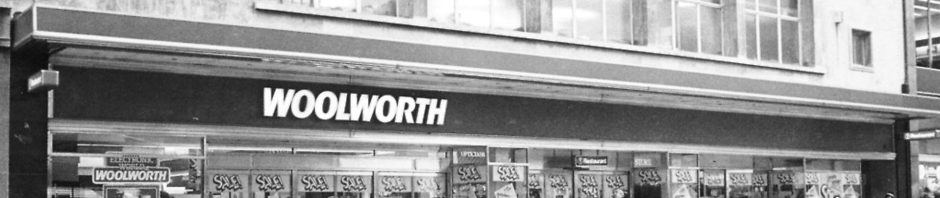
I used to be able to tell you, within a year or two, exactly when a piece of music arrived in this country. Not because I was especially cool — in 1966 I was at prep school, not yet a teenager, which disqualifies a man from cool by statute — but because everybody found things out the same way, at more or less the same time, whether they liked it or not. Juke Box Jury on the BBC and Thank Your Lucky Stars on ITV filled Saturday evenings, Top of the Pops was Thursday, and if you missed them, you had genuinely missed it, not “caught up with it later,” because there was no later. We used to drop down from Claires Court’s boarding house, Ridgeway, into the town centre on Saturday afternoons with our pocket money, for a bag of Pic’n’Mix at Woolworths, which also sold affordable 7-inch singles and LPs and served as a primary destination for teenagers. Twelve or so of us boarders would hang about there, and half the point of standing in it wasn’t the record; it was the boy next to you, pretending to concentrate on the sleeve notes while working out whether you were friend or rival, and sorting out your posture to ‘fit in’.
None of that machinery was designed to build community. It was designed to sell records and fill the early evening slot on TV. But it did the other job as a by-product, almost despite itself, because there were only so many channels and everybody was forced down the same narrow ones. If you were the kid who didn’t fit in at school, who was hopeless at Latin or worse at rugby, there was still a decent chance you’d find your tribe at the record shop, because the culture hadn’t yet worked out how to give you a tribe of one.
I’ve been turning this over because of the NEET figures, which by now everyone with half an eye on education policy has had drummed into them: something over a million young people not in education, employment or training, a good deal of it now put down to mental health and neurodivergence rather than simple idleness, more than six in ten of them not even looking for work any longer. The usual explanation runs that the internet gave failing pupils somewhere comfortable to hide, and there’s truth in that. A teenager who feels like a washout in the classroom can feel, within the hour, like a minor deity on a leaderboard nobody at school has ever heard of. That’s a real trade, and not always an irrational one.
But I don’t think the internet’s real trick was inventing an escape. Boredom, failure and the urge to vanish from view are not new inventions; my generation had all three in generous supply, and we still turned up at the record shop on a Saturday. What’s changed isn’t the impulse to withdraw. It’s that withdrawal used to be witnessed. A teenager in 1966 who wanted nothing to do with the mainstream still had to go somewhere to reject it, stand next to other people doing the same, be seen not fitting in alongside people who also didn’t fit in. That’s not a small thing. It’s the difference between failing in public, among your own kind, and failing in a bedroom, alone, at scale, where nobody — not even the algorithm feeding you the next video — actually knows your name.
Take the Maidenhead Advertiser, which in my day ran to well over a hundred pages (and that’s not including the property supplement), and which I don’t think anyone actually bought for the leader column. Going back to those same Saturdays, once the store managers had moved us on, we’d slip out the back door directly onto Kidwells Park, where the mighty Thames Valley Wanderers played their rugby. We knew most of the players by sight; almost always some of the stars had their photos in the sports pages of the Advertiser. It landed on every doorstep whether you’d asked for it or not, because the advertising that paid for it depended on every household in the town seeing it. And a paper funded on that promise had to earn its keep by covering everyone, not just the town’s best team but every team, at every level, the Under 12s as faithfully as the First XV. That wasn’t civic virtue. It was the business model. A hundred pages (plus supplement) a week doesn’t get filled by winners alone; it gets filled because somebody has to justify the advertising rate by reaching everybody, and reaching everybody means writing about everybody. Whole swathes of young people who would never trouble a trophy cabinet still had their name in print some Thursday or other, in a match report nobody outside their own family read twice, and that was still a kind of witness. Today the same paper runs to perhaps thirty-two pages and no supplement, its remaining readers mostly over sixty, and there simply isn’t the money or the space left to do what the old hundred pages did without trying. Breadth was never a decision anyone took. It was a side-effect of a funding model, and when the funding model went, so, quietly, did the breadth.
Algorithmic recommendation doesn’t just offer a young person more choice than Top of the Pops or the Maidenhead Advertiser ever did. It actively works against the forced encounter that used to build community. Two boys in the same form room today can watch entirely different worlds on the bus home, each perfectly tailored, each the only member of its own tiny congregation. The scarcity that used to throw us all together — three channels, one paper, one high street — has gone, and nothing has arrived to replace the thing scarcity did for us by accident.
But I don’t think the record shop and the sports ground only mattered because they gave the disaffected somewhere to stand together. They mattered because standing together is how a movement finds out who its leaders are. Somebody in every one of those crowds turned out to have more to say than the rest, or the nerve to say it louder, and the crowd itself did the sorting: it promoted them, copied them, followed them out the door and into something bigger. The hippies who spent the late sixties rejecting the whole apparatus of straight society went on, a surprising number of them, to build the businesses, the magazines, the record labels and eventually a fair slice of the establishment itself. Punk’s loudest voices did much the same in fashion and music a decade later, tearing down one lot of gatekeepers only to quietly become the next. And the generation after them rejected exactly that, because that is what generations are for, and found their own meeting places to do it in. It was never a straight line from rebellion to obsolescence. It was a wheel: today’s meeting place produces tomorrow’s leadership, which becomes the day after tomorrow’s target. Who’d have thought those schoolboys, clutching their paper bags of sweets so preciously at the side of a muddy rugby pitch, would go on to spend a lifetime in the professions, lead the military, captain industry — or, like me, end up writing a blog suggesting things ‘ain’t what they used to be’.
What worries me about the bedroom rather than the record shop is not only that it is lonelier. It is that nothing sorts itself out inside it. A feed does not promote the young person with something to say to the top of a crowd, because there is no crowd, only an algorithm quietly serving each of them a slightly different version of agreement with themselves. Nobody gets discovered by the kid three streets over who happened to be standing in the same queue. The wheel that used to turn a generation’s disaffected into its next leadership seems, for the moment, to have stopped turning, and I am honestly not sure yet what, if anything, is meant to replace it.
So here’s where I’ve ended up, more tightly than when I started turning this over. The 2020s NEET crisis isn’t simply young people fleeing academic pressure into a more comfortable alternative reality, though for some of them that’s plainly part of it. It’s that the shared infrastructure which used to convert an individual’s sense of failure into something collective and visible — a subculture you could walk into, be seen joining, wear on your sleeve, and quite possibly end up leading — has been quietly dismantled, and nothing has been built in its place that does the same job. The withdrawal isn’t new. What’s new is that it now happens without an audience and without a wheel to turn it into anything, which means without anyone standing near enough to notice, and without anywhere for a struggling teenager to go and be a recognisable kind of person instead of an anonymous one, let alone the next person society ends up being led by.
As government money, whether it be national or local, has been steadily withdrawn to cover only the essentials, we’ve seen a massive reduction in available after-hours activities in schools, which, coupled with the closing of Youth Clubs, has left many of today’s children and young people standing on the shoreline of a tide that, in their view, has gone out. And yet it doesn’t have to be that way. Last Saturday was the annual Maidenhead Rowing Regatta; we loaned them 200 chairs and a gazebo to a riverside swarming with all ages. The Advertiser covered that, as it did the reopening of the Rugby season for the town as well. In Will Greenwood’s brilliant 5-short-episode series (The Heart of the Game) on Maidenhead Rugby Club, he celebrates the community, mental health support, and friendship at grassroots, emphasising that the sport’s survival relies on local volunteers. The series highlights the growth of women’s and inclusive rugby while addressing the financial and logistical challenges facing local clubs.
As I have highlighted, for whatever reason, the normal ebb and flow of our lives have changed. Whether that be the failure of government for society, or physically from the onset of global warming, we can moan all we like. Yet the answer lies in our own hands, does it not? Of course, it’s not time to disengage from the internet. But it is time to re-engage our children, young people and community to the common good of synchronous activity. For that, we do need our clubs, pubs and libraries of course, and we have a country whose monarchy is willing to celebrate those longer anniversaries too.
Will Greenwood closed his own documentary on Maidenhead RFC with a similar thought, travelling the whole pyramid from England shirts to the volunteers sweeping the clubhouse floor, and landing on the same conclusion I’ve been circling here: that the game itself was never really the point, only the excuse the community used to gather. Swap rugby for records, or for a results-day scoreboard, or for a hundred-page local paper nobody bought for the leader column, and the shape of the argument doesn’t change at all. It was never really about the football, or the football on Kidwells Park, or the football Lucy keeps pulling away from Charlie Brown. It was about the eighty minutes, or the Thursday paper, or the Saturday afternoon, that gave two people — a boy and the stranger next to him in a listening booth, a volunteer and a player, this generation and the one it’s about to make room for — a reason to stand in the same place at the same time and notice each other. Greenwood calls that “the heart of the game.” I’d call it the heart of most things worth having, and I’m not yet convinced a bedroom, however comfortable, has worked out how to grow one.

 A Principled view
Absolutely love this James. I was talking with my 19 year old son just this morning about how sad I feel that the we have lost so much of what used to bring us together in the days of just 3 or 4 television channels; we would talk with our friends about the latest episode of Neighbours or Grange Hill. (I also said how the TV shows of my youth seemed so much more “wholesome” than those that my children watch; I’m referring to the likes of The Waltons and Little House on the Prairie; nostalgic for yesteryear, I know).
I explained how we would share so many experiences, in the same physical spaces, even if it was just the same view from the bus or the same programme on the TV screen. I agree with you that societal change has, in so many ways, diminished those opportunities for meaningful connections that build communities.
I also explained how my childhood influences revolved around school, friends and family, alongside television, cinema, books and magazines, but now, as a parent, I feel I am struggling to compete with the strangers online who are the influencers my children spend too much time listening too.
It makes me think that schools, where young people are together “IRL” can play an even more important role as community builders, not just places for academic learning and enrichment activities.
Absolutely love this James. I was talking with my 19 year old son just this morning about how sad I feel that the we have lost so much of what used to bring us together in the days of just 3 or 4 television channels; we would talk with our friends about the latest episode of Neighbours or Grange Hill. (I also said how the TV shows of my youth seemed so much more “wholesome” than those that my children watch; I’m referring to the likes of The Waltons and Little House on the Prairie; nostalgic for yesteryear, I know).
I explained how we would share so many experiences, in the same physical spaces, even if it was just the same view from the bus or the same programme on the TV screen. I agree with you that societal change has, in so many ways, diminished those opportunities for meaningful connections that build communities.
I also explained how my childhood influences revolved around school, friends and family, alongside television, cinema, books and magazines, but now, as a parent, I feel I am struggling to compete with the strangers online who are the influencers my children spend too much time listening too.
It makes me think that schools, where young people are together “IRL” play an important role as community builders, not just places for academic learning and enrichment activities.