It is very likely that by the time my words are published, the ‘news’ has broken that our entire junior and nursery school is to be back up and running from Monday 22 June. Now we have chosen to do this because it is the right thing to do for the ages of the children involved. It is not just our experience of the last 10 days that is highlighting just how important the opportunities to be taught in person are, but also how equally essential there needs to be contact between young people.
I could write many more words at this stage, but here’s executive head, Justin Spanswick explaining the principles and arrangements we have in place for our reopening.
As we have been developing our plans to reopen our school since the moment we were shut down on Friday 20 March, it has very much surprised us that so many heads, teachers and their unions seem not to have acted in like manner, awaiting the government’s advice and direction. And when I say we, I am not suggesting that Claires Court was unique in this approach. Far from it, for as far as I can see, the vast majority of our sector is now back up and running at similar levels as we have been, and can plan to be even more engaged from September onwards. Our own strategy for remote learning planned for 6 weeks of cover, before reopening on Monday 8 June. Whilst it is a very great pity that Years 7,8 and 9 can’t be included in the roll out of back to school just now, actually for Year 9 we have been able to accelerate their commencement of their GCSE courses, and for Year 7 & 8, they are so very much into the swing of work and play each day, that it’s clear their learning as such is not suffering.
With all of the above in mind, it was with very great pleasure I took up the invitation from BBC Radio 4’s World at One on Wednesday this week, to face Sarah Montague’s inquisition on why we felt entitled and permitted to act in the way we have. Do listen from 7.10 for the full interview here: http://ow.ly/HmG050Ab35f, I pitch in circa 9.20.
Sarah was pretty fair in her questioning, enabling me to answer rather more fully than some newshounds do, to illustrate the bigger picture around school reopening. That teed me up quite nicely for the my final statement, used for this blog’s title. Over the past decades, government simply does not seem to understand that school is so very much more than just education, and its slow and steady subsummation under the testing cosh means that a general comprehension of the wider role of schools as vital centres of education, health and care in their community has been lost.
During #lockdown, our school, adults and children, have had to learn totally new ways of teaching and learning, living and breathing, on-line and at home. 10 weeks in now, we are planning to incorporate a number of our new ways of working into our curriculum plans and delivery. I have never witnessed such a degree of innovation, creativity and plain stubborn grit and determination in my professional life before, and I am incredibly proud (and relieved) that my teaching staff, our student learners and their parents & guardians have come shining through. I cannot wait for this enormous feat of endurance to end, as it has been utterly exhausting, with only 1 day off since that 20 March really for our entire leadership team. When we do close in just under 4 weeks time, we will do so still working to the maximum, knowing that ‘the job is not done until it’s done!’
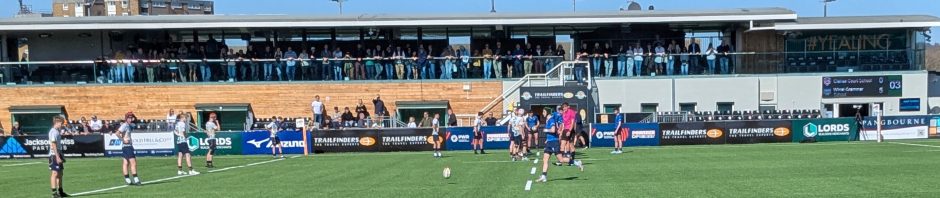
The Government has asked schools in England to reopen, carefully, for some of its junior year groups, namely Reception, year 1 and Year 6 from Monday 1 June. Many schools have been open throughout the period of #lockdown for the children of key workers and for those children classed as vulnerable. As we were preparing to reopen our school for our key worker children, we have combined both operations onto the one site at Claires Court Junior Boys, and the header above shows the scene set on Sinday 31 May 2020.
The marquee highlights a new entry zone for the school, with 4 main entry channels therein to permit us to check our returnees, both in terms of their health & well being, and that they are not bringing onto campus forbidden fruits. This is going to be #schoolusual for those boys and girls returning, but as pioneers, they are helping us as an organisation to prepare more generally for our reopening for all year groups in due course. The scene also shows additional handwashing facilities as well as emergency toilets for use.
The government’s rules for schools to follow require groups sizes 8/16 much smaller than seen usually in their schools, but for our sector, these group sizes are the norm because it is only in providing teachers the opportunity to get to know their pupils as individuals are we able to get to know them well enough to make the very real difference we do to their learning outcomes at the end of each key stage. And of course as it is not just about exam results, but about building confident, resilient individuals, willing to take risks and opportunities and happy to ‘give it a go’ too.
One of the major benefits we have are the 6 RCN nurses we have on our staff; they will be to the fore in the forthcoming weeks, as we certainly are not planning to take any risks with anyone’s health. As the numbers of pupil grow as they return to class, so their parents will be released from their roles as co-educators – thanks a million to all of our parents who have supported their children through this most unusual period!
As Academic Principal, driving the next steps in our school’s ‘recovery’ agenda, we are planning for a range of scenarios for the future, most of which include having all children in at school full time. Of course we may have to ‘cease’ because a ‘viral spike’ causes #lockdown again, but in such a scenario, we have ‘built’ our remote learning platform and for periods of 2 weeks, we would simply run full-time school ‘virtually’. Whilst I am very proud of the clear choice we made for the first extended close-down period to focus teaching and learning on the morning only, that was driven by the reality that we were not going to be back at school any time soon, and we need to manage the new scenario accordingly. Our new distance learning will recognise the need to keep up academic learning for the winter months, when so much of the ground work is laid for the development of new skills and understandings. Im many ways, we have been fortunate that the ‘viral blast’ has happened at the best time of year, causing us to lose 1 term of work, but spanning 6 months of calendar time.
I can see a hybrid emerging where we have to land year groups in the labs for a day, if switching between rooms is not permitted. I see all of our rooms becoming ‘classrooms’, and quite a few additional out-door spaces as well. I can’t see normal ‘school lunches’ resuming, though I can see ‘canteen facilities’ being available. Inter-school sports are likely not to return until 2021 it is reckoned; whilst this great weather could imply an ‘indian summer’ of cricket and athletics, we know the British weather will let us down at some stage, so perhaps we will need to bring back our sport of ‘micro-orienteering’ which we use in activity week usually, or perhaps encourage our technically capable but less physically committed students to build their own drones for competition ‘a la Robot Wars’.
We are encouraged by our government to be led by the scientists, and I will, of course. But those scientists know nothing of running schools, and in that province this school proprietor accepts the challenge to run the best possible school provision we can, as this generation of pupils are going to be the ones that will become the teachers and scientists of the future, and they’ll need to be good ones too, as the problems stacking up for us all look pretty big ones too.
Two weeks ago on Saturday 8 May, I received the above comment in a longer, affirmatory email from one of our parents in the school. The first half of the summer term is now done, it’s Bank Holiday Monday, and whilst I am of course enjoying the sun, I am still at home, the crisis is still very much with us, and lord bless us, I am still trying to work.
Even though I live but 100 yards from the school, and in my own house, I have always been able to separate school from home. Part of that is bourne of the inevitable experience gained over 39 years of headship, the certain knowledge that sometimes, most times, you don’t have to keep working. Much more recently, I have learned from Twitter and other social media channels, that if broadly your view is tenable, just putting it out there assists you in setting your broader compass in the right direction. Now that I have no option but to work from home, receiving incoming mail is much more disconcerting, and here I am not talking about emails from parents, whether they are #theGoodtheBadortheUgly.
No, as it turns out, perhaps my most consistent correspondent is Gov.Uk, for they have softened me up to receive an email every day, and some times more. Along with the other thousands of headteachers out there, I dread receiving their emails, because they are largely impenetrable, often re-stating by link with a tweak or two previous guidance without informing you what the amendments are. Moreover, it’s the volume of information one email can contain, requiring a full reread to spot the changes if any, and, such as Sunday’s lunchtime email, of such importance and in such detail (this one on the re-opening of nurseries and junior schools) that one has no option other than to set other plans aside and ‘dig in for an hour’.
What makes the above such a compelling read is that it must be read in conjunction with the government’s previously published guidance, and not just one bit, as the various links in the document take you off on a Cook’s tour of the internet. Dear reader, you will be delighted to hear that I forwarded the planning guide (subtly different from ‘guidance’ please note) to my colleagues in leadership. ‘If the DfE are going to spoil my Sunday, I in turn…’ – no that was not my motive, actually I was moved to share because there were some key steps to follow, which I knew those leading the actual reopening the school in 8 days time might need to read asap. Now, let’s make this very clear, the planning for our reopening has been a pretty heroic set of tasks led by our executive headteacher, Justin Spanswick over the last week, my part being to ensure the logistics of marquees, additional wash hand-basins at entry, and PPE are all there to support the front-line. Plus of course a curriculum to be delivered…
You’d like to think that there are tips to be had by watching the BBCTV celebratory minister of the day live on the ‘box’ at 4/wheneverpm, to hear their summary of the contents, just to give you a clue rather than spoil your Sunday. Yesterday our man on show was the PM himself, swatting away the sideshow of Dom Cumming’s vacation in Durham with his first blow. Good I thought, he is going to (and he did) talk about the reopening of nursery and junior schools. Sadly, as ever with our Boris, he did not trouble us with details (drat), and in the middle of his conversation with the camera, he dropped a huge bombshell; Year 10 are to go back on the 15 June. Nowhere in the guidance released on 24 May is there any indication of this. Nowhere at all.
I started writing this blog at 2.30pm, Monday 25 May, certain in the knowledge that during my writing, I was placing myself at risk once more of failing to ‘spot’ the next email in from Gov.uk. Indeed, at 3.31pm, in comes today’s email right on cue, now providing “Guidance for secondary school provision from 15 June 2020 Updated 25 May 2020″.
Now this provides no planning guide, and as you can see, secondary heads and their teams will have to make up their plans as they go along. Here are the expectations laid upon us:
DfE: Expectations from 15 June From 15 June, secondary schools are able to offer face-to-face support for a quarter of the year 10 and 12 cohort at any one time. Alongside this the government is asking secondary schools to:
continue providing full-time provision for vulnerable pupils in all year groups (including year 10 and year 12)
continue providing full-time provision for children of critical workers in all year groups (including year 10 and year 12)
provide some face-to-face support to supplement the remote education of year 10 and year 12 pupils, with a clear expectation that remote education will continue to be the predominant form of education delivery for these year groups and that this should be of high quality
continue to use best endeavours to support all other pupils remaining at home, making use of the available remote education support and ensuring a high quality offer
As @clairescourt watchers will know, it is not as though we are not actually running a school just now, 900+ children, 150+ teachers working every day to cover the advertised curricula for Summer term 2020, just not on our premises; plus we’ve chosen to adds a plethora of social and sporty opportunities to broaden off-screen activities and support all of our mental health . In addition, we have also chosen to add value to both Year 11 and Year 13’s offer from 1 June; rather then leave them to a long hot summer #lockdown, we are running taster 101 course for A level and university 101 course for those making their next steps into higher education. And to top it all, we await the provision of exam board spreadsheets, in order for us to provide the predicted grades and rank-orders for all of our candidates at both GCSE and A level. And as Head of Centre, the government has also confirmed that as Head of Centre, I must personally sign every one of these grade submissions off.
During this Covid-19 crisis, many of the great musicals of screen and stage are being re-run, and to date I have caught, Les Miserables, JC Superstar, Phantom 1&2 and last night, Miss Saigon. I have not yet caught ‘Evita’, and will now scour the channels to see when that great show is due for its brief reprise in the limelight. Why ‘Evita’ I hear you ask? Because of the most remarkable theatre solos therein, that by the eponymous heroine of the piece , Eva Peron, and it’s main show-stopping song, ‘Don’t cry for me Argentina’. I find I choose to listen to this track when I feel ‘put upon’, releasing my little known ‘martyr complex.
#halfterm? #nochance!
Ok, you don’t need to read too much into this choice of music tracks, as you can find much better ones here on my #Isolationtracks5 released this weekend.
I see no need for a long preface introducing the subject of my blog today. It’s Thursday the 30 April, so I am deliberately posting a day early, in case my readers take this for a May Day joke. I can assure you, that as far as my household and community is concerned, there is absolutely no joke arising from the crisis Covid-19 is wreaking across our country. That’s not to say there’s not a goodly amount of good humour around, there is. As a colleague speaking to me earlier mentioned, “If men of a certain age need to consider their lot in life, just consider what Boris & Carrie have been through over since January 2020. Quite.
The Scientists on their daily briefings are talking a whole lot about Randomizedcontrolled trial: (RCT), which I paraphrase from wikipedia as follows: “A study in which people are allocated at random (by chance alone) to receive one of several interventions. One of these interventions is the standard of comparison or control. The control may be a standard practice, a placebo (“sugar pill”), or no intervention at all. These happen in all walks of life, and very much happen in Education really quite seriously. With the whole world waiting with baited breath, we are hoping to see in a few weeks what usually takes years, the emergence of both vaccines and medications to combat Covid-19. Claires Court is not just waiting, with trial orders placed for PPE to see how school-facing needs of heightened biosecurity can be met, as well as commencing the planning for classroom, building and outside space so that we can manage ‘#schoolreturn’ effectively. Please do have read of this current article from the experience in Denmark & China, highlighting the ‘new normal’ issues we will face soon.
RCTs can only really take place if only one thing has been introduced, and everything else has been left the same. And with COVID-19, we have that perfect experiment underway – the only thing to have changed in the world is the arrival of this killer virus, and the devastating effects that one disease organism is spreading across the word. We no longer can rely upon just-in-time management of world-wide deliveries from across the world, nor for that matter can we just import the labour we have ‘seasonally’ needed for harvest and whole scale building projects. One of the immediate aftermaths is that we are having to grow our own.
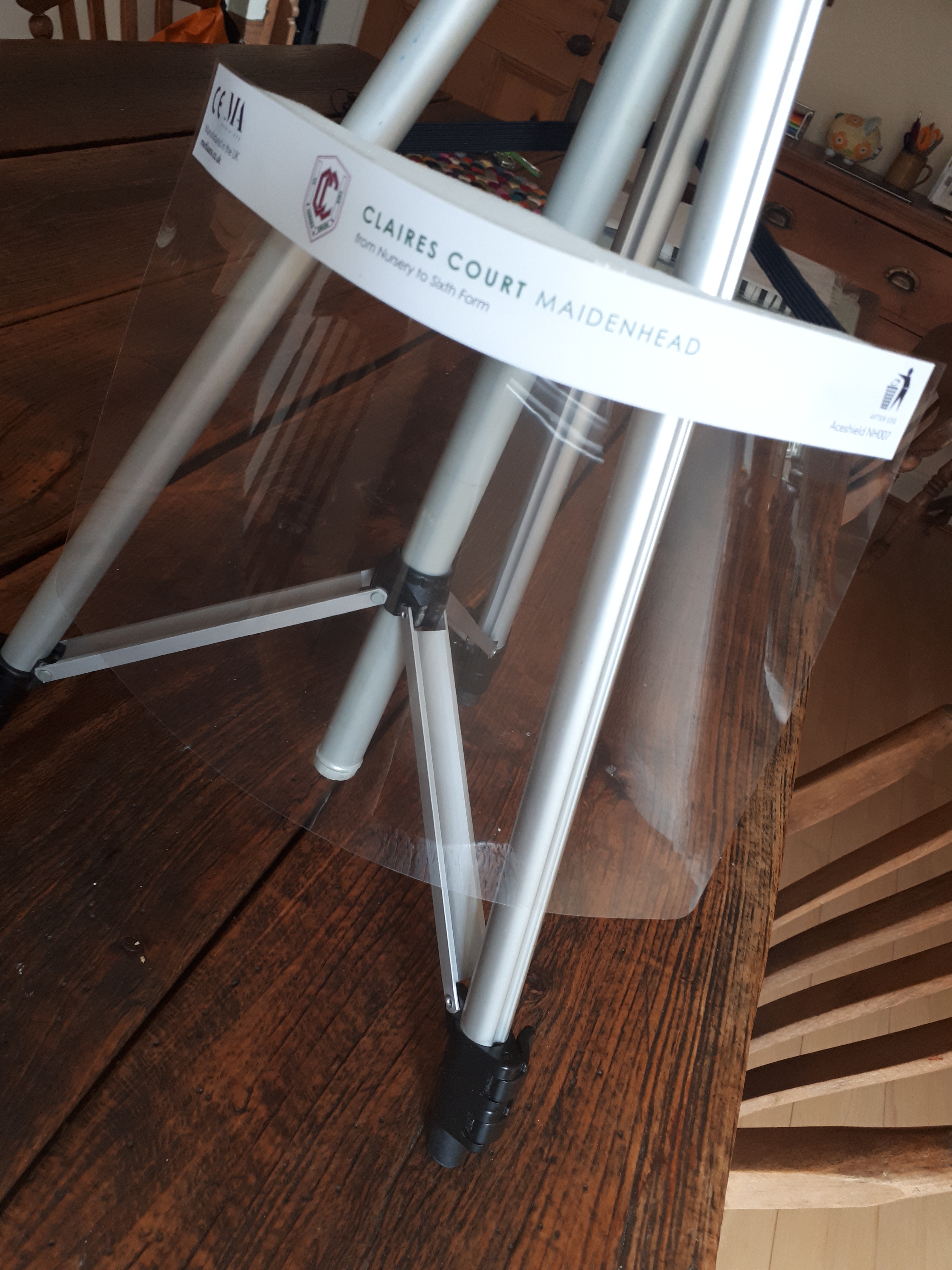
All over the country, workshops are re-engineering to support schools in their needs, and our own printers, Media Ace reached out to provide for us these, personalised to boot. Their work reached BBC news on Monday evening, from 1:54 onwards. Of course, there are so many more considerations to bring in to play, sufficient separation in classes, reduction in movement around the school, medical and hygiene matters and such like. There’s no ‘Dummy’s guide’ here, so researching the successful returns to work elsewhere in the world is core to getting it right here at Claires Court.
Our experiment also includes our choice to redesign what Digital Learning should look like, which has set out to provide a coherent response for all phases from Reception to Sixth Form. We know some schools have not reopened provision for home learning at all, and of course there are a huge number of families who have no access to technology or wifi at home. The BBC have embarked upon the provision of a range of resources to support home learning, and a country-wide school ‘Oak National Academy’ has been established to provide a framework to park those lessons on. As our parents have learned, we have chosen to pursue the agreed curriculum laid out in our year group curriculum statements for Summer 2020, logically continuing the coherent programme for the year. We’ve had to make some tweaks, of course. We have also chosen to balance the academic component with social and co-curricular offers, not because they are easy (far from it) but because the evidence arriving in from the schools ahead of us in their experience of the pandemic that the children and families were so quickly overwhelmed by full-time school. To be honest, that was our experience before Easter, partly because for both school and home, our G Suite tools were accompaniments to our classroom, not a complete replacement for them.
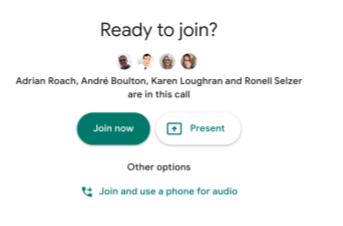
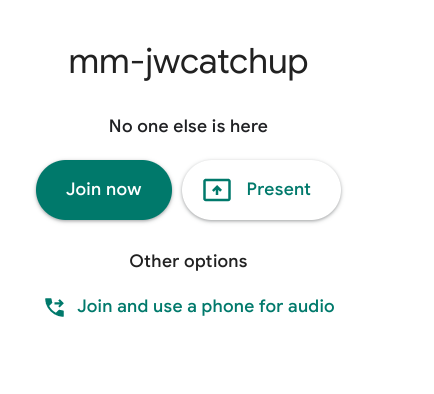
Over recent weeks, with serious research being summarised* and broadcast events from across the globe as well, it’s been fascinating to see how our plans continue to track what’s the accepted best path. What’s also noticeable is that new ‘behaviours’ are emerging in the digital classroom. Students arrive for class, but don’t want to be the first in. By way of pictorial example, this is what I mean:
Here’s a MEET I am joining, and you can see who is in the Class (teachers only) – apparently I’ll go in straight away of course, as my friends are inside. On the second image, I won’t go in (apparently) because I will be the first in, so will hover until others are brave enough to enter!
Where we are now is in a place like no other, and as a school that has no choice other than to pioneer its own route through the fog, we have submitted to our families our plans and we will be no doubt held to account if we don’t deliver.
I’ll close with the impressions that our very many students and their teachers have left with us this week.
A student says… “Until Mr Google gives us Grid view by default, we’d rather not be ‘spotlight in the centre’ when we choose to speak”. (Google this week have gone grid implementation for MEET and free to the public. This is the general impression from students.
A teacher says… “When we place a video in the work stream, our students will surely watch the video before attempting the work”. Actually expected behaviour looks like:
step 1 – try the work without watching the video
step 2 – ask a parent to explain about complex numbers
step 3 – “I suppose I’ll have to watch the video
A parent says… “It was quite difficult because…understanding how to pitch these ideas to {my children’s} age groups is a real challenge and it gave me – if I needed to have any – more respect for the skill and professionalism of teachers”.
The thing about this experiment is as Professor Chris Whitty makes clear every time he steps up for the Downing Street Road show, is that we won’t know whether our plans are right or wrong until the pandemic is over. What I do know, as referenced above and in the footnote below, at Claires Court we don’t just followed our gut feel or the evidence from Hattie below, but we are also adapting all the time based on the newsfeed from Europe and Asia as their schools work through lock-down and re-emerge the other side. Of course I still have my fingers crossed…
After Easter my school has this week returned to work, and it seems we have made a good start, though we have more to do over the coming days to redevelop the richer social experience of real school too. I have written before that we are on occasion shackled by the knowledge and responsibilities we have, and ‘going social’, ‘zooming’ our lessons has needed some care and calm from the outset. DfE give no direct advice to schools, though point specifically at the London Grid for Learning’s advice that expressly warns about live cameras on children, requires 2 staff in the room etc. It’s current advice, and so for this first week we have been cautious about the number of sessions that could be live. At the end of last term, after 7 days on screen, we asked our secondary students for their responses to the experiences they had received to date. They too are really cautious about being live on-screen and showed a strong preference for being ‘live’ with their icon profile photo. Peer group sampling is not enough though, and whittling through the layers and complexity of adolescent thinking, it’s quite clear really that on an individual basis they like being on camera with their friends, just not with the teacher in the room.
Sixth Form lessons have inevitably been flat out since the start, not least because for Year 13 we have been assisting those students to complete their studies at the end of the individual subject programmes before the ‘closing’ of their courses mid May. Thanks to the feedback from our parents forums running every Tuesday, it’s become very clear to everyone that whilst through the ‘as yet unknown’ process A level and BTec results will arise for the students, those ‘grades’ actually won’t confirm the students have actually embedded the skills with those that might previously be assumed to have happened. For example, the learning and memorising of vocabulary and formulae, and the repeated, rehearsed practice of same, of problem solving, of dragging back knowledge to create essays under exam conditions are normally well rehearsed through the first part of this Summer term. Such practice doesn’t just make perfect in the short term, but makes permanent for a much longer period, placing the students in good shape for their next steps at University. So once we are past this first 4 weeks stage of checking and affirming that we have all the evidence we need for the exam boards’ needs to provide the candidates with grades, we will turn our attention to the Course 101s that we can provide to prepare Year 13 for their next steps, whether they be into employment or into University. Now we can’t make these 101s compulsory, but at least we can scatter the ‘seeds’ and see what grows.
Year 11 plans are similar, though it is much more challenging for school and parents when the press reports that Ofqual have said ‘You don’t need to do more work’ now. Across the country, the vast majority of schools and students seem to have ‘down tooled’ and permitting the roll of the dice to fall their individuals’ way. And that does not help schools and parents like ours who actually wish the young people to work the hard yards now, appreciate that learning is a lonely place, and that as with Year 13, how can you ‘rock up’ for A level etc. in September feeling optimistic IF you have not gained the skills to match the knowledge? I know it is a cheap comparison, but imagine if for some reason, practical driving tests were cancelled and government confirmed that there was no longer a need to pass the driving test, because we had the data from the mental Highway code test and we could use the teachers’ professional judgement from that instead. Our Year 11 and parents have been utterly brilliant, with 100% attendance, and on the first and second days of term this week, I ran two optional sessions for the boys in my line of command, and enough took the opportunity to show up to learn how to tweak their G Suite skills (go check out Screencastify and KEEP notes for my content).
So where my headline comes into play is for the rest of the school, from Year 10 downwards, to Year 1 and even perhaps Reception. School provides a ‘schooling’ experience, not just an educational fount of wisdom. Having been teaching for 45 years now, I am the first to admit that education in schools is a very inefficient process. What should take 5 minutes to explain sometimes takes less, but most of the time takes disproportionately longer than even the raving pessimist could suggest. My ‘bête noire’ is simple punctuation and grammar. At interview when boys are entering the school, their written assessment work is almost always up to scratch. 3 years later, the same children tell us they have never been able to spell and punctuate. Ignore that please, a cheap shot. Suffice it to say, that for the vast majority of a child’s life in school, their best memories are embedded by their teachers, and not by what they could do in their exams. Teachers get that their classroom needs to be a productive and ‘fun’ place – we don’t ‘murder the School Secretary for her Coca Cola’ for our or her health as part of Science week!
So here we are, facing week 2, and working out how to up-socialise our on-line school by distant learning. It seems we are competing with the BBC in terms of these popularity stakes, and I fear, of course, that it is the celebrities that will win if we go with the ‘Kardashian effect’ rather than the experts’ approach. One of my chums on the national education circuit is Ross Morrison McGill, and his blog today is an absolute beauty, sharing as he does my admiration for Professor John Hattie and Tricia Taylor.
McGill has this to say about the Kardashian effect in schools “My concern today is that our teaching workforce is in a position in which teachers and school leaders believe their professional wisdom is no longer valid. We only need to turn on the news to see articles and videos on ‘homeschooling’ or ‘home learning’ cited by celebrities, rather than by actual teachers. Academically, this is something I have been studying which is known as the Kardashian Effect: “to share an opinion and be viewed as a voice of authority, particularly when an individual may not be an expert in the field, but their opinion is taken as a credible source because of the numbers of people they influence.” Note, experience in teaching does not necessarily mean expertise.“
Hattie has this to say on the current situation in a recent paper with When Schools Are Closed: What Matters and What Does Not. “Let’s recall the effects of the Christchurch earthquakes in 2011, which severely disrupted access to schools. There was a rush to online learning with a cry for special dispensations for upper high school examinations. As advisor to the Qualifications Authority that oversaw these exams, I argued we should not give special dispensation. I based this on strike research, which showed no effects at this upper school level, with positive effects in some cases. Sure enough, the performance of Christchurch students went up, and as schools resumed, the scores settled back down. Why? Because teachers tailored learning more to what students could NOT do, whereas often school is about what teachers think students need, even if students can already do the tasks.“
What is indeed interesting is the statement that teachers are able to focus their attention on the things that children can’t yet do well enough. Now, what with before and after Easter, we have barely had 10 days online, offschool, but those that are critical of our offer are clear that their children are struggling to work out what’s needed to be done. One of the great advisors of teachers on on-line learning is Russell Stannard, who has been on-line almost all this century. His view is really quite clear, that on-line always works best in combination with the classroom, known as ‘blended learning’ and if you must go ‘distance learning’, do try to avoid engaging with too many ‘live’ sessions with the class.
Taylor asks teachers to max out on building relationships, and references in her Book Join the dots the evidence that leads her, Hattie and, of course, McGill to the shared conclusion that almost all the success built in education is related to the wonderful relationships developed in school. Here she is writing last week about this new period of isolation from school, with the kitchen table becoming the classroom, under the heading Maintaining positive relationships is more important now than ever:
“A few years ago while conducting a focus group, I started by asking the Year 11 (10th grade) students, whom the school classified as ‘low-performing’, if they liked being in school. One girl responded, ‘I feel like my teachers don’t even see me.’ This has stuck in my mind. We know this girl: she is quiet and well-behaved but often falls off our radar, right under our noses.
“And now, in these extraordinary times of school closures, as adults and children navigate new terrain, moving learning from the classroom to kitchen tables and from human interactions to digital devices, our ability to connect with students has become increasingly more challenging. We won’t see students on the playground to ask a question or pass them in the corridor to slip in an encouraging smile. In a remote learning environment, everyday interactions obviously become more difficult and less natural. Students from disadvantaged backgrounds will face the biggest challenges due to a variety of reasons, such as lack of online access, quiet spaces to work and anxiety about homelife like finances and caring for others, to name a few. These factors will further alienate students from that sense of belonging to the school and classroom community that is so important in excelling at learning.“
So as my school faces its second week of Summer term, and thanks to the power of Google updating Classroom to give us in-Form break-out MEETs, and with an afternoon of enhanced opportunities to bring the school together for clearly more social activities, we genuinely set out to be more social and engaging in what we can do within the constraints of professional behaviour. Under a very clear heading The arts are an even better barometer of what is happening in our world than the stock market or the debates in parliament. Great civilisations are not remembered for the wars they won, but for the cultural legacies they leave behind, I present to our secondary boys and girls, remote as they may be, around a kitchen table or in some more private space a ‘surely must be unique in the UK’ programme of artistic, cultural, aesthetic and sporting activities.
These are secondary-aged clubs and activities, to which many younger children and adults are invited to as well; I do hope we can recruit good interest into as many as possible. One of the most exciting developments of the last 5 weeks is not just that we have our skies, birds and fresh air back (I am writing from under the Heathrow flightpath and near the world’s busiest motorway usually), but that families are slowing down and reuniting in their homes. I have every hope that parents and children will come along and take part together, and that the genuine “Up-socialising the school experience on-line…” will include teacher, students and parents in that magic partnership that Hattie, McGill and Taylor would agree is the most successful way to support children in their educational development.
It is inevitable that so many of our metaphors on crises point at our country’s war experiences of the last century, and encouraged by Dad’s Army etc. that ethos still flows rich in our writing. I’ve chosen the ‘weather’ metaphor instead, feeling it more apt. Like the arrival of the great winter storms this year, we’ve know they’ve been coming and we’ve planned our defences accordingly, battened down what hatches we could and awaited with bait breath the onslaught. Storm’ Dennis’ was an utter brute, blowing in at up to 140 mph/230 km/h , its impact for 7 days. The effects filled the news screens and we watched with baited breath as the flood defences of Ironbridge held up against the might of the torrent that the River Severn had become.
During this January, we became aware as a country of the emergence of a new ‘flu’ in China, that was rapidly causing one of its provinces to ‘shut down’ into isolation. In turn, within our school, we commenced some tightening of procedures, reviewing of our processes, checking what might happen in terms of emergency closure and considered our options. The call went out from my laptop to ensure all of our staff were bringing themselves up to date with the full use of Google Docs and its allies’, and checked that if not already, our classrooms themselves were going on-line with their teachers. What could possibly go wrong?
As Academic Principal, it falls to me first to confirm what our educational direction is to be, and how that is to be realised within the context of our school here in the Thames Valley. Obviously I sound out teaching approaches with my colleagues in leadership, but as there are few agreed ‘models’ on distance learning instruction for schools closed by pandemic, it falls to me to lead the discussions and affirm the choices. Given that the school spans the entire age range, the last thing I can set out is a ‘one size fits all’ approach, and it is very evident to any member of the Claires Court community that we do choose to do an awful lot of things in differing ways because of this, not just because of the age spread, but also because we teach a wide ability spectrum and we separate the children by gender from age 5 to 16 as well. Could the task be more complicated?
One of the ‘problems’ I experience as a well seasoned education researcher is that I know ‘stuff’ and the evidence that is required to validate decision making in education needs always to be better than a ‘hunch’. I won’t bore you at this stage with the details of Richard Elmore’s seminal paper* on how it simply isn’t possible to scale up promising educational practices into a national ‘rule of thumb’. What we know in schools, and mine certainly reflects this trend, is that we have amazing teachers who do amazing things in their classes, get breathtakingly good results, yet they all manage their classrooms differently. Even within a department, the contrasts can be quite stark; some teachers simply know how to teach and practice that really well, whilst others get to know their pupils really well, and investing time in those relationships rather than pedagogy holds them in equally good stead.
Elmore’s findings about the efforts in the USA (and 4 other countries) to standardise best practice in the classroom so that national standards could rise are grim indeed. From his study of 4000 classrooms in 500 schools he could not find a ‘super hero jumpsuit’ that teachers could slip on before stepping into role as a teacher. In short, ‘best practice’ in the classroom is an untrappable ‘Will-of-the-Wisp’; sure we can identify those simplistic things that can be harmonised but what we can’t do is simplify the complexity of learning. Helping students practice a skill they already have is one thing, but helping get their heads and hands around a concept new to them is quite a different matter.
“Who’s Elmore?” I hear you ask – Professor of Education at Harvard, and a serious world expert in education. Elmore asks the question ” Can you “teach” people to learn in ways you have not?” and gives us a very straight answer. “I think not!” So there in lies the rub. When we select our teachers to join Claires Court, we look for subject, age and stage expertise, their ability to build and nurture skills and relationships in the children and young people (CYP). We take more than a glance at their social media profile of course, not looking for positives as on-line educators there more than checking out that they are the ‘real deal’ in their ‘public’ private lives. In recent years, we have never selected any teachers because of their competence with distance learning skills, and I can think of only one ever, Chris Sivewright whose efforts here assisted in the establishment of Economics in the Sixth Form.
I confess I had more than Ellmore’s evidence to hand, I also have the experience of many wider industries who have learned to deal with serious disruptions. The first thing you must not do is change all of your practices at once. It’s far better to change by evolution over time, and agree what it is that you are trying to achieve in the new circumstances, before choosing the tools and adapting the processes as a consequence. We have learned this over the last decade in various phases of education; you can’t give up play too quickly with the early years, where experiences, peer coaching and movement for learning are essential. At primary & secondary level, knowledge and expertise need time to build; the ‘lost decade’ given over to training for the test in the state sector is so well understood that it embarrasses those who forced upon the nation.
I also had the luck that schools in Hong Kong had emergency close down forced upon themselves by the riots there last Autumn. Schools had to close, but the teachers were able to get together, design systems and roll them out for a week or two and then, after their return to school, evaluate the Good, Bad and Ugly bits. There were certainly plenty, more of those anon. When the schools had to shut down again in January, and not just in Hong Kong but across the Far East, the schools’ diverse community began in earnest running ‘on-line’ education, bringing children to the screen for the most prolonged period of time I have ever known. Of course we know there are families that choose to home educate, those being disciples of that approach and consenting to be teachers-and-learners in the same household. It’s clearly utterly different when families are locked-in, no escape from each other, and where priorities don’t just include the children’s school curriculum coming down the ‘tubes’.
My previous blog describes the theoretical approach taken, so I won’t repeat that, other than to confirm our first 8 day period of Distance Learning has been to close down the work of the term, using the existing tools we have at our disposal and in ways that both the teachers and children understand how to deploy. We’ve tried to keep up the best of communications we can, to inform public examinations students on their prospects of receiving grades this year, and to support their on-going establishment of their subject credentials. Every morning, for secondary pupils, teachers have ‘surfaced’ new work and then monitored and ‘conversed’ with their classes in their various on-line subject and pastoral Classrooms. At primary level, we’ve been less prescriptive, and of course at the Early Years stage, really only been able to prompt and suggest for families to take control.
With the whole of the Northern Hemisphere currently online, and with so many schools ramping up their on-line classrooms on Monday, it came as no surprise that so many commercial services crashed and burned. Even Firefly and Microsoft Cloud services creaked badly – here’s one of those stories – https://www.bbc.co.uk/news/technology-52005999 whilst locally in homes with multiple occupancy, broadband speeds fell below the ability to stream live. These are certainly the lessons learned from the Hong Kong schools, but there are so many softer problems that need solving. Children are great peer educators, indeed true for adults too, and in the normal working day, all can receive support when their system appears not to be working. A quick nudge here, a ‘watch&learn’ there and every user is quickly up and running. At home, it’s utterly different, and very lonely indeed, where the tech problems don’t just magnify, they become insoluble without serious support.
We’ll know by Wednesday next just how successful all of our teachers and learners have been in adapting to their new workspaces and establishing their routines that will work for all the family. We’ve had so much good feedback; clearly for many, the approach has worked. I completely understand that for some, having online school in real-time is the solution they had expected, but sadly, as so many schools that have found last week, bandwidth and technology have not coped. Ellmore describes delivering ‘high level content’ in unfamiliar ways, like “knocking the corners of the grand piano to get it through the classroom door!” Yep, that was certainly an understandable metaphor witnessed!
Despite the very best of planning, and the careful direction to staff to go easy, the vast majority of teachers have learned in week 1 that being ‘distant and on-line’ is the most inefficient and time consuming way of working. Marking and Feedback takes so much longer, and we’ve had colleagues working to midnight to keep up with the ‘flow’ even though we had dramatically reduced the volume expected. Moreover, we have so many teachers who are both partnered up and have now become unexpected carers for their own family, children and adults, Time in the office has to be shared between the grown-ups if both are at home. Many staff’s partners are key workers too, so during some of the day, they are flying solo as chief cook and bottle washer. Calming the storm
Giles Coren writing in the Times today highlights some good advice for the ‘newly found careworker’:
A child psychologist and “neuroscience educator” in New Zealand called Nathan D Wallis has been doing the rounds on social media saying that all this remote schooling is a waste of time. Thank God.
I’m not saying that I’ve been looking for any excuse to nix the home school nonsense and get on with my life but when Wallis says, “Let your concerns about your kids’ academic outcomes go. They are stressed at this frightening time for the world. A four-week holiday from schoolwork is not going to do them any harm,” I am all ears.
He goes on: “When parents take over the teaching they tend to go to a 1920s model rather than a 2020s model (it is true I dusted off my old university mortar board on Monday morning and have been pinging chalk at the kids like billy-o) but trying to focus on reading and maths at a time like this is going to stress them out and harm your relationship.
Forget all that. Now is a great time to focus on self-care. Does your child know how to make their bed by themselves? (no) Do they know how to make their lunch? (they barely know how to eat it) Are they able to get up and make breakfast by themselves? (they aren’t even able to get up). These are skills your kids will need for the rest of their lives. They are easier for you as parents to focus on. And now is the appropriate time.”
Over the past 5 days, and with the support of Hangouts Meet, we’ve been developing our approach for the Summer term ahead – here’s a preview of our work under construction.
We’ll have a Handbook for the other stages, Junior and Sixth Form, covering the detail as required for that age and stage. What this framework does is advise and inform in more detail how we feel school will run during the summer term, until such time as we are released back into our premises.
What we also know is that video and other visual interactions will help cement and build further the relationship of our teachers with the children and young people they teach. We’ve already trialled some Hangouts, amd our YouTube channel is filling with great examples of Teachers in action. What we have not yet done is ‘Calm the storm’, as the full impact of Covid-19 is not due to hit until 2 weeks time. I sincerely hope our community weathers the full force of the epidemic and my heart goes out to the other public services that will be having to manage the human damage in real time. As a teacher, that’s not my role, but I do sincerely affirm that our preparations for learning to continue through the Spring and Summer are assured. Let’s close this blog with a lovely video produced for this Thursday’s on-line music assembly. Spot me if you can! It’s aptly titled ‘Isolation’.
*Elmore, Richard. (2016). “Getting to scale…” it seemed like a good idea at the time. Journal of Educational Change. 17. 10.1007/s10833-016-9290-8.
On Wednesday, Gavin Williamson, the Secretary of State for Education, announced that as part of the country’s ongoing response to COVID-19, schools, colleges and early years settings have been asked to close to everyone except children of key workers and vulnerable children from Monday 23 March.
I am now writing to give further detail of the short term educational provision we are making for your children from now until the end of term, Wednesday 1 April. This information covers children from Reception to Sixth Form. Parents of Nursery children will receive separate guidance from Mrs Wilding and the Nursery staff. Our Key workers with children in the school are already in contact with us; we are running key worker cover from Monday this week through until we reopen.
Firstly for our young learners in school, and for whatever age, we wish to bring your children’s curriculum in each subject area to a logical close. For Secondary and Sixth Form students, their teachers will be setting their classwork via our digital ‘Hub’ & G-Suite tools on the days for when lessons are scheduled, coupled with the additional homework arising. This is their normal way of learning and we don’t envisage further explanation is needed at this stage.
For Junior Boys and Girls, as they follow the same curriculum outlines but in different ways, you can find our more about Junior Boys here – http://schl.cc/7G
Other countries have experienced shutdowns for these reasons for some 10 weeks now, and we have adapted our plans for the next 8 days in the light of their experience. A simple graphic that shows how best to plan such work can be found here http://schl.cc/7B. This first period of closure provides for an opportunity to consolidate, complete and reflect on their work of the term. For all Year groups, we are not expecting parents to take over the role of teachers, but we will need parents to assist in a variety of ways.
It may be that the family does not have sufficient resources at home to support everyone with a suitable device to access our ‘Hub’. If you would like to loan an additional school Chromebook for home use, you can reserve one here via this Google Form. All devices reserved may be taken home from school tomorrow Friday 20 March by the boy or girl concerned. Please book a Chromebook here – http://schl.cc/7F
Please make arrangements at home for where your child is expected to do their work. We always recommend that the use of a screen for school work is conducted downstairs and in public view. If you are able to set up a work station for them, so much the better.
It is our plan for teachers to be at work during the day; they will monitor work being carried out in the morning, and provide feedback to completed work and in work streams during this time. During the afternoon they will be marking, planning and preparing the work of the following day, and liaising with their colleagues and sharing the load. Any questions from parents arising should in the first instance be communicated to the teacher concerned or the form teacher.
From 4-5pm, teachers and senior managers will be working together to resolve key issues. We hope to respond to any key queries during this time.
A considerable amount of the work planned to be completed is not digital in nature, though the communication about it may be. Our plan is not to tie the children to a computer screen for a long time, so please ensure that no single work session lasts longer than 45 minutes.
Many parents too will be working from home. Putting the family needs first, confirming family time, exercise outside and the myriad of other opportunities available will be all part of establishing a suitable routine.
With pupils being at home, they will be using the internet more than ever. This may cause extra anxiety for parents. Our visiting consultant in this area is Paul Hay, and parents can find lots of information from his website direct: www.pclstraining.com/links Paul is always more than happy for parents to email him direct with any questions they may have about their children’s use of the internet Paul.hay@pclstraining.com.
During the break, the teaching staff are working to establish those packages of work required for the Summer term starting on Wednesday 22 April. As this is new work, we will have to devise the most effective distance teaching strategies to support each module. Fuller information will be provided prior to the start of term. The School’s Curriculum Statements, https://www.clairescourt.com/handbooks, cover the elements of the ground to be covered; we are fortunate to have the whole G-Suite set of tools already deployed plus the many bespoke subscription services for subjects we use. These are tools though, and teaching needs to be layered sensitively to support everyone’s learning, whether able or vulnerable learner.
The school is formally closing for its Easter break on Wednesday 1 April, and for most, End of Term reports and communications will follow this day. During the period Thursday 2 April to Monday 20 April inclusive the academic staff are on leave, so teaching and learning activities directed by school will cease during this time. I will be writing further to highlight the more extended opportunities for support we are making available during this time, from our Library service amongst others next week. Keyworkers’ children in school will move to a version of our holiday activities programme, though that is unlikely to be available for other users of this service due to the government restrictions and need for social distancing and isolation.
For Year 11 and 13, we await further news from the Government tomorrow on the mechanisms by which their GCSE and A level grades are to be awarded. It is vitally important that these students keep developing their skills and maintain their academic standards of speaking, reading and writing. We will be using Google Hangouts MEET to record speaking assessments, as well as the other tools in G-Suite to capture the very obvious improvements our students are able to make in these important final weeks of study.
I hope the above summarises clearly our arrangements to the end of term. If you have any further questions, please address these to your child’s headteacher.
Whilst every week of school is busy, this time of year Claires Court is at its most active, and with every part of our antennae ever focussed on the education, health and care of our children and staff as the Covid-19 epidemic develops, I sense ‘a quiet, determined, responsible leadership in many different situations and contexts’ across our organisation. My quote is from Geoff Barton*, General Secretary of the Association of School & College leaders, and it is so clearly evident at Claires Court. I write more in my blog today, but for now please be reassured that we are doing as much as we can humanly do to ensure the school is prepared for all the various contingencies, both current and in the future.
Our Executive Headteacher, Justin Spanswick is leading the school’s efforts to ensure that Claires Court pupils and staff , and in his breifing to parents yesterday writes:
“Please be assured that we are constantly evaluating the situation regarding the spread of Covid-19, and we are in regular liaison with the Department for Education (DfE), Public Health England (PHE) and the NHS to ensure we prioritise the wellbeing of our school community.
Taking advice from those external agencies, we have already made several adjustments to our provision for the pupils and staff. These adjustments include additional education on good hygiene, prioritising pastoral support for pupils concerned about the virus, and providing the required resources to keep the school as clean as possible.
As the spread of Covid-19 continues, we have also cancelled or postponed several trips and visits to ensure that we are following all government recommended guidelines. Our ski trip to Northern Italy has been cancelled, our visit from Zoolab for both Junior and Senior schools is postponed until the summer term, and we have now postponed our Lent Term Senior Boys and Girls music concert. Further information on rearranged times where applicable will be available at a later date.“
Backstage, so to speak, I’ve been preparing with our academic leaders and managers to be able to manage the delivery of teaching, learning and feedback to our classes should the government make the decision to close schools. We are well placed to do so, particularly at Secondary and Sixth Form level, as our teachers and students are well used to using G-Suite and Google classroom for the delivery and completion of academic tasks. Our junior classes are pretty familiar with Chrome tools too, and currently we are working out how to make additional Chromebooks available to our families who may face unusual competition for the 1 desktop device they have available at home. I do hope that we can keep ‘real school’ open for as long as possible, but with the ‘Claires Court Hub‘ now 8 years old, it provides a great repository of links and knowledge of how we work within the school.
It’s also great to confirm that a huge numbers of the commercial companies involved in education are planning to make their ‘pay-for’ services freely available during the period of the current unusual educational disturbance. We’ll be able to ‘live stream’ privately within the @clairescourt.net domain readily to large audiences, and eve hold Q&E sessions to groups of up to 250 via ‘Hangout Meets’. Working remotely, our teachers will be able to work in teams to provide ‘coherent’ batches of work for classes and year groups, and of course provide assessment, feedback comments and other support. And of course, since we have published curriculum statements for all of our year groups, it’s quite easy to predict what areas of learning will need to be covered in any 1 half of term.
I sense what won’t be possible via a ‘screen’ is the kind of ‘classroom experience’ that looks and feels like school. We won’t be able to plan for all of a class to be sat down together, to work together in real-time, partly because of course we have no idea of what will be happening in people’s homes on a day to day basis. What we have found though, when boys and girls have been ‘off school’ for a period of time, is that they are able to work successfully on a unit by unit basis. Young learners are usually able to consolidate their learning quite successfully on their own, learning lists and completing comprehension tasks and knowledge projects. What’s not nearly so easy is to undertake new learning where topics and concepts are unfamiliar. So part of our current planning will be to delay those deeper elements of a topic that might need some careful teaching first. The concept of stretch and challenge for the more able must still exist in our ‘digital space’ but we musn’t just plan new ‘lessons in how to swim’ by ‘chucking the children into the deep end!”
There’s clearly going to be a great scientific data capture around which country managed this current epidemic best. Like many school leaders in England, I recognise our responsibility to keep school in session whenever possible, in part because teaching ensures learning happens, and in part because parents too have roles to fulfil, for their family, for their employer and indeed for society at large. I recognise too that other countries are making their choices and they’ll be different to ours. The USA have just cancelled their Rowing season for 2020, and we see great rafts of cancellations of events, regular and one-offs elsewhere; Sunday mass is cancelled in Rome, and the Football has been put on hold. I do wish the best for everyone, as the health threat to the elderly and infirm is very real; such loved ones need the best of help at the best of times, and we must do even better for them over the weeks to come.
February in our school year is almost certainly the busiest time in my personal schedule. Not only are there multiple opportunities to attend meetings after school, I have the Principal’s day job, Head of Exam centres (x2), SB headteacher responsibilities, teacher, colleague, care worker and so forth all competing with the time available, not forgetting of course the personal responsibilities outside of school, which include , mourner, husband, parent, grandparent and the final all-encompassing role of crisis management leader.
My headline of – ‘Investing in the near future – why do it? is born from the hearing of children and adults over the years that ‘the only reason why society is doing something is as a consequential reaction to criticism’. I have recently presented at 2 national meetings (training new headteachers and holding Universities to account) and the agendas do seem easily overtaken by the ‘Whack-a-Mole’ approach to solution management – I check Google dictionary for elaboration – “used with reference to a situation in which attempts to solve a problem are piecemeal or superficial, resulting only in temporary or minor improvement”.
As a school leader, I am running and planning this week, next week, next month, next term and next year, and the change in horizons brings markedly different challenges. Monday 2 March sees the country surface decisions about secondary school placements. By Monday 9 March, I’ll have my staffing plans for September 2020 up for approval, and that’s no mean feat, given the size of our faculty (200+ teacher/educators) and the complexity of subject choices that pupils aged 11, 14, 16 etc. are now able to make within the CC educational offer. We have new/improved academic courses to introduce at all levels, including the arrival of Virtual Reality as a learning tool; priorities for staff continuing professional development are being set for quite some time into later 2021.
In a parallel universe, my leadership team are monitoring the day-to-day control systems that our school needs to stay fit and healthy. Is the predicted Chiltern Hills’ snowfall going to stop the school’s bus services running? Are our communications about Covid-19 reaching our pupils, staff, parents and wider community effectively? Have we broader ‘stuff’ in place in case the pandemic puts the ‘Thames Valley’ into quarantine? Are the Maths GCSE results coming down the tube next Thursday going to make it, reach the pupils & staff in a respectful manner and separately, has the time been set aside to analyse and handle the inevitable mini-crises that arise if individuals don’t achieve as they/we might have expected?
And so the other additional universes play out. Our engagement with the ‘Green Agenda’ continues; new water filters and bottle fillers have been installed on all 3 sites, and plastic bottles of ‘bought water’ now disappear from the sales shelves. The ‘food miles’ of our catering offer continue to reduce, whilst the quality of the ‘catering offer’ continues to improve. ‘Rapid’ staff development has seen our cooks and housekeepers dramatically improve the look and feel of school all through the year. Corona virus not withstanding, we have nurses, cleaners, staff of all descriptions securing our work place in ways previously unheard of. And yes, all week and on all sites I have been able to ‘disinfect my hands’ at will.
Any householder will know that if you want a builder on-site to make something happen you have to have a plan and obtain quotes and all sorts. As Claires Court has North of 1400 adults and children running around it on a daily basis, wearing out everything from Assembly halls, bath & cloak rooms, desks, etc.through to valves, windows, yards and zips, refurbishment and refreshing of our school is an incredibly important process. We’ve new carpets on the staircase to the first floor at Senior Boys – I overheard this week from pupils staring at the change – “The school must have given up on its plans for a new campus then!” I’ll come back to that ‘small voice’ later on; please accept dear reader that come Easter, Summer and Autumn, the builders are always with us, so the question is ‘What have we in mind for 2020 then’?
Here’s just a taster on one project for this summer – The total refurbishment of our Sixth Form.
This will provide fantastic group and individual study areas, and new technology, as well as social hubs including a cafe. Work will be completed for September 2020, creating a great Sixth Form where all therein can continue to thrive. Our current students have contributed their views and suggestions, having a significant input about contemporary requirements for studies. Our design will reflect these in a fresh, sharp, clean way. The pre-university and workplace style environment will enhance students’ learning experience and prepare them well for life after Sixth Form. We look forward to inviting you into our new Sixth Form later this summer, of course.
Shorter term, and thanks to the immense vision and generosity of our PTA Foundation trustees, we have a new non-turf cricket pitch being installed at our Taplow playing fields in April. With so many different age groups requiring differing lengths of cricket wicket, our grass square simply can’t cope in a spring and summer where we need to be able to play the game, even in a light drizzle! Their further generosity also brings in a teaching set of Virtual Reality googles so our teachers can commence the in-house training needed so their use can be expanded into the classroom from September. For adults as well as children, ensuring we have time to ‘play’ with learning ideas and practice the skills needed forms a vital part of our work-life balance school needs to keep in mind.
That ‘small voice’ heard on the staircase has very clearly bought into the vision that we do need still to ‘refresh’ the school by moving on to a new campus. We have completed our pre-appeal draft report ‘Statement of Common Ground’ and that has been shared with the local authority last month. I quote from the February 2020 planning guidance: “For an appeal where the appellant wishes to proceed by a hearing or an inquiry the appellant must provide a draft statement of common ground (as required by the Hearing and the Inquiry Procedure Rules) when making their appeal. A “draft statement of common ground” means a written statement containing factual information about the proposal which is the subject of the appeal that the appellant reasonably considers will not be disputed by the local planning authority.” You can find the full guide here. Our appeal will be formally lodged with the Planning Inspectorate within the next few weeks, signalling the commencement of further intensive work between both parties. We are appealing on the new school campus and the adjacent playing fields, and securing that planning decision in our favour opens up the major opportunity for the school to complete its relocation onto one site. The obvious value of the other 2 school sites for new houses is evident to all, and the major grounds for the refusal of our plans for housing was largely due to the ‘loss of a school’.
As we emerge from one of the darker ‘seasons’ the world has endured, I have plenty of optimism that wider society has heeded the lesson to work more collaboratively together. Whether it will maintain that approach only time will tell, but we won’t manage ‘climate change’ nor ‘pandemic’ without working much more in unison, let alone develop effective new relationships within Europe and the 4 home countries. Our young people have every reason to ‘channel their Greta Thunberg’ and demand that we don’t let them down. It is indeed their future that we hold in our hands, and hearing their voice and making sure we create a worthwhile legacy for them will in turn educate them to do the same for their future generations to come.
This Blog is about the world, the UK, school and the future, so please stay tuned because, reading this on the day of publication St Valentine’s day, you’ll guess my thoughts don’t end on a low point.
PLC UK has recently spent 3+ years in a chaotic space, not knowing ’nuffink’; parliament and the country coming and going/in-or-out, coupled with deal/no deal as part of the conundrum.
Entering 2020 and it’s been a breeze; we have a government with a decisive majority, a ‘man-of-the-people’ in charge and a mantra of ‘we can get this done’ snow-ploughing all ahead on social media. What’s not to like?
External natural influences such as Storms Ciara, Dennis, COVID-19 to name but 3 remind us that the unpredictable can happen every day. Equally, whilst we’ll be delighted to learn that the ‘down-under’ bushfires are suddenly a thing of the past, the arrival of coastal Australia Ex-tropical cyclone Uesi means that ‘OZ’ now has heavy rain, which has lashed the state since last weekend. Such severe storms led to flash flooding in Queensland where a 75-year-old man is reported to have died, record rainfall caused chaos in Sydney, and the weather woes are set to continue, with further storms expected along the east coast over the next few days. Flood warnings have been issued for NSW and for southern Queensland, and she’ll bring winds of up to 130km/h to the tiny Lord Howe Island, about 600km equidistant between OZ and NZ, and put simply, they need us to pray for them just now!
Back here in Blighty, the Boris Johnstone ‘bus tour’ is about to commence, after the Christmas, New Year & Caribbean break. Left with no story or news to write about, (Remember, Boris has been on leave with his girl/friends/mates), our papers have already begin to mythologize just how well our new PM has commenced the 20’s leadership style of this century. Journalists suggest we have a new Churchill, able to choose the most amazing team around him, and as a consequence no longer needs to be seen on the media or heard on Radio 4, because, as a man of the people,he knows how they want to hear what’s next best to happen.
Day 1 of the said Bus tour, Boris’s reshuffle is now in plain view, and some very important close friends have been dropped at the first stop, because of course, only ‘Boris knows best’. As best example, here’s best news of Savid Javid’s resignation.
BBC news says “Sajid Javid has shocked Westminster by quitting as chancellor in the middle of Boris Johnson’s cabinet reshuffle. Mr Javid rejected the prime minister’s order to fire his team of aides, saying “no self-respecting minister” could accept such a condition.
Mr Javid had been due to deliver his first Budget in four weeks’ time. The former home secretary was appointed chancellor by Mr Johnson when he became prime minister in July. His resignation follows rumours of tensions between Mr Javid and the prime minister’s senior adviser Dominic Cummings. He has been replaced as chancellor by Chief Secretary to the Treasury Rishi Sunak – who just seven months ago was a junior housing minister.“
Of course, elsewhere in the world, there’s no plain sailing either. With Democracy per se giving rise to the no clear mandate in countries throughout Europe and Israel, and in other countries where the word has been ‘bent’ a little, such as Turkey and Russia, their presidents have done their level best to ensure they remain in power for a very long time. That might be a good thing really, and we certainly should not be aiming to get in the way of those controlling forces, for fear of causing something worse.
And here’s how the Chaos of dramatic change has effect in schools these last few years. Locally and wider afield, schools and their GCE/GCSE students therein no longer have their studies and achievements validated by coursework created along the way over a 24 month period. The ‘norm’ now is ‘study hard’ for 18 months, learn how to learn and produce the results in the exam room to sort the best from the rest. It will take another 5 or so years for the researchers to complete their long term study of the effects of these changes, but the effects are becoming quite clear already. Those with stable homes and sufficient funds to keep their families warm and well fed are thriving, other than in the wider terms of their children’s mental health, because the first past the post system does seem to be putting far more pressure on the students than a decade or so ago and classic coursework courses that they have replaced. And for those without the stability of a nourished homelife, they are finding it much harder to compete in this style of assessment, hence the social mobility indicators stalling and in reverse of the desired trend that all should be able to succeed through school. Their mental health has certainly suffered, for which insecure learning is only one of the factors.
It’s been interesting to read emerging research that because employment is now reserved for the post 18 year old, our younger disenfranchised adolescents no longer spend their time in the company of older adults in work, but in their own company out of work, and influenced much more heavily by what’s available within their peer group in terms of entertainment and occupation. It seemed so obvious to aim to keep all in education to age 18, either at school or college or in apprenticeships; trouble is, the latter are scarce and only available to the good guys and girls, and unless you are ‘academic’ and ‘well supported’, studying at school to keep taking English and Maths GCSE as a focus simply doesn’t cut the ‘skills’ development we need for those to have a successful future.
This week’s new choice to further cut thousands of obsolete level 3 (A level equivalent) and below is on the face of it, no bad thing. The leaders of the further education sector recognise vocational courses are always evolving and adapting, and the efforts of central government is to focus more clearly on 3 major strands that bring greater harmony to the post 16 landscape, academic, vocational and apprenticship studying be the 3 routes forwards. So long as the investment goes into the apprenticeships and that genuinely we provide enough work-based learning for our young people, then we’ll see their reintegration into a society with the space and attention span to look after their welfare.
Teachers in whatever phase of learning they are to be found are representatives of one of the noblest of professions. We will never get rich in monetary terms, but it’s a great calling and brings out the best in so many they reach. On Monday this week, we learned of the death of one of our finest teachers of the last 30 years here in school, Susan Payne.
We learned on Monday of the death of Susan Payne, teacher and latterly deputy head at Junior Boys until quite recently. Richard Hoog, teacher both of RS at Senior Boys and still form teacher for Year 6 at Junior Boys wrote this perfect snap-shot of Susan in her memory. I copy it in full below, and doff my hat to both Mr Hogg and Mrs Payne, teachers indeed in the finest ‘Noble’ tradition of educators in the land.
“She was a great servant of Chess at Ridgeway/Claires Court, an outstanding teacher, a patient mentor and a loyal friend. Susan continued to develop chess at Claires Court, taking the game outside these walls for the first time to play in the Berkshire, Buckinghamshire and EPSCA leagues. She pushed for more tournaments to be played at the school and helped build the foundation for future success – not only driving the school minibus to weekend tournaments but, in the early days of EPSCA, Susan would take the boys off to Camber Sandsfor a whole weekend tournament; not to everyone’s taste I hear you say, but a true testament to someone determined to give Claires Court boys every possible opportunity during their time with us. So many boys have so much to thank her for.
I will never forget the time I was visiting Susan in hospital after her miraculous recovery from meningitis. We had been chatting away about life, the universe and everything when a diminutive nurse knocked on the door and announced in a sweet Irish brogue that it was time for Susan to sit her psych evaluation; a must for all in her situation. At this point Susan asked, straight faced, if we could have another paper so I could sit the test too…
Mrs Payne was a kind and above all, determined individual; possessing a regal quality that would in itself not be out of place on a chessboard. On the wall in what was her office she had a large poster boasting the poem Do Not Go Gentle Into That Good Night by Dylan Thomas. Susan Payne would not “Go Gentle”. She fought illness with a cheerful and faithful confidence, living to see the marriage of both her daughters, and the birth of two grandchild – two years after being given only weeks to live.
I still keep a text message from Susan from the morning after Claires Court finally, after much effort on Susan’s part, broke into the group of top Chess playing schools in the country with triumph in Bristol. The message reads:
“Had a great night’s sleep… Just sinking in what a momentous achievement it is. Thank you for inviting me to see history being made. WELL DONE to you all!”
No Susan – Thank you. ” And to Richard I extend my thanks, cast in a similar mould, chess ‘whizz’ and wry humourist, and great leader of ‘Chess education in our junior school. Children find chess is one of those most rewarding of games to play, luck playing little part in its methodology. Rules and strategies have to be learned and honed, and then…practice, practice, practice must then follow.
And broadly speaking that’s what teachers throughout the world have to do, introduce, school, teach and then encourage practice… ; it takes the patience of a Saint (thank you Valentine) and the broad shoulders when the learner needs a shove, and sufficient humour to cope with the setbacks that always show up in the classroom. And that’s a good metaphor for all of us to follow, as we face the ongoing and ever changing face of the world in which we live!


 A Principled view