I’ll stand before the Lord of Song With nothing on my tongue but Hallelujah

These are the words from of one of those great songs from the early 80’s, Hallelujah, written by Leonard Cohen.  For those that can’t reach back that far, you’ll know the song as sung by Jeff Buckley, featured in that wonderful modern cartoon film, Shrek.  It has been covered by all and sundry, and deservedly so – it’s a great song to sing!

As the shades of 2012 fall away, and the bright new dawn of 2013 breaks upon a somewhat sodden Thames Valley, I can’t help feeling inspired.  Like the ‘Hallelujah’, coming to work in Education is a celebration of joyous humanity.  Our school community is of course filled with individuals young and old, and in each in their own way will have doubts and uncertainty about purpose, but absolute willing to give our whole host of challenges their best shot, because that’s the way we like it.

The glow of success still warms us from the Diamond Jubilee celebrations, the Olympics and Paralympics, not just in terms of performance, but equally in terms of majesty of occasion and warm hearted endeavour.  Lord Coe thanked us all at the closing ceremony “When our time came – Britain we did it right.”  Back to the lyrics – “I’ve heard there was a secret chord …, It goes like this, The fourth, the fifth, The minor fall, the major lift”.  That is indeed the nature of human endeavour, a key stroke here, a tickle there, a time to stand up and be counted, a time just to hold a hand and be of comfort.

If you can’t remember what Claires Court is all about for 2013, then you can catch site of my Christmas Newsletter here.  There are clear and coherent set of steps that we have put under way to keep our school, its provision and the opportunities that creates for pupils, now and in the future, ahead of the mainstream education world.  Yes, we are excited about the acquisition of 48 acres by our junior school, which sensibly developed over the next few years can provide ‘game changing’ facilities for us all.  But buildings don’t make great schools alone, and it is the heart and minds of my teaching colleagues that have worked so hard over the last 18 months to synthesise the best of all worlds for our school community.

This coming term, there are weekdays when I simply won’t get home, because of the extraordinary range of diverse activity on offer and underway.  As a celebration of what outstanding school can do, when examinations are not to the forefront, go no further than January to March in Maidenhead.  We publish this Friday the Sports Circular of 2012, covering pretty much every blade of grass and drop of water, stick, leather and net offered in combat, a remarkable testament to the athletic life we promote.  Fixtures start Saturday, weather permitting, and the roads around Maidenhead already seem to swarm with the bodies of our older athletes raising the heart rate in preparation for competition.

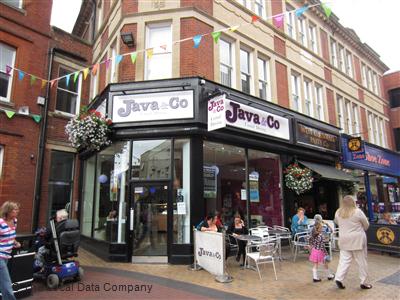
I’ll be at the launch party of our new Town centre based, computing initiative, ‘Hack Club’, with 6 or so of our young computer mentors drawn from Year 9 and 11, teaching the public about what’s best in computing and the digital landscape.  We are all pretty amused that our host coffee shop is called ‘Java&Co’ – one of the languages of the world wide web, and the worst that can happen is a lovely cup of hot coffee and a croissant all-round.  If you want to join us at the bottom of Maidenhead High Street– 10 am here – or of course on-line at www.clairescourt.com, where we hope to running a live feed of the event for a couple of hours to Midday.

Best to end with a bit more of Leonard Cohen: “And even though it all went wrong, I stand before the Lord of song with nothing on my lips but Hallelujah.”  Here’s hoping 2013 lives up to all of our hopes and dreams – Hallelujah to that!

Posted in Uncategorized | Leave a comment

The greater danger for most of us lies not in setting our aim too high and falling short – Michelangelo

… but in-setting our aim too low and achieving our mark.

It’s report reading and writing time at CCS, first full series of the year, and I witness 120+ hardworking colleagues writing as if their lives depended upon it. I don’t know whether all children and families read reports, but the process of reading and recognising the truth, victories as well as frailties is part of the process in building a child’s better understanding of themselves as learners. In recent times, it’s become fashionable to talk about Metacognition (I should know, I have led 2 seminar workshops recently), all part of the building of the conscious consciousness that makes a teacher more aware of the craft skills needed for their job.

We have worked really hard at Claires Court to establish a conversation with our pupils about the things they can do to improve their work and the progress they make at subject level, as well as in the broader holistic notions of holding appropriate values and adhering to golden rules. If truth be known, the setting of realistic goals and targets for one’s pupils is the hardest thing to do – challenging enough to really make a difference, but within reach of the individual so that they know how to bridge the gap.

One of the great exponents of this craft (giving feedback to learners) is Professor Dylan Williams*, and I read his various works with great interest.  His interest in improving this craft is the same as mine, namely that what happens in the classroom is 90% of the solution to a child/class/school/country’s needs. And the problem for all levels of our western society is that change is happening at such a pace that educational reform has been unable to keep pace.  Honestly, with the best will in the world, Governments in the UK, Europe and the USA have done their best to ‘improve’ schooling, and classrooms have improved vastly in the time Dylan and James have been pedalling their wares on the planet. The trouble is that classrooms have not improved fast enough; offshoring and automation have taken loads of semi-skilled, lower tier jobs away over the past decades and that erosion is remorseless.  Basic car mechanics is no longer a requirement when cars last for ever.  What price a milk-round these days for the willing small-scale entrepreneur?  That erosion will continue – entering the teaching profession used to be something that most educated to A level could aspire too, yet now most governments across the world recognise that they need to get the most numerate and literate into these roles if their education system is going to stay up with the Jones (Finland, Singapore, Honk Kong and Japan).  In a well publicised lecture in Salzburg last December, Professor Williams had this to say “It is as if we are walking up a down escalator. In the past, the rate at which our schools generated skills was greater than the rate at which the skill demands of work were increasing, and the availability of low skill jobs were being destroyed, so we made progress. But the speed of the down escalator has been increasing. If we cannot increase the rate at which our schools are improving, then, quite simply, we will go backwards”.

International research is important to study, absorb and inwardly digest.  Here’s a one liner that summarises what we know on how to become an expert – “Outside of the top 1% and the bottom 1%, anyone can become a professional musician if they practice enough”.  In Maclolm Gladwell’s book,  Outliers: The Story of Success, the 10,000 hour rule theory states: “to become an expert in a field of study, it merely takes 10,000 hour of focus and practice on the topic at hand“.  And what follows from this therefore is that teachers/schools/governments should not run a system that presses out the chance of success – because actually anyone with time, effort and motivation can become an successful practitioner in their field.  Now we can say expert, because of course becoming number 1 in brain surgery requires opportunity and experience too, way over this number of hours.  Back to Prof W. –

In the past, we have treated schools as talent refineries. The job of schools was to
identify talent, and let it rise to the top. The demand for skill and talent was sufficiently
modest that it did not matter that potentially able individuals were ignored. The
demand for talent and skill is now so great, however, that schools have to be talent
incubators, and even talent factories. It is not enough to identify talent in our schools
any more; we have to create it”.

Reaching back 450 years to the age of the Renaissance, when Michelangelo di Lodovico Buonarroti Simoni was in his pomp, the city fathers of Florence and Rome vied for his services, so obviously remarkable was his work as architect, painter and sculptor.  He could not have created all of this on his own, and so we know he developed his co-workers skills and talents to a very high degree.  He worked for 70 years or so, and his influence spread all over the developed world, from which we have never looked back.  This essay is not about Michelangelo any more than it is about Dylan; we know that the best way to achieve is to study well, with great teachers and so forth, but it is to understand rather more importantly that progression and development to levels of mastery can happen to us all.

So when I review all the targets and suggestions for improvement this winter, of course I will be looking for stretch and challenge, for the low hanging and readily achievable to be largely invisible, yet for humanity and understanding to be present in abundance too.  Because therein lies the rub; we can’t all be Michelangelo, but his words are very clear and if I might paraphrase using my own thought processes as a young child receiving an Airfix model as a present  “if it is easy to build, it’s not worth the making!”

*Mr William’s CV is fab – 1996-2001    Dean of the School of Education, King’s College London, then 2001-2003    Assistant Principal, King’s College London, then of to Princeton, NJ 2003-2006    Senior Research Director, ETS then back home to the Institute of Education, 2006-2010    Deputy Director, Institute of Education, University of London and now 2010-            Emeritus Professor of Educational Assessment, IOE.
Posted in Uncategorized | Tagged , , , , | Leave a comment

If you never change your mind, why have one? Edward de Bono

In our plans for 2013 and beyond, I make it quite clear that Claires Court will maintain a broad and diverse curriculum which, whilst acknowledging the primacy of English, Maths and the Sciences, will permit our pupils to gain skills up to mastery levels in the Arts, Humanities, Languages, Technologies, Physical Education and major games.
This may sound a curious statement, particularly now that the United Kingdom’s education is seen to be delivering the best of all the great western world economies* – what’s to worry about?
In a letter about the Government’s proposed English Baccalaureate Certificates to the Prime Minister on 22 November, twenty-two professors of Education express their grave concern over the adverse effect this rushed development is likely to have on both the life chances of many children and on the future national economy.

The professors are right to be concerned, because the narrowing of the curriculum is well under way, even here in the Thames Valley, across a broad range of selective grammar schools and comprehensive academies at secondary level. Perhaps the most obvious signs are the squeezing of the KS3 curriculum into 2 years, with GCSE choices forced on children at 12/13 years of age and the removal of sciences and other non-core subjects from the diet of those in the last year at primary school. At a time when all educationalists agree breadth and diversity are key attributes for developing a creative and entrepreneurial learning culture, Michael Gove and the DfE press relentlessly onwards with the whole scale sacking of this landscape.

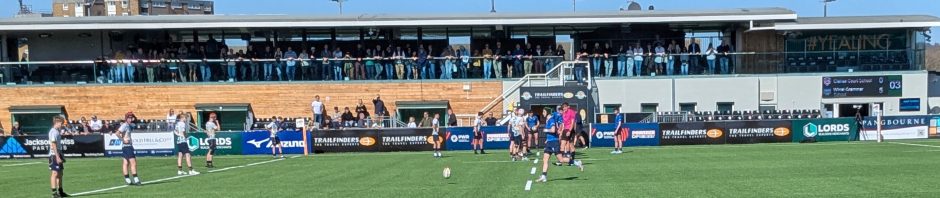
Saturday 1 December saw Claires Court’s artistic community embrace Maidenhead’s Art on the Street, with our Year 8 artists leading workshops indoors in the Nicholson’s centre, whilst our Musicians performed an extensive 3 hour set on stage outdoors at the top of the High street. 30+ younger drama students ‘flash-mobbed ‘Gangnam’ style, and year10 created their ‘statues’ throughout the market. Back at school on the same day, some of our leading year 11 boys pushed their comfort zone pursuing Google Certified individual status in a day’s training. If it hadn’t been so frosty, 100+ would have been playing rugby; but the flooded river didn’t prevent the boat club from training through the morning, nor prevent 30+ new Duke of Edinburgh candidates from commencing their closed season expedition skills acquisition.

Let’s not imagine these two stories are not linked. This week Chief inspector Sir Michael Wilshaw published Ofsted’s annual report. In it he made it clear that the differences in school provision was leading to “serious inequalities” for millions of children.

Ofsted places our borough near the top of a new league table ranking local authorities according to inspectors’ ratings of schools. Yet already, the teaching of fine art and music at primary level has become a minority provision, and the Olympic legacy ideals are disappearing in the rear view mirror for most young people in such schools.

Obviously, I am immensely proud that our hockey players have won 4 major county and national trophies this term, and that our young rugby players have retained the county rugby title at under 12, and the under 9s made it through to the Telegraph’s national final next term. The coalition government makes much of the rhetoric available to politicians in requsting of Independent schools such as ours that we should lead the way and share best practice. The reality is that Claires Court chooses to recognise that children, not league tables, are the purpose and focus of our educational provision.

I do hope the calls of 22 professors rattle David Cameron into action. Edward de Bono’s quote that leads this post encourages even the best that a change of thinking is possible. With the noise of Leveson and a failing economy occupying his attention currently, I worry that Mr Cameron is otherwise engaged.

The benefits of a modern Liberal arts and sciences provision seem destined to remain solely in those institutions such as ours, whose true independence makes the difference that inspires children to become confident learners  and considerate of others.

Sir Michael said this week  “The inequalities for local children are stark.” Yes, looking at our school ‘at play’ on Saturday, that’s really very true.

*http://www.bbc.co.uk/news/education-20498356

Posted in Uncategorized | Tagged , , , , | 4 Comments

“It is easier to build strong children than to repair broken men.” Frederick Douglas*

ISANet Newsletter 26 November 2012 – the ‘Weather-affected’ edition.

“It is easier to build strong children than to repair broken men.” Frederick Douglas*

This clear sighted statement about the development of the child into adult is by an orator I knew not of, whose story is worth reading*. In many ways, this is why I come to work each day, to ensure that young boys and girls grow successfully and develop a degree of resilience that will sustain them through Life’s troubles, whenever and wherever they might come. Hold that thought…

The immediacy of modern news is such that I don’t read about the failure of a new flood relief scheme pump to work, I actually watch the news video – http://www.youtube.com/watch?v=6TmK0TkHnUE
I am sure that every possible procedure was put in place to ensure the system would ‘fail-safe’, yet it did not, and people’s homes have been flooded out. The cost of the Flood-relief scheme was £1.5 million, and precious use that turned out to be. Hold that thought…

This last week, we learn that the DfE has overspent its £7.3 billion pound academies budget by £1billion, because of a tenfold increase in the number of English schools converting to academies. “The Department for Education (DfE) met the expense from its overall budget”, says the National Audit Office report. “The department was unprepared for the financial implications of rapid expansion,” the authors say. The government said it made “no apology for spending money on a programme that is proven to drive up standards” (source BBC news)

As no-one seems to have found the evidence that turning schools into academies actually leads to school improvement, (here’s one sophisticated report that tests the thesis- http://blogs.channel4.com/factcheck/factcheck/8994) it seems to me that such statements are made by DfE officials and ministers in turn, cynically avoiding the truth, and despite that, used to justify over spending £1000,000,000. That’s a big number!

Here’s the maths. The £1billion pounds is over a two year period March 2010-April 2012, in which the number of academies has grown by 2000 (from a low number of 203). The overspend represents a whopping £500,000 per school. Now you and I know that if we had that sort of extra money falling in our laps, we could make a pretty good case for suggesting that we could improve our school performance too! More on So where did all the money go here.

But as with the Flood relief scheme in Kempsey, this extra spending is no guarantee of making improvements; at least we know in Kempsey that to put the matter right, the pump has got to be switched on, but in education the picture is so much more complex. Across the country, what state schools are crying out for is for their basic infrastructure to be repaired, for roofs to be mended and for buildings to be renewed. The casual response of the DfE is that this extra spending has happened within Budget – coming from the draconian cuts that Local authorities have had to endure from their budgets. The DfE has built few if any accountability measures into their Academies, and you can read more here, on the govtoday website.

Learning things
1. I think we all know the secret of learning is not just about learning to read, but learning to listen well as well. Here’s a lovely UK website that has a mine of audio stories you might like to check out – http://storynory.com/
2. I don’t know much about the Knewton corp, rather grandly suggesting that “Education is right now undergoing a monumental shift, from the one-size-fits-all factory model to a digital, personalized model. Knewton is at the forefront of this change”. Well anyway, I was researching how to speed up reading, and this page on their blog covered a lot of the ground well.
3. Google’s world of wonders is like their Art project, a way of going somewhere without using petrol! I love the Jurassic coast and Ironbridge as examples of places you can visit virtually, as well of course as the Barrier Reef and Scott’s Antarctic hut, two sights rather further away.

Onto things Digital
● The Inaugural ISANet Unconference took place on Saturday 24 November. The main stream of talks was provided by Learning ‘slams’ during which 5 minute sessions under pretty rapid fire delegates highlighted some learning approaches or technical tips that worked for them, and this provided for an interesting, if eclectic mix of subjects. Unwitting stars of the show were undoubtedly the students of Claires Court and Wellacre Academy who presented with great polish and in addition were on hand to show the adults how to work the kit!
● I came across this simple little Google Search into Movie creator at the Unconference – really quite fun – here’s the tool, and here’s two movies I created about the ISANet using it – http://goo.gl/17Fym and http://youtu.be/Ida8O6Wgtp4.

And finally:  As the pressures of term get tougher, Happiness moves into short supply – watch this short TED talk by Shawn Achor on ‘The happy secret to better work’ – amusing and thought-provoking. http://goo.gl/C4WTh

Thanks for reading, listening and playing with this slightly edited membership newsletter for teachers and techies in education.

Best wishes

James Wilding

jtw@clairescourt.com

* http://www.frederickdouglass.org/douglass_bio.html . As I am married to a History teacher, I was reminded of his claim to fame as an upwardly mobile slave.

Posted in Uncategorized | 1 Comment

“Hard pressed on my right. My center is yielding. Impossible to maneuver. Situation excellent. I am attacking.”*

This famous quote from General Ferdinand Foch, when he held firm to prevent the French Army being overrun at the first battle of the Marne, 5 and 12 September 1914, is one that causes me to smile and reflect.  There is no doubt that as our old Registrar, Anita Roberts used to say, ‘Life is hard and then you die’.   I am not  so taken with writer David Gerrold’s addition –  ‘Then they throw dirt in your face. Then the worms eat you. Be grateful it happens in that order.’ Those that know me understand that my almost permanent state of mind is ‘ruthless and relentless’ optimism, which is why I guess I have stayed at the helm of this great school for over 30 years now.

I imagine the quote really does not adequately cover the Department for Education’s mood music in November 2012.  Here is what Mark Serwotka, general secretary of the Public and Commercial Services union which represents civil servants, has to say, “Gove appears to want to run his department as some kind of nightmarish right-wing experiment, playing politics with people’s livelihoods and putting at risk the very important services DfE civil servants provide to schools, teachers and the public”.

Let’s inspect what is happening within Gove’s department just now – as reported by the Parliamentary Education Select committee “staff morale in the DfE is flagging as a result of extensive restructuring over the past two years“.  A further review has shown that up to 1,000 people are at risk of redundancy as a plan to reduce administrative spending by an amazing 50 per cent by 2015.  Half of the buildings the ministry uses will go, and ‘everyone will be told to focus on ministerial priorities’. Over the weekend, schools learned via Mr Gove’s stooges at OfQual that the January GCSE resits for English won’t publish their results until August, so that we won’t have a repeat of this year’s crisis.  This is utter nonsense, because the January resits are vitally important for those candidates who are post 16 and need to gain a C grade in English to ensure they can apply for Uni, or for work with employers who demand C and so forth.  This morning, the exam board has notified us to confirm this and to say candidates can have their money back if taking the exam in January is no use to them.  Throughout the country then, umpteen hundreds of candidates whose results were blighted by the unfair upwards readjustment of grade boundaries  will learn today that actually what ever efforts they have made, they won’t hear for another year what grade they have been awarded. Expect trouble at mill all around, particularly in hard pressed English departments who thought that they had got it right last Summer, have been accused of cheating and over-marking by OfQual and Mr Gove subsequently, and who have spent their own time and energy to put right this wrong this term.  Perhaps they will be encouraged by Mr Gove’s words last week  “Exams matter because motivation matters. Humans are hard-wired to seek out challenges,” he argued at the Academies’ conference in London last Wednesday.  “Our self-belief grows as we clear challenges we once thought beyond us. If we know tests are rigorous and they require application to pass, then the experience of clearing a hurdle we once considered too high spurs us on to further endeavours and deeper learning.  There is no feeling of satisfaction as deep or sustained as knowing we have succeeded through hard work at a task which is the upper end, or just beyond, our normal or expected level of competence. Exams show those who have not mastered certain skills or absorbed specific knowledge what more they need to practise and which areas they need to work on.”

Our candidates don’t have any memory of where they went wrong last summer (they did not go wrong, of course, just scored lower than the revised higher score to gain a grade level implemented to lower overall pass standards) but what will irk them further is that there will be no chance of remembering what they did wrong in January when they get the results in August.  The wonderful thing about politics is that when the ballot is taken on a Thursday, our masters know our feelings within 24 hours or so – no waiting around for 7 months or so!

*From Wikipedia 1914

On the outbreak of the war, Foch was in command of XX Corps, part of the Second Army of General de Castelnau. On 14 August the corps advanced towards theSarrebourgMorhange line, taking heavy casualties in the Battle of the Frontiers. The defeat of XV Corps to its right forced Foch into retreat. Foch acquitted himself well, covering the withdrawal to Nancy and the Charmes Gap, before launching a counter-attack that prevented the Germans from crossing the Meurthe. Foch was then selected to command the newly formed Ninth Army during the First Battle of the Marne with Maxime Weygand as his Chief of Staff. Only a week after taking command, with the whole French Army in full retreat, he was forced to fight a series of defensive actions to prevent a German breakthrough. During the advance at the marshes in St.-Gond he is said to have declared “My right is hard pressed (“driven in” in some versions). My center is yielding. Impossible to maneuver. Situation excellent. I attack.” These words were seen as a symbol both of Foch’s leadership and of French determination to resist the invader at any cost, although there is little evidence that Foch actually said them.[5] Foch’s counter-attack was an implementation of the theories he had developed during his staff college days, and succeeded in stopping the German advance. Foch received further reinforcements from the Fifth Army and, following another attack on his forces, counter-attacked again on the Marne. The Germans dug in before eventually retreating. On 12 September Foch regained the Marne at Châlons and liberated the city. The people of Châlons greeted as a hero the man widely believed to have been instrumental in stopping thegreat retreat and stabilising the Allied position.

Posted in Uncategorized | 1 Comment

Electing a Who?

Throughout my adult life, I have always taken the opportunity to vote in Elections, be they local, national or European. But, it must be said, I have found it a bit difficult to find out about the elections that took place today for the new office of Police Commissioner for the Thames Valley Police.  Nothing has come through the letter box, and I have met no-one at the door or in the High street.  In short, it is one of those surprising ballots in which all the candidates are invisible.

Well that’s no quite right of course, because I have been directed to go on-line to http://www.policeelections.com/candidates/thames-valley/so I have, and once there, I find Six candidates.  Now I am sure they are all really genuine people as well as upright citizens, so I read their short introductions with great interest.  Says the UKIP candidate: “I have absolutely no professional experience with the criminal justice system” – so that’s him out then. Imagine having someone oversee the running of something as large and complex as the TV Police with absolutely no credentials to do so.  I read on: “Regularly work with Victim Support, Probation, Prison Authorities and suspects with addiction and mental health difficulties”.  That’s more like it from the Labour candidate, I think, and yet – what’s the party politics doing here?  Policing is not one that benefits from politics getting in the way, and I feel much the same way once I have read the Tory and Lib Dem manifestos too.   Two Independents have also put themselves forward (at significant cost, £6k a head) are there too – one (the man) is a great wow – read what his blurb says ‘We’re disappointed to report that Geoff Howard has not yet provided an introductory statement to PoliceElections.com.’  Well, clearly I won’t be voting for him then, if he can’t be bothered to even write himself an electoral thumbnail.  Actually (post the event) I find there are a plethora of sites, and Geoff is on some of them.

And finally, I reach the second Independent candidate, Patience Tayo Awe, and frankly, if I must vote, she’ll get mine, because she makes it clear her work is to be outside politics and she plans ‘to be a viable link between the police and the public’. So, all I have to do is go and vote then.  Easy.

And yet I can’t and don’t vote.  For the first time, I choose to protest by not participating in a democratic ballot.  My reasons are simple really – since the Coalition government has come to power, it seems to have challenged pretty much every activity and status quo I know, and wobbled it good and proper. Now that might be a good thing in some cases, but to shake in every way, every public service, every well established agency involved with keeping our Society safe and healthy and by doing lower their morale to rock bottom and then some seems to have been way too harsh?  I understand the need for cost savings in these impecunious times, but why then pay £100,000 to pay 1 person to supervise something as complex as a Police Force?  Given that the new single person is to replace a quango of 17 or so previously, I actually believe that such a larger number provided more appropriate democratic links than the 1 unseen & unknown candidate we were offered this time around.  Unless the elected official is extraordinarily able,  and the Police service see the implementation to be a good thing (and they don’t), the whole concept is doomed.  After all, the Police are increasingly concentrating on working together across the regions, to share costs and resources.

So there you have it; nothing more than a simple, straightforward desire to stand up and say that ‘since I have had not literature through my door, no contact with  a candidate, or with any tiny bit of propaganda to persuade me that this election is a good thing, I choose to vote with my inertia and do nothing’.  A pity really, because in real life I am a push-over for Democracy and all I needed was a reason to vote for something or someone that I could believe in.  Next week I’ll write about how the coalition government are replacing the entire national and local education framework with just one person and a private set of appalling prejudices about Learning. This individual actually is already elected, and of course I mean Mr Michael Gove MP.

Posted in Uncategorized | Tagged , , | Leave a comment

And in competition with our other expeditions, those in Cologne are doing their best – glad to see they are back in the UK safely. http://cologne.clairescourt.net/

Posted on by jameswilding | Leave a comment

Apparently hygienic toilets, judging from the first use of language our current trip have deployed in Cologne.  I am a bit worried about their reference to 2013!

https://sites.google.com/a/clairescourt.net/claires-court-germany-trip-2012/


Posted on by jameswilding | Leave a comment

So the Sailing crew are across the Med in Turkey this week, where Google Apps rule OK, except Sites, which are blocked at present.  Not that our intrepid sailors let that get in the way of reporting home of course.

https://sites.google.com/a/clairescourt.net/ccoe/home/turkey-trip

Posted on by jameswilding | Leave a comment

With so many trips out and about over our half-term, it could be difficult to stay in touch – so here’s the French department’s Normandy trip website for your edification, which will grow during the week as we watch.

http://normandy.clairescourt.net/Home

Enjoy.

Posted on by jameswilding | Leave a comment