An exemplar ISANet weekly Newsletter from the Principal’s Pen

The ISANet community is 440+ educators spread across ISA schools and further afield too, with membership in the Americas, Europe, India, South East Asia and Down-under too.  It’s been important for the Association to have a voice about Digital Literacy, to inspire within, to encourage and cajole, as well as to lead thinking in the wider world.

Here’s my latest post, which nicely links to some of the ideas in today’s other blog, and also shows the direction of travel of my own thinking for developments within CCS.

ISANet Newsletter 2 Monday 16 January 2012

The current series of ISA GAPPs courses recommence this weekend at Dixie Grammar School – 4 places left – find that link and the details of all the courses to May here – http://goo.gl/4SoF4

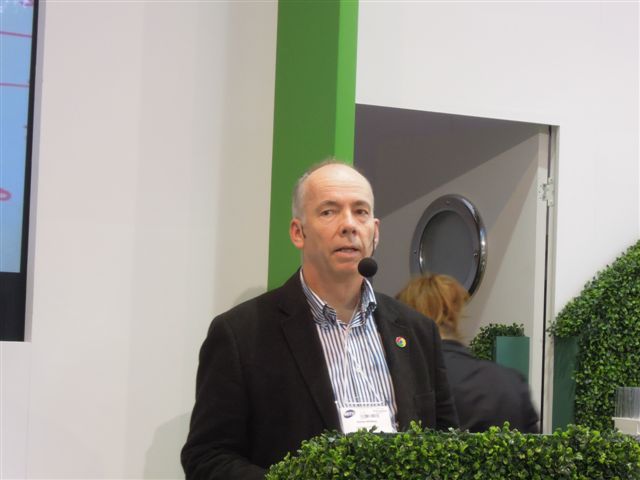
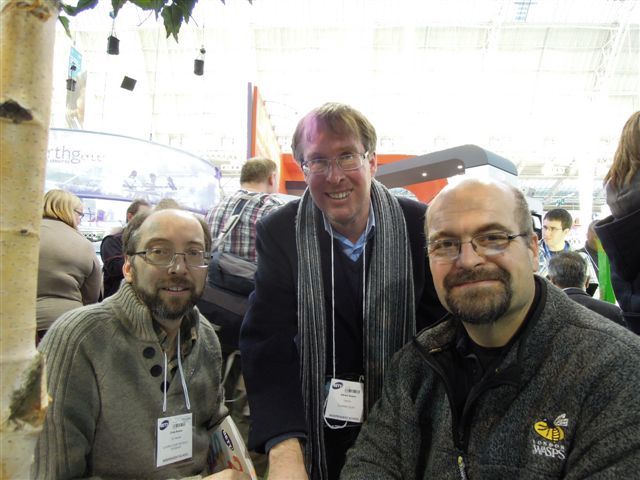
Many thanks to the gallant band of ISANet supporters who attended the BETT show last Saturday;  apparently the chair of our beloved ICT committee, Jim Stearns, got lost somewhere in the halls, so much was there to see! Joking apart, there were over 20 supporters of one kind or another (plus a lot more of the general public) to watch my 1.45pm Saturday Google talk on their stand to highlight the GAPPs training we are running, and that was heart-warmingly gorgeous of all!  Here’s the 2 slide shows I talked all over – http://goo.gl/TYYNS & http://goo.gl/Yj811

As a serious point, the two major Education shows a year are amazing, free CPD for teachers, with many stands running ‘celebrity’ chats from leading exponents in the field.  I am so convinced in the value of such shows to ensure Teachers update their professional and vocational knowledge, it seems a no-brainer to run a similar ISANet day at the education show at the NEC Birmingham on Saturday 17 March.  So if there are any regular attendees at the NEC Education show, please let me know so we capture the Zeitgeist first time round!  I have posted this date in the ISANet calendar.

Edutone Tablets: The ISANet team at BETT12 chose to visit the CUP stand on which their partners from the USA, Edutone, were showing their latest Android 4 tablets – sizes at the 7”, 8” and iPAD buster 9.5”.  Their VP, Michael Awerbuch has suggested he will ship to the ISANet project 30 such slates for review – some at the 8” size (circa £100 + vat), some at the iPad size at circa £150+ vat.  Battery life is circa 5 hours now, OS is Android 4.0 (ice cream) and the slates come with a leather case and inbuilt keyboard.  The slates play Flash (unlike iPads and in addition have an usb port (in addition to the other media outputs).  Edutone can brand tablets with school logos!You can see some info here –http://www.edutone.com/products/et-persona-tablets/ . 

Once I have confirmation of the shipping and arrival of Edutone slates, I’ll open a shared document so that ISANet schools can book them for a 1 week trial.  The point here is as follows – we have been looking for an entry price slate big enough to use as a book replacement, access point for cloud computing and cool enough to win hearts and minds.  I can imagine some schools taking these slates on for school use, whilst others will suggest their pupils bring them as part of their uniform!

Google Science Fair 2012 – first prize $50,000 plus

The 15 finalists (5 in each age category) will be awarded the Finalist Prize, a trip to Google Headquarters in Mountain View, CA to participate in the final winner selection event to be held on or about July 22 – July 23, 2012. Finalists will be required to attend the event for two days.  Above and beyond this are 2x$25k runners-up prizes and the grand winner a £50k award!  You can read a whole lot more here –http://goo.gl/U23pT

Entrants can submit Projects in any one of the following categories:

• Computer Science & Math

• Earth & Environmental Sciences

• Behavioral & Social Sciences

• Flora & Fauna

• Energy & Space

• Inventions & Innovation

• Physics

• Biology

• Chemistry

• Food Science

• Electricity & Electronics

Google UK are planning to have local winners too – Robin Morgan is responsible for marketing for Google UK, and more info will be released shortly.  The 3 age ranges are: 13-14, 15-16, 17-18, and in team entries it is the oldest age that counts.

Other points of interest arising early in 2012:  An interesting state-side initiative running for the last 11 years is the Freechild project – I rather like their Ladder of Youth voice and their ideas for different roles young people can play in society – read more here –http://freechild.org/.

Mr Gove has blasted ICT teaching in schools – Jose Fraser is one of the brightest thinkers in the UK on ICT stuff – here’s her take on what’s the difference between computer science, and the broader and much to be desired development in all schools, Digital Literacy. – http://goo.gl/fPsTh

I caught up belated with a Letter to New Teachershttp://goo.gl/zxPi4  written by Peter Gow, which strikes all sorts of plus points in advising new colleagues about the profession they are joining.  Written prior to the start of the Autumn, Term, it sits well now too, at the start of a new Year.

Some real fun for February 29th?  One of the UK stars of school blogging is David Mitchell, and he has had the bright idea that everyone on the planet should Blog on 29th Feb.  Now be honest, had you yet turned your mind to that crazy event, our Leap year 0f 2012?  Find out more here – http://feb29th.net/ and here – http://goo.gl/4j70T

I do hope your Lent Term 2012 has started off with a smile on your school’s face.  I hear today that ISI start ringing headteachers tomorrow to let them know that their Unified Inspection is to start in 5 days time.  GULP!

James Wilding, jtw@clairescourt.com

Posted in Uncategorized | Tagged | Leave a comment

Digital Literacy v Computer Programming

It has been really gratifying to be part of the ISANet, to help inspire and develop a national project to take schools and their communities to ‘the cloud’.  As the local paper, the Maidenhead Advertiser reports, we went live this last week with our work in conjunction with the Independent Schools Association and Google.  Three things have been created; a vision for how schools can integrate their entire productivity backbone, how teachers and pupils can access anytime, any where both the tools to be productive and the information to go with it, and a training programme from beginner to certified trainer in tools for the job that will serve you in good stead anywhere and in any language in the globe.  Now that’s some project, and I guess why Google were happy for me to talk about the ISAGrid for Schools and the Google Apps training programmes at the British Educational Training and Technology (BETT 2012) exhibition on Wednesday and Saturday last week.  Even more fun on the Saturday was the presence of the home team from school; not just to see ‘the Boss’ speak, but to continue their separate journeys to find and secure engaging and innovative solutions to keep what we do  inspiring!

It’s with a rueful smile that I report that Mr Gove doesn’t actually thing schools are doing a good job with technology; in his view lessons are dull and boring, and what we should be doing is to be far more innovative and imaginative and teach children computer programming.  Yep, that’s right – instead of encouraging children to engage with tools, ideas, technology and the 21st century, our Secretary of State  wants us to go back (1980s) to the future and teach them ‘coding’.  Hmmm.  Even with the best will in the world, the vast majority of the flower of British Youth will tell Mr Gove precisely what he can do with that kind of prescription.

It’s not that Mr Gove is wholly wrong; we need to help our ‘computer experts of the future’ have the opportunities to acquire such skills at a young age.  The company behind www.clairescourt.com is run by a past pupil, Bob Barker whose one of the brightest I know at this coding stuff, and our virtual school has been a standout plus point for the organisation for a decade or more, thanks to Shinytastic.  But the trouble is, we don’t actually know the jobs we need to be training them for; one man’s Website meat is another man’s mobile App poison.  You see the thing about a virtual world is that it is at least as big as the world, and actually in many ways can be a whole many more dimensions larger than that, because it can be.  Our digital guru has as many different roles as business will permit; ‘coding’ is just one part of a myriad of solutions we need. Who is going to ensure we are ‘favourite’ on the search engine’, whose going to blend our channels, etc (I am making the language up!).  In addition to our traditional website presence, we are currently running a School Management system integrating our entire working community, together with an entirely separate Google Apps domain for teaching and learning, an increasingly complex Facebook and Twitter presence to watch and comment, with lots of blogging and posting in all sorts of ways.  What with one thing and another, we are in danger of having up to 1500 people online for CCS every day in some way or other, pupils, teachers, LSAs, admin, Sysadmin, not to mention our ‘digital’ visitors.

But Mr Gove is of course focussing in on the children, and there are indeed plenty who complain that their experience at school is SOOOO much duller than their life at home, on screen.  And given that Electronic Media is big business, why wouldn’t we want to rally to the cry to populate the next generation of C++ jobs when they arise, rather than outsource the work (and therefore the Jobs) to the 1 billion South East Asian graduates who can do the work?  And Mr Gove is right to point out the differences between school and home; he does it all the time.  After all, he believes children should read 50 books a year, and that children should read the Harry Potter oeuvres by 11.  Indeed he quotes the Charter School exemplar in the States that do just this, knocking UK child readers from 17 into 25 place in the world order of things.  And I’ll even go with him on the ‘spare the teenage Nation ‘Of Mice and Men’ – though a great book and one everyone should read, but not the only one for goodness sake that is the required read at 16?

The trouble is that it’s case of throwing out Babies with Bathwater; if  we ditch teaching Digital Literacy in favour of Computer programming as he directs, it would be as heinous a crime as if we ditched teaching reading and spelling in favour of writing.  Where on earth are the JK Rowlings of tomorrow to come from if the breadth of their education is narrowed to just one of the composite of skills we actually need to teach.  The real point is that the nations’ children don’t have a proper balanced programme young enough.  I am utterly fed-up of being lectured to by Government ministers and educational experts alike who keep referring to achievement outcomes of 16 and 18 year olds, without recognising that it actually all happens between the ages of 6 and 13.  So narrow is the diet of the junior National curriculum before age 11 as measured by primary school league tables, that the whole focus is on English and Maths, and sack the rest of it.

So yes, let’s teach programming to our children, but let’s also teach blogging and collaborating, sharing in real time and using technology, and lets make sure that all those at primary school can be have the opportunity to be inspired by paint and craft, bat and ball, dance and public speaking and fill their boots to overflowing too.  And I wo9uld say that wound’t I, because I know there is one school in our town where that happens in abundance – just go here to see what younger children can achieve in their virtual worlds – CCS has been digital since the ZX81 and BBC micro, and it shows – http://goo.gl/G4kPZ .

Posted in Uncategorized | Leave a comment

A year of Blogging has passed, so what’s for the future…

Those lovely people at WordPress have summarised my first year of ‘A Princpled view’ with this annual report for the blog.

Here’s an excerpt:

A New York City subway train holds 1,200 people. This blog was viewed about 3,800 times in 2011. If it were a NYC subway train, it would take about 3 trips to carry that many people.

Click here to see the complete report.

Those that know me well are aware I also run a private network for teachers and fellow workers within ISA schools, known as the ISANet, a Blogging career for me that is now three years’ old. The two blogs serve completely different purposes; the ISANet exists to build a digital community around sharing resources, sharing experiences and sharing services, and through this collaborative working develop an understanding of how 21st century learning includes using digital tools.  The Google collaboration has been the latest of a series of high profile developments that have assisted many of the the 300 schools within to make considerable progress within elearning.

What this blog has allowed me to share through conversation and argument what I feel a modern, relevant education should be striving for.  I have every hope that in 2012, I can double my readership cover the globe perhaps a little more effectively, and ensure that our work within Claires Court Schools becomes even more widely known.

So here’s a promise that 2012 will be the most remarkable year yet in our school’s history (51 years young); notwithstanding the bitterness of the western world’s recession, centres of excellence are thriving, and innovation and excitement permeates our educational atmosphere at the turn of the year.  I also promise to keep some of my CCS hyperbole down a bit too.  :o)

James Wilding

jtw@clairescourt.com


Posted in Uncategorized | Leave a comment

End of Term Newsletter

There is a real sense of excitement around our school this December, and it’s not just because Christmas is coming! The dawn of any academic year heralds renewal but reviewing this term, I can see that exceptional progress has been made. For 2011-12, we welcomed new pupils at the main entry points into Nursery, Reception, Year 7 and Sixth Form, and new staff to teach and lead. It is what this new crop is achieving that sets the backdrop for this newsletter. On the water our sailors have notched up the position as best sailing school in the country, for example above Sevenoaks and Millfield in the latest national competition. You can see some highlights of their first national sailing season here – : http://goo.gl/VTXYg

Our U12 boys’ rugby squad were unbeaten all term, coming back from the recent Berkshire Rugby Festival winners overall of the 46 teams competing. Going one better, our senior girls’ hockey team won the indoor county championship (beating Wellington College in the process) and went on represent Berkshire in the southern regional stage in which they came 4th, holding their own against schools with vastly superior numbers of girls to choose from. The Young Enterprise team is building its new business case with the help of Cisco’s mentors, while Year 13 pupils are being invited to interview and receiving offers from Universities. We deliver a winning balance of size and engagement – small enough as a school so that everyone gets a chance and big enough to compete with the best in the country! You can see further evidence of this approach in the enclosed Achievements and Scribblings magazines which chronicle the life, work and times of our particular community in all its guises, from Nursery to Sixth Form. What I hope we exemplify best within is just how much your sons and daughters achieve in the round, with every aspect of their lives here filled with opportunities to succeed. We want our pupils to be fundamentally happy at school, to grow in self-worth, to achieve across the broad sweep of school life, and in so doing become the resilient men and women set to survive and prosper in an uncertain world.

I hope it is a “given” that we are a school for all abilities. So we should be, for those who join at 3 years of age have their whole futures ahead of them – we must hold open every possible door to them so that, in every sense, they can explore whilst within our bounds. We are a school of high Expectation, grounded in reality in terms of age and circumstance: our purpose is to nurture high Aspiration amongst our young. Aspirations are what drive boys and girls to be what they will become. As teachers, it is our duty to provide the type of school environment which will enthuse students to do more, to be more and to reach beyond their imagination! As 2012 arrives, it’s time to share with you our next major development plan. As I do so for the next 4 years, it is with some humility! It’s difficult to see ahead quite as clearly as one wants; back in 2008, I had little foresight of the coming chaos in the financial markets, in business and in society at large, and no view at all of the sweeping changes that a Coalition Government would bring to Education. Clearly far more devastating for our families has been the continued turmoil in the global economy, and for the time being there seems little to cheer on that front, though Hope springs eternal, so please read on! Because we have indeed done well despite that bleak backdrop to meet the 8 targets set in 2008.

The first target was to extend what we teach and learn well beyond the confines of the National Curriculum. What happens in the classroom needs to be around a rich and diverse provision; few junior schools have a curriculum as broad as ours so well supported by specialist staff teaching with an obvious love for what they do. There is an alarming gulf growing between the education experienced by our own pupils in these formative years and those in state primary schools. It is the main reason for new junior pupils to join, and it is the main reason why pupils should stay on with us into the secondary years. During the Key Stage 3 years our pupils enjoy a huge diversity of visits and experiences providing brilliant handson learning. Most of the local secondary schools do none of this, and it shows. As a school for all abilities, we are not in the race to be the best just for the clever. The Department for Education’s own research recently published shows that all the plans to fast track more able pupils in the state sector to take GCSEs earlier and accelerate their learning has had precisely the opposite effect – lower achievement, more resits and increased pupil disengagement from the very subjects such as Maths and English in which the Government expects success. But there’s something even more worrying about the state sector’s curriculum changes over recent years, and that is that with such a shortening of the curriculum, the inevitable consequence is ‘teaching to the test’ and head examiners ‘cheating’. Compare and contrast that with our delivery of a broad curriculum supported by an appropriate artistic, sporting and extra curricular provision, the whole evidenced by our successes this term. You can see some great slides from our recent Netball tour to Malta here – http://goo.gl/Cw7Uv.

Our second main target was to refurbish our school environment, and we have made notable steps on all three sites. Yes, we have more to do but the changes already wrought have significantly improved provision across all age groups. Building developments for 2012 include the renewal of the Ridgeway swimming pool, with plans being submitted to the RBWM panel as I write. We start using our new playing fields at Taplow soon, a useful and important addition to our facilities for field games. You can see a slide show of our various developments here: http://goo.gl/nC80M

We live in a digital age, and it has remained important that we use those tools to enhance learning in many and diverse ways. We are well-resourced in this area and the development of our Google ‘Claires Court Hub’ has ensured that our pupils have access to anytime, anywhere tools for learning, and a service that can only grow and keep us at the forefront of digital engagement in the 21st century. Expect us to manage this roll-out carefully though, because these are new skills to lie alongside the old, not to replace them. Reading, writing, drawing, debating, questioning and working hard and with gusto is how we already nurture talent beyond the imagination – that skill-set remains an absolute requirement. But what these tools allow us to do as never before is to collaborate across time and place, to enjoy the excitement of creating with others wherever they are in the world, and to recognise it is the ability to be flexible and adaptable learners that are now the prime requirements for successful employment.

Our fourth aim was to engage more closely with our town and surrounding area. Our 3for3 charity work has and will retain close links with those in our community who are challenged, who don’t have our benefits of background and success, or for whom terminal illness blights their future. Our sponsorship of Art on the Street has assisted in the rejuvenation of the wider Arts community and brought the work of our own young artists onto the High Street. Take a look here at our workshop in operation: – http://goo.gl/wJCdm. The David Course Challenge has brought a new major sporting event to the Schools’ Rugby calendar; indeed whatever the sport you’ll find us working hand in glove with our local clubs and county associations. Outdoor education and the Duke of Edinburgh’s Award Scheme are embedded well now for both boys and girls, providing further stretch and challenge. Our own Holiday Club offers not just care and activity for children outside of term-time, but excellent employment experience for the young graduates of our sports leaders and child care programmes. The other 4 targets – to promote further Staff professional development, greater PTA Liaison, maintenance of outstanding Pastoral Care, and an enhancement of pupil discipline and attitude to learning – are not so measurable. In these, we have delivered really well and they will remain core to our future development.

See my next Blog on how all this is moving forwards into our next School Development plan.

Posted in Uncategorized | 1 Comment

Some views from the wings…ISANet Newsletter 12 Monday 5 December 2011

First things first – it’s been a funny old week in the news, as ever.  Increasingly, as the chickens come home to roost, it seems that plain old common sense is the way forward after all.  As one market maker in Chinese Stock market futures wrote on Saturday “If it looks too good to be true, it probably is!”  Apparently Chinese corporate government is not so rigorous as that in the UK, so what appear to be amazing profit surges are no more than someone fiddling the books.  As if UK PLC is squeaky clean anyway.

Closer to home, there we were in the run up to strike day being promised Armageddon, what with the skies closing and all that Border guard stuff failing to hold-back the daily tide of illegal immigrants at our frontiers, and in reality it was a very quiet day (or so my son tells me who actually works for the BCA).

And I do get that same feel about the UK education scene too.  There were some humorous pictures in the paper of teachers making their point, in a thoroughly decent and middle class way; there was Clarkson going off the deep end too – and actually since that is his normal state of mind, then all was pretty much in order there!.  Like many Independent School leaders, I was thrilled that our staff did not see this as a fight with their own governing body (and whilst my Union, NAHT called me out, I too felt it inappropriate for the time and place), and so like many schools we were able to function pretty normally.  Surprisingly,  we were not actually back in the 1970s with bodies building up in the morgues (yet).

The funny old bit comes in the various bits of news leaking out from the research teams.  No sooner have we learned from DfE research that pushing bright pupils to early GCSE exams means lower grades, more resits, more teaching to the test and the subject Maths losing still further in the A level popularity stakes (read that here http://goo.gl/l4t7p), than we then hear the following

  • The new OfSted chief has decided that teacher performance must be rigorously checked against incremental/cash promotions of various kinds – http://goo.gl/syOfc
  • Children in dilapidated schools do better than in brand new gin palaces – nice guardian chat piece from 18 months ago here – http://goo.gl/PBD8b to juxtapose against more recent findings here – see TES 2 December and Professor Dylan William’s commentary on the BSF paradox – more money spent, less achieved in terms of teaching and learning.
  • Now that science is out of the state primary school SAT treadmill it gets less time in the classroom – http://goo.gl/teYpX
  • Armenia is to make Chess compulsory in its junior schools – http://goo.gl/mm5P2

OK the last news item is actually a couple of weeks old, but in general terms it’s probably likely to improve academic attainment more than having performance related pay, let alone rigorously auditing it, or new building or bringing Science back into SATs.  Almost every thing you can see in Independent primary education are the things that make it great.  Small classes, a commitment to the curriculum beyond the textbook, meaning sports, and art and drama etc., making ends meet, great customer service, and (shared with all teachers if only there was time and space) a love of teaching and doing the job well for the parents.  Despite my best efforts this year so far, I have not been able to get those close to government to look at the amazing work we do in our smaller private schools, and bring what they do into the narrative.  Instead, it is once again building anew;  I am so angry that Manchester Grammar School with its sovereign wealth fund of umpteen hundred years is going to open a new free primary school, supported by Mr Gove’s magic pot of money.  What kind of signal does that send out for all the other independent schools in Manchester who don’t have access either to the pot or to MGS patronage, but who have done an amazing job for years.

So if it were to bring back anything, I would bring back assisted places at once, start them at age 7 but forbid them to be available to the post Year 8 cohort.  That way we would really make a difference in the UK.  But this government are as many before them,  simply not open to ‘common sense’ or indeed evidence based investigation and management – we know that now that Mr Gove has started filling all the discretionary posts in his education project with cronies – we know that because surprise, surprise the Daily Mail tells us so – http://goo.gl/RbCQx

Posted in Uncategorized | Leave a comment

How building self-worth in school happens…

This week, a media agency from one of the major universities visited Claires Court to engage our Sixth Formers in some evaluative activities; research is vital to understand young adults’ views for their future, for University and for future employment. The agency made a particular call back to the head of Sixth Form to report that their experience with us and of our Sixth Formers was extraordinary. The openness and willingness of the students to engage seemed second to none.

Well that’s all fine and dandy, but how’s it done, this building of ‘confidence’. In this bog that will develop a bit for a few days, I thought I would have a go at showing you some of our tools in action.

So have a good watch of the presentation I am using this morning Friday 25 November with the Sixth Form, which is about building self-worth. It’s also of course about building resilience, anger and shame; raising political awareness and teaching too about the Armour our society through parliament creates to protect civilians who genuinely care.

http://goo.gl/mZi4C

I’ll write back later about the next steps that developed from the presentation.

Posted in Uncategorized | Leave a comment

Coalition versus Conservative Education philosophies

Almost every year in some form or other, I get to work with, meet or otherwise engage with a senior politician of government hue to discuss the politics of education. This year, in my capacity as Chairman of a national professional development committee of one of the Heads Associations, I invited the local MP, John Redwood to speak to 100 or so headteachers at a study conference, partly because it was held in his constituency.

Now before I tell tales, it must be said we have enjoyed a ripping day or so of intellectual cut and thrust, being presented to by figures drawn from other think-tanks involved in developing this nation’s educational agenda. The Sutton trust presented their recent finding of what makes for the most effective teaching and learning in schools. The Principal of one of the coalition’s new free schools in London gave a great pen portrait of the trials and tribulations of going from drawing board to school assembly in less than 6 months. Google’s leader in Education in these parts of the world highlighted the challenges facing our schools and his great company in 2012. Experienced educators, heads and senior managers heard much to stimulate and inspire.

As Mr Redwood’s host, I have to remain polite and detached. Indeed he probably didn’t put a foot wrong, stepping carefully through the very many mines the top stream present laid to catch him out. He was very clear that the views he expressed were those of a back bench conservative politician, rather than a coalition spokesman, though he and Michael Gove it appears are pretty adjacent in terms of educational philosophies. He spoke for the best part of an hour, without notes and covered the whole piece of education stretch & challenge without repetition, deviation or hesitation. Sadly though, he left his audience completely unmoved, for Mr Redwood failed to include any evidence based research to back up his trenchant, right wing, pro-selection for secondary school etc. views.

Regular readers of my blog will know that I ‘do’ evidence-based research. Indeed the story of the last decade is that failure to use such knowledge in decision making gets you into a pretty large amount of trouble. Witness the Iraqi war and the international banking collapse as 2 examples of governmental failure. A former parent and scrutineer from the FSA had been warning all about the bundling of derivatives to no avail for years; but the public mood of high office was not to declare ‘the emperor has no clothes’ but live with the benefits of growth, come what may – in short take the taxes now, borrow long and cross the fingers!

It’s not either that I hadn’t given the MP for Wokingham a very clear briefing. “You will be talking to far more primary and prep school heads than heads with 6th Forms. Please don’t bang on about the failure of A and GCSEs levels (they are changing anyway, we are awaiting outcomes from summer consultations) to lift the underprivileged to Oxbridge etc. Do have another look (I had pleaded) at the extraordinary mismatch in independent and state school performance and understand where the divide starts; namely in the early and junior years at primary school. No educational evidence in the world indicates there is value using one teachers to teach all the subjects. Diversity and breadth of activity and focus is what leads to the development of curious minds and committed engagement”.

AS our hour progressed, the whole of the education system below the age of 11 was left untouched, as if in perfect shape. Instead, the rhetoric spoke almost wholly of the need to select so that the better children could do better; “We select our best sportsmen for the world cup and the cricket team, why on earth should we not select our best pupils so that they too can be coached to that high standard we need and bring back success to all areas of the country. After all (he went on) only bright children from grammar and independent schools get to Oxbridge”. The Vulcan Smiled.

The current stats are that 54% of Oxford pupils come from the state sector and 59% of Cambridge’s. Now despite difficulties, that’s a healthy percentage, and growing each year, with a majority also coming from non-selective schools. To be honest, the issue is not about selection, but about the failure of state education to raise aspiration across the piece for all of their children – here I quote Dr Wendy Piatt, director-general of the Russell Group. This spring, she said “universities in my group will continue to do everything possible to increase participation from under-represented groups”. She added: “The issues of low aspirations, lack of high-quality advice and guidance and, most importantly, under-achievement at school still remain significant barriers to participation and can only be tackled by agencies and institutions across the board.”

And there is the rub; whose been in charge of education for the last half-century? Politicians, no, civil servants yes, and the DfE now in 2012 is no more fit for purpose than the Home Office or the Border Control Agency. The diet of low quality, narrow subject based curricula, excessively focussed on English and Maths from far too early (5) to age 11 has produced cohort after cohort of children whose attainment has plateaued. That’s not to say that good children can’t thrive, because they can, despite the poverty of their diet, because they have so much support and enrichment coming from their home environment. No it’s precisely the cohort that misses out at secondary that is missing out at primary, those without family support. Where’s the sport, the arts, the after school clubs that stretch and challenge, the mix of teachers and engagement of specialists?

I am told that the new pupil premium for those new junior schools that are seeking to provide really good provision as ‘free’ or ‘academy’ centres of learning receive both capital sums for building and for equipment plus funding up to £8000 a head per year current account to ensure they make a success as alternatives to the current state sector diet. Well I can assure you that great local independent schools such as Claires Court do just that and at lower cost already. Unlike the unproven new school, ours are independently proven (PISA study 2009) to form the world’s best schools. Ah, there’s a thing – evidence to prove our case, but sadly not the stuff that this or previous governments are interested in using. At the conclusion of his talk, Mr Redwood was honest enough to say that he knew little about the junior years, but he’d pass my comments on to Mr Gove. I’ll wait by my phone then!

Posted in Uncategorized | Tagged | 1 Comment

Half-term Newsletter, October 2011

Firstly, may I give a warm welcome to all of our families, new and old, on our return to this new Academic Year 2011–12. Because of the very many layers on which our School operates, it’s difficult to be certain who gets to know what, so perhaps it’s helpful to confirm the following; we have started back this year with 109 students in the Sixth Form, 501 secondary pupils, 270 juniors, and 68 in the Nursery, and I am particularly pleased that the Open Days so far have seen us busier than ever, meeting with prospective parents interested in their children joining the School.

The life blood of our Schools is of course the pupils, and the spirit shown by them at all levels has been really quite amazing. As I write, Year 6 are on the Isle of Wight, 57 boys and girls enjoying the opportunity to work together and be away from home for an extended week; their curriculum seems particularly exciting with Beach & River studies joined up with map skills and orienteering, and a wide range of activities and sports. Preparations for our half-term trips are also well advanced, as we send the 1st and 2nd XV’s to Italy on Rugby tour to Lake Garda, the senior Netball sides to Malta, the GCSE linguists to Normandy, the rowers to their first training camp of the year at Longridge and our swimmers to the ISA Regional Gala. Many thanks to all of our families whom were able to support our Bonfire and Fireworks night; we seem to have had over 1200 in attendance at the first big social event in this Olympic year. Star Fireworks display was exceptional (they won the UK award for best display in 2010 and you can see our display: http://goo.gl/qjMtE ), as were the contributions from all; the Cake Sales, Tugs-of-war, Sporting challenges, Pumpkins and Guys. The three PTA Committees gave outstanding support for the event, and of course benefit from the surpluses generated!

We also welcome Mr Paul Bevis to our Leadership group as the Head Teacher at The College, and he has already brought amazing energy and insight into our work, reinvigorating anew our efforts to confirm our status as the leading Junior school in the area. Here, we are adding to our excellent provision and the in-depth preparation for 11+ success, a curriculum philosophy and structure that builds critical, confident and resilient learners, who are inquirers, problem solvers, intellectual risk takers as well as effective communicators. We are further defining how we build the essential foundation of an enduring moral sense and a set of personal values that are underpinned by deep feelings of self worth and happiness.

In conclusion, the remainder of this term is full of extraordinary activity in the Schools, as you’ll see from the details in the Bulletins (see http://www.clairescourt.com); not just because the Parent/Teacher evenings commence, but also Music Concerts for Juniors and Seniors, our Open Chess Festival and our enthusiastic support of Art on the Street in Maidenhead on Saturday 3 December. The PTA’s business also includes their Barn Dance on Saturday 26 November and the PTA Family Disco on Friday 2 December. In short, we should have quite well filled your (and my) diary with a mix of events to suit all ages and tastes, and I hope to meet up with you sometime soon!

James Wilding

Academic Principal

Posted in Uncategorized | Leave a comment

Coming together is a beginning; keeping together is progress; working together is success.

I think we all know that Henry Ford invented the Model T Ford, indeed brought motoring to the masses, 15 million of them to be precise!  What I like about the Henry Ford story is that he was a self-made man; born and brought up on a farm, he was clearly acquainted with hard-work.  His mother died when he was 12, an event which evidently inspired young Henry to live his life as his mother would have wished. During his adolescent years, he used his interest in things mechanical to mend friends’ and neighbours’ watches, though his deeper interest was in developing things mechanical to take the hard-work out of farming using animal labour. At the age of 17 he moved to the nearby city of Detroit to be apprenticed as a mechanic.  15 years later, now married and experienced in both engineering and the ‘new’ electricity, he made his first mechanised quadricycle. For the next 6 years and 2 failed companies, he built and raced his cars to gather sufficient publicity for his enterprise. At the age of 45, he designed and built the Model T Ford, at 50 the mechanised production line that revolutionised manufacture around the world.  He lived to the grand old age of 83, and an icon of the self-made man, an industrialist who continued to care for the common man. Just when you think that his life-story was all good, it must be said his anti-Semitic views were given much publicity by his profound wealth in the 1920s, and will have stoked some of the fires that if nothing else, blinded those Stateside that needed to see the growing threat to Jews across the world, most particularly of course in Nazi Germany.

Let’s be clear about Ford’s success; in the late 19th century, a University education did not lead to manufacturing success. As now, most of the entrepreneurial success stories came from visionary adults who built their craft skills and understanding of the technological breakthroughs of the day to meet humanity’s needs. It’s all very well to think of the ‘market’ as being the driving force behind Ford’s ambitions, but his legacy of hardwork indicates that it was more than fickle opinion that created 15 million reliable motor cars! He married young, built his own farm and barn, clearly had his wife, Clara’s support as his ideas grew and collapsed in financial disarray before he eventually broke through.  You’ll find a similar pattern in Steve Job’s life story, another remarkable American who died last week. His company published this on their website “Apple has lost a visionary and creative genius and the world an amazing human being”.  Amen to that.  You can’t move in this 21st century without being touched by Job’s remarkable inventions, though it’s worth bearing in mind that neither of these men reached the summit without being part of a peer group that worked for that greater good of humanity as well.

And this is where our school comes in to play, as it is one of my jobs as Academic Principal to create and develop an environment within which boys and girls can develop as successful learners.  So that’s not just about creating an academic environment in which great grades can be achieved, but a culture which values diversity within achievement so that others whose strengths lie in the creative or idiosyncratic are also encouraged and supported too. That marks our school out as very different in the Eastern Thames valley, where good schools are synonymous with a selective entry, and a focus on league table position. Now whilst I’ll move heaven and earth to ensure our school is seen to the best in Maidenhead for academic achievement, there is so much more that we strive to achieve in terms of culture and atmosphere. And there is no better example of this happening in our community than the great school events we host, such as last weekend’s Olympic Bonfire night & Fireworks.  Yes Star fireworks are contracted to add their blitz to the blaze, 2010s Firework company of the Year, and well done them. But we would not have had an event without the hardwork of adults coming together voluntarily to put the ‘show’ together, which included super team work from bands, and pupils, and teams and families, without whose efforts we would not have had great guys and amazing pumpkins.

We’re currently processing the pictures taken on the day, but you can get some measure of the success of the show from this simple video I took using a Flip camera – http://goo.gl/qjMtE.  The music comes from Chariots of Fire (Vangelis) plus John Williams’ Olympic Fanfare. As you watch it, consider too the work of rather better modern day film makers than me, boys I taught at Claires Court, Christian Colson and Toby Hefferman. Christian is best known as the producer of Slumdog Millionaire, for which he received numerous awards including the Academy Award, Golden Globe Award and BAFTA Award for best picture. Toby is somewhat younger, just rising to first assistant director on movies such as Pirates of the Carribean; On Stranger Tides and Clash of the Titans 2.  Here’s a snip of Toby talking through his work on a previous title, Quantum of Solace – http://goo.gl/b2975.  Now it’s true to say that Christian was first an academic achiever and then a film maker, but Toby just went straight to film and has worked blisteringly hard ever since.  And like Mr Ford, whose quote I headed this piece with, Toby continues to work hard on all things, which brings him into contact with Claires Court.

As I lead the review of Claires Court’s development plan for the next 5 years, at the heart of our provision must remain the strength of resolve for our pupils for which we are renowned, namely to build confidence and self-esteem, to equip with  a range of  life-skills and to provide a modern relevant education from which develops a love of learning and an understanding of the need for care and consideration for others. And there is nothing more important than the combination of legacy of world greats to inspire us, and the proximity of the talented pupils, both past and present, who know what our school really stands for and causes them to thrive.  I’ll close with a second quotation, this one from Steve Job’s, and a nice one to inspire every young man and women as they come to work in our school.

“Your time is limited, so don’t waste it living someone else’s life. Don’t be trapped by dogma – which is living with the results of other people’s thinking. Don’t let the noise of other’s opinions drown out your own inner voice. And most important, have the courage to follow your heart and intuition. They somehow already know what you truly want to become. Everything else is secondary”.

Posted in Uncategorized | Leave a comment

You have to expect things of yourself before you can do them.

It has been an extraordinarily busy start to the new academic year, so much so that Blogging on matters educational has had to take a bit more of a back seat than I’d like. Every week at school has had major events and highlights, and include not just Speech Day and Parent Teacher Association AGMs, but a whole host of wider community involvement, most notably running the Regional Arts exhibition at Norden Farm Centre for the Arts on Tuesday 4 October. The winning artefacts have been on display in the Arts centre Gallery; the exhibition comes down next Monday, and the winners travel to the National finals, to be held in Wokefield Park later in November. Here’s a video of the exhibition that gives you some idea of the content, covering the work from pre-prep years to A level, in Fine Art, mixed media, textiles and ceramics, digital and 3 dimensions.  http://youtu.be/nGZ21R3MYr4

Art teachers from the 40+ schools in ISA London West install the exhibition by 11am on the day, adjudication is over by 3 pm and the whole lots down by 5pm – an extraordinary ‘flash mob’ approach to art display, and rewarding for the teachers themselves, as it provides valuable insights on how they and their peer group of specialists are responding in the ever changing world of art and education.

The great pity about such events is that an audience of impressionable children don’t get to see the work in its entirety. As my quote from the American Basketball player, Michael Jordan indicates, belief in one’s ability is a prime requirement of success. In Art, where so much is possible if one only knows, seeing Art is amazingly important as a stimulus to the creative juices. Visitors to Claires Court Schools will see our pupils’ Art pretty much everywhere, and that display provides a guarantee that current pupils will get ‘hung’ in the future. It must be said that the older the pupil, the bigger the ‘hanging’ so in the Sixth Form centre there are some seriously large pieces that would not find pride of place in the family living room!

And it’s not just not Art that needs to be seen. Throughout the curriculum it is vital that subjects are brought alive by being seen in context, often up close and personal. I was fortunate enough to visit Flanders with the Year 10 Historians, on their visit to the Ypres Salient, to the memorial of Tyne cot to the fallen at the battle of Passchendaele in the summer of 1917 and subsequent British deaths to the end of the war. There’s no doubt that our young students of War, male and female bear witness to the horror of that conflict, even though now separated from the events by 90 years or so.

Those that know our school well will be aware of the extraordinary range and diversity of our trips, providing every opportunity for hands-on education,. It’s quite amusing to see the faces of teaching staff supporting the Geography department when they arrive at Lulworth Cove on the Jurassic coast of Dorset, and spot for the first time the walk they and their charges are going to take up and over the limestone cliffs to Durdle Door! This year, blessed by the good weather we have all enjoyed, Year 8’s visit provided further exceptional opportunity to witness the extensive erosion that has created this world renowned spectacle, breath the spray and witness the sheer scale of this natural wonder.

There has been a national debate about whether the Health & Safety executive’s remit in recent years has discouraged school trips; this summer their guidance was reduced from 150 pages to 8, and the hope is that schools will rebuild their long list visit and outings programme. Suffice it to say, we haven’t ever cut ours, because it has remained essential in an all ability range school to provide the learning environment that works for all, getting hands-on and made-up to fit the experience to the educational need.  That’s why last Saturday, a whole bunch of us were out practicing our expedition skills in the Eastern Thames Valley; you don’t have to go far outside of Maidenhead to glory in the beauty of our countryside, and on occasion the impenetrability of its footpaths!

A fellow Berkshire Headteacher, Anthony Seldon at Wellington College, went live this week with his frustration of government placing the focus on school performance on grade related league tables. And he’s right – he and I have both been fighting extraordinarily poor exam board marking in some subject areas – most of our Girls GCSE Business studies results have just been raised a grade because of inept external marking of coursework for example. The extraordinary scale of school examination run by government that impacts upon our schools is damaging the very educational experience we seek to provide, and UK schools are now in full consultation about how the new GCSE programme should look from next September. All I can say is that we must give time for our pupils to learn from reality and make some mistakes, from which they can learn and be ultimately more successful in the future.

Posted in Uncategorized | Leave a comment