For fifty years, I have witnessed the evolution of education from the classroom frontlines. As a headteacher, I introduced the National Curriculum with optimism, only to see later reforms push high-stakes testing and diminish children’s creative writing. In response, my school designed a question-based curriculum, prioritising curiosity and creativity alongside knowledge and analysis. Today, only GCSEs remain as high-stakes tests at my school, but my concerns go deeper.
To add weight to this blog, here’s news of a national petition to highlight why play is so important
What worries me most is the gradual erasure of unsupervised play from children’s lives. The relentless focus on attainment and ‘outcomes’ has crowded out the spontaneous world where children explore, fail, and grow resilient. Children now face schedules packed with adult-led activities, which deprive them of opportunities for self-discovery and independence. This is not just a loss of leisure—it’s a loss of the safe space to fail and learn, a vital part of developing an internal sense of control and adaptability.
I see this even more clearly as a grandparent. My grandchildren, in private nurseries and independent schools, benefit from open-ended play and choice. Here, oracy and decision-making are valued as much as traditional skills. Heuristic play, rooted in the Greek concept of “discovering for oneself,” is central. Research and biology agree: play isn’t a break from learning—it is its most sophisticated form, nurturing innovation and critical thinking.
Through play, children gain firsthand experience of space, measurement, and quantity. Everyday materials spark curiosity and deep concentration, helping children learn to entertain themselves without electronics. Structured games like chess teach choice and consequence, though I must admit, I still haven’t let my grandchildren win!
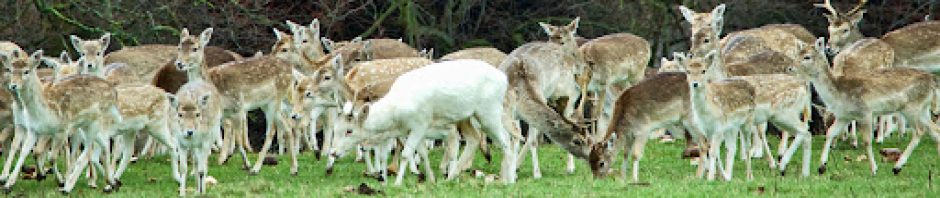
Recent studies, such as those on parkland fallow deer*, offer a warning: play occurs only in stress-free environments. Human interference—or, in schools, rigid curricula—disrupts this, leading to poorer emotional resilience and developmental outcomes. Policies prioritising test scores at the expense of play risk creating high-stress atmospheres that stifle the very growth they intend to promote.
The rise in childhood anxiety parallels these educational shifts. By removing the “relaxed field” necessary for play, we’re denying children the foundation for innovation and wellbeing. Schools must reclaim protected, stress-free play zones—much like deer need undisturbed woodland. These spaces should be rich in natural materials, free from constant adult oversight, and scheduled when children are alert, not tired or hungry. At my school, for example, one morning a week is devoted to outdoor exploration, fueling conversation, writing, and learning.
If we are to foster healthy, resilient children, we must rebalance our priorities. Play is not a luxury; it is essential to growth. In short, it’s the highest form of learning. Let’s ensure our schools reflect this truth.
*https://pureadmin.qub.ac.uk/ws/portalfiles/portal/394270502/arac072.pdf – research by Queen’s University Belfast, 2022
The research is quite clear.
The European fallow deer, scientifically known as Dama dama, is a widely distributed Eurasian ungulate whose survival and historical range have been deeply influenced by human translocation and habitat changes. While populations in its native Turkey face extinction risks due to urbanisation, the species thrives in numerous introduced regions, including Ireland’s Phoenix Park, where it has been studied extensively. Research shows that these deer exhibit distinct personalities, ranging from “beggars” who actively solicit food from tourists to “avoiders” who maintain distance from humans. Contrary to expectations, bolder mothers in peri-urban environments actually select more concealed bedsites far from human activity to protect their offspring from threats like unleashed dogs. As fawns mature, they undergo a behavioural transition, shifting from hidden, milk-dependent lives to active herd members that balance foraging needs with constant vigilance against predators. Finally, observing play behaviour in such livestock and wildlife is increasingly recognised as a vital indicator of positive animal welfare and emotional health.

 A Principled view
Hi James
I am thoroughly enjoying your reflections on your long and distinguished career in education.
I’d love to share them with our members via our website, if that’s ok with you? We can also pull out juicy bits for social media posts.
If you are happy with this, can I suggest we create a “from our Patron” section on our news page. While you are still our only Patron, this will work, but you/we can think of a better heading.
If you like, we can display a snippet with a link to the full article on your own Substack, or whatever it’s called, to, hopefully, deuce traffic there.
Let me know if there are any other messages we should include: eg “You can sign up to James newsletter/blog/articles here”. (Link to your own subscriber page
I have copied in my colleague Peter Clarke. He can subscribe to your blogs so he’ll receive them regularly and can work his magic with the AFIS website etc.
Many thanks
Michelle
MICHELLE DANIELLS
Founder & CEO
[Image]
12 Fratton Road
Portsmouth
PO1 5BX
U.K.
Tel: +44 (0) 7949 153319
E: michelle@afis.org.ukmichelle@afis.org.uk
W: http://www.afis.org.ukhttp://www.afis.org.uk/
The Association for Families of Independent Schooling (AFIS) C.I.C. is a community interest company, incorporated in England and Wales, company number 16817786
This email and any attachments are intended solely for the use of the named recipients. If you are not the intended recipient you must not use, disclose, copy or distribute this email or any of its attachments and should notify the sender immediately and delete this email from your system. AFIS has taken every reasonable precaution to minimise risk of this email or any attachments containing viruses or malware but the recipient should carry out its own virus and malware checks before opening the attachments. AFIS does not accept any liability for any losses or damages which the recipient may sustain due to presence of any viruses. Opinions, conclusions or other information in this message and attachments that are not related directly to AFIS business are solely those of the author and do not represent the views of AFIS.
Good morning,
Whatever your preference in regards to ‘a patron post’ James, your blog is amazing!
I’ve already subscribed, and love the way you word your thoughts. I equally agree with Michelle. Your insight is unquestionably invaluable, and sharing your thoughts through AFIS would be fantastic for all involved.
As we get to know each other better, you’ll learn that I am always happy to support as best as possible. If you consent to sharing your insights, in whatever capacity, then I’ll happily work with you to make this happen, in the easiest way possible for you.
Many thanks,
PETER CLARKE
Operations Manager
[cid:946f2184-1eb1-4d83-a849-4d49116e4c85]
E: peter@afis.org.ukhttp://www.afis.org.uk/
W: http://www.afis.org.ukhttp://www.afis.org.uk/