Being the owner of a school looks, from the outside, like being in charge. You can call yourself Principal, sit at the top of the org chart, and technically you are. But the Genghis Khan approach—conquer, dictate, move on—never once worked for me, and I watched it fail for other people who tried it too.
What actually running Claires Court taught me was that leadership in a school is a design problem, not a command problem. You have to know the subject content well enough that a Head of Maths can’t bluff you. You have to understand that education is, underneath the mission statements, a selling job—you’re selling learning to the children in front of you and selling seats to the parents paying for them, and if you forget either half of that you’re not really running a school. You have to learn to do the right things right, which is a different skill from knowing what the right things are.
And when something genuinely new comes along, you go back to school yourself—I was fifty-nine, sitting in a room being taught by people half my age, when I won a place on the Google Teacher Academy at Easter 2012, because the alternative was pretending I already knew.
Fifty years in education will do that to you. You become the person people ring when the board meeting went badly, or when a Head can’t work out why a good team has gone quiet—and these days it’s not just schools. Social enterprises call too. What I tell them isn’t a framework. It’s closer to a set of things I’ve watched go wrong, over and over, in places that had every reason to succeed.
A staff room stops speaking up long before anyone notices. Not because people are timid—because the last three times someone raised a risk, it went nowhere, or worse, it came back to bite them. I watched this happen at Claires Court more than once over the years, and the fix was never a policy. It was a Head or a Principal actually changing course in public because someone junior said something true.
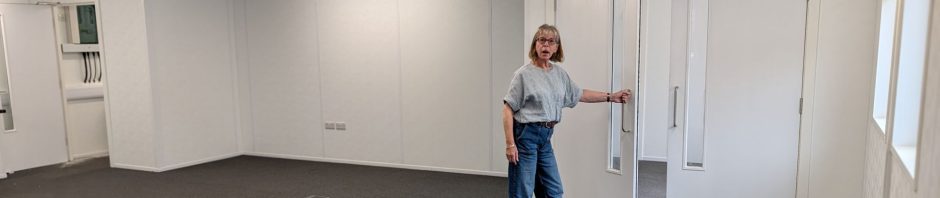
I got a chance to prove the same principle again this summer, on a much smaller and much more physical scale.
On 19 February 2026, my brother and I sold our shares in the school to the Licensed Trade Charity, leaving the school our parents started in the hands of a 232-year-old organisation with the standing to secure its future. Their money this summer went where it should—nearly £2 million into a new nursery centre at Juniors, and new sport and creative facilities for the Senior Girls and Sixth Form on the central site. What they gave me was the chance to design and rebuild the music centre and refresh the Drama Shed next door.
Trust doesn’t come from the meeting where you say the right things about a project like that. It comes from whether the cover arrangement you promised actually happened, whether the contractor who told you Friday meant Friday, whether you remembered what you’d said you’d do. Five solid weeks. Working drawings, contractors, a building that was to built off site, to go from empty shell to five working teaching spaces and be ready for the first day of term, with no slack in the schedule for anything to go wrong twice—which meant knowing, hour by hour, whether a decision was mine to make on site or someone else’s to make on the phone. A Head of Department who doesn’t know whether a decision is theirs will sit on it for a fortnight, not from incompetence but because nobody told them where the line was. A building site has no patience for that kind of confusion, and neither, I’ve come to think, does anywhere else.
Feedback in education has a bad habit of arriving only when something’s gone wrong, which teaches people to hide things rather than fix them.
The best Heads I’ve worked alongside give feedback the way a good games coach does—constantly, specifically, and mostly not in a formal meeting at all. That’s roughly how five weeks on a building site works too: you don’t wait for the snagging list, you say it while you’re standing in the room.
The social enterprises I advise have a version of all this too, just with a funding cliff attached. A trustee board that doesn’t trust its chief executive will strangle the thing it’s trying to save, usually through good intentions and too many sign-offs. None of the organisations I’ve helped were free of mess. The ones that came right had leaders who could say “I got that wrong” out loud, in front of the people who worked for them—and who did it often enough that it stopped being remarkable.
It’s probably the last thing I’ll get to say I led at Claires Court. I’m proud of it for a reason that has nothing to do with bricks: the creative education of teenage boys—the ones who’d never dream of picking up a violin unless the room made it feel like theirs—just got measurably better, because someone was still willing to go and stand in the empty building and work out what it needed to become.
That’s usually where things actually turn.
