Fake News: When Princes, PMs and the Met Police collide…

During the era of Donald Trump, during his rise to President and his time in office, the world of broadcast and print journalism brought to our eyes and ears that notion of ‘Fake News’, articulated so clearly by ‘The Donald’ as a defence against the many and varied stories his rivals and enemies surfaced against him to bring him ‘to book’ or ‘bring him down’.

False Information has been with us for ever (1), and very much formed part of Charles Dicken’s playbook during the 19th century, with ‘Fake News’ per se emerging in the 1890s, when daily print journalism in the UK, across Europe and the Pond permitted the publication of scurrilous stories and saw the emergence of what we now call the ‘Tabloid press’. Back then, such writing won the sobriquet ‘Yellow Journalism‘, and I quote “as Robert Darnton explained in the NYRB recently, the peddling of public lies for political gain (or simply financial profit) can be found in most periods of history dating back to antiquity, it is in the late 19th-century phenomenon of “Yellow Journalism” that it first seems to reach the widespread outcry and fever pitch of scandal familiar today”.

In February 2022, we see a perfect storm, in which the Prime Minister of the Day is being investigated by the Metropolitan Police, whose Commissioner herself has resigned because others have no confidence in her propriety and when the second son of our Monarch has chosen to buy off a ‘sex claim victim’. On the latter, whilst I rarely applaud the Daily Star, today’s front page has it so right:

The problems the Prime Minister has seem rather more than whether he has committed a crime in the eyes of the Law, as a consequence of the findings of ‘Party Gate’, the reports of multiple occasions of drinks events and birthday parties at 10 Downing Street from Summer 2020 to Christmas 2021, all of which seem pretty damning, it must be said. Boris Johnson’s far bigger problem is that the Prime Minister may have lied to Parliament, and if that is the case, he’ll have no choice, as suggested by his deputy Dominic Raab and so many others in his own party last month, and reiterated today in the Times by a formed Conservative attorney-general, Jeremy Wright, MP for Kenilworth.

How does Dame Cressida Dick fit in anyway into this picture, a public servant of scrupulously clean public character? Her problem is that during her 5 years in office so far, she has been charged with clearing up what independent observers cast as the culture of misogyny and racism within Britain’s biggest force. Dame Cressida is on record very recently in suggesting that such behaviour was never sanctioned in the police service and she being personally shocked by the stories of officers sharing images from crime scenes on WhatsApp. The trouble is, as the Mayor of London has highlighted, not only have such crimes occurred before she took charge, but that under her watch, such officers have not only been retained but promoted as well.

I quote from the Guardian article, Feb 10: “Khan had put Dick “on notice” last Wednesday that she had to rapidly reform Scotland Yard or lose his support for her leadership. His confidence in her was shaken to breaking point by a scandal at Charing Cross police station where officers shared racist, sexist, misogynistic and Islamophobic messages. Two of the officers investigated were promoted, while nine were left to serve in the Met.

All three stories are about very public national figures in the limelight. Prince Andrew’s clear lies and departure from any current standard of truth were highlighted in his television interview with Emily Maitlis, some 3 years ago. Writing last month, Mailtis said this about the directness of her questions at the time: “It is more than two years since I sat down with Prince Andrew in a Buckingham Palace ballroom and posed questions that seemed almost too surreal to ask. It is two years since the world heard his defence – about a birthday party in Woking, a trip to Pizza Express, and his inability to sweat – and shook a collective head, trying to work out what any of it meant. At the time, the specifics seemed almost comical. They spawned memes and riffs, quiz-show questions and stand-up routines. But now, suddenly, they feel deadly serious.” To be honest, I don’t think we could find anyone today who feels Prince Andrew has any integrity left, not even in his own family.

Cressida Dick has at least chosen to resign, a route left open to professionals who feel they wish to preserve their dignity in the face of public disquiet. I fear it may be too late, in part because so much will now unravel from the very carefully constructed facade of progress being made constructed under her watch. As Robert Verkaik explains in the Independent last Thursday “But the biggest challenges for her replacement – following her sensational resignation, hours after saying she would not go – may come in reforming or removing the dangerous attitudes that have long been allowed to fester among the junior ranks of Britain’s largest police service. They have been horribly exposed in the last few months.

The situation has many echoes of the bad old days of British policing – and perhaps they never went away, despite the succession of commissioners who made solemn promises to clean up the Met once and for all. But has the force ever known a crisis like this? In addition to claims of racism and corruption, the Met is also facing a charge of institutional misogyny.

Evidence is so widespread that they can no longer be dismissed by the reflex response that the good name of the service is being besmirched by a handful of dodgy cops involved in isolated incidents. The problems run deep.

In recent years, Public Figures across the globe have made it clear that they are subject to the most disgraceful smears, and that ‘Fake News’ and its parent ‘False information’ have been their watchwords as they try to rise above the vast lake of social media posts trying to ‘take them down’.

Sometime soon, both the Met Police and the Cabinet Office will publish their full findings on the ‘Party Gate’ scandal, and it’s a brave commentator that calls those to be yet another set of ‘Fake News’ so that Boris Johnson will survive. To independent observers such as those in Education, for whom truth, respect, responsibility and integrity are by-words for how our school communities are to thrive and grow, I celebrate that certainty we offer our leaders of tomorrow in these core values, and always wish that those in higher authority would bear true witness to them too.

  1. https://www.politico.com/magazine/story/2016/12/fake-news-history-long-violent-214535/
Posted in Possibly related posts | Leave a comment

“Ticking to the same Tock”: Entrainment – why children need need well-regulated adults close-by [Spoiler alert – please jump to the section on Mirror Neurons if you want to read what’s new]

entrainment

noun

  1. The act of entraining; specifically, the catching up and conveying away by live steam of minute drops of water from a boiler or of particles of sugar from an evaporating-pan or other vessel from which steam is exhausted.
  2. Any of several processes in which a solid or liquid is put into motion by a fluid.
  3. The alignment of an organism’s circadian rhythm to that of an external rhythm in its environment

The Century Dictionary.

Back in 1972, when I was a student studying Psychology (& Biological Sciences) at the University of Leicester, Dr Jim Reason and others introduced me to the concept of ‘entrainment’. It turns out that this phenomenon can be found the world over, as much governed by the rotation of the earth, the daily cycle of the moon and of course the interaction of the living things themselves on planet earth. And not just living things…

It turned out (explained the now Professor Emeritus, The University of Manchester) that this phenomenon was first spotted in Switzerland in Cuckoo clock shops, where all the clocks kept time with each other, but once separated into a multitude of households, each clock went its own way, and their owners needed to adjust their timepieces in ways they never needed to be before they were sold. In short, the miniscule vibrations of each clock nearby kept them all in rhythm. Who knew? Well, I guess the birds and the bees could have let mankind know, but that’s another story.

I’ve certainly written about this before, and frankly (as Prof Reason’s family know as I now have the privilege of educating his grandchildren) entrainment has informed my leadership in school ever since I became a teacher. Fundamentally, schools do best if they create ‘flow’, that sense of purpose, belonging and engagement which permits children to release themselves into their education knowing that they are ‘caught, conveyed in a livestream together, aligned to the natural rhythm of the environment around’.

I received this email today from a parent of a new secondary school child who joined us this term, having been missing education since July. My DH Inclusion had reached out for feedback after 3 weeks, “The weight of the world carried every day is as good as gone. N is willing and able to get up and go in each morning. N brings home little to no angst or anxiety each afternoon. N is a well-regulated, well-supported Autistic child who is in an enriching and accepting school.” There is a whole lot more, yet with 5% of our staff and 1000 children across 3 sites with coronavirus and 2 former staff funerals this week, I guess most would wonder why I write about this just now.

So let’s be clear: my wordpress account alone stretches back a decade, and I don’t think I’ve changed message over that period of time. What I have really enjoyed is that science and specifically human cognitive research keeps catching up with the work that people like me have led for decades, which sits almost in oppositional defiance to what our Department for/of Education and their regulator poodle Ofsted sets out on their oft-restated mission to ‘improve schools’.

Do you know any leader who would choose, whilst a country is in the middle of a pandemic AND the worst period of austerity and family challenge this century, to focus on school attendance statistics? https://schoolsweek.co.uk/dfe-absence-policy-attendance-consultation. Let’s be clear, I am not condoning absence from education, but there really is rather more going on just now than ‘skipping school’.

In short, I have lead my school aligned to a clear set of values and with an even clearer construct of no blame throughout this century. Previous research has confirmed in my mind that in most circumstances teacher/student groups need to be less than 1:20 and that we need to aim always to build individuals the intrinsic motivation to succeed. “Intrinsic motivation is made up of three components: autonomy, mastery, and purpose. Autonomy is having a choice in what you do, and being self-driven. Mastery is wanting to get more skilled and be recognised for competency. Purpose is understanding why you’re doing the work, it is often centred around helping other people.”

Given the selfish gene we see portrayed every day in parliament just now, why on earth would we focus children on ‘helping other people’? Here’s why, and it is all to do with the breaking news of the discovery of Mirror Neurons.

OK, Mirror Neurons turned up in the science literature in the 1990s, when Italian scientists discovered by accident that macaque monkeys brain patterns matched their hand movements normally recorded simply by watching humans reaching for food. I quote from BrainFacts:

“During the ensuing two decades, this serendipitous discovery of mirror neurons—a special class of brain cells that fire not only when an individual performs an action, but also when the individual observes someone else make the same movement—has radically altered the way we think about our brains and ourselves, particularly our social selves.”

Now here is the crux of the matter, now the science has moved on a lot. Far too little attention has been given to those other organs of the body connected to our cerebral cortex which have almost as many neurons, the heart and the stomach for example. I quote the same BrainFacts:

Before the discovery of mirror neurons, scientists generally believed that our brains use logical thought processes to interpret and predict other people’s actions. Now, however, many have come to believe that we understand others not by thinking, but by feeling. For mirror neurons appear to let us “simulate” not just other people’s actions, but the intentions and emotions behind those actions. When you see someone smile, for example, your mirror neurons for smiling fire up, too, creating a sensation in your own mind of the feeling associated with smiling. You don’t have to think about what the other person intends by smiling. You experience the meaning immediately and effortlessly.

And here in lies the rub. We need teachers to be relaxed, on message and in synch, because if they are working in harmony, then the chances their combined ‘charisma and example’ will be overcome by an individual dysregulated child or adult will be small. Schools can rather too easily be upset by a ‘bull in their china shop’, but the power of ‘Teachers ticking to the same Tock’ cannot be over-amplified. Indeed, as anyone knows if they have attended a huge amphitheatre gathering, the expectation of the crowd is everything, and seldom disappoints!

If you want to read more on this, I highly recommend https://www.wellwithinreach.co.uk/blog/2022/1/19/be-what-you-want-to-see-the-hidden-mirror-explained

“What we know is that the electromagnetic energy field of a human body is extraordinary.
It projects a great distance away from our body, 24/7, without any conscious awareness on our part.
We basically possess a mighty forcefield that the vast majority of us just aren’t ta
pping into.”

Posted in Possibly related posts | Leave a comment

Why schools do best when curriculum plans, ‘flow’ and the science of learning coincide.

I wrote some time back about the importance of Curriculum design, bringing to the fore the example of Singapore who had chosen via 2 steps to ensure that their students made better progress at school. Back in 2014, in a blog entitled The ever-shifting foundations of Good Curriculum design and practice – using PISA/OECD data! I was keen to emphasise as best I could that many advocates were there to highlight that the DfE could learn from such advice, including this report entitled Making Education work – news link here https://www.bbc.co.uk/news/education-25881774

My staff are currently attending to a substantial curriculum review at secondary level, in part brought on through the experiences gained in the classroom and through remote learning caused by the covid-19 pandemic and in part brought about by the competing demands for more effective inclusion, relationship, sex and health education in the light of current societal and governmental demands. It’s a heck of a challenge I have given departments, but such reviews are part of our familiar practice, and we have some great ‘steers’ from those in education that point the way both now and in the past1.

Curriculum plans need to cover the piece required, so over the period of secondary education for ages 11 to 16, we have a first section of subject skill, style and content confirmation (the stuff that separates subjects) coupled with a common approach the ways of working required (habits & responsibilities, both real and virtual). It’s pretty obvious that subject specialism at secondary level is both a real requirement to ensure deep learning happens, though what’s not so obvious is the way learning happens varies hugely between subjects. Every child enters secondary school with the expectation they can read, write and do sums, but many may never have come across a modern foreign language or explicit teaching in practical arts and sciences. Each subject leader has a specialist understanding of the ‘work’ their department needs to have in place prior to the start of a GCSE course of study for years 10 and 11, the last 2 years of compulsory education. In England, the government specifies both the content that needs to be covered and the mechanisms used for assessment at the close, to ensure the students’ success is measured, though it remains the school’s choice still to determine the curriculum methodology and wider ‘cultural’ expectations on their school community. The key area secondary schools need help with is the age range 11 to 14, where breadth of subject and activities is an absolute requirement, but the stitching together of diverse subjects does not necessarily join these together. I’ll return to these specific subject demands as well as to the wider importance of school culture once I have introduced the two other elements in the heading, of Flow and Learning Science.

‘Flow states’ were named as such by the psychologist Mihály Csíkszentmihályi, though I suspect we all have experienced in our own learning those times of complete absorption when ‘stuff happens and gets done’. I guess over many years of lesson observations I have seen countless times when the class of learners have been completely absorbed in the activities of the moment, lessons I would have marked as successful, and honestly seen quite a few when it was quite clear there was no ‘flow’ evident. Whilst on occasion it was fair to blame the teacher directly (talking too much and wasting children’s time on admonitions etc.), more frequently the cause was the inappropriate choice of task for the lesson content chosen. For ease of writing, I’ve cribbed wholesale from Wikipedia the principles of ‘flow’:

Components

Jeanne Nakamura and Csíkszentmihályi identify the following six factors as encompassing an experience of flow:

Those aspects can appear independently of each other, but only in combination do they constitute a so-called flow experience. Additionally, psychology writer Kendra Cherry has mentioned three other components that Csíkszentmihályi lists as being a part of the flow experience:

  • Immediate feedback
  • Feeling the potential to succeed
  • Feeling so engrossed in the experience, that other needs become negligible

Just as with the conditions listed above, these conditions can be independent of one another.

Just reading through those components of ‘Flow’, it becomes pretty obvious why the teacher present in the room can make a huge difference to ensuring that learners become engaged in their studies. A child’s trust in their teacher is paramount, knowing they can ask for help and not be criticised. Getting immediate feedback that they are on track requires the teacher to be vigilant, that broader classroom ‘feel’ of calm and that the activity has a personal ‘value’. Trouble is, we can’t enter Flow states that readily, particularly in new unfamiliar areas – there is the pain of new learning to endure before we have sufficient knowledge, skill and understanding to enter Dan Pink’s confidence of ‘autonomy, mastery and purpose’. If you’ve tried to learn to ride a bike, skate or ski, you’ll immediately re-feel the bruises of those early attempts!

Learning – now hear’s the thing, until recently, entering teaching as a profession did not give a great deal of focus on the underlying principles of how learning happens. Moreover, it’s a pretty obvious statement that at secondary level, most subject specialists were pretty successful when studying their chosen subject at degree level and beyond, which does not make them necessarily effective teachers for those children who have no natural aptitude for their discipline. All secondary teachers understand the importance of starting afresh with their subject, though that does not mean they’ll ignore the ‘work’ previously covered. In England, children are expected to have studied the following National Curriculum elements of history at primary school, to include a range of monarchs up to Queen Victoria, early British History, Romans, Vikings and Saxons any time soon, plus contrasting civilisations of those periods, ancient Egypt, China, Greece, Maya, Benin and/or Baghdad. Those ‘stories from the past’ help inform children’s more general cultural understanding of the value of different peoples’ contribution to the World as we now see it.

The biology of learning that takes place in the human brain commences with new experiences being directed to the Hippocampus, part of the limbic system a group of brain structures in the cerebral cortex responsible for behavioural and emotional responses. We’ve 2 situated in our cortex, just above the ear line, and they managed all the data coming in so we make sense of it, sort it and either cause an immediate reaction to it (movement etc.) or lay down the longer term memory of same into events and spatial recogntion or into learning and memorizing facts and concepts. Bit by bit, these laying down of memories permit higher order skills to be established; experienced car drivers and musicians do not need to worry about how all the moving parts required for their ‘virtuosity’ are connected, such procedural activities seemingly appearing in the subconscious. These ‘constructs’ and ‘schemata’ are built from birth, permit babies to make sense of the world, and over the years we lay down loads of different memories that link ‘Car schema’ in strange ways, not just how to drive one but travels to and from places and in different vehicles. Understanding Schema theory2 is essential in making learning stick, because if a previously constructed ‘schema’ can be accessed, such as ‘Love’, it makes understanding the behaviour of Romeo & Juliet more readily accessible in Shakespeare’s eponymous play.

As a school, we adopted the work of the Learning Scientists for our school culture back in October 2017, in order to pull together all the many strands on theory and practice into one ‘handbook of Six learning strategies’. We’ve also tried as hard as possible to stop using the word ‘revision’, because there is so much more to learning to be done before re-learning can happen, and because work needs to be visited a number of times in a number of ways to truly ensure the concepts have been grasped. We’ve also had to take much more notice of forgetting curves, which highlight just how easy it is to forget new matters within hours of having studied it!

Understanding why curricular design needs a spiral approach is pretty obvious, as that plays into both developing robust schemata that make new learning easier and revisits learning making sure that when exam answers are needed, they are available for immediate use. Providing opportunities for ‘Flow’, having lessons long enough and uninterrupted in which more complex skills can be embedded through learning activities will mean field trips for physical geography or ecological sampling will be the best so flow is established. Indeed visiting a superb drama production can make such a difference to the study of a play; whilst it might not make a difference to an exam answer, it might actually inspire a reluctant learner to dance, act, perform or work backstage, re-motivating them in the process. Establishing the right learning experiences to create the more sophisticated moral and cultural codes we need for individual and societal benefit now present educators with our biggest challenge. It is no longer enough to use examples from US history to establish the presence of race in our curriculum, nor to represent humanity by ignoring the contribution made by females, nor to ignore the appalling effect adolescent access to the internet brings to their understanding of sex and consensual behaviour. Given the fragmentation of the lower secondary curriculum I have referred to earlier, I see my job as curriculum leader/designer to pull together this area into a really coherent whole, to ensure for example the Maths department play their part in social instruction (Turing/Lovelace/Williams) whilst ensuring in a school that manages its boys and girls education on separate sites that ‘nil detriment’ arises through such separation (DfE paper 2021).

I’ll close by making reference to some pretty modern understandings now arising about the growing epidemic of attention deficit, anxiety and mental health in children, now at levels 100 times greater than existed when I first entered the profession. Many of the unintended consequences of moving to a digital world included the swapping by children of external play for screen based games. 20 years ago and more, the damaging loss of play areas in communities began to be redressed by the Children’s Play Council and its successor, Play England, where thanks are due to their ‘sustained, effective lobbying by the Children’s Play Council/Play England (amongst others) that such significant sums of public and lottery funding were committed to play’3. The Play England report in the same year caused a media storm with headlines such as “Go OUT and play! One in three children has never climbed a tree and half have never made a daisy chain” in the Daily Mail at the time. Austerity measures of course overtook the generosity of the government of the day, and we see now even more clearly through the #lockdowns of 2020/2021 how damaging to children’s physical and mental health development is the loss of independent play and its associated risk taking/independent learning/schema development.

If you have not listened to Jose Long’s impassioned broadcast for the retention of Adventure playgrounds on Radio 4, do listen here…https://www.bbc.co.uk/programmes/m000zcf5

Anecdotal experience as well as scientific enquiry has confirmed that learning cannot take place when people are stressed and anxious’. It’s worth noting that flight and fight caused by physical stressors stimulate the body’s production of Adrenaline (hormone producing short term -15 minutes- response) , diverting blood to respiration, sense perception and muscle readiness system so the body can act immediately to make reaction. If the stressors remain, then the adrenal gland also produces Cortisol, which shuts down other systems too, such as reproductive, digestive and immune systems. Whilst you can runaway from a physical threat, the invisible threat caused by stress is not removed by either of these hormonal releases. Under such stresses, short or long term, human IQ crashes, and ceases to be able to reason or problem solve4.

All the above means that a school day must take into account all the physical and mental needs of its community, both adults and children. Many current school schedules do not begin to take these into account, putting a huge premium on academic achievement in English and Maths from an early age in the Junior school setting, reducing at the expense now of many of the other requirements for a healthy education. At secondary level, there has been a dramatic reduction in break-time length, meaning many timetables simply do not permit sufficient down time between lessons for the natural effect of rest to lower stress levels to take place. Moreover, DfE and Education leaders have increasingly advocated silence in corridor requirements, further reducing opportunities for play and conversation. With days at school becoming shorter in length, and parents unwilling or unable to permit children to play unsupervised outside, the ‘caged’ nature of childhood is becoming more obvious, and children themselves unable to manage the social interactions between themselves that they would previously have learned at unsupervised play. I don’t have an answer for other schools in this area, but am keen to highlight that for my school we aim to offer a working day covering 8.30 to 4pm with after school hour long activities in which fun and choice have a chance to ‘flow’. Routine is visible everywhere, where visibly ‘kind’ behaviour is noticed and praised, where tech is universally available for each child and can go home too, but in a safer ‘school cocoon of provided services’. Where possible, this means that our boys and girls can come and go to school, learn safely and enjoy their childhood and as an added bonus, do very well academically indeed.

1. Rosenshine’s 17 Principles of Effective Instruction – Unesco paper 2010 – http://www.ibe.unesco.org/fileadmin/user_upload/Publications/Educational_Practices/EdPractices_21.pdf

2. Evidence for Educators website – https://overpractised.wordpress.com/2022/01/02/catalyse-learning-using-schemas/

3. Urban playground website report 2011 – https://rethinkingchildhood.com/2011/09/28/play-england/

4. Manchester Anxiety Help website explanation – https://manchesteranxietyhelp.co.uk/adrenalin-and-cortisol-in-anxiety-disorders/

Posted in Possibly related posts | 1 Comment

Making plans for life’s journey ahead

If ever there was a time to consider that life is not predictable, ‘now’ in December 2021 is it! My school’s academic term is coming to a close, we have 11 teachers and 11 support staff off currently, which represents circa 10% of our front of class workforce. Just shy of 25% of the children are not able to be in school, partly because they are unwell (7%), partly because their families have been touched by the Omichrom variant, and part because of the need to form a family bubble for the protection of vulnerable family members at home. We’ve been tracking the more general % for the locality, which are rapidly spiking this week, hence the family precautionary measures keeping a larger number at home.
Of course life must go on and the fat that we’ve been able to celebrate Christmas virtually using our pupils ‘on screen’ has in part permitted that drawing together. If you have the time, please check out the spiritual messages that Rev. Sally Lynch (Seniors @St Lukes) and Rev. Jeremy Harris Juniors (@All Saints)

One of our teaching staff in the Outdoor Education unit, James Wragg has chosen to cycle around the coastline of GB, starting in Suffolk some 19 days ago. For our end of term assemblies, James Shared the following video of his ‘making good progress’ and it gives a great take on how life is all about making on course adjustments, rather than assumptions about the pre-laid plans always coming through on song.

James has chosen to cycle anticlockwise around the GB coastline, starting from Suffolk and this is his ‘phone home’ message after day 19. It brought tears to my eyes and pride to my heart.

As James makes clear in his conversation, we all have to check our steps on our journey if not every day, then most days. That’s a great reminder for us for the future, when increasingly industry seeks not to seek new recruits whose amazing qualifications dazzle, but whose pragmatic common sense is non-existent. So long as learning curves still are an excepted understanding of a challenge that the commercial world embraces, in addition to sector knowledge in your industry, you also need bags of experience and common sense at a relatively low level. And you can only get that by putting yourself about a bit – like cycling around GB – go Mr Wragg, GOOOO!

Posted in Possibly related posts | Leave a comment

“Our greatest glory is not in never failing, but in rising up every time we fail.” ~ Ralph Waldo Emerson

The daily news tells the consistent story of how leaders, in whichever domain they are to be found, have to rise once more to the challenge of command, having just received the bloodiest of noses. This week we have seen Presidents, Prime Ministers, CEOs and the rest receive ‘wounds’ that for many less strong could prove mortal, but because they have experience, strength or simply courage, they’ll pick up once more their challenge once more and, having learned from the experience we hope, not make the same mistake again.

And because my posts do get read over the arc of time, this week (commencing 1 November 2021) has seen

  • President Joe Biden lose the safe Democrat senate seat of Virginia to the Republicans
  • COP26 delegates chose to fly in from all other the world to attend in great ostentation the COP26 meetings in Rome and Italy, as a consequence showing they don’t really care for climate change if it involves not using their Jets as toys
  • President Macron having to back down in the France/Britain fishing squabble around the Channel Islands
  • Prime Minister Boris Johnston probably doing all of the above and trying to change the parliamentary standards process, ostensibly to save the Conservative MP Owen Paterson from suspension for ‘sleaze’, but rather pointedly perhaps to save his own reputation as he is soon to be up before the same process in parliament as well.

Frankly, the Westminster bubble of politics is so not important just at the moment, because the whole matter of Climate change is affecting all of humanity, and in the face of the change becoming Emergency, we need the concerted action of the whole of the developed world, and those we might otherwise wish to pull down are frankly the only people in play who have the power to make a difference right now. And to that end our own Prime Minister has rather rapidly stepped up to the mark. Critics are quick to state that all Boris can do is make rash promises, and there is no clear plan behind the rhetoric to ensure his proposals become deliverable. This is where I reach for Raplh Waldo Emerson once more:

“The good news is that the moment you decide that what you know is more important than what you have been taught to believe, you will have shifted gears in your quest for abundance. Success comes from within, not from without.”

Over the past 50 years perhaps only equalled by the Victorian era, the technological revolution is making things possible that we could previously scarcely believe. Computing power, artificial intelligence, manufacturing at scale in new technologies providing locomotion, power, energy and more, and as a consequence reducing our carbon footprint as rapidly as possible. From EV cells to hydrogen power, the market can grow rapidly if the powers-that-be open the right markets now – to expand the replacement of coal and petroleum products by green methods, or at least other understood methods that clearly do reduce the damaging air pollution, the prime cause of the current conflagrations and weather systems damaging peoples across the globe.

Schools in the UK are very well placed to lead the education required for the future we desire, and government here has a real part to play as well, changing the focus on the striving for the individual at the expense of others to ensure success of the next generation is most assured. The current employment crisis in the UK highlights just how much we need the skills of all of the people, and that we must value those skills differently. Why can we not recruit sufficiently into the area of care, health, education, service (be this civil, military or supply chain)? The obvious answer is that we have been importing these elements of the work force from overseas for so long now, we have forgotten how to develop from within, marked of course by the sheer unwillingness of ’employers’ to pay a competitive salary because it’s been so much cheaper to import.

In reviewing where our former Sixth Formers have gone since 2000 in terms of employment, it’s quite obvious that they have filled every niche, nook and cranny, from hospitals to Hollywood, welfare to waste management, military to manufacture, and they have skills in abundance to offer. Sure the police, military, education, health and care are well represented, as to every where else, in part because the families our children come from have themselves benefited from the joys and challenges of full employment and all that brings. What successful societies do (whether patriarchy or matriarchy, elected or dictatorship) is ensure every member is supported through their childhood journey and when vulnerable as adults too. It’s important to remember that everyone of our own pupil’s homes is likely to model successful economic employment and the security that provides.

One of the unintended side effects for democratic countries is when and where the individual is given greater freedoms to make their own choices but at the ‘expense’ of reduced public services. We’ve seen that in the UK with the ‘loss’ of council housing giving rise to reduced stock and higher costs to tenants, and elsewhere in the world where health care is not provided universally. As the arguments in the UK wage to work out where to build all the new homes we need for our growing population, we see our own government twisting and turning by the month. Not that long ago the headlines were speaking of removing the ‘protection of the Green belt for much needed house building’.

As the Financial Times reported last month “Boris Johnson last year promised to tear up England’s “outdated and ineffective planning system” to make it easier to build new homes. But his proposals have since run into strong opposition, raising doubts over whether the UK prime minister’s reform to fix the housing crisis will proceed. Johnson sacked Robert Jenrick, the housing secretary responsible for the sweeping planning reform, in September. He was replaced by Michael Gove, who has put the contentious proposals under review”. When we read the words ‘review’ this does mean further delay and, if nothing else, the Chancellor of the Exchequer pleased he has not had to reach into the tax pot to pay as early as he might have otherwise. But I digress…

In short, for a country that makes the rules and creates the boundaries within for its society, it is clear we need sufficient freedoms and opportunities to keep the twin flames of innovation and inspiration alive. Britain has done incredibly well with its recycling regimes, a clear example of rules to which society has concurred. I see no reason why we won’t meet ambitious Carbon targets even if the route to which have yet to be established. Many of us have already changed our behaviours, vehicles and purchasing to support local and home brew, but as educators we have to manage the expectations less by preaching and more by supporting the young whose voice is very much in favour of a ‘change for the better’. And so we do need to find even more time in schools for children to practice the skills of risk-taking and innovation, bearing in mind that most of these areas are actually covered by the ‘nice to do’ subjects such as art, drama, music and sport, because the core academic disciplines have been moved from practical and project-based to knowledge base for which there are ‘correct’ answers to be given.

In opinion terms I hear our new Education secretary Nadhim Zahawi talk about the need for state schools to lengthen their working days to encompass the opportunities to permit those most affected during the pandemic through lost learning to catch-up. What he must be very careful not to do is to extend the working day and ‘fill it with stuff’, because that is less needed than providing a secure school ‘working’ environment in which children can be challenged to try things, fall over, bounce back and have another go. I close with 3 further thoughts from Emerson:

“I like the silent church before the service begins better than any preaching”, a great reminder to us all to architect the environment and atmosphere and step aside…

and “Do not go where the path may lead, go instead where there is no path and leave a trail.”

What we don’t need are ‘clones’ in our children, but individuals of purpose who understand that “To be yourself in a world that is constantly trying to make you something else is the greatest accomplishment.”

Amen to that.

“Our greatest glory is not in never failing, but in rising up every time we fail.” ~ Ralph Waldo Emerson

Posted in Possibly related posts | Leave a comment

Claires Court Jubilee Tree Canopy project

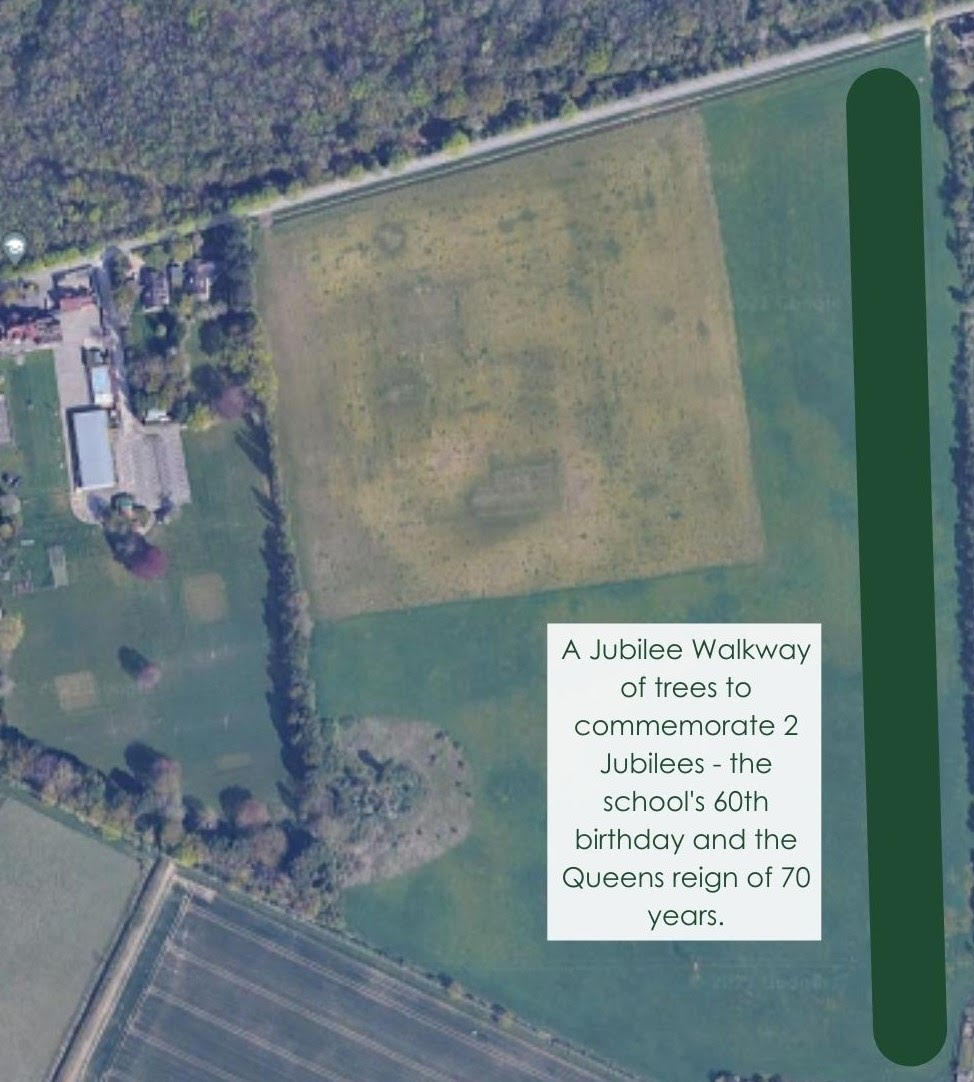
In order to celebrate two major Jubilees this academic year, the Principals confirm their intention to create a woodland tree canopy and wildlife corridor across its fields at Claires Court Junior Boys by Maidenhead Thicket. The new canopy will be aligned north to south, creating a wildlife corridor between Maidenhead Thicket and its southern boundary with the green way that links Firs Lane and Woolley Firs Environmental Centre on Cherry Garden Lane.  

The first Jubilee is of course the one we missed during last year’s school closures, that  being the school’s Diamond Jubilee to celebrate the 60 years that have passed since the school first opened in September 1960. 

The second Jubilee has been created nationally to mark Her Majesty’s Platinum Jubilee in 2022 which invites people from across the United Kingdom to ‘Plant a Tree for the Jubilee’. To be known as “The Queen’s Green Canopy” (QGC), it is a unique tree planting initiative, with a focus on planting sustainably, the QGC will encourage planting of trees to create a legacy in honour of The Queen’s leadership of the Nation, which will benefit future generations. 

Location of the new canopy 

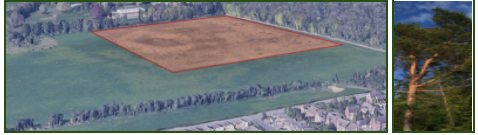
The photograph looking west of Claires Court Fields shows the lovely row of Scots pines that already make one half of such a corridor, though after the 100 or so years the trees have been planted, they are showing their age and gaps are appearing. The new trees will be planted 10m to the west of this line, accompanied by native hedgerow plants to link the larger canopy trees together.  The gap between the two will be kept mown and the trees cared for to encourage that sense of a well-tended landscape for the deers, badgers and other wildlife that traverse our land. 

How families can help

So…we are seeking 100 Claires Court families to choose to provide one of the larger 100 trees needed to create the main canopy corridor and to be identified in time with a family plaque on the tree, provided by QGC.  We have chosen our local nursery, Stubbings, to provide both the trees as well as tree planting kits to ensure the planting is a great success.  Stubbings Nursery will provide each family who purchases a tree the support structure to ensure it thrives which includes the stake and ties plus an environmentally friendly tree protector. The total cost per family will be £69.99. As a certified nursery, Stubbings will ensure that your tree is healthy and that it has been grown in the UK.  

Furthermore, for each tree sold, one tree will be planted in the Amazon through Stubbings’ relationship with the charity ‘One Tree Planted’, www.onetreeplanted.org 

The school will identify the ‘spot’ to plant the tree and provide the bark mulch and fertiliser, plus an additional 14 smaller hedgerow tree whips provided free of charge by Carbon Footprint…we are delighted to have their support.  This in turn will create a double width hedge of 7m length to join to the next feature tree in the canopy.  The hedgerow will be a mix of Crab Apple, Dog Rose, Dogwood, Gorse, Hawthorn, Hazel and Rowan,  providing vital resources for mammals, birds, and insect species. As well as being an important habitat in their own right, hedges act as wildlife corridors allowing dispersal between isolated habitats.  The school is incurring additional costs in this project, and we are delighted to have the support of the Trustees of the PTA foundation in our endeavour.

Purchasing details and timescales 

These plants are arriving in early November, so we wish to work with families to ensure they can plant their tree during this month, and participate in the set up of the hedge.   We don’t expect the planting itself to take too long, circa 30 minutes, and at its close, the family will have planted their major tree along with 7m of hedge which will be one metre apart in a double row – in short,one large tree and 14 whips. 

We will record the precise planting of the canopy tree and adjacent hedge on our map of the school site, and once provided with your photo, upload it onto the Queen’s Green Canopy website and assist you in securing the QGC plaque when available. 

How to get involved

There are just 100 trees available for 100 Claires Court families and we’d like to encourage you to show your interest by completing this form here which will also be promoted at our PTA Fireworks event this Saturday and through our weekly bulletin.   To ensure we plant in November before the ground is too hard, we aim to close the books by the start of half-term (18 October).  For those who have filled in the form to show interest, we will then be in touch via email with details on how to purchase directly online.  The trees available are English Oak, Field Maple, Beech, Hornbeam, Lime and London Plane which will be offered on a ‘first come, first served’ basis as we have a limited supply of each .

We look forward to enhancing the local environment with this wonderful canopy, providing a legacy for the landscape for years to come.  

Posted in Possibly related posts | Leave a comment

Let’s go Zero – How?

Back in June this year, the headteachers within RBWM were all written to by our council leader for Adult Social Care, Children Services, Health and Mental Health, encouraging all schools to start taking steps towards reaching net zero, using the Ashden Let’s go Zero campaign as an exemplar. It’s a splendid example of thought leadership by our current council administration, and it chimed very well with the work we had been planning for many years for our new campus development, as and when that was approved. Our new buildings were of course to be of the latest design, adopting the newest and best of modern technologies, but sadly, the same administration (and sadly the national planning inspectorate as well) thought otherwise. So here we are, Claires Court School in 2021, and what are we going to do to support such plans, given that we are to remain for the time being on 3 sites and in buildings that hark back to the Victorian era?

Firstly, please let’s remember that the school owns its land, both its 2 sites in central Maidenhead and its 60 acres by Maidenhead Thicket. So we have to do as much as we can to reduce our carbon footprint, but I betcha many readers won’t know what the means. So here goes to set the record straight…

“A carbon footprint is the total amount of greenhouse gases (including carbon dioxide and methane) that are generated by our actions. The average carbon footprint for a person in the United States is 16 tons, here in the UK is 8.3 tons, to compare two of the highest rates in the world. Globally, the average is closer to 4.7 tons.”

Back in June, the UK government set its ambition to achieve net-zero greenhouse gas emissions by 2050, though it’s definitely more a wish list than the start of a task driven project. I sense that BJ and his ministers are likely to be using more of David Cameron’s nudge theory rather than choosing to things practical themselves, because (if nothing else) they have far too much on currently to resolve the current Brexit/Covid/Austerity crisis.

Believe you me, my school is doing its best to reduce its energy usage, but however hard we try, we will still be running busses, heating buildings, cooking food and all the things humans do to live and survive in C21. Over a decade, it’s fair to say that our human headcount has averaged 1000 in terms of children and 250 full time equivalent adults – there are times when I do wonder whether nursery children should count as a whole number, but to keep me honest, let’s in the end agree Claires Court has 1250 humans under its roof, spread of course across Maidenhead.

To be honest, the data on individual child and adult Carbon footprints a year is reported at really variable amounts, with some quotes for families at 17 tons of CO2 emissions being lower than for individuals, so much so that advice needs to be tailored, not generic. The most important recommendation I can see coming the way of schools is that we should aim to plant One Tree Per Child , I’ll buy that, and that accounts for the first 1000 we have on the stocks. Of course we need to consider our staff do not wish to feel left out, and whilst we have 250 full time equivalents, what with part time roles, job shares and volunteers, we can certainly add another 500 into the mix. And let’s make sure everyone plants one for a friend, someone less fortunate and with no access to trees or land, and that gets us to the 3000 we have to hand.

In due course, 3000 mature trees will provide us with carbon sequestration of 60+ tonnes a year, and even more helpfully scrub the air of pollution toxins and breathe out sufficient Oxygen for 6000 adults – more than enough to cover our local population as well as our school settings across Maidenhead. The nice thing is about our project is that we will still have circa 20 hectares of grasslands also doing their bit for CO2 removal and Oxygen production; adding an additional 20+ tonnes a year removal from the air and supporting a further 3000 adults with their Oxygen needs.This brings the total Carbon Dioxide removal to 80+ tonnes and reoxygenating 9000+ souls across the RBWM.

I’m staggered by the CO2 footprint being so very much bigger than our oxygen needs; this is because of course whenever we travel in a car, train or plane, we burn so very much more oxygen than we breathe. And everything we need is also delivered in the main using powered vehicles, so I can see we need to encourage societal change to accept that growing & making your own makes what we do more likely to be sustainable and that staycations are the way ahead. And whilst winter is coming, we could do with not switching the heating on so early. Oh dear… I’ll think I’ll stick to encouraging everyone to plant trees and grow grass, so Zero or Not, here come the Tiny Forests!!!

Posted in Possibly related posts | 1 Comment

Planning for the future…

My long experience as a teacher of 46 years standing informs me that we should always be planning for the future so that as and when change happens, we have the agility to adapt to those new and unfamiliar circumstances. I have a few strands in motion now for our school and its community for the months that lie ahead and I share with you one of these below , to support the further development of our sports facilities. 

Claires Court School Fields at Ridgeway 

When we purchased the fields adjacent to our Junior Boys school eight years ago, we laid some 14 acres of the fields immediately adjacent to the school as sports fields with two cricket squares, a proactive decision because such new surfaces take time for the land to settle and the grass to grow. Those original plans to use the fields as cricket squares, with the outfields serving as suitable playing surfaces for our winter sports of Rugby and Football, were superseded to accommodate other interests arising.  In particular, as our revised  proposals included using this land for car parking and to support the development of artificial surfaces for hockey, we did not at the time apply for change of use for this specific area of our field from agricultural to education use. 

Since January 2021, we have been actively discussing how best to use this resource and have widened our conversations with local councillors, planners and sports bodies. Whilst our own efforts were underway, one of the major cricket clubs in the town lost access to their grounds and facilities. North Maidenhead Cricket Club has been a major partner with our Senior Boys school for some time, its excellent facilities providing two cricket squares and nets for our cricketers for ten years or so. 

The sudden closure of such a remarkable club, with over 100 years of history and at the time hosts for the Berkshire Ladies cricket squad, affected us all with no notice given. Whilst Claires Court were able to intensify our use of our other partners’ grounds (Boyne Hill ) and guest at Cookham Dean, we still needed the pitches lost from North Maidenhead for our school use.   It also left North Maidenhead Cricket Club in an impossible position and the adult club ceased to play in April 2021.  

During the summer weekday, for cricket on any one games afternoon, we need 7 cricket squares/nets available for age range 9 to 18; we manage our own squares (3), have a formal partnership with Boyne Hill cricket club for the daily provision of 2 more, so the shortfall of 2 is real, and can only get worse as our girls’ increase their engagement with the sport as well.

Understanding that both North Maidenhead and ourselves had lost valuable cricket pitches, I met with Majid Khan, chairman of North Maidenhead Cricket Club and other players, and this summer were able to host some of their junior section on our current junior boys’ cricket facilities.  

As our school does not play weekend afternoon cricket, there’s a natural synergy possible if our application for our own use of our new grounds is successful, as North Maidenhead could utilise this space for their club.  With our sports hall, changing facilities and car parking alongside the new surfaces, already built in the school grounds, it’s a natural fit for both partners. Thus in August this year, we made an application for a change of use for the laid sports turf area from agriculture to education.  This application is now live on the RBWM planning portal, planning application number 21/02500, where all plans and supporting documents can be viewed. 

The whole of the fields as seen are within Claires Court School boundary, with the shaded area showing the grass playing fields laid in 2013. Whilst we propose to use a quarter of the 48 acres for sport, this does leave the substantial remainder for agricultural use, currently hay cropping. Whether winter or summer sports, the activity will be supported by our own school sports building offering changing facilities and toilets, current roadways and permanent parking.  There are no plans or applications for additional buildings, lighting or permanent parking facilities.  The current sports busses we use for carrying our senior boys sportsmen to their games sessions will carry our pupils to the grounds, and no additional traffic is expected to be generated during their normal internal use.

Partnerships with Maidenhead & district sports clubs.

As a major secondary school providing sports education to over 600 boys and girls every day, it’s difficult for a lay person to comprehend why we need such substantial sports facilities. We coach nine sports to county/regional/national/international standard, those being athletics, cricket, football, hockey, netball, rowing, rugby, sailing and tennis. Other sports that we also provide for are golf and swimming. Our active, formal partnerships with local sports clubs include (in South Bucks) Huntswood Golf, Phoenix Rugby, Taplow lakeside and (within RBWM) Maidenhead Hockey, Maidenhead Rowing, Maidenhead Sailing, Boyne Hill, Living Tennis at Bisham Abbey and Little Marlow Athletics stadium. This investment the school makes with its partners helps both school and clubs; not only does it provide additional revenue for the clubs, but it also introduces our boys and girls to ‘club life’ meaning they continue one as sports players beyond school age, with all the benefits for fitness, health and community engagement that brings. 

International sporting legacy

Following the wonderful performance of the amazing athletes of all nations in the Tokyo 2020 competitions this summer, our children have returned to school keener than ever to develop their sport. And as Emma Radukanu and Leylah Fernandez showed last weekend at the US Open tennis finals, international competition and stardom beckons just as adulthood begins, so school is where training and competition has to take place. Our town and its sporting clubs therein has a wonderful history of supporting the development of athletes of all hues, let alone the achievements of those from our own school, such as Ellie Rayer who won Olympic Bronze with Women’s Hockey at the Olympics. That’s something Claires Court certainly chooses to continue further with our boys and girls for many years to come. And we do that best by sharing the development of facilities for all, as our partner sports clubs are sure to testify.

Posted in Possibly related posts | 1 Comment

Schools back…

… I was so hoping to publish our exciting plans for the year ahead today, but we’ve been taken to the wire by other work we’ve had to concern ourselves with, so…

If you are CC Alumni and attending tonight’s social at Boyne Hill Cricket Club, I’ll see you there…

otherwise, please keep your eyes skinned for my update start of term news for the Claires Court Community for the Autumn Term 2021 and beyond.

Posted in Possibly related posts | Leave a comment

Public examinations 2021 – a fair outcome for those students caught up in the pandemic!

A level results are in for the 2021 Cohort, and they will in the main be delighted by the outcomes they’ve achieved at the close of their Sixth Form studies. For the Claires Court cohort, 43% gained A* or A, 76% A* to B, with 88% making their first choice University destination. As this picture looks very similar to 2020, the first year where teacher assessed grades replaced exam grades, it’s comforting to know the teachers have been able to sustain high standards of participation and engagement, despite all the difficulties of the In-Out school we have been required to run for the last 18 months.

It’s clear though that these results are higher than if they had been determined by public examination, marked and determined by independent examiners, so does this ‘grade inflation’ then bring the whole process into disrepute or worse? It’s useful to have the University entrance data to refer to, because with so many applicants winning their first choice place, that’s indicative that higher education isn’t being sniffy at all, and actually are ready to welcome our successes with open arms. And well done them, because the graduates of 2021 are demonstrably a resilient bunch, who’ve missed a host of ‘rights of passage’ events because of the closure of UK entertainment PLC, and yet have found new ways of carrying on their lives with family and friends regardless.

There is a historical precedent to what we have currently experienced. that being the choice by England, Wales and Northern Ireland to move from O levels to GCSEs in the 1980s. This exercise was conducted to ensure that the whole cohort of students passing through secondary school could enjoy a common experience of curriculum, coursework and examination, replacing the apartheid that O level (top 20%), CSE (mid 40%) and non-exam (bottom 40%) had brought to schools prior to their introduction in 1986. Inevitably far more students ‘passed’ GCSEs than ever passed O levels, and ever since researchers have been trying to prove that standards have slipped. In reality, the expansion of general education to all at GCSE has led to the massive expansion of higher education as a consequence; pre GCSE only 5% of the population attended University, where now it is 10 times the size, and the country’s economy benefits massively as a consequence.

Reach further back, and you can find a brilliant spoof report written by Harold Benjamin, back in 1939, a satirical commentary on the nature of schooling and school reform, “The Saber Tooth Curriculum”. Using an alias of J. Abner Peddiwell, Benjamin wrote on the topic of stone-age education. Readers learn that in the Paleolithic curriculum, children were taught how to grab fish, club woolly horses, and scare saber tooth tigers. They needed these skills to sustain themselves – to get food and protect themselves from danger. In time, however, colder climatic conditions prevailed. The local waters grew muddier, making it impossible to see, let alone grab the fish, and the horses and tigers eventually died away. Yet the schools continued to teach fish grabbing, horse clubbing, and tiger scaring techniques, believing them to be fundamentals with inherent character-building and mind-training value. Progressive stone-age educators would argue that new skills needed to be taught, including fishnet making and ways to deal with a new menace, the glacier bear. Through “The Saber Tooth Curriculum” Benjamin shows how schools often conduct themselves in ways that are unresponsive to the emerging needs of the life experience.

If I may draw us back to 2020 & 2021, it would have been entirely inappropriate for us to have regressed students grades from what they were capable of achieving at the time, and what actually they would have achieved given the lottery of the exam room and the requirements of the exam boards to keep grades awarded down to % of the cohort. Using rationing to keep grades down is the current choice of the UK government, the most often quoted statistic being that only 3% are permitted to gain a level 9 at GCSE.

Rationing, whether deliberate or accidental is no way to manage a testing system. Just consider the appalling state the country has got itself into through not running HGV testing – with no drivers able to take the test, we now have a chronic shortage of HGV drivers and we now have the army on standby to provide 2000 drivers to keep our supermarket shelves stocked, though that would probably not help given we have 100,000 drivers missing! I am delighted that the government is reaching in to expand the availability of undergraduate medical places; this is an area of acute rationing the government has managed for years, preferring to recruit the bulk of its missing doctors from other countries around the world. Frankly, that’s its own scandal now, and we need to leave other countries’ leading medics to build their own countries and permit many more of our own nationals to qualify instead.

If next year is to normalise, and see the reintroduction of examinations, then so be it. It’s fair to say we will be as ready for that in 2022 as any, because our teachers always seek to bring the best out of our pupils, whatever the circumstances prevailing at the time. But schools and colleges will give exam boards and government fair warning too; you left us very much to our own devices for 2 years, informing us consistently at the last minute of new matters we had to implement and all at our cost not yours. We are now as aware as we ever have been of the capabilities and capacities of our children as learners, and we’d like to see a reintroduction of a fairer rationing system for the awarding of grades aligned with our efforts this year, namely using grade related criteria rather than % rationing. That’s a whole other technical paper, but for the moment I’ll return to the driving test as best example. When someone passes a driving test, it’s because they have met the criteria for safe and effective driving. None of us would agree to a system that demanded only 55% of those sitting the test on any given day were permitted to pass – if the driver is good enough, they should be graded accordingly!

And finally, it is worth just remarking that our students of 2021 have made an incredible job of winning their pandemic year; shorn of their celebrations, sporting and social opportunities, they have really got stuck in to all those elements that were available, including their school work. More generally, we’ve seen reading flourish, and a welcome growth of interest in craft and domestic skills for life, and more than that a willingness and openness to rise to the challenge! And as that’s why I came into education in the first place, and why I am still committed to the teaching profession, willing myself to treat every day as a school day, one serving up a new lesson to learn from.

Posted in Possibly related posts | Leave a comment