
The American journalist and author, Hunter S Thompson said “Anything worth doing, is worth doing right.” He certainly wasn’t the first, and it’s a constant surprise to modern man when they uncover the work of our ancient predecessors and find paintings and craft work to be so incredibly well done. We’ve seen a real resurgence in the development of craft skills amongst our society and a real market growing for craft articles and foods that had perhaps almost disappeared. There is a problem though, that of the growing reluctance of our ‘mind-set’ to engage with deep learning and extended practice.
Our Head of English, Luke Wespieser has shared with me this article from the Guardian, “Skim reading is the new normal. The effect on society is profound” by Maryanne Wolf. I am not surprised teachers are alarmed by the growing evidence that innovation and our adoption of new technology may be moving too quickly for developing brains to keep up! Wolf writes: “As work in neurosciences indicates, the acquisition of literacy necessitated a new circuit in our species’ brain more than 6,000 years ago. That circuit evolved from a very simple mechanism for decoding basic information, like the number of goats in one’s herd, to the present, highly elaborated reading brain. My research depicts how the present reading brain enables the development of some of our most important intellectual and affective processes: internalized knowledge, analogical reasoning, and inference; perspective-taking and empathy; critical analysis and the generation of insight. Research surfacing in many parts of the world now cautions that each of these essential “deep reading” processes may be under threat as we move into digital-based modes of reading.”
We may be seeing the same happen in other areas of skill acquisition in schools, such as hand-writing too. Evidence from the exam boards is showing an increasing number of candidates are being authorised to use laptops for their public examinations, because their writing is not up to the speed required. In addition where spelling, punctuation etc. are a real problem, then spell-checking can be enabled. Such access requirements to ensure those with such disabilities used to only each down from A levels to GCSEs, though now include children down to 11+ entrance tests and other primary school assessments too.
Wolf continues: “This is not a simple, binary issue of print v digital reading and technological innovation. As MIT scholar Sherry Turkle has written, we do not err as a society when we innovate, but when we ignore what we disrupt or diminish while innovating. In this hinge moment between print and digital cultures, society needs to confront what is diminishing in the expert reading circuit, what our children and older students are not developing, and what we can do about it.”
There’s a whole host of skill-sets that can only be learned through patient practice and deep absorption in the process, and we’ve seen these disappear over time in a whole host of human activities. From lead glass work for windows, to the use of slide-rules for calculations, some of these skills were acquired during the interim stage of technological development, no one for a moment now would suggest we should go back to glazing all windows with fragments of glass, or dispense with the calculator. The real problem with the change in reading habits is that “as UCLA psychologist Patricia Greenfield writes, the result is that less attention and time will be allocated to slower, time-demanding deep reading processes, like inference, critical analysis and empathy, all of which are indispensable to learning at any age.”
The challenge for those involved in education, be we teachers, learners or parents is to provide enough space for the development and retention of both sets of skills, analogue and digital. It’s perhaps no wonder that sixth form and university subject disciplines as diverse as Languages and Humanities which require deep reading and reflection, philosophical thought and re-examination of past actions and writings are proving to be less attractive than those disciplines that don’t require a set of skills built around such an interconnected set of neurons in our brain.
What does this mean for us at Claires Court? Expect lots of technology still to roll out, with AI and 3D arriving through the year. But also expect us to continue to work on real reading, writing, and inspiring children to take pride in the acquisition of the physical and craft skills throughout primary, and to keep the school open long enough to ensure the hours of practice as well as the breadth of study can be put in. Hunter Thompson 2018-19 looks to be an exciting year for us all, with much happening in these fields of learning every day, so I’ll keep you posted with a new blog every Thursday of course!!!
 The trouble with the concept of judging performance for 21st century school leaders is that almost all the desirable outcomes required in good schools are immeasurable for the purposes of judging performance; as with all elite performance, you must concentrate your resources on looking after the individuals in the team, treating them as individuals and managing their needs accordingly. The outcomes for students leaving the Sixth Form are going to be very different to the needs the pupils had identified on entry in the school at age 11, and dependent too on the emerging skills and talents the children display as they rise up through the school’s many channels of provision. If a school chooses to measure itself by Russell Group University admissions, then it is then requiring of its Sixth Form leaders and Careers guidance counsellors to put destination more important than career choice. One of our own staff’s son revealed to me the other day (attending Sixth Form elsewhere), “the anger on the face of the Headteacher was all too palpable when they heard I was choosing Oxford Brookes over Russell Group for my chosen degree course”. No wonder such schools are shutting down A level Art, Drama, D&T, Music and Sports as subject choices, because such subjects point at Art School, Drama or Music College or worse still, a career in these and Sport rather than the pursuit of a degree. Unsurprisingly, all the above routes are open in our Sixth Form, and whilst all the above is true, I do actually feel we are serving the individual students best this way as well.





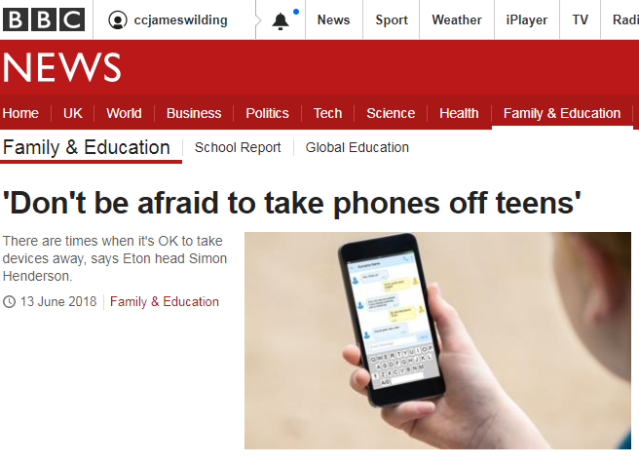
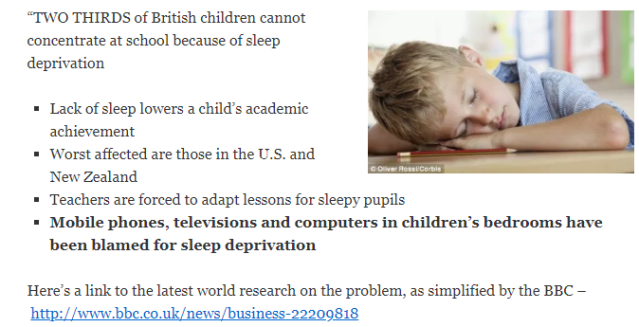
 At the start of the Autumn term, I introduced the work of the Learning Scientists, lead by Dr Megan Sumeracki, and Dr Yana Weinstein, both Cognitive Psychological Scientists over the pond at Rhode Island College, Providence and University of Massachusetts Lowell to both the Academic Faculty and the wider school community. We commenced use their work to inform explicitly the teaching of the “Six Strategies for Effective Learning”, and we follow their advice pretty closely. Last October I posted in a blog entitled “another-fine-mess-you-could-be-leading-us-into-but-we-dont-have-to-follow” that the learning Scientists are as strident as I about the use of mobile phones – you can see that in their blog post entitled:
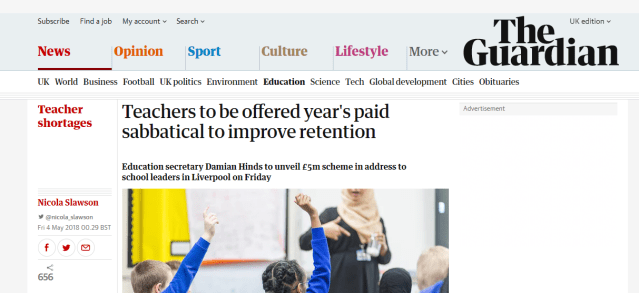
 Our industry is well used to Secretaries of State coming up with Golden ticket solutions that will noticeably improve teacher retention. Claires Court has not introduced performance-related pay for example, now rolled out in every state school at great expense of time and effort. Because it ‘works’ in ‘business’, Michael Gove and his DfE apparatchiks felt PRP should be rolled out for all teachers as well, back in 2014, suggesting that it would reward the best teachers, encourage teacher recruitment and retention. Guess what; it dramatically increased teacher and management work load without any benefit to the pupils, and after 4 years, we have the researchers from LSE making it clear that PRP per se does not work-


 A Principled view