Amongst the busy life I lead as a school principal, leader, counsellor, mentor and blogger, I also teach classes, currently some Year 8 History and Year 9 Spanish. It’s important to note I have always taught, secondary and sixth form it must be said, in order to validate some of the decisions I have had to make over past years. It’s one thing to know the theory, quite another to have the experience to understand how that might roll out in practice. When the Chartered College of Teaching opened 12 months ago, I became a founding member, because I am utterly convinced that Teaching is a unique profession, not just an extension of business or commercial activity.
Rachel Jackson, from the Institute of Education at John Moores University in Liverpool writes under this headline in today’s Impact magazine from the College. Rachel’s quite right about the activity of teaching being that complex, and not the first from our profession. Here’s Lee Shulman, an American educational psychologist, widely quoted on the difficulty of Teaching.

Here’s Rachel writing further: “It must be remembered that education was considered a discipline of philosophy at first but due to the desire to find ultimate answers to questions of pedagogy, it was thought best to view education scientifically. This ‘big R’ Research, as Goswami and Stillman put it, was seen as inadequate if teachers are not granted the space to think carefully about the implications. Over 30 years on, are we philosophers or technicians?
The dominance of the ‘science of learning’ reinforces the perception that teaching is merely a technical endeavour but, as Cochran-Smith and Lytle maintain, it is so much more than this and ‘practitioners are legitimate knowers and knowledge generators, not just implementers of others’ knowledge’. Winch et al. see teaching as consisting of tacit understandings and reflective thinking as well as technical information but surmised that until teachers are given the space and the capacity to think deeply about the evidence they are bombarded with, teachers cannot be philosophical. As Ball, Maguire and Braun put it, teachers remain ‘ciphers’ who merely ‘implement’.”
Over the last 5 days since our return from half-term, those I work with have noticed I have been a little vexed. Obviously, with the new Campus proposals and consultations underway, pressure groups and their arguments to consider, I have a whole new wall of work to consider. We’ve also had 2 Year 11 parents evenings to handle this week, discussing exam possibilities as well as future destinations with some 100 families and the young people concerned. We had over 160 children involved in our Scholarship examinations, so I have had all those cases to consider, as well as those applicants in contention for Sixth Form award as well. With some of my leadership ill or injured too, there have been additional parents consultations to attend and monitor, and of course the daily ‘Russian Roulette’ of school life brings its unexpected experiences too. Late on Wednesday evening, I needed to act as paramedic, accompanying one of our older pupils home in their mother’s car for example.
None of the above vexed me.
Prior to half-term, I had been asked to read a manuscript of a new book on Childhood and parenting, to provide feedback and perhaps a ‘quote’. Since the book has yet to be published, it’s title is confidential, but the 6 authors are coworkers in one of the psychology services we use. Mothers as well as clinical psychologists, these current practitioners have chosen to write in depth, giving pen-portraits of case histories, about the children under the age of 11 they have been working with in recent years. The book is over 300 pages long, and the contents are a page-turner. I’ve already replied in draft with my quote: “This is a remarkable book; it is packed with wisdom from expert practitioners whilst at the same time illustrated with case examples that highlight very specific strategies for successful therapeutic interventions that parents will recognise straight away. The writing exudes empathy from the 6 authors, everyone a mother and still working on getting it right for their own children”.
What vexes me is that I never knew being a parent was so hard, and on reading through the very many case notes in the book, we obviously had it so very easy when bringing up our own children. Equally vexing is that I recognise the exemplars in so many of the cases I and my colleagues in leadership are dealing with each day. We are facing an epidemic of mental health issues in our schools in England and mine is certainly not immune from the crisis. National statistics suggest that 1 in 10 of our children are suffering from a diagnosable mental health disorder, that’s over 100 children at Claires Court, 2 in every class at any one time. Those individual mental health issues may be resolved, but of course those unseen at an early age in others will rise up to take their place.
I have tried my utmost to ensure that we have both the qualified staff and expertise/experience in place to manage the daily issues that confront teachers and parents in the daily care of their children, to ensure we are so much more than ciphers implementing from a cue-card. What’s so comforting about the writing of the 6 clinical psychologists (coming from healthcare) and of researchers such as Rachel Jackson (coming from educational research) is that both confirm the sheer complexity of what we in teaching have to do each day, and that there are sources of confirmed knowledge and proven therapeutic pathways that will keep teachers and parents able to manage well the daily challenges they face…which I repeat are “As challenging as in an emergency room during a natural disaster”.
Let me finish on a hopeful note. Almost everything a parent naturally does to provide for their children is intuitive, and most get this right. A baby needs an adult nearby whenever they need them, to comfort, console, secure and care. Readily available parents, and as we are proxies to this, teachers too, are able to provide physical reassurance to help children feel safe, and by being consistent in such support allows children to learn how to calm themselves. What is less obvious to parents as their children get older is that that need for a place of safety does not get less, and this is not just about ‘space’ in a physical sense, but also of that in time. Being together, not making all of life the treadmill that some days feel, keeping blame away and keeping hope in conversation alive and eternal is the way forward. As we all age, what next has to be done is not quite so intuitive and automatic. Telling children not to worry is often the worst thing that can be said, as is expecting that learning is linear and there won’t be serious hurdles along the way. It should be no surprise that in really effective schools, mental health matters are pre-eminent, because the children do feel safe and able to surface their worries and cares. That does not mean that every child needs clinical interventions, but it does mean that those of us with responsibility must (and do) consider these as serious options. And it means I need to get to know my pupils well, and that’s why I need to be in the classroom, so I keep that particular skill ‘honed’.
 M
M these neuromyths have been well intentioned; Howard Gardner in his work on multiple intelligences wasn’t trying to invent a new way of teaching, rather than debunk the post-war simplistic approach that advocated that brains could be trained to do anything. Here’s Gardner writing back in 1993, 10 years after his seminal book Frames of mind. The theory of multiple intelligences was published:
  appearing alongside articles on cognitive science, it was amazing just how many myths re-emerged around whole brain/left brain/right brain learning. That’s not to say that we don’t have different parts of our brain processing different things in different ways, but there are far too many interconnected neurons for us to imagine the bits don’t speak to each other at lightning speed. We’ve know from the very many head injuries endured by soldiers in wartime that damage in different areas causes irreversible damage to specific functions such as speech and sight, but we also know from the remarkable recoveries made by some that the very nature of the brain’s make up enables it to adjust and repair – this is called neuroplasticity, and actually we rely upon this in schools because the whole nature of a child’s growing development through education relies on the basis that neural connections can be made and remade. Here’s the dictionary definition of same:
 ology has once again been touted as our saviour, this time in order to equip ourselves for life in the “21st century”. Here’s leading thinker on education matters and government behaviour czar,
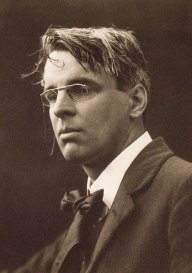
  Firstly the most obvious one is that the general requirement for schools to have a much more academic and rigorous approach (in order that England can rise up the PISA tables, provide better students for the economy, now and the future). This is being translated by proxy into a narrowing of subject disciplines from the age of 5, and with children being identified as falling behind from the very start. The use of assessment to determine whether children are making progress assumes that education is the ‘filling of a pail’. Now I get that, so that so long as I can measure the depth of water in the pail, and ensure that a child’s learning keeps up, then those ‘falling behind’ can be spotted and chivvied along. The trouble is, whilst we can measure the depth of water, that’s not a proxy for the ‘depth of learning’. WB Yates reminded of this with his illusion that ‘Education is not the filling of a pail but the lighting of a fire’, and it is so much harder to measure the latter.
 All we need now is for the numbers of uniformed police to be increased once more. Whilst I have to accept that there are many more crimes now to be committed on-line, so that space needs care, I also know just how important it is to have school liaison officers who work locally and get known in all the schools. As with school nurses, it’s not good enough to spread them so thinly that they are invisible. And that’s no myth here RBWM, where there are no longer any police officers assigned to the role. RIP
 day the internet broke our phones. Sadly, ISI still got through despite that break, circa 9.15 to let me know we were to be inspected this week. So much for Mrs Wilding’s cunning plan.
 this week. Inevitably, we are watching the reactions of those within RBWM who are developing their own opinions, and why not? We are a free and democratic country, and planning law permits this process of public scrutiny and exploration of views. The Maidenhead Advertiser letters’ column and other social media seem to have commenced casting me as a ‘pantomime villain’ and I know, and am so strongly advised by others, that I will for the time remain being ‘ever thus’. ‘Enjoy the moment and move on’ they say, because the application we have made is so very much more detailed than a few soundbytes in confidential email heaven. At the time of writing, it seems important
  Schools work within the ‘Health and Care’ system, and inevitably, our experience of the emergency care offered by the NHS is amazing, whether that be for children or staff. We’ve had three unfortunate major RTAs within the school community within the last fortnight, with the cars written off. It’s not appropriate for me to go into any detail, though in short, other drivers unlicensed or insured have been involved in the mayhem. Fortunately, those involved are alive and well, thank you. Creating a ‘safer’ society on the road always include education, and our Sixth Form attend the ‘Safe Drive, Stay Alive’ show every year to be informed, shocked and we hope educated to drive safely and be insured. The attendees this time round were handed a sealable cloth bag to hide their phone in, which prevents signal reaching the phone and distracting the driver. That’s an important innovation we could all think about acquiring moving beyond education and emergency care, the other health and care services are beginning to struggle to such an extent, that even when required care pathways are identified, the timescale for the commencement of support are stretching way into the future. I can’t tell you any of the details here, but at every age and stage we manage on a weekly bases cases of considerable need. Perhaps one of the biggest changes our school has wrought since the last inspection has been the introduction of our fully qualified school nursing staff, together with nationally recognised first aid training ‘school’ they can run for us. This last fortnight has seen all of our contracting coach company drivers receive updated training in safeguarding from our school nurses, because the local authorities no longer necessarily offer this service in a timely manner.
 The English national focus has been on the achievements of both 10/11 and 15/16 year olds (Years 6 and 11), looking at the examination outcomes for English and Maths, and for Year 11 also to include 6 other subjects, one of which could be Literature, the others focussed on 2 sciences, 1/2 humanities, an MFL and one other (known as the EBACC). For state schools completing at the end of Year 6, the SATS outcomes for pupils dominate how the schools themselves are viewed by their inspectorate, Ofsted. For state secondary pupils, getting the mix of subjects right has also become part of the judgment measure, to ensure the highest score in these 8 subjects to measure progress against the EBACC measure, more of that
 around the attached cathedral, get their photo taken holding it up or pushing it down, and sending that image as a postcard back home to prove they got there, bought the T-shirt, dropped the feather and ball from the top of the tower to explore gravity and then come back home. But that focussed journey is not the same as spending rather more time in ITALY, a country of great and diverse representations of culture from Ancient Rome to the present day. Their art,
  technology, music, drama food and philosophical thinking bursts upon the visitor and engages us in so many more ways, and this takes time, effort and commitment to get the full picture. In the end, no doubt the tour operators will rub their hands with glee if they can reduce costs by increasing volume to the one city, grow the communication channels by increasing plane, hotel and bus size, with the expertise of the support team reduced to knowing the 10 pages from the guide book and testing same via extensive essay writing and number crunching around the limited palate of knowledge, skills and understanding required to visit PISA and return.
 It’s that time of year when the Season in which we are expected to be jolly has passed and the school bells are soon to ring in the New Year. Here’s yours truly on Christmas Jumper day on end-of-term Friday, standing by the tree at Senior Boys, showing some of the hampers soon to off into our local community via the Lions, Foodshare and the Salvation Army. I had the photo taken because I had been invited to write a Fly-on-the-wall end of term item for Schools Week, one of the professional journals that report on Education matters, and they wanted a photo to go with the article. You can read that here:
  “The fascination of what’s difficult
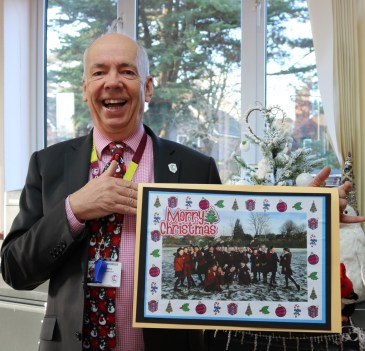 Imagine my surprise when the girls of Year 5 presented via Santa the postman the Christmas card you see me holding here in the picture. “To Mr Wilding” it said. I have never, ever (forgive a failing mind, by the way) ever been presented with a card like this. As I opened it up, the hairs on the back of my neck bristled, as every child in the class had written a personal message wishing Mr Wilding a Happy Christmas or similar. Mrs Helen Phipps, our amazing school secretary at College followed up helpfully: “I did ask the girls for which Mr Wilding was the card intended, but they could not answer me”. Ouch. So whilst I am holding the said card in the picture, may I express on behalf of both Mr Wildings how grateful we are for these very kind thoughts, and my brother Hugh, in whose care the card now resides, also sends his thanks.
  joined Claires Court when aged 11 and left Year 13 in 2005 bound for medical school. He wrote to me on Monday, the day it was announced that “the defect that causes the neurodegenerative disease Huntington’s has been corrected in patients for the first time” by a research team at UCL. Paul joined the team in April this year, after 7 years of work culminating as a neurology registrar in Southampton.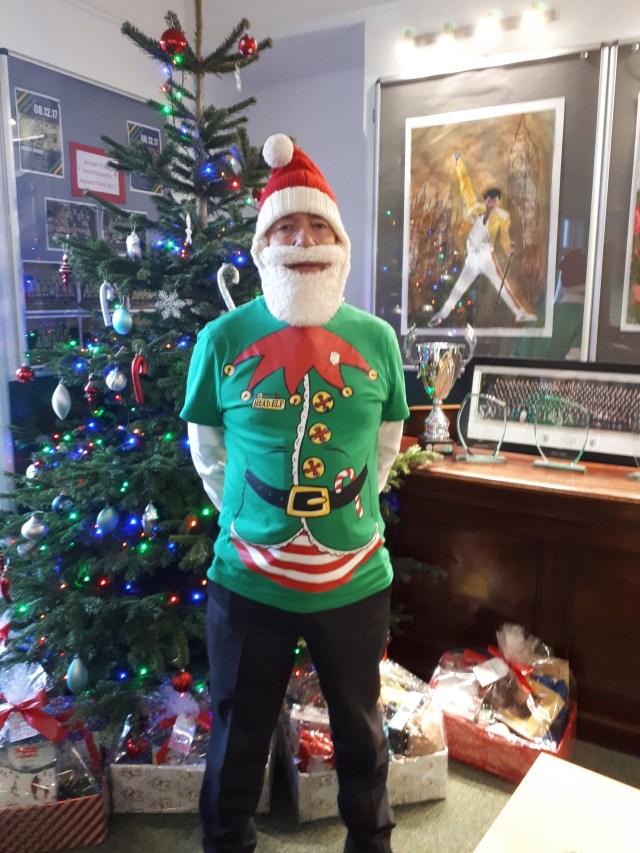

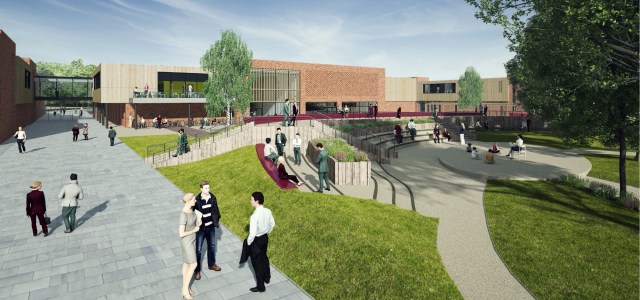
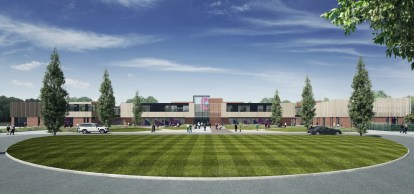 During the fortnight of half term, my brother Hugh and I have reached agreement with Berkeley Homes over the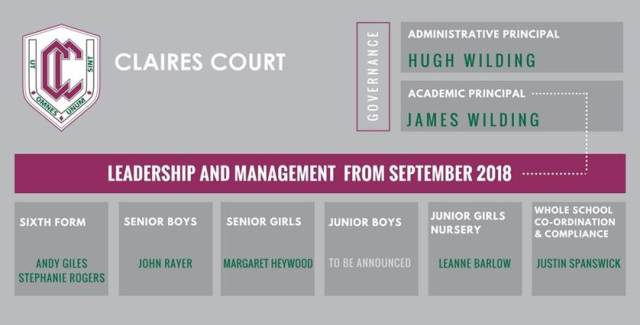
 A Principled view