‘A day in the Life of a CCJB’ – How school environment matters.

Those whose reading list includes the Claires Court Sixth Form Bulletin will know their newsletter has been running with a Thomas Edison quote this term – ‘Our greatest weakness lies in giving up. The certain way to succeed is always to try one more time’.  It rather neatly fits with the narrative I wrote back in October in https://jameswilding.wordpress.com/2014/10/09/most-people-dont-read-the-writing-on-the-wall-until-their-backs-are-up-against-it/ , in which I quoted from Malcolm Gladwell’s book ‘Outliers’. As one of a number of examples, early gifted and talented violinists in Germany were not those who made the grade as adult violin students. None of the naturally gifted rise to the top. The psychologists found the main direct statistical relationship to be between hours of practice and achievement. No shortcuts. No naturals.
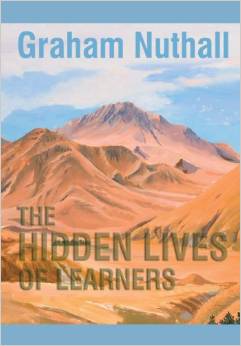
Hidden Lives of LearnersLast term, Mandy Temple Films visit Claires Court Junior Boys to capture the essence of ‘A day in the life of a CCJB’ and in this charming short movie, we get a sense of the extraordinary environment through which our younger boys are nurtured to develop very many skills and talents.  You can see Mandy Temple’s film here, and it’s a delight to see almost no teachers in action, just children speaking about school and the values they hold dear. In one of the most remarkable educational books ever written (published 2007), Graham Nuthall highlighted the difference between how teachers feel learning happens and the child’s own personal experience of growth and success. Its clear evidence and proposed pedagogy/philosophy has supported our work in creating the Claires Court Essentials, by which we have mapped our curriculum with the many and varied activities a child needs to explore for them to learn, acquire a skill, and retain a concept. We have now developed our unique mix of quantitative and qualitative methods to monitor what we do and check on each child’s development, very much our foundation stones for evidence-based quality education.

Education and Child Development more generally is never off the newsstands; Education Secretary Nicky Morgan is back in office and she has decided to focus now on ‘Coasting schools’, as measured by the school’s English and Maths results at primary level and by their English BACC results at Secondary.  Increasingly us Independent schools are being challenged to provide as much support as we can find to partner with our state sector colleagues, whilst being increasingly ‘frozen’ out of the performance tables by which such state schools are measured. As the retiring head from Eton College, Tony Little made clear recently, the arid nature of the secondary and sixth form exam system “makes it difficult for teachers to make links and pupils to see things in different ways. It’s about encouraging them to see things laterally and be more nimble.” (Daily Mail, 18 May) In brief, it’s becoming very difficult to compare apples with our smorgasbord of delights – life at Claires Court is mutli-dimensional, focussed on the learners and where they want/are inspired to learn.
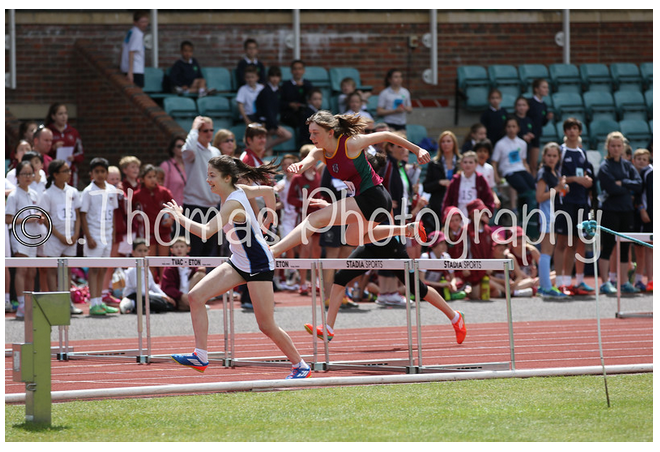
ISAGirls20125In reality, Claires Court has to ensure the teachers and children go the extra mile, join ideas up and make the bigger picture happen. This Wednesday, we hosted once again the ISA London West Athletics Championships, now a formally recognised British Athletics Event on the national calendar, and with the results not just posted to schools but up for public view (any time soon) on the Power of 10 website, alongside results from regional, national and international fixtures too. Lovely as it is to add value to local events to maximise their ‘importance’, we are of course delighted to report that we won the boys and girls and overall title as Victores et Victrices Ludorum. A whole host of fabulous photos are visible from our official photographer and former Claires Court parent, Isabelle Thomas. It is about taking part of course, but it is also about the preparation and skill acquisition; look after the performance and the results will look after themselves.
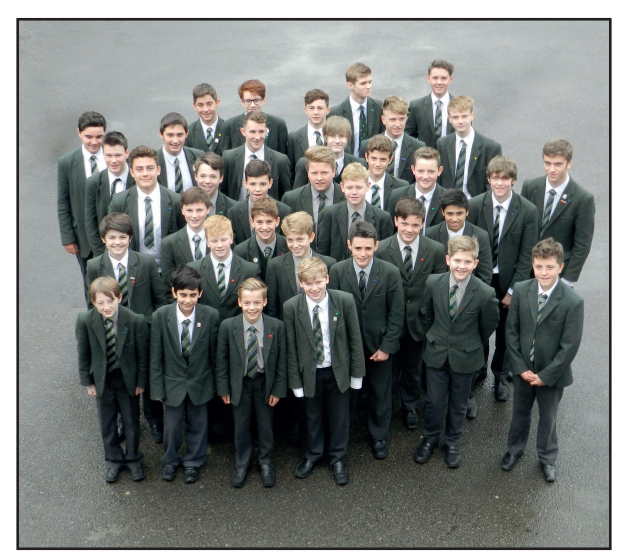
Arts Award group 2015This evening at Norden Farm Centre for the Arts, Frances Ackland-Snow, our Artist in Residence and 40 of her talented young proteges launch the publication of ‘Art is the time for Freedom’ book, with  BBC award winning Portrait Artist Paul Bell as the guest of honour. The look and feel of the book itself is really special, but you can get some sense of the look and feel through this pdf here. These young Arts Award practitioners show through drawing skill and reflective commentary what Art means to them.

Just 2 events in 3 days, each adding an extra dimension to the lives of our young people. Perhaps that is why a prospective employer was moved to say earlier today by email to Assistant Head of Enterprise Education, Steph Rogers, “I met with Dxx this week, and I must say, what a lovely young man. Soo confident, articulate, and well spoken, it was  a delight to meet him, he was introduced to the majority of my team, who all felt the same way. If my son (just starting at CC) turns out remotely like Dxx I will be a very proud Mum”. 

I look forward to getting Mandy Temple back to CC to ‘film more of our everyday life’. It really is not possible to convey in words alone just how special our environment is becoming – and incomparable to the kind of Coasting School Mrs Morgan alludes to.  I’ll finish this week’s blog with a bit of serious Nuthall “In my experience, teaching is about sensitivity and adaptation. It is about adjusting to the here-and-now circumstances of particular students. It is about making moment-by moment decisions as a lesson or activity progresses. Things that interest some students do not interest others. Things that work one day may not work the next day. What can be done quickly with one group has to be taken very slowly with another group. What one student finds easy to understand may confuse another student. In order to navigate the complexity of the circumstances in which a teacher works, it is not possible to follow a recipe. As a teacher, you make adaptations. You must. The important question is: what adaptations do you make. You can do it by a kind of blind trial and error, but it would be much better if you knew what kinds of adaptations were needed, and why.”  (P15, Graham Nuthall, ‘The Hidden Lives of learners’)

P.S. I suspect at Claires Court, we actually do know what the adaptations are needed and why!

Posted in Uncategorized | Leave a comment

“You don’t need the eyes to see; you need vision.”

David Wilding, my father, was diagnosed with Retinitis Pigmentosa (RP) in his late 20s, was warned that he might be blind within 5 years, but happily kept his sight (albeit ever decreasing) for another 50. In 1960, he left the comfort of employed work to set up Claires Court with his wife, Josephine, here in Maidenhead, where Hugh and I were two of the 19 founding pupils. Of course it took huge courage to start a new business, but more than that, it took imagination, insight, knowledge and, of course, vision to plan a new school. During the ’60s, that ‘vision’ moved on to plan the building of a new school for 250 pupils at Ridgeway, acquired in 1964 to be the boarding house. Sadly the costs of providing the infrastructure for such a school were beyond belief; in due course, an alternative, to build speculatively two houses in what then was the kitchen garden and use the profits from their sale to build a senior wing down on the Ray Mill Road East site proved more achievable. The teaching wing was opened during the Queen’s Silver Jubilee year, my second as a member of the teaching staff in the newly expanded senior school.

Both my brother and I thank our lucky stars that ‘RP’ did not pass down the family gene, and we see well enough for all those things sight is needed for, driving and the like. At the time of writing, our Dad is really not well at all, but surviving in his beloved North Norfolk village of Letheringsett, and he very much hopes to ‘see’ me over half-term. I have been totting up the whole host of ‘news’ he needs to know, because believe you me, he still has a very clear head for minute detail about the school he founded and still very much cares for.

He’ll want to know about cricket developments, team results and so forth, and will be really tickled by the notion that the staff are now fielding a cricket team in the local knock-out Julian Cup, first match this coming Tuesday evening against Taplow Cricket Club. He asks about rowing in the summer too, and the imminent racing at the National Schools regatta in Nottingham is one we all look forward to hearing results from – the boys and girls have worked very hard and have excellent chances to ‘medal’ this coming weekend. He really misses being able to travel to Maidenhead; the recent Rowing Dinner attended by 150 of the Boat Club and their parents was a spectacular success, with Sydney Olympian Miriam Batten-Luke in attendance as guest of honour to assist us in  raising some £7,000 of new funds towards the onward development of our equipment.

He’ll be delighted to hear of the donations being made to the charities the six school councils resolved to support through their 3for3  fundraising.  The details are impressive:  Alexander Devine £3,600; Kids in Sport £2,600; Daisy’s Dream £1,000; MENCAP £1,000; Diabetes UK £1000; Rosie’s Rainbow Fund £1,500; and Thames Valley Adventure Playground £1,577.34, giving rise to a total of £12,277.34. All three of us know that the boys and girls work really hard to raise the funds, to do something different and make a difference!

My father has a lovely turn of phrase, such as “Exams, like the poor, are always with us” and he knows that pupils need to excel in exams so that they can move on to their next steps in life. Yet I never forget him joke with Henry Cooper, the British heavyweight boxer, about success at school. Henry was a Claires Court parent in the ’70s, and was asked to open the Claires Court Sports Hall. Henry simply looked down at his hands, smiled wickedly and said “Both at school and in employment, I found I was better working with my hands!”

And of course Dad, like many others, will ask me about the progress of our current plans to build a new campus, sufficient to accommodate our somewhat expanded vision of his ‘Claires Court’. I’ll reply very positively:

“The election is over, we have a settled government for the next five years, and we can see that our local authority have a body of councillors, largely re-elected, with whom I hope we can do business. We have completed our designs for new Junior Girls, Senior Boys, Senior Girls and Sixth Form schools, new kitchen and dining spaces, a cultural centre for Music and Drama, and a new double size sports hall to accommodate the myriad sports and activities we now run. Our overall investment is on the order of £30 million and I hope that we will have plans lodged this August with fingers crossed for a March 2016 build start and September 2017 opening.”

Of course my father won’t be able to see anything, and has no expectation of being able to travel south to visit to see our ‘vision’ become reality. But I know he will be able to sense our excitement that such proposals bring to fruition a dream we as a family have had for almost 50 years, one I can genuinely say has been mine as Man and Boy. While it was the boarding house, Ridgeway was also our family home long before it became a junior school. If our plans are able to progress, obviously leaving the original Claires Court will be a huge personal wrench. Like our father though, Hugh and I believe that there is a greater good to be achieved, for Claires Court to become a ‘destination’ school for all of our children, one of such scale and substance as to be sufficient for all of our possible dreams combined.

Dad will of course bring me back down to earth. “What do you think of Kevin Pietersen being sidelined? Fancy England losing four wickets before lunch at Lord’s on Thursday. Talking of which, where’s my lunch?”

I thank the Lord for BBC Radio, a saviour not just for the blind, but very definitely a service that conjures up sufficient ‘pictures’ to illuminate the world in which we live through words alone. As I leave my father to his lunch and ball-by-ball commentary on Test Match Special, I’ll know he’ll be in good hands, permitting me and my bro’ to get on with the ‘visioning’.  Unlike RP, that thankfully does seem to run in the family.

Posted in Uncategorized | Leave a comment

Time for the development of a Parent Ambassador programme…”Claires Court Parent Voice”?

Claires Court Ambassador Programme ­ “Parent Voice” Proposals

It is an interesting truism in life that if you want something done, do it yourself. Actually, it is a Factoid – one of those oft repeated phrases that becomes true because of the sheer number of times it is both said and heard. You would not manage your own tooth extraction or hip replacement, of course you would not. As a School Principal, indeed as a previous parent and pupil of my school, I might be better placed than most to know what the ‘parent and pupil from Claires Court on the omnibus’ thinks about our school. But that’s no replacement for the other 3000+ voices we need to listen to who are members of our community. These are current pupils (1072), parents and family (double that number at least) and teachers/administrators/other employees.

Our annual questionnaires with Parents, Pupils and Staff provide excellent food for thought. The outcomes from the 2015 Parental Survey have been presented to the main PTA board, and over the next couple of weeks I am meeting with the various PTA local groups to share those outcomes, and once that’s done, provide a written public report for our community. Now whilst all this is excellent practice and noble etc., it does not provide the insightful, analytical, surgical or personal actions that might make our school much more successful come next Monday.

During our meetings with pupils, parents, friends, PTA trustees and visitors, we are increasingly aware that having good Ambassadors who are willing to go that extra mile to speak up for us and support our activities is a major bonus. During every school year and particularly in reviews and Speech Days, we have discussed and prominently congratulated the brilliant work of our School parent teacher association groups. However, we cannot expect to much of the same people, hence earlier this Academic year, the Principals and Headteachers have chosen to prioritise the recruitment and deployment of Parent Ambassadors.  Here’s my first go at highlighting what that plan might look like.

Parent Ambassadors

We have 3 types possible, and a mix of all three across age and stage are desirable:

  • Past parents who know the school really well, have built a positive reputation that we can trust.
  • Current parents who want to add something extra into their engagement with the school.
  • Current parents who are also teachers/administrators who have the key skills we need already in place.

What is the Parent Ambassador cohort? 

● As a member of the Parent Ambassador Cohort, parents of current Claires Court pupils will have the opportunity to use their leadership skills in support of improving Claires Court policies and practices that benefit pupils, teachers and parents.

● Cohort membership is aimed to enhance the skills, knowledge, and confidence of parents necessary to create meaningful change within Claires Court and the wider community.

● A successful Parent Ambassador will be able to Increase other parents’ knowledge about Claires Court, as well as inform on local and national educational issues

● Engage prospective and existing parents and inspire them to assist with the transition into the school, help them settle in, become more active, loyal and engaged within our community.

● Work with key leadership staff to provide ‘Critical Friend’ advice to improved policies, procedures, practice and provision

How many of the above roles would a Parent Ambassador fill?

My guess is either outward facing Ambassador or inward facing friend. Or both.

Information for Parents

What is the level of commitment to participate in the Parent Ambassador Program?

  • Attend a one day orientation, including safeguarding element
  • participate in at least six events a year,
  • More generally and regularly, Inform and inspire other parents with your knowledge, passion, and belief that Claires Court as an educational environment is ideally suited for most children
  • Notification to the Parent Ambassador cohort by email will invite parents to participate. We know our parents are busy, so this system will permit you to be as involved as you wish, but no less than 6 occasions a year.

The benefits of being a Parent Ambassador include:

  • Opportunities to be engaged in Open Day and external Marketing events and campaigns
  • Increased knowledge about current education policy and issues, plus site­-local developments, inc. healthy eating, welfare matters, digital innovation and mindfulness
  • Participation in advocacy related activities, education/inspection meetings, press briefings and research
  • Networking opportunities with parent and community leaders
  • Recognition once a year at our main Speech and Prize giving events

What next? 

Please have a think about these proposals and give me some feedback!  In the first instance, either by commenting on this post or directly by email. Once I know the issues and concepts you flag up, I can write a little more and run a survey for best fit of expectations and concerns. My best email address to use is jtw@clairescourt.net. I look forward to hearing from you in whatever way you think appropriate.

Posted in Uncategorized | 2 Comments

Satire should comfort the afflicted and afflict the comfortable

It’s election day and all over the media are the Good, Bad and Ugly thoughts about today’s General Election.  I particularly liked the SkyNews teams General Affection Ballad:

The most remarkable aspect this time around is that the most lauded politician, Nicola Sturgeon, leader of the SNP, isn’t even standing for Parliament. Cartoons have littered the landscape a plenty – perhaps the one best expressing the ‘memes’ of our time is this one from Matt.

It won’t come as any surprise to readers of my Blog that I am a Liberal by persuasion, supporting that so-called party back in the ’70s and representing its views as best I felt possible on Union Council at University. During that time, I also engaged in Leicester’s Charity Rag, becoming editor of its Rag Mag, known as ‘Lucifer’ for my edition of 1974. I had to run its entire contents past the Lord Mayor of the time, whose support was essential if we were to be gain the City’s permission for disruptive student activities of one kind another for our 7 day long festival. Walking into the Mayor’s parlour, to present our ‘working copy’ was nerve wracking.  He chose to wear most of his regalia, and was the spitting image of that well known fictional figure, the Mayor of Trumpton.  My meeting was short sharp and sweet – he put a red pen through anything that was remotely rude or scurrilous, leaving me with a joke-free Rag Magazine. Given that we planned to sell 20,000 of these to raise funds, I had to revisit the process and find jokes and stories that simply flew over the Mayor’s head. Second time round, the copy got through, we published, only afterward then receiving a furious letter from the Mayor, once one of his staff explained the ‘new’ material to him!

On Social Media in 2015, new characters have appeared, including including @Trumpton_UKIP, a fictional town and candidate purporting to support UKIP. Here’s an excellent account from the Guardian Newspaper explaining where the ‘Kippers have come from, and the efforts of UKIP to have the spoof banned.  At the time of writing, I am well aware that there is a fine divide between satire and ridicule, not just because of the Charlie Hebdo killings on 7 January and subsequent events in Dallas last week, but because more generally, poking fun at people has very limited permissions, and can’t be assumed to be a personal right. Free Speech means something very different.

I’ll conclude not by writing more, but by adding a lovely short paragraph from an article written by Will Self, http://www.bbc.co.uk/news/magazine-31442441, entitled: ‘What’s the point of Satire?’ It rather says it all. Enjoy your freedom to vote today, and let’s see what happens from Friday 8 May onwards – there’s plenty left to enjoy!

“The paradox is this – if satire aims at the moral reform of a given society it can only be effective within that particular society, and, furthermore, only if there’s a commonly accepted ethical hierarchy to begin with. A satire that demands of the entire world that it observe the same secularist values as the French state is a form of imperialism like any other. Satire can be employed as a tactical weapon, aimed at a particular group in society in relation to a given objectionable practice – but like all tactical weapons it must be very well targeted indeed. A satire that aims to afflict the comfortable in other societies requires the same sort of commitment to nation-building as an invasion of another country that’s predicated on replacing one detestable regime with another more acceptable one. The problem for satire is thus that while we live in a globalized world so far as media is concerned, we don’t when it comes to morality. Nor, I venture to suggest, will we ever.

Posted in Uncategorized | Leave a comment

All you need in this life is ignorance and confidence, and then success is sure–Mark Twain

The Election race is underway and Education is to be one of the key battle grounds. I’ve trawled the Beeb to capture some of the highlights:

“David Cameron has declared that permitting the building of new Free Schools is one of their big ideas, and we can look forward to a further 100 a year being built over the life time of the next Parliament.

Labour has accused the Conservatives of planning “extreme” post-election public spending cuts of £70bn.  Shadow chancellor Ed Balls made a speech unveiling Labour’s analysis of how Conservative plans would affect non-protected Whitehall departments.

BBC assistant political editor Norman Smith said Labour’s “dossier” was designed to give people “the political heebie jeebies” given the scale of cuts required, and an attempt to paint the Conservatives as ideological when it comes to reducing spending.

A pledge to raise education funding in England from £49bn to £55.3bn over the next Parliament is the price of the Lib Dems entering coalition after the election, Nick Clegg has said.  It is the first so-called “red line” that the Lib Dem leader has revealed. The Lib Dems have said they would spend £2.5bn more than Labour and £5bn more than the Conservatives between 2015 and 2020 on education, protecting funding all the way from early years to further education. Mr Clegg said what his party call the “cradle to college” pledge would be a “deal-breaker” in potential negotiations with other parties.”

In reality, for a school situated in the Thames Valley, I feel sure that the SNP, Greens, UKIP etc. have all got something to add into this mix, but the reality of the situation is that the next Parliament will include at least one of either the Conservatives or Labour parties, and that the most likely partnership they will create to form a government will include the Lib-Dems.  Now, it must be said Mr Clegg went back on the Lib-Dem promise not to raise University tuition fees, but as things turn out, the coalition choice to advance those to £9000 and make them more of a graduate tax rather hitherto seems to have been really quite an effective way of expanding UK Universities event in the face of a world recession.

Let’s make no bones about the general principal of needing great higher education – we do. As our own school’s University final year undergraduates are about to be launched into the world of work, they don’t need to report they have spent three years in a Library and seen a professor once in a blue moon. As the Facebook pages of our students show, the dissertations are now reaching publication, and the few weeks of swotting  before finals are upon them, heads are down to secure their degree.

And it is not just for the undergraduates we need great Universities. Many of the non-University jobs now include diploma course and the like validated by the Universities. Mature students often need access to shorter courses that lift standards of knowledge and expertise, and whilst some ‘colleges’ may not be household names yet, Higher Education also extends to the great Institutes and Societies of the Land. I am absolutely delighted that all three of the major political parties have put their support behind the plan to develop a Royal College of Teaching. I started supporting this enterprise at the outset, promoted by the current Conservative MP for Bristol North West, Charlotte Leslie, who was kind enough to attend a conference I ran in the Autumn of 2013, and encouraged me to push further the concept of a Royal College into the Independent Sector. Another strong supporter of the Royal College, who shared the platform with Charlotte and myself, Professor Pete Dudley (Leicester University) visited our school this January, to meet with our Subject Leaders and talk about how to develop our work through Lesson Study, a long-term collaborative approach to build deep subject and teaching expertise.

We need informed, educated voices at the heart of Education planning to ensure that back-of-the-fag packet stuff does not enter our schools on a minister’s whim. Sadly, that’s what we have had to face for a quarter of century, and an approach that escalated last parliament under Michael Gove. In the long term, probably his most dangerous change was to move so very much of the training of teachers from Universities to schools, under Teach First and other similar strands. I am delighted that we run our own teacher training programme in the school, in conjunction with Universities such as Reading, Bucks New, Winchester, Chester and Brighton, as well as in partnership with our GTP provider, eQualitas. As an Independent School, we have chosen to use the surplus from our Holiday Club programme to invest in new undergraduate and graduate talent, to ‘grow our own’ so to speak.

But a country cannot rely solely on ‘micro-breweries’ such as Claires Court to populate our nurseries and schools country-wide. Where are is our future talent to be found? Where are the specialist departments, in which we are growing our subject specialists, importantly for Maths and Sciences we know, but actually for ALL the other subject disciplines we need? Answer – the  Universities of this fair land of course.  I cannot over-emphasise the importance of stability in education, and with Universities able to reap from their own crop of undergrads, the right kind of students can be encouraged to give teaching a go. Either that, or for students to be able to travel home to study and work their ticket at their local Uni, whilst reducing accommodation costs and building a professional life with school work colleagues is certainly a sure fire way to succeed.

Sadly, we now have Job Agencies and bands of headteachers even trawling the Dominions for staff licensed to work in the UK, to fill the incredible shortage of primary and secondary staff we now face, whilst at the same time we have unprecedented numbers of new teachers leaving the profession shortly after qualifying, or choosing to join a growing exodus to other countries. Currently over 400 new English Curriculum schools open each year outside of the UK, and all need their core qualified staff to come from our Island Nation.

 So inevitably, I’d have to ask friends and family who care about English National Education to vote Lib-Dem, because the only way to hold back yet more chaos from arriving in our state schools is to ensure there is a moderating influence at the heart of the new administration. Of course I understand the Conservative plea that without a profitable economy, we can’t have success in social enterprises. and I certainly understand the Labour approach that places key importance upon careers advice. The trouble with both parties is that they have ‘previous’ on their hands, both guilty of undermining the professional judgement of school professionals by implementing educational pedagogies that don’t work.

As Mark Twain’s quote makes clear, if you don’t know what you are doing, but nevertheless insist that the stats show you are successful, then frankly your doomed. Flagship policies such as Teach First (and then ‘do something better next’ goes the quip) may have a small part to play in furnishing our nation with teachers. But as with the Police Force, we need to grow our teachers from the indigenous communities where they were born and educated, where as professionals they feel comfortable and aligned to the wider community in which they will live and work. Both my wife and I fell in love with Leicester where we went to University, and both would have been really happy to work there in the multi-national city community we lived amongst. As things turned out, we married and returned to my home town of Maidenhead back in 1975, where there were jobs for us both, and where we have spent a collective 80 years in Education.

Funny how after all that time, Jen and I tend to agree on most things, despite her being a Historian and I a Scientist. And we do make it be known what we think as well. Sadly, we tend not to agree with almost anything the local political candidates have to say about the educational needs of this area, and they certainly seem to be deaf, dumb and blind to the lead we give. But hey – (Jenny’s favourite phrase) – what do we know anyway?

.

Posted in Uncategorized | Leave a comment

Leadership and the Peloton…

Welcome back to the Summer Term at Claires Court, dear Reader. The Easter break for teaching staff is but 9 working days long at best, with professional development a very key aspect of our 3 INSET days spent as a professional body of 150+ educators and support staff working collaboratively and yet in different teams for age, stage and work focus. School leadership and management at this time of year feels very much like working the Peloton, that great ‘snake’ of  energy by which road cycling manages it affairs at race time. It’s fair to say that the academic staff on the 3 Claires Court sites are both my greatest responsibility and the source of my greatest pride.  They are a feisty bunch too, and not just committed to the one site; we have a number of staff who commute across sites, and plenty with cross-site responsibilities as well. As a member of staff, you can find yourself in a variety of teams too, each of which attract their own set of responsibilities and challenges. At any given time during our training days, staff will find themselves wearing different ‘jerseys’; some sessions attract all those working in specific departments to focus on their subject, others are ‘interest’ led, still further are whole site with specific issues to tackle. In short, we have small and large groups, dynamically jostling with each other, some breaking away to forge a new initiative, only to be subsumed into the pack at a later stage as the ‘peloton’ requires.

What might we be occupying ourselves with, given that school was ‘out’ for Easter? Any one with responsibilities for working with the Under 8s was most likely to be updating for 2 days their paediatric First Aid skills, a statutory requirement these days every 2 years (20+ adults). As we are introducing ‘De-fibrillators on all of our places of work, these and a very large number of other staff also took part in practical training in their use. The only effective treatment for a person who has suffered a sudden cardiac arrest (SCA) is the combined administration of CPR and the use of a defibrillator. A defibrillator will deliver an electrical shock to stop the irregular rhythm and allow the heart’s natural pacemaker to restart the natural rhythm. The addition of ‘Defibs’ are very much part of the school’s policy to improve the medical welfare and provision for both pupils and staff. Separately the Nursing staff have been updating teaching and support staff on the use of Epipens and medicine management, not new but certainly something more closely highlighted as a regular need for us to check that staff know what to do.

On the Academic side, at both primary and secondary level, we have run workshops so staff learn how our overarching assessment processes and report writing are to knit together for more effective reporting on attainment and skill development for our parent body. I am not shy in stating that the hard ‘yards’ we have worked to create the Claires Court Essentials is not a job done but a work very much in progress.  Whilst we will continue to be innovative and forward thinking in our approach to a curriculum best suited for this decade, we need to ensure that our actions match my rhetoric – put simply, it’s not just the children who need to acquire new skills, but adults who need to adjust their working practice for a better ‘fit’.  Our partners in our latest digital offer, Discovery Education’s new Secondary service provided two major training sessions for teachers and support staff to ‘surf this new cloud’ and work out how best to deploy in lessons and for homework.

And of course we have the inevitable ‘staff meetings’ to pull dates and plans and activities for the new term into a coherent whole, to keep staff clued up with what’s expected of them, and of course to allow new ideas to surface and be shared. We have new courses to be designed for both new A levels and GCSEs, and some 600 pages updated in 20+ handbooks for each year group (and gendered too) for our curriculum statements for the next academic year. Some would like to think we could fit all this activity into the working term, but sadly, there are of course lessons to prepare and give, myriad sports, activities and events to train, execute, review, celebrate and indeed simply just enjoy in the Summer term that lies ahead. And anyway, whether it be Rowing camp or Ski trip, extra coaching or workshop activity, we’ve had plenty of things to offer for the children over the Easter break as well.

At the close of Parliament on 31 March, new safeguarding and welfare measures become law, with Keeping Children Safe in Education and Working Together to Safeguard children both requiring face to face training for staff to ensure we comply with parliament’s wishes. Frankly, with so much legislative and curriculum change throughout the year in Education, the state sectors’ 5 reserved days simply would not work for Claires Court and our needs – we have 12 protected days for CPD and this year we will use them all in very full measure! Without this time, we could neither plan nor build our next steps. And that’s where my leadership perhaps plays out best, to make and break teams sufficiently to ensure all the preparations have taken place – after all, we have a vision to provide outrageous opportunities beyond a child’s expectations or even dreams.

The actual Tour de France sets off this year on the 4th July from Utrecht in Holland, and ending with the ceremonial run into Paris on the 26th July. I like the fact that the race is decided by this final race, that there are indeed champions and stage-victors, with a multitude of different jerseys being worn, such as the king of the mountains (polka dot) and the sprinters (green) being almost as obvious as the overall winner (yellow). In like manner, the nature of our school is to celebrate together our end of year in July, focussing on retirements and departures new of course, but also on those staff who have gained new qualifications through the year. We’ll have spent quite some time interviewing and recruiting new staff to join the faculty, no mean feat at a time when dramatic teacher shortages now reach all disciplines! Pleasingly, the growing reputation of the school with this strong commitment to professional development makes us not just an attractive place to come to work, but a serious institution to build a career, indeed a lifetime around.

So the Summer Term commences, with some 1065 children on roll, ready to tackle learning and skills, face challenges and opportunities, stand up to be counted and collaborate for best effect. Now’s not the time for the Peloton to stay in its tight column and ride its own way, but break up into a hundred different parts and then some so that the business of school can happen. Suddenly it is no longer about the adults, but the children, their welfare and provision. The sun has certainly been shining and we seem well set for the weeks of hard work ahead. Of course, there’s an election in the offing, the results of which will be incredibly important for shaping the school’s next steps for our new campus. But those choices are for a nation to make, and once the verdict is in and we know who are to form the next national and local administrations, then we’ll reform some part of the Peloton so we can carry our plans forward with all appropriate speed and urgency.

I’ll close my allegory on the Peloton with a Sir Bradley Wiggens quote “It’s the stuff of dreams. As a child, being a fan of the sport, I never imagined that one day I’d be in this position. Kids from Kilburn don’t become favourite for the Tour de France. You’re supposed to become a postman or a milkman or work in Ladbrokes.”

Posted in Uncategorized | 2 Comments

End of Lent Term Bulletin 2015 – James Wilding, Academic Principal’s recount of the past term.

Moving on…

This time last year, we were both celebrating and recovering from our whole school Inspection. Twelve months on and that work seems a lifetime away. We have as a school moved significantly onwards and upwards and, where possible, improved our provision considerably. At the pinnacle of what we do, I am delighted to report that Head Girl (2014) Molly Ross sits on an offer from St Edmund Hall, Oxford to read French, and Head Boy (2015) George Monk a place at Pembroke College, Oxford to read Chemistry. With other university offers from Russell Group Universities, including Imperial, Durham and Bristol, I believe we demonstrate very clearly that students from a broad ability school such as ours, are perhaps even more likely to receive a university place or offer of employment than anywhere else. This is because at Claires Court academic teaching and learning (scholarship) is coupled with so many practical and collaborative opportunities to develop those other skills needed in adult life.

There's no stopping our students (or staff)

There’s no stopping our students (or staff)

The other successes we count this month include further national awards, with the Best Senior Production (Year 12 with “Hymns”) in the ISA Drama Festival; National Team Sailing Champions over schools such as Radley and Abingdon, and regaining the Under 16 National ISA Sevens trophy (whilst runners-up in the National Finals at both U14 and U18). Boys and girls are winning county, regional and national, trophies and selection. The U15 Girls are this year’s Berkshire County Hockey champions and two Junior Boy rugby players, Johannes Dreischmeier and Archie Arnold, travel to Dublin to represent the Independent Schools England ‘Lambs’ Rugby U11 side. Amongst a number of individual professional highlights, Michael Hudson’s (English teacher) selection to referee the National Schools Natwest U18 Vase Final at Twickenham is perhaps the most unique honour to have been achieved to date. Mr Hudson now sports a splendid RFU Blazer and tie!

STOP PRESS

Congratulations to one of our peripatetic music teachers Emma Stevenson, who has just been awarded ‘Creative Woman of the Year‘ by the Sue Ryder charity at its annual achievement awards.

Creativity abound

Creativity abound

Throughout the School, the Creative Arts are flourishing, as seen in concerts and exhibitions, in which the great joy the children bring to their work is evident to all. As often as possible our Marketing Manager, Kim Davies captures the essence of our news and makes it public. Thanks to Mrs Dyer and her film crew, we look forward to an amazing video of ‘A day in the life of Junior Boys’ on our return to school next term, to which in the near future we hope to add the other Claires Court divisions.

Your feedback

Your feedback

As I write, we have 1040 pupils in the School, and every week we welcome new pupils and families to our community. Thank you to the 264 parents who completed the Annual Parental Questionnaire, spread in proportion to the numbers found in each age and stage on each site. Both Hugh, my brother and fellow Principal, and I value hugely the time parents take to give us feedback, because it is through receiving advice and guidance from you that we can develop the School further for the future. The vast majority of the feedback was incredibly positive, with only six parents (equally spread across the three schools) whose overarching feelings for the School are not positive. Your opinions on progress, behaviour, academic and co-curricular provision, reports and feedback and perhaps above all, your child’s happiness are really very supportive indeed. Of course unhappy customers are not what we want, and we still have areas to address. Our other major success story is in the manner in which we have improved the effectiveness and communications between the School and parents, even when in the ‘soup’. In large part this is down to our hard working office teams – they deserve a very big ‘thank you’.
Your brilliant support

Your brilliant support

Much of the success in our building of effective relationships comes from the work of the Parent Teacher Associations, whether that be in the creation and running of social events, fund raising for much needed prizes and extras, or in the creation of yearbooks for those pupils ‘graduating’ at the end of the Summer Term. It is to the Main Board of the PTA that the results of our Annual Questionnaire now travel, for their scrutiny and thoughtful comment, and once that is complete, suitably anonymised summary outcomes will be shared back with our parent body. As I write, the main Summer Ball has been moved to the Ridgeway estate, and we have nearly sold out the planned 300 seats. That’s the kind of brilliant support that empowers our PTA Committees to continue to work magnificently for us all. I do hope new parents feel willing to step up and involve themselves in our various groups across the sites into the new Academic Year in September. There will be vacancies!

The landscape ahead

The landscape ahead

I cannot write to you on the cusp of a General Election without drawing your attention to some of the biggest blots I see on the current landscape. The publication of National League Tables in 2015 has done more disservice to the Independent sector than ever before. Over 60% of all GCSE examinations in English, Maths and Sciences which are sat within all independent schools follow the iGCSE framework and are absolutely fit for their purpose. Not including such examinations (in our case Maths and English) in performance tables massively under-reports our effectiveness as educational institutions. When Eton College scores 0%, you know there is something really quite badly amiss. One of the reasons why independent schools have migrated their examinations to other frameworks is that continual change to the English examination programmes have brought many school teachers and departments to their knees. Currently, our secondary staff are rewriting most of our A Levels on offer, and English and Maths GCSEs are on the move again from September. It will not be until 2019 at the very earliest that comparisons now can be drawn between subjects and pupil performance from one year to the next.

Sharing our experience

Sharing our experience

We might be having to wait on the outcomes of the General Election to move forward our own plans for school building and development, but I do assure you that we are not standing still. Claires Court is not just managing educational change, but helping lead it at national level. Head of Junior Girls, Leanne Barlow with Lindsay King were invited to present the work we have created for our Early Years and Junior School curriculum as a model of best practice at ISA’s National Junior Schools Conference in February. Our Head of Sixth Form, Andy Giles together with Stephanie Rogers assisted ISA in creating a separate National Conference for Sixth Forms last week. They presented most powerfully the extraordinary work we are now doing to link academic students to the work place skills required for success at university and beyond.

And finally

And finally

A final ‘thank you’ – on behalf of our 3for3 Charities. Across the ages, our School Councils have worked really well to identify and support our 2015 fund raising campaign, and at every age group worked incredibly hard to raise funds through sponsorship, fancy dress, fair stalls, cake sales and so much more. I am delighted to announce that at this stage in proceedings we have raised a colossal £9148.29. Once all the funds have been collected in, they will be divided across the following Charities – Alexander Devine Children’s Hospice Service, Julian Budd Kids in Sport, Thames Valley Adventure Playground, Rosie’s Rainbow Trust, Daisy’s Dream, Maidenhead Mencap and Diabetes UK, as well as a significant amount to Comic Relief. I feel sure that parents, like our teachers, will draw a gentle sigh of relief that the fund raising is now over for the year, and your remarkable support for the outreach work we do with our local charities is gratefully received.

BREAKING NEWSSince preparing this bulletin we have heard that the Year 6 Junior Girls, who set themselves a class target of raising £2000 – have exceeded that and raised an astonishing £2076.03! What a fantastic effort – well done girls!

Big image
Please enjoy the Easter break with the family (if you can), and I look forward to meeting up with one and all for our Summer Term, which starts seemingly all too soon!
Posted in Uncategorized | Leave a comment

A funny thing happened in the Park the other day…

My sons live up in London, and as is the custom amongst families, we went to Sunday lunch with one the other week. Maidenhead to North London has its many traffic moments to enjoy, and what with Bristol City playing Walsall at Wembley, we chose to take the rail and tube (Beaconsfield to Highbury and Islington) and walk up through Highbury Fields to their home. Spring was up, the trains ran well, and time was on our side. Along side some of the Tennis courts there (all bustling with weekend testosterone, grunts and competitive edge appropriate to the location). I spied the Park refreshment kisok. “Coffee?” I enquired.

Waiting in the queue, a small group of 40+ mums came alongside, deep in conversation. Teachers of all ages become really adept at listening to abuse of their profession; this could perhaps be used as a new form of military software by the way, but I digress. “The trouble I got into” said Brown hair, loosely brushed “is that by the time I had chosen to put some behaviour expectations around my daughter, she was up out and away.  Hopeless!” Harmony Blond retorted “What is about teachers that makes them so good at setting boundaries?  What I don’t get is why we don’t listen to them when we are younger – it is as if we are inoculated at school (by bitter experience) to ignore what teachers say, so once we are adults becoming parents, the last thing we will do is follow their advice.” Brown hair retorted “They make it look so easy, and it so is not”.

My concentration was broken for the demand of £3 (good value for an americano and white coffee), so I picked up my crockery and moved away back into the real world. Their conversation wafted in and out of the breeze, and drifted away from the feckless nature of their children as gently as indeed we did from the kiosk once our coffee had been imbibed. Just a gentle soundbyte lost in the wind. Yet I captured it and have thought over it some more over the last 4 days. Perhaps as teachers we could do a little better? As the experts in child development, is it not a little too late to interact with us when children actually commence in our schools?

Not so fast, Wilding. Teachers are not ‘experts’ in child development and they are certainly not experts in individual children before they meet them. As the Bard would have it “There are more things in heaven and earth than are dreamt of in your philosophy” (Hamlet). What’s worse, we have so many examples over the last 20 years where educational ‘expertise’ has been deployed for no good purpose, not least the industrialising of assessment at 7,11 and 14 in English, Maths and Science. It’s not just the research from across the world that fits my narrative – and caused the DfE to withdraw its national curriculum levels last year, but so much else besides. Witness the ‘noise’ from any of the politicians currently on the stomp about the lack of Mathematicians, Scientists, Engineers and Computer programmers. Maths and the Sciences are compulsory in schools to the age of 16 for all children ever since when, so it’s not that we have not planned teaching and learning ‘space’ in the curriculum. The current decision to make Maths harder and tougher, and similar muscularity about the revision ‘upwards’ of standards in the Sciences might imply English Education standards will move nearer those of 16 year olds in the Asian Tiger economies, but I predict that the government of the day will be disappointed that its newly deployed strategies won’t work as expected some time down the track.

Experts in Child and Adolescent development are recognised by Professorships, and in this field none are better thought of than Sarah-Jane Blakemore, Professor of Cognitive Neuroscience at University College London. Until recently, it was thought that human brain development was all over by early childhood but research in the last decade has shown that the adolescent brain is still changing into early adulthood. Sarah-Jayne  has led much of the research which shows that our brains continue to develop throughout the teenage years, and is as easy to understand as any – here’s a recent radio broadcast of hers from ‘A life Scientific’ on Radio 4 –  “She discusses why teenagers take risks and are so susceptible to influence from their peers as well as her childhood growing up with the constant threat of attacks from animal rights groups”.

Coming from an entirely separate direction is the relatively new discipline known as Acceptance and Commitment Therapy, more colloquially known as Mindfulness. Wikipedia covers the ground quite well here. Developed since the 1980s, it is now being rolled out across the western world as an alternative to other more traditional behaviour therapies such as ‘stick and carrot’, with the latest (2015) research suggesting it has much to offer. We have a significant course programme for teaching and admin staff ourselves rolling out after hours in the Summer term.

If you bring both neuro and behaviour sciences together, it is genuinely easy to understand why we don’t have floods of geeky-teenagers breaking through the doors of universities and employers. During the transitional teenage years the neuroplasticity of the pre-frontal cortex (there, I can use long words) arises because up to 35% of the neural connections dissolve and are repurposed. Whilst this is happening, the brain’s reward system skips ahead of the ‘conscience’ and promotes the kind of activities that bring pleasure and a sense of well-being. By example, how many teenagers do you see trying to solve the cryptic crossword. Move up a couple of decades and a goodly number are seen on the train, skip a generation and you are the odd wo/man out if you don’t have a go at least once a week. What motivates and inspires adolescents are activities that offer more immediate reward, often when working with others, and often when the outcomes are less predictable. It is amazing how much fun children have in the school minecraft club, completing activities that could be described using code and formulae, which they would simply not do that way.

How do you bring enjoyable practical problem solving down to the teenage years, such that Maths, the Sciences and technologies become sought-after disciplines? Most adults know the answer – make the activity relevant, purposeful and meeting a need and you’ll be home and dry. The Western hemisphere has an obsession with including written wordy problems as the harder-to-solve larger mark questions on Maths Exam papers. Such problems do not explore the child’s mathematics and practical abilities, but test rather too fully their understanding of vocabulary and syntax, grammar and semantics. They look at such problems, recognise that someone knows how to do them and thus decide they do not need to! What our old polytechnics understood so well is that less committed students needed more practical teaching time. What old style employers understood is that baby accountants needed time to learn their trade before plying it. Drill the skill, don’t test it too early nor make it count too much. The whole point of double entry book keeping was designed around the fallibility of the human operator to get things right first time.

I’ve been lucky enough to see some amazing shows and plays this week in school, from boys and girls, young and old. Why they have gone really well is that in every case, the children have had a degree of autonomy about their selection of activity. Not only have they chosen their starting point, they have spent hours (beyond any I can count) rehearsing and practising their talent before seen by the crowd until they have Mastery. Their purpose has been pretty selfish really, to prove to themselves they can do something really well and beyond any reasonable expectation of others. And I think that’s one of the big lessons we teachers pass over to children; we might say ‘you can only do your best’ when it’s something we have encountered for the first time. Longer term, that’s not what we intend, much more like “failure is not an option” or even ‘to the victor the spoils” . The Human purpose  is to be mindful of life’s possibilities, and to set out without fear or favour. As another Professor, Stephen Hawking says ” “I have lived with the prospect of an early death for the last 49 years. I’m not afraid of death, but I’m in no hurry to die. I have so much I want to do first.”

Back to the Park then, to an imaginary follow-up to the conversation I overheard. What would I say back to Brown and Blond? I’d ask about the child’s schooling, the who, what, where stuff. I’d ask whether the parents took the children to all those things that builds an education that’s not what happens in school. I’d talk about the listening to the young child reading out loud, for more than 20 minutes each day to an adult with whom they felt secure. I’d wonder out loud whether digital devices are switched off gone 8pm, whether the life blood of family time together was allowed to flow, impeded or otherwise by the idiot’s lantern flickering in the corner of the room or palm of the hand. I’d talk about conversation, laughter, jokes and communication, again within the context of children working with adults with whom they shared close things, perhaps even secrets. You see, the only way to ensure we build resilient children is to ensure that the prefrontal cortex is securely attached to the limbic system, so that what we see and understand consciously together with the people we trust is intimately connected with our feelings about ourselves and them. If actions, emotions and decisions are as hard-wired in as we can make them, when we put them under pressure, they are unlikely to fail, and if they do, we won’t mind. It’s called Learning.

I try to make sure I share the same intimacy with the Americano, hand, eye and mouth. As my wife or sons will attest, in those terms, I am still learning. Where’s my bib?

Posted in Uncategorized | Leave a comment

How best to make an Impact on a child’s learning – consistent, insistent, persistent application of the right approach.

One of the better independent commentators on Education matters I follow is the Teaching Times, an on-line journal for our industry, published by the Imaginative Minds Group, led by publisher Howard Sharron.

In “Ofsted Is In Denial; Special Needs Do Exist” – Suzanne O’Connell, Editor of their Every Child Update service reminds us that Ofsted is in such trouble over its spectacular failures over the past 18 months that credibility in its work is at an all time low. The article is a splendid short essay highlighting that passionate rhetoric and the setting of high bars for all is a simple denial of the human condition of the whole of childhood around us. SEN and Disability exist, as do considerable issues of Mental health. Suzanne concludes her article “It might be unduly pessimistic and I might be an enemy of promise, but the new consultation provides no guarantee that SEND will hold the attention of inspectors in the way that it should. Neither will it provide those schools who battle daily to support their SEN pupils with the platform they need to celebrate their achievements.”

I quote from her article, specifically focusing on the way children learn, Ofsted has this to say ‘all children and learners progress well from their different starting points and achieve or exceed the expected age-related standards, and/or attain relevant qualifications so that they can progress to the next stage of their education into courses that lead to higher-level qualifications and into jobs that meet local and national needs.’ 

Who can write such complete tosh about all of our children? You can’t have everyone achieving or exceeding age-related standards between say Years 2 and 3 without displaying a worrying ignorance of  child development, unless you set the bar very low indeed. International comparisons highlight that in much higher achieving countries such as Finland, school doesn’t start until Year 2. Child development does not assure anyone that at this stage, the cognitive development of all 7 year olds is sufficiently advanced to set baselines for all children. It’s agenda-driven inspection of ‘stuff’ like this that has led Ofsted to miss so much of the big picture problems reported  in the article.

Considering the same view at upper secondary level, is it really possible in our sceptered isle for everyone, whatever their starting point to leave education through higher level qualifications into jobs that meet local and national needs? This is such a depressing, reductionist view of the purpose of education, and in many senses is of course uninspectable. Education is simply not there just to fill our factories and production lines, or provide workers for the NHS and Military, City and Country alike. Education is so much more than this, multi-faceted and diverse, occurring not just in schools, but at home together and apart from family and in the weft and weave of life itself.

I don’t work for OfSTED, but am a Reporting Inspector for the Independent Schools Inspectorate, where I am tasked with managing whole inspection teams to judge schools against their aims and national standards. Separately, I design and develop national training courses for schools in England to design and build their curricular challenges and for future headteachers so they develop the skills to lead and manage, and know the difference between those 2 challenges. Working with the former Head of our Girls School, Lizbeth Green, I have learned from her just how different the expressed purpose of education is in the Scottish system. Here’s the declared purposes (4 of them, called capacities) north of the border:

The four capacities. The purpose of the curriculum is encapsulated in the four capacities – to enable each child or young person to be a successful learner, a confident individual, a responsible citizen and an effective contributor. The curriculum aims to ensure that all children and young people in Scotland develop the knowledge, skills and attributes they will need if they are to flourish in life, learning and work, now and in the future.” This makes rather good reading – employment will follow because those capacities are built, as will perhaps a more fulfilled individual and a better society beyond.

In the Claires Court Essentials, we try even harder, and our curriculum continues to develop such that it is well mapped against those values, characteristics and ways of working. I am not saying success is assured, but I am that our children stand a much better chance of developing the multiple skills and interests, emotional intelligence and thick skin because we have thought of all those needs, and tested them sufficiently during development in school so they’ll stand the test of time beyond.

My work over 40 years in education has helped me understand how important it is that we work authoritatively and with a great evidence base of research to build upon. Here’s an example of that in action. Head of Sixth Form Andy Giles and his colleague, Stephanie Rogers, Assistant Head with responsibility for Careers and Enterprise education, are leading at a national conference for Sixth Forms in London this Friday. Take the opportunity to flick through their presentation on the co-curricular work we have developed for our Year 11 through Sixth Form to undergraduate population beyond. You don’t need to hear their talk to appreciate the quality and depth of their work, highlighting as it does how students can make choices and commit to gain significant vocational skills and experiences along the way that can only enhance the quality of experience they gain in their Sixth Form years, additional to gaining the academic grades…’so that they can progress to the next stage of their education.’

One of the points of their presentation is that all Sixth Form centres can aspire to produce the extra financial resources to make this happen – and in so doing build deeper and more complex opportunities for more in their community to succeed in the future. Working alongside Andy and Steph, I am demonstrating the cloud-based solution we have developed over the last 5 years that now encompasses all of our provision, which enables specifically schools to improve yet further the 4 most important value-adds for teaching and learning. Google Classroom, Apps and environment specifically assist in building opportunities for collaborative learning, enable teachers to give feedback whilst work is building rather than just corrections and marking at the end, massively improve opportunities for peer learning and innovation, and through making choices and thinking about how to reimagine work, significantly improve metacognition and self-regulation.  Google Apps are of course not something that brings in new revenue, but since they are free for schools,  you might wonder why so many institutions are not yet involved?

Two diverse solutions from one institution, both seem to ensure that children of diverse needs can be catered for and inspired, not just for now, but for the longer term. The multiple skills needed, for both the real and virtual worlds will be acquired most successfully because the learning approach we use embraces the ways that make the most impact, and we consistently apply these ways over the child’s career with us. If I may rewrite O’Connell’s words “Either choice, through consistent, insistent, persistent use, though better both, will provide those schools who battle daily to support their  pupils, whether SEN, AG&T or just plain enthusiastic, with the platforms they need to celebrate their achievements.”

Posted in Uncategorized | Leave a comment

“Fantasy is an exercise bicycle for the mind. It might not take you anywhere, but it tones up the muscles that can.” Sir Terry Pratchett

I first came across Terry Pratchett’s writing in the mid 1980s, children’s books such as the Colour of Magic and the Carpet People. It was quite clear then that Terry (one of the few authors about whom I feel very personally) showed a fabulous mix of humour and invention, mischief and plain silliness. I have probably read every one of his Discworld sagas, and have preferences for those tales based in the improbable Ankh Morpork, a city state at the centre of that fantasy world, riding on a disc on the back of 4 elephants, themselves standing upon a turtle swimming through the Universe.

Yes you have got it, not a single shred of connection between that world and this, and yet, through carefully drawn characters, embedded jokes that resurface when you least expect them and stories that are rippingly close to those current in the serious press, and elegantly told as any of the best of Chaucer’s morality plays,  Terry made you look at your own self and motivations, from which only good could come. Try this, perhaps my favourite quotes of his that fits my own thinking

“Inside every lump of coal there’s a diamond waiting to get out.”
Terry Pratchett, Reaper Man.

The modern world, as driven by politicians and the agents of government, is beset by the failures of its own machinery. It’s so obvious that targets corrupt behaviour, however well intentioned, as research after research proves. But put someone in charge, and they’ll quickly adopt a target setting approach, because of course, they will build a reward system around that from which they personally will benefit, if permitted. In the Disc world series of books, Prachett spotlights pretty much every industry, from the Police (who are central to so many Discworld novels, known as the City Watch), Film, Education, the Press and Tourism industries.

terry-pratchett-5.siMy leading quote from Terry is well aligned to world book week, because it is through reading only that one can enter his Discworld, explore the multiple adventures of wizards and adventurers, male and female – DEATH’s adopted daughter Ysabell is a fantastic modern role model for feisty intelligent teenage girls for example. Without imagination, nothing can be achieved, except targets. Now goals of course are different, and we can have plenty of those big, hairy audacious things in our lives, such as building a new campus or a vaulting ambition to achieve excellence in unusual ways, and I can but thank Sir Terry Pratchett for nourishing my life and nurturing my soul. When all is unfathomable and little seems to have purpose, a quick flight on the back of a large turtle and the world he supports helps give me both a new perspective and a resolve to do something for the children in my care or the staff with whom I work.

Posted in Uncategorized | Leave a comment