(after the manner of the Rime of the Ancient Mariner) & with apologies to Samuel Taylor Coleridge.
This tale of heroic contribution, spoken on the leaving thanks after staff Inset at Claires Court Senior Boys School, commemorates the contribution made by those departing staff, aligned to the Ray Mill Road East campus.
It is the Principal Emeritus,
Who stoppeth one of three;
His beard is grey, his eye is bright,
“Come, tarry now with me.”
“The Hall is dressed, the drinks are poured,
The speeches soon begin;
But ere these faithful souls depart,
Pray let this tale sink in.
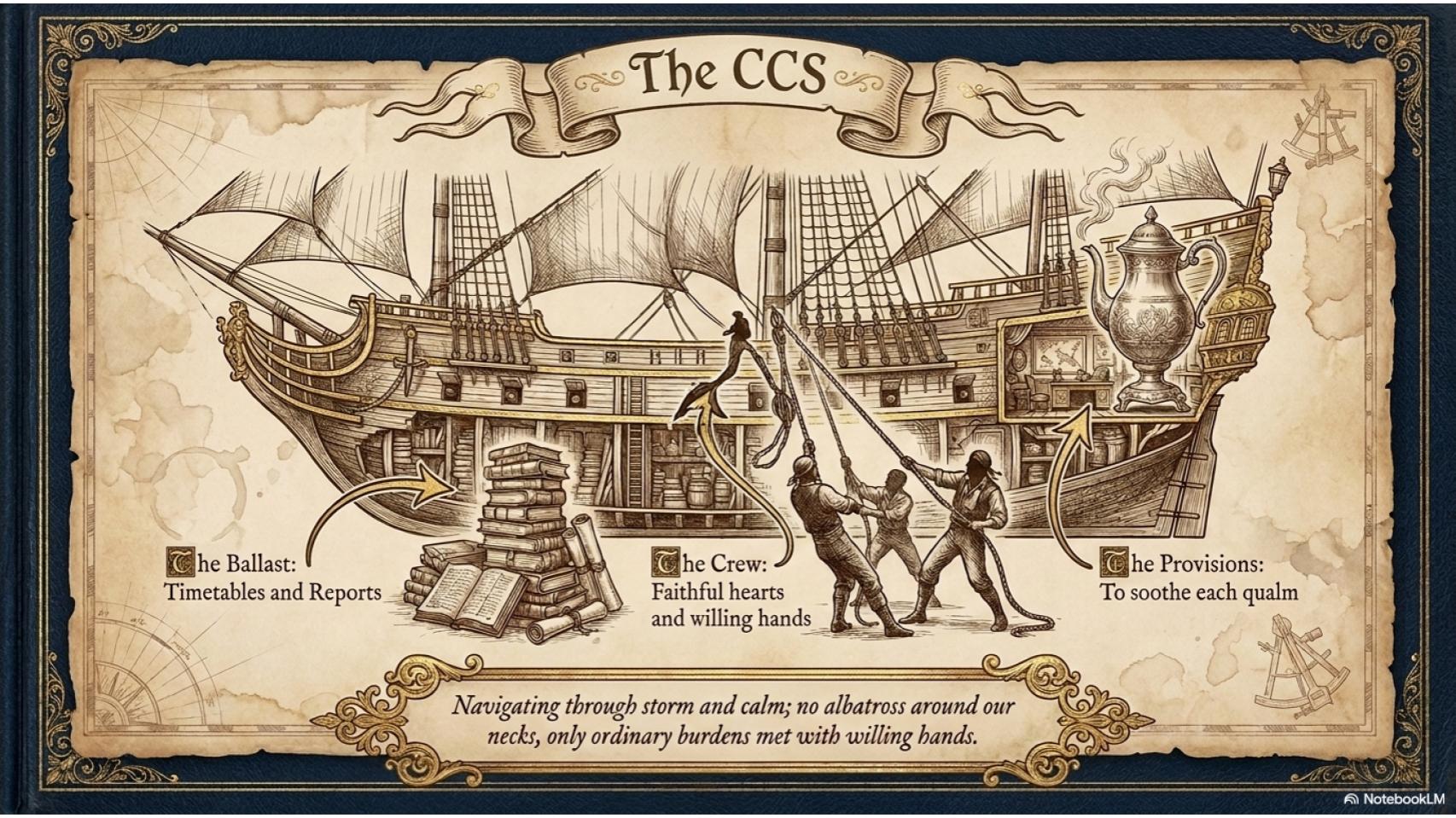
For many a year we’ve sailed together,
Through ISI’s storm and calm;
With timetables, reports and boys,
And tea to soothe each qualm.
No albatross hung round our necks,
Though burdens there were many;
Yet faithful hearts and willing hands
Outnumbered cares by plenty.
For schools are built of flesh and blood,
Not merely brick and stone;
By those who quietly gave their all,
And never sought their own.
Now hear of those whose watch is done,
Whose duty now is past;
Whose names shall echo through these halls
Long after bells have ceased their blast.
Dame Maggie Olivier
First came Dame Maggie Olivier,
High Queen of Stage and Speech;
The Common Room her royal court,
No soul beyond her reach.
A parent first, then leader true,
With wit both sharp and warm;
She weathered every school-day gale,
Each teenage thunderstorm.
Yet all who gathered round the urn,
Knew well another throne:
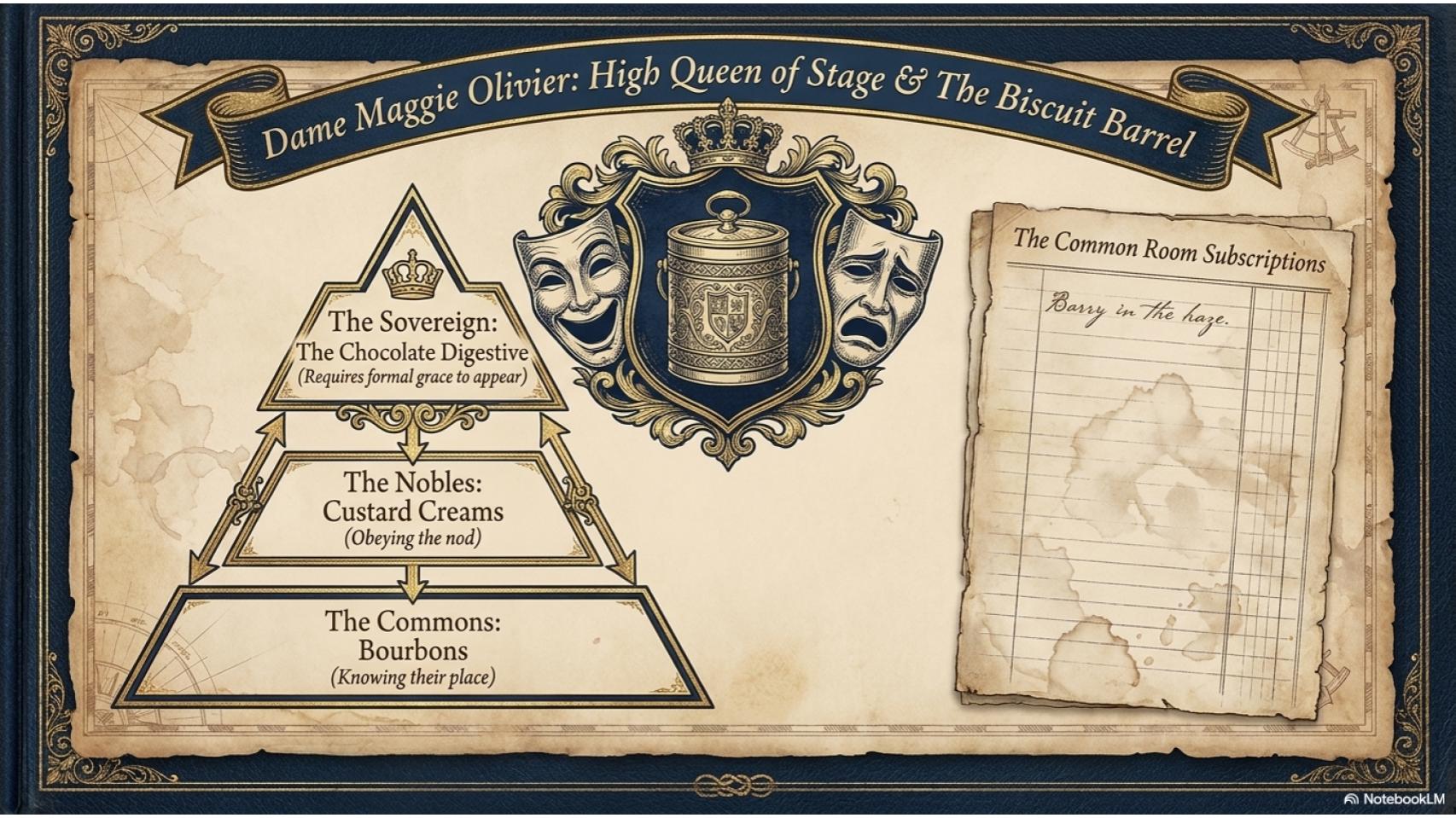
The Mistress of the Biscuit Barrel—
A kingdom all her own.
The Custard Creams obeyed her nod,
The Bourbons knew their place;
No Chocolate Digestive dared
Appear without her grace.
And monthly came the solemn cry,
With ledger held aloft:
“The Common Room subscriptions, please!”
Though spoken ever soft.
For someone had to mind the purse,
And someone keep us fed;
Else hungry teachers, lacking tea,
Would surely fall down dead.
And oft when endings came around,
‘Twas Maggie’s voice we’d hear;
To bid farewell to friends departing,
With laughter and a tear.
Yet now the wheel has turned once more,
The herald takes her seat;
The one who spoke the parting words
Must hear them now complete.
But not farewell—not wholly so—
For schools are strange that way;
We part with “Adieu” more than “Goodbye”,
And meet another day.
Beside poor Barry once she stood,
In years now passed from gaze;
Though life wrote scenes no playwright dared,
His memory sits in the haze.
Cherie Levi
Then Cherie Levi, healer kind,
The guardian of our health;
Whose calming smile and measured words
Were greater far than wealth.
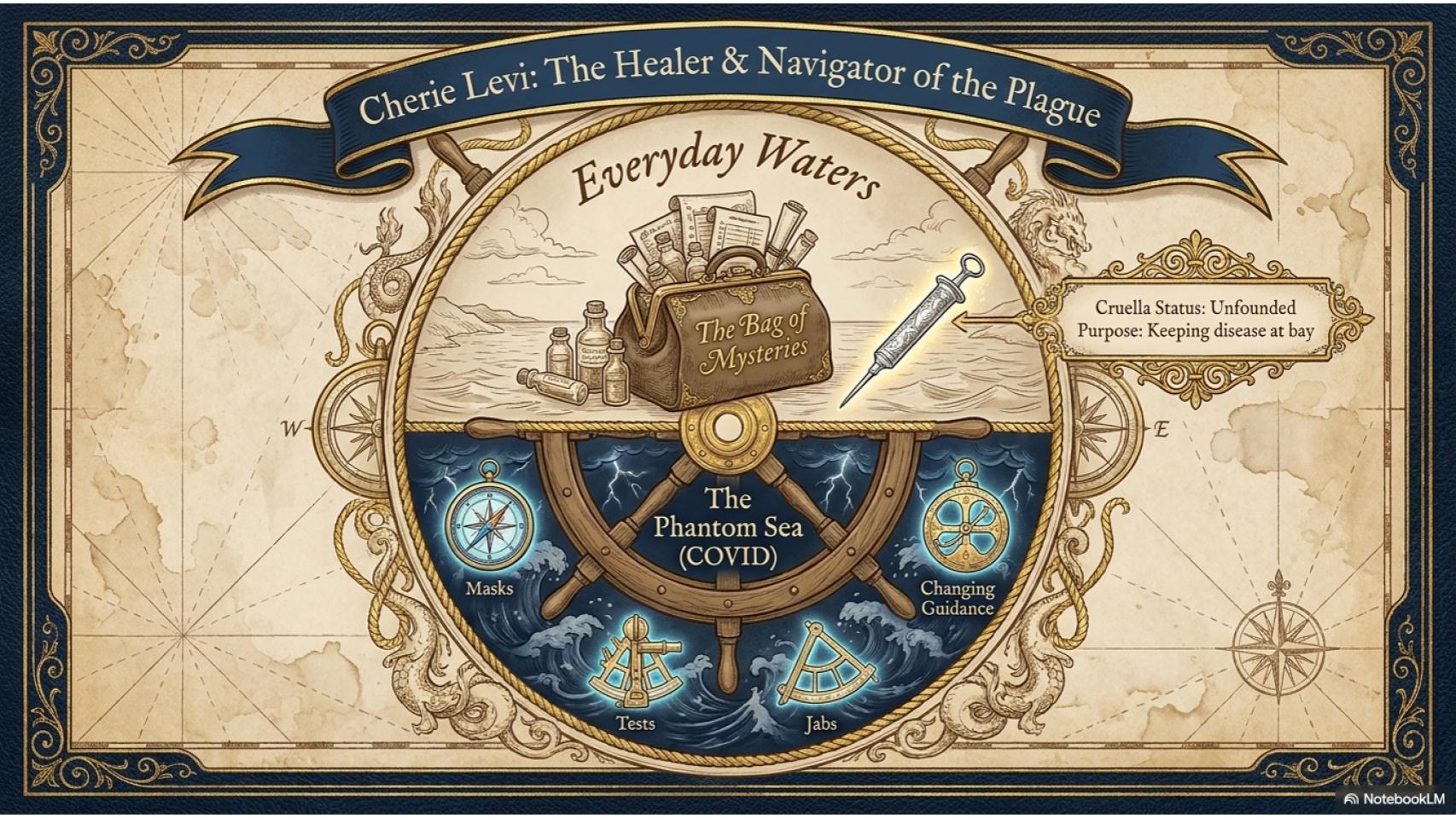
She bore the bag of mysteries,
Of lotions, charts and files;
Yet somehow soothed the fiercest boy
With little more than smiles.
And many feared the gleaming dart,
The hypodermic gleam;
“The Nurse approaches!” voices cried—
“A most alarming dream!”
Yet Cruella she was surely not,
Though she liked the likeness well;
Her purpose was not wickedness,
As every child could tell.
The needle served but one great cause—
To keep disease at bay;
To guard the young entrusted here,
Each ordinary day.
Then came the plague no living soul
Had thought they’d ever see;
When silence settled on the land
Like some dark phantom sea.
Through COVID’s strange and fearful years,
When certainties grew few,
She brought us calm and clarity,
And always knew what to do.
The masks, the tests, the jabs, the charts,
The guidance changing fast—
Yet Cherie steered the little ship
Until the storm had passed.
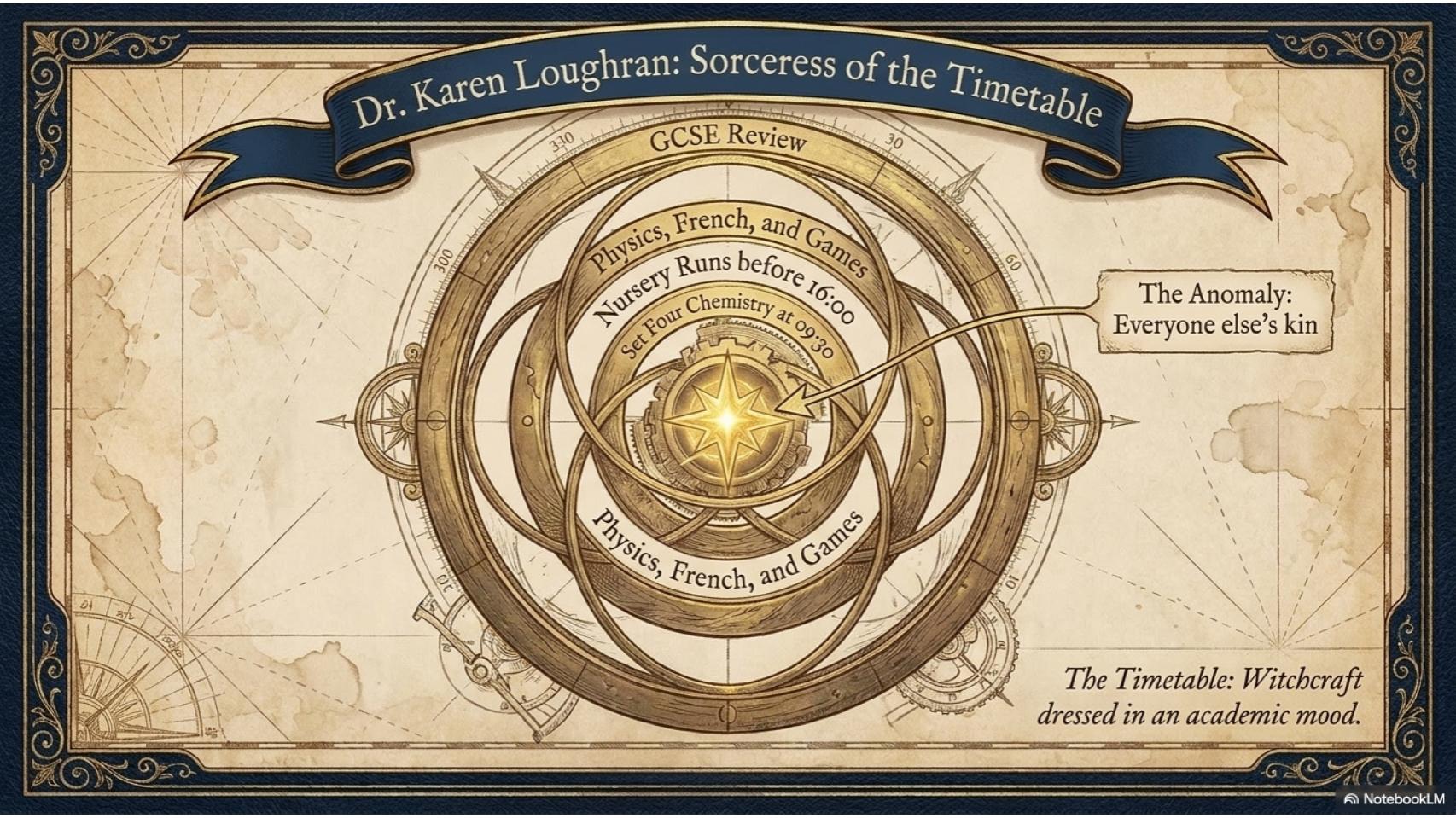
Dr Karen Loughran
Then Dr Karen Loughran strode,
With scholar’s measured tread;
The Academic Deputy,
Whose thoughts ran miles ahead.
The Cover Lists! Great parchment scrolls!
Known only unto few;
If lessons stood when staff were gone,
‘Twas Karen saw them through.
But deeper still the mystery lay,
Beyond all mortal ken:
The sacred art of Timetables—
Unknown to other men.
How place Set Four in Chemistry
At half-past nine on door,
Whilst somehow granting nursery runs
Before the clock strikes four?
How balance Physics, French and Games,
And GCSE review,
With granny needing hospital,
And Year Eight needing you?
Not Karen’s granny—mark me well—
But everyone else’s kin;
For somehow every pleading case
Would find its way to win.
She cut just enough slack, no more,
With wisdom, tact and grace;
Until impossible itself
Found somehow time and place.
The rest of us looked on in awe,
And wisely did conclude:
The timetable is witchcraft dressed
In academic mood.
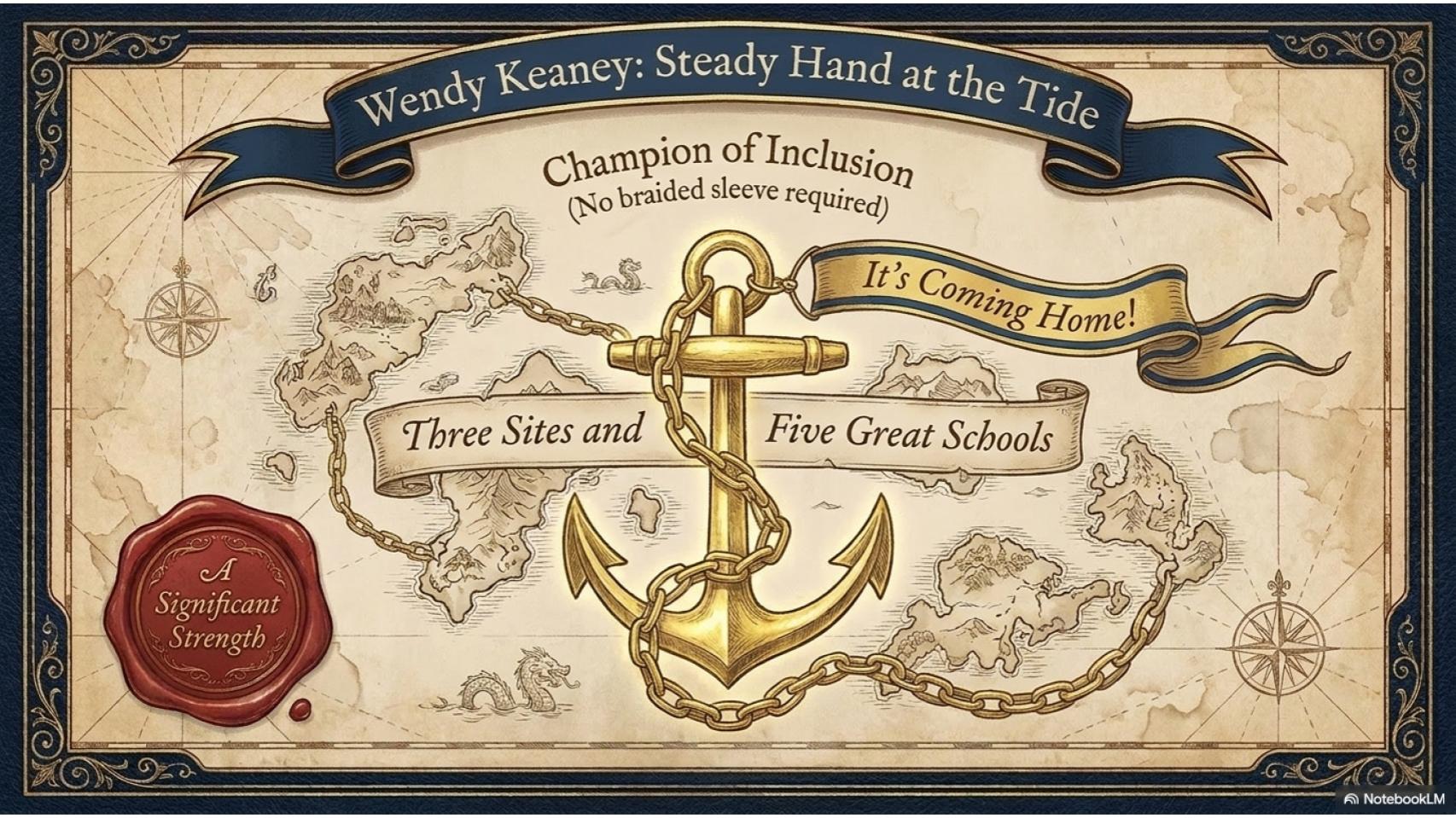
Wendy Keaney
Then Wendy Keaney, steadfast soul,
Whose heart embraced us all;
Inclusion’s champion, wise and firm,
She answered every call.
Yet “Deputy” ne’er told the tale,
Nor captured all she’d done;
For captains need no braided sleeve
To prove that they have won.
Across three sites and five great schools,
Her fleet stretched far and wide;
Yet every sailor knew her hand
Was steady at the tide.
The broadest charge of anyone,
Yet closest-knit her crew;
They knew the voyage, shared the helm,
And always saw it through.
When inspectors sought a shining light,
One phrase rang clear and strong:
“A Significant Strength” they wrote—
Where Wendy did belong.
The football crowds cry every year,
“It’s coming home!” with cheer;
For Wendy and her steadfast team
Made those words true right here.
Not sung from Wembley stands alone,
Nor dreamt by hopeful men;
But lived each day in countless acts,
Again…and yet again.
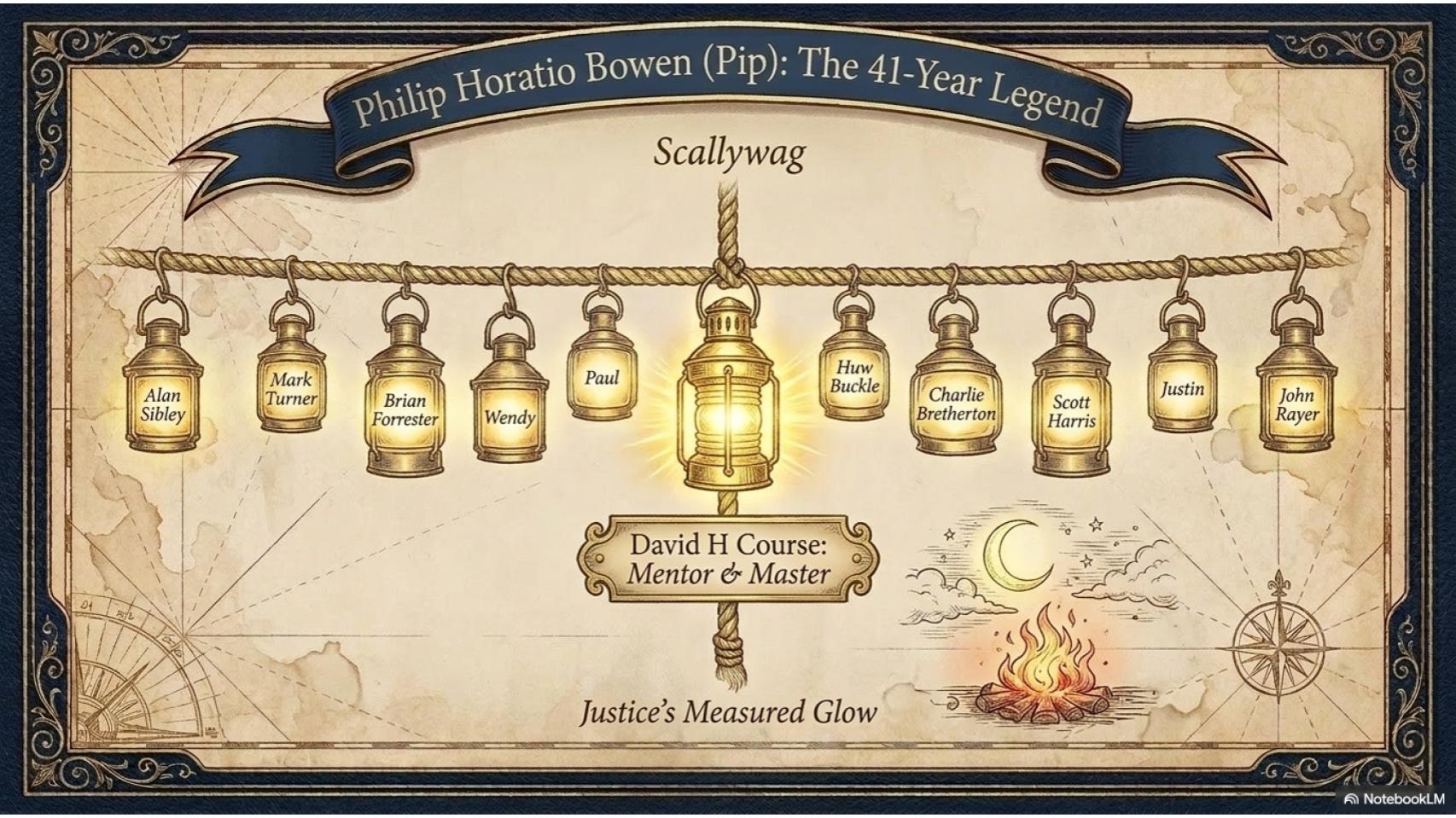
Pip — Philip Horatio Bowen
Now Pip! Sir Philip Horatio!
Long may his legend grow.
From Scallywag in younger days
To Justice’s measured glow.
One-and-forty years have passed
Since first he walked these grounds;
As pupil, coach and master true,
Where countless joy abounds.
The coaches waited at his word,
Their journeys all well planned;
No driver feared the unknown road
While Pip gave his command.
Now Pip! Sir Philip Horatio!
Long may his legend grow.
From Scallywag in younger days
To Justice’s measured glow.
One-and-forty years have passed
Since first he walked these grounds;
As pupil, coach and master true,
Where countless joy abounds.
The coaches waited at his word,
Their journeys all well planned;
No driver feared the unknown road
While Pip gave his command.
Yet hear the words he leaves behind,
More precious than applause:
“I’ll miss the old establishment,”
He says, then gently pauses.
He names the friends who shaped his path,
Too many to recount;
Yet some deserve remembrance still,
Whose worth no tongue can count.
Alan Sibley, Mark Turner,
Brian Forrester beside;
Wendy, Paul and Huw Buckle,
Who walked the selfsame tide.
Charlie Bretherton, Scott Harris,
Justin, John Rayer too;
Each a lantern on the voyage,
Each steadfast, wise and true.
But one name shines with special light,
And bids us all take heed—
David H Course, his mentor dear,
A master every school would need.
Generous beyond all measure,
Humble, wise and kind;
A teacher who shaped other teachers,
And countless hearts and minds.
“It was,” says Pip, “the best of times—
Though worst there sometimes proved:
The ski trips and the rugby wins,
The boys whose lives were moved.
The visits made, the grades achieved,
The friendships forged for life;
The memories that outlast exams,
Outlasting toil and strife.
And when old boys return again,
With children at their knee,
You know the work was worth the while—
As plain as plain can be.”
And somewhere still the barbecue
Awaits another June soon,
With laughter rising through the dusk
Beneath a summer moon…
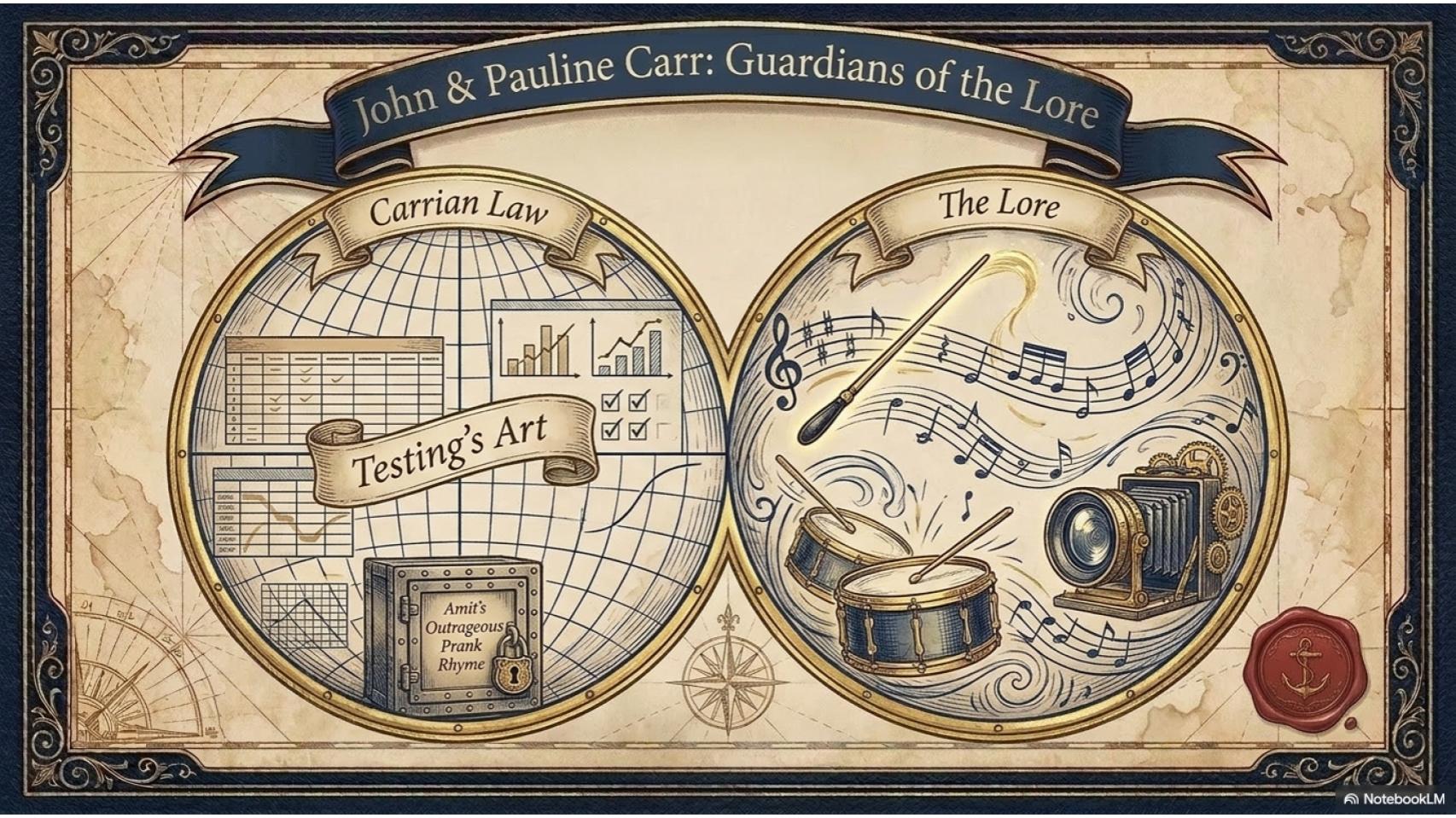
John and Pauline Carr
Then John and Pauline, side by side,
Long guardians of the lore;
They mined the seams of hidden data,
And tested evermore.
No spreadsheet dared deceive their gaze,
No system hid a flaw;
For every number told a tale
Observed by Carrian law.
Yet John bore other gifts besides,
Unknown to graphs and sums;
For when the Staff Choir found its voice,
He summoned beating drums.
His baton danced, his eyebrows rose,
His fingers marked the time;
Till weary teachers somehow found
Their voices turned sublime.
And oft beside the Christmas tree,
Or Speech Day’s grand parade,
His patient hand upon the lens
A thousand memories made.
The films, the songs, the treasured scenes,
Now safely kept in store;
To warm our hearts beside the fire
When we can teach no more.
And Pauline too, with testing’s art,
Kept standards straight and true;
Though one remembered script survives,
As legends sometimes do.
For Amit wrote with boundless zeal,
His verses bold and frank;
He sought a rhyme of highest worth…
With one outrageous prank.
“What word,” he mused, “completes this verse?”
The examiner looked wan.
The answer was… perhaps unfit
For mention after dawn!
Yet laughter lives where kindness dwells,
And every school must keep
A little shelf of treasured tales
Too good for solemn sleep.
Andre Boulton
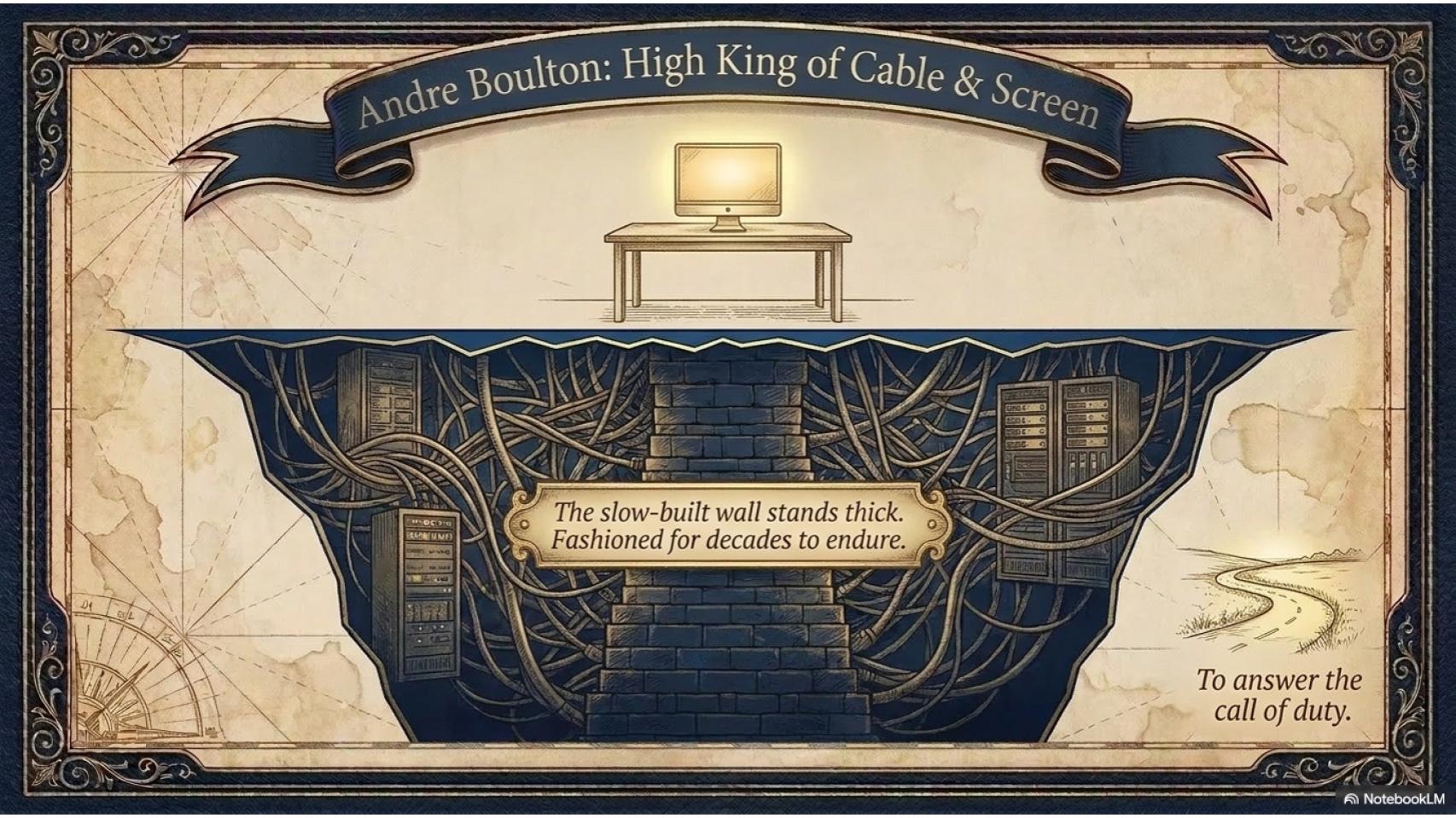
Then Andre came, Lord Boulton named,
High King of Cable and Screen;
Whose kingdom lay where none could see—
Behind each glowing machine.
“Why build it fast?” the youngsters cried.
“Why not tomorrow’s trick?”
Andre smiled that patient smile:
“The slow-built wall stands thick.”
For brick by brick, and wire by wire,
He raised a future sure;
Not fashioned for a single term,
But decades to endure.
The architect of quiet things,
Whose triumph none applaud;
Until one morning nothing works—
Then all invoke his God.
Yet greater still the choice he made,
When family called away;
To seek a wider, stranger world,
Beyond familiar day.
One heart remained at Claires Court still,
Another journeyed on;
For every father knows at last
His duty is not gone.
The map unfolds before the feet,
The road bends out of sight;
May every mile reward the faith
That guided such a flight.
Jamie Odell
Then Jamie strode—the tallest man
To grace these ancient stones;
Whose head seemed nearly level with
The weather vanes and cones.
Now City’s towers beckon him
With figures, funds and shares;
May merchants tremble at the sight
Of one who climbs their stairs.
Yet none shall quite forget the day—
Confession now is due—
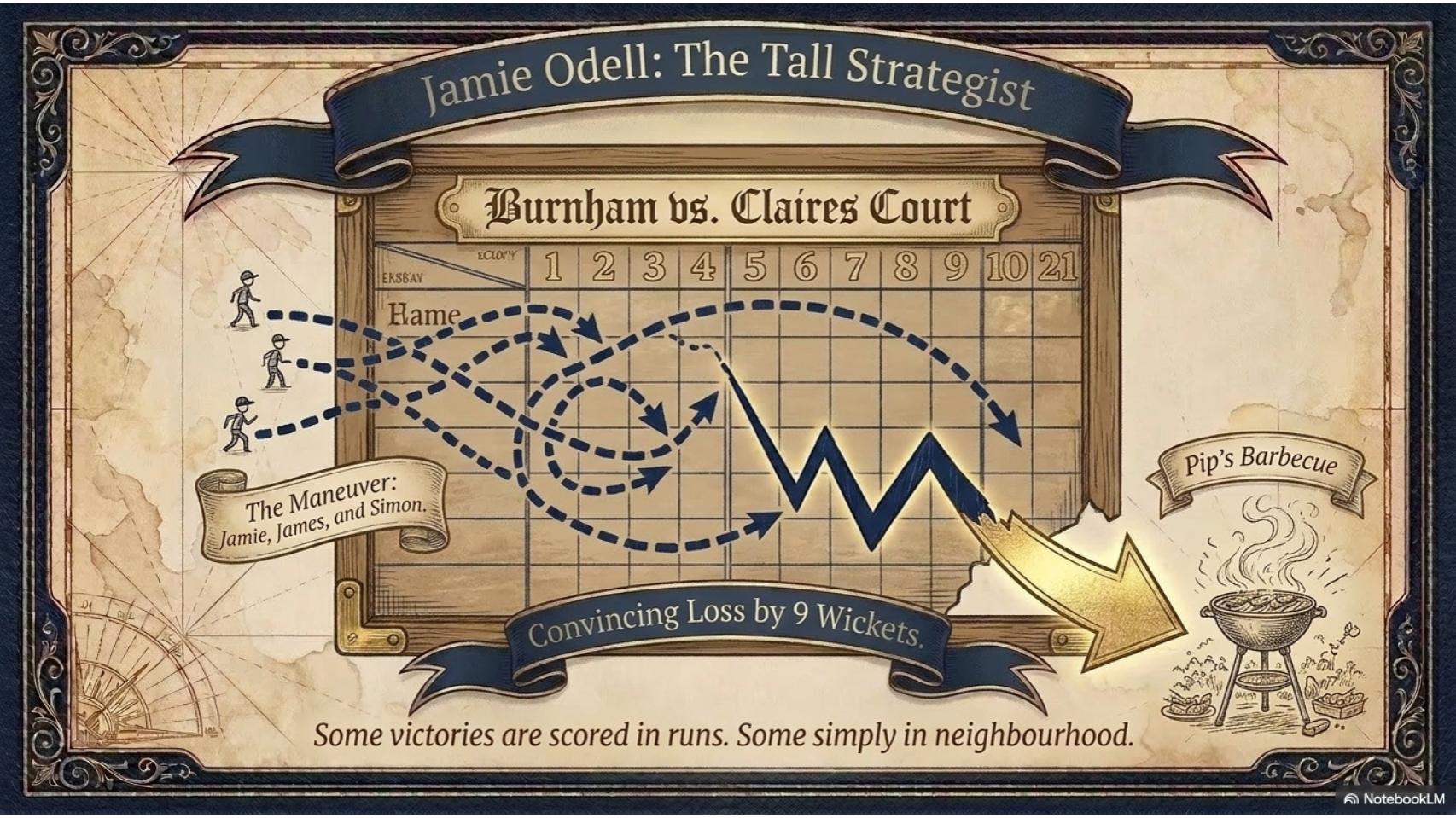
When Burnham won by nine great wickets…
Or so the scorebook knew.
For Jamie, James and Simon there
Contrived, with subtle art,
To lose with such convincing grace
They played the clever part.
“Why throw the match?” the youngsters cried.
“What madness guides the bat?”
“Because,” quoth they, “Pip’s barbecue
Was waiting after that!”
The alumni gathered, stories flowed,
Old friendships were renewed;
Some victories are scored in runs,
Some simply… neighbourhood.
The Guests Listen
The Guests are hushed. They hear the tale.
The glasses all stand still.
The Principal Emeritus
Has yet to speak his fill.
He looks upon familiar faces,
Now silvered more than gold;
And sees not merely years gone by,
But stories still untold.
Then softly speaks of Dickens’ words,
Whose truth we all have known:
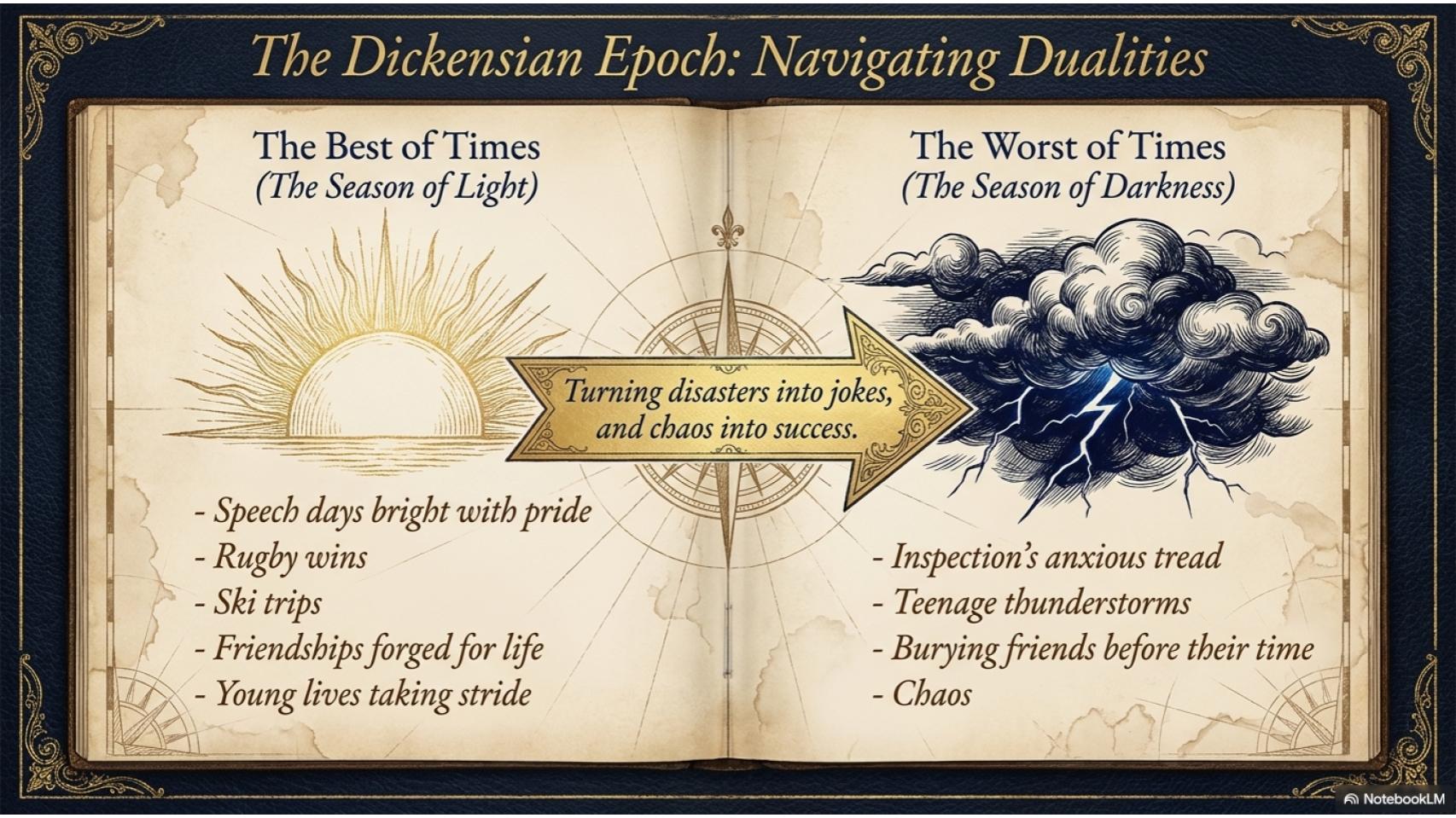
“It was the best of times, it was the worst of times; it was the age of wisdom, it was the age of foolishness; it was the epoch of belief, it was the epoch of incredulity; it was the season of Light, it was the season of Darkness; it was the spring of hope, it was the winter of despair.”
“So wrote old Charles—and every school
Has lived that selfsame page.
For every triumph, every doubt,
Belongs to every age.
We’ve known inspection’s anxious tread,
And speech days bright with pride.
We’ve buried friends before their time,
And watched young lives take stride.
We’ve laughed at things no parent knows,
Nor governor could guess.
We’ve turned disasters into jokes,
And chaos into success.
For schools are curious little worlds:
Tomorrow always comes.
Another boy, another bell,
Another beating drum.
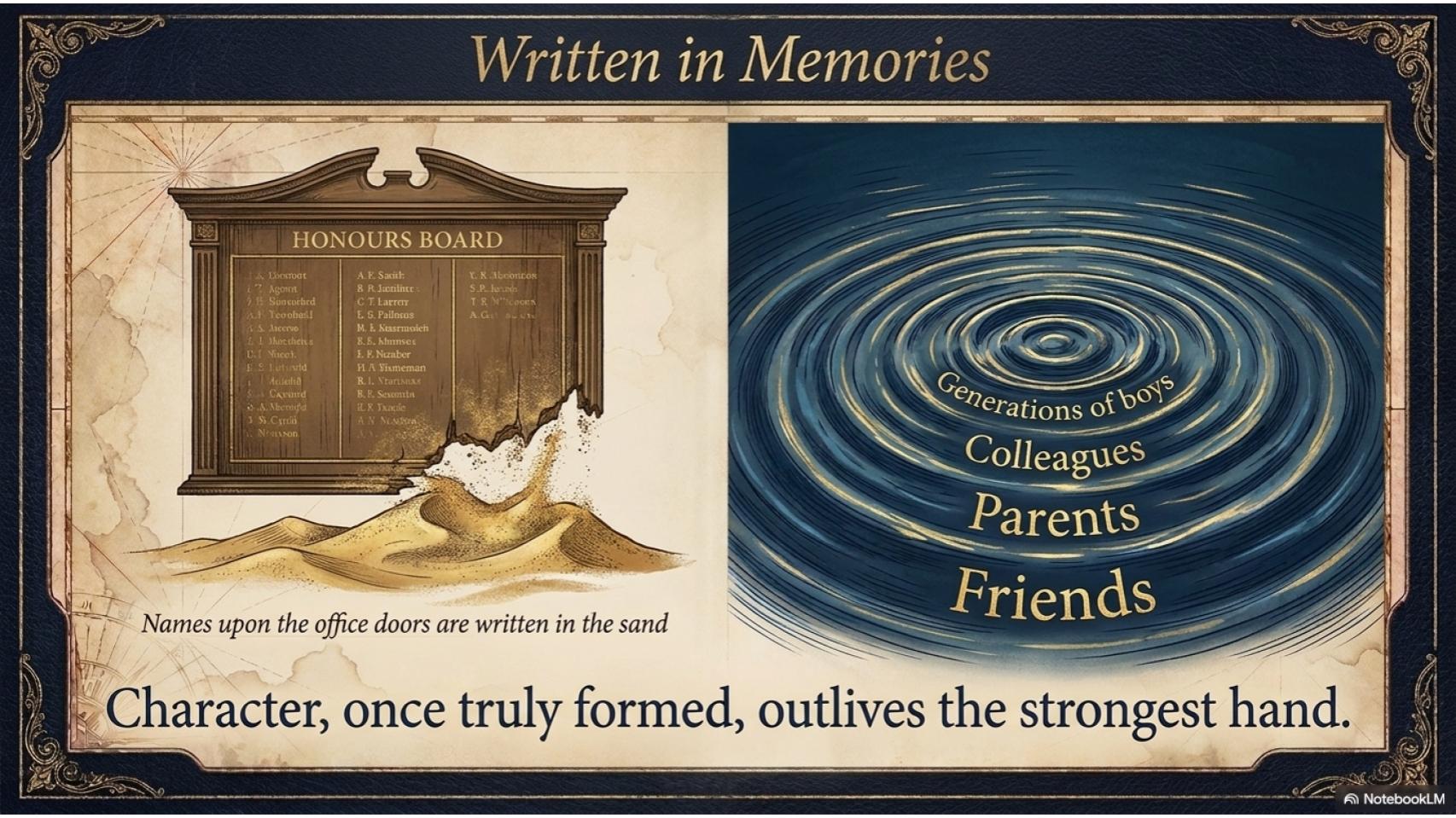
The names upon the office doors
Are written in the sand;
But character, once truly formed,
Outlives the strongest hand.”
Then rose the Principal once again,
His final toast to give:
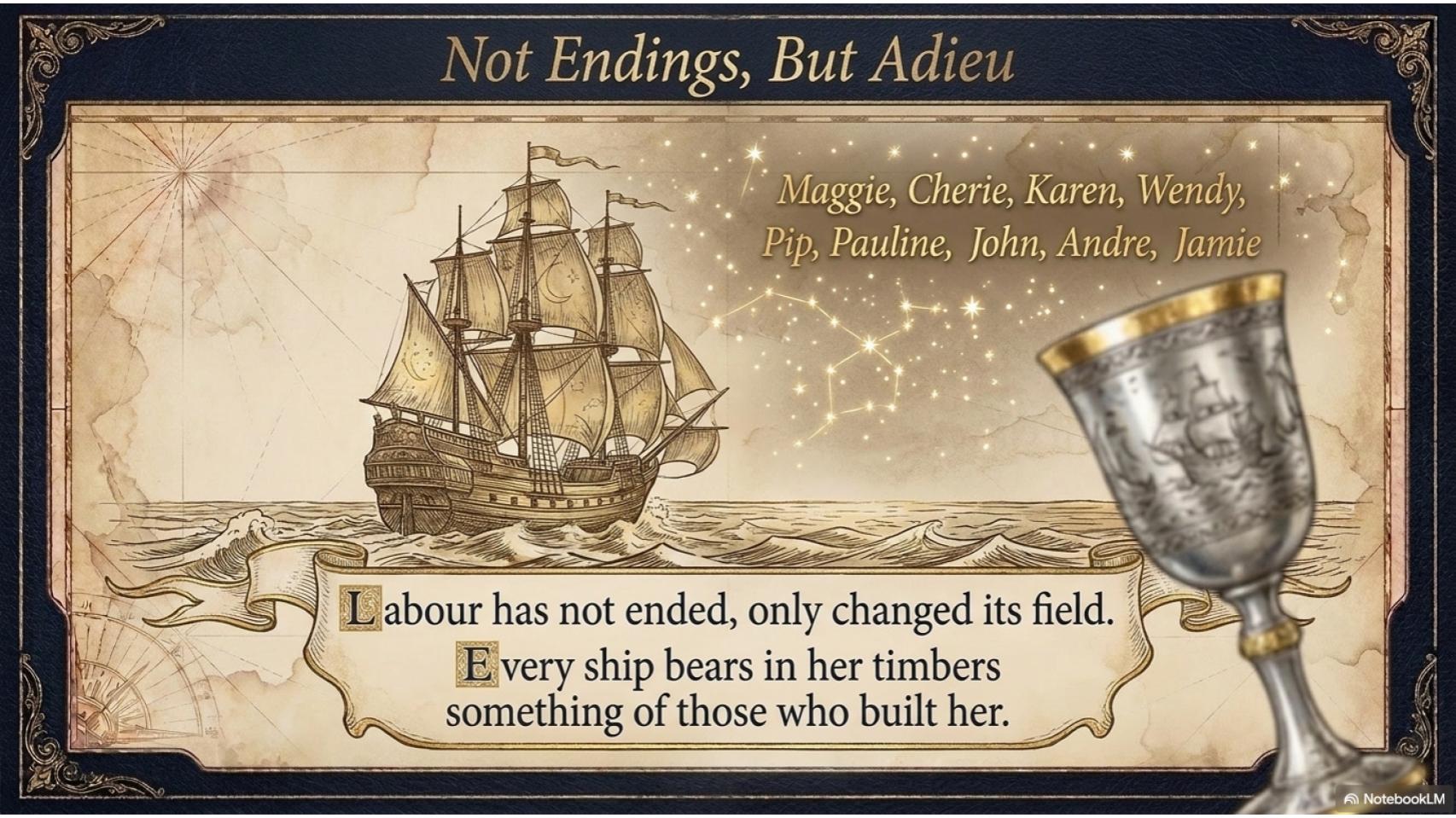
“To Maggie, Cherie, Karen, Wendy,
Pip, Pauline, John—
To Andre and to Jamie—
May every one of you
Know that your labour has not ended,
Only changed its field.
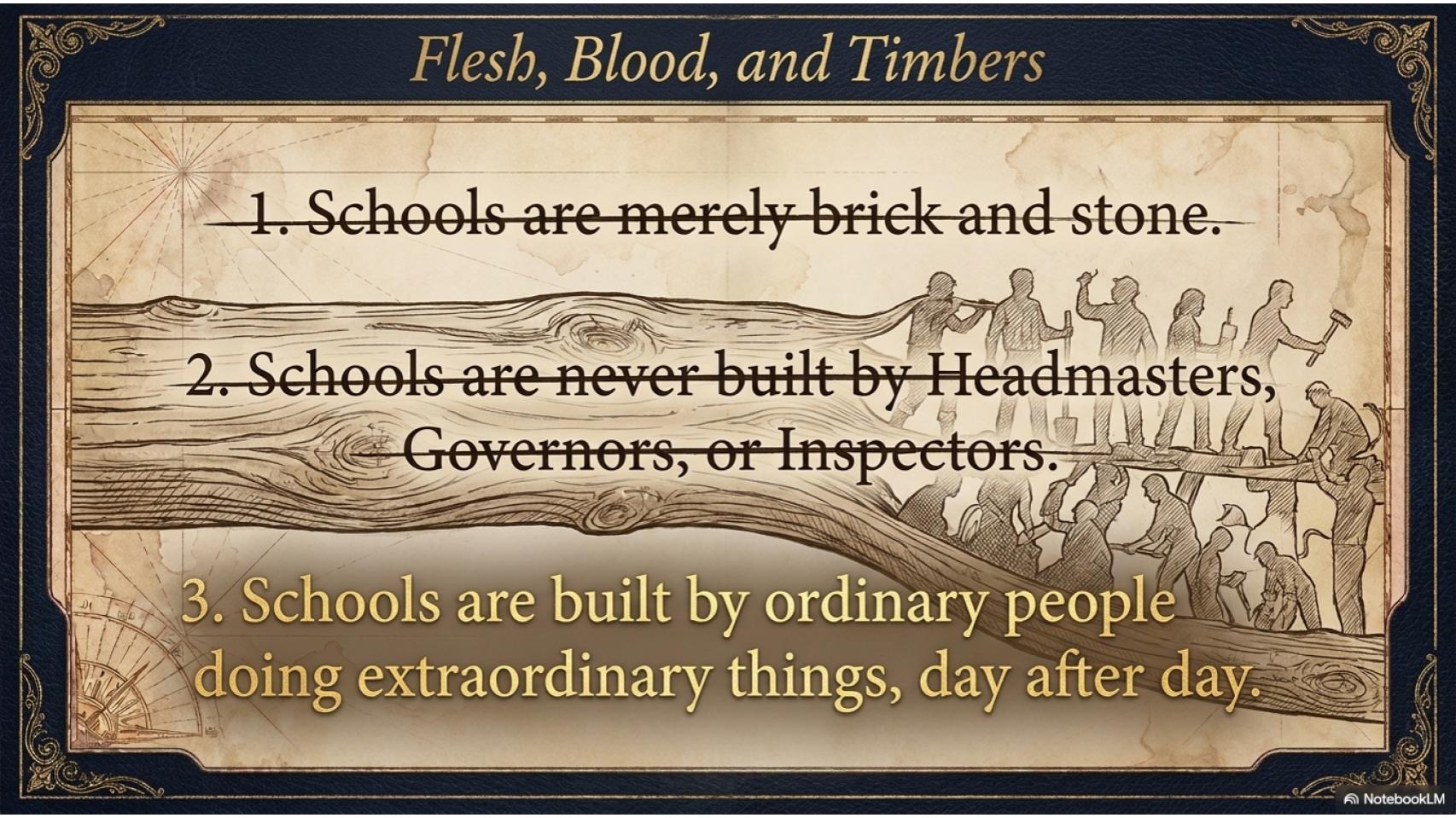
For schools are never built by Headmasters.
Nor by Governors.
Nor by Inspectors.
They are built by ordinary people,
Doing extraordinary things,
Day after day,
Year after year,
Until one morning they discover
They have become part of the place itself.
You leave your offices today,
But not these halls.
Your names are written,
Not on honours boards…
But in the memories
Of generations of boys,
Of colleagues,
Of parents,
And of friends.
The tide rolls on.
The voyage continues.
New hands now take the helm.
Yet every ship bears, in her timbers,
Something of those who built her.
So raise your glasses high.
Not to endings—
For schools know very few of those.
But to adieu.
For somewhere,
On another Speech Day,
At another rugby touchline,
Around another barbecue,
Or over another biscuit barrel,
We shall surely meet again.”
And all were silent for a space.
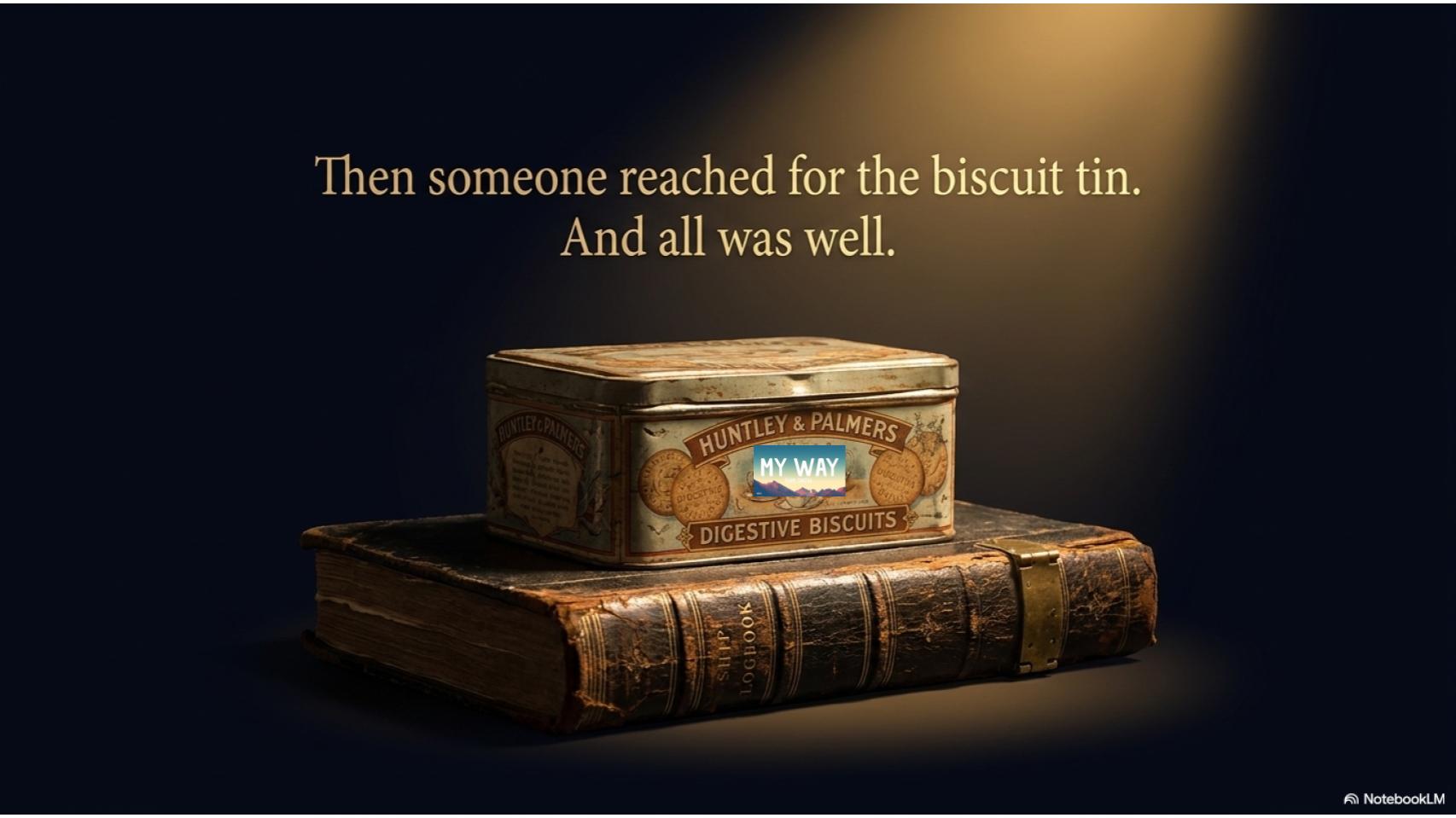
Then someone reached for the biscuit tin. And all was well.

 A Principled view