The Future – an announcement 22/11/2013

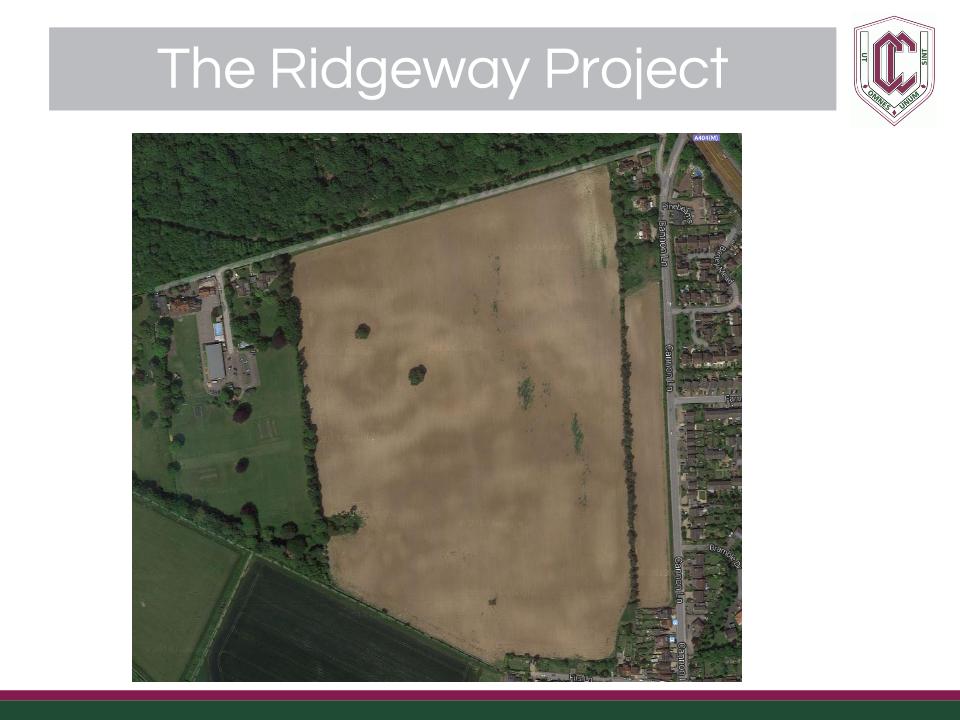
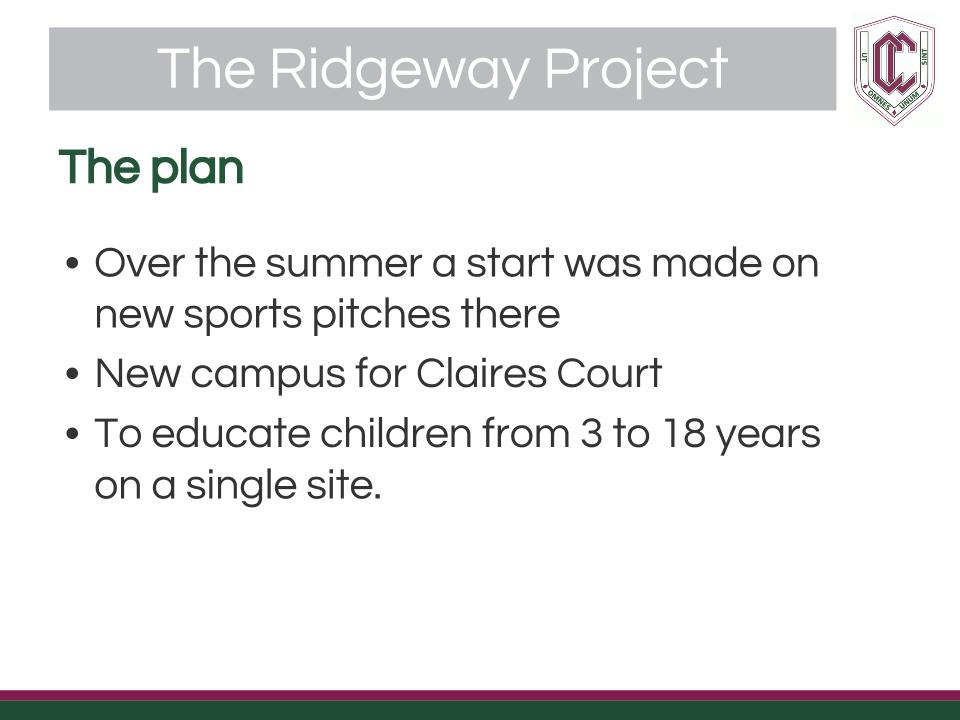
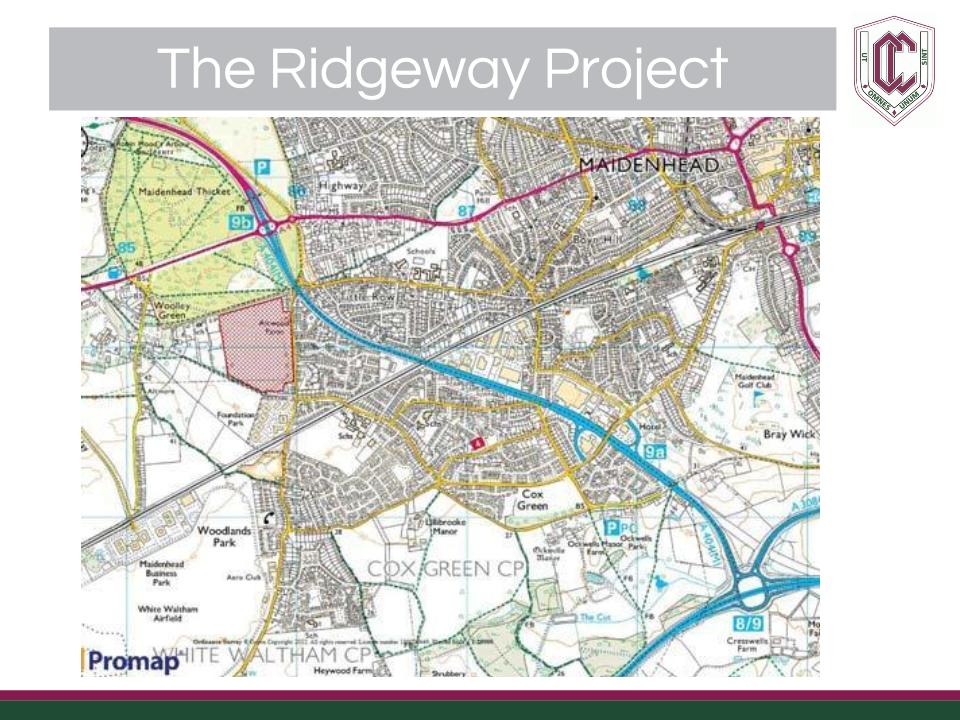
On Friday 22 November 2013, the Principals of Claires Court announced to their staff, and to the Parents and wider community through our Bulletin email ring our intention to develop a new school for Claires Court on the land purchased last year, adjacent to our Junior Boys school at Ridgeway. What follows is a short presentation covering that announcement:

Ridgeway project 131119 v2 (2) (18)

Image

Image

Image

Image

Image

Image

Image

Image

Image

Image

Image

Image

Image

By all means feel free to email me jtw@clairescourt.net

Posted in Uncategorized | Leave a comment

“I am always doing that which I cannot do in order than I may learn how to do it.” Pablo Picasso

Whether you are Picasso or Rodney Mullen, you know you have had to try things you can’t do in order to grow and develop– fostering prolific ingenuity purely for passion’s sake, not because a victory or defeat is at stake.

The world education community is waiting with bated breath for the release of the latest world statistics on school educational achievement of 15 year olds – such is their anticipation, they have set up a unique website – Pisaday– so that when the OECD release the data on 3 December, they can cover the broadcast and make commentary.

The world rankings from PISA have driven national government policy across the developed globe for years, and given that the OECD doesn’t have an axe to grind, irrespective of whether the tests or methodology are in anyway proven, (read recent critique here), it seems sensible that nations use it to check their educational pulse at this school teenage threshold. What I think is remarkable about the work of leading western nations in this regards (Finland, our commonwealth cousins, Norway and Belgium spring to mind), is that they don’t have the feeding frenzy of compulsory early education, school achievement tables and the politicisation of education that we see in both the UK or the States).

You don’t see that feeding frenzy in the UK Independent Sector either – read anything any one of our Independent school leaders in the UK has written about policy and practice in our schools, and you’ll see we stand by the almost absolute requirement that children must be given the opportunity to do it all, without fear and pressure. One can only read the BBC education headlines on any week, and recognise the perceived weaknesses of the UK state system per se (and damns so many great state schools into the bargain of course), whilst highlighting what our private sector does so well and has been renowned for over the decades. great athletic, artistic, musical and science educations (picking up on this week’s soapbox of the nation), and in the main (particularly across the middle years) across the width of the ability spectrum. It is also worth bearing in mind that many of the great schools for specialist learning differences and difficulties are also fully independent too, though drawing their funding through local authority statement from the exchequer.

Whether you are an artist or a skateboarder, your direction of travel will vary hugely (pardon the metaphor). There’s no right way to learn either craft skill, and what we know is that engaged learners will fail time and again until they master a specific skill. When my sons were a lot younger, and in charge of a gameboy, I learned and mastered SuperMario4. I’d like to think that the persistent effort needed to learn the mechanical skill to hop, ski and jump to reach the final level and glory made me a better person. In reality, it reminded me just how tough learning something new is.

I remember a few years ago attending in Islington a training day for both state and private school mentors for new teachers, and arguing the toss for my approach to what made a great lesson. In the video clips, of a good teacher aspiring to be great, and the same teacher at now elevated guru status, the difference seemed to be that in the latter, because the teacher was so pushy and focussed that all should stay engaged, that meant ‘outstanding’ could be seen. My take on the day was that great learning is not linear, so approving that an outstanding lesson could not show 1 or 2 children failing was beyond my ken.

I’m raising this now because it’s that time of year where much of our activity is at make or break point. How does a rugby team give up its county title – reluctantly I’d guess? What precisely does an ocarina choir look like in festival mode? Our authors across the school are writing for ‘Scribblings’, our magazine that showcases the English department’s work- who says their work is good enough to be published? How do you console a child (and family) now they have learned that 11+ success is not for them this time around? Switch to our main school website at clairescourt.com and you can check out our diary for the next month. Looks madness perhaps, but the sheer scale of our ambition for example to ‘Caballerial‘ (a 360-degree ollie while riding fakie) means we will and hopefully learn lots from that considerable practice activity.

I had the privelege to attend a private viewing on Tuesday evening of the work of two artists who teach in our school, Frances Ackland Snow and Mavis Barber. The children know them as teachers, but they are just so much more than that. Mave paints the London cityscape, and she captures the vibrancy and plurality of city architecture amazingly well. Frances transports us in a Turneresque way to the big skies of East Anglia,  and her pictures sit so well alongside Mave’s bricks and mortar. Their work (for sale) is on show at the Norden Farm Arts centre this week and next, so do pop along to have a look. I have reminded Frances that she should take her stuff to Burnham Market, where I feel the Chelsea set-by-the-sea will snap her up, and Mavis that Upper Street is the way forward for rapid sales in N1.  And as the title of this blog says, and my colleagues know only too well, I spend much of my life bossing people around. They might say I am still in my early Picasso stage, getting it wrong most of the time. I might say that I couldn’t possibly learn how to do it better, without plenty of practice. So what I have completed my 10,000 hours and haven’t made expert yet – I can but keep trying. :o)


Posted in Uncategorized | 1 Comment

Digital Newsletter Monday 18 November 2014 – The Youthful shifting sands edition

http://goo.gl/dFrFlM

You can find info about this Saturday’s forthcoming ISANet Unconference on the website for same. Do yourself a favour and show up if you can. But book on the website so we know you are coming.

Even my upmteenth year of teaching now, it never fails to surprise me just how independent of choice some young people can be. Just when you think you have got a groove covered, up comes some information that sidelines your expectations all at once, and suggest actually you might have a heap more work to do, just when you were hoping to have got that base covered.

Facebook moving off the teenage radar

The news that Facebook are reporting that the ‘Youf of today’ are leaving them in droves for something simpler and easier to use has also surprised the stock market. After all, investors don’t spend $104 billion dollars to buy a company (2012) if they don’t think it has a really good future. Now actually it probably has, but I am going to guess that informed Parents have begun to get pretty picky about their children ‘pimping their profile’ and perhaps even worse on-line, and actually there are enough good people out there warning children of the perils of a Facebook account, both for safeguarding and for career employment opportunities when they grow up.

It’s all about the Apps

Indeed it is. The first I noticed that kids have moved platform was a year ago, when we started getting some Tweets out there getting a bit closer to the knuckle than we’d like. Instagram and Vine also started showing up on our radar; picture and video streams of meaningless bits of fun that connected their audience rather more temporarily, and then Snapchat arrived, purporting to be Fun today, gone tomorrow (meaning your messages would not stay on someone else’s phone). WhatsApp, WeChat, KakaoTalk and Friends on Minecraft to name but 4 free ways children can message and chat. Without their parents. Much more detail here from the Guardian

and not about the filters

Today’s announcement that the big search providers are going to eradicate from their search facility the ability to find Abuse images. That’s a good thing, but don’t think for a moment that the trade and behaviour of paedophiles is actually built around open searching on the web.  Like most criminal activity, it is planned, works undercover, involves children all too often caught up in their trap, with sharing happening in the deep web, where Google, Bing and Yahoo don’t go.

and all about the Education

Our children are surrounded by food, drink, drugs and indecent images. So as educators we need to work them a lot to ensure they have sufficient strength and resilience to know right from wrong, how not to overindulge, and how to stay straight. Working with technology is no different. Our work in school using technology needs to a little and often, and not overblown. Most parents keep their wallets and drink cupboards safe and managed. The trouble with technology is that being new, parents don’t feel confident about their understanding of its use, and they probably don’t know how to get better information. The ISANet assists a little in raising awareness in our community of possible solutions, such as OpenDNS so parents wifi at home is protected. On the ISA consultants list, we now have recruited Paul Hay, who is an expert in this field and runs events and evenings for parents and teachers, as well as INSET and pupil sessions too. He is visiting us at Claires Court next Monday evening to run such a session for us.

On with the Shifting sands of careers advice

Not that long ago, the government provided full funding for secondary careers advice – and this wall-to-wall, private schools included made a huge difference. They brought in EMA grants to keep pupils in Sixth Form education too. Since the crash, that’s all gone, and guess what, un-monetised by government, http://www.bbc.co.uk/news/education-24988338 tells us now that Careers advice is now appalling.  The independent sector has in the main kept faith with ISCO, COA and CES London/Gordon Collins, all three organisations filling a major need we have to ensure our students are well informed, assessed and supported. Our schools don’t need to use all three, and they fit well too with local careers advisers whose careers have been cut short by cuts and do provide some very useful consultancy 

Rethinking learning : what counts as learning and what learning counts

2006 saw the publication of this volume by Judith Green and Allan Lewis, and I like the phrase, because for most of a child’s life growing up, they’re actually not at school. My twitter stream pointed me to the Bank Street papers, published in the US by this extraordinary school, postgraduate college, occasional writings by practitioners, and it seems they like me believe that all experiences are opportunities for learning. Long ago I started questioning why teachers wanted to colonise children’s time for learning, when actually left to their own devices they are often pretty good at doing just that – learning something different, exciting and often acquiring skills that they will bring back into school the next day. The occasional set I am pointing at is entitled The Other 17 Hours: Valuing Out-of-School Time, and rather oddly the paper I point at here is actually from a trio of researchers in Newcastle here in the UK. I blogged on Friday about multiple competencies, and highlighted the extraordinary benefits of an orchestra day we hosted last Thursday; tonight many of the same musicians were out in force at our secondary music concert. You don’t get good at virtuoso solos, be that on classical instrument, voice or electric guitar playing Iron Maiden, without putting the time in; but what’s obvious is that the musicians value that we put on a show for them (not colonise their time) and give back in other ways through their academic work in greater measure because of it. Here’s a link to some videos of our day – great fun.

To conclude

Just one item of addictive software for you to try – Nudge, and as the website says: Nudge is a virtual-instrument widget designed for self-expressive online music making & sharing. It is fun and simple to use and you don’t need to know a single thing about producing music to make your own individual songs in minutes! Don’t blame me when the work don’t get done!

Best wishes for a good week

James Wilding

jtw@clairescourt.net

@james_wilding

jameswilding.wordpress.com


Posted in Uncategorized | Leave a comment

The development of multiple competencies is central to an outstanding education – anyone can be a polymath

30 years ago, the developmental psychologist Howard Gardner proposed the existence of multiple intelligences, and for quite some time, this attractive notion that we have a diverse range of modalities, musical – rhythmic, visual – spatial, verbal – linguistic, logical – mathematical, bodily – kinesthetic, interpersonal, intrapersonal, and naturalistic, sent educators on a hunt for a way of identifying students by way of their learning style so that they could adjust their teaching that best fitted the learners. We were involved in a sports development project 15 years ago, during which we were asked to approve the separation of PE classes into those who learned by auditory, kinesthetic or visual means to test this theory. As I was the superviser at the time I declined, as the suggestion that foot or net ball players could learn better by hearing and looking rather than by practice was clearly arrant nonsense.  Pretty soon afterwards, we sought out any elements of the National Curriculum that promoted the introduction of learning styles into the classroom and ensured the same were buried without ceremony too.

This is not to say that I don’t understand that learning preferences exist, because they do. Any survey of a timetable adult education classes will highlight the diverse choices we are given for choice, as indeed does the list of many thousand of University courses.  These both have developed over the years to cater both for preference as well as for onward employment vocation. For example, I couldn’t begin to learn to play the guitar without have an interest and temporal preference for picking up a 12 string and giving it a good pluck. Indeed, the family mouth-organ has just turned up behind a wardrobe and I have every intention to continuing my 50 year old quest to master the harmonica. I suspect however that it’s not my ‘huff-and-puff’ intelligence that’s at fault here, but my motivation to put in the 10,000 hours that would bring me to expert status.

Thursday 14 November 2013, we hosted an orchestra day at Claires Court, which by current, layered approaches to teaching should not have worked. We had 86 musicians of diverse abilities and ages (8-18) from 7 different schools come together with a range of teachers who had never worked together, with a focus to produce a celebratory concert for parents, friends and family at the end. For my part, I had little knowledge of the other schools’ pupils nor involvement in the day itself (my musical talent is kept well hidden), but as I looked at our own instrumentalists taking part, it was quite evident that they had really developed their playing skill (by their age) remarkably well. I suspect we are now rather used now to those advertorial photo-opportunities other schools have created, with fiddlers wearing cricket helmets, in a lab coat with a stethoscope and such like. My personal snap-shot was to see our gold-medalling national rowing champion playing a lead saxophone line whilst the Orchestra ensemble played ‘Bring him home‘ as background, knowing full well that all his other area of activity also engage him with similar passion and involvement.  All of the other older musicians seemingly sported similar cvs, also highlighting their burgeoning Renaissance wo/man credentials. You can see and read more here – http://goo.gl/kTy6R1.

Much is said and written in school brochures about the attention available to ensure the development of the whole child, and this includes all aspects of their development, emotional, physical, practical as well as intellectual. Actually this has been so for far more years that Gardner’s words on Multiple intelligence have been around. It is my central belief that it’s not just enough to wrap up a school’s offer with these words, but that you have to set out to provide for multiple competencies in a strategic way. That means at junior school level, you need to offer diverse languages, opportunities to understand subject knowledge and skills and so forth, and the oomph to work at them! Gone are the days when parents will accept the statement that ‘there’s not much there’, and they’ll support with tigerish intensity any channel of interest their child exposes. In my view, this modern parenting interest does not (for the most part) deprive the child of their childhood, and many cases actually expands the child’s opportunities to play and explore what’s possible quite significantly. We can’t roll back the relentless tide of progress, and societal concerns about emerging technologies have been with us since the time of the ancients. Parents and schools need to be balanced in their approach; given the school has a responsibility for all of its children in equal measure then it should seek to be strategic in its deployment of resources to ensure that multiple competencies can be developed by all.

A word of caution is needed. It’s one thing for a school to provide opportunities for children to engage, quite another to cause compulsion.  A firm steer is sometimes required to ensure that a child discovers their writer’s voice lying dormant, or experiences the joy of singing, striking a cymbal, blowing a note or plucking a string. I do remember vividly in my own childhood longing to weave baskets from cane and willow. There was good support for the slow learner (just starting the project most of the time) and for the child that saw no purpose in finishing, a physical demonstration that ‘quitting’ was not a learning characteristic we wished be encouraged. Unintelligent compulsion is foolish, such as seen in the Dickensian workhouse, though I do believe that ‘stuff’ needs to get done to a child’s best ability, and they won’t find out what ‘that’ means unless they try.  Perhaps by way of example, try remembering learning to ride a bicycle. You did not learn by instruction manual, but by repeated practice. My learning was not aided by the presence of stabilizer wheels, so the process was later (in age) and more painful than that enjoyed by my sons. In the way that they knew about guns even before they had seen one, they also understood by some strange lore of nature whenthe time had come to ride without those extra wheels. Both chose to have the wheels removed at a very early stage, and to insist at the point of transition that at no time should my hand be under the saddle’ to support. That, it has turned out, has been an allegory for all my teaching and learning moments, whether for my children or my students. Their best moments have arisen when they achieve by their own just desserts and cognition, not because their teacher has ‘bought’ them the time or opportunity with their hand still under the saddle.

Multiple competencies firmly established in the young adult as they emerge from school into University or the world of work give them so many more opportunities to enjoy life, employed or otherwise. I am very certain that many of our best athletes depart school for their next stage, ready to leave sport behind for a time, not because it has worn them out, but because they want to take their learning to new and different places, not just more of the same. I am a great advocate of the Pareto principle, by which most of the time you should only strive for the 80%.  The push to achieve the last 20% is fundamentally flawed; your sighting of that final effort needed actually often opens up another set of levels…everyone says it is easier to go from starting golf to a scratch handicap than ever it is to go from scratch to successful playing professional status. In short, unless you know otherwise, don’t try too hard.

By the way, this is why I believe in recent years those that run education have been misguided to establish benchmarks where 90% is the pass mark to achieve the top grade. In reality, the exam/assessment has had its bar set too low to start with, or that which had been set was a competency test, in which case students clearing the 80% bar had demonstrated that competency had been proven. The certificating of which should not then have been so rationed.

Through our school I see children on the path to multiple competency acquisition, little polymaths being nurtured by the bucket load. The process is both geared for age and opportunity, and the children themselves open up really rather more of the opportunities than the adults might suspect. Our breadth and diversity of provision for children is central to our development plan, as are the many and varied trips and outings that are engineered to enhance the curriculum questions we pose. Fitting it all in within the working week/month/year may be a challenge, and that’s why children must be allowed to spend enough time in one place of learning to get good enough, to explore and extend their understanding when the opportunity arises. Hence the joy of the orchestra day; something we can’t necessarily do more than once a year, though something that buys the musician sufficient space in the day to have a transformational experience. Oh, and by the way, the audience have had one too – blown away by the outrageous joy and enthusiasm of our musical team for the day!

Posted in Uncategorized | Leave a comment

Weekly Digital Newsletter, Monday 11 November 2013 – Time to Remember

http://goo.gl/GW85yJ

In this newsletter

Summary links from the ISA ASC

ISANet unconference Saturday 23 November 2013

Digital snippits

ISA Conference update

The ISA Autumn Study conference attracted a record 110 delegates; ISA PDO Maggie Turner writes “ I’m sure you’ll be as delighted as I am that 69% of the delegates rated the conference overall as excellent, 28% as very good and 3% good.  This is the third highest rating in seven years and a great endorsement from the growing number of delegates – compared with 82 in 2013 and 2012.”.

The various conference Presentations used will be on the ISA schools website shortly, and where I am able, I’ll join them to the ISANet website too. Colleagues tweeted using the #ISAASC13 tag, and you can still see some interesting comments there.

• Developing teachers for the new curriculum – David Weston, Chief Executive of the Teacher Development Trust

Above all, David reminded us of the very real value of home-grown INSET, that one-off CPD courses rarely impact upon the school, and that the most powerful evidence now exists in the value of Lesson Study, a proactive approach to planned Lesson observations that have wrought sifnificant benefit wherever they have been implemented in the world.

“A one-off training event rarely changes habits effectively, you need to actively pursue a new idea or skill for at least two terms, or more than 50 hours if you want to see a long-lasting change. Sustained experimentation and refinement is the best way of embedding a theoretical idea in everyday classroom practice.”

For more on the Teacher Development Trust – http://www.teacherdevelopmenttrust.org/

For more on their Good CPD guide – http://goodcpdguide.com/

• Providing challenge through subjects in the context of a new national Curriculum – with an example from science – Annette Smith, CEO of the Association for Science Education and Director of Council for Subject Associations

Put simply, schools that do not make use of the various subject-based associations are missing out on some of the most amazing support and resources. Find out more here – http://www.subjectassociation.org.uk/

• Improving classroom practice – Professor Pete Dudley, Department of Education, University of Leicester

Building on David Weston’s advice, Pete Dudley asked delegates to work in pairs to write a set of ‘ride a bicycle instructions’.  We worked valiantly, and then after 5 minutes, he asked us how well we had done. Moreover, he asked us ‘would they be of any use? Would they help us learn to ride a bicycle?”

A telling experience, because of course we are forever pushing our teachers to write lesson plans, which by and large embed the wrong practice in our teaching. Here’s his take on what we should switch to – “Lesson Study” – http://lessonstudy.co.uk/

• Raising the status of the teaching profession – Charlotte Leslie MP

In an impassioned plea to the Association to join a national push to develop a Royal College of Teaching. “Royal Colleges and other professional bodies have promoted and protected the status of professions like medicine for hundreds of years – and yet teachers have no equivalent body. For too many years teaching has lagged behind in professional status.  A Royal College would finally put teaching on a more even footing with other careers – so that gaining Qualified Teacher Status is not the end of training but the beginning.” You can find her booklet, supported by all the main unions and exam boadies here – http://goo.gl/tkdX23

The conference also received great support from the following small seminar providers:

1. Making Shakespeare accessible and relevant to Primary pupils by Fi Ross, Associate Artist, RSC.

Fi Ross looked at how to engage younger pupils by ‘doing it on your feet’. She demonstrated methods of introducing both text and narrative using rehearsal room techniques.

2. Excellent teaching – not using a text book: by me, James Wilding

Educationalists around the world rail at the failure of modern printed teaching materials to inspire and energise. Textbooks and sets of worksheets are published with increasing frequency, to best capture the latest change in syllabus or examination. Yet when children leave school, they’ll probably never use a textbook again. James Wilding argues that it is not just a shift to use technology that’s needed, but a refocusing of the profession on to ‘how learning happens’. My presentation here: http://goo.gl/X9SpiL

3. The IB: Primary Years Programme (PYP) and Middle Years Programme (MYP): Karen Rayner and Caroline Hazel, ACS Egham School

How can a school curriculum best fit the ever-changing needs of students?

Karen Rayner and Caroline Hazel introduced the International Baccalaureate Primary Years and Middle Years Programmes and their curriculum framework structures.

4. Social media – do you know what you are missing? Chris Knight, Barley House

An introduction to the term social media: what it is, the platforms that are used and how your school can use them effectively to communicate with your key stakeholders. This seminar looked at the typical fears and concerns schools face when considering the unknown leap into the social media world and the benefits they will discover on the other side. Most who attended were won over – it’s time for schools to get ‘social’.

ISANet Unconference Saturday 23 November

Final reminder to sign up for the forthcoming do-it-yourself free conference at Claires Court – here’s the website, please join us… https://sites.google.com/a/clairescourt.net/isa-unconf/

All sorts of demonstrations and examples from the various digital arms of the ISANet will be on show.

Digital snippits

Wheeldecide is a remarkable spinning wheel, editable to include your own ideas – here’s an obvious choice – http://wheeldecide.com/beer-decision-maker/

http://www.schoolscience.co.uk/ takes you to an amazing number of science resources.  Personally I love the idea of school-based epidemic scenarios, and the Deadinburgh project looks well structured. Maths meets Biology at GCSE level.

Ways to use technology to support questioning in the classroom – great article in the ICT evengelist’s blog that might help…http://goo.gl/ROcWoh

The Invisible Gorilla – Highlight the selective nature of attention with this Test – I am trying it assembly on Thursday – can’t wait! http://goo.gl/Jvkq

That’s me in the corner – simple summary on Brain plasticity and neuro-myths in modern education that’s puts us right – read it now and lose the nonsense of learning styles overnight! http://goo.gl/TpEjFD

Thanks for reading and see you soon.

James Wilding

jtw@clairescourt.net

jameswilding.wordpress.com

Posted in Uncategorized | Leave a comment

Image

One of the remarkable and long term partners for Education in the UK is Rotary International. Now I need to declare an interest here, or rather failure of one. Given the ever-on nature of school leadership (and my successive afflictions to Cricket and Golf through adult life), I have assiduously avoided morning, lunchtime, tea and evening supper clubs, of whatever colour, faith, colour or interest. Whether it be the Burghers of Marlow or the Grandees of Maidenhead, I have steered clear.

But it must be said, the Rotary Club of Maidenhead (and there are 3 variants within the Town) do amazing work in Education generally, and with schools in particular, and for me their commitment to Public Speaking and International Youth camps are 2 major reasons to give in public my sincere thanks to them for their support. And it gets better, as you might expect, for this year and last, they have provided for all of the new Year 7 entry into Maidenhead schools, this fine Historical romp through from the Bronze age to the present day (well 2004 and Windfarms anyway).

I can’t impress on you enough what it means to know every year 7 child has one book, one filled with facts, and some opinions too, that’s not a text book filled with the wrong kind of questions, but a thick 200 page plus text and supporting pictures and diagrams that celebrates why we are here, in the here and now, and able to celebrate being a Brit in C21.

Our new Year 7 intake will receive their copies with all due dignity shortly after their return from half-term. We’ll use it not just to promote reading and discussion, but to highlight how important ‘giving’ is. Throughout a child’s career in school, they are almost always on the planning end of charity. ‘How can we support Children in Need better’ no doubt many will ask on their return  to school, and why not, of course.  But it is equally important to highlight the work of agencies such as Rotary, whose members give up so much of their time and energy to make our own society so much more ‘civic, collaborative and supportive’ of others, not just those in need now, but those who actually will lead our society in the future.

Rotary International lead on their website with this simple thought:

“WELCOME TO ROTARY. We are neighbors, community leaders, and global citizens uniting for the common good. With you, we can accomplish even more…  Ready to make history with us? Get involved”.

I commend them to you; an organisation that has a real sense of what the future might look like, built on that clear understanding that the past has so much teach us about our frailties and failings. Their principled fight to rid the world of Polio has almost succeeded, just one of many amazing programmes they have led. https://www.rotary.org/en

Posted on by jameswilding | 1 Comment

“If you want your children to be intelligent, read them fairy tales.”

“If you want them to be more intelligent, read them more fairy tales.” Albert Einstein

October 2013. Entering the Junior Boys school at Claires Court, by the back door, you are confronted by a vast poster, created by some in their Art class. Above and around the poster are large, firm, obviously aged and somewhat ‘wonky’ shelves. And packed onto the shelves are hundreds of jars, filled with a cornucopia of slime, and colour, and crepuscular things. In the instant, such is the power of Roald Dahl’s writing, one feels the presence of all of the myriad of dreams of these children, captured in Dream jars by that companion to their sleep, the BFG. 

I took one of the jars to their assembly on Wednesday, marvelling at its touch and feel, and happy to share the hopes and ambitions of the young B4 child with the company. “One day, I shall play cricket for England”.  And I hope he does.

Throughout this term, I have marvelled at our mission throughout the school, for pupils of whatever age, to ensure they become literate, communicative and coherent in what they do and say. When the deeply dyslexic and now internationally famous video editor, Rupert Houseman reminds us of his sense of irony that he is ‘paid to read and write’ and that we gave him those skills, it humbles me to the core. I know we did, as we have done with so many others, and it is that single-mindedness of purpose that pervades our mission to this day.

In the world of shared Docs that Google Apps give us, I am able to read a vast range of minutes and other shared thoughts and directions of the staff. At Senior boys on a Wednesday morning, there’s a 10 minute time set aside for all to read. And I read a memo this week, a quick stick shake at colleagues, to make sure that the available time for this quite work is not displaced by some prosaic need to tidy a bag or complete a homework. Throughout the school, as notably with older as well as younger pupils, we celebrate their writing on walls; short creative works of fact and fiction, highlighting that writing is good. As is reading, As are books. 

Neil Gaiman summarised the value of books in a brilliant Annual talk for the Reading Agency earlier this week, reported in the Guardian – http://goo.gl/YQleLP. Douglas Adams once told him ” more than 20 years before the Kindle turned up, a physical book is like a shark. Sharks are old: there were sharks in the ocean before the dinosaurs. And the reason there are still sharks around is that sharks are better at being sharks than anything else is. Physical books are tough, hard to destroy, bath-resistant, solar-operated, feel good in your hand: they are good at being books, and there will always be a place for them. “

Gaiman highlights too that the long-established ban on Science Fiction in Communist China has now been overturned. What was the key feature Chinese research that led to this recent volte-face circa 2007? The fact that all the highest achieving scientists in companies such as Microsoft, Apple and Google, responsible for imagining the future had in common the practice when they were young of reading science fiction.

All around our school, we are imagining the future for our children, for our learners, for each other. I was in a B10 History lesson yesterday, wrangling with them to capture their research, their viva-voce of same, using technology (Movenote) to show it all. And I was struck by their struggle to come to terms with what it might look like, watching them wrestle with that process of imagining.  And History reminds us, because we can read what our forebears have done through its lens, that Human life is a story of struggle. Without imagination, we wouldn’t have all of the things around us. Take the light bulb; Thomas Edison worked diligently on perfecting a commercially manufactured light bulb. He imagined that it was possible and eventually achieved success. He has been quoted as saying “I have not failed. I’ve just found 10,000 ways that won’t work.”

At the heart of our schools are the Libraries, populated by books and artifacts for reading by talented professionals who give their all to ensure a love of reading is a possibility to be acquired by all. I am proud we invest in those centres of ancient culture, of paper and picture that provides vivid illustration to our ambition that all should read.  “Memo to self -just got to make sure they do!”


Posted in Uncategorized | 1 Comment

Lucy Calvia Bywater 16th August 1984

Rosemary Barker, Rebecca Fuller, Aimee McCardle, Lee Paige, Giles Smith and I, amongst so many others, Lucy’s Parents, brothers, sisters in fact and in spirit, Friends and Relations attended Lucy’s funeral today, Tuesday 15th October 2013. I write this for the record. All of us there in attendance this afternoon were there to reflect on her life, and did so in a Quaker way, with adults who knew her well speaking in Ministry about her life and times.   We heard of the time as a young child, when her brother was buying a rabbit, how Lucy managed to ‘borrow’ a guinea pig too. And of the time when, on the way to a Britney Spears’ concert, Lucy abandoned her friend in a motorway pile-up queue, to secure a McDonalds for them both. And we reflected upon our own lives (as is the Quaker way) and reminded ourselves of our own frailties in the face of vaulting ambition. Pleasingly, Lucy didn’t do ‘v.a’. Instead she became the friend, the angel, the bridesmaid, the godmother, the auntie and the wingman for all.

It was a privilege to be there, to listen to her Personal tutor from Leighton Park School, Quaker Elder and CofE minister, Juliet Straw. A host of friends of like age attended, as well as that of our wider community of all ages that comes together to celebrate the life, and mourn the loss of one of our own.

Lucy Bywater, 6th Form Claires Court, 2000-2014 – In memoriam , requiescat in pace.Image


Posted in Uncategorized | 2 Comments

Weekly Digital Newsletter Monday 14 October 2013 – ‘Everything’s a remix’ edition

Preamble

I find it incredible that our Secretary of State for Education has decided to change the rules on the GCSE Results system that will apply to secondary schools come September 2016.  “As any fule kno” (to quote Nigel Molesworth – here’s his facebook page http://goo.gl/GBAW5p)  when all the evidence shows that ‘All bonus systems corrupt’, why’s Gove bothering with this nonsense at all?

I can see come the Summer of 3 years hence, that Governing bodies and Headteachers will be scrabbling around to prove that the reverse of what they have been showing to date; their students will suddenly be reported as being of lower ability than heretofore so that the value-add will be so much higher. At a stroke I can see state Grammar schools plummeting down the League tables ‘cos whilst their alumni are still doing very well, sadly they won’t be adding value in their 8 subjects as reported to Govt.

What I object to most is the prescription that 8 subjects is enough.  Well honestly, given that OfSTED and DfE expect all students will be studying English and Lit (2), Maths, 3 Sciences, an MFL, Hist or Geog (That’s the EBACC grouping by the way), why bother offering anything else?  It’s definitely a case of ‘Wither the Arts’, and as for the practical or vocational, “Abandon hope all ye who enter here (as professional teachers)!”

And 24 hours after I had written this post, we have this from the Admissions tutor at Oxford University – http://www.bbc.co.uk/news/education-24533511 – in short “There is widespread concern, not restricted to the secondary-school sector, but also to higher education, about the limited evidence that there is need for any change and widespread concern that the impact of bringing in both GCSE and A-level changes at the same time is going to just wreck the English education system.”

What does it all add up to? Not a clue, dear reader, except for Misery for all those who are under the cosh of those who try to plan to beat the system.  As I have previously reported, when the Headteachers of Independent Schools, large, great and good identify that Education has entered/been left in charge of the lunatics, what more can I add.  I guess that in 3 years time, we’ll have GCSE candidates for subjects as diverse as Mandarin, Business, Computing, Electronics, Latin, Statistics, Technology (that’s food or materials) as well as Art, Drama, Music and PE. We’ll be almost on our own then as a day school in this postcode, as one that believes at age 16, it’s diversity and breadth that identifies the 21st century Renaissance student.

News of the ISANet Unconference, taking place – Saturday 23 November 2013.

Fellow Google Certified teacher, Paul Robson and I have gone out to our community to see if we can drum up some extra talent to illuminate and inform our forthcoming Digital conference.  If you’d like to attend, speak or otherwise participate, please encourage us and sign up.  Costs are at £0, and hopefully the experience worth a day out of your comfort zone. Here’s the link to the website – https://sites.google.com/a/clairescourt.net/isa-unconf/

Loads of Titbits for the forthcoming Half-term – set aside time to read this stuff!

  • Everything’s a remix, the 4 video edition – brilliant social study of our media, and how we got here today, to quote Bernard Chartres “We are like dwarfs on the shoulders of giants” – from Kirby Ferguson http://everythingisaremix.info/watch-the-series/

  • Planning in response to Learning –  remarkable blog from Edna Sackson downunder, who reminds us that lessons go best when we learn from our students, whose work reveals new insights.

  • Genetics outweighs teaching, Gove adviser tells his boss – Education in England is no better than mediocre, and billions of pounds have been wasted on pointless university courses and Sure Start schemes for young children, Michael Gove‘s special adviser has said in an outspoken private thesis written a few weeks before he is due to step down from his post.

  • In the same week, the OECD came out with the bombshell that 18 year old Brits don’t spell as well as the 60 year olds.  Quite why the world’s economic forum needed to spend loads of money working out stuff that’s sparklingly obvious to those about to enter their seventh decade beats me.  In most children’s lifetime, English doubles in vocab in 20 years (or some such made-up statistic) and we now have over a billion words in regular use. Fat chance the ‘Yoof’ of today can manage that and gain an insight into a world that demands that they think for themselves. http://goo.gl/MP86rO . Not the shock horror we might think it is – unless Mr give chooses to reduce us to a 2 subject league table to rise up the OECD rankings

  • Think you know all about GMAIL?  Here’s a great infomatic that foreshortens History and fills in the gaps – http://www.pinterest.com/pin/138978338474405465/

  • Claires Court, Halliford, Canbury, Heathfield, St David’s et al and the ISAnet project went to the cloud with their children’s data in 2011 – here’s an Infographic that shows just how ahead of the game we were – shows going to the cloud started (well almost) in 2012 – http://www.pinterest.com/pin/101964379036927267/

  • I love this poster, a mash-up from 100 years ago showing how one person can put on a gas mask.  Rather highlights that remixing is an Art practiced for many, many years. http://pbs.twimg.com/media/BWUxOL4CQAAPkSK.jpg

  • And in case you thought is was safe to go out after the Black Death – Madagascar: Bubonic Plague – Madagascar Faces New, Terrifying Threat –

  • And for those that really do feel that Technology is getting out of hand, here’s how you can host virtual meetings using ‘Second Life’ pedagogies. Don’t laugh, SELTRA are being serious – far more convincing to create your avatar that’s a bit more groovy than the real you – I’ll finish this newsletter where I started – ‘What’s real, when everything can be remixed?’

And finally – for those professionals in Education that wish to visit us at Claires Court to see our work using Google Apps and Chromebooks, I have a regular Monday pm slot set aside to witness and share good practice.  You are more than welcome to come along and learn more about what we have been able to achieve (and continue to do so).

With every best wish for the forthcoming half-term break (and 1 week off from me as well), keep blogging!

James Wilding

jtw@clairescourt.net

jameswilding.wordpress.com

Posted in Uncategorized | Leave a comment

Be careful what you wish for…

Any one who knows my views about education knows they are not jaundiced. I am one of the most relentless and ruthlessly optimistic people I know. Posterity never voted for us to be miserable about the future, and I should know, because I have every hope of being there in that future, being brilliantly wise about the past, because that’s what 20:20 hindsight brings.  And actually, what I like about the ‘memory’ blogging brings, is that I have been true to my beliefs since I started this writing process.

Data is all-pervasive in the current world, and if you can manipulate data – analytics – then you gather “intelligence”, which wisely deployed helps you plan for the future, stay ahead of the competition, lead the field and/or make a fortune.  Governments make huge use of data, indulge themselves in the political version of data analysis and come up with the number they first thought of.

Consider the current situation in the business within which I work – Education.

  • Over half of schools failing in RE
  • School Maths results disappointing
  • Too many pupils failures at 7
  • England lags on young adult literacy

Now you’ll get my point before I make it.  Government tells us it has spent billions of tax payers money, introduced entire new layers of curriculum and ways of measuring it, demonstrates with its own flawed political tools that results have never been better, and celebrates its successes by beatifying its stars in the field with gongs and medals and Queen’s birthday honours.

How can this be, I hear you ask – how do we reconcile irreversible signs of significant progress and an irreversible slide to the bottom of the western world’s literacy and numeracy performance tables?  Are we really to believe the independent data from the OECD that the literacy of our 16-24 year olds is actually no better than those aged 55-65? Perhaps more worryingly, it appears that 8.5 million adults in the UK have the reading age of 10 year olds, or so the relevant BBC report states: http://goo.gl/MP86rO

The major leading western world countries in education have not set out to raise academic standards through a selection, target-based and league-tabled assessment system. The current coalition government continues to chase this tale to the nth degree, now focussing on real teaching for nursery children and a back-to-the-future approach to terminal exams at 16 and 18. What the leading countries have done, is determine that all children will learn to read, write and count, been inclusive and child centred about the settings (in which the more advanced aren’t held back, because they become the teachers of their peers, and the teachers aren’t being judged whether they are good teachers.

In a variety of reports and reports, including Pasi Sahlberg‘s book “Finnish Lessons: What can the world learn about educational change in Finland“, it becomes startling obvious that if schools concentrate on improving schools, and build teams of experienced and well qualified teachers to support each other and the learners, and have an incorruptible view that children will learn to read, write and count whilst in their care, actually that’s what will happen. Keep it simple, but organised by experts, and good stuff happens. It is extraordinary that across the pond, Canada’s rise to the top of the table is in complete contradiction to the US’s slide to the bottom for the same reasons. And here in the UK, the current chair of the HMC group of private schools, Tim Hands of Magdalen College, Oxford, arguably the country’s best academic school, makes an informed challenge really as coherently as any: I quote from the BBC report Mr Hands, speaking last Monday, criticised political interference in education – “the long interfering arm and dead restraining hand of government” – and said that the “principles of commercial accountability” had been applied to schools in a way that was “flawed”.

The DfE in its own defence (yep, beyond party politics, we have been really badly served by the civil servants who really ought to have known better) has this to say as retort:”Our rigorous new curriculum, demanding GCSEs and high-quality A-levels involving universities will raise academic standards for all children.”

Well, given the track record of government over the past 50 years on education, the easiest of political footballs to kick to death, I feel a dose of Harry Callahan coming on “do you feel lucky punk?” The failure of Education policy to rectify the failure of previous generations  is because the civil servants and educationalists alike have introduced an extraordinary gamification of school progress measures. You can’t nationalise and/or denationalise professionalism at whim in the way you can state industries such as railways and the Post Office,  even though bitter experience tells us it hasn’t worked in industry anyway.

Tim Hands went on to say in the same speech “The story of the last 50 years is the intrusion of government and the disappearance of the child. More radically put, it is by extension the intrusion of the state, and the disappearance of love.” And therein lies the truth, as I see every day in my own and other private schools. It’s about the school as it is about the subject, it’s certainly more about the people than the processes, but the latter better be right, not because if they are not, the children won’t learn their tables, but because if the children can’t play their sport or their arts, the children will give the adults ‘hell’.

Dan Pink, the american writer, talks about the need for learners to acquire Autonomy, Mastery and Purpose, whilst educationalist Sir Ken Robinson talks about the importance of ‘finding your element’.  In holistic schools such  as ours, we can’t focus on the specific at the expense of the generic, because all the evidence of the past 200 years keeps confirming that it’s about all of it, little detail and big picture.  And it’s the holistic schools that build better people, who actually don’t think that learning stops at 18, and carry on learning for the rest of their lives.

And so to the title, I am deeply troubled that international tests set out to confirm with precision the imprecise. In my lifetime, the number of English words has undoubtedly doubled, and we now have well over a million. In Finnish, because of the way they concatenate them, the number is infinite. But the latter is phonetic, logical, sequential and additive, unlike our illogical mess of the polyglot. It is so much easier to be logical and ordered, than creative and slightly scruffy. I am not happy that our country is on the bottom table for spellings and sums, but so much happier that our suicide rate is not in comparable poor form. If you fancy competing in that arena here’s the list, http://en.wikipedia.org/wiki/List_of_countries_by_suicide_rate

In the meantime, I am quite comforted to learn that I know as much if not more than the 18 year olds.  It’s rather proven my other point that learning doesn’t stop when you leave school. Be careful what you wish for.

Posted in Uncategorized | Leave a comment