NotebookLLM Deep Dive Audio review of this article can be found here – https://schl.cc:443/gm
It’s 10.30pm, Saturday evening, 21 December, and we’re watching BBC2, a night dedicated to Annie Lennox and her singing.
Lennox’s life exposes all that’s so wrong, yet brilliant about the way individuals have been able to grow up in the UK during our parallel lifetimes. Her work captures the smallness of growing up in a closed, Scottish community up to the grandness of being the best in our generation.
When I say wrong, she was permitted to join the Royal College of Music age 17 and drop out, these days that would be regarded a ‘safeguarding’ issue. Long before Simon Sinek, she asked (1992) the question ‘Why’; for over a decade she’d empowered (along with Bowie) an understanding that life could be androgenous, and none were required to make a choice they might later feel uncomfortable about.
At the close of yet another year in which the natural order of things is in complete turmoil, from the things we know (Austerity, UK bankruptcy, VAT, government incompetence) across the insoluble (Gaza, Sudan, Ukraine, Climate change, Poverty) to the unknown (dark energy, Farage, Musk & Trump), I feel moved to put in print a few words I’ve spoken frequently about over the year.
Change has been with us with such increasing frequency that it’s become the norm. As a consequence, almost all organisations of scale have lost contact with the corporate memory of how they got there in the first place. And of course, the very nature of democratic choice is that if a new team (red) is elected, then all existing (blue) ways of working will be cancelled. This leads to major government departments having to give press releases supporting the ‘new’ orthodoxies, which must taste like sawdust in their mouths.
For us long-standing leaders of our generation, it’s both exhausting and inexplicable; how can government agencies move from swearing that ‘4 legs are good’ without recalling the antics described in Orwelll’s Animal Farm. Orwell would be regarded these days as a failure, dropping out from school before going to college. How is it possible for the Oxbridge/UCL educated intelligencia of 2024 not to appreciate that they’ve adopted the ‘Newspeak‘ Orwell brings alive in his statement of the future ‘1984’, now of course 40 years old?
For at least most of this century, we’ve been lied to by our politicians, from ‘weapons of mass destruction’, the ‘Ponzi’ scheme that lead to the 2008 Wall Street crash, Brexit and the stolen US election of 2020. It’s ever been this, and will remain so I guess.
Lennox’s longevity remains an inspiration; as culture, gender, politics, technology and life itself have been little more than ‘quicksand’, she’s floated and stayed ahead of the game. I’ll leave you with her reminder of where ‘sweet dreams’ are made – but preface that by my thought that ‘When surrounded by ‘Shit’, all you can do is ‘Shine”!
Sweet dreams are made of this Who am I to disagree? I travel the world and the seven seas Everybody’s looking for something Some of them want to use you Some of them want to get used by you Some of them want to abuse you Some of them want to be abused Sweet dreams are made of this Who am I to disagree? I travel the world and the seven seas Everybody’s looking for something Hold your head up, keep your head up movin’ on Hold your head up movin’ on, keep your head up movin’ on Hold your head up movin’ on, keep your head up movin’ on Hold your head up movin’ on, keep your head up Some of them want to use you Some of them want to get used by you Some of them want to abuse you Some of them want to be abused Hold your head up, keep your head up movin’ on Hold your head up movin’ on, keep your head up movin’ on Hold your head up movin’ on, keep your head up movin’ on Hold your head up movin’ on, keep your head up Sweet dreams are made of this Sweet dreams are made of this Sweet dreams are made of this
Generations of pupils from all schools and colleges are used to looking back on archive publications that document all the special events and achievements over the past year. Bit by bit, the tradition of publishing the school magazine has eroded, because of cost in terms of design, print, opportunity and staffing.At Claires Court, thanks to the amazing works of the various editors over the years, started by my father David, then Ray Carter, then for many years Michael Mead, prior to my brother Hugh picking up the mantle before handing it on to Trevor Sharkey and then Rosemary Barked for a nigh-on 20 year stint, then Kim Davies and now Catherine Corrigan. Whoever picks up the load carries a huge burden – in 2024 that’s because we also publish online, via App and umpteen channels on Social Media.
Our versions have gone through a range of published names and format iterations too, starting with the Claires Court Review (A5), then through to The Court Circular (A4>A3>A4), and then to the Report, as you see it now. The pandemic obviously caused mayhem, but I am delighted to share our recovery – a bumper TWO years in ONE bonus edition, and you can find that here – https://schl.cc:443/gl.
My aim for 2025 is to commence the digitising of all of the previous records, no mean feat on its own, so by this time next year, interested parties should be able to catch up much more easily.
Please let me know what you think, via comments below or directly via my LinkedIn messaging service.
This time last year, we wrote to share with you news of developments at Claires Court, and 12 months on it’s pleasing to report that at Senior Boys, the Food Tech studio is now successfully commissioned and the MUGA at Juniors nearing completion. We have permission to replace the Senior Boys Music facilities, planned for July 2025, and we are reviewing how best to conclude the refurbishment of the ‘Shed Theatre’ drama studio and adjacent workshops in a similar manner. Further applications for a new PE facility and a Study pavilion for Sixth Form at College continue to work their way through RBWM planning. Across the sites, our efforts for continual improvements to meet our children’s needs and our future aspirations will continue with careful consideration.
VAT Matters
We continue to work with HMRC to complete our VAT registration and implement the requirements of the Autumn Budget 2024 and Finance Bill 2024-25. In passing, please support the new petition for Parliament to reconsider the imposition of VAT on school fees — please use this link: https://schl.cc:443/gk.
It’s not just our sector that feels the government has significantly failed to consider the repercussions of its decision to impose VAT on tuition fees. Last week, Buckinghamshire County Council published this paper, leading as follows “The recent introduction of a 20% VAT on independent school fees, and the abolition of business rates relief by the Government, has sparked significant concerns about the potential impact on Buckinghamshire’s education system.” Read more here. Over the 43 years of James Wilding’s Headship, Buckinghamshire Council (and Buckinghamshire County Council before it) has always taken a proactive approach to working with the independent sector, including Claires Court, both to maximise the benefit for all of the children and as appropriate to minimise the additional cost to the Education Authority. The new government has yet to recognise how complex the meeting of SEN needs is, how seriously underfunded the sector is, and how schools like Claires Court have played a significant part in alleviating the problem for local education authorities.
Court Report
We used to publish an annual 200+ page book to chronicle all aspects of the school; however, now we are in a more digital age and publishing so much more frequently on many channels, we have condensed it to our main highlights over the years. We are delighted to share the Court Report for 2022 to 2024 with you next week when it will be available online via our website. I will also add a further post to this Blog as well. In the meantime, our ever-updating website media continues to cover the news as it arises, also available via the Claires Court App, from the Apple or Android store.
Parent questionnaire – opening for comments on Wednesday 8 January 2025
This annual questionnaire takes the form of the one used by the ISI Inspectorate. It will be released as an on-line form at the start of next term, be open for two weeks and will be emailed to you. At the same time, we will be running our annual pupil and staff questionnaires, as these assist in triangulating incoming data to check for common patterns of praise, concern or interest. A sample for view, but not completion can be found here.
PTA matters
We express our immense gratitude to the PTA Trustees, Committee Chairs and active supporters for the wonderful events already run this term, including the Autumn Fireworks, Chess Competition, Christmas Fayre, Wreath Making and PTA Quiz Night.
Many will have seen PTA President, Phyllis Avery MBE at these events, not just leading by showing an interest, but as Chair of the PTA Foundation charity, working hard to ensure new incoming funds are put to best use. Our PTA AGM is to take place on Friday 7 March at 2pm, to be concluded in good time to support the official opening of the new Multi-User-Games-Area for our Junior school and other community users. We are delighted to confirm that Sports commentator Steve Rider will conduct the official opening later in the afternoon, with some showcase activities on display on the astroturf from children and adults from the school! More news to follow on both the AGM and a funding update from our JustGiving channels.
Independent Schools Association (ISA)
ISA is the largest and most diverse of the associations in our sector, where each of the 691 headteachers act as our representative. As Principal, James Wilding has been elected from those to serve for a further three years on the Executive Council. Not only is James the longest serving head on Council (since 1990), but when at the same time, as the ISA member the school joined, we then discovered that the founder of The College, Maidenhead, Andrew Millar-Inglis was one of a handful of school proprietors who chose to establish the group of Principals of Proprietorial schools formally in 1878. Messrs Wilding very much hope to be representing our school in 2028 when ISA celebrates its 150th anniversary in 2028, for which event an updated History of the Association is to be written, in which we hope our contribution over time will be recognised!
Staff Departures
The photo shows Chris Rowan, ICT & music teacher, on the keyboards at the Junior School Carol service at All Saints this week. After 38 years teaching at Claires Court, Chris steps away into his new career as proprietor/photographer for Classpicks, so in many ways will still be seen around our events, capturing the scene, and as required stepping back in to play the Organ, Piano, Keyboards or Ocarina for the school as required. When alumni talk about their time as a junior, most will always have Mr Rowan up there as someone who inspired them, as class teacher, for music, for technology and anything involving the school ‘show’!
Next steps
We have much to look forward to in 2025 and would like to wish you all a peaceful, happy and healthy Christmas break with your families and friends. As you might expect, teachers and administrators continue to catch up on workflow and quality assurance activities. End of term Friday sees the staff working with Finn O’Regan, one of the leading Behaviour and Learning specialists in the UK, to understand even more clearly what we now understand about neurodiversity in our community. In addition, the staff will workshop together on how to use the growing set of tools using Artificial Intelligence (AI) to best effect in the classroom, as well as in their workflow as professionals.
Senior and Sixth Form staff with Finton O’Regan
SchoolTV advice for the break
Our SchoolTV website is well used by our community, providing excellent independent advice and information on common areas of concern. We highlight specifically the item on ‘Managing Overwhelm’ here, the advice provided by Laverne Antrobus, child & adolescent psychologist, to highlight the active parenting actions to consciously and intentionally assist their children to learn good well-being strategies. The video is easy to watch, 10 minutes of good advice that covers very up-to-date concerns.
If there is One Thing you can do for Claires Court over the break…
It’s to pass on, in your friendship groups and communication channels, just how positive our school remains about the future ahead for our children. The Carol services at the end of term were true celebrations of how we collaborate and how musical and choral scholarship continues to grow across the years. All the many plans we continue to develop have your children at the heart of why we come to work and what we do. As we highlighted in our previous communication, we will continue to work on business efficiencies, develop further our existing relationships and work on new out-of-school partnerships to bring additional revenue in too.
With many best wishes for a happy and healthy New Year.
In his book, published in 2017, McRaven makes 10 suggestions, the subtitles being ‘Little things that can change your life…and maybe the world’. 7 years earlier, when he gave the commencement address to 8000 graduating students at the University of Texas UT. Rather than read the book, the video of his speech is worth watching here.
I’ve been reminded of these simple messages recently, which sit in direct contrast to the incredibly complex set of instructions we face every time we wish to cause the creation of something new. And though I continue to do my best to understand and then accelerate those next steps, actually, sometimes only time is needed, and there is nothing I can do to short-circuit the calendar. In many ways, that’s the nature of the school curriculum itself, which is carefully paced through each year to ensure there is time for the breadth of cognition to develop, knowledge AND skills to be acquired.
This year, I have completed 4 years of service for the Independent Schools Association as the chair of their Inspections committee and as their representative on the cross-association Universities committee checking in with universities and colleges on their processes and requirements, and causing them at the individual University level to consider carefully the concerns the schoolwide sector has about student management and well-being. It’s been an enormous privilege, being the representative of almost 700 independent schools in these 2 forums, and whilst my contribution has been genuinely valued by my colleagues in ISA, I am delighted to have drawn to an end those 2 elements of work-flow. Having recently been re-elected to serve on ISA Exec Council for a further 3 years, I’m pleased my voice has not been silenced completely, yet returning just to work in my school is hugely rewarding in turn.
As my previous posts this term have made clear, we have no choice other than to look for the positives and celebrate the successes, not just for ourselves but everyone else concerned in our society, because it’s team, collaborative work that will make the difference for us all. When as a headteacher I am asked to engage with any national government consultation, I will make that contribution rather than set it aside. During the recent HMRC consultation on the introduction of VAT to our sector, it’s clear to those MPs directly involved that the huge volumes of correspondence that followed made no difference to the roll-out of policy, but that does not mean we can’t hold HMRC to account when the process falls over and fails to deliver the outcomes (6500 more teachers) predicted.
It’s worth mentioning that the new government’s review of the curriculum content of our state schools is coming to a close, and there’s considerable focus from pressure groups on the need to reform once more the public examination system and the extraordinary and bureaucratic beast it has become. I urge the utmost caution on everyone currently hoping for a dramatic transformation quickly – don’t go there yet! Dame Christine Ryan, formerly Chief Inspector of the Independent Schools Inspectorate made very clear to the government 7 years ago that Michael Gove’s wholesale changes to the then National Curriculum at both GCSE and A Level simultaneously would place the country’s ability to check the nation’s progress into limbo for 5-7 years – that’s how long it would take to assess whether the changes had made an impact, and if so, was that a good one. It’s also worth saying that the Scottish Government did the same thing, and so now we can for the first time see the results rolling in. Yes, in principle, England’s system is improving, but we need 4 more years to check that the improvements are making the ‘change in practice for the better’ permanent.
England’s reading, writing and science progress has been very strong indeed, the latest evidence of which comes from the TIMMS 2023 assessments for Maths and Sciences. What’s important to appreciate is that it takes teachers also a very good deal of time to get used to new mechanisms for teaching, learning and assessment, and I certainly approve of the academic focus that has returned to the teaching of the sciences, and the importance of Literature in our lives as ways of learning about emotional regulation and change. It’s genuinely nice to see that our ‘recovery’ from the pandemic has been quicker than other countries, and for Science we are now placed at the very top of expectations, so well done fellow science teachers for that. Scotland adopted a far more modern approach, diluting rigour with relevance, the latter sadly being ‘opinion’ and with little actionable content. The Curriculum for Excellence has proven not to be, which saddens so many I know where once Scottish Education was held in the highest esteem.
Where the English system works at the 18+ and graduation process to work or University remains the most efficient process, permitting young adults to move on into apprenticeships, college or University with graduation beyond expected in 3 years. As our higher education qualifications incur the acquisition of serious debt, the last thing we should currently be thinking of is a migration to a 4 or even 5 year pathway prior to graduation, at an adjusted debt cost of £100,000. One of the brilliant innovations in the private University sector is the willingness to compress this process into 2 years, mostly in the music and fashion business because it’s the work that follows that aligns work experience to skill and knowledge already acquired.
What’s not working anywhere in the UK is the availability for planned support for those whose learning difficulties are not being met, the funding for diagnostic assessments that need to be carried out and the subsequent skilled support, counselling and other therapies ensuring intervention happens in a timely manner. Apparently there is an investigation by JCQ underway to explore why there is such a difference between the state and independent sector in terms of reasonable adjustments to be made to meet disability requirements for public exams. As anyone who has worked with out school has found, we conduct rigorous assessments towards the end of Year 9 to assess those needs prior to commencing GCSE courses, and again at the start of Year 12 and Sixth Form courses. These routine activities cost money, time and resources, teacher-feedback and then ongoing assessment to check that the concessions awarded are actually being used. Whilst I certainly support this review, I don’t expect to read that our sector has been too generous – as it is very clear just how under-resourced the state sector has become. Not wishing to sound facetious, but the lack of National Health dentistry is not down to the over-provision of dentists in the private sector!
In McRaven’s short book (p122), he describes the Wednesday of ‘Hell Week’, during which the SEAL trainees spent 15 hours after dark up to their necks in mud. All that was needed was for 5 of the trainees to quit and the whole squad would be released from the slime. Just as it looked the squad would fail, one brave voice began to sing, then a second until of course the whole troop joined in. Bit by bit the mud seemed a little warmer, the wind a little tamer and the dawn a little nearer.
“If you want to change the world, start singing when you are up to your neck in mud!”
I’ve just watched Sherborne’s rugby video of our U14 side beating their A team away in the quarter-final of the South West Rugby Cup by the narrowest of margins, 17-15, and the last 5 minutes epitomise the strength that a team can draw from when no-one gives up! Throughout this term, I’ve seen that spirit of teamwork shine through, evident in the classrooms, the arts, music and drama events, and indeed in the relationships evident at the PTA events such as Fireworks and Christmas Fair. Despite the complexities to be found in the ‘game of life’, we can make things a whole lot easier if we do the simple things well. Here’s to completing the term in such style, singing well whatever the weather!
The author of this quote, James Baldwin (1924-1987), was an American writer and civil rights activist. He was a prominent voice in the American Civil Rights Movement and is considered one of the greatest writers of the 20th century. His work pushed so many literary boundaries.
In last week’s blog, I highlighted the series of events in the week, most if not all were both impressive and important. This week, I aim to highlight just how forward-thinking Claires Court continues to be, at a time when the wider media seems to be suggesting that nothing useful is happening, other than chaos abounds around. Whilst so many systems, both in the UK and worldwide are indeed feeling heat and confusion, knowing that in the case of Education, schools have had to be adaptable for decades now, that’s been a real help for leadership in our school.
This week has seen the Government call for another full-scale curriculum review, some 10 years after the Gove’s agenda which rolled back the education developments of the ‘noughties’, in part to reduce teacher workload and to establish a core benchmark of what the ‘classic’ British curriculum should look like. ‘Do we need another curriculum review’ I hear you ask? I can give two answers to that; for the state sector I don’t serve, and for our own independent school, which I devote my working life to (answers are Yes and No, and in that order).
As with the introduction of the new National Curriculum by Kenneth Baker, Gove’s review was honourable, back in the 80’s, the introduction of coursework highlighted the need to stretch a child’s experience in school to test what they knew, understood and could do from just high stakes public examinations. The introduction of Curriculum 2000 encouraged students to follow a wider range of courses in the Sixth Form than just three A levels, including modular steps along the way, and gathered GCSEs as well in this spread of assessment. The trouble was that high-stakes exams only increased, and a student’s passage through GCSEs took over 100 exams in 18 months. Returning to terminal exams only with a modicum of coursework as appropriate has been a success over the past 10 years. But, where Gove got it entirely wrong was introducing the English Baccalaureate which forced children to study languages and humanities at the expense of the arts and practical subjects over this period. This signalling that practical skills and working together were not to be valued has increased the sense of isolation that young people experience, at a time when mental resilience has been challenged for other reasons too.
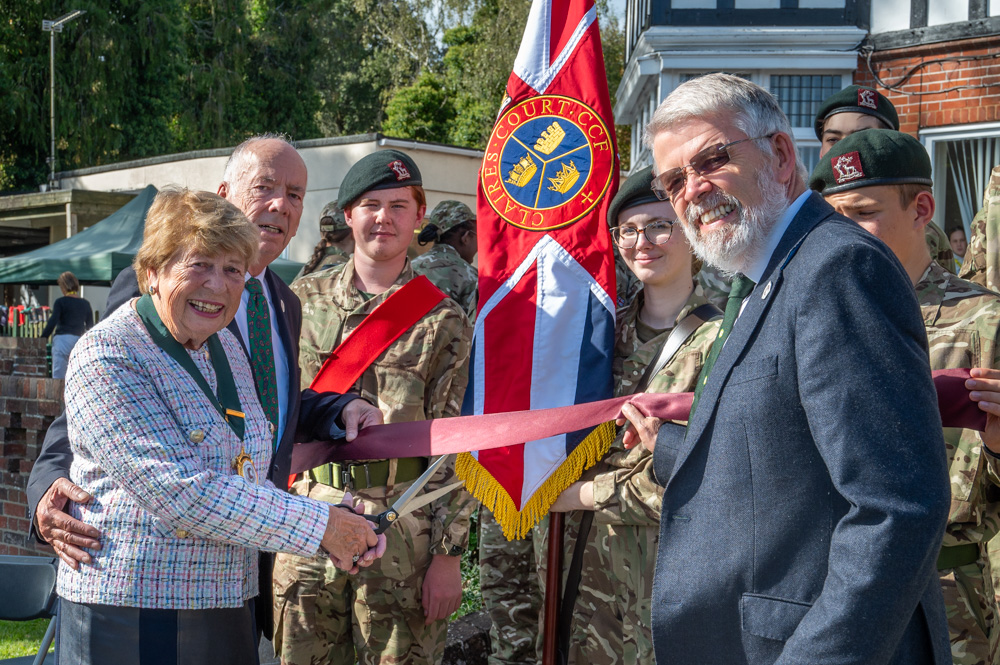
The photograph above shows the President of the CCPTA Foundation, Phyllis Avery MBE, celebrating the Biennial presentation of the King’s Colours to our CCF troop, accompanied by Principals James and Hugh Wilding. The current government has decided that the National Cadet Service is to have its funding cut by 50%, a decision that is deplored by all connected to the CCF. In an open letter, the group of Honorary Colonels and the presenter Lorraine Kelly, the National Honorary Colonel, said: “The Army Cadet Force has inspired and transformed the lives of countless young people. Providing essential life skills, a foundation for their adult life and enhanced career prospects.” It added: “For our cadets, the taxpayer and society as whole, we ignore opportunity cost at our peril and we implore both Government and the Ministry of Defence to ensure that funding for our cadet forces are restored and, as we move forward, are increased to match the commitments made. Not just because it is in the interest of the taxpayer, but for the enduring benefit of our cadet forces and the societal impact they deliver.” The letter continued: “Although sponsored by, and funded through the Ministry of Defence, and despite the clear role of defence in addressing the issue going forward, Government too must play a role in ensuring the positive impact of our cadet forces is not degraded or lost.”
Measuring things in school is often far harder than the lay observer might think. Why are so few young people leaving school and not wanting to enter the ‘hard, vocational professions’ such as engineering?Take for example ‘Checking whether an engineering student can weld successfully’; is really the best form of assessment to make sure they can write about it? Down at the primary level, whilst swimming is a clear priority of the national curriculum (NC), it seems the only state school requirement to meet Ofsted standards is that children spend six weeks on swimming and water safety. The NC Intentions are clear, it’s the implementation that is the problem – that and of course, the requirement that English and Maths standards must meet international PISA league table improvements by age 11, a priority set by UK Gov. These standards don’t give any recognition of the need for children to gather all the appropriate soft skills in addition, to collaborate, to learn to listen, debate and show compassion for the views of others, all need to be acquired during childhood.
When our application to create a new campus for our school was being considered during 2019, it included a support paper by Peter Swift, Head of Independent Education and School Safeguarding Division at the DfE, which made clear that it was unlikely the school would be able to meet the requirements imposed on schools by the Equality Act 2010 unless this migration onto one site was enabled. Refusals by planning in 2019 (RBWM) and 2020 (National) and then Regulatory failure by ISI in 2022 for failing to correct the imbalance in provision for boys and girls placed the Principals between a rock and a hard place, baulked by planning who prevented development and yet failed by regulators for not developing as required. Wrap that up in a pandemic taking place across the world at the same time, what on earth could we do? Just get on with it was our answer!
Where are we now, just under three years on?
Leadership in the school is united across the whole age range.
We have a common curriculum suitably facilitated and an increase in breadth of offer, not diminution.
We’ve ensured equality of access to all buildings & facilities fit for purpose either with us or just about to arrive.
D&T and Food Tech on both senior sites
Agility, Conditioning, Fitness and Strength sessions are a priority provision
Juniors united on one site with common programmes for Forest School and an amazing new astroturf at the final stages of completion to further enhance our PE lessons. And yes, everyone swims.
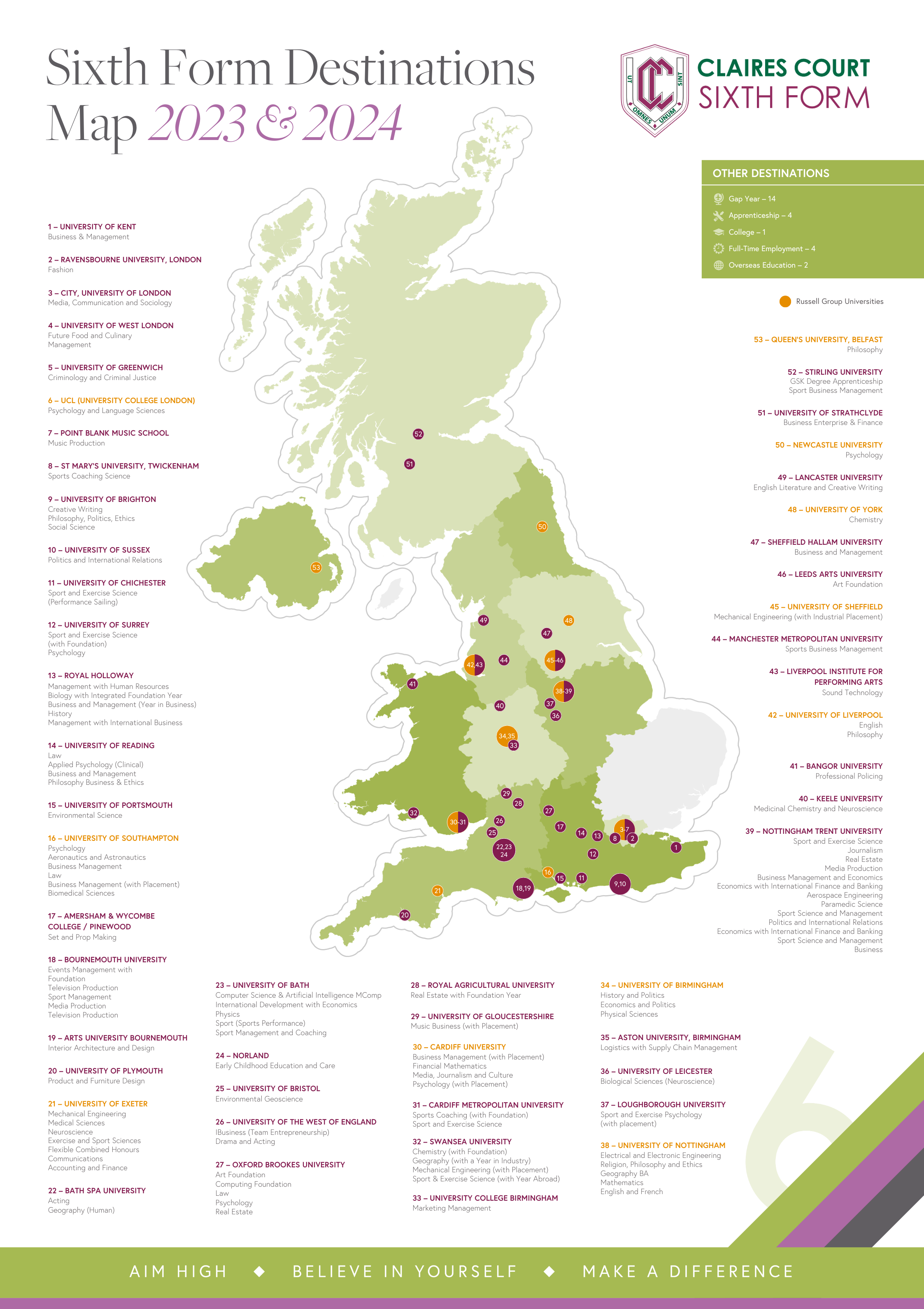
And as measured by destination output at 18, our young people are not just making the destinations they hoped for, but able to pursue their dreams as well.
And if you read this in time to vote, our short movie contribution (Y10-12 category), “Love You to Death” is up for Young Film Academy School Oscars – vote here .
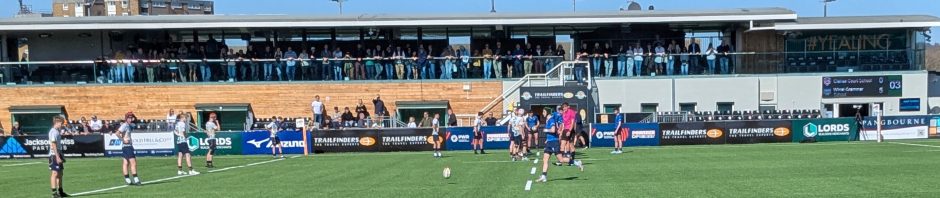
And whilst education provision is at the central heart of what we do, we’ve built out all the other vocational and recreational opportunities as well. All of our playing fields are approved for league sports, and our sports opportunities cover every child, yet permit us to be considered one of the best schools for sport in England, as demonstrated with our nomination as a finalist in the ISA Large Schools awards 2024. It’s not just about the certificate, it’s on the ground results too. The 1st XV have just won the rugby league they play in, the U15 and 14s both through to the Berkshire finals, whilst our U15 footballers through to the quarter-finals of the ISFA trophy, and our tennis squads competing amongst the Top 16 in the UK in 2024. Here’s where Yacht’s and Yachting call our sailing “the illustrious Claires Court School”, likewise where Junior Rowing News talk about our rowing boat club’s “wealth of experience, front-runners and flaunts an impressive record”
As listed outcomes for students are better than ever. With 87 Year 13 students applying for University and degree apprenticeships just now, we have those preparing for Oxford interviews alongside those looking for career opportunities in engineering with British Aerospace, including of course a Ukrainian refugee, one of 11 still supported at Claires Court. Her Sixth Form colleagues have reached in to provide support for the online Svitlo school, giving academic support and a lifeline for less fortunate peers in Ukraine, unable to attend school to pursue their studies because of the war with Russia there.
It’s truly a brutal world for all, with our refugees’ mothers now directed that their visas will end in 18 months and they and their children will need to go home. I guess that’s appropriate, so long as the war is over. I hope it’s not just an easy set of known refugees ready for deportation to improve the statistics, which so recently have shamed the Home Office. I welcome the call across the houses of parliament to reduce the noise and increase the debate to ensure ‘we do the right things right’. it is our underpinning values at Claries Court that provide the lodestone and the centre of gravity we need – to know the difference between ‘Right’ and ‘Wrong’. Responsibility for our actions, Respect of others, Loyalty to our school and families and Integrity above all are embedded throughout Claires Court and will stay so. In conclusion, James Baldwin expresses how best we should work together in the following, and perhaps most famous quotation:
“For nothing is fixed, forever and forever, it is not fixed; the earth is always shifting, the light is always changing, the sea does not cease to grind down rock. Generations do not cease to be born, and we are responsible to them because we are the only witnesses they have. The sea rises, the light fails, lovers cling to each other and children cling to us. The moment we cease to hold each other, the moment we break faith with one another, the sea engulfs us and the light goes out.”
This week’s papers are ablaze with all the bad news of the moment, after all, that’s how they fill the news/screen-print and encourage click-bait, encouraging commercial advertisers to help pay the bills. This upbeat message is deliberate, because my lived experiences in school remain really positive! Though it must be said, weather-wise, “Winter draws in”!
Regular readers of my own writing know I will often ‘rail against the storm’, mainly I think to ensure others know I have noticed the inclement conditions they are having to endure. Sufficient to say that the mundane reality of my role as Academic Principal is, that when snowy weather is forecast, I am up and about at 6am to check conditions outside, and as appropriate make the choices to be called. My family WhatsApp is a great support in this, with members to the north and west, cheerfully checking whether it is to be a ‘snow day’ for them or not. Frankly, the gloating from those resident in warmer climes elsewhere on escaping the misery of a sleety day in Maidenhead doesn’t help! If we have difficulties that need an alert to parents, then we have the range of social media, text messaging and website warnings to assist of course.
So what has Claires Court done this week?
Sunday – news breaks that our own Mrs Ruth Young has become a Masters Hockey World Champion
Monday – opened our new Food Studio at Senior Boys;
Tuesday – world-wide video launch of our AI work with Merlyn Origin, filmed and produced entirely in-house;.
Wednesday – major sports victories at senior level, best being RFU vase win by U14 team away against Taunton School (40-5); next up is Sherborne school at the semi-final stage.
Thursday – ISA Whitbread award for CC best performer at GCSE, Rhiannon Thomas, citation here and
Juniors held a brilliant PTA Christmas Fair at Ridgeway, with visitors, shopping and fun all around;
Friday – PTA trustees meet to sanction further major funding investments in school fabric and provision for all divisions, and the week’s not over yet!
Thursday night at the Claires Court PTA Fair.
I think we all recognise the rights of the Government to do its best to address the financial and economic climate it has inherited, and finds itself in, as we reach the close of 2024. It’s not just UK matters at stake either, but the national security of our borders, our relationships with the wider world and our support for peaceful and appropriate resolutions to the conflicts that also fill our news briefings too. What I do leading a school needs to be ‘from the front and in person’, because ‘agency’ is expected of me, and most of the time, ‘every cloud does have a silver lining’, so I go looking for it!
I’m a huge Tolkien fan. I discovered him late in childhood and am still encouraged to this day by the impact it had on me to ‘keep reading the text’! The image below captures Frodo and Gandalf mulling the situation over!
Tolkien’s thoughts as carried in Lord of the Rings spanned the period 1937-1949, far more than just the period of the Second World War and I suppose we can be thankful that the happy ending arose not just because of the vanquishing of the fascists of the day, not just peace, but the commitment to the world to the Universal Declaration of Human Rights. Just imagine where we would be now if we had not determined that every child should be able to go to school, without a National Health Service or indeed without the reconstruction of our cities and new towns, all going for growth, and yes, despite eye-watering levels of National Debt, and food rationing in place still for a further 5 years, covering the first 6 months of my own life!
To conclude, looking back into the past of just one’s own life reminds us that the future will be bright and that the storm clouds will break sooner or later. In the meantime, I hope you like my headline ‘Be the silver lining and shine!’
Over recent weeks, I have caught up at Open Days, Community Events and wider pastures with a host of former pupils,, and we’ve had some really good conversations. What’s surprised me is that whilst I am more than keen to discover what they are doing now, and how their own parents are doing, their interest always returns to “How’s the school doing?” Given the inability for any of us to insulate what we do from social media, and my own preference to use a host of communication channels too, I get very few questions about the ‘retirement’ I’ve never had. In short, this former pupil and my fellow forebears of the current school remain fascinated by how school is doing, and almost universally that is attributed to the start they made at Claires Court on their subsequent educational journey to fame, fortune and favour. I jest of course, but there remains a huge amount of truth in #ItStartedAtCC.
The thing about Open Events is that I genuinely have no idea who I am actually going to meet and talk to, though at least that’s probably narrowed down by the likelihood of the adult concerned living locally. What social media more generally offers is a digital meeting space, where for example with LinkedIn, I am likely to bump into rather more because the visiting distance across the ether can be pretty infinite. So what follows is a mix of in-person or virtual meets, and I am always deeply grateful that the adults concerned are almost certainly of the view that ‘I will remember them’. The point about schools in general, and Claires Court in particular, is that we exist because fundamental to everything we do is the academic mission we serve for the parents of the children they place with us. The clue is in my title too, “Academic Principal”, and that does govern my working/waking hours (are they really any different/), so here goes..
Professor Jonathan Trevor
Saïd Business School
University of Oxford
I first met Jonathan Trevor in 1983, he was only 7 and in Year 2. His mother was a teacher locally and as Jonathan moved through from Junior to Senior school, so a shy young learner became both more confident and accomplished. Jonathan left us at the end of Year 11 (S3 as it was known in 1993) just as we were acquiring Maidenhead College, and before our own Sixth Form opened in 1994. Move on 30 years, and he is now Associate Dean for Practice and Affiliates, and Professor of Management Practice, Saïd Business School, University of Oxford. He teaches on international executive education programmes and the Oxford MBA, Management Diplomas, and Executive MBA. He’s a published author too, and his track record of study includes a Master’s degree from Warwick, additional Masters studies at Université Toulouse and MIT, his PhD whilst at Cambridge and work experiences including some heavy shifting in the city, army supply chain at Sandhurst and was 2022 Shimomura Fellow at the Development Bank of Japan, Tokyo. And all this pretty much started when Jonathan studied Commerce GCSE at Claires Court, with my brother Hugh and Mike Miller – who knew such a subject existed and could inspire one of so many to enter ‘trade’ – how very unfashionable in 1993!
Gemma Giles
Head of Innovation at Sainsburys
Gemma Giles joined Claires Court for her secondary education from Juniper Hill primary school, and was one of the first students to study Food Technology at A level, joining Sheffield Hallam University in 2010, graduating with 1st Class honours. Gemma has been the Head of Innovation at Sainsbury’s for the past 3 years, and during the time I have known her, she has never resisted a challenge, be that performing arts with Jackie Palmer, working as a swimming instructor in our own Holiday Club – her school CV says it all “Competed at ISA national level in cross country, swimming, netball and athletics. Also represented the school in rowing, hockey, cricket and biathlon. Captained the swim team. Deputy Head Girl for the senior school”. The lesson to learn here is that A level students in England are no longer permitted in the state sector to study Food & Nutrition/Food Technology. In one of the mind-boggling reforms led by Michael Gove, when he took over as Education Secretary in 2010, was to ban this ‘soft subject’, it’s thought a misaligned afford to force students to study Chemistry instead, to keep the labs full at University. The UK still leads the world in this area of creativity, and Gemma is a shining example that sometimes, the subject studied opens up pathways you could never have considered beforehand.
Dawa Balogun
Legal Counsel
When the Reverend Tunde Balogun and family first moved into Ray Mill Road East, they had arrived into the country to ‘plant a new church’, which thrives now in Uxbridge. Their community chose to support the boys’ education at Claires Court, and their oldest, Dawalola joined us directly into Year 7 for his secondary and sixth form education. I still recall his mother, Toyin looking at me with steel in her eyes: “Mr Wilding, we know he is good at sport – but he is with you to study hard!” Dawa won an academic scholarship to study in the USA at Sport Management & Business Bachelors degree at Georgia Southern University in 2017, his second degree being back at Brunel University London studying law (LLB/JD Hons) in 2020. Dawa has been using his legal knowledge in his role as Legal In-House Counsel at The Kingsborough Centre for almost three years, but he is best known for his amazing Kix football academy in Uxbridge. Whilst Boris had become PM, and was busy proroguing Parliament, Dawa persuaded the local MP to visit his project and witness at first hand how to engage very young, underprivileged children through sport. When asked how on earth he had managed to prioritise the Prime Minister’s attention at the time, Dawa’s response was priceless “How did I do it? By God’s grace. #GottaBeAGeniusGottaBeExtraordinary”
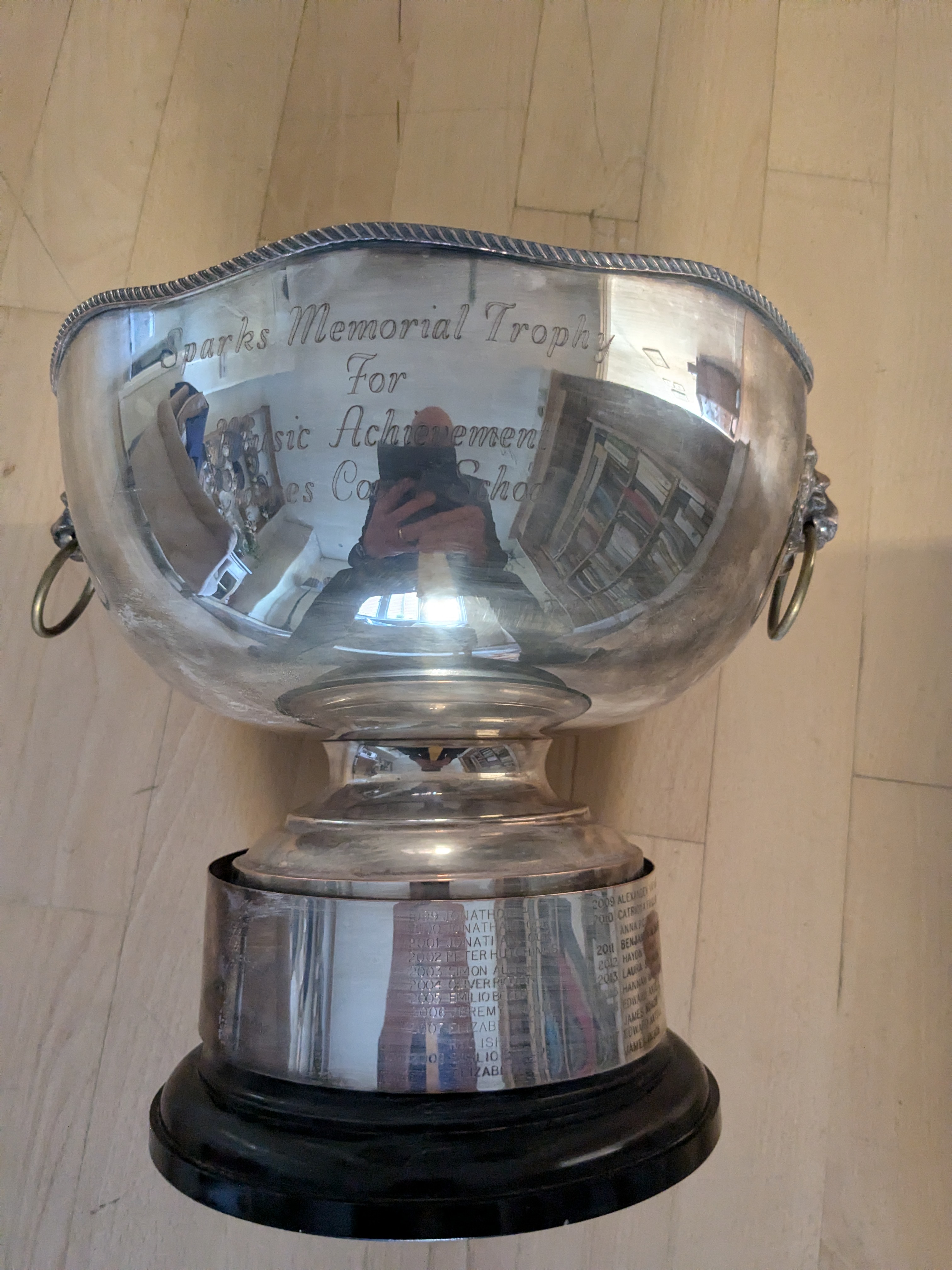
My penultimate #ItStartedAtCC could be as ever one of hundreds, but I’m choosing Emma Sparks, a founding student and the only girl in our entry cohort of 17 into the Sixth Form in 1994. Emma studied Music A level with us, and left behind the Sparks Music Trophy on her departure, a Speech Day award to recognise the most talented musical student of the year. Whilst with us for her secondary school education for 7 years, Emma played, sang, danced and did everything backstage as well, and since then she has remained in the business ever since. Her first two degrees were Music based at Goldsmiths, initially BMus and then MA in Arts Administration and Cultural policy (2004), before tweaking that a little more at Henley Management College with a PgDip in Applied Management in 2012. The cup shown above is indeed the Sparks Trophy, and I really do hope Emma is able to come back to see the Sixth Form she helped found, with ten times the Sixth Form numbers, and where both A level Music and A level Music Tech are now offered. The show below is testament to the incredibly well established Arts & Music scene at Claires Court, it being this week’s “Showtime” Autumn production 2024.
And finally, let’s close with rising singing star, Josh Roberts. I taught Josh’s dad, Piers in the 1980s, our first ever international rugby player (Holland) and perhaps the school’s greatest fan. Josh’s mum, Katie joined the teaching team at Junior Boys, It’s fair to say that Josh himself had amazing sports skills too, but those were not the drivers in his time rising up through secondary school, nor what enabled him to gain AAB at A levels in Art Photography, Music Tech and Drama. Josh chose to pursue a Career Musician degree at Falmouth University, graduating in 2023 and launching his first single at that time. Through his last five years at school, Josh chose to play in public, busking at our various fireworks and fete events and plying his trade, learning how to entertain. It’s fair to say that, given that you need to take the chances when you can, Josh is doing just that, and as the advert below highlights, he’s playing live tonight in Guildford, and of course we wish him every success –
#ItStartedAtCC.
There are literally hundreds of success stories such as these, the first 5 in a new book I am writing to cover how best to describe the successful outcomes for so many from our school. Some stories can’t yet be told, where adult men and women are working for the government in roles to keep our country safe, and those are probably examples of the highest award, when service above self applies.
The quote above is one of my favourites from Ian Leslie, a humorous and informed author of a range of books in which he sets out to identify how we/society can change for the better. I await the arrival of “Conflicted: Why Arguments Are Tearing Us Apart and How They Can Bring Us Together” for a read-through this weekend once again, because put simply, both the UK and US democracies have chosen their new leaders and governments for the next 4/5 years and as a school principal and business owner, I’ve just got to get on and live with the consequences. In truth, the best I can do is just to work hard, “be the best we can be” and in 4 to 5 years’ time, I hope the decisions made in 2024 have actually helped us, our society and the wider world.
As the fall-out from the UK Budget proposals continue, I thought it wise to draw to your attention the correspondence all headteachers received last Friday, from the Education Secretary, Bridget Philipson. In it, she reminds schools that a very large number, £63.9bn is to be made available for education in state schools in 2025-26, that being an increase of £2.3bn on this year, plus an additional £3.5bn for school building repairs and RAAC concrete recovery emergencies; I can only assume that means the majority of the education increase is to come from the £1.725bn due to be taken from the private sector through the imposition of VAT. Apparently, all the money being made available to is to be spent at National level, to cover shortfalls otherwise in teacher provision, salary raises and SEN. The clear message from Ms Phillipson in her conclusion is as follows: “This Budget is about fixing foundations of this country. Whether it’s a brilliant early years, free breakfast clubs or rising standards in our schools, all children should receive the best possible start to life, no matter what their background is. There will undoubtedly be challenging times ahead, but you can be assured that this government will support you and that we’re putting education back at the forefront of national life.”
As no doubt her colleagues from around the cabinet table are reminding her and Rachel Reeves, the Chancellor of the Exchequer, “Actually, you seem to have forgotten you are raising the NI contributions for employees, lowering the NI floor and as a consequence almost certainly school/college budgets are going to be even more stretched than ever”. Even if there is additional revenue entering the system at National level, the chances of that filtering down to the local school level any time soon is as close to zero, because if nothing else, we don’t have a national education system at all, just an extraordinary complex web of free schools, academies, local state council schools & colleges and a host of alternative provisions, independently owned but fully funded by local authority funding – the latter alone has an estimated hole of £2.5bn, but so dispersed and allocated in a myriad of ways including by court tribunal hearings, there is no chance of that landscape changing until whole scale reform takes place.
Yesterday and today, I’ve spent talking with over 150 prospective parent groups looking at entry into our senior school and sixth form for next September and beyond, and all the key drivers are the same. Their interest is not about securing ‘privilege’ for their children but something much simpler and understandable – opportunity for provision and a ‘joined-up service delivered in a competent, exciting and innovative manner, ensuring that every child and young person is included and recovers from the set-backs that in the main have impacted upon their education to date. I listened to the BBC Moral Maze on Radio 4 on Tuesday night, in which the private sector was scrutinised, pummeled and otherwise criticised for separating out and as a consequence ‘winning all the best seats at the table’ in the decades to come, be that university, work, celebrity etc. A leading professor from Newcastle University was asked by Michael Buerk what he would recommend. “Sort out the diverse nature of the state sector – we simply don’t have a national education system, and blaming & blaming the private sector won’t improve UK education at all.
Whilst it’s true none of us can see the future for education, what I do know is that it can be readily imagined. Just spend a few hours within the boundaries of Claires Court, listen to the children talking about the school, see the extraordinary capabilities of very normal young people that can be developed to the max if only they can be given the time and opportunity to ‘learn to fly’. I am sorry the country can’t afford to offer a full day of school, that it’s only just working out that learning to swim needs more than 6 weeks in Year 3 on water safety, that art, drama, music and sport are as essential as the 3Rs. It’s not enough to use rhetoric to improve schools, politicians have little understanding of what makes children love school. All hot air ever does is dry up support, whereas they could go be cheerleading the amazing achievements our schools bring to UK PLC.
This proprietor can only applaud the decisions made by parents to choose the right school for their child. I hope mine is one in which everyone feels both welcome and chosen. Perhaps if nothing else, on this grey Friday evening in winter, cheers yourself up with Simon Sineks’s story on Nike… https://youtube.com/shorts/yTotCREiTRU?si=ZvJcBfjRpCHQxVRd
As the Academic Principal of Claires Court, I don’t even think of my role as a curse, but a responsibility I am more than delighted to exercise every day. “We’ve got this!”
As part 1 of the half-term report published at the start of half-term emphasised, the School has been in great heart to date, and the various activities, Holiday Club and trips away at half-term have gone really well. Whilst you can read and see the news stream on our website or via other social media, please consider loading the Claires Court app directly onto your device which carries our news as it is made. I have some immediate good news to report to our junior parents, with a temporary car park being installed on Tuesday 5 November in the overflow area by the sports hall, accompanied by regular road sweeping twice a week. Hopefully, this will keep the area clear of mud and grime.
This week’s budget on Wednesday confirmed the imposition of VAT on private school fees from 1 January 2025. Chancellor Reeves has not minced her words, and she clearly doesn’t care what people think of her policy choices. Since every business has been affected in some way by the major changes to taxes and national insurance imposed from January and April, I won’t plead any special cases in this update. The Independent Schools Council (ISC) and its constituent school associations have agreed to take legal action to challenge this measure, and you can read that statement here. ISC expects the case to proceed quite rapidly, initially at the King’s Bench, and will receive much press interest.
The HM Treasury response to the recent consultation was published on Wednesday to coincide with the Budget announcement, 44 pages in all which our associations will check through over the next 4 days before publishing wider advice to schools in our sector. As of 30 October, Claires Court is one of about 2,500 schools now required to register for VAT, a process that normally takes between 6 to 8 weeks. As we cannot conduct VAT business until we have our VAT number, it’s difficult to imagine a more chaotic, ill-planned set of rule changes, expecting all to be settled down in time for 2025. If as parents, you receive any media interest about VAT and tuition fees, please let me know (jtw@clairescourt.net); most of the time I will share such commentary with Sarah Cunnane, head of comms at ISC, but you can directly email her as well sarah.cunnane@isc.co.uk.
Having HM Treasury’s final guidance does mean we can now complete our impact and risk assessments as well as recovery plans for past and current VAT spending, as well as work through what the implementation pathway looks like for fee-paying parents, with formal publication of invoices required after 1 January 2025. Our finance department will liaise closely with parents, with information forthcoming in coming days. Please do not think that either my brother or I are complacent about this matter because we are not. As with so many other schools in the area and now wider business concerns particularly in Health, Care and Hospitality (because of the change in National Insurance contributions), we will be examining everything we can do to keep costs down.
We find ourselves in very good company in terms of our resistance to the mendacious and deceptive approach the Labour Party has taken since forming government at the beginning of July. The diplomatic row that has erupted between the UK and other European nations whose embassy children are educated here in schools their country funds is really serious, with Prime Minister Starmer’s wish to improve relations with the EU now in jeopardy. And it is quite clear that whatever money is raised won’t feed into local state school budgets anytime soon; as the Secretary of State for Education’s email to me and all headteachers in England made clear on Friday, the crisis in SEND, school building disrepair and pay settlements is such that other developments are going to have to wait their time. Our sector genuinely wishes to play its part in the recovery and growth of the country’s economy. We contribute massively to the respect the world has for the British education system, and we do hope that even at this late stage, reason is possible.
Further and Higher Education now find themselves in the same place as our sector, with new and unforgiving taxation further damaging their financial viability. However, it is quite clear that employers more generally and farmers in particular across the country face similar challenges. Apparently, this is the mandate the new government feels they were given at the election; there is sufficient national press coverage of business and wider societal reaction disagreeing with their judgment without my adding to the ‘noise’. In this part 2 report, I do wish nevertheless to make clear that Claires Court will continue to provide the amazing opportunities that you as our parents ask us to make available for your children.
The many and various infrastructure improvements planned for the half-term have proceeded at pace, involving flooring, decorating, electrical and builders everywhere, and the site/cleaning teams have made particular efforts to ensure we are good to go for the next half up to Christmas. The senior boys are already making good use of the new Food Tech Studio in advance of its official opening on Monday 18 November by chef Wesley Smalley who runs the amazing Seasonality Restaurant in Queen Street. Wesley has been a familiar face at school for a while, helping with our ‘Futurechef’ activities and associated skills. With the Multi-User-Games-Area (MUGA) due to open for use to follow shortly thereafter, we’ll keep the good news flowing!
I was saddened to hear this Wednesday of the closure of one of our local independent schools, Highfield, part of the long-term network of provision for families in Maidenhead and the surrounding area. Highfield’s owners, Chatsworth Schools, have made it clear that the combination of declining school roll, imposition of the new tax of VAT on school tuition fees and the increase in employer contributions to National Insurance have been the cause of the closure. Chatsworth schools have asked us to provide support where we can, and of course, we will do our level best to support those children and parents as they seek a suitable next step for their education.
I chose the quote by André Gide, possibly the greatest French writer of the 20th century, because it seemed so apt in the current circumstances. When new governments enter power, as the Labour Party did last Summer, they have the opportunity to deliver their mandate to the electorate, but they also do bear the responsibility for the wellbeing of all children concerned, specifically of course because they are from where our future wealth and prosperity are going to arise. I have been representing the voice of our sector as strongly as I can, in person in parliament, in writing, canvassing and even most recently via video on X. Whilst there seems great strength in the arguments we have given about the inappropriate speed and longer-term unfairness of this tax, it is clear that political dogma is to rule.
As last week’s post makes clear, and the publication of our own community questionnaire to parents and guardians early next week enables further, I do accept that we have to get on with the new ‘réalité’. But that’s not to say we should lose empathy for those caught up in the ‘blight’ that government policy is causing in our sector, and Maidenhead as a town is all the poorer for the closure of a school that’s been here a century. And we as its neighbour will do all we can to make real for its girls, should they join us, their school’s motto “Empower. Discover. Succeed”.










 A Principled view