In my fifty years in education, I have watched the pendulum of school reform swing back and forth with dizzying speed. We have seen the rise of the “knowledge-rich” curriculum and a laser-like focus on the “core” subjects of English, Maths, and Science. On paper, the UK is a success story; our performance in international league tables has markedly improved. But as I look out across the landscape of 2025, I am deeply troubled. We have traded the soul of our schools for a set of metrics. While we have been busy passing tests, we have left a vacuum in the lives of our young people—and that vacuum is being filled by something far more sinister than a poor grade.
The Missing “Outlets” The rise in youth misogyny and the “Manosphere” is not in doubt. But its causes are far more widespread than a failure of schools to “instruct” boys on how to behave. Education is about building pride—the kind of pride that comes from knowing you can lead a choir, command a stage in a drama production, hold your own on a muddy rugby pitch or stay at the helm when the wind blows so strongly. When we narrow the curriculum to meet testing targets, we strip away these “outlets.” For boys, this creates an identity vacuum. If a young man doesn’t find status and belonging within the school gates—through the arts, public speaking, or sport—he will look for it elsewhere. He finds it in the aggressive, individualistic “alpha” rhetoric of the online world. He isn’t looking for hate; he’s looking for a way to feel significant.
The Internalized Crisis for Girls The damage to our girls is equally profound, though it often wears a different mask. In our “attainment-focused” culture, girls are increasingly internalizing the pressure to be perfect. Without the “safe failure” provided by a creative performance or the communal resilience built in team sports, we are seeing a crisis of confidence. National data shows that girls’ enjoyment of physical activity drops by a staggering 30% as they transition to secondary school. Why? Because the school has become an “attainment factory” where there is no space for the messy, joyful growth that happens in a choir or on a sports field.
Understand there is Crossover
However, we must be careful not to paint with too broad a brush. In the Venn diagram of character building, the needs of our students often overlap in vital ways. Just as we see boys who internalize their anxieties and retreat into isolation, we see many girls who desperately need the overt, public validation of success that only the arts or sports can provide. For these girls, a “gold star” on a maths paper isn’t enough to build an identity; they need the tangible thrill of a standing ovation the visceral pride of a last-minute goal or stroking the quad to victory to feel truly seen. When we cut these programs, we don’t just lose “extracurriculars”—we lose the primary mirrors in which these young women see their own strength and capability reflected. As the header to this post highlights, the ‘high’ that can be achieved when 33 rowers, boys and girls, row in unison to a collective override to ‘exhaustion’ really is worth the effort!
A Different Path: The Claires Court Model
People often ask why schools like Claires Court maintain such a formidable reputation, not just for academic success, but for the character of their alumni. The answer isn’t a secret formula; it’s a commitment to the whole child.
We have always believed that a “broad and balanced” education isn’t a luxury—it is a necessity.
We protect the Arts because they build empathy and emotional literacy.
We champion Sport because it teaches the “social contract” of loyalty and respect.
We prioritize Oracy because a child who can speak with confidence is a child who can navigate a complex world without falling prey to extremist ideologies.
Above all, we stand by the strongest set of values, that include and set a bar strong enough to hold when times get rough: Responsibility for ourselves, Respect for others, Loyalty to our school (and family) and Integrity above all.
The Role of the Alumni
When I look at our alumni, I don’t just see people with good A-Levels or vocational BTecs. I see individuals who make a meaningful contribution to wider society. They do this because their education was a rehearsal for life, not just an exercise in memorization. They learned to build pride in what they can do, not just what they can test for.After five decades in this profession, my conviction has only grown stronger: It won’t come from just the academic.
We must restore the “holistic heart” of our schools. We need to give our children back their voices, their creative outlets, and their communal spaces. If we don’t, we shouldn’t be surprised when they find their sense of purpose in the darker corners of the internet.
Another year closes, and the festive flurry attempts to cloak the underlying tension and exhaustion that have permeated the English education system. As the clock ticks down to 2025, many of us in schools, whether we are Principals, teachers, or governors, are not merely reflecting on curriculum reviews and exam results; we are contemplating the resilience of the very foundations on which our schools and our families stand. The year has been defined less by aspirational progress and more by the compounding pressure of what I have often referred to as “Lethal Mutations” in government policy—decisions flawed in their conception and damaging in their effect.
The most acute crisis of 2025 has undoubtedly been the systemic failure to adequately support children with Special Educational Needs and Disabilities (SEND). We have witnessed the predicted exponential rise in identified need—the bell curve of educational demand has not just shifted; it has been fundamentally distorted. When 43% of a neighbouring nation’s children are now falling into the category of requiring additional support, and England’s own high-needs funding has doubled in five years, the narrative of a manageable problem collapses entirely. The reality is that austerity, disguised as efficiency, has poisoned the well. The significant real-terms decline in state school budgets since 2010—a 9% average cut—has stripped away the early, preventative support that mitigates later crisis. When local authorities are verging on bankruptcy over High Needs funding, and policy reform is promised over a glacial three-year horizon, we are simply watching the crisis deepen in the meantime. The failure to reinvest in Early Years Health Visiting, following its devastating 40% workforce cut since 2015, is not merely a statistical anomaly; it is a moral failure that ensures that children arrive at school with needs that are already acute, complex, and prohibitively expensive to address. The crisis is countrywide, as explained by Chris Coghlan MP this month in Parliament.
This financial toxicity is compounded by decisions that show a profound misunderstanding of educational ecosystems. The 20% VAT levy on independent school fees this year, imposed by the new administration, was heralded as a silver bullet to fund the state sector. Twelve months on, the consequences are predictable and severe: families, particularly those with multiple children or complex needs, are finding their choice increasingly untenable. The promise of funding 6,500 more state school teachers rings hollow when the Parliament’s own Public Accounts Committee criticises the Department for Education for lacking a “coherent plan” and “sufficient evidence” to achieve that target. This policy, designed to foster equity, risks a sharp reduction in choice, exacerbates pressure on the already overstretched state sector, and constitutes yet another textbook example of a policy whose unintended harm outweighs its idealistic aim.
Counterpoint: The Power of a Wide and Engaging Approach Yet, even against this backdrop of national systemic strain, our community at Claires Court demonstrates that a truly focused, well-resourced school can maintain a broad, engaging, and fundamentally inclusive approach to education—an essential counterpoint to the divisive narratives and narrowed curricula elsewhere. Looking at our end-of-term successes across our media channels, the breadth of pupil endeavour is a testament to what is possible when the environment is right.
A vital part of Claires Court’s strength lies in the excellence of its Nursery and Junior Schools, where the foundations for confident, curious, and resilient learners are carefully laid. In the Nursery, children flourish in a nurturing environment that prioritises language, social development, and emotional security through purposeful play and expert care. This early investment ensures children transition into formal learning, happy, engaged, and ready to thrive—an approach that represents one of the most effective and meaningful forms of early intervention.
The Junior School builds on this foundation with a rich, balanced education that combines academic challenge with exceptional pastoral care and a wide range of creative, sporting, and community opportunities. Small classes and attentive teaching enable early identification of need, while performances, events, and shared traditions foster confidence, kindness, and belonging. At a time when early years and primary education are under increasing national strain, Claires Court’s Nursery and Juniors stand as clear evidence that when children are supported well from the very beginning, the benefits are felt throughout their entire educational journey.
This has been a term of exceptional breadth. We celebrate a “3-Peat” of County Cup victories in Rugby for our U14, U15, and U16 boys—a tremendous sporting achievement built on teamwork and commitment. Equally, we cheer for our U13, U16, and U19 Gymnasts, whose skill and dedication have earned them places in the National Finals. But education here is not just about the elite; it is about providing the spark of engagement for every child.
A defining feature of life at Claires Court, valued highly by parents, is the richness of learning beyond the classroom. Across the whole age range, pupils benefit from regular external visitors, workshops, and speakers who bring learning to life and broaden horizons, alongside a carefully planned programme of educational visits and residential experiences. From local exploratory trips in the early years to confidence-building residentials and subject-specific excursions for older pupils, these experiences deepen understanding, foster independence, and create lasting memories. They are not extras, but an integral part of a broad education that helps children grow socially, emotionally, and academically.
Our commitment to bringing learning to life was exemplified by two recent events, each demonstrating the value of depth, expertise, and real-world engagement within a broad curriculum. Studying Science is one thing, but A Lunar Rocks visit provided pupils with a rare and compelling opportunity to engage directly with authentic Moon samples collected during the Apollo 12 mission, alongside an extensive collection of meteorites and fossils from around the world. Structured, age-appropriate sessions for Year 4, 7 and 8 pupils encouraged careful observation, questioning, and intellectual curiosity, transforming abstract scientific concepts into tangible experiences that inspired awe and deepened understanding.
Our Year 10 students, across both Senior Boys and Girls, benefited from a confidence-building workshop with internationally acclaimed artist Ian Murphy, where they learned complex techniques directly applicable to their GCSE coursework. In an educational climate where investment in the Arts has too often been eroded, this level of professional engagement represents a deliberate and principled commitment to creative excellence. The energy in the room—students challenged, supported, and encouraged beyond their comfort zones—was as educationally significant as any lesson in mathematics or literacy, reinforcing the importance of a curriculum that values breadth, depth, and human creativity.
Crucially, our successes have been fundamentally inclusive. Our annual Santa Run saw a fantastic turnout from Juniors through to Sixth Form, one of many events that bring the entire school community together in seasonal good humour. The “Make a Difference” ethos was palpable, with our Sixth Form donating generously to the local Foodshare, and students from all sites continuing our tradition of decorating trees for the St. Luke’s Christmas Tree Festival in aid of Alzheimer Dementia Support. These actions, alongside the simple, beautiful spectacle of our Lower Juniors performing their Nativity, underscore that our focus is on building character, instilling empathy, and fostering a sense of ‘Service Above Self’. Even the simple act of planting a Prunus tree on the Junior grounds to celebrate the Maidenhead Rotary Club centenary—an effort I was proud to share with the pupils—stands as a living, growing symbol of our commitment to the future and to community engagement. The message is clear: when education is broad, encompassing the physical, the creative, the academic, and the moral, it becomes a force for cohesion rather than division, demonstrating that a rich school life benefits all children, regardless of their specific needs.
As the year ends, it is the small, principled shifts that offer glimmers of hope. The growing understanding that genuine learning is anchored in the physical—in the act of writing on paper, which we champion here—is a quiet rebellion against the relentless digital tide. We observe global peers, like Sweden, reversing years of screen-focused pedagogy, reintroducing textbooks and handwriting to combat declining literacy and concentration. This is a critical lesson for parents and schools: the digital environment is volatile, and our collective responsibility is to ensure that the real world remains the primary domain of our young people. Building that internal resilience, that human connection, and that ability to focus is the only true defence against the seductive, yet ultimately reductive, forces of artificial intelligence and social media’s virtual friends.
Anticipating the “Ides of March” and beyond. If 2025 was a year of reckoning with past government errors, the Spring and Summer of 2026 will be a period of intense pressure, shaping not just the future of this academic cohort but potentially the direction of national policy.
Spring 2026 brings the crucial, often overlooked moment of institutional decision-making. Schools across the country will be finalising budgets for the 2026-27 academic year, with costs continuing to rise—whether for energy, staff salaries (driven by the recruitment crisis), or essential resources to meet students’ complex needs— headteachers in the state sector, particularly, will face another significant real-terms shortfall. The season will be defined by this silent, desperate scramble to maintain provision despite inadequate funding settlements, all while preparing students for the academic hurdles ahead.
Local authorities are on the front line of the crisis in Special Educational Needs and Disabilities (SEND) funding, with many councils facing near-bankruptcy due to the statutory requirement to meet rising High Needs deficits. As local councils determine the provision of vital services, including children’s services, youth services, and adult skills, the political outcomes of the local elections will directly influence the immediate future of local education support. Furthermore, the outcomes in Wales and Scotland will set policy direction for devolved matters such as skills and post-16 education, which England will closely monitor. The policies debated—from local authority reorganisation to the future funding formulae for social care and education—will decide whether the crisis in preventative support deepens or is finally addressed with the necessary local focus and investment.
Summer 2026 at Senior Schools is, inevitably, Exam Season. For pupils sitting GCSEs, BTECs, and A-levels, this summer will mark the conclusion of an educational journey uniquely defined by the post-COVID, post-recovery failure landscape. Despite staff commitment, these children have suffered from the government’s abandonment of Sir Kevan Collins’ comprehensive recovery plan of 2021. The attainment gap persists, and systemic overload in SEND provision means that many students enter exam halls having received interventions that are too late or too diluted to fully compensate for lost time. The profession’s focus must shift from simply securing grades to ensuring that well-being sustains them through this peak-pressure period. The pastoral care, the sensitive support for those with mental health needs, and the provision of access arrangements must be exemplary, because the safety net beneath this cohort feels historically thin.
My conclusion, as I look to the blossoming of Spring and the heat of Summer 2026, is a call for a unified, principled stance. The real success of schools like Claires Court, which deliberately invest in the width and depth of pupil experience—from triple County Rugby wins and National Gymnastics qualifications to community service and high-level Arts & STEM workshops—proves that a truly engaging and inclusive education is the only path to meaningful progress. We must champion the importance of educational choice, support initiatives like the Association for Families of Independent Schooling (AFIS) to ensure our concerns are heard at the highest level, and continuously advocate for a system that measures success not just in raw attainment data, but in the holistic health and happiness of every young person. The crisis of 2025 demands a resolute, collaborative effort in 2026 to ensure that the children we serve are equipped not just for their exams, but for life itself. The alternative, allowing the system to continue its slow, preventable collapse, is an ethical negligence we cannot afford.
“Lethal Mutations” – When the direction of Government Policy is fundamentally flawed or damaging from its conception, and which ultimately leads to severe harm or the eventual collapse of the system or society it was intended to govern.
I do try to start every blog with some happy news from the world of education. This Tuesday, I joined a nationwide on-line meeting with the Minister of State (Minister for School Standards) at the Department for Education, Georgia Gould, around the need for ‘Local’ SEND reform. I applaud the Minister for making herself available for a succession of similar events, all to form part of the country’s need to ensure all children in nurseries and schools get the support needed to ensure their school years are successful.
The trouble with the process of reform now underway is that the scale of the problem is so vast that reforming the identification of children who need additional support simply won’t cut it. Scotland’s analysis of the situation shows that 43% of children fall into this category, representing a doubling of need over just the last 10 years. The situation is measured differently in England, where the statistics (21% with SEN) cover a higher severity of need before being recorded. However, the almost doubling of spend over the last 5 Years for High Needs funding is indicative that the challenges are rapidly increasing in England too, and if it were measured by similar parameters to Scotland, the % would be pretty similar.
Teachers’ leaders have previously said that schools were being overwhelmed by an “explosion” in children with additional support needs, including dyslexia, ADD and ADHD. What has been abundantly clear for over 15 years now is that access to the professional identification of learning differences and difficulties has become so delayed and so costly that children’s needs reach crisis level before appropriate diagnosis and treatment plans to enable interventions to start.
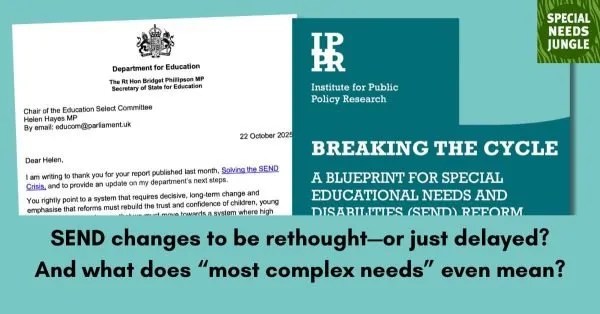
Commenting on the government’s response, chair of the Parliamentary Education Select Committee Helen Hayes said: “We understand that the government isn’t in a position to answer our report’s recommendations in detail whilst it is still developing its SEND reforms. However, the current response will only suffice as an interim response because it does not directly address any of our report’s recommendations in the way that is expected of an official response to a Select Committee inquiry.”
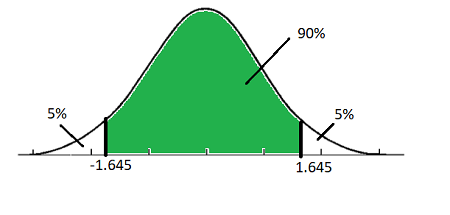
Statisticians describe the distribution of populations as being covered by a bell curve, of which the following is an example. Standard deviation (STD) shows the expected differences between what’s normal and what’s not, and in terms of additional need, the graph below shows for needs in school, there is a top and tail that would usually require our attention, but that 90% should be described as normal.
In 2025, the Bell curve for children’s needs has been badly shifted, looking far more like the following:
Essentially, this is demonstrating we now have a school system that is now longer offering the provision needed for a significant minority of the population. This is where the toxicity of government policy to reduce the spending on children’s services since 2010 and the subsequent toughening up of academic standards in schools since 2014 have really begun to bite. And this is not just because of the growing awareness of parents that their children are struggling to meet the academic standards expected of them for reading, writing, numeracy and broader reasoning at ages 7, 11, 14 and 16. When you look at the underlying cause of children’s struggle, the major common single reason for children and adolescents listed is “social, emotional or behavioural difficulty”.
The Independent sector in England recognises these difficulties far more rapidly, such that earlier interventions take place and at an earlier age. As our pupils rise up through the various developmental stages of children’s development, so more precise identification of the specific challenges takes place. You can see this is the sector’s recognition of access arrangements (EAR) for public examination. The Labour government started bleating that our sector is a softer touch for giving out EARs; the clarity of these statistics highlight our children get the legal support they need and that it’s the state sector that’s lagging behind.
So what’s the solution then?
Return the Investment in Early Years Health Visiting in England to previous levels, this has significantly declined since 2015, marked by substantial cuts to the Public Health Grant, leading to a dramatic workforce reduction (nearly 40% by 2022), increased caseloads, missed mandated child reviews, and widespread service pressure, despite growing evidence of need and calls for increased funding to support early child development.
Increase English state school budgets back to 2010 levels; these have seen significant real-terms declines per pupil since 2009-10, with cuts averaging 9% by 2019-20, impacting secondary schools more (9%) than primaries (2%), and even more severely in deprived areas, leading to squeezed resources, staff shortages, and increased dependency on loans, despite government pledges to restore funding, as rising costs for energy, staff, and SEND needs outpace funding increases, creating a sustained crisis. Schools face an estimated £1.8bn shortfall in core funding this last year, impacting staffing and resources.
When the government of the day seeks independent advice, act on it! After COVID, the Conservative government appointed Sir Kevan Collins to recommend a comprehensive education recovery plan. His proposals, costed at approximately £15 billion, included:
Funding for an extra 100 hours of teaching per pupil.
Extending the school day by 30 minutes for a fixed, three-year period to allow for both academic and extracurricular activities like sports, music, and the arts.
Significant investment in the teaching profession and targeted academic support, primarily through tutoring.
Prioritising support for early years and mental health & wellbeing.
The government ultimately announced a much smaller package worth an initial £1.4 billion, which Sir Kevan described as “far short of what is needed”, “too narrow, too small and will be delivered too slowly”, leading to his resignation in June 2021.
Whilst I applaud the current government’s initiative to resolve the SEN funding issues in local authorities, essentially bankrupted already by the mounting costs of the ‘High Needs’ they face, taking a further 3 years to change the rules simply means the crisis will get worse in the meantime.
And finally, the Labour government’s policy, which has added 20% VAT to independent school tuition fees for 12 months now, is clearly yet another ‘Lethal Mutation’. Flagged up as a way for funding 6,500 more teachers into the state sector, the UK Parliament’s cross-party Public Accounts Committee (PAC) found that the Department for Education (DfE) lacks a “coherent plan, suitable targets and sufficient evidence” to increase the number of teachers. The committee criticised the department for failing to outline how it will achieve its manifesto pledge to recruit an additional 6,500 teachers.
So what can Independent school parents, teachers and alumni do now to ensure their voices are heard, to add to the political pressure heads and school associations have focused on their local MPs as well as the national government? Make the step by joining the Association for Families of Independent Schooling (AFIS). AFIS is the only membership organisation that brings together families who choose and value independent education in the U.K. and British international schooling. Their work supports their member families and the wider sector by championing choice, fair representation, and greater access to independent education.
It’s FREE to join AFIS as an individual, a family or a school. As the Academic Principal, I have joined our school as a founding partner of AFIS, and together with many other heads in due course, will encourage AFIS to grow in influence to support our communities even more fully. Our school is already recognised as a pioneering AFIS Foundation Partner School, one of the very first in the UK.
For enthusiasts of Trivia and Pub Quizzes, please check the last section of this Blog on the song.
We’ve just a couple of weeks left to the end of term, and all 3 schools are all set for the season, with trees, ivy, lights and decorations everywhere, and probably ‘Songbird Supreme’, Mariah Carey’s dulcet tones reminding us that Christmas is much more about people rather than presents. What’s worth our children knowing is that Maria Carey writes almost all of her songs herself, starting during junior school, and that writing has captured her a handsome net worth of $225 million. I guess that might make her children, twin girls, Moroccan and Monroe, a bit more ambitious for their gifts than the rest of us.
Clearly, our young family members won’t have those kinds of expectations, nor perhaps have ‘Oompah and Granny’ top buyers on their list of prezzies wanted. What’s more important, as the lyrics go, is wanting the humans there in the mix. Coming together across the ‘break’ certainly works for Family Wilding, though perhaps by the close of ‘Twelfth Night’, it’s time to move on for us all.
ClairesCourtTV features this week the topic “Surviving Christmas. As families around the world prepare to celebrate Christmas by decorating their homes, singing carols, buying gifts and planning feasts, often the true meaning of Christmas can be lost due to the commercial exploitation of this time of year. Many people see it as a joyous occasion to spend with family and friends, but for others, it is viewed as a stressful and challenging time attributed to a combination of factors such as financial pressures, relationship issues, and, quite often, loneliness.
Perhaps more importantly for parents is to set sufficient boundaries around their children’s access to social media, and best of all, keep them in the real world rather than alone in the digital space, where virtual friends are certainly not always the best influence, or even actually known! Mariah’s early life was spent largely with her mother. Although Carey looked forward to Christmas every year, she said in 2019 that her “dysfunctional family” and financial struggles in childhood often overshadowed her excitement. “I always wanted to have a really good time at Christmas, and they would ruin it, so I vowed in my own life I would make sure every Christmas was great.” She says it’s these struggles that gave her the encouragement to write, to express herself and find her true voice.
There are so many traditions at this time that are really worth observing across the family. I feel very sorry for the population of Denmark that at the end of this year, it is closing down its Postal Service at the end of December, so presumably the few left who choose to send Christmas cards have this as their last opportunity. Here in the UK, it seems we share 1 billion each year, with 150 million posted through the Royal Mail. How on earth do Danish children send their ‘thank you’ letters?
The physical act of writing on paper is now understood to be one of the key features of successful learning, with the latest research highlighting that screen-based memory decays so quickly that the average writer can’t remember what they typed 10 lines previously. However painful it is, helping children write their own lists, cards and letters, as well as to develop their personal signature, does every youngster the greatest service.
Staying smartphone-free is a great ambition for our youngest, and readers may have already heard of the move in Australia from next week (10 December) to ban anyone under 16 from keeping or making accounts on social media apps like TikTok, Instagram, YouTube, Snapchat, X, Facebook and more. Prohibition in isolation of course, never works, so nations that go down this route need to provide suitable alternatives. Just as England has been moving up in terms of its literacy and numeracy skills, Sweden’s overfocus on e-learning has seen parents and teachers really worry about their children’s inability to focus and work in school successfully.
As a consequence, Sweden is reintroducing printed textbooks and handwriting in schools to address this declining student literacy and concentration, reversing a previous trend of relying heavily on screens & devices. The government has invested millions of euros to buy new textbooks and is encouraging less screen time, particularly for young children, citing concerns that digital tools have led to reduced focus, comprehension issues, and a decline in basic skills.
Here in the UK, as well as in the USA, austerity in state school budgets is giving rise to similar concerns, with the literacy divide becoming more acute between the various socioeconomic layers, where access to physical books differs significantly. Ultimately, the signs are really clear; as adults, we must model, as best we can, reading and writing, thinking and expressing our views to each other, because that, it turns out, is how children acquire the skills they need best of all.
Back in 1967 or thereabouts, when brother Hugh and I were writing our lists for Father Christmas, or Dad kept us guessing about the ‘8 legs he had bought for the family present. He had taught my brother and me how to play snooker at the various hotels we stayed in over the summers. When he asked us to hop in the Commer Van we used for transporting us boarders between Ridgeway to collect said gift, we were certain that we were to collect our hearts’ desire. Instead of a showroom, we turned up at a kennels, and picked up 2 black poodles, Claude and Eustace, the first school dogs to join our community.
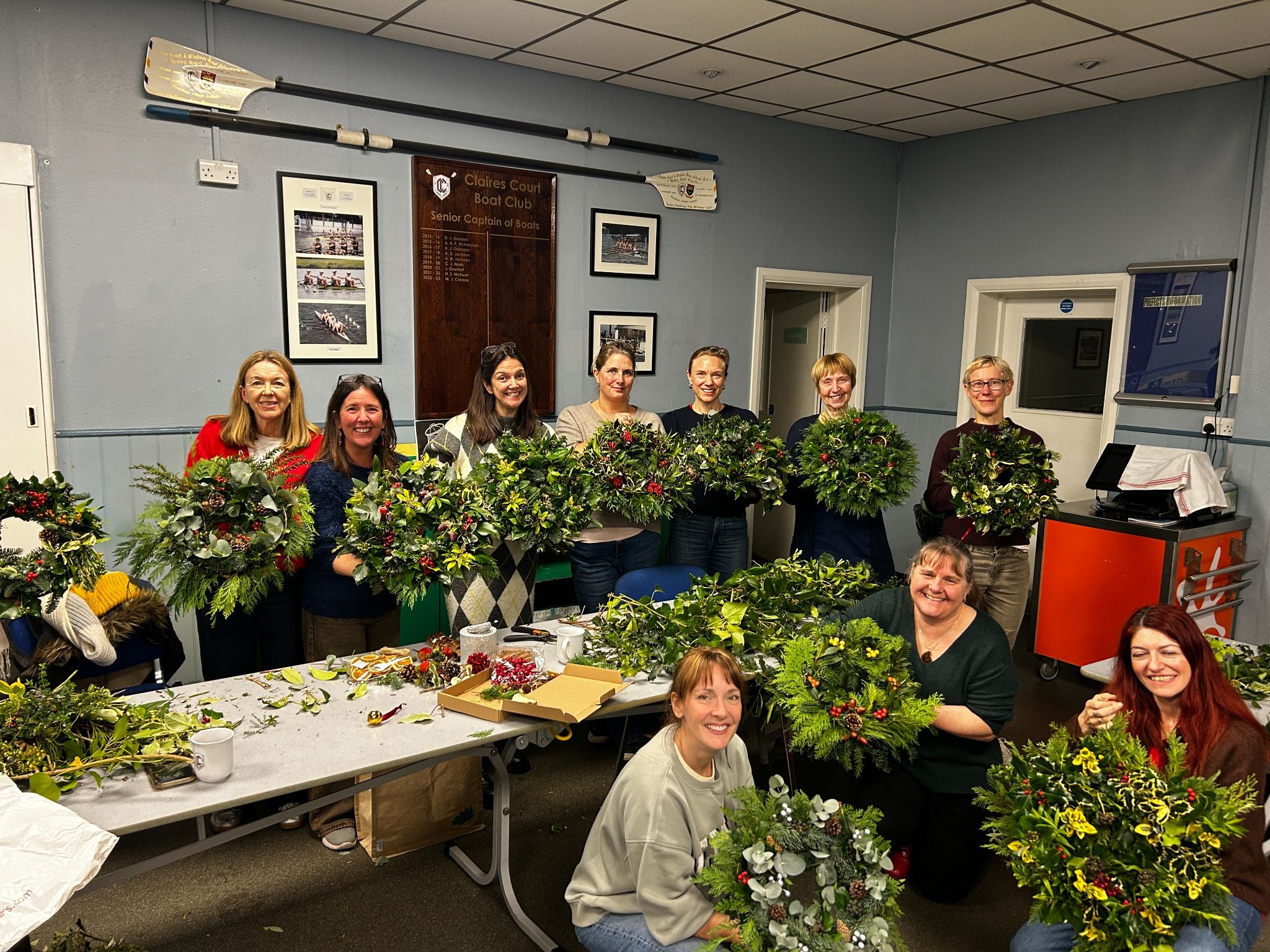
And finally, this Wednesday evening the sailing squad ran their annual fund-raising winter-warmer and wreath-making at the Senior Boys’ school. Over 2 hours, the parents transformed from willing amateurs to gifted professionals, as the closing snapshot below of their work reveals.
P.S. If anyone wants to buy said Sailng Squad one extra of the additional fireflies they need for national team racing, they can check that out in Santa’s basket here – https://ovingtonboats.com/firefly
Trivia
Written in 1994 with Walter Afanasieff, her record producer, and released on her album, “Merry Christmas”, these days Mariah’s dulcet tunes are to be found universally around the shopping centres and favourite seasonal downloads. For those shortly to take part in Pub Quizzes, the other key bits of information are:
The song was released in 1994 but didn’t reach the top spot in the UK until 2020 and in the US in 2019, after 25 and 26 years respectively, 70 weeks in the UK Top 100 and 16 weeks at number one on the Billboard Hot 100.
Billboard No. 1 of the Greatest of All Time Holiday 100 Songs—ahead of legendary vocalists like Bing Crosby, Brenda Lee, and Nat King Cole.
Mariah Carey wrote 18 of the 19 songs listed by Billboard, and she holds the record for the most cumulative weeks spent at number one as a songwriter.
It’s the song that just keeps giving, annual royalties an estimated $2.5-$3 million.
YouTube downloads to date (Noon, Thursday 4/12/2025) are 805,582,218.
One of the many benefits I continue to enjoy is seeing the success that former pupils (and staff) make of their lives post Claires Court. While I can recall memories from the school I lead all the way back to its founding in 1960, and have stayed in touch with friends made in that era, I take the most pleasure in observing those now in adult life who I personally taught in a school very much shaped by my direction in curriculum choices and opportunities provided. As the title suggests, I believe there is a huge correlation between the success the next generation enjoy and the support and choices their parents made for them along the way.
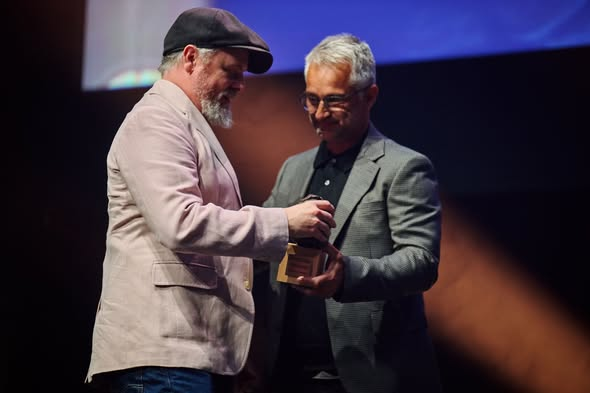
Last week, Rupert Houseman (1988-1992) was awarded the BBC Grierson Trustees Award 2025, The Grierson Trustees have lauded Houseman for the breadth, quality and diversity of the documentary projects he has worked on over many years in the industry, alongside his longstanding commitment to developing and nurturing the next generation of editing talent.
Rupert’s father, David, wrote to me in 2013 to alert me to the then brilliant news of the BAFTA award 2013 being presented to Rupert for his documentary film, 7/7: One Day in London, and you can see the warmth for school coming through in his words:
Whatever the prizes of life that come to us, what’s more important is the impact we can make on others, to give them help, support and even a ‘leg-up’. Last week, Rupert reminded me that fellow Claires Court student, Toby Hefferman (5 Oscar film nominations this year and 2 winners for Dune – Part 2) gave him his first job! Much more importantly, is the recognition he has received for his work in developing The Garden Production company to help young people without privilege to develop the technical skills to win employment in television.
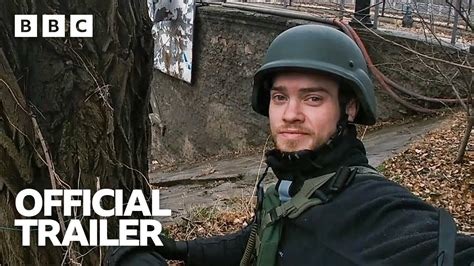
Rupert, like so many young people then and now, learned differently to primary school expectations, and it was only during his time with us at secondary school that he was permitted to grow towards his interests and skills. In the D&T workshop and Art room, he found his future and enjoyed real examination success, and through which he was able to step forward and make such a great career for himself and contribute to the world of documentary filmmaking. This week, Rupert’s documentary, Hell Jumper, won the Emmy award for Best Documentary. It tells the story of the war in Ukraine captured through the eyes and the extraordinary first-person footage of a group of volunteers saving strangers’ lives in one of the most dangerous places on Earth.
Claires Court likes winning awards too, the latest being singled out during our school inspection: “Pupils who have special educational needs and/or disabilities (SEND) are identified early. Specialist staff review personal learning plans regularly. These are tailored carefully to each pupils’ needs. Teachers are well informed about these needs. Consequently, they offer appropriate support and well-thought-out activities in lessons. Sensitive support for pupils with physical disabilities or mental health needs allows them to access the curriculum fully and to participate in the activities on offer. Pupils are provided with sustained pastoral support to build confidence. As a result, pupils who have SEND make extensive progress from their given starting points. They achieve well in public examinations. The success of thoughtfully tailored provision on outcomes for individual pupils who have SEND is a significant strength of the school.”
When Rupert spoke at our Speech Day in 2013, he made it quite clear that he enjoyed the irony now as an adult of writing scripts, narrating in his documentaries and speaking in public as is required of him now, remembering the boy he was entering secondary school, labelled a failure because of his dyslexia. Now in 2025 he feels just the same, and the recognition he has won for his outreach work is not just thoroughly deserved, but a reminder to us all that, whilst you need a bit of luck to get on in life, the best fortune comes to those that work hard to overcome their own difficulties and then do their best to help others too. You can find below the link to his acceptance speech for the Grierson Award last week below. I’ve also included the transcript of his speech too, for in his words you really can capture the human essence he brings to our community.
And that’s where parenting comes to the fore. I feel sure Rupert would not have come to Claires Court if he didn’t need smaller classes and a school that understood how to support his needs. In no way does that suggest ever that secondary-aged children need adults to fawn over them; far from it. They strive for their independence and just need sufficient opportunity to find their element. And that formula works for every child, even those with the highest intellectual potential. As the same Inspection report makes clear, the diversity of the excellence of our outcomes is one to celebrate and thank our parents for making that choice at the right time for their child.
Transcript: We have, I would say, the best documentary editors in the world working right here. We are as a group, simply fabulous, funny, frank, and a brilliant bunch. I’m lucky to call friends as well as colleagues. I’m even lucky enough to call a documentary editor my wife.
The editing training scheme would not have been possible without this amazing community. We got exactly why it needed to be done, and we’re completely happy to share their incredible skills.
For me personally, as you’ve heard, I like to make the cutting room as jolly as possible.
There needs to be laughter in the edit suite. It should always be a daily ingredient. This can, of course, confuse the casual passerby. I remember once an editor had burst into my cutting room, shouting, “Stop laughing”. That editor was actually in the process of cutting a comedy. We were cutting Life and Death Row!
You could say there’s a lot less to laugh about right now. Reduced commissions, smaller budgets, many out of work, even a war against truth itself. To cap it all, the rise of technology in the form of AI that we’re constantly told has the potential to completely replace us in the workplace. Now, I really hope that the next sentence I’m gonna say is gonna sound as ridiculous in 10 years as it does today. But I, for one, feel strongly that humans should be telling human stories, and that includes the editing of those stories.
Documentaries need to be put together with love and careful human consideration, and not fired out like a microwave meal, for one. Despite the occasional 3:00 AM existential crisis, I am genuinely excited about the future and the challenges it poses. I feel our skills in conveying truth through documentary as more important today than ever.
And among us. We have the fiery passion, skills, and belief to do just that and to do it brilliantly. So, as a documentary editor, I proudly accept this award. It’s rather lovely to be overwhelmed and recognised. Thank you very much.
The publication of the Claires Court Inspection Report September 2025 last week provided many statements about the school’s work with the children and young people receiving their education with us. The inspection regime for our sector is conducted by the Independent Schools Inspectorate, the current framework introduced in 2023, known as f23, and its reports are particularly careful now with the use of language. The words ‘Excellent, Outstanding etc.’ are no longer permitted, because the report is only a snapshot of the school in action, and the words are carefully used to highlight what the school does well, and what it needs to improve. Nevertheless, read as a whole, the report does explain quite why the school has such a good reputation for its work, in the classroom, for our pastoral work, for our extra-curricular activities and most importantly of all, for the academic results the school achieves for its students, and across all ages and stages. The report is available on the school’s website, as are those back to 2014.
Central to the inspection process is an additional challenge for the Inspectors involved, that being whether there is something that might be unusually successful that a school does that is worth highlighting, these being known as ‘Significant Strengths’.. In the way that Cathedral Choir schools could not get a mention for the quality of their singing, so Claires Court could not get a significant strength of its excellence in PSHE, Pastoral Care, Sport, the Arts or indeed our innovative use of ICT. These are already part of the school’s reputation, both locally and nationally. These can be seen clearly in the overarching summary of 12 inspection findings, copied below, covering 3 or 4 sentences as expected, and we are delighted to read them there.
However, Summary 7, about ‘special educational needs and/or disabilities (SEND)’ is worth further highlighting. “Pupils who have special educational needs and/or disabilities (SEND) are identified early. Specialist staff review personal learning plans regularly. These are tailored carefully to each pupils’ needs. Teachers are well informed about these needs. Consequently, they offer appropriate support and well thought out activities in lessons. Sensitive support for pupils with physical disabilities or mental health needs allows them to access the curriculum fully and to participate in the activities on offer. Pupils are provided with sustained pastoral support to build confidence. As a result, pupils who have SEND make extensive progress from their given starting points. They achieve well in public examinations. The success of thoughtfully tailored provision on outcomes for individual pupils who have SEND is a significant strength* of the school”.
Everyone in the school, and most notably those who lead and support those who learn differently, is particularly pleased with this finding. This is because this approach to our work covers all children and not just those with SEND, and not just academics. During every INSET our teachers participate in, whole school and departmental activities occupy most of the time, checking our work, reflecting on what’s gone well or awry, and collaborating together for the greater benefit of all. Our CPD efforts have not just been about teaching, learning, marking and assessment, important as those are. Over the past 18 months, we’ve also tackled the emerging use of Artificial Agentive Intelligence in the classroom, the considerable differences between the way generations of adults review parenting (Victor Allen), ADHD and Neurodiversity Training (Fintan O’Regan) and understanding Abuse in society (Marilyn Hawes). All 3 are significant leaders of our thinking, each highlighting in their own way the transactional nature of human development and progress. As the last 4 summary statements make clear, the school is really on top of its brief, focused on the challenges our children and young people are facing in a world changing by the day, if not the hour!
I have chosen Arnold Schwarzenegger’s quote because it so aptly describes how the school has got where it is now, in 2025. His lifespan covers all the 65 years the school has been in existence. We started small as a school (19 children), and have 862 now as of November 2025. Over that period, we’ve had many successes and setbacks, challenges and opportunities. During my time as Head (1981- Seniors/1988 whole school), we’ve seen O levels depart, GCSEs commence, Co-education arrive, the Dot.com bubble, university expansion, the Global Financial crisis, Olympic Games, Brexit, the Pandemic and now VAT. We have learned from all of these events, particularly the Gove reforms in Education and, more recently, the growing crisis in well-being, and I am so proud of the school’s ability to lead from the front. As a school that only serves a local population, we’ve got to be connected to our local community, and now as then, we are struggling always to meet the demands that are placed on our teachers, our support staff, our parents and above all, our children.
The 2025 School Inspection may be the last in my long career at Claires Court. The findings could not be more pleasing, a validation of all that we hope for when we come to work each day. Our aims are crystal clear: a modern, relevant education a love of learning a range of life skills – academic, social, musical, creative and sporting a strong spiritual and moral character.
These are underpinned by our Core Values: Responsibility for ourselves Respect for others Loyalty to our School Integrity above all
Plus… We recognise the importance of building confidence and self-esteem in each of our pupils, and preparing them for the next step in their schooling We work in partnership with parents and guardians to help our pupils achieve their full potential We promote an understanding of the need for care and consideration for others within our community and the wider world ISI Inspection Report 2025: The proprietor and leaders have a clear vision for the school based on the values of personal responsibility, respect for others, integrity and loyalty to the school. They understand and fulfil their responsibilities effectively. Leaders place pupils’ wellbeing at the heart of their decision-making. As a result, pupils thrive. They are proud to belong to the school community.
Need I say more?
*An Independent Schools Inspectorate (ISI) “Significant Strength” is a designation for a school’s provision that goes beyond simply meeting the standards and provides clear, demonstrable, and highly beneficial outcomes for pupils. It reflects the exceptional knowledge, skills, and dedication of leaders, staff, and governors in a particular area, which can include leadership and management, curriculum, or pupils’ welfare and personal development. Key characteristics of a Significant Strength Exceeds standards: It is not just about meeting the basic regulatory standards but about excelling in a specific area. Leadership-driven: The strength is a result of the knowledge, skills, and decision-making of the school’s leadership, managers, and/or staff. Impactful for pupils: It must result in a clear, demonstrable, and highly beneficial impact on pupils. Demonstrable through evidence: Inspectors verify this strength through a range of evidence, including pupil, parent, and staff feedback; school records; observation; and scrutiny of pupils’ work and progress.
When the school was emerging from #lockdown, it was very evident that everyone’s ‘engines’ needed a metaphorical service, to check that all the moving parts were suitably free-running, that the ‘satnav’ switched on and the future direction of travel calibrated. At most of the following assemblies I ran at Senior Boys, and on the other sites as appropriate, I included the hashtag “MakingHistoryEveryDay” and used the current achievements (of anyone, it must be said) to illustrate the point. And it worked. Creating aspiration is one of the key strengths headteachers need, yet often that staircase of hope does need some easy risers to get going. It’s also true that not every aspiration will be met, as my childhod ambition to play open-side flanker for England testifies!
During last week and this week, we’ve seen rainbows over the schools, a metaphor for the evidence in front of our eyes that, despite the rain, the sun will shine once more. We know though that the physical elements will continue to forge and shape our future, as will the changes in humanity itself affect the ongoing direction of our enterprises. School is a small microcosm of this; over the past 20 years, we’ve worked hard to provide for all sites access to all-weather pitches (to combat the rain) and progress the various pathways (academic, art, choral, drama, music, sports) to support the separate growth of these talents towards the best they can be. The long arc of history of our school includes developing a reputation for the quality of our fencing and judo; sadly, however noble and athletic those Olympic disciplines are, times moved on, and student interest refocused on so many other sports, activities, and interests.
The recruitment of Sixth Former Lily Gater by Iowa University into their ‘Hawks’ boat club went viral over Instagram this week, pleased as punch that the University would be in capturing a world-class sculler for their squad and as an international academic student for their faculty. Yes, that’s another example of a student making history, yet worth highlighting that Lily joined us in the Sixth Form for the known reputation we have for the strength we have in the sport of rowing and also because of the strength and breadth of our Sixth Form teaching programme. My banner headline does try to highlight just how proud we are of Lily and her achievements, which are to have both the academic and sporting achievements to win this pick by the ‘Hawks’.
For Christians, it was Jesus Christ who highlighted just how difficult it is for a person to be a prophet in their own land. This proverbial saying inevitably impacts not just a human, but also schools and colleges. Whilst I do spend most of my time on my feet in school, both last week and this I’ve had the opportunity to attend major gatherings during which heads and those in the wider business of education have come together to focus on the future for schools and their purpose, last at the Institute of Directors venturing further into where AI is taking teaching and learning, this with Mr Richards at the ISA Autumn Study conference, where our art work won deserved praise, and the school highly commended for the Innovation we bring to our curriculum and purpose.
As I write, it seems our 2025 School Inspection report remains unpublished, a simple issue of delay by the final piece of editing. Without the accolades within, it’s difficult to ensure that our future audience of prospective parents appreciate just how successful our school is at achieving its aims and live to our core values. As current parents can see from the school’s App and Instagram blog, the achievements, accolades and actions of our athletes carry on in all areas. Our U14 netball girls beat Wellington College on their way to becoming Berkshire Champions, and the boys’ rugby teams carry on scoring tries and tackling hard, and of course Hockey is striking the right notes too.
At Claires Court Juniors, today the staff held a quiet commemorative birthday lunch for our former colleague, Bridie Gravett, who passed away this July. Her husband, Dan, is now back at work, in school, and I know just how thankful he is to be back at work and supported by the school as a whole. Some history is not about success at all, but to note the event, understand its importance and take the opportunity to include, remember and reflect. That combined well with the broader reach of the week for Remembrance, with assemblies and silences across the sites to remember those who gave their lives in battles so we could enjoy the peace we now experience.
Claires Court CCF assembles outside the Maidenhead Town Hall on Sunday 9 November 2025
5 weeks of school at Claires Court lie ahead for us all. My efforts will continue as both headteacher and Academic Principal to (where possible) make more history and encourage my colleagues, children and young people to do so too. These weeks include many opportunities for our community to come together in many ways, and I’ll welcome all conversations that add elements to the hopes we have for our children ahead. We are always told that life is too complex, but the answer is ‘to never to give in, focus on the important and what needs to be done’, and #simples, you too could be Making History Every Day.
The 2025 Celebrity Traitors programme has attracted circa 13 million viewers per episode, and I have no doubt that by the numbers are all added up, the programme will end up challenging the final of the Women’s Euro 2025 for most-watched programme this year. Despite the very honourable intentions of all the celebrities involved in the game, with the final prize fund of over £80,000 being available for the winning celebrity’s chosen charity, a huge % of the UK population have been watching an amazingly successful TV programme which tacitly approves of’ Lying’ to win the prize that could benefit so many deserving cases.
The phrase “Life imitates art far more than art imitates life” was said by Oscar Wilde in his 1889 essay, The Decay of Lying. The quote suggests that life often mimics the forms, ideas, and emotions presented in art rather than the other way around. Wilde was not the first to identify the importance of lying in public life, that honour probably belonging to the Greek philosopher, Plato, wh introduced the concept of the “noble lie” (gennaion pseudos), which are myths or falsehoods in words that the rulers of his ideal city are permitted to tell citizens for the purpose of maintaining social order and promoting the common good. This was an explicit departure from the stricter moral views of his teacher Socrates, who seems to have opposed all lies.
This week (4 November 2025), I’ve been listening to the current Secretary of State for Education highlighting that the new curriculum that her government are to introduce next year will put right the deficiencies arising from the old ‘new’ curriculum celebrated by Michael Gove 11 years ago, in his time in the same role. I remember specifically when Gove supported his changes in the Computing curriculum, supported by the then Executive Chairman of Google, Eric Schmidt, requiring a focus on the teaching of the fundamentals of Computer Science, coding and programming skills within our schools. The fundamental ‘truths’ of the last decade, spouted by Government and the DfE no doubt will be replaced by the brave new world hopes that iterate that we need computing to go back to providing broader insights and knowledge about the applications and outcomes. Inevitably, we will end up examining ‘up to the hilt’ the syllabus followed by its students; another folly erected in the pursuit of education, which has already moved on because of AI, LLM and the explosion of computing power now with us, previously never perceived ever to be available.
In terms of Education across the world, and all due praise to those very Gove reforms, English education has done really well, in Reading, Writing, Spelling, Maths and Science assessments in comparison to most other developed economies. Our sector gives Mr Gove every credit he deserves for those reforms, but has to hold back in its peon of praise, because Gove chose not to see all of the reforms we needed to truly create the outcomes that benefited all children. Forcing the EBacc on the country has seen the almost complete destruction of state school Arts education in the round, and his unwillingness to recognise those industries that bring such success to the UK through Film, Music and TV. Moreover, whilst we still lead the world in food technology, our state school Sixth Formers are unable to follow Food Studies at A level.
I do feel I can speak for the Independent school sector in England to say that neither set of reforms is likely to trouble our schools, as we have always been able to see the value in a myriad of subjects and approaches. We’ve been completely loyal to the children and young people we serve, offering all the range and breadth needed for our individual communities. Some schools have chosen (as we have at Claires Court) to make use of internationally recognised qualifications, and to offer breadth and range for subjects that are better assessed through practical assessments of vocational skills rather than terminal written exams. In short, there are many ways of ‘skinning the cat’, and we can celebrate them all.
Where national government is failing now and has been for years is in failing to adopt the duty of candour needed to run the country effectively. Despite the obvious failings of all the great departments of government, be those Care, Education, Health, Judiciary, the Police and Prison services, and perhaps above all, the Treasury, all their ministers (and their departmental spokesmen) can do is state that ‘we are spending more in real terms than previously’ and that it will take time ‘to put right the mess that we inherited from the last government’.
I quote from August 2024 “During the recent state opening of parliament, the new Labour Government confirmed their intention to enact primary legislation imposing a statutory duty of candour on all public servants and authorities. Although public authorities are currently subject to guidance on candour when taking part in inquest proceedings, they are not bound by any statutory duties to tell the truth. According to the Government, the new ‘Hillsborough Law’ intends to ‘change the culture of defensiveness in the public sector that has denied families the justice they deserve and contributed to their suffering’. The inclusion of this law in the 2024 King’s Speech is the direct result of a manifesto promise made by the Labour Party to support the long-standing ‘Hillsborough Law Now’ campaign to oblige state bodies to tell the truth and proactively cooperate with official investigations and inquiries. It is also, in part, a response to the outcome of the recent Infected Blood Inquiry and other high-profile miscarriages of justice such as the Post Office Scandal.”
Of course, no such legislation will ever work when we have such an oppositional approach to running our country. Those who win elections declare that they have the mandate to empower the changes they see the country needs, but never engage with the experts who actually know what needs to be done, in part because ‘expertise’ is now so easily acquired simply by inferring ‘I’ve done the job before’. I am one of many professionals now who feel that we are badly served by our government. It appears they are indeed ‘the traitors within’. Unlike the victor(s) from the TV series, where the successful could indeed have lied their way to the top, no one wins when the government of the day acts so treacherously, both to win power and then to retain it. This is no diatribe focused on the present; our country simply has outsourced so much, so many and for so long the services needed to run what we needed as a civilised society that we find ourselves in the perilous position today. Plato observed that ‘the noble lies’ are required to serve the purpose of persuading people to accept their role and be motivated to act for the country’s stability.
Sadly, government assertions today are no longer believed, because the half-truths and worse have come too thick and fast, with evidence of their failures filling the TV screens and news bulletins to the hilt. Sadly, I suspect the viewing public has already switched over from the reality of the news to the illusions conjured by ‘Traitors’, the ‘Great Bake Off’ and all. If nothing else, at least these shows actually have some winners!
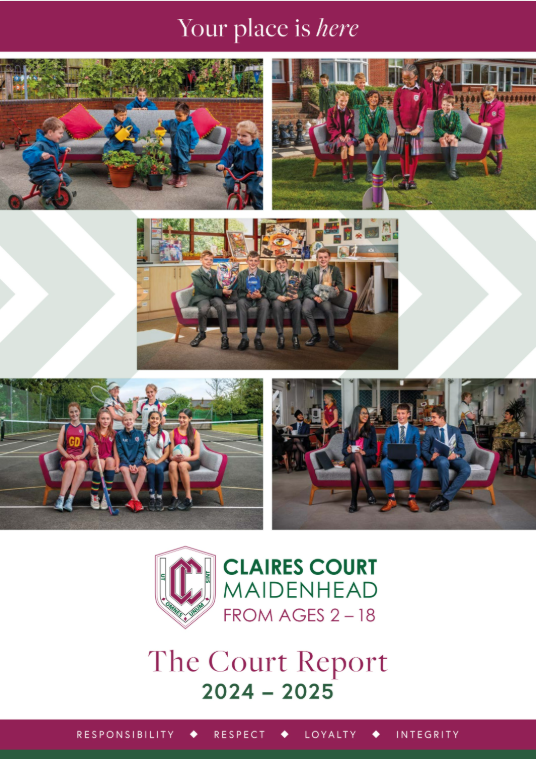
This half-term, we publish the Court Report, our annual statement, which covers the various successes of last year, and includes my commentary on the times ahead. You can see the website copy here, a really colourful celebration of Claires Court in action. As I make clear, we remain acutely aware of the financial challenges placed on families due to the addition of 20% VAT, and are doing our level best to keep core charges down. However, our catering prices are set to rise, so we can continue to provide high-quality offerings, and a separate communication outlining the changes will come out over the holiday half-term.
Schools win permission to appeal government’s VAT policy
The High Court previously acknowledged that the policy would disproportionately affect families in the bottom half of the income distribution, with 3,000 pupils expected to be displaced immediately. Despite this, the Court declined to intervene, citing Parliament’s broad discretion in matters of taxation. However, the Court of Appeal’s decision recognises the serious human rights implications of the policy, including potential violations of Article 14 (prohibition of discrimination) and Protocol 1, Article 2 (right to education) under the European Convention on Human Rights.
Our recent visit by the Independent Schools Inspectorate was most encouraging too; and we look forward to receiving the report and sharing its contents, expected in the 2nd week after half-term. Good news is always nice to receive, of course; we are very aware, though, that it is in the future that we plan our daily work, to give all of our children, whatever their strengths and differences, the skills and opportunities that will nurture the very best longer-term outcomes for their successful development. Nurture is one of the key values within education, is always spoken of within the Early Years Framework for nurseries and Reception, but seems to be quickly forgotten by so many, including Secretaries of State for Education. Nurture is a core principle in education, parenting, and personal development to emphasise the importance of caring, emotional support, commitment and providing a safe environment for growth.
To that end, and reflecting on the PTA Fireworks event on Saturday night (and the risk assessment we make every year to cover exploding mortar bombs in the air!), it provided a great opportunity for our school community to meet and enjoy a convivial evening of activity and conversation. With over 1000 present, what with ticket sales and footfall to the bar, ice cream van, pizza trailer and stalls, it provided both wonderful entertainment and a useful surplus to the PTA Foundation funds. Those in turn provide many valuable extras for the children and the school’s activities, for example, for the Flexitent providing cover for our stall as well as for other PTA events, and the next one arrives to benefit Forest school after half-term.
I appreciate that the most important recognition of the school’s suitability for our future pupils is the word-of-mouth recommendation of our current and previous families. It seems that the 2 major talks run this term, online with Marilyn Adams (video here, well worth watching) on the active parenting needed to safeguard children from the online harms of the internet and in person by Olympian 400m runner, Mark Richardson, to a good audience of parents and sports students. Mark spoke compellingly on his clear ambition to become the best in the world, and belatedly this Summer, he and Iwan Thomas, Roger Black & Jamie Baulch received their Gold medals for their victory in the World Championships in 1997, the original winners (USA) being subsequently disqualified because of the use of performance-enhancing drugs. You can see the final here, with Mark Richardson running the anchor leg and posting the fastest time he has ever run, 43.5 seconds.
During his talk, Mark was asked whether he was disappointed to receive his Gold medal 28 years late. His answer was a huge surprise: “Certainly not, as my daughters had only ever known their dad as once being an athlete a long time ago. For them to be present whilst we took the podium was an enormous satisfaction, bringing my past life into the present. And anyway, I got to keep the Silver medal too!”
Mark is one of those many ‘Diamonds’ who have enjoyed their education here at Claires Court. Whilst he did well at school and then Loughborough University, he recognises now he has ADHD (Attention Deficit Hyperactivity Disorder), a neurodevelopmental condition characterised by persistent patterns of inattention, hyperactivity, and impulsivity that interfere with daily functioning. Sport, in general, and Athletics, in particular, provided Mark with the discipline and excitement to help him focus. We now know that arises from the dopamine release, providing the reward for focusing so well, and it’s why we continue to include so much sport in our curriculum.
Dopamine is not the only hormone valued by education (and amongst adolescents, that’s just as well). The ISI inspectors noted just how calm the school is during the working day. We know that is due to class size, teaching quality, the children’s willingness to learn, a really well-balanced curriculum and the great relationships that are engendered. If we get that right, then those companion hormones come out to play as well, endorphins (which reduce pain and stress), serotonin (which stabilises mood), and oxytocin (associated with social bonding), which contribute to feelings of excitement and happiness. When schools get this right, then we lay down the conditions to find Diamonds, as most parents know, their children are really precious to them, not far away in the sky, but gems in their own homes, whose talents and facets of personality just need bringing out.
So, let’s all look forward to ‘Sparkling’ – it’s half-term ahead. Enjoy!
This week’s blog explains why it’s easier to make some stuff up rather than go by the evidence!,” discusses the prevalence of educational myths, contrasts them with evidence-based approaches, and features the career insights of World champion & Olympic bronze medallist Mark Richardson, Claires Court Headboy in 1987-1988.
As a professional teacher, growing up through more than the average number of decades than most, I’ve seen a ‘Heinz variety’ of Edu-myths, promoted to be kind to adults and children, on why perhaps their ‘intelligences’ were maybe different to others in the same context, and how perhaps they might be better attuned to learn differently.
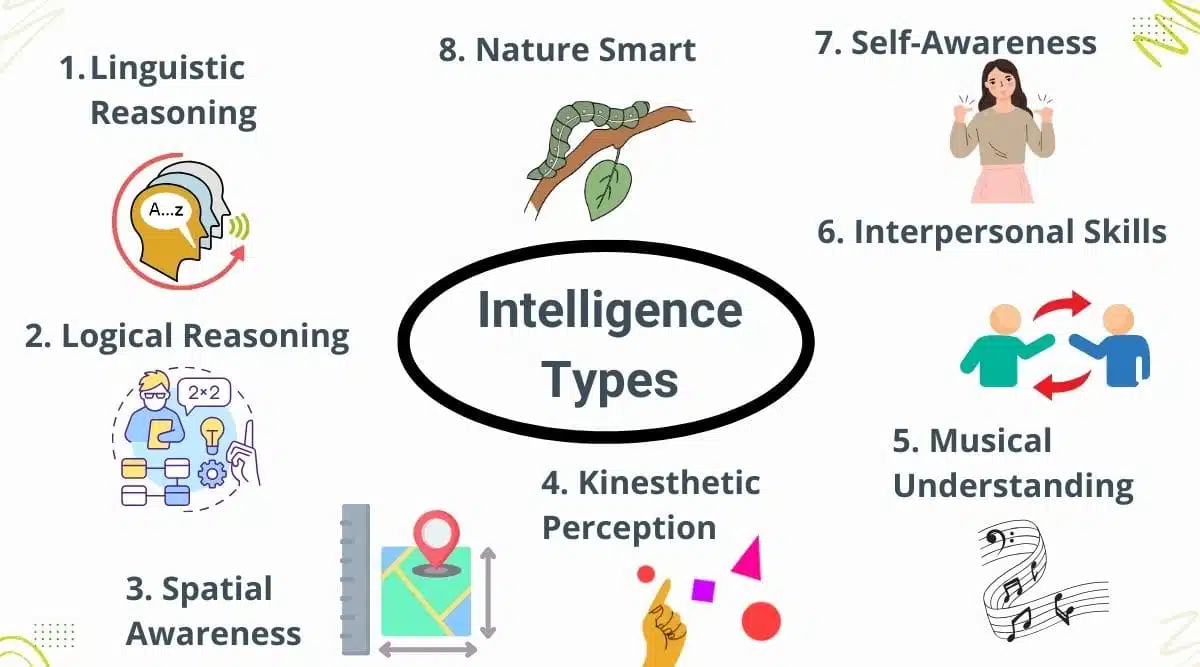
The graphic below shows categories of intelligence types, yet have no scientific basis whatsoever:
Howard Gardner started this ‘Goldrush’ in the early 1980s with his ‘multiple intelligences’ model, which grew up alongside the much-promoted concept of ‘learning styles’. Other myths include the VARK model, that learning is better in bite-sized chunks, that left-brain/right-brain dominance dictates how people learn, and that a specific amount of learning (20% in this case) is lost when ‘students’ sleep. As the graphic above shows, it makes such good points that ‘surely it must be true?’ Sadly not, there’s no golden ticket to the future, just the bitter Northern Irish truth that ‘Life is hard and then you die’, perhaps even better illustrated by American Science Fiction writer David Gerrold, who wrote:
“Life is hard. Then you die. Then they throw dirt in your face. Then the worms eat you. Be grateful it happens in that order”
Our first visitor in our Speaker series this year was the athlete Mark Richardson (1983-88), Olympic medallist and World Champion and last Friday night, his 45 minute or so unscripted talk highlighted much about his development as a teenager into adulthood and his learning as an elite athlete that rang so true of what I remember about Mark in the 5 years he was at Claires Court. To an audience of parents and their sporty offspring, Mark’s presentation included his development from wannabe runner through the 1990’s culminating in his ‘greatest race’, winning the 1998 400m against Michael Johnson, world champion at the time.
In the 1997 World Championsips, Mark ran the anchor leg of the 4x400m relay, and initially won the Silver medal behind the USA quartet, subsequently upgraded to Gold when one of the American runners admitted to doping offences. Mark was asked whether he minded having to wait until this July to receive his medal, with the other 4 involved, Jamie Baulch, Roger Black, Iwan Thomas and heat runner Mark Hylton.
Mark’s reply was simply wonderful. “Not at all. This time, in the London stadium, my daughters were present. So for them, Dad wasn’t just somebody who’d been an athlete long ago, before they were born. To have my medal presented to me and the team, whilst their mum and they watched was a magical moment’.
After his athletics career, and a period of self-doubt and reflection, Mark commenced on a career in business.
“ I now consult with organisations and I take a lot from being an athlete and setting performance goals, deconstructing things into thinking about what it is you’re trying to achieve, thinking about those performance milestones, those key performance indicators, and then breaking it down into bite-sized chunks that you can be doing, day in and day out.
I’m a big believer in that. I learned that skill as an athlete – and the ability to compartmentalise as well. There are loads of things I probably didn’t realise that I was doing 30 years ago as an athlete, but I’ve got the benefit of really strong knowledge about performance psychology now.”
What Mark made abundantly clear to us is that, to reach the very top, you need to have that as the goal, and you have to believe in yourself and your capabilities to improve. It is best not to spend any time dwelling on what others do, but to look after your own ambitions and then break them down into clear, compartmentalised goals, each of what are supported by specific tasks to do and changes in training so achieve them. He highlighted the many setbacks he faced throughout his running career, most notably that overtraining led to burnout and viral illness. During the audience’s opportunity to question Mark, they asked whether he ever ran that fast in training. Somewhat disarmingly, he answered, “I’m quite a lazy trainer and I’d never try that hard in training, just jog around, sort of faking it!”
All the signs are that, for whatever learning and skill acquisition needs to be completed, the support that fails is that of undeserved praise. Rather than suggesting someone is brilliant, what is much more effective is to check on what went well, highlight possible next steps and allow for feedback and goal setting.
I conclude this blog by quoting from a very recent article by Professor Carl Hendrick, formally an English teacher locally, and fellow researcher into what works best in learning: “The comfort of myth crowds out the discipline of truth (even amongst teachers):
This is not science. It is not even good pedagogy. It is moral theatre, performed for an audience of educators who want to believe they are doing the right thing without having to prove it. And the applause comes not from improved student outcomes, but from the warm glow of shared moral conviction.
The great danger of comfortable fictions is not that they are wrong, but that they make us feel right. They provide the satisfaction of moral certainty without the inconvenience of empirical accountability. They allow us to believe we are helping when we may be harming, to think we are progressive when we may be perpetuating the very inequalities we claim to oppose.”











 A Principled view