Mark Hookham, correspondent from The Sunday Ti mes, came to speak to some of our Sixth Form students last week, asking them “What do young people want from, or want to know about, Theresa May. He posed the s
 ame questions to the PM on Satruday, and the Sunday Times covered some of those in their Sunday paper edition.
I have cut and pasted the series below:
May we ask . . . Pupils pose PMQs
Who is your favourite artist and why?
Alasdair Butler, 19
Stanley Spencer, who was one of the great British 20th-century artists. He was born and brought up and painted a lot in my constituency. If you’ve seen his Glasgow shipyard Second World War paintings, they’re absolutely incredible. We now have a Stanley Spencer that has been lent to No 10. I had a print on my wall as home secretary, too.
Have you ever suffered or known others who have suffered from mental health problems?
Alastair Roberts-Rhodes, 19, and Flora Gault, 18
I have known people who have suffered from mental health issues. There was a young woman I met recently who explained that, when she was at school, nobody had really known how to deal with her mental health problems. She had been grateful that one teacher had been able to help her. Because the teacher was a head of sixth form and had a small office, she was able to provide the girl with a space to which she could go when she was worried or anxious. But that was all she was able to do.
It is examples like that that show why we need to ensure there is a member of staff trained in every school who knows what to do.
I have known friends and family affected. I’ve not been in a position where there was a direct expectation for me to assist, but I have seen that there are often within families people who don’t quite know how to respond to those sorts of problems.
What is the worst book you’ve read?
Camilla Slais, 17
I’m tempted to say the draft Labour manifesto for the 2017 general election.
Has your thinking ever changed because of a novel?
Alasdair Butler, 19
A book that brought something home to me was The Boy in the Striped Pyjamas [published in 2006 by the Irish writer John Boyne].
It is a very, very cleverly written book and a very well-written book, and what it brings home is the absolute horror of the Holocaust.
Has your faith ever got in the way of any policy you have had to agree to?
Sally Price, 17
No, I don’t think it has got in the way. But I got a strong feeling from being brought up in a vicarage of the importance of public service.
What is on your bucket list?
Flora Gault, 18
I genuinely don’t have a bucket list. My approach is to just get on and do what you’re faced with every day.
Talking to the students on Monday, it was quite clear just how thrilled they were by seeing their questions answered. “When you read the Prime Minister in print asking your questions, which are much closer to the topics that fill our conversation every day, you feel you have got to know her just a little bit better”.
Therein lies the difficult rub for our politicians, that being the failure of elections to gather the interest and engagement of the young. It was evidently the case with Brexit, as the Sky Data exit poll showed last year: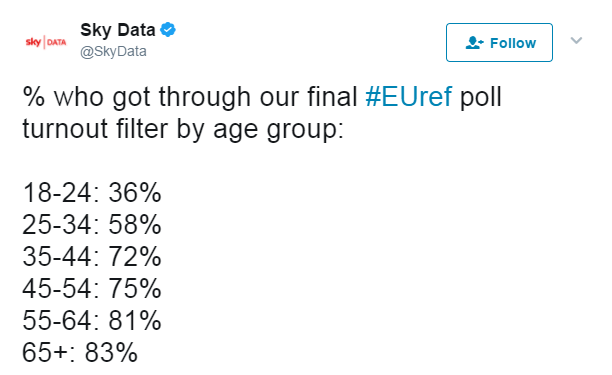
As no data was actually taken on the age of those who actually voted, Sky data don’t suggest their statistics are fool-proof, but they’ll be pretty close. Guardian young journalist Hannah Jane Parkinson wrote an excellent article on the failure of youth to cast their vote 28 June 2016. Entitled “Young People are so bad at voting“, she strikes close to the heart of the matter:
“But what is most disheartening is when people do not vote because they feel politicians do nothing for them. Often, the people who do not vote are right: politicians have done nothing for them. But, quite frankly, that is because under the current system, politicians won’t do anything for the people who do not vote. Politicians implement policies for the people who return them to power. Older people vote.”
And why: see triple-lock pensions, free bus passes and TV licences, protection from cuts.
We can get a handle on where this ‘youth inertia’ comes from this Douglas Adams ‘quote’
“1.Anything that is in the world when you’re born is normal and ordinary and is just a natural part of the way the world works.
2. Anything that’s invented between when you’re fifteen and thirty-five is new and exciting and revolutionary and you can probably get a career in it.
3. Anything invented after you’re thirty-five is against the natural order of things.”
What is so evident is that new and exciting sets out as young adults become truly independent, with a belief that they can shape the world. It’s only after a few years getting a bloody nose on the rocks of life that adults begin to realise they need to organise and get political. And the danger of course is that with the vast majority of those of the age of 35 becoming increasingly conservative, changing the status-quo becomes really difficult.
Last Thursday afternoon at the ISA Heads conference in York, Times journalist spoke with great humour and honesty about just how much ‘Nothing matters’ when it comes to elections. Philip Collins is a leader writer for The Times, also chairman of trustees at the independent think tank Demos. Before joining The Times he was the chief speech writer for the prime minister, Tony Blair, the director of the Social Market Foundation think tank, and an equity strategist at two investment banks. In short, Collins knows ‘stuff’, and his take of things is very adjacent to Adams’. ‘Parties that get elected in the UK hold the centre ground, and you can see that over the past 70 years since WW2′. Despite all the hot air and headlines of copy writers and media gurus, there seems nothing politicians can say to sway the voter in the run-up to elections. Collins predicted Labour will win circa 180 seats, and he has an interesting about the chances of Jeremy Corbyn surviving. More than 195 and everyone will think he’s been a success, and less than 170 and the Corbynistas in Parliament will be in the majority,
Since Collins’ talk last Thursday, the major parties have released their manifestos, and it is pretty obvious which politician (and party) has tried to strike the middle, stable, reliable and sensible ground, staying out of the limelight and clear of controversy. “Lurches to the left and to the right must be avoided at all costs” suggests Collins, but writing in the Times on Sunday, he is mourns the lack of real guts in the Labour manifesto.
The really damning critique is not that the Labour Party is red in tooth and claw. It is that it is toothless and clueless. Mr Corbyn’s political ideas were stale when he first had them 40 years ago. This is a document that, at 45 pages, is long because they didn’t have the wit to write a short one. Reheated, rehashed, resigned, a sermon to the converted. The foreign policy section is too vague to be the precise terms of surrender that the leader desired but “extremely cautious” about nuclear deterrence means he doesn’t understand it. Military action when other options have “been exhausted” means “never”.
Just in case my readers feel I am a tad biased in my coverage, here’s the same Collins writing today about the Conservative Manifesto:
“Trying to decipher what this general election is about, there is a lot of noise and not much of a signal. Theresa May’s approach to campaigning — avoiding the public and the pesky journalists with their questions — reflects really badly on her fragility. The Tory manifesto is said to be light on anything so conventional as actual policies. Better to promise nothing and be sure to deliver it. You have to search for a clue to what is going on and, on your behalf, I think I have found it. There is nothing going on.”
And there you have it dear reader, a choice of 3 ways forward:
1. The empty rhetoric that is a sure fire ‘winner’, or
2. Shroud waving by the clueless, or
3. Some genuine concern for good news and concern for others from the youth of today.
Sadly, I don’t think the third way is going to surface our young voters generally, but it would be nice to think Alasdair, Camilla, Flora and Sally would make their vote count, perhaps seeing something for them in policies that might arrest the ever rising cost of University Education. As the Independent made clear in March, we now have the highest tuition fees in the world, and they are set to rise further next year. Spotting the policies that benefit the young is what’s needed if they are to be attracted en masse into the polling booths. I quote Collins again: “Unless we find a way of changing the way young people choose to vote, nothing else matters. The grown-ups know how they are going to vote already, and the older they are, the more certain they are.”

 Deputy Chief Constable John Campbell said:
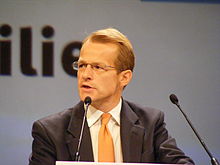 during the coalition government’s term of office, weaknesses including his determination to meddle in matters despite advice. Mr Laws worried his audience more than a little, at the spectre of a returning MG into DfE after this election, if only Theresa May could find it in her heart to forgive him!


 uilds the resilience they need to survive in the much harsher world of adulthood that lies ahead.
 mother, tragically killed 20 years ago in a car crash. Of course I refer to Harry and William Windsor, the sons of Princess Diana and becoming I suspect in their own way almost as well known and loved as their mother. What Prince Harry has done this last week, and supported so ably by the Duke and Duchess of Cambridge is to call-out about their own grieving for their mother, and talk openly about the stress and uncomfortable lack of well being still around their loss. Simon Wessely writes really well about this in Wednesday’s Guardian newspaper “Princes William and Harry break mental health taboos for a new generation” and


 People unqualified for the role are no more fit to teach than they are to work in hospitals or prisons, to detect crime or manage dementia, to bear arms in the military or to sail aircraft carriers. Government can call the shots as much as it likes, but they need to be carefully crafted and well thought out. If not, it may indeed win the perceived battle its sees to conquer our financial crisis, but it will emerge when it declares its victory over austerity without the well-educated workforce we need to populate our industries, public or private on which we place our trust to provide for our defence, our health, our care and safety, or the future education of our children.
 Early March saw our IGCSE results in English and Maths released from the January series of examinations, for many Year 11 pupils this being their introduction into the suite of exam finals they are to take in May and June. Results were as you would expect a mixed bag, because that’s indicative of our broad ability intake, but with A* and As abounding it’s a reminder to all that for many terminal exams without coursework are a ‘good thing’.
 school achievement dramatically improved, with so many top level grades being achieved by the students, released from the stifling effect of the old terminal examination test of knowledge (the old O level). With impressive efficiency, teachers learned what the systems were to maximise best effect coursework, and results continued to improve through the 1990s and ‘noughties’. Sadly, whilst results improved, the actual literacy, numeracy and skill-base in 16 year old pupils did not improve, as seen by Sixth Forms, Universities and Employers alike, so the suspicion of ‘gaming’ even ‘cheating’ the system grew in the onlookers’ minds. 10 years or more ago, to counteract this ‘problem’, coursework was swapped out for ‘controlled assessments’, min-public exams during the 2 year GCSE programme, which would solve the perceived woes of coursework. Job done, verification and validation swapped out for external marking, and public confidence in the GCSE exam process restored.
 Except not quite, for the public exam bodies started noting that individual exam centres had continued to make further, sometimes rather too dramatic improvements for their students. Anecdotal evidence emerged about children being placed in classrooms and asked to copy down answers from the board, and whistle blowers in schools started to write about the blatant cheating taking place. Here’s



 A Principled view