
The ability to read is central to a child’s ability to do well academically at school. Claires Court is a broad ability secondary independent school in Maidenhead Berks. We aim to recruit some 100 boys and girls per year group level from Year 7 and above, and on entry we assess each child’s reading age, as well as carry out a more general audit on their learning skills via CEM centre’s MidYIS assessment. As parents choosing to find their child’s education with us, it’s quite clear their parents have taken a keen interest in their development through their primary years, but many talk of their child’s reluctance to read and of their concerns that there might be some underlying learning difficulty holding them back. In short, we have our work cut out to ensure that the vast majority of our pupils have reached a reading age of 14 by the start of their GCSE courses in Year 10, when they are 14+ years of age!
To this end, we have developed a range of strategies to assist children (and parents) develop age appropriate reading skills. To start with in Year 7, every child has a library lesson a week as part of their English curriculum, and the libraries are well stocked with contemporary novels and modern factual reference books. This work is supported by author visits and book vents through the year. In addition, every child has a digital reading account providing them with a very wide range of digital books provide courtesy of Renaissance Accelerated Reader, which gives teachers the information they need to monitor their pupils’ reading practice and make appropriate decisions and choice to guide future reading and reinforcement. This internet based software gives each child regular feedback on their progress, supported by the librarians and teachers eager to give praise where due. However and he is a really big caution, silent reading on its own won’t improve the reading age of a reluctant reader. They specifically need to read out loud to an ‘interested’ reader – we call this RADIO READING.
How might a parent listen to an older child at top primary/lower secondary child read?
Specific focus is given to listening to your child read without seeing the text. The text can be from fiction, from a school book, from a catalogue or magazine or from that daily paper no house should be without. Make sure your child has their reading to hand and then…
…sit back and imagine you are listening to the radio
Listen to the unfolding story and if words cannot be read, then leave it for your ‘radio’ reader to work out what word might do instead. This might require them to read on a bit, but do be patient.
From fiction, capture unfamiliar words and discuss their meaning and usage – not too many, but enough to keep you concentrating on your job as listener.
Magazines tend to use technical language dependent upon the article – perhaps not necessarily useful in the wider context – but words, themes and issues will emerge which are worth an ‘any questions’ on afterwards – this helps check comprehension as well as keeping you involved.
The textbooks have a reading age at least age appropriate if not two years or more ahead. They contain a technical vocabulary your child may need to become familiar with, so as they read jot down any words which seem technical and unfamiliar to them and you. At natural points, for a break or to clarify, raise these words and discuss them.
Papers raise issues of personal, social, cultural and moral development leading anywhere you might wish – often you don’t may feel you don’t need to hear the ‘reading’, but just discuss the emerging issues. The lovely thing about newsprint is that this is where new words, usage and grammar first come into written use. Spot the new words and see if they have value for your child.
Many of our families with boys in year 7 to 9 report the value of this personal time they find together. In a world full of things to do and not enough time, with wall to wall TV and PC, internet and games machine, finding some quiet time to follow this work builds bigger and wider bridges than all might think at first hand.
The departments at Claires Court all produce secondary lists of technical vocabulary for their subject and in each year of key stage 3 (ages 11 to 14). These are issued at the start of the year, are often reissued with revision guides and can be worked through at home to ensure each child is literate in their reading and their meaning. It is amazing just how few words exist in the technical lexicon of each subject, so a bit of diligent attention here provides really useful support for the child, whatever their wider reading ability.
And finally – some 8 years ago I remember listening to Gary Chevin, former prison inmate turned Dyslexia researcher, working with Professors Rod Nicolson, and Prof Angela Fawcett. They had just completed his book (2009 – AuthorHouse), Dyslexia: Visually Deaf? Auditory Blind? In short, Gary’s unusual story is that he has no ‘inner voice’, and so unless he reads out loud, he can’t hear the story! This reinforced in my mind that whatever the many root causes of word blindness, even the most challenged adults could discover a love of reading and that there remains significant importance that all to be heard to read out loud and often! LAMDA exams for this purpose provide significant extended opportunities for boys and girls at secondary level to raise their standards of public speaking up to Grade 8.
This blog was commissioned by the Independent Schools Council to inform and advise.

 programme. We had not yet articulated the learning philosophies needed to underpin the newly designed curriculum to follow, and his broad experience and deep understanding of education matters quickly enabled the school to develop the coherence provided by the Claires Court ‘Essentials’.
 Even more impressive, those waiting to take over, Messrs Giles, Heywood and Barlow are ready for the challenge, each really well versed in their responsibilities. The Principals are deeply grateful to Mr Bevis for the excellence of his stewardship and we wish him every possible success in his new ventures, husband of a globe-trotting tennis journalist, grandad and problem solver extraordinaire.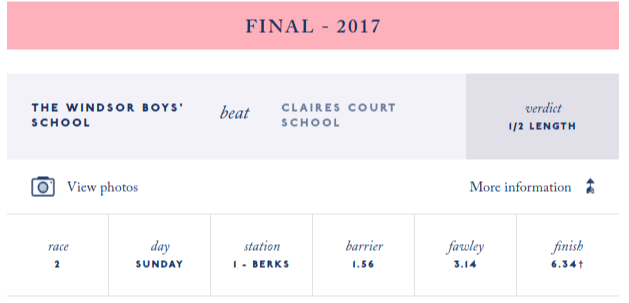




 I was due to write this week about our considered reaction as a school to the various terrorist atrocities over the last few weeks. It is certainly not our wish to cause our families to fret about choices we make. For example, this coming week’s trip to the Globe theatre on the South bank for our Year 6 girls has been cancelled; the excursion involved some bankside walking near Borough Market, traffic is not yet free flowing in the area, and it seemed more appropriate to swap this Macbeth day in London for a Macbeth day in Maidenhead instead. It is important of course that we still handle difficult conversations about terror and man’s inhumanity to man, and not duck such issues; sufficient to say that there is enough within the Bard’s own writing of murder, mayhem and sorcery to cause our pupils to reflect upon such barbarous matters. Each activity we undertake goes through our Health & Safety prism, and all additional activities, particularly those that involve different and unfamiliar situations, including residential components are given the most detailed scrutiny. Our work here is independently inspected at least 3 times a year by a
  and ambulance crews protected from the showering, flaming debris from the building. Speculation on fault and blame is rife; given the area has had been covered by such mixed political masters over the past 15 or so years, it’s unwise to point a finger. Suffice it to say, other public servants are going to be in the spotlight in months, perhaps years, for actions that are polar opposites to those decisive and life-saving behaviours we have seen this last week.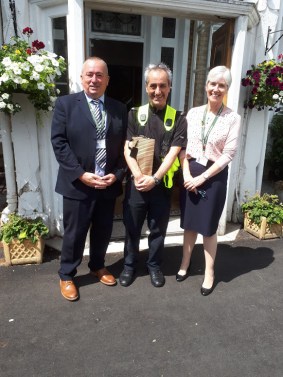
 better public services, “in some way or other they’ll need to be paid for, whether that be by 1p a £1 on income tax, or a new ‘dementia’ tax to be applied to those with property services”.
 ‘mopping up’. It’s so much better to focus on noticing things well the first time around, this playing to the old proverb ‘a stitch in time saves nine’. Obviously, good noticing is needed almost everywhere, but its connotations can often be negative, even if the purpose is supposed to be ‘good’. Big brother CCTV cameras have come into their own in every walk of life; they have permitted us to track those involved in the recent terrorist outrages, find out where they have been prior to the events, and even perhaps arrest others associates supporters. Being spied upon often has negative connotations, and has certainly brought into a range of public workplaces such as the NHS a fear of being found out for making a mistake and thus being labelled unprofessional or worse. Here’s the Nursing times writing about that 3 years ago – https://goo.gl/D4AzCB.
 The second way I learned this was through the excellent research work of Chris Watkins of the Institute of Education London, now sadly retired. Chris’ teaching definition is as follows: Noticing. This is the first step: to stimulate and credit learners with the fact that they direct their attention and that this is a key building block. It can develop further into a focus on one’s own activity: that key element of noticing what you are doing while you are doing it.
 c support that has risen to wash over the police, emergency and health care workers that have had to deal with such horrific events during this period. Bravery and duty are on show every day in our public services, yet all too often unseen and because of that unreported. The ‘thin blue line’ must not be permitted to get any thinner, and if there is one policy from the Liberal party I am prepared to support, it’s the increase in income tax to fund world class public services.

 Deputy Chief Constable John Campbell said:
 mes, came to speak to some of our Sixth Form students last week, asking them “What do young people want from, or want to know about, Theresa May. He posed the s
 ame questions to the PM on Satruday, and the Sunday Times covered some of those in their Sunday paper edition.
 A Principled view