Making sense of tragedy and chaos – why it is important to be an expert witness.

The election of Donald J Trump to the Presidency of the United States knocks the UK’s Brexit vote into a cocked hat. It seems likely that the reasons for both votes is very much the same, that being the backlash from the silent less-qualified majority who have seen their work and home conditions deteriorate substantially in comparison with the affluent better positioned minority over the last decade. Very much a repeat of the Brits’ sacking of the Experts this side of the pond it appears.  I quote from the Telegraph: “I think people in this country,” declared Vote Leave’s Michael Gove, “have had enough of experts.” His fellow Brexiteers were quick to back him up. “There is only one expert that matters,” said Labour MP Gisela Stuart, also of Vote Leave, “and that’s you, the voter.”

I am old enough to remember the rise of Margaret Thatcher, her election in 1979 seeing the demise of the Labour party for a generation until its re-emergence under Tony Blair in 1997 with New-Labour.  One of the funniest books written about the period is John O’Farrell’s ‘Things can only get better – Eighteen Miserable Years in the Life of a Labour Supporter‘, which carries many immortal lines.  Try this one:

“Like bubonic plague and stone cladding, no-one took Margaret Thatcher seriously until it was too late. Her first act as leader was to appear before the cameras and do a V for Victory sign the wrong way round. She was smiling and telling the British people to f*** off at the same time. It was something we would have to get used to.”

The book starts by identifying the author’s early years in Maidenhead, living around the corner from Claires Court.  Dickensian images of collieries and slag heaps are conjured in the opening stanzas, and we are transported into a Cookham where (he writes) “the down-trodden classes are barely able to consider a life other than work, and where leisure is unheard of”.  The landscape of Maidenhead has necookham-workhousever been scarred by ‘mining’ per se, but pretty much every other element of the poverty of the 19th century has been experienced here in the Royal Borough and wider area. The Cookham Workhouse was built in 1834/5 and provided for 200 inmates, and any vagrants and beggars overnight, because sleeping rough was not permitted within the borough.  In the map of the whole area, the workhouse is shown sitting as a cruciform building, halfway between the Infirmary and the Isolation hospital; they knew in those days that there were no cures for the infectious diseases of their times, and such patients needed to be kept completely separate from those who were more generally infirm, from injury hospitalisations to the chronically sick. St Mark’s hospital and its attendant graveyards stood ‘helpfully’ nearby.  We know all of this because local experts have chronicled these events of the time and established as best they can the steps that led to improvement in care and provision, and their important work continues to the present day.

Whether writing about the 19th, 20th or 21st Centuries, our local and national communities have experienced challenges beyond endurance. Earlier this month, we marked the 100th anniversary of the conclusion of the battle of the Somme, the worst ever conflict ‘event’ in which the British infantry have participated. We now know of over 12,000 British child soldiers who lost their lives on the Somme, whose presence there had been actively encouraged by families, friends and the wider society at large. It was only when the carnage of that battle came to light in 1915 that families began to ask for their children to be sent home; parents had simply no understanding that their sons would be fighting and dying, rather than supporting behind the lines.  The experts of the day did not consider conscription necessary, since so many troops could be mobilised through volunteering alone.  Once the casualties became clear, so their views changed and the number of children permitted to join up rapidly dried up.

With the wisdom of hindsight this year, we are also exploring the ‘casualties’ of 50 years ago, at Aberfan, in which 116 children and 28 adults lost their lives. Their school was engulfed in a slurry of mud and stone: “More than 1.4 million cubic feet (40,000 cu metres) of debris covered a section of the village in minutes. The classrooms at Pantglas Junior School were immediately inundated; young children and teachers died from impact or suffocation. Many noted the poignancy of the situation: if the disaster had struck a few minutes earlier, the children would not have been in their classrooms, and if it had struck a few hours later, they would have left for the half-term holiday” – Wikipedia

The owners and ‘experts’ alike were not allowed to get away with their preliminary excuses, and the official enquiry blamed the National Coal Board (NCB) for extreme negligence.  The memorial at Aberfan replicates in its own way what the War Graves commission does so well for the war dead – every child is known, named and remembered. I quote from the same Wikipedia article: “A study into the disaster’s long-term psychological effects was published in the British Journal of Psychiatry in 2003. It found that half the survivors suffered from posttraumatic stress disorder (PTSD) at some time in their lives, that they were more than three times more likely to have developed lifetime PTSD than a comparison group of individuals who had experienced other life-threatening traumas, and that 34% of survivors who took part in the study reported that they still experienced bad dreams or difficulty sleeping due to intrusive thoughts about the disaster”.

I write this post as we learn of that a plane carrying 77 people, including a soccer team from Brazil, Chapecoense, crashed on the outskirts of Medellín, Colombia, killing most aboard. Early signs are the plane experienced complete power failure, with the pilot reporting having no fuel, crash landing just a few miles from its destination. Emergency services are mobilised all over the hill side, 7 survivors have been found, and the president of Brazil has declared a period of national mourning. It’s a major tragedy, right up there with the Munich Air disaster of 1958 when , a plane carrying 44 Manchester United players, known as the Busby Babes, and officials were returning from their European cup match against Red Star Belgrade. 23 adults died; “the crash not only derailed their title ambitions that year but also virtually destroyed the nucleus of what promised to be one of the greatest generations of players in English football history. It would take 10 years for the club to recover, with Busby rebuilding the team and winning the European Cup in 1968 with a new generation of “Babes”.  No doubt air travel in the longer term in South America will be made safer, as it was following the Munich disaster, but that’s only going to happen if experts painstakingly piece the evidence back into sufficient shape to draw conclusions.

At the same time, more local in the UK, the spectre of child abuse has raised its head again, in the same sport of football. This time there are suggestions not just of cover ups, but of institutional bribery to ‘pay victims off’ to keep the club’s name out of the press. I have not idea of where this latter expose will take us, but suffice it to say that there won’t be a police force in the country not having to deploy its officers to sift through the allegations, investigate as appropriate and hold both individuals and corporations to account. Such additional pressures can bring services to their knees, but it is essential that we respond and deal with matters with great care and expertise.

Our own hospital services of 2016 are facing incredible challenges of resourcing, where ambulances are unable to discharge their injured and sick, as there are no hospital beds into which to admit them, because we cannot discharge those in hospital with sufficient speed into caring environments back in the community. Those community resources are being stretched to the limit both by an aging population and by this age of austerity in which we have every year to do more with less, and that requires very considerable expertise indeed.

We do live in interesting and immediate times, in which our past history serves to remind us of lessons past and lessons learned. I have no doubt that we require great expertise every day, and that as an educator I must lead my school and learners therein, both adults and children, to gather what skills we have, hone those and develop others anew, to be able to cope with all the circumstances that an uncertain future may bring. I can’t believe we must accept ‘Beyond truth’ reasons as vaid. Whatever rhetoric politicians have used to win elections and plebiscites, we in the real world need to remember falsehoods when spoken or given as evidence.  There will come a time when those that cause the disasters that inevitably follow lies and deceit will need to be held to account. Not just by our judicious use of the ballot box, but of civil, criminal and international courts of tribunal as well. Our need for expert witness is as real now as ever.

Posted in Possibly related posts | Leave a comment

“There is a crack, a crack in everything. That’s how the light gets in”. Leonard Cohen

There has been plenty to cause us to reflect and be respectful, perhaps even mourn this week. 11am Friday 11 November saw our country come to a halt for 2 minutes, to remember those who have given their lives across 2 world wars and 102 years of military service.

Wednesday saw the US election promote the ‘least well qualified’ candidate to the White House, and some of the cartoonists caused the Statue of Liberty to veil her eyes.

Leonard Cohen died today, and with the death of the author to the title of this piece comes an opportunity to celebrate a core belief in my work. As regular readers of my blog and emails will know, a mix of predictive texting and a rush to publish on occasion leads to fluffs, spelling and grammar infarctions. However, fundamental to working in education is to understand that it is not a perfect process, but a journey in which teachers & children need to explore, learn from their mistakes and work in the ‘gaps’ together. 

Cheerfully this week, research highlights that time spent guiding or scouting promotes life expectancy in ways the church service or sports club does not. Other evidence highlights why; the majority of children aged under 5 are no longer physically sufficiently well prepared for school, and subsequently because of a learned unwillingness to be active, the arrival of high levels of obesity and early onset diabetes. 

Cohen was an extraordinary craftsman, as poet and melody maker. His longevity as author and performer makes his last album ‘You want it darker’ as important as any others. Personally I don’t want it ‘darker’, so I won’t be working to fill the gaps. Children need to play more together and with adults, so time must never be filled with planned activity at the expense of those freedoms. And opportunities to make mistakes need to be planned in, so in failing, the child and adults develop the resilience to bounce back and recover.

Light brings so many and varied opportunities for us to see and do everything; it’s arrival needs to be planned but also lucky and occasional in addition,  so we make the most when we have its benefits. Structure is all important, as there are plenty things we need to get done and in good time  – but do let’s remember that we need those cracks, to let the light in!

Posted in Possibly related posts | Leave a comment

“Should the last one out switch off the lights?”…another parable of modern times.

Thursday’s headline on the BBC Education page online led with this: Ofsted warning over newsbbchmcipolice weaknesses in child protection.  HMCI Sir Michael Wilshaw in writing to the Chief of Constabulary, Sir Thomas Winsor, said there were cases where police officers had failed to attend key meetings about child protection or visits with social workers. In a number of forces there were delays in flagging up domestic abuse cases to the local council. In one case, an Ofsted inspector questioned a police decision to close a case even though “there was clear evidence that the children concerned had suffered non-accidental injuries”.

This week’s blog is not out to lambast anyone specific, be that the Police, the Judiciary, local authorities, or indeed public service in general. But I can’t help notice in my contact with the various public bodies and statutory authorities that austerity measures are having a dramatic and negative effect on service delivery and the ability to have human interaction with professionals. This is evident at local authority level, where there seems no longer any redundancy staffing built-in, such that when a key worker goes on leave for whatever reason, you have to await their return. Further more, as unitary authorities outsource services to other authorities and agencies; in our case for example, legal services and building control already sit with Wokingham, and children’s services are due to move to Achieving for Children (AfC), a community interest company originally set-up to service another Royal Borough, that of Richmond.

I don’t doubt that accountability structures can be put in place to ensure the citizens of Maidenhead continue to be well served, but as with all kinds of franchise delivery, the problems don’t asouthernrailwayrise until the service begins to fail. Commuters on the Paddington line might be happier now we have lost FGW and gained GWR, but down on Southern Railway, their well publicised chaos continues unabated. If things could get worse down there, recently the service has announced a further reduction in timeable by 15%, so that, as Southern states, without any hint of irony, that these cuts will provide their “passengers [with] more certainty”.  In a very clear editorial in ‘The Conversation’ this summer, franchising in rail is given a very strong ‘pasting’, and whilst I am not an expert in train lines, it does seem to me that failure there is made much more difficult because of the industry’s fragmentation.

Education is a people-based business, and sits within Children’s services more generally. The mantra for the last 13 years has been that ‘Every child matters’, and none of us doubt that here at Claires Court. In the machine age

watsons_avatar

IBM Watson avatar

, where computers are replacing humans in so many ways, it might seem realistic to see how artificial intelligence can be used to replace the human previously employed. What’s interesting is that, since IBM’s Deep Blue beat Gary Kasparov in 1997, that  match being the first defeat of a reigning world chess champion to a computer under tournament conditions.The Deep Blue project inspired a more recent grand challenge at IBM: building a computer that could beat the champions at a more complicated game, Jeopardy!  Over three nights in February 2011, this machine—named Watson—took on two of the all-time most successful human players of the game and beat them in front of millions of television viewers. The technology in Watson was a substantial step forward from Deep Blue and earlier machines because it had software that could process and reason about natural language, then rely on the massive supply of information poured into it in the months before the competition. Watson demonstrated that a whole new generation of human – machine interactions will be possible*. As the IBM Watson website makes clear, “Watson is a technology that understands all forms of data and reasons and learns at scale”.

The trouble is with this second industrial revolution that we are in, in which humans are not able to  handle data as well as machines, it’s so easy to implement cuts by losing the humans, because the machines can give everyone the semblance of things working normally when all runs well. The Docklands Light Railway is an excellent example, and no doubt soon so will self drive cars prove more than a match for city traffic. But for ‘flow’ to work successfully, conditions must be normal, and have pre-set boundaries that are difficult or even impossible to break. In children’s services, everything is variable, and there are simply no fixed constants at all. Specifically, homes are no longer nuclear families with extended support from families nearby. Housing is no longer a given, and worse still the minds of both adults and children no longer work in predictable ways. In my first 10 years of teaching, I don’t recall hearing ‘issues about adolescent mental health’ but my goodness me, it was self evident that teenage boys were not as assured and confident as their female peers. Matters have deteriorated heavily in more recent decades. and now parents with children under the age of 10 are consistently finding their children showing significant signs of anxiety.  As recent NHS statistics show, a quarter of a million children under the age of 18 were in contact with mental health services in June 2016.

mental-health-children

It is interesting to note from the graph that there are more boys than girls struggling across 3 of the 4 age ranges. The trajectory for the 2 genders is very different, with boys later cognitive development meaning that some boys don’t develop the coping strategies as readily as girls in the younger years.  As pressures mount so the girls’ coping strategies break down, and an ‘explosion’ in problems in the adolescent years arise, whilst the boys problems don’t get worse.  At Claires Court, this probably explains too why we get a greater interest in our more intensively staffed provision for boys under the age of 11; parents being made very aware by their own sons from quite an early age that all is not well. Honestly, I am pretty certain that we get  too much of the wrong diagnosis of ‘learning difficulty’ for boys at an early stage, with the actual issue being anxiety and subsequent misaligned coping strategy giving rise to the problems seen in the classroom. Give the same young boy more support, effective hands-on learning, more physical exercise focussed on sports, more collaborative and engaging activities and the ‘learning needs’ readily diminish if not ‘vanish’.

Perhaps as I have demonstrated, all the above ‘Big Data’ handling feedback means we can more clearly identify problems and trends, but only so long as we have the ‘intelligent’ human to hand. What we have learned even more from the Watson experiment is that whilst machines can always beat individuals in competitive challenge, humans with machines can always beat machines alone. And therein lies the rub; with so many public organisations being depopulated, and with the diminishing human community spread into a diaspora disconnected by the franchise process, who in the end is going to watch and implement the human interventions across this set of disconnected networks?

classroom-sumer-2000bce

Sumerian classroom 2000 BCE

As our school servers sit chugging away, night and day, with self-refreshing utilities keeping our registers, bus lists, pupil tracking and so forth up to date and tickety-boo, it’s true they don’t need the office lights on and us humans can switch them off and go home to enjoy our work-life balance, hem-hem. The reality of the machine age is that we desperately need to keep people up-skilled and engaged, and this is not about more university graduates with higher levels of qualifications.  Classrooms have not changed in physical space and dimensions for 4 millennia

1600shakespeare

1600 ACE

and more; William Shakespeare is well documented as a reluctant learner, as he is said to have crept ‘like a snail unwillingly to school’. Whilst pedagogy might change, the requirement for  human-human interaction to grow and nurture health minds and bodies remains an enduring need for success. I see no difference or variation in that need in other areas of children’s services; nursing and social care also  need humans to manage the interventions required.

In a world full of light pollution, we are constantly reminded to ‘switch off the lights so we can see the stars’! Equally, in the march of the machines ever onwards, the last thing we should be doing is ‘turning off the lights” – for our society to thrive, we need humans switched on and involved!

*Source http://www-03.ibm.com/ibm/history/ibm100/us/en/icons/deepblue/

Posted in Possibly related posts | Leave a comment

End of Life Policy – a modern parable

It comes to a pretty pass when the world corporates (and indeed anyone carrying SamsungEoL.png‘responsibilities’) have to write and publish their End of Life Policy.  Here’s one that Samsung have written for the benefit of their Chromebook users; as software utilities updates, hardware technology can’t and eventually the chip-sets of yesteryear cease to function – it’s call End of Life.  And of course there needs to be a policy to describe what that looks like.

This model might make sense if our goal was to produce cars, clothing, and some other goods more efficiently. But a school education doesn’t fit into this paradigm. It isn’t just a commodity, something to be used and then discarded, because what we study and how we learn it remains with us as a learning experience for ever more. Or perhaps forgotten in the next 5 minutes of course, and needing on-going reinforcement until the knowledge and the understanding that underpins the skills to be acquired are embedded more fully.  I am writing this at a time when quite a wide variety of reports, such as this from the Chartered Institute of Personnel and Development, are coming out reporting that many new graduates are being recruited into non-graduate roles, suggesting inevitably that the cost to the students involved might not be worthwhile, or for that matter explain why non-graduates are therefore being squeezed further down the food-chain, so to speak.  The research summarises that we should reduce quite substantially the volume of students studying to degree level, and that the Blairite policies propelling us to 50% at University have now reached their sell-by date and thus have served their purpose to ‘End of Life’.

HoG Anegulo.pngA. J. Angulo is the Elizabeth Singleton Endowed Professor of Education and a professor of history (by courtesy) at Winthrop University. He is the author of Empire and Education: A History of Greed and Goodwill from the War of 1898 to the War on Terror. This summer, he wrote an excellent summary article of his thinking for the Guardian newspaper, in which he highlighted problems appearing in the States, with the arrival of for-profit companies pedalling university diplomas to those least knowledgeable in the value of same, and most gullible in terms of paying their way for a qualification not worth the diploma parchment it was printed on.  The article is worth reading, a useful caution at a time when Universities are clamoring for higher finances for the undergraduate studies they provide to that growing number of school leavers in the Western world.  It seems that State-side the case is proven – End of Life for graduate emancipation needs to be called.

Not so fast, dear Reader!  Here in the UK, we have an emerging story around the development of undergraduate education over the last 60 or so years, which is on-going and evolving. Back in the 1990s, when a student went up to University, it used to be suggested that they were ‘reading’ their subject, say English, History or Mathematics, indeed even with contestant introductions by Bamber Gascoigne to University challenge on the BBC in this way.  Times have changed. With costs escalating rapidly, a History degree at Bristol now delivers a whole lot more than a mere  1 hour lecture, a fortnightly seminar and a library reading card. The increase in contact time in the undergraduate years is giving rise to far more and varied opportunities to gain the vocational work skills around the subject, rather than just acquire theoretical skills of enquiry to be tested through examination alone. In the UK, the new for-profit providers of undergraduate programs have followed this lead; I was fortunate this Thursday evening to attend a reception at the British and Irish Modern Music Institute in Fulham Broadway, (BIMM), one of 6 of their centres in Europe, and I make no bones about it, the setup is very impressive as it provides a strong undergraduate experience to study and the opportunity to gain practitioner expertise in the business.  Principal Julia Ruzicka really does set a new benchmark for what practitioner expertise might look like in College leadership see more here: Pick of the week’ from The Guardian . I’ll go further, and suggest that whether it be in nursing, medicine, the law, accountancy or Bar school, vocational training at undergraduate and  postgraduate level by ‘private’ providers has been with us for yonks. Without their work, public life, regulation and service in the UK would be in chaos.

It is also the case that employers, training groups and Universities are now closely working together in a whole host of industries to merge undergraduate education back into the workplace.  Coach building skills are best gained in the garage, say employers such as Morgan and Aston Martin, and what’s noticeable is that the graduates of such programmes are more loyal and longer serving that latter day postgraduate entries. I’d echo that experience within education; as many Claires Court parents know, we have a substantial number (>20)  of past-pupils now employed throughout the school from early years to Sixth Form.  They haven’t all served all their time here; I studied for my degree at Leicester and Justin Spanswick (Headteacher at Junior Boys) in Nottingham, but others have completed degree and PGCE qualifications at CC, and that programme is set to extend further with our new FdA in Childhood studies at Winchester now under way.

End of Life Policies exist to explain why support is to be switched off when the machine google-chrome-browser-tips-trickshardware in question is outmoded and no longer updatable. Our early Samsung Chromebooks are 5 years old this Christmas, and still working as well as they did on the first day of opening.   The issues is that their systems architecture is unlikely to support the next updates of Chrome browser in 2017. Shame, as my little black chrome book is and remains an amazing workhorse. The beautiful thing about the human mind is that it is capable of such extraordinary and unfathomable activities that it seems never in need of a policy to limit its capabilities and define its limitations. In practical terms, whilst we have over the last 50 year worked out that many more than a privileged few are capable of pursuing an education to graduate status and beyond, we are resetting our expectations in terms of who can/needs to bear the cost of the residential component, and whether distance learning away from the factory face actually delivers the skills development that the job/employer/customer needs.

Pretty much every business/industry requires its workforce to develop substantial skills to be effective in their work, and the ability to apply learned knowledge in new situations is essential to that purpose. That is a metaphor for growing up too, in the 21st century we need to be adaptable, engaged and willing to take on new, and often as yet to be defined challenges. Education does not have such a single purpose, any more than work and play has, but it needs to support the very and many purposes individuals and society needs for their future development.

In short – That’s Life.

End of.

Posted in Possibly related posts | Leave a comment

Every day is a Mental Health Day

My thoughts on World Mental Health Day and how I hope that these days won’t exist for much longer, as awareness should be commonplace whilst stigma & discrimination to people with Mental …

Source: Every day is a Mental Health Day

Posted in Possibly related posts | Leave a comment

Fireworks: an excellent metaphor for the business of Education in a rapidly changing world.

One of the striking and remarkable cogs in the Claires Court community wheel is our
Parent Teacher Association. I get to sit with the 4 local committee groups through the year (Girls, Junior Boys, Senior Boys, Sixth Form) and am currently privileged to be supporting their collective efforts as they prepare for the Annual Family Fireworks spectacular on Satruday week, the 15 October.  The events starts when the doors open at 5.30pm, parking in our new field (bring wellies for thheaderimg-500x383e walk and torches for the return in the dark) and there are a number of lovely events and side shows happening over the next 2 hours before Star Fireworks set off their first display of the new 2016-17 season. They are the current reigning British Champions of Champions, and we get to see all the new ‘whizz-bangs that have been created for the new display season, fresh delivered from their place of manufacture – China.

Food and beverages are on offer for most of the evening, and your ticket price of £20 for a family of 4 does represent amazing value for an event of this kind. http://schl.cc/2x .  The event helps bring to a crescendo the work of our first half-term, bringing the families of some 1080+ children together for conversation and more than a little excitement and fun.

High points of this first half of term include:

  • the launch of the school’s first undergraduate degree programme in Childhood Studies in partnership with the University of Winchester, by distance learning,
  • the senior schools’ Speech Day and as well as the celebration of the many and varied academic and supporting successes of the last calendar year, we went big and bold on the school’s on-going commitment to developing the next generation of scientists, engineers and technologists,
  • welcoming back Mrs Susan Payne, now retired deputy head at CCJB, after the most serious setbacks of life threatening illnesses and operations over the last 8 months, including a replacement hip fitted over the summer break!,
  • successfully launching all new GCSE and A level programmes in most subjects, despite the indecent haste which government has forced this change on the country, and (as predicted and feared) with a worrying lack of publications and support materials in place,
  • developing further our approach at junior school level to bring the work-life balance of pupils and families more into line with the best research evidence showing that younger children need both stretch and challenge along side sufficient down-time and sleep,
  • settling in a new cohort of children and parents, actually moving every cohort up a year and getting the new year under way,
  • and managing (just) to get our new network of coaches and transports up and running in an age when chaos on the roads seems ever more likely.

Low points include:

  • losing a valued senior member of Junior girls staff , Director of Studies Mr Niels Carruthers to pastures new with no notice,
  • losing our Business manager, Mrs Lynne Constantine, who runs our holiday club in a serious bike crash over the bank holiday weekend. Lynne has been rebuilt (left shoulder, ribs and elbow) but will be off for another 4 weeks at least as she faces the challenges of recovering mobility and flexibility in her upper body,
  • discovering that yet more of our local authority RBWM is being outsourced to independent providers, whose services will have no integration with the other education and social care groups that help keep RBWM ticking,
  • and learning from the Education Green paper that even greater expectations are being placed on the Independent schools sector to leverage improvement in the state sector provision for education, for urgent attention NOW.

On the last bullet by the way, Claires Court already provides the largest nursery provision in Maidenhead, the lions share of holiday club cover for working parents, teacher training for 20+ adults within the school whilst continuing to provide world class pioneering support for education nationally in our expertise of using cloud-based services in the classroom. At the time of writing, we have also offered to support RBWM with the development of respite education services for children at the Braywick heath centre, where Harmony education are now established but need examination and invigilation services. It’s a fine mess that arises when all the Pupil Referral Unit (PRU) services in the state sector are shut down to give school all the funding they need, when actually what schools can’t do is support the needs of children whose health and backgrounds mean that a school setting is simply the most inappropriate way of providing. It’s like suggesting that Accident and Emergency services are best place in Care Homes!  Current statistics continue to highlight children’s mental health continues to decline, in spite of families’ best efforts. I am so impressed by the current generation of children, bright of eye and ready to serve, but they continue to be surrounded by a rhetoric aimed at adults which hits their young minds full square and causes mental conflict and confusion with almost every soundbite.

How can you shut down a slideshow that relentlessly shows drowning or bombed children, shattered families, despair of monumental and biblical proportions alongside running the soundtrack of England for the English, Foreigners taking away our birthright, Europe the new bogeyman…

…whilst on the other channel we witness the Trump campaign’s bright idea of putting an AK47 and a poster of Hilary Clinton on sale together on eBay?

Mr Spanswick and Miss Barlow who lead our junior education model are doing their very best to calm down that national and international hysteria down, by leading our thinking along with the other leading schools and countries (Finland and Singapore) that less is more to ensure children develop in a balanced way in their primary years. It’s a hard ask to change gently ease away from a homework lead homelife, to finding greater time for reading, practice, family engagement and the like, and we’ll continue to fettle to get the balance right for each child and home. As Mr Bevis and Mr Rayer are finding at secondary level, our children are up for every challenge, and at that higher level diligent work at home is the required work ethic that is needed, and our new way of looking and reporting on attitudes to learning fits in the same mould. And As Mr Gles and Mrs Rogers make clear on the entry portal of the Sixth Form centre

“AIM HIGH, BELIEVE IN YOURSELF
AND MAKE A DIFFERENCE”

and you can’t do that if you don’t have established a sense for yourself that the best targets being set come from within, rather than a meaningless score on the side of the hamster wheel that is expected to go ever faster and faster.

We have many former pupils working in the field of camera and film,. most notably Matt Wain (http://www.mattwain.com) and Ben Wilson (http://www.imdb.com/name/nm0933043/) , but I have been really taken by the work of a mroe recent graduate Sam Ivin, whose new book of photographic images taken using a photographic record he captured of recent refugees makes remarkable and disturbing viewing: http://www.samivin.com/lingeringghosts/ 


samivin

Fi Ivin, his mum, was one of those hard working parents supporting Claires Court becoming a better place some 10 year’s ago, and she wrote this to support my interest in Sam’s work:

“I know, I know… it’s REALLY bad form to spam a whole bunch of people with a group email! However, when you are a mother bear and you need to help your cub, even social ostricization seems  to be something one is prepared to go through to help out – and I suppose you find out who your friends are! 😀  I’ve included you in this list because you either know Sam and all he has been through this last year or two or you are someone who is interested in causes – or maybe you were young once and remember how hard it was following your calling.

Sam has been plugging away at his project on asylum seekers (Lingering Ghosts) for 2- 3 years now. His dedication to making the final product happen – the book of ‘Lingering Ghosts’ deserves an award in itself. In particular he has plugged away relentlessly at gaining access to asylum seekers – a fairly soul destroying job at times – agencies are very protective of their clients; when he got access he carted a suitcase of dressing up clothes, Polaroid cameras (remember the old instant pictures?) up and down the country to centres to engage with asylum seekers in the hope of getting photos and interviews – not all of them willing to have photos taken or to give interviews their situations are so delicate;

. About 22 of his pictures are being exhibited in Athens in June and possibly in Rome in October. He has worked to get a UK based exhibition and written an excellent proposal  but probably needs a sponsor with funds (such as the RSA) to make that happen.

Most of this  – apart from Italy and the book production- Sam has had to fund himself. Running workshops at centres, his travel expenses, purchasing Polaroids, dressing up clothes etc has all been done at his own expense and he has to pay to enter competitions. He currently earns a small amount taking pictures of group days out at a Segway track nearby and occasionally does some event work in London.

A limited number of copies of ‘Lingering Ghosts’ has been produced (500) and Sam has a small number (20 or so) remaining on his site for sale. They are £20 each http://www.samivin.com/store/lingering-ghosts. For each copy sold we are going to contribute £1 (and will top it up with  more to make it a worthwhile amount) to one of the charities with which he worked:http://www.solace-uk.org.uk    ‘Solace is a Leeds’-based charity which provides psychotherapy, complementary therapies and advocacy support  to the survivors of persecution and exile living in the Yorkshire and Humber region, many of whom have been traumatised by torture, rape, the death or disappearance of loved ones and often combinations of all of these and other atrocities.’

You may not want to buy a book but if you have a connection who might be a way of Sfiiving-contact-infoam acquiring funding for an exhibition or worthwhile work – journals and projects not weddings! — He’d probably be interested. He has been pretty full on with this and it’s been exhausting for us all in various ways so definite possibilities preferred please to avoid more overload. Thank you for taking time to read this. I know it may be a longshot – but thank you.”

I think we all know if we are going to make a difference, that’s a personal choice we have to make, not just something to nod at and pass by on the other side of the road. In the work and play that our pupils, past and present, show, I hope we can demonstrate that there is a better, more careful way of making the world a better place, and that as a result, we can enjoy the crash, bang, wallop of fireworks once or so a year, knowing full well that we can’t live at that frantic pace and make the change for the country at large that people would wish for our futures.

Posted in Possibly related posts | Leave a comment

Education in the Age of Entitlement – part 2.

There is something very beguiling about the word “Entitlement”. As I wrote in part 1, it is reported across the globe that young adults (Gen-Yers) feel the rewards and opportunities of life should be theirs at a rather earlier age than their forebears might have expected. In short, and in some way, we have developed in our younger adults a belief system that  is giving rise to “unrealistic expectations” and, ultimately, “chronic disappointment”.

entitlement-snapshot

In reaching Adulthood in the seventies, there was much discussion at the time about the ‘Swinging Sixties’, perhaps the first generation post WW2 who broke free of the conventions wrapped around them by the ‘survivors’ from the war. Despite the protestations from adults for whom black&white, deprivation, rationing, national service and above all injury and death had been a life forming set of experiences, the post war generation saw life in full multi-sensory technicolour. You can read more of the huge life changes that arose at that time in this History magazine article: http://www.historic-uk.com/CultureUK/The-1960s-The-Decade-that-Shook-Britain/

Every generation as it ages must look back on its own emergence into adulthood and compare it to the next generation’s opportunities that came available to them. The profumo-514838paradox is very evident to the current teenagers; reading such an article informs them that free sex, drugs and rock and roll were universally available, and not just limited to the new young.  As the Profumo affair (1963) up at our local stately home, Cliveden, demonstrated, there was an awful lot going on throughout society, including government ministers, sex and Russian spies. As the magazine article concludes: The 1960s was a decade of rapid change. Blink for one second and you would have missed it. It was the period that finally allowed people the liberty and individuality people had fought for and what we take for granted nowadays. The sixties began bleak and restricted, but by the end, people were full of hope and optimism for a better future. Now we know what Charlie Fleischer meant by, “If you remember the ’60s, you really weren’t there”.  The article itself is written by a 17 year old this autumn, so worth a second glance. 

In a time of austerity, it’s no surprise that the concept of ‘Entitlement’ has risen, because of course, over the last 8 years, our expectations (worldwide) have steadily been reduced by governments who can’t borrow any more money from the future to give to their current citizenry welfare benefits above and beyond the ability of the tax take to provide. Despite our own concerns as a country about the ability to fund housing, NHS or education for the masses, and the ‘Brexit’ belief that our ‘Entitlements’ are being robbed by the immigrant invasion, the collapse elsewhere in what a society might expect to be offered is simply catastrophic in comparison. Leaving aside the flames that fan across the Middle East and Africa, or the Trump v Clinton show airing nightly across the pond, much of central and southern Europe has seen dramatic reductions in the reasonable expectations for provision to ensure a stable society, whilst having to deal with a migrant crisis that dwarfs that of the UKs. Migrant.jpg

So we are in a period of massive and unpredictable change, when individual freedoms in the UK are still central to the British way of life, at a time when it is indeed difficult to know what the future brings. What I know is that children can still shape their own future and given an appropriate educational, cultural and holistic education, they don’t need to emerge into adulthood obese, disconnected, disinterested and self-serving. That’s simply not what I see in our school graduates or indeed the graduates of 3, 6,9 or 12 years ago. It’s difficult to feel entitled when you have taken on university debt, but many have also chosen to earn whilst they learn and found their own way in life without demanding ‘happiness’ as a given. Our own independent counselling service’s mantra to our adults and children has been consistent over the past 10 years, that expecting to be happy all the time is both delusional and bad for your health.

Education in schools must include the teaching of concepts of wisdom, enlightenment and entitlement. Each emerges from the earlier stage as society weaves better, more inclusive and productive rules for its own protection and development. At any stage in a society’s development, there will be some citizens who feel they deserve a better slice of the pie than is available. It’s education’s job to throw a light on such challenges,  debate and disagree of course on what must best happen next. War, conflict, depression and fascism all have a nasty habit of emerging in each of our lifetimes, and they’ll often not be recognisable until after their metamorphosis into the crisis when it arises. Where I feel we are genuinely empowered in the 20teens is that the strength of the pupil voice has not been diminished, and supported by parents and teachers alike,  can be heard loud and clear. If the government needs any additional encouragement to improve one outcome in schools, it is to ensure that that the entitlement to speak out, to value ‘Free Speech’ is guaranteed for all, whatever the ability, colour and creed of the children concerned.


Posted in Possibly related posts | Leave a comment

Education in the Age of Entitlement – part 1.

If you have not read last week’s post, that might help you, dear reader, to understand how we got to here. The arrival of the Age of Reason saw the the beginnings of the explanation of the the universe in which we live. Whether in Ancient Rome or times modern, Reason per se does not necessarily mean things are done for the best. Power has continued to corrupt rational processes, with those in power working by whatever means to keep hold and sway, most notably monarchies and religious doctrines.

The arrival of the age of enlightenment across the eighteenth century saw scientific reason and philosophy undermine such traditional power bases, and saw the birth of what we now understand as modern, western democratic principles. The separation of powers between government, the law, the courts and the emergence of civil liberties including the emancipation of woman, abolition of slavery, sense of fair play and free speech are central tenets of what we teach in our ‘British values’ today in schools.

Anyone picking up the international press and scanning its pages will be well aware that all is not entirely well in 2016. Not only are there vast swathes of the middle east and Africa far from peaceful, but closer to home in both the United States, Europe and here in the UK, the rising clamour of intolerance is very plain to see. Presidential Trump’s campaign seems to be built on invective and lies, with his supporters perfectly happy to agree that the fabric of his policies has no foundation in truth, but a lie ‘rings’ true and they’ll support his right to lie to the death.

President Merkel’s grip on political power seemed to be almost complete earlier this year, but in the wake of mounting majority concern in Germany over her loss of control of the migrant crisis, support for her party has fallen to third in the recent state elections in Mecklenburg-Western Pomerania this week, behind the Alternative for Germany (AfG) anti-immigrant ‘volk’.

The visible political and economic uncertainties are now being pitched even further into conflict through the new confusions arriving with ‘The Age of Entitlement’ – probably best seen in the support given to such a notion by those born in the 1980s and 1990s, Gen-Yers, ‘Generation Y’, that age group of adults now in their 20s and 30s. This is not new ‘News’, but said age group is being researched into quite deeply (probably by University grads of the same age!) and being increasingly labelled by the research data that implies that  Gen-Yers have a highly inflated sense of entitlement and self-importance, suffer from serious commitment issues and lack of financial reason, often causing them to ‘bounce back home’ for rehab and parenting.  In short, and in some way, we have developed in our younger adults a belief system that  is giving rise to “unrealistic expectations” and, ultimately, “chronic disappointment”. Ouch. An easy read longer article on this appeared back in 2010 in the Telegraph here – https://goo.gl/8azSbH.

Whilst I am certainly the first one to say “Not so fast, Professors and researchers”,  I think the evidence and our experiences are telling us that whilst not universal across any age cohort, there are certainly emerging trends we need to be wary of. The word Entitlement is a beguiling word, suggesting a universal emancipation for all, irrespective of current location and disposition. Here’s a snapshot from the dictionary:

entitlement-snapshot

In the 3 bullets shown of its meaning, you can see just how readily misconceptions can build if the word is used. For example, if I spend £1 on a chocolate bar, I do feel I am entitled to receive a product that is worthy of consumption. I don’t however feel I should receive chocolate heaven in the first bite. Having worked now for 41 years, I have paid my ‘stamp’ so feel entitled to receive a pension in 3 years time when it comes available. I am prepared to argue with those that feel my entitlement is too costly, and that the nation might not be able to afford it.  I am not prepared to argue that a 29 year old is entitled to my pension now. They’ll have to ‘pay in’ through their labours for 36 more years or whatever society then dictates is the appropriate period and only then become entitled.

Entitlement very clearly comes with the notion of ratio, ration and quota, being rule-based on a variety of constraints, including time, space, human resource and money. Currently in the UK, we believe that children should attend school from the age of 5 to 16, and that ‘school’ word is really quite specific. Everyone in England is entitled to a school place funded by government, and now, from age 16 to 18, all must continue in some form of education and training too. They can’t just down satchel and up labourers’ tools at 16 (in my parents’ time it was 14).

There’s certainly an active battle in terms of entitlement in the Health sector too, currently, where/when the government feels we should have 7 day working in hospitals, and pretty much all those inside are stating ‘we don’t the resources to meet the proposed entitlement’.  At times the argument here, as with the Brexit debate that went before, is almost ‘Trump-esque’, full of gross lies and false-hoods. Imagine for example how we would make our classrooms safer in the UK if we permitted teachers to carry guns therein? I digress.

As I mentioned last week, research from 10 Downing Streets’ own Innovation unit highlights that most government decisions are “based on hunch, gut feel and narrative. …We are effectively flying blind, without much of a clue as to what really works, and what doesn’t. It is actually quite scary.” Our job, those who work in and run schools, as I see it, is to try to ensure we do somewhat better then this approach. Leading Claires Court, I have the very good fortune of being able to set our tuition fees at a level that suggests we can look after rather mote of the whole child’s needs whilst at school, not just those that are educational. And setting out the framework for the curriculum, the co-curricular the pastoral and medical support, it is true I have had to ‘up the ante’ because of my own perceptions that the ‘market’ either expected or needed more that before.

At the Senior school Speech Day yesterday (22/9/16), our principal guest, Professor Andrew Williams spoke to the whole school about the ongoing inevitable march of the robots and computers. Where we like it or not, soon our fridges will be speaking to the delivery trucks, and before we know it the fresh punnet of blueberries will be back on the chill shelf. This has already happened of course; I used to have to religiously check the oil and air pressures on my car prior to any long distance journey, and prepare for the break down that was all too often. Now I don’t, and short of driving itself to the service garage, my little iQ needs nothing from me other than a monthly squirt of petrol. Prof Williams is our expert Science, Technology, Engineering and Maths ambassador, and is seen in school most weeks. In peon to Stig of Top Gear, Andrew has been renamed STEM, and it is really worth heading STEM’s warnings.

You can find Professor Williams’ short presentation here – https://goo.gl/dZ5Oj0 –  and it does need his narrative to make full sense of it. In short, the onward and increasing march of technology is reshaping our entitlements for pretty much everything every year, if not in an even shorter time frame. Technology has almost brought us the cheap, reusable, self-filling water bottle, which can refill even in the most arid conditions from the moisture in the air. Given this, and the challenge that brings us all is this – given that 2/3rds of the humans on the planet do not have access to clean water, might not humanity’s choices about what to do about same be massively influenced by the arrival of such a life saver?


See part 2 for the second part of this blog.


Posted in Possibly related posts | Leave a comment

The Age of Reason v the Age of Enlightenment 

Almost 7 thousand years ago, mankind entered the Age of Reason. Ancient cities in the middle east and Asia show that mankind could be ordered, think, communicate using writing of a form and have a settled society. Long before the birth of Christ,  mathematics existed in a recognisable form and travellers had worked out how to navigate far and wide using the night sky.  All was indeed well.

aorfrotntcoveropThe trouble with the Age of Reason is that it held no checks and balances. Power was in the hands of the mighty, and practices such as slavery, torture and worse were the order of the day. States tinkered with democracy, but tyrants largely ruled the roost. To this day, we still know that Reason per se does not go far enough.  If reason alone was sufficient, you would not need to learn the Highway code, because intellect should suffice. Any learner knows the folly of that. Here’s some current practices that seem reasonable but are disastrous:

  1. Teenagers at risk should be given screaming dolls to put off teenage pregnancy. This does not work. 
  2. Showing at risk teenagers hardened criminals in gaol. Again, this does not work.

Now the Cabinet office are increasingly doing their bit to highlight that hunches and gut-feel as drivers of government policy are unhelpful, and so they set up and partly own a specialist team knows as the Behavioural Insights team.  You’ll remember the former prime minister, David Cameron talking about ‘nudge theory’, and thus unit is where that came from. Here’s what their website has to say:

“The Behavioural Insights Team (BIT) is a social purpose company. We are jointly owned by the UK Government; Nesta (the innovation charity); and our employees.

BIT started life inside 10 Downing Street as the world’s first government institution dedicated to the application of behavioural sciences. Our objectives remain the same as they always have been:

  • making public services more cost-effective and easier for citizens to use;
  • improving outcomes by introducing a more realistic model of human behaviour to policy; and wherever possible,
  • enabling people to make ‘better choices for themselves”

I am indebted to Alex Quigley, a school leader up in Yorkshire who reads and writes extensively and whos recent blog, http://www.theconfidentteacher.com/2016/09/screaming-dolls-scaring-em-straight/, aided me in my thinking.

In summary, David Halpern CEO of BIT has this to say from their research: “Many areas of government have not been tested in any form whatsoever. They are based on hunch, gut feel and narrative. The same is true of many areas outside government. We are effectively flying blind, without much of a clue as to what really works, and what doesn’t. It is actually quite scary.”

enlightenmentWhen mankind entered the Age of Enlightenment, all sorts of new beliefs started to emerge, not developed intuitively by the survivors of the societies what went before. The Sixteenth and Seventeenth centuries provide sufficient wealth for philosophers to have time to think, playwrights produce the complete works etc.; all sorts of changes started to occur, which led to the various revolutions, agrarian, industrial and political that permit us now to find ourselves where we are and who we are. Almost 400 years ago , the philosopher René Descartes proclaimed “Cogito Ergo Sum”, broadly translating as ‘I think therefore I am’, continuing the theme that in ancient times Plato and Aristotle promoted on how personal consciousness arises, and it led others to advance ideals such as liberty, progress, tolerance, fraternity, constitutional government, and the separation of church and state.  To this end, we hold these ideals to be of the highest regard, and indeed the last government appropriated them as British values, and directed schools to teach them!

Back to Halpern then: Government actions …” are based on hunch, gut feel and narrative”. We have so many examples evident of this in 2016 in schools.  Take Theresa May’s recent advocacy for the expansion of grammar schools. Her beliefs stem from her survivor mentality which says “I went to grammar school and look where I am now, so it must be good for everyone else”. In reality, all the evidence is stacked up against her policy, and her performance in the House of Commons this week when responding to Jeremy Corbyn who challenged her on the evidence was beyond dreadful – see snippets from the independent here – https://goo.gl/2acPg0.  Survivor mentality is classic Age of Reason stuff – it worked for me so it must be good – but as Richard Branson and Jeremy Clarkson show, you don’t even need to complete your education to make a success of your life – indeed Clarkson when out big on A level results day suggesting that failing your exams is a good thing, which is another example of survivor mentality!  What he tweeted was:

“If your A level results are disappointing, don’t worry, I got a C and two Us, and I’m currently on a super yacht in the Med.’

keep-calm-and-cogito-ergo-sumSchools and Society more generally need both to be reasonable and to be enlightened, and there is a delicate balance to be struck. What we must not do is tip over into the all-reason category, because then only the children of the privileged can rise out of slavery, nor offer only enlightenment, because actually I want to know that there is an order of things for driving on the road, for example. Education needs to be broad, balanced and beneficial to all in receipt, and in turn those new learners need to acquire the motivation to extend their interests into their society and offer value back in return.  At a time when entering service, be that the military, the police, education, healthcare and local government is at a worrying low, I do recognise my responsibility as a school principal to engender in our youngsters the willingness to serve others above self. And to get some great exam results.  And above all to find happiness in who they are!

Next week, prompted by Dr Alisdair Findlay, “Education in the Age of Entitlement”. 


Posted in Possibly related posts | Leave a comment

A record – best ever or steepest decline

As dawn on Thursday 25 August broke, the news channels were welcoming GCSE students and their families with best wishes prior to visiting school to collect their personal GCSE results. The narrative this year is different because the government has changed so many of the ground rules about what the exam boards are able to publish and how they (the DfE) are going to measure school performance.

Here’s the editor of Schools Week’s, Laura Mcinerny, take on the matter, writing on the 24 August: “Not having knowledge of these headline measures tomorrow will be massively annoying for school leaders trying to work out how well they did nationally”. It has not been annoying just to school leaders but to the press as well, so instead they find the following headline to run from about 10am:

BBC headline

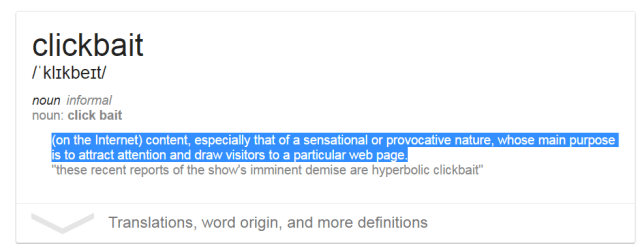
So that’s typical of lazy journalism for you, seeking a fear and doom headline to attract clicks and attention.

Before I continue with the above ‘bad news’ stuff, I’d just like to confirm that Claires Court students have had an excellent year, beating all sorts of previous high tide marks in specific subjects, and more generally, doing very well thank you kindly.

We are a school that values the talents in all of its children and our 108 Year 11 students cover the full ability spectrum. For 90% to gain 5 or more GCSEs indicates outstanding outcomes for the cohort, reflecting the hard work put in by our students, teachers, and it must be said families, over the past 2 years. Elsewhere will see overall % pass rates stall as GCSEs revert to terminal examinations only, yet I am delighted that so many top grades  have been achieved across our really broad and innovative curriculum offer. We don’t narrow choices and the breadth of these successes means our students are able to proceed into Sixth Form studies in a myriad of subject styles and mix.  Boys get a really bad press at this time of the year, given their failings nationally to demonstrate high levels of  academic achievement, but when 93% gain 5 or more GCSEs, a school record performance in the last 10 years, that does need mentioning! Boys and girls will be rightly celebrating when they open their results this morning, and actually if their results are not quite as high as they would like, after 5 years in a good school, maybe this is indicating that a different subject mix of approach is needed for that next set of steps. 

The Independent Schools Council publish our results next week, and good though our results are, ISC vet our work for quality assurance purposes. You’ll already know the DfE do not accept that at least half of the GCSE taken by Independent Schools are to be included in their data trawl, and schools such as Eton are recorded as having Zero% gaining 5 or more GCSEs. This winter when DfE reports on school results, it is to ignore our sector completely, Praise the Lord, so the ISC published data becomes even more important as a source of information on school performance.

Here’s Laura Mcinerney at the close of her article: “As schools are judged by a series of measures, rather than just the 5A*-C grade pass rate, and as those results get harder to work out (which they will in upcoming years due to more changes) it means the focus of results day will go back to where it should be. The hard work of pupils and their teachers. All we will be able to tell is that individuals got the grades they needed for the next step, or they didn’t. And concentration can go on ensuring everyone is going to an appropriate course, job, college, university, whatever, that will best help them learn the next things they need to learn”.

Now back to that ‘lazy journalism’. The decline in performance does not mean that pupils are doing worse or that standards have risen. Actually no one really knows what this set of one-off figures means for sure but in essence the big changes are:

From this summer, State schools are being measured for their attainment and progress measures against a narrow basket of subjects, and Science, History or Geography and a Language are all in there. BTEC is no longer permissible at this level, so there has been a massive increase on 22.5% entry in Science GCSEs for example. Likewise, Geography, History and Languages are really demanding disciplines, and if candidates are switched in to them from non-exam based courses because of the new system, then expect to see an apparent drop in pass rates, because more weaker students have been returned to these core disciplines. So it is not a real decline, just indicative of the narrowing of the curriculum in state schools so that they meet the performance targets set for them.

As ever, we now have the target becoming more important than the process, which is not an approach that I welcome for our country’s state schools, and the headlines that results are getting worse is a crap welcome to the day for those opening their GCSE envelopes today.

And finally for the record:

CCresults2016


Posted in Possibly related posts | Leave a comment