Over recent years, the attention given by governments and the media to the outcomes from the international PISA assessments has become pretty intense. These assessments take place every three years, and their focus on the skills of 15 year olds covers Maths, Science and Reading, the latter being the focus for 2018. You can read more here – https://fullfact.org/education/what-you-dont-find-out-about-englands-educational-performance-pisa-league-table/
The English national focus has been on the achievements of both 10/11 and 15/16 year olds (Years 6 and 11), looking at the examination outcomes for English and Maths, and for Year 11 also to include 6 other subjects, one of which could be Literature, the others focussed on 2 sciences, 1/2 humanities, an MFL and one other (known as the EBACC). For state schools completing at the end of Year 6, the SATS outcomes for pupils dominate how the schools themselves are viewed by their inspectorate, Ofsted. For state secondary pupils, getting the mix of subjects right has also become part of the judgment measure, to ensure the highest score in these 8 subjects to measure progress against the EBACC measure, more of that here.
Over the past 3 years, it’s become very apparent that performance in this explicit DfE measures has become an obsession for most state schools, because they have no opt out and they are judged against their performance as a school by the outcomes in these subjects. The national and educational media, coupled with Institutes of Education across the country are reporting a groundswell of dissatisfaction of the consequences of this relentless focus to drive up standards so our state school pupils perform better in comparison with other countries. Some schools are disapplying their weakest pupils as quickly as possible to get them ‘off roll’, others are shutting down the teaching of all other subjects other than English and Maths in the final year of primary school, whilst at secondary school, subjects as diverse as Art, Drama, Music, RS, Technology and Sport are seeing numbers of pupils and teachers spiralling downwards as the subjects don’t carry the same value for the educational league table, if at all.
From pedagogical, philosophical and social mobility stand-points, this is an utter disaster for the children, because it is not permitting them to build domain expertise in sufficient areas that interest them at an appropriate age. Junior children are no longer able to draw accurately, and fear the process because it does not come naturally. Secondary children see creative and athletic disciplines as something they might do at the weekend, competing of course with all the other engagements that adolescents have to content with at the same time. Obviously, if the children are fortunate to go to a performing arts school or specialist sport or technology college, this is not the case, but the practical facts of the matter are that the focus has changed from specialisms to the core, and schools are choosing the same for all of their pupils, despite its obvious lack of merit for their broader educational development.
I have no problem if travellers wish to go to PISA, check out the leaning tower, look around the attached cathedral, get their photo taken holding it up or pushing it down, and sending that image as a postcard back home to prove they got there, bought the T-shirt, dropped the feather and ball from the top of the tower to explore gravity and then come back home. But that focussed journey is not the same as spending rather more time in ITALY, a country of great and diverse representations of culture from Ancient Rome to the present day. Their art, technology, music, drama food and philosophical thinking bursts upon the visitor and engages us in so many more ways, and this takes time, effort and commitment to get the full picture. In the end, no doubt the tour operators will rub their hands with glee if they can reduce costs by increasing volume to the one city, grow the communication channels by increasing plane, hotel and bus size, with the expertise of the support team reduced to knowing the 10 pages from the guide book and testing same via extensive essay writing and number crunching around the limited palate of knowledge, skills and understanding required to visit PISA and return.
But if we want to develop the kind, caring, supportive, skillful and successful adults to lead the future of our country, they need to be permitted to be more than just tourists to PISA, pursuing a narrow course of study judged primarily by a tick box culture against core standards. Reductionism of this kind reduces quality, not grows it; read this article published today on the future of Design Technology to see just how challenging the matter has become in a subject which really has to be at the heart of what every school offers its children from 11-14 – https://www.teachertoolkit.co.uk/2018/01/13/saving-design-technology/
We don’t get it all right in the independent sector by any means. For example in my school, I need to be able to extend the girls programme to bring resistant materials and robotics into the mix, and the boys to add food and textiles. But at least the design experience and skill applications are covered by all pupils in a sustained way for 3 years, and the potential designer/builder has been inspired by age 14. The whole educational country, be that ITALY, ENGLAND or wherever, needs its landscape explored. Sure, there are fun things to find in PISA, but that’s not enough to nourish and inspire our children. It’s disappointing that our sector is receiving even greater blame for supporting privilege and elitism, when in our own minds we are doing quite the reverse. Certainly, the development of the whole child and our focus on growing great young adults, with excellent temperaments and a willingness to strive, is of greater importance than exam results. Conservative minister and minister of health in the House of Lords, James O’Shaughnessy, who spent 4 years at Claires Court as a child spoke with great passion about the development of character education in schools being of paramount importance when he visited us in September last year. I ask the question – what kind of character to you build in a PISA tourist as opposed to a traveller who spends the time and trouble across ITALY?
In short, let’s not encourage educational tourism only to a narrow core band where success is measured through the passing of an exam. None of us make best friends with people because of their grades, but because they have a much broader knowledge and understanding of who they are and how they fit, and the skills to make their lives all come out well, wherever they find themselves placed as adults in this world. I leave you with the writings of Plato, who was a philosopher in Classical Greece and the founder of the Academy in Athens, the first institution of higher learning in the Western world.
It’s that time of year when the Season in which we are expected to be jolly has passed and the school bells are soon to ring in the New Year. Here’s yours truly on Christmas Jumper day on end-of-term Friday, standing by the tree at Senior Boys, showing some of the hampers soon to off into our local community via the Lions, Foodshare and the Salvation Army. I had the photo taken because I had been invited to write a Fly-on-the-wall end of term item for Schools Week, one of the professional journals that report on Education matters, and they wanted a photo to go with the article. You can read that here: https://goo.gl/duUFz2. It struck me that in line with the 9 lessons and carols, Tim Minchin’s 9 life lessons, it was time I added to the set of 9 with my own 9 lessons for learning, gathered over the 42 years I have been a teacher. Where possible, a bit like the advent calendar, I have tried to illustrate a little more with a link to something more luscious.
If you can do but one thing to help others learn, be kind, both to them and yourself.
If you are planning to teach, know your stuff.
If you are planning to learn, sleep well, and in between try to ‘know’ stuff by learning it.
Whether you are planning to teach or planning to learn, do so with a passion.
As teachers and learners, keep your eyes on the ‘near horizon’ so you know where you are going, but keep them open for other possibilities along the way.
Understand your intelligence arise from 3 parts – a. your cognitive efficiency (brain-power, mainly down to short-term memory) b. crystallised intelligence (stuff you know) and c. fluid intelligence (how you see patterns, make links across areas and use logic), and in knowing what you use best, work with that whilst seeking to improve the other bits.
Lead a rich and diverse life at whatever your age; interleaving and spacing what you do, and see and listen to with lots of other activities, which helps ‘grow’ your fluid intelligence.
Get lucky by practicing lots, by learning stuff by rote and putting that learning under pressure by testing yourself.
Keep striving. Achievements open doors; sometimes those achievements are paper-based, such as GCSE and A level grades and get you a place on a training programme or at University, others are practical, such as passing your driving test or an ‘open mike’ night audition, which give you new opportunities. Never give up, because actually none of us ever do…
So, please do have a great Learning Year in 2018, bearing in mind that that we are forever forgetting. Though that is another post.
“The fascination of what’s difficult
Has dried the sap out of my veins, and rent
Spontaneous joy and natural content
Out of my heart. There’s something ails our colt
That must, as if it had not holy blood
Nor on Olympus leaped from cloud to cloud,
Shiver under the lash, strain, sweat and jolt
As though it dragged road metal. My curse on plays
That have to be set up in fifty ways,
On the day’s war with every knave and dolt,
Theatre business, management of men.
I swear before the dawn comes round again
I’ll find the stable and pull out the bolt.”
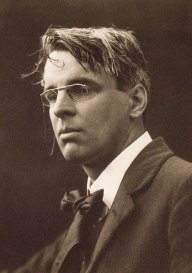
Yeats wrote this poem in the early part of the last century, at a time when his fame as a poet was world wide, but his ambition was to become renowned as a playwright; his joy of writing for the stage was clearly tempered by the experience of working with those that ran theatres and bankrolled their productions. In short, he hoped to break through the crippling need for perfectionism in the creation of his poetry, whilst maintaining both its complexity and ambiguity. As the final sentence suggests, Yeats ‘ere longed to release his creative self to write unburdened of the rules of the game.
2018 is set to be a milestone year for my work, one in which we seek to win permission to build a new campus for our school. The purchase of the adjacent field by our Junior Boys school at Ridgeway 4 years ago reunited much of the package of land originally put together by a Mr Louis Gilau, a South African as it turns out, his own trade being that of a ‘Diamond merchant’. During my father’s time as headteacher at Ridgeway, he would regularly suggest to new pupils and parents that they should keep their eyes peeled for any ‘lost’ jewels left behind by Mr Gillow; sadly none have turned up, so the investment we need for the new buildings will have to come from a mix of capital obtained from the sale of our other 2 sites, if possible from the building of houses on part of the estate, and from a commercial loan.
There is no doubt that that our school needs to be released from the constraints it currently faces, spread across Maidenhead and increasingly cramped by the issues of space and unequal distribution of facilities across the 3 sites. I remember my first contact with RBWM planning officers in 1982, when they first expressed the opinion that the senior boys school site was overdeveloped for its purpose. Over subsequent 35 years, our school has grown as the town has grown, we’ve gained new accommodation and added girls into the mix. With both sets of residents in the Ray Mill and College areas keen to keep the roads uncluttered with parking, parking restrictions grow like topsy, yet we can’t bring all of our traffic onto site without reducing still further the space in which education can happen.
There remains a pressing need to increase the efficiency of our school by bringing our separate site operations together; maintaining the separation of genders for the middle part of their educational development will remain a key construct, but increasing the opportunities for social development across the genders is a growing imperative, one not just for this school but for the wider community. It’s fascinating to see the success our partnership sports organisations enjoy doing just the same, be that in Athletics, Cricket, Hockey, Rowing, Rugby, Sailing or Tennis. There is an intensity of engagement required to maximise performance, but at the same time, a need to ensure rest and recuperation within the wider community. I’ve noticed this most recently with our elite performing Tennis players, who work jointly with us and Delgado and Lee’s Pro Tennis Academy, Living Tennis, at Bisham Abbey.
Developing Tennis players need upwards of 20 hours a week of ‘Court’ time (20 hours on court as well as at school), but clearly other skills and talents need to be developed alongside, and not just those within a narrow academic programme. Rubbing along in a much bigger school assists those players to accept failure is a normal part of learning, permits them socialise with others, above all helping build a sense of mutual respect despite differences.
It has often been said that Education is the most complex of all human activities, given that all the moving parts are living organisms, capable of their own independent thoughts and with their own idiosyncratic ambitions. It’s clear that such a description can be given to the methodology that underpins making planning application as well, because all those component parts consist of human entities, with their own hopes and ambitions as well. I have every hope that this author will not feel like the ‘colt’ in Yeats’ poem, forced to ‘shiver under the lash, strain, sweat and jolt’ as if pulling the broken stone required for road-making. Perhaps in 12 months time, I will be able to report on the outcomes from the process I outline above.
In the meantime, I bid you (perhaps as W.B Yeats would) “Sláinte mhaith” for 2018, and in the light of the other many serious negotiations going on in England over the next 12 months, mix the metaphor with this very Royal message!
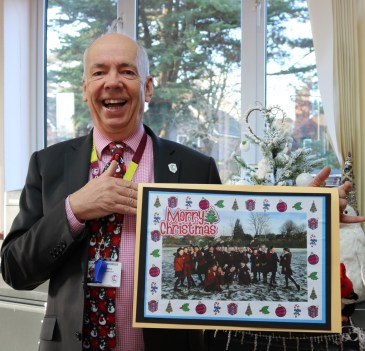
Imagine my surprise when the girls of Year 5 presented via Santa the postman the Christmas card you see me holding here in the picture. “To Mr Wilding” it said. I have never, ever (forgive a failing mind, by the way) ever been presented with a card like this. As I opened it up, the hairs on the back of my neck bristled, as every child in the class had written a personal message wishing Mr Wilding a Happy Christmas or similar. Mrs Helen Phipps, our amazing school secretary at College followed up helpfully: “I did ask the girls for which Mr Wilding was the card intended, but they could not answer me”. Ouch. So whilst I am holding the said card in the picture, may I express on behalf of both Mr Wildings how grateful we are for these very kind thoughts, and my brother Hugh, in whose care the card now resides, also sends his thanks.
Throughout the term, the headteachers and the head of nursery lead their respective weekly bulletins with their words of the week. As a general observation, the higher up the school, the less written; all aim to give a particular insight into the age and stage of the pupils for whom they care, and so it can be no surprise that they tailor for their specific audience. Whether their message hits their expected audience is as much of a guess as mine was above. We hope so, but in the end whin knows?
At the same time, many of you are kind enough to click on the Academic Principal’s blog button, and catch up on my wider musings, or switch over to Facebook to view our offerings there, or perhaps jump to @clairescourt and our other Twitter channels to read what the news looks like in short form, or perhaps bounce back to the school’s main website to see the regular and rapidly moving newsfeed on your children’s achievements. Often we appear to have ‘too much’ happening, so you need to be selective in what and where you browse.
That’s where the Court Report comes in, our annual statement of achievements now in its third year. Every family should receive a hard copy of the Court Report with their eldest son or daughter when they come home from school this Friday, together with other end of term glories, such as grade cards, reports and other notices. The Court Report captures almost all of our measurables in easy to read format; you may need to take it gently because there is a lot to digest and I do want you to avoid ‘data indigestion’.
That’s true of us on the other two sides, be we teachers or parents. Everyone of my staff faces information overload, and our pupils need to be very careful that they don’t swap from the real world into the ‘virtual’ world; both can readily lose sight of the important things that need to be done come Monday. Indeed parents, pupils and staff went away at half-term, with a promise to turn off their devices and every intention to digitally detox. I have no doubt that Christmas will be made all the more enjoyable, on the one hand by being able to catch up with all your family and friends wherever they are in the world via Skype, and on the other by switching off the media stream and chilling out with all those near and dear to you at home in person. As a by-line, it’s interesting to note that France is to ban all mobile phones from schools in their entirety from September 2018.
With this in mind, I draw to your attention the important information of a police focus here in the UK on social media and child exploitation. We would like to take this opportunity to remind you that Thames Valley Police continue to investigate explicit videos that are distributed via social media, eg Snapchat, Instagram. If any such video is received by our children or indeed adults, the police must be informed and it must be deleted; if it is shown or passed on it is a criminal offence. Further advice for both children and parents about how to stay safe online is available on the National Crime Agency’s Child Exploitation and Online Protection (CEOP) command website: https://www.ceop.police.uk/safety-centre/ If your child or a child you know has been affected by such a video they are encouraged to speak to parents / teachers / trusted adult /contact ChildLine on 0800 1111 for further support.
One of our amazing school leaders, Andy Giles who runs the Sixth Form, is choosing to lighten his load more than somewhat, by stepping down into retirement at the end of August. His deputy Stephanie Rogers is rising to take charge in his place next September, and further appointments to support this change will be announced in the New Year. We have already announced other leadership developments, with Justin Spanswick joining me to work more corporately and Dean Richards joining us from Hampton Prep School in his stead. Such activity is multiplied manyfold by the wide and diverse nature of the staff professional development undertaken here. With 400 staff, it’s a tall order for us to find the time and place for it all, so almost inevitably we now have substantial amounts of CPD delivered on-line and remotely.
January 2018 heralds other developments for Claires Court, as our new first aid training centre, led by Jane Webster, School Nurse at Junior Boys, builds capacity to cover all of our many First Aid, Sports Aid, even Mental First Aid needs. Our teacher training escalates apace, and familiar faces will be seen in new roles as knowledge, skills and understanding are built further. We will also be in touch for your support behind our longer term plans for our new campus, due for submission shortly and for determination in the first half of 2018.
I close my end of term report with the words written by former pupil, Dr Paul Zeun who joined Claires Court when aged 11 and left Year 13 in 2005 bound for medical school. He wrote to me on Monday, the day it was announced that “the defect that causes the neurodegenerative disease Huntington’s has been corrected in patients for the first time” by a research team at UCL. Paul joined the team in April this year, after 7 years of work culminating as a neurology registrar in Southampton. “Today is a hugely exciting day in our department as for the first time, this drug has been able to reduce the amount of the faulty protein (mutant huntingtin protein) that is known to be the cause of the disease and it has been shown to have been safe so far. This paves way for a larger study that based on the above, has significant promise for being the first drug to effectively treat Huntington’s disease and slow/stop progression. It is an absolute delight and privilege to be a small part in such a brilliant research group at an incredibly exciting time for HD research”. Paul concluded “I wanted to email you because it reminds me of how fortunate I am that I was afforded such a fantastic start in life at Claires Court and how grateful I am that you and all my teachers gave me the skills and opportunities I needed to have such a rewarding and fulfilling career to date.”
Such messages of thanks from former pupils are among the many things that keep me and so many of my colleagues here keen and motivated to come to work each day. Even more inspirational is the extraordinary support today’s parents and pupils have given us during this last term. As the end of 2017 beckons, let’s remember our good fortune to have been able to share so much – we are indeed fortunate and my brother and I thank our lucky stars each day that we lead this school at a time of such opportunity.
In case my dear readers though that besuited Principals are the only images to be seen, other pictures of my good self at Christmas time are available.
Every user of social media will have come across the many and varied video streams that set out to educate and inspire each day. Here’s one from Goalcast, covering musician/comedian Tim Minchin’s acceptance speech of an Honorary doctorate from the University of Western Australia, where he had previously studied for his Arts degree.
If you have time, do watch the 18 minutes or so that Dr Tim gives the WA audience, because he hits multiple nails on the head really well. If there is a specific section that strikes me best, it sits 3:16 in when he has this to say about how to achieve well:
“I advocate passionate, dedication to the pursuit of short-term goals. Be micro-ambitious. Put your head down and work with pride on whatever is in front of you. You never know where you might end up. Just be aware the next worthy pursuit will probably appear in your periphery, which is why you should be careful of long-term dreams. If you focus too far in front of you you won’t see the shiny thing out the corner of your eye. “
All the world’s leading advocates of ‘what works best’ are clear about the need to become really expert in the things you are passionate about. If you don’t have a passion, still get your head down and learn stuff, because it is in the acquisition of knowledge, skills and understanding (KSU) about a person or a subject that a passion can be discovered, be that of course love for the person or the field of enquiry.
The header for this week’s blog comes from the Walltowall people who run the Child Genius TV series for Channel 4 and they are looking for gifted children aged 8-12 (and their families) to take part. Casting Assistant Producer Anna Greenaway wrote to me today to inform me of the above, and added in her email: “Currently I am seeking applications for the 2018 series and would love to hear from the parents of gifted and talented children who may be interested. Additionally one of the last weekends in January we will be holding a Mensa backed Open Day and are keen to speak to parents who might be interested in registering their child/children for this whole day event. This is an opportunity for 8-12 year olds to get involved in Mensa Challenges, quick fire quizzes, Strategic puzzles being just a few examples, but also to meet with other families”.
Let’s be fair, dear reader, we are not the only institution with amazing children herein. No doubt Anna’s written to every school in the country to widen her trawl, but these are busy times and most of the info will end up in the digital dustbin. So those of you out there, please do think about having a go – if you don’t, you’ll never know whether you could have made the grade. I remember when the cox, Gary Herbert (Gold medal with the Searle brothers at the Barcelona Olympics in 1992) spoke at our school speech day shortly after that event. He made it clear “If not you, who? If not now, when!” That’s one great life lesson I learned from a man who learned it the most difficult way possible, training for 4 years to become an Olympian. Anna concludes her email as follows: “Please be assured that there is no obligation to take part in the programme but for anyone potentially interested in hearing more about it can call me direct on 0203 301 8480. With thanks and kindest regards, Anna.”
Tim Minchin also sets out in this video to give some life lessons, 9 of course to echo of course the nine lessons of carols of the traditional Christmas service, of which we are holding at least 3 school versions next Friday morning. My teaser for next week’s blog is it’s title “Mr Wilding’s 9 lessons for learning”, based on the clearest evidence we now have on how learning happens best. In the meantime, let me leave you with Minchin’s closing sentiments from his address, which though now at least 4 year’s old feel as fresh now as they must have sounded then:
“And in my opinion, until I change it, life is best filled by learning as much as you can about as much as you can. Taking pride in whatever you’re doing. Having compassion, sharing ideas, running, being enthusiastic and then there’s love and travel and wine and sex and art and kids and giving and mountain climbing, but you know all that stuff already. It’s an incredibly exciting thing this one meaningless life of yours. Good luck and thank you for indulging me.”
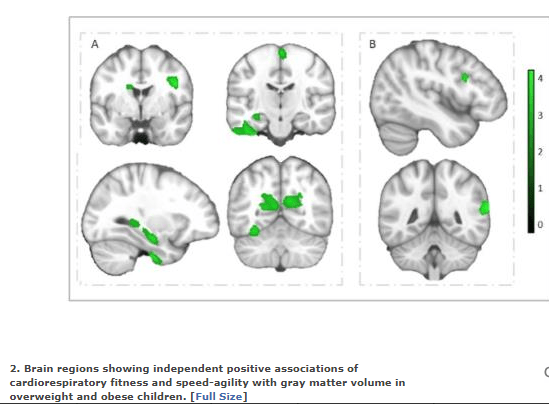
I am one of those people who enjoy setting themselves new challenges and acquire a different understanding of the world in which we live. In recent years, I have taken on an allotment, met fellow market gardeners, enjoyed the chatter around a thermos of coffee and definitely learned to lean on my shovel. Digging is one of the most physical activities I have ever done, and I was delighted to read this morning that such aerobic activity has every chance of making me more intelligent. Actually, the research relates not to people of my age, but to children, and that’s even more exciting. I quote from the press release (21 November 2017) from the Universidad de Granada:
“Researchers from the University of Granada (UGR) have proven, for the first time in history, that physical fitness in children may affect their brain structure, which in turn may have an influence on their academic performance.
More specifically, the researchers have confirmed that physical fitness in children (especially aerobic capacity and motor ability) is associated with a greater volume of grey matter in several cortical and subcortical brain regions.
In particular, aerobic capacity has been associated with greater grey matter volume in frontal regions (premotor cortex and supplementary motor cortex), subcortical regions (hippocampus and caudate nucleus), temporal regions (inferior temporal gyrus and parahippocampal gyrus) and the calcarine cortex. All of those regions are important for the executive function as well as for learning, motor and visual processes.”
According to the main author of the paper, Irene Esteban-Cornejo, postdoctoral researcher at the University of Granada, grey matter volume in the cortical and subcortical regions influenced by physical fitness improves in turn the children’s academic performance. She writes “Physical fitness is a factor that can be modified through physical exercise, and combining exercises that improve the aerobic capacity and the motor ability would be an effective approach to stimulate brain development and academic performance in overweight/obese children”.
“This scientific paper means an important contribution to human knowledge which should be taken into account by educational and public health institutions”.
“We appeal both to politicians, who make educational laws that are increasingly more focused on instrumental subjects, and to teachers, who are the final link in the chain and teach Physical Education day after day. School is the only entity that gathers every children in a mandatory way for a period of at least 10 years, and as such, it’s the ideal context for applying such recommendations”, conclude the researchers.
Across on my Facebook page, there has been lively debate as to whether UK Independent Schools persist in maintaining privilege per se, and a parallel discussion on the important purpose our existence as centres of excellence to provide opportunities for children that otherwise would not be open to them. It’s in the opportunities for and provision of physical education that our specific independent school has always had as a key focus, because the positive link between physical performance and intellectual development has always been evident for most children. There is a particular focus in the research that’s easy to miss, and that’s the even stronger correlation between raising aerobic activity and reducing obesity.
How does this tie into setting a healthier mind-set then? The key features of progressing positive mental well-being is to know what things you can’t change, what things you can, and setting out to do the latter. Here’s Susanna Halonen, the Happyologist on the matter – Susanna’s full article can be read following the link here:
“Let’s start by looking at what research has said about worrying in general:
About 85% of the things we worry about never happen.
If what we worry about does happen, 80% of us said we handled the outcome better than we thought we would.
People who let go of worries instead of stressing over them are much healthier than those who don’t.
So how do you let go of this worrying that sometimes drives you crazy – especially when you’re worrying about things you have no control over? Try the six strategies below to stop worrying once and for all – there’ll be a time and a place for each of them.
1. Accept uncertainty & learn to thrive in it.
2. Call a friend to talk about you worry.
3. Practice mindfulness.
4. Distract yourself with another activity.
5. Exercise!
6. Have a designated worry time and worry notebook.”
What’s interesting about the above is that the act of being physically active, whether that is running, rowing, riding a bike or digging an allotment takes time, and at least 20 minutes or so. In that time, you certainly commence 4 of the 6 activities above, and worries diminish – and often you carry out that exercise with a friend and do make mental notes in your to do list. I’ve written before that any activity worth doing needs to be undertaken for at least 20 minutes of focussed time, most specifically around reading because it’s only once you are deep into a book that the language being taken deep down into your consciousness starts reshaping and make new connections with other learned concepts and understandings.
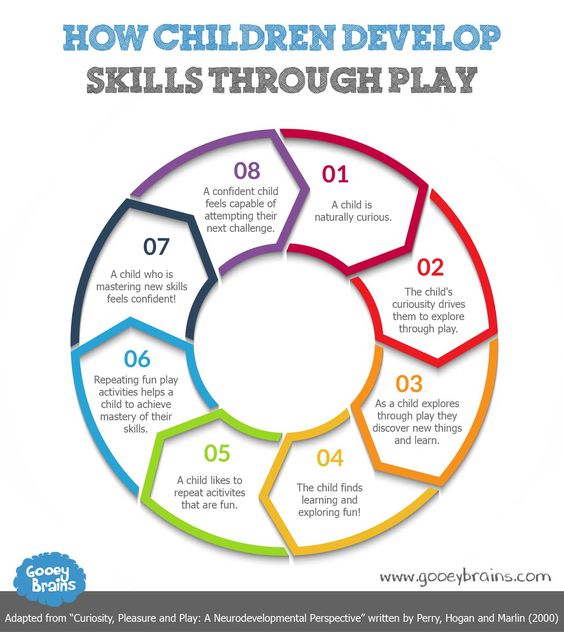
To conclude, here’s a circular graphic of how the best early years education looks, and see how the science above clearly maps well onto the activities shown in a young child’s life.
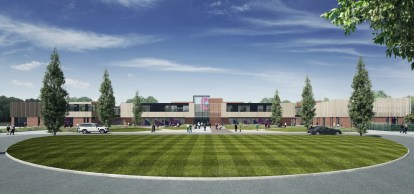
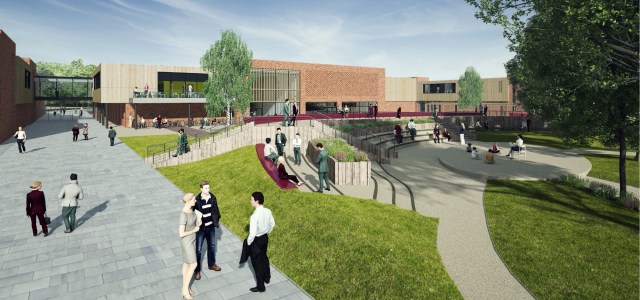
During the fortnight of half term, my brother Hugh and I have reached agreement with Berkeley Homes over the terms by which Berkeley will partner the School in realising our vision for a new, single campus alongside our Junior Boys site at Ridgeway. Our aspiration for this was first announced some time ago but planning details have taken time to resolve. Our intention now is to move with all speed towards an early submission of plans to the local authority and we will share the timeline for this with you shortly. The new campus will remove many of the shortcomings inherent from our split sites as well as providing a purpose-built environment in which we can deliver the high quality education that you expect.
We published our info about our project 2 years ago and it’s great to be able to announce we are now pressing on. See http://www.clairescourt.com/new-campus-design for more information. The timeline for the project shows the process as follows:
Month
Action
Autumn 2017
Finalise planning application and submission
Spring 2018
Planning decision
Reserved matters applications for housing sites and recreation areas
Late 2018
Commence construction at Cannon Lane
August 2020
College Avenue and Ray Mill Road East sites vacated
September 2020
New School to open
To facilitate this exciting stage in the School’s development, my brother and I wish to announce the appointment of Justin Spanswick, present Head of Junior Boys, as Executive Headteacher from September 2018. Supporting me in my role, Justin will be working across all sites alongside the current headteachers. His role will encompass strategic and compliance matters, including pupil recruitment and scholarships, new campus implications and parental engagement, overview of operational management and designated safeguarding lead. The organisational chart of what these changes is shown below.
In turn we are now actively seeking to appoint a new Head to take on the day to day responsibility of the leadership and management of Junior Boys, with effect from September 2018. As part of his role, Justin’s initial focus will be to support the new Head, facilitating a smooth transition into post and ensuring our School values, ethos and learning philosophy continue to be at the forefront of his successor’s vision for the pupils, parents and staff of Junior Boys. Valuable support will also come from our other collegiate Headteachers, Maggie Heywood, John Rayer and Leanne Barlow, and of course the faculty as a whole.
These appointments will release valuable extra time specifically in my working week as I now join my brother to support our ambitious building proposals through to their successful completion, as well as lead the equally careful planning process needed to bring 800 pupils, their teachers and support staff across Maidenhead to the new campus. Bearing in mind my title, Academic Principal, all the headteachers, wherever they are based, will continue to report on their educational matters to me; likewise for Administrative matters they will continue to report to Hugh.
At this important time in the life of our School, my brother and I would like to thank you for your valued support as we strive to provide your family with the best learning environment and education possible. We look forward to making further announcements later this term.
With each passing release of both government data with commentary from the wider expert community, there seems to be depressing evidence that ‘last year’s innovation’ implementations have become this year’s policy ‘disasters’. No more so is this true than in Education, and very much across the western, English speaking world, not just the local estate managed by the current Conservative administration.
Across Australia and the United States, in Scotland as well as England, in vocational as well as academic education, national centralised control systems have been implemented, particularly in terms of curriculum coverage and methods of testing, and the outcomes for learners it seems have declined, not improved.
Justin Spanswick, my colleague at Claires Court, is writing in more detail about the recent pronouncement by Her Majesty’s Chief Inspector of Schools, Children’s services and Skills, Amanda Spielman (otherwise known as the Head of Ofsted) who wrote yesterday (12 October) that “Schools in England are focusing on tests and exams, rather than giving pupils a good grounding in a wide range of subjects”. She also says a rounded education – or the lack of one – has consequences for social mobility, with less academic children being particularly hard-hit if schools drop subjects such as art to focus on core ones – BBC/news/education.
In Scotland, even worse criticism has developed about their curriculum and the outcomes for pupils. Known as the Curriculum for Excellence, CfE, it has been seeking (for 15 years since its initial design) to develop the 4 capacities it hopes to deliver for its children: “successful learners, confident individuals, responsible citizens and effective contributors”. The trouble is these outcome measures on their own are almost impossible to measure and unaligned with actually the process of learning in school. As one secondary school teacher has written a damning open letter to Nicola Sturgeon, warning that Scotland’s curriculum is “utterly failing the children in our care”.
One of the main criticisms of both England and Scotland’s systems is that they have been in constant turmoil since the last but one major curriculum change in 2000. Every year, ‘stuff’ is moved. These changes include the public exams system itself, linear to modular, terminal exams to coursework, then to controlled assessments, now back to linear. It has been school ownership and government structures, the arrival of ‘free’ schools and academies, the switching of responsibility for oversight between a heinz variety of masters, including Local Authorities, Multi-academy trusts, stand-alone colleges and looser federations. Here in England, Ofsted might have inspection rights over the success or otherwise of the school in meeting its educational purposes, but until recently no-one has had oversight of the financial and business management capabilities of the ‘owners’, so a new branch of government oversight, the offices of the ‘Regional Commissioners’ have had to be introduced to ensure there is someone actually ‘watching’ on behalf of the tax payer.
Each turn of the ‘change-wheel’ gives rise to further internal exhaustion of the key workers who actual provide the pedal power for education, leading to the inevitable problem of teacher recruitment not matching the numbers needed to meet population increase and teacher departures via retirement or resignation. The latest developments in Apprenticeships in the UK, the new financial levy on employers and the political priority it has become have been met with a colossal 60+% reduction in apprenticeship take-up because…’the salary offered is just so low!’
In undergraduate education, the recent introduction of the £9000 grant for students in England has already had to be adjusted, because the total cost of a 3 year degree for the most disadvantaged students is predicted to be over an eye watering £50,000. With the graduate population soon to crest over 50% of the population, the sense that there will be a graduate premium for earnings after in employment is vanishing like the polar icecap. In turn this means that the cost to the tax payer, (after the latest increase in threshold to £25,000 before the student loan starts to be paid back) is going to be greater than if we had retained the original system of tuition fees and student grants, deemed to be so much fairer to those at the bottom of the ‘pile’.
What’s remarkable about the successful western systems of education that are doing really well, such as in Finland and Canada, is the almost wholly absent nature of central, federal control. And that’s why they are successful, because when things change, they changes in a socially cohesive way for all schools, not in a dog v cat street fight of who can win ‘outstanding’ at the expense of ‘requires improvement’. The framework that both countries have adopted is built around attracting and supporting their teachers as leaders of their profession and of pedagogy. That lack of central control means no politician such as a Baker, Gove or Greening can dive in and ‘change’ the system for the better.
As the headline suggests, I am fortunate as an Independent School Education leader, I don’t have to follow the latest diktat of government. Stability and coherence are absolutely essential to the development of deep and rich curriculum-based provision. World research highlights that specialist teaching needs is more effective from the age of 7, so you need schemes of work to remain stable so serious domain knowledge about what works with 8 year olds, for example in geography, history, language and science education develops. It’s a truism that all independent schools are unique, and by that definition must be very different to each other. The reality in a global sense is that we believe in very similar core principles, the teacher being the expert in the classroom, children receiving a variety of stimuli from a variety of teachers from an early age, the extended day to broaden and deepen the opportunities for children and an expectation that the learning journey for each child is going to provide both a worthwhile daily experience, and opportunities to take risks and fail without being named and shamed for so-doing.
This month heralded the important announcement that there are now more ISC independent school children in schools abroad then there are foreigners attending ISC boarding schools in the UK. The growth of ISC independent school curriculum provision in countries across the globe can almost be described as an ‘explosion’, with Haileybury for example exporting its model into Kazakhstan. It also no surprise to see such schools making use of the IGCSE, a world version of England’s GCSE system, which has stayed remarkably stable for 30 years unlike its parent, which is changing once again over the current period of 3 years.
The trouble when tests change, is that, initially at least, the teachers and learners both have to focus on the test because that’s the way the output measure of the new subject curriculum is measured. Once the new model beds in, then trial, experience and professional judgement come to the fore once again, once the assessment tools have been checked and ratified as working. Learning scientists like to look at change of periods of 10 years or more, so they can assess whether real change over time has happened, or is it just a statistical effect brought about by population variation. Since the current government has initiated a whole scale change to England’s state exam system over a period of 5 years, we won’t get the first indicators of that the change is worthwhile until 2025 at the earliest. As I write, every assessment system from 5 to 18 is changing; that is simple madness.
Claires Court left the National Curriculum in 2006 and so for the past 11 years has been developing a careful implementation of a broad and deep curriculum now for 11 years. We have aligned many of our more recent developments with work of leading professional bodies across the globe, and currently we are working alongside the excellent work emerging from The Learning Scientists*, a group of cognitive scientists whose mission is to make the science of learning more accessible to us all, children, students, teachers, parents and other educators. In so doing they aim to:
Motivate students to study
Increase the use of effective study and teaching strategies that are backed by research
Decrease negative views of testing
At the end of any educative process, we need to have effective measures of the success of the ‘Output’. If the only thing we know about are the ‘Output’ requirements, then we have no choice but to teach to the test. What research-led education developments permit us to do is concentrate on more on the performance during the learning journey, to focus on the micro-steps that will lead to exceptional performance in the long term, but actually aren’t visible per se as output measures. This could be about engagement and striving, about writing skills and keyboard dexterity, knowledge about software, hardware or thoughtware.
I’ll close with the words of our new Chief Inspector of schools, Amanda Spielman, writing in the preface of a new Ofsted report looking at the state school curriculum. Ms Spielman says schools have a duty to develop each individual child and give them a broad education. “However, good examination results in and of themselves don’t always mean that the pupil received rich and full knowledge from the curriculum. In the worst cases, teaching to the test, rather than teaching the full curriculum, leaves a pupil with a hollowed-out and flimsy understanding. A rounded education – or the lack of one – has consequences for social mobility, with less academic children being particularly hard-hit if schools drop subjects such as art to focus on core ones. Restricted subject choice for low-attaining pupils disproportionately affects pupils from low-income backgrounds.
In short, everyone deserves a rich and diverse set of opportunities in schools, and if we want to raise the performance of all of our pupils, this government should focus its priorities still on ensuring that all schools are funded to provide such a curriculum, with high quality specialist teachers employed for the long term. Causing such austerity cutbacks across the public estate is going to cause the worst damage in communities that have the least to support their own outside of the classroom. Whether in Canada, Finland, Singapore, Japan or Shanghai, this is what the authorities understand – deep, quality provision for all reaps the best results.
*The latest blog from the Learning Scientists highlights the reasons why students need to be separated from their mobile phones – Cellphone presence and cognitive capacity.Please have a look and read, and you’ll see why I rate them as an advisory group for our school!
Just a short post this week, in part because it’s been manic here in the ‘engine room’ at Claires Court. Those that have studied the art/science of Leadership in Education* will know that the most successful approaches long term don’t start or end with a clear desk. I’ve been ‘architecting’ lots of things this month, a new induction day for Year 7 in partnership with the National Trust with a little help from some new friends at the Sea Cadets for example. Whilst I am delighted to have some existing excellent staff in new roles, and some promising new colleagues with diverse experiences to bring to the mix, there lots of support for them going on, less ‘fun’ induction at Cliveden, more ‘Baptisms of Fire’ joining the team here at Claires Court.
Yesterday, at the Senior Schools Speech Day, Tod Muil and Camilla Slais (head boy and girl) gave a truly remarkable movie presentation, with live voice overs, celebrating the last 12 months of activity here. Their film will appear here -> FILM <– though not actually with me at the time of writing. Perhaps even more impressively, Todd Lindley (also Year 13 and a school councillor) welcomed Lord James O’Shaughnessy to the event with a speech of good humour and impressive delivery, recalling for this former pupil of the school a number of weaknesses seen here back in the late ’80s, including perhaps blaming me for losing his Biology book rather than himself.
In their words, indeed in the actions of so many other of the leading school pupils in serving so well at the event, they make clear that Claires Court is about permitting their pupils to have a voice and to exercise that voice as effectively as they can.
Today, at Senior girls, I spotted some ‘speed dating’ going on, a process by which Year 7 were able to meet with and interview Year 11 on a 1:1 basis, asking who they were and what they did, getting to know them better. By the time I entered the hall, the event was well underway, and both sets of girls were completely engrossed. Year 11 had obviously regressed a bit, finding perhaps some memories they had on starting at Senior Girls; essentially, and really quite quickly, the girls were getting to know each other in a kind, supportive and friendly way.
Lord O’Shaughnessy summarised yesterday the approach to Character education schools ought to adopt, remembering quite well just how close our community was here back in his day, which was it must be said ‘BG’ (Before Girls). His words were simply – “The Americans summarise it as Be Kind, though I perhaps prefer the concept of Do Good“. Little did his Lordship know that he was shortly to be immersed in the work of the Sixth Form leadership, Andy Giles and Steph Rogers (Head and Deputy Head teachers). As Mr Giles made completely clear the Sixth Form motto takes this move to Character Education to a perfect conclusion: “Aim High, Be Yourself, Make a Difference”.
Really quite a lot of people have told me just how pleased they are that their children are going back to school, partly of course because the children need to, but also because parental resources have by now been worn pretty thin. I thought I would document what we have been doing at school this summer, particularly since A level results were published 3 weeks ago, to inform and clarify just how busy schools can be, even though apparently we have no children on site (it has been alleged – just ask Holiday Activities just how many attended each day – usually always over 100, sometimes 150!!!).
First things first. The Academic Principal takes 6 weeks of leave a year, plus bank holidays. As we are a 51 week of the year business, and every week has serious activity of one kind or another therein, I have long learned I can’t afford to be away from work and expect all things to go smoothly. Academic staff of course have closer to the number of weeks the children have on leave, but even they work for almost 3 more weeks than the children on site, because of the requirement we have to train, upskill, collaborate and frankly clear up the old stuff and renew so we can start the new year afresh. This summer, my leave dates were Fri 28 July to Friday 11 August inclusive, with 2 other days elsewhere. Hold on to that set of facts.
First and foremost, because of the sheer business of Claires Court, the school offices, Finance, HR, Maintenance and ground staff, Marketing and Registrar stay open throughout the Summer. Arrivals and departures slow it must be said, but we never have less than 80 staff on any one day or so at work during the summer break, and my colleagues have needs and plenty of questions that require supporting if not answering. Hats off to them all, our amazing all year round team that keep the business so buoyant. Jenny and I find it no sweat at all to stay-cation, not because of the above, but finding the time to enjoy our garden, appreciate the food from my allotment is so very restful. If this sounds like living the life of a semi-recluse, that’s correct. After 185 days of full-on work with children and adults, finding some me-time becomes pressing for us both.
Because of the Staff work days in the Summer, we have 27 weekdays in which to complete the chosen investment in ‘fabric’ repair work. Senior Boys has undergone a complete front of building face-lift, involving some pretty serious ‘acros’ under the main first floor gable over the front door. In College avenue, a huge volume of refurbishment activity within has taken place; Miss Barlow has a new office on Junior corridor for example, and a new conference room developed from Mr Bevis’ old office, but lots more besides – despite the fact that over 400 children have spent their summer within the Holiday activities we have run alongside. Holiday Activity staff, most notably Lynne Constantine and Anne Halpin, have developed a quite savage yet hollow laugh when colleagues ask them how their holiday’s been, because of course they haven’t had one.
The most remarkable build this year was reserved by Principals’ assistant turned project manager Claire Samber for Junior boys.
As building regulations change, so we must invest, and so we had planned the installation of a new fire escape come balcony for the Mezzanine on the Sports Hall, alongside a new brick replacement for the conservatory at the side of the Year 6 block. We lost 2 whole weeks to the hideous weather of later July, but today both were just about finished and almost available for use. Many other parts of JB have had a refresh as well, and all in all, Mrs Samber deserves great praise and cheer for pulling off one of the most remarkable transformations the school has enjoyed.
On 2 Thursdays in August, this year 17 and 24, A level and GCSE students, often with parents, come into school to collect their exam results. How those results turn from big data in the cloud into individual candidate summaries for every one is a dark art of course, but includes our Data Manager (DM) logging on at 12 midnight Tuesday to the central JCQ data hub, smashing the stuff for between 2-3 hours, using specialist software that will have been updated at least twice over the previous 2 days, and probably needs a further update from the MIS provider on the Wednesday morning to sort out the final wrinkles.
Obviously, I ‘swan-in’ to work on the Wednesday morning without a care in the world, and review the respective candidate sheets – circa 150 for A level and 100+ for GCSE. Thousands of marks are combined into hundreds of grades, and after a cursory glance (hem hem) spot that the sheets make no sense to me at all. Lots of gaps, holes and otherwise lumpy bits; I point out to DM that there seems to be some mistake. He politely suggests I might turn the sheet around, and look at the sheet with my glasses on. There is now too much data on the sheet, and what’s more, reporting examinations that ceased to exist 12 months ago. Genuine cursing and steam arises from behind the screen of the DM, and for A levels at least, a further hour of work is required ‘under the bonnet’ so to speak.
I kid you not about the alchemy required to turn data into paper info for candidates. Please bear in mind, we are now dealing with old courses and new courses 50+ in total, letters and numbers for some, little numbers and big numbers for others. It gets worse. All the numbers and letters that mean something to the students come down on the Tuesday night, but the factually accurate stuff about individual marks for questions and papers are not visible to the teaching staff until the Thursday. All the staff can’t know before Thursday, otherwise they might break confidence and tell the children what they got and break secrecy, yet all the subject leaders need to check though on both Wednesday and Thursday with a fine tooth comb, because stuff can and does go wrong. On both on days, wherever the Heads of Department are in the world, they log in on line to the specific exam boards for the subject concerned, check the results they can see, read the moderators’ report on their own marking where appropriate, read the Chief examiner’s report where there might be controversy, and throughout all this time keep their fingers crossed. And write to me to summarise what they can see and whether there are ‘issues’ of which to make me aware. As I live with the Head of History (we are married by the way), I have seen this year after year, and the load and demands on them just get more and more burdensome, because of course, the stakes seem to get higher and higher.
Thursday and Friday after both publication days are filled with cheers and tears alike. This year as in most years, the overall results are strong and for some, blooming amazing, for most candidates there is a feeling of the odd subject grade that got away, and for a few the odd is more like quite a few. Andy Giles, Steph Rogers and Kim Hall in the Sixth Form are superb, and their results handout (17 August) started just before 8 am for the Y13 on whose results University places depend. I am not very good at the mawkish hanging around, clapping hands and supporting jovially, because the sight of an old man looking excited rarely calms nerves in the young.
What seems to work for me and those students (and parents) that need a bit more help, is to be mobilised by the Head of Sixth Form when the problem arising looks one for the hard bucket. And though we get some rock hard ones, I am usually able to crack most of them I am given. Now if that sounds grandiose, it’s not meant to; with candidates being able to trade up as well as down, Andy Giles does have some really quite curious issues to solve, and sometimes we just need more eyes on the ‘prize’ so to speak then his.
GCSE results day is much less of a terminal celebration, more of a taking stock and checking whether GCSE grades match A level subject choices, whether A levels are in the correct combination, and whether a switch to alternative BTEC courses might make more sense. Obviously some students move on to other Sixth Forms, but we enjoy inward migration as well, providing a sense of renewal and refreshment for all. For the Sixth Form team, the work doesn’t end, and it’s quite noticeable just what a big burden they have – holiday has to be taken prior to A level results day, because it’s full on til today, everyday being a work day.
Those secondary staff lower down the responsibility ladder might escape much of the work, but most will still take an interest, turn up to see how their classes have performed, and celebrate/commiserate as appropriate. And of course of these, quite a few are beginning to prepare for the pre-season sports training to commence, Rugby and Sailing both being involved. For primary staff, as Richmal Crompton of Just William might write, they are permitted to be ‘gloriously idle’ throughout this period, because of course they have no results coming down their wires so to speak.
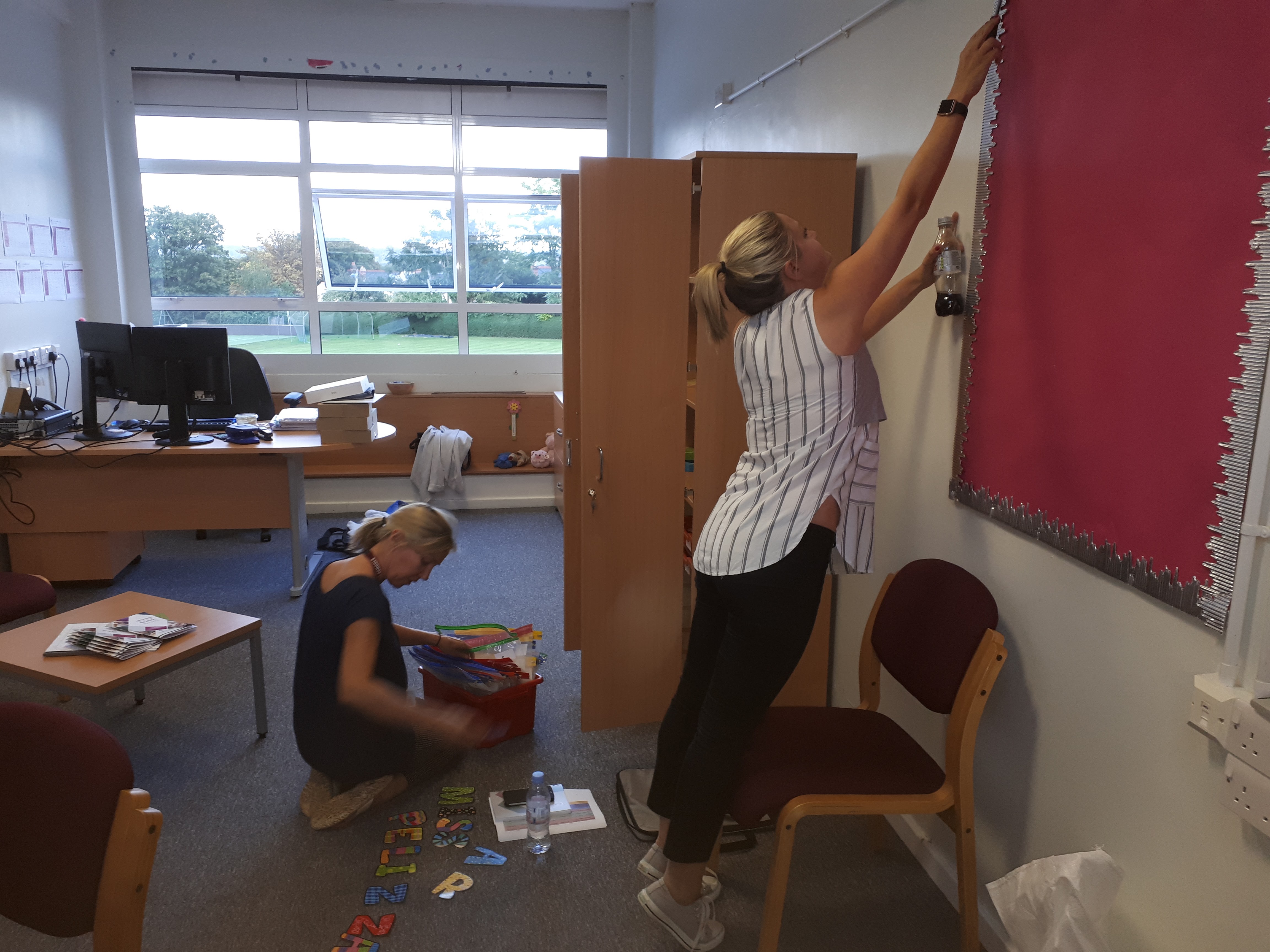
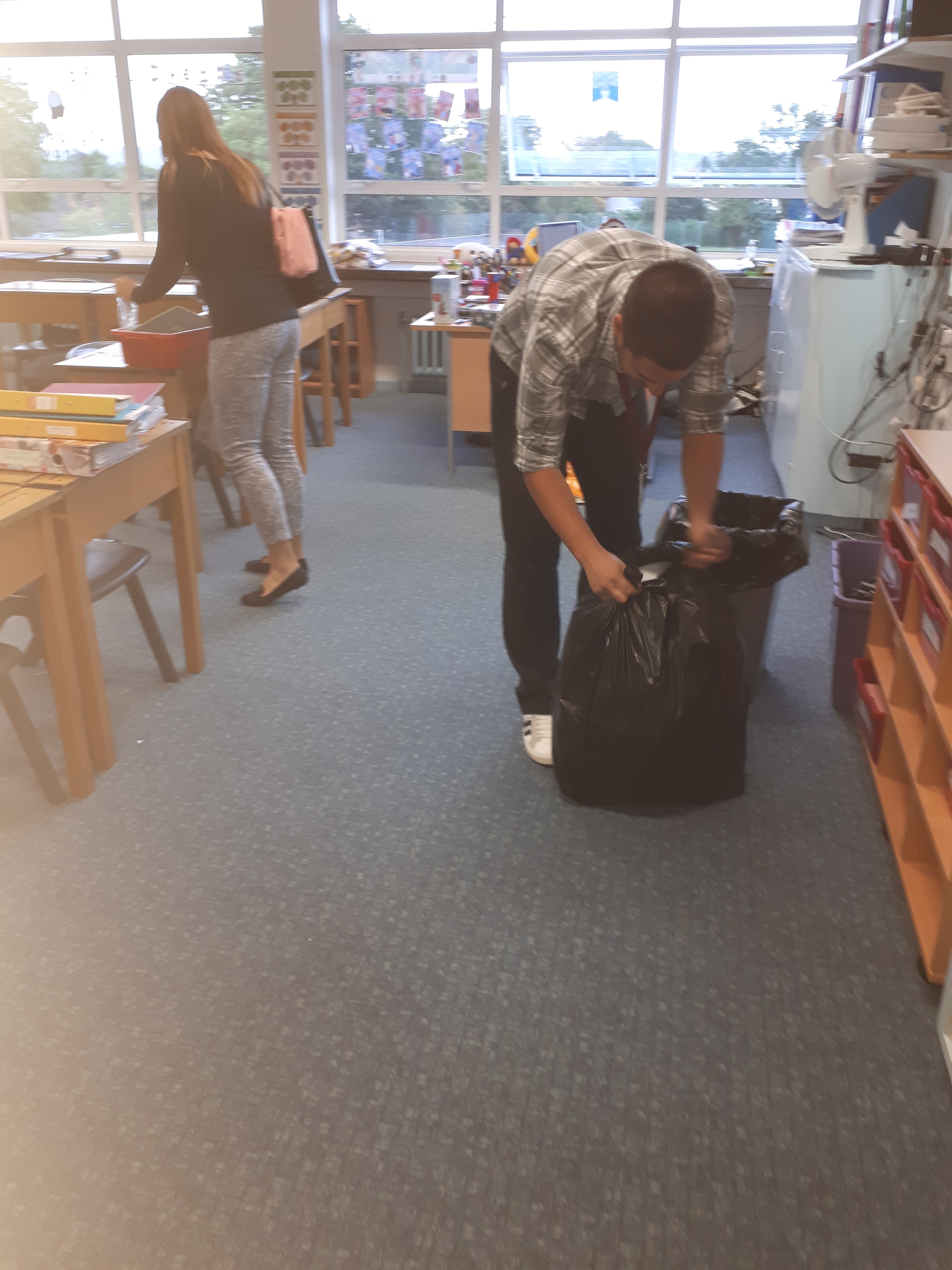
For primary school staff then, we reserve a very special kind of hell. Known as deep cleaning and renovation, every single scrap of their classroom has to be taken down, boxed up and put as far away as possible. This permits the cleaners (the same good people we employ in term time) to go around in a microscopic manner, wiping over with sterilising fluid so that all known germs known to man are killed. The builders and painters usually work counterintuitively to our programme, opening up classrooms sealed with ‘Deep cleaned’ signs and wreaking their own kind of havoc with white boards, fire sensors and such like. Our Domestic Bursar (DB) has his own very special kind of language to use on Discovery days such as these; he has developed a unique way of apologising to his troupe, recovering their torn-up clocking on cards, and as appropriate, even smiling at them.
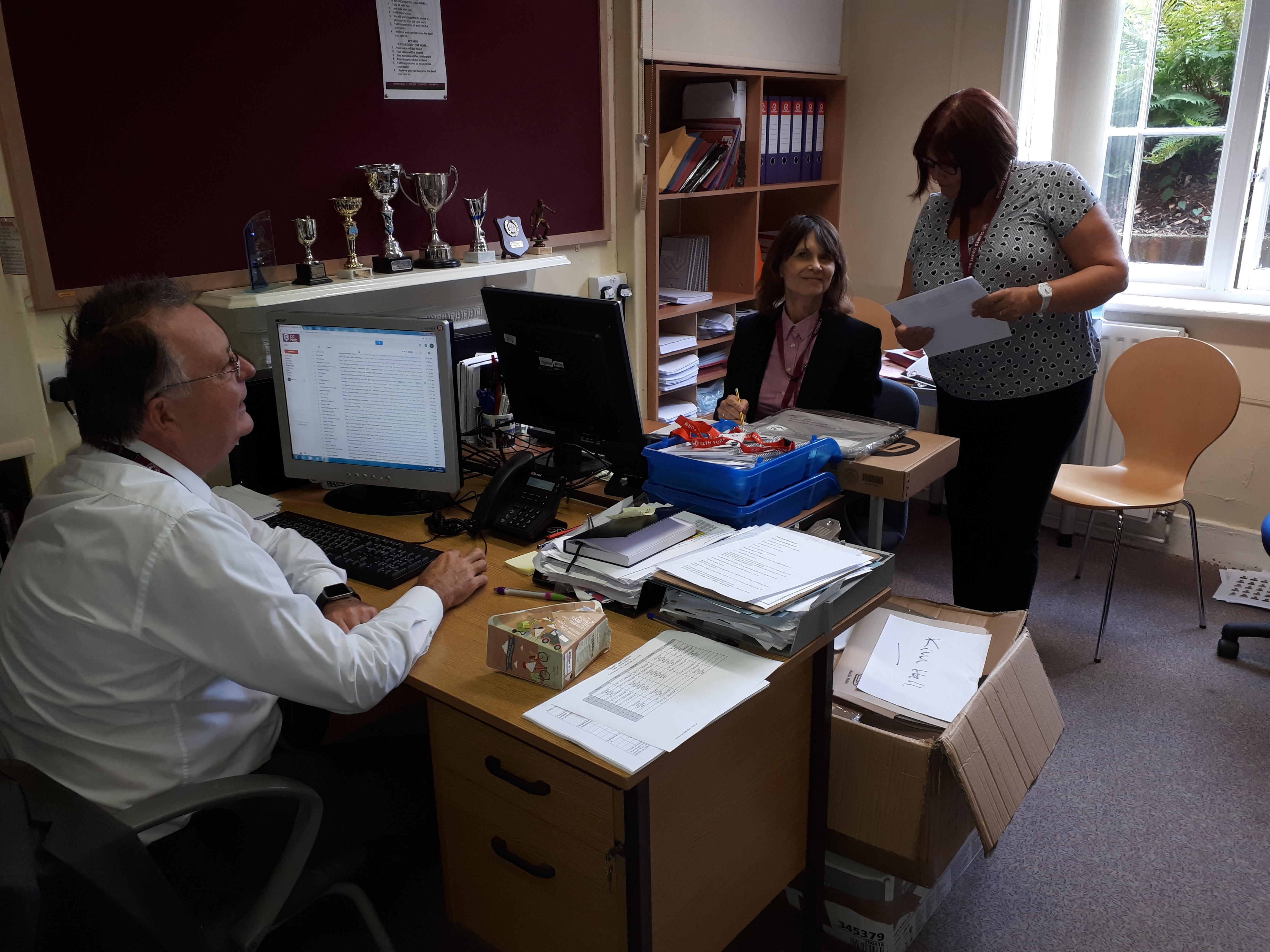
Once DB declares that the school may now be considered open for teacher’, the primary staff then recommence the Herculean task of decorating their classrooms for Day 1 – that was today. Most staff at least scoped their challenge last week, many could return and start being creative, but pretty much all were still hard at the decorating lark well after 18:00 on Wednesday 6 September. That night, at 18:30, there were leadership, teaching and admin staff all still hard at the grind-stone. ID badges for students, bus passes and back at school letters, lockers and landings still being checked, cleared and made ready.
If you have continued reading this far, well done. You are beginning to understand why the full-time office and admin teams look forward to start of the new school year – they are able to welcome the teachers back from their break, and cause them to share the load of answering calls, emails letters and such like, all with unique demands and suggestions. After all, most of the parent queries in recent days are not about nuts and bolts, but academic and pastoral concerns to which only their teachers can make effective response.
This author reserves 3 very special privileges for his own attention.
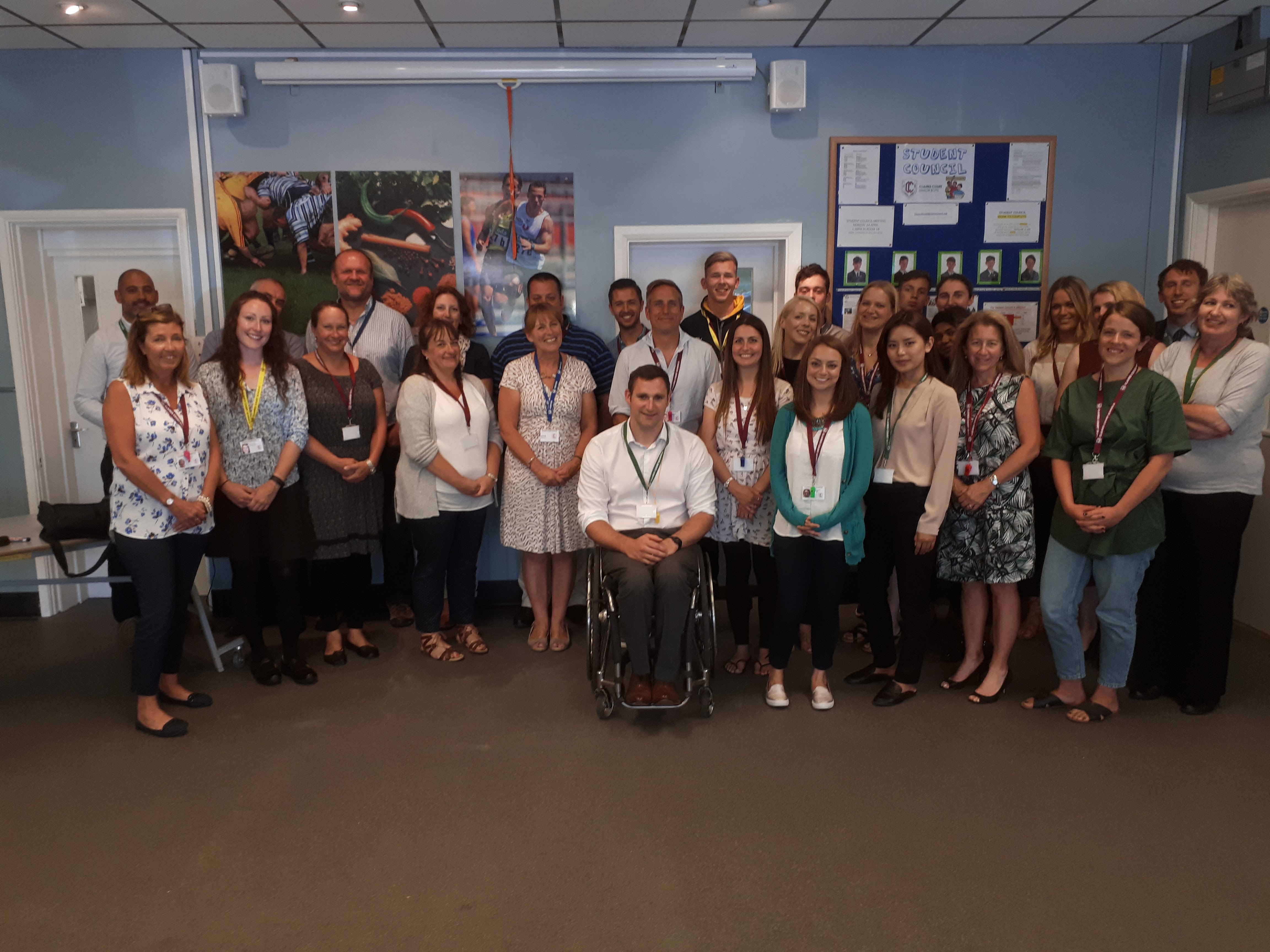
I take a particular interest in inducting new staff, and 28 of the 30 starters were in for the 1 September for the day. This year’s newbies include experienced hands, teachers, nurses, programmers and support, converts from the City and paralympians switching careers. Teaching and working in schools changes most people for the better, a job/career in which every one can really make a difference, and I take great pleasure in facilitating that change.
Welcoming in the new Head Boy and Girl, Todd Muil and Camilla Slais and their team of School leaders, getting them set for their first big challenge, to prepare the picture show for Speech Day may take them out of their comfort zone, but putting the young in charge of such an operation really does mean we show respect for and value Pupil Voice. School councillor Todd Lindley has the unique pleasure of returning the favour showed to him by Lord James O’Shaughnessy, when he welcomed Todd to the House of Lords in February and congratulated him on winning the Whitbread prize. James is an old boy of Claires Court, I had the pleasure of teaching him and pointing him in the direction of Wellington College for boarding senior school. James is presenting our prizes at Speech Day, and Todd gets to read out the Lord’s school report from way back when.
Researching and preparing the ‘Welcome back to work’ presentation to the Faculty on their return to school is my third great pleasure. Setting the tone for the incoming Academic year is essential, causing a regathering of common solidarity around the very essence of what makes our school such an outstanding institution for children, teachers and parents alike. This year, I chose to have the event filmed on Tuesday, in the Courtyard Theatre at Norden Farm, in part because it’s quite clear that attending this event for all of us is motivational, and thus in part, being able to share that set of messages to a wider audience seems a good thing.
And finally, and thanks for reading this far, where does the reward for getting ready for school come from. I started my day today with 250+ boys at CCJB, in part to lend moral support to a site that has been through the ‘Samber/Spanswick’ challenge this summer, and in part to see a lot of very ‘new’ boys start. Looking at the gathering, from their backs so to speak, I know that those boys are incredibly fortunate that their parents have found the funds to bring them to us. When so many commentators of education worry about the growing immorality and perverse logic of school leaders, when the Professor who leads Education thinking at Cambridge talks about schools adopting strategies this year that simply ‘make her weep’, Claires Court remains a beacon of how to be responsible as a seat of learning, how to respect all individuals, whatever their ability, how to stay loyal to those same children, even when it seems everyone else is giving up, and above all how to ensure the children rise above it all, to become remarkable, secure and well balanced adults able to contribute effectively in a society that badly needs integrity to triumph. And you read that here. And I stand by every word. As I did on Tuesday morning at Norden Farm in front of the faculty, and challenged them too, to live and breathe every bit of ‘them’, the Claires Court essentials.

 The English national focus has been on the achievements of both 10/11 and 15/16 year olds (Years 6 and 11), looking at the examination outcomes for English and Maths, and for Year 11 also to include 6 other subjects, one of which could be Literature, the others focussed on 2 sciences, 1/2 humanities, an MFL and one other (known as the EBACC). For state schools completing at the end of Year 6, the SATS outcomes for pupils dominate how the schools themselves are viewed by their inspectorate, Ofsted. For state secondary pupils, getting the mix of subjects right has also become part of the judgment measure, to ensure the highest score in these 8 subjects to measure progress against the EBACC measure, more of that here.
 around the attached cathedral, get their photo taken holding it up or pushing it down, and sending that image as a postcard back home to prove they got there, bought the T-shirt, dropped the feather and ball from the top of the tower to explore gravity and then come back home. But that focussed journey is not the same as spending rather more time in ITALY, a country of great and diverse representations of culture from Ancient Rome to the present day. Their art,
  technology, music, drama food and philosophical thinking bursts upon the visitor and engages us in so many more ways, and this takes time, effort and commitment to get the full picture. In the end, no doubt the tour operators will rub their hands with glee if they can reduce costs by increasing volume to the one city, grow the communication channels by increasing plane, hotel and bus size, with the expertise of the support team reduced to knowing the 10 pages from the guide book and testing same via extensive essay writing and number crunching around the limited palate of knowledge, skills and understanding required to visit PISA and return.
 It’s that time of year when the Season in which we are expected to be jolly has passed and the school bells are soon to ring in the New Year. Here’s yours truly on Christmas Jumper day on end-of-term Friday, standing by the tree at Senior Boys, showing some of the hampers soon to off into our local community via the Lions, Foodshare and the Salvation Army. I had the photo taken because I had been invited to write a Fly-on-the-wall end of term item for Schools Week, one of the professional journals that report on Education matters, and they wanted a photo to go with the article. You can read that here:
  “The fascination of what’s difficult

 Imagine my surprise when the girls of Year 5 presented via Santa the postman the Christmas card you see me holding here in the picture. “To Mr Wilding” it said. I have never, ever (forgive a failing mind, by the way) ever been presented with a card like this. As I opened it up, the hairs on the back of my neck bristled, as every child in the class had written a personal message wishing Mr Wilding a Happy Christmas or similar. Mrs Helen Phipps, our amazing school secretary at College followed up helpfully: “I did ask the girls for which Mr Wilding was the card intended, but they could not answer me”. Ouch. So whilst I am holding the said card in the picture, may I express on behalf of both Mr Wildings how grateful we are for these very kind thoughts, and my brother Hugh, in whose care the card now resides, also sends his thanks.
  joined Claires Court when aged 11 and left Year 13 in 2005 bound for medical school. He wrote to me on Monday, the day it was announced that “the defect that causes the neurodegenerative disease Huntington’s has been corrected in patients for the first time” by a research team at UCL. Paul joined the team in April this year, after 7 years of work culminating as a neurology registrar in Southampton.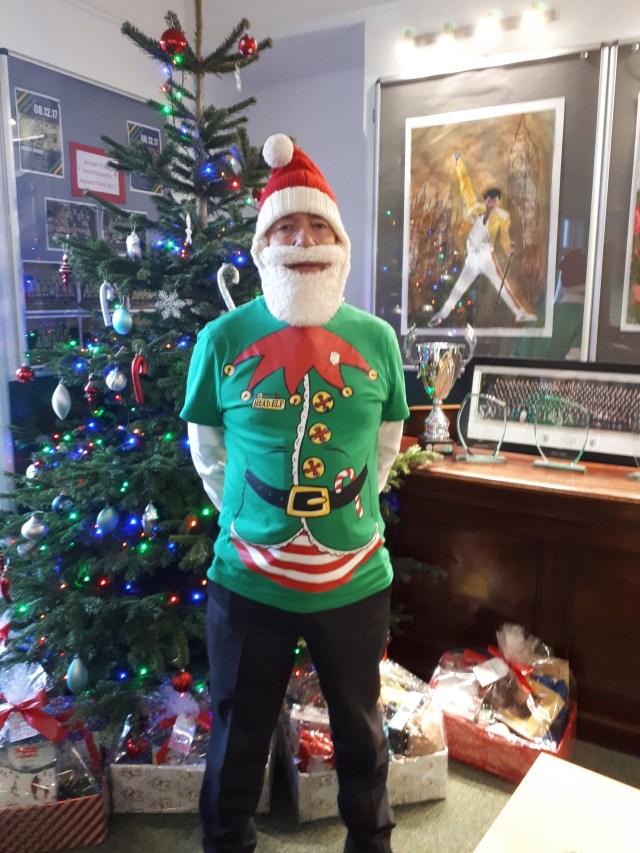

 During the fortnight of half term, my brother Hugh and I have reached agreement with Berkeley Homes over the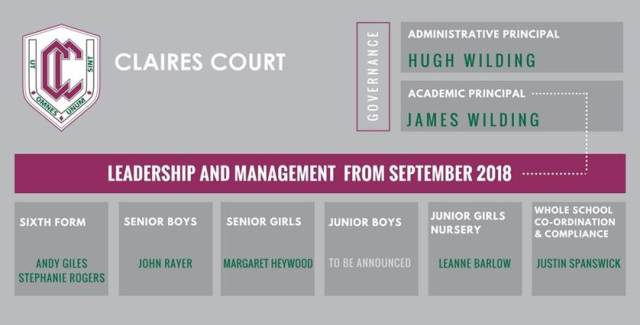
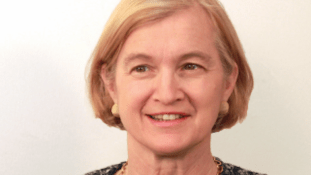 recent pronouncement by Her Majesty’s Chief Inspector of Schools, Children’s services and Skills, Amanda Spielman (otherwise known as the Head of Ofsted) who wrote yesterday (12 October) that “Schools in England are focusing on tests and exams, rather than giving pupils a good grounding in a wide range of subjects”. She also says a rounded education – or the lack of one – has consequences for social mobility, with less academic children being particularly hard-hit if schools drop subjects such as art to focus on core ones –
  In Scotland, even worse criticism has developed about their curriculum and the outcomes for pupils. Known as the Curriculum for Excellence, CfE, it has been seeking (for 15 years since its initial design) to develop the 4 capacities it hopes to deliver for its children: “successful learners, confident individuals, responsible citizens and effective contributors”. The trouble is these outcome measures on their own are almost impossible to measure and unaligned with actually the process of learning in school. As one secondary school teacher has written a damning open letter to Nicola Sturgeon, warning that Scotland’s curriculum is “utterly failing the children in our care”.
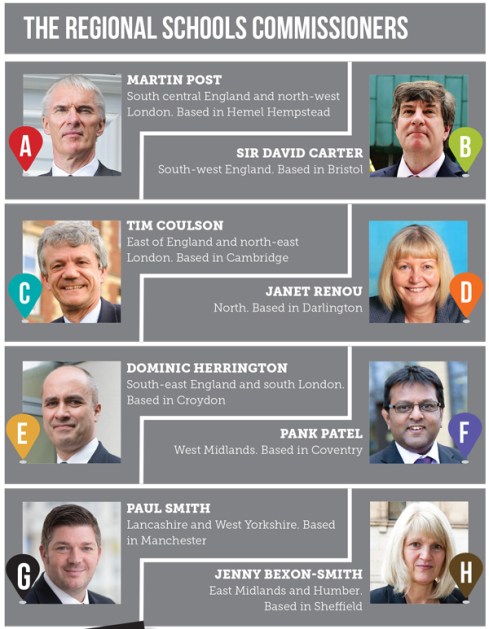 Each turn of the ‘change-wheel’ gives rise to further internal exhaustion of the key workers who actual provide the pedal power for education, leading to the inevitable problem of teacher recruitment not matching the numbers needed to meet population increase and teacher departures via retirement or resignation. The latest developments in Apprenticeships in the UK, the new financial levy on employers and the political priority it has become have been met with a colossal 60+% reduction in apprenticeship take-up because…’the salary offered is just so low!’
 This month heralded the important announcement that there are now more ISC independent school children in schools abroad then there are foreigners attending ISC boarding schools in the UK. The growth of ISC independent school curriculum provision in countries across the globe can almost be described as an ‘explosion’, with Haileybury for example exporting its model into Kazakhstan. It also no surprise to see such schools making use of the IGCSE, a world version of England’s GCSE system, which has stayed remarkably stable for 30 years unlike its parent, which is changing once again over the current period of 3 years.
 developing a careful implementation of a broad and deep curriculum now for 11 years. We have aligned many of our more recent developments with work of leading professional bodies across the globe, and currently we are working alongside the excellent work emerging from The Learning Scientists*, a group of cognitive scientists whose mission is to make the science of learning more accessible to us all, children, students, teachers, parents and other educators. In so doing they aim to:
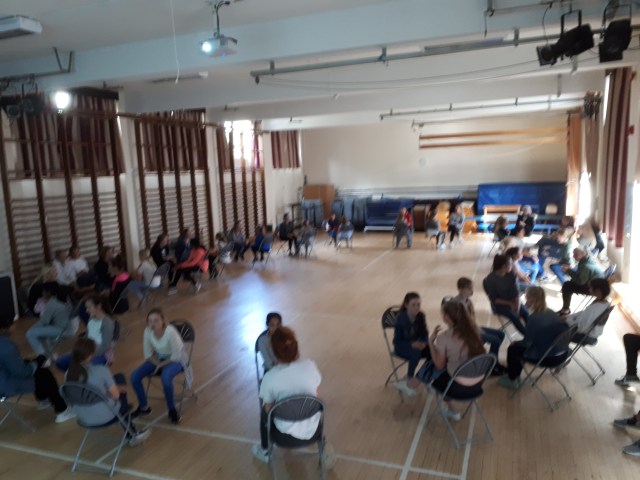 Today, at Senior girls, I spotted some ‘speed dating’ going on, a process by which Year 7 were able to meet with and interview Year 11 on a 1:1 basis, asking who they were and what they did, getting to know them better. By the time I entered the hall, the event was well underway, and both sets of girls were completely engrossed. Year 11 had obviously regressed a bit, finding perhaps some memories they had on starting at Senior Girls; essentially, and really quite quickly, the girls were getting to know each other in a kind, supportive and friendly way.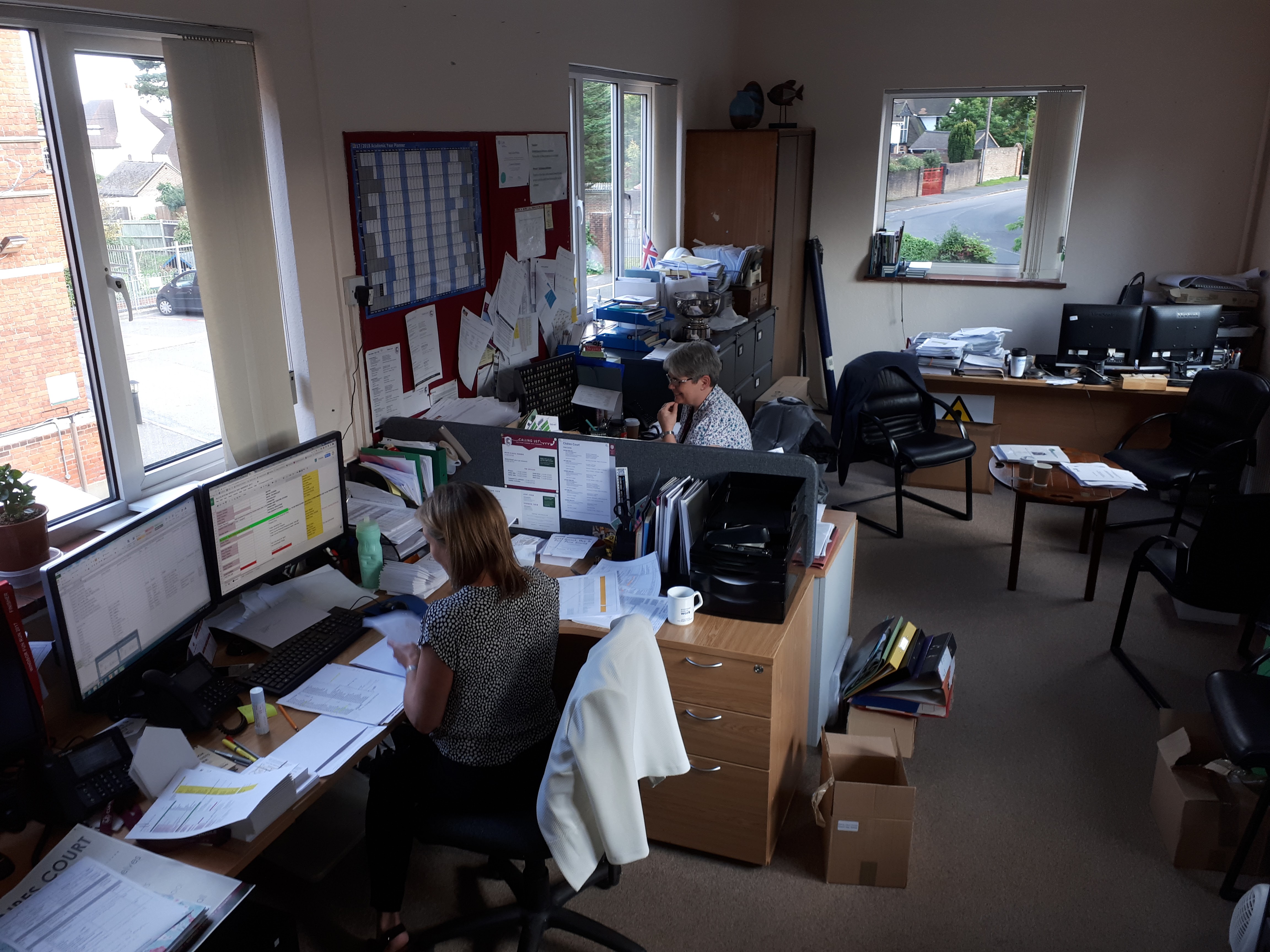
 A Principled view