Round-up of 2014-15

Leading the way…

I have just completed my 40th year as a teacher. That might seem to some to be an anniversary worth celebrating, but as I plan to be around for some time still, I won’t overdose on champagne just yet. Looking back over the decades, I sense that I have managed to gain sufficient experience to know what works and what does not, without taking away my passion for working with children and the excitement of creating anew an education that will stand the test of time.

I am both evidence- and research-led, it must be said, born of my University education as a scientist and pragmatism as a business man. It means that a lot of what I want to happen in school must be led by the teachers and pupils for whom it means the most. I can’t expect to direct the lives of the 1500 or so in our community at the micro level, and indeed much of what I can do takes time for its impact to show through.

At the same time, I know people expect me to work hard, to share the difficult yards and muck in when help is needed. For Claires Court to be as good as we need to be for all of our children, we need to be an agile organisation, and by the very nature of such an approach, we need to travel lightly as appropriate. But keeping the baggage down does not imply a lack of expertise; far from that, our teaching and learning support staff spend a remarkable additional time each year to plan, rehearse, review and renew their curricular activities. Practice is not about making perfect, but about making permanent, and that crosses all avenues in education. The challenges we face each academic year have nasty habit of being more of the same and yet utterly new. Bullying for example stretches back in our memories to our own school days, but no way then (1960s ahem) would I expect to be pilloried 24/7 on social media that I could not escape.

If you do not already know, everything in English national assessment terms has been changed. National curriculum levels have been scrapped because long-term research identified that they had not given rise to any lasting improvement in standards. Primary school training courses now abound on assessing without levels, whilst Ofsted is making it clear that marking and assessment methods are to be changed/reduced. At secondary level, GCSEs are in turmoil, with new grading systems and ‘fatter’ English and Maths subjects coming in September 2015, the rest to follow in 2016. Out with grades A* to G, in with grades 10 to 1, with 4 (upgraded to 5 after the general election) being the equivalent of a C.

As Academic Principal of Claires Court, I am steering us clear of the turmoil. Having abandoned the National Curriculum 7 years ago, we are now pretty adept at measuring attainment, progress and effort as was independently confirmed at inspection last March – http://goo.gl/zEJnCS. Research into effective learning does not indicate the government is going to find its reforms easy to implement nor that it going to achieve the wins it expects in terms of international benchmarks against other countries. As I write (August 2015), we learnt that the Scottish Higher Maths exam (made harder by that parallel jurisdiction within the UK) has had to have its pass mark lowered to 34% from 45% to balance their books; to think that a candidate can get almost 2.3 of the paper wrong and still pass makes a mockery of what we know effective assessment looks like, that being an exercise within which a candidate can show what he knows, understands and can do.

As this edition of the Court Circular shows, life at school is not actually about assessment and examination, useful as both of these exercises are for evaluating success with learning. Education in its broadest sense is to equip children with the experiences, skills and expertise they need to lead fulfilling lives for themselves and the wider community into their future years. And Education is about having fun, being challenged, failing and falling as well as jumping and clearing the hurdles. Education is both a collaborative and solitary activity; there is a time and place for both, woven through a variety of opportunities in both public and private space. Parents are of course essential to best of practice seen in education, partly because they do often know their child better than others, and because their interest helps carry the child when interest flags.

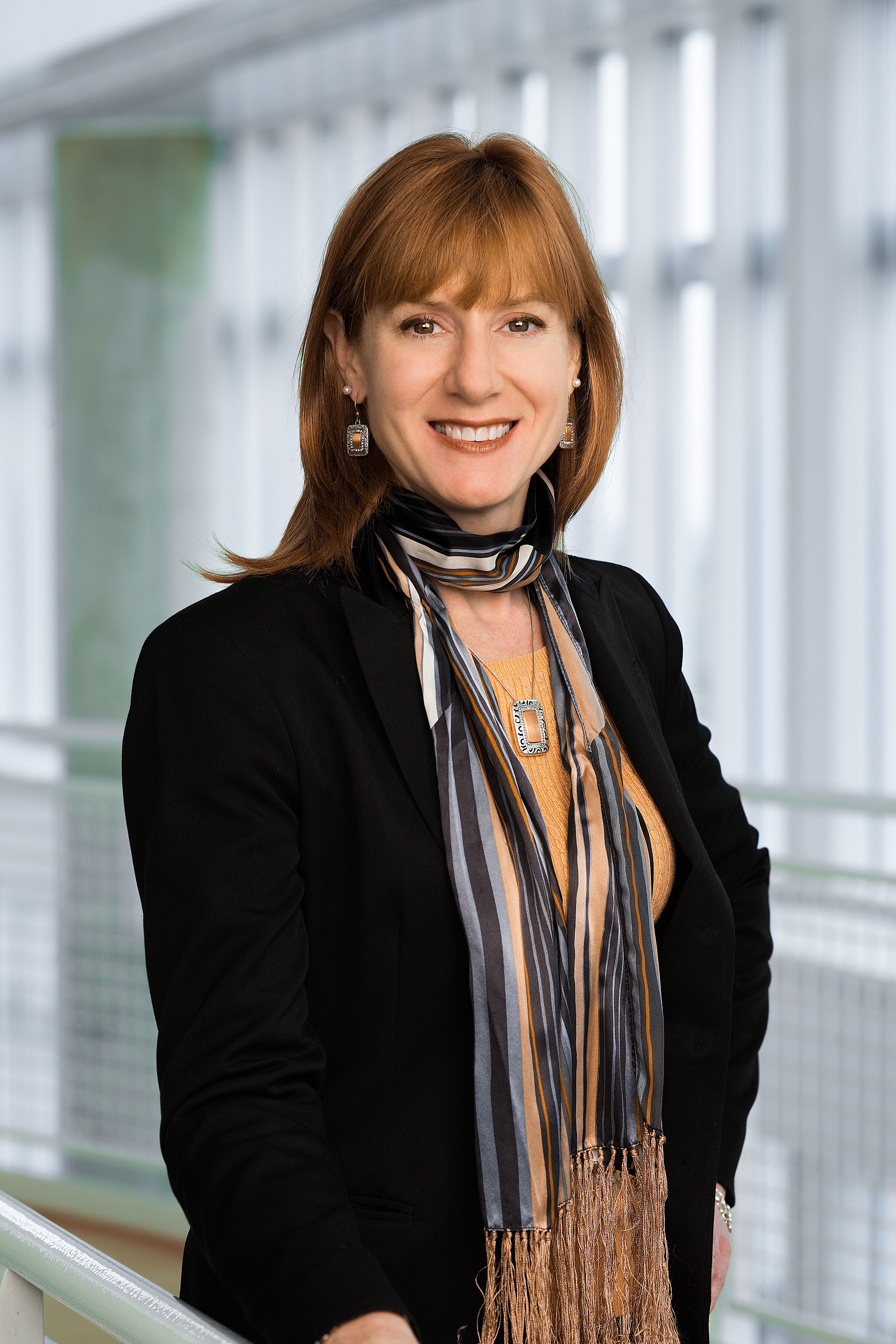
I have become increasingly concerned that the failures in education policy have been mirrored in the provision of Child and Adolescent Mental Health services. Agreed multi-agency processes for the identification and support of children’s needs have become so bureaucratic, time-consuming and unfocused on the individual that specialist clinical interventions take far too long to implement. In response, I have appointed Everlief who have at their disposal 14 clinical psychologists and 2 Paediatricians. Dr Sue Wimshurst (pictured) is the associate now attached to Claires Court, who will be visiting six times a year to provide in-house support and advice for staff and, as appropriate, parents who have concerns. Key issues tackled this year include supporting  children and young people in emotional distress such as anxiety, stress/low self-esteem and self-harming as well as providing support guidance with parenting and family issues.

Talking of which, it’s been the greatest of privileges to work with some pretty committed parents this year, making the life of Corporate PTA, led so effectively in her own inimitable way by President Phyllis Avery MBE. Much of the success in our building of effective relationships comes from the work of our local Parent Teacher Associations, whether that be in the creation and running of social events, fund raising for much needed prizes and extras, or in the creation of yearbooks for those pupils ‘graduating’ at the end of the Summer Term. What was new this year was the ‘move’ of the PTA Summer Ball to the Ridgeway estate, selling out the planned 300 seats. That’s the kind of brilliant support that empowers our PTA Committees to continue to work so hard on all of our behalves, and I do hope new parents feel willing to step up and involve themselves in our various groups across the sites into the new Academic Year in September. There will be vacancies!

In writing this edition of the Court Circular,  I make no apology for drawing to your attention to some of the biggest blots on the current landscape we see. The publication of National League Tables in 2015 has done more disservice to the Independent sector than ever before. Over 60% of all GCSE examinations in English, Maths and Sciences which are sat within all independent  schools follow the iGCSE framework and are absolutely fit for their purpose. Not including such examinations (in our case Maths and English) in performance tables massively under-reports our effectiveness as educational institutions. When Eton College scores 0%, you know there is something really quite badly amiss. One of the reasons why independent schools have migrated their examinations to international frameworks is that continual change to the English examination programmes have brought many school teachers and departments to their knees. Currently, our secondary staff are rewriting most of our A Levels on offer, with English and Maths GCSEs on the move again from September too.  It will not be until 2019 at the very earliest that comparisons now can be drawn between subjects and pupil performance from one year to the next.

Claires Court is not just managing educational change, but helping lead it at national level. Head of Junior Girls, Miss Leanne Barlow with Mrs Lindsay King were invited to present the work we have created for our Early Years and Junior School curriculum as a model of best practice at ISA’s National Junior Schools Conference in February.  Our Head of Sixth Form, Andy Giles together with Stephanie Rogers assisted ISA in creating a separate National Conference for Sixth Forms last week.  They presented most powerfully the extraordinary work we are now doing to link academic students to the work place skills required for success at university and beyond. Head of College Paul Bevis leads one of the annual national conferences for deputy headteachers, and lectures for ISA and inspects Independent schools in addition. For my own part, this year saw me appointed as a Reporting Inspector for the Independent Schools Inspectorate, one of a select few (70 or so) who lead the inspections of the 1300+ Independent schools in England. I chair ISA’s National Professional Development Committee and have spoken at over 20 events leading educational thinking for our sector. All this activity gives us the certainty of ‘professional’ high ground – other schools and educational institutions take our work very seriously indeed!

One of the important channels by which I can inform and influence educational debate is my blog. I am not out to grab headlines, but to produce a coherent narrative of why we have a Claires Court way of doing things. After all with over 1075 children and 300+ employees, we are an important community in our own right, even before we extend it to include friends, relatives, former pupils, partner schools, businesses and fellow travellers. One of my recent posts highlighted the growing conceptual divide between government and employer hopes for education, and identifies ‘The Magnificent Seven’ ways in which a Claires Court education neatly seems to fit both bills. Please read more at www.jameswilding.wordpress.com.

That education is delivered by a truly dedicated staff in a day that runs from dawn to dusk (actually 07.30 to 18.30), longer when trips and evening events are involved, often covering 6 days a week and for a few since May, every day of the week as well. Their motivation is to ensure that the opportunities presented enable your children, young and old, to achieve the remarkable things they do. And what’s becoming ever more noticeable is just how much joy and fun is had whilst these challenges are undertaken. Said one appreciative parent as they watched their son perform at Art on the Street, “Claires Court has so much soul!”

Broader support from the key professionals we work with also leaves a special mark. Carole Hawkins, our safeguarding visitor, Helen Cole,our Careers Advisor, Rachael Williams, our counsellor from the Living Room and Paul Hay, our visitor for digital safety are all fine examples; there are few schools that give such prime attention and focus to the economic, mental and personal welfare of all of its children, whatever their age and stage. Whilst national guidance pleads with schools to attend to these matters, we have them all in hand by pioneering remarkable ways of working – Claires Court in so many ways is leading the way to model how difficult “stuff” can be done better.

Our wider partners, most notably Rotary International, Samsung Enterprise, Discovery Education and the Independent Schools Association recognise the difference that collaboration with Claires Court brings. It’s not just that we see eye to eye where our interests overlap, but that our vision is genuinely inclusive; everyone we work with matters, each child has value and we adjust and adapt for that. As a consequence, our partners feel their effort is that much more worthwhile, because at Claires Court it reaches everyone, not just a favoured few.  Of course schools are dynamic places – things go as easily wrong as right. Our get-go is not about self-aggrandising advancement, but a genuine and deeply felt wish to work with our partners so everyone succeeds. Art on the Street and Maidenhead’s Got Talent are two of the many showcases we support, clear demonstrations that the best of Claires Court is indeed the very, very best, while giving room for those who simply want to have a go; to be an enthusiast is enough!

And you don’t just have my word for this; the reputation of the School now takes our message to the wider world. Our website and the several editions of the Court Circular capture the highlights in impressive detail, while our Facebook and Twitter channels come alive most days with news of derring-do and joyful engagement. Our Former Pupils’ group is now firmly up and running, with Rugby, West End and Cricket fixtures rolled out in recent months. We even have an inaugral Annual Alumni dinner planned for Saturday 19 September at the Senior Boys School – bookings can now be made via Eventbrite at https://goo.gl/mfeviu.

And finally, what of the academic landscape that lies ahead for our children over the next 12 to 18 months? We have a Conservative administration for 5 years, determined to cut back the deficit and return us to national prosperity. For state education that means some of the toughest belt tightening ever seen as budgets fail to match the increasing numbers of children, and because government is increasing its take from employment via higher national insurance contributions and employer pension contributions. The offer for state secondary pupils is being dramatically narrowed to 8 core subjects (look out for Progress8), so the notion of a 21st century renaissance learner has been struck dead. With post 19 further education and training almost a zero entry in coming budget plans, it’s very much down to schools to make it all happen by age 18.

If ever there was a time when Claires Court’s value-added was visible that time is now. For every child and every family, there is something going on for them to be involved in, to support and participate to the full. Thank you to the 264 parents who completed the Annual Parental Questionnaire, spread in proportion to the numbers found in each age and stage on each site. Both Hugh and I value hugely the time parents take to give us feedback, because it is through receiving advice and guidance from you that we can develop the School further for the future. The vast majority of the feedback was incredibly positive, with only six parents (equally spread across the three schools) whose overarching feelings for the School are not positive. Your opinions on progress, behaviour, academic and co-curricular provision, reports and feedback and perhaps above all, child’s happiness are really very supportive indeed.  Of course unhappy customers is not what we want, and we still have areas to address. Even then, I can see that the other major success story is in the manner in which we have improved the effectiveness and communications between the School and parents, even when in the ‘soup’. How that has been enabled is largely down to our hard working office teams – and they deserve my final very big ‘thank you’.

James Wilding
Posted in Uncategorized | Leave a comment

Is it a case of ‘the younger, the better’ for children learning a new language, or indeed, anything?

I love reading research. It’s the academic in me, I guess, speaking here, because without an evidence base, you can’t actually prove your point. And unless the evidence base is large, inclusive, sustained over a period of years, and the research outcomes independently scrutinised, I know the conclusions are worthless.

” If it looks like a duck, quacks like a duck and walks like a duck, it’s a duck”

And here I mean no disrespect to fowl, but so many policy decisions made without evidence turn out to be ‘turkeys’ – one day wonders.

Two years ago, our Head of MFL Kate Ing and I started a serious sideways look at the teaching of modern languages, partly because the government had launched its ‘new’ initiative to ensure every primary school child would learn a modern foreign European language from age 7 to 11 from September 2014 onwards. We joined a local primary school cluster supported by the University of Reading, attended a couple of meetings through which direction was being given to primary schools on what might work well for them and networking with the University lead advisors to share with them our thoughts . Please bear in mind as an independent school we have considerable experience of teaching languages at this Junior level, both living and dead, and much of government’s rhetoric was directed at its own schools to unify and harmonise provision for its children.

Speaking at the time, Kathryn Board, head of languages strategy at the CfBT, an education charity which has merged with Cilt, formerly the National Centre for Languages said “When you scratch beneath the surface you’ll see there is an enormous diversity of things happening under the label of languages at key stage two – from a few words and a song to quite rigorous teaching. For some the new curriculum and the emphasis it places on grammar and written language will be a challenge, for others it’ll be business as usual.”

The national requirements seem to specify 30 minutes a week for Years 3 and 4, with 45 minutes for Years 5 and 6. When Kate and I heard this, it seemed to us quite extraordinary that anyone would expect children to make ‘progress’ in the primary years with such poor provision. Moreover, in so many schools where there are many languages outside of the ‘brief’, might not time be spent better looking at these and leave the ‘hard stuff’ of grammar and writing until the start of secondary school? After all, that’s what so many independent schools have done for years; encouraging enquiry and understanding of language and culture, promoting story and enthusiasm for learning during these formative primary years.

Professors Florence Myles (Essex) and Rosamond Mitchell (Southampton) have been researching Early Second Language learning for years, and their most recent research (2008-11) has now surfacing in a variety of lectures and publications, the one catching my eye most recently being yesterday’s article in the Conversation, an on-line academic journal. It’s worth a read, honest, because it really does reinforce what all experienced teachers know, and that is there is a time and place for enthusiasm, and equally, and probably rather later on in a child’s school career, a time for hard learning and rigour.

Summarising Myles and Mitchell’s work would be trivialise much of the very great detail held therein, but here’s the principal outline. Older children learn more rapidly and effectively than younger children, because they have a wider range of cognitive strategies at their disposal and because their more advanced literacy skills in their home language could be brought to bear to support their second language learning. That’s not to say that the younger children were not more enthusiastic, they were, and that if you want to speak like a native, you have to start  very young! But the reality of life in our schools is that we can’t immerse our children in that second language, it’s migrant children that can enjoy that benefit; if we really want to make an impact, then we’d need an hour a day including holidays and amazingly supportive home families, and even then the advantage is likely to be quite small.

Other research highlights that pretty much every ‘subject’ has a life cycle it seems, that cycle could be as short as three years, and is age and stage appropriate. The first HMI who ‘inspected’ my headship back in 1981 was the lead languages inspector for the South of England. His experience taught him that successful outcomes at 16 and A level take-up for the final two years of sixth form were as likely in schools that started at 11+, 12+ or 13+ and he certainly took a keen interest in what we were dong with 10 year olds with French and ‘wondered why we bothered?’ It is interesting to note that written outcomes in Latin have almost always been visibly better than in Modern Languages, and certainly CEM centre University of Durham’s research highlights just how much more demanding Latin and Ancient Greek are at GCSE level. This is because they only test 2 of the four skills for language learning, reading and writing, and leave well alone speaking and listening.

Really good schools (and teachers therein) understand their purpose in education well. Socialising children to collaborate, to work and play ‘nicely’ and to gain enthusiasm for learning starts their journey to age 5. Getting stuck in to becoming literate and numerate, to enquire and purposefully learn new skills takes children through their primary years, cognitive development aligning with ‘subject’ matter and ‘context’. Much research continues to highlight how disadvantageous it is for education outcomes for summer-born children in a country whose school year is organised around 1 September; too much too early is the significant problem here, because existing skills have not been practised sufficiently to become permanent before the child has been moved on.

This is so noticeable in school in so many other subject areas. Neat handwriting, once the pride of primary school outcomes is no longer something we can expect 11+ year olds to have. Such neatness requires fine motor control of hand and fingers, as already stated, practice makes permanent. Children no longer permitted a fine art experience in junior school might not be able to draw and paint, unless family values have ensured such activities have continued at home. In subjects as diverse as PE and Resistant material technology, it is obvious fine and gross motor control cannot be relied upon with new starters in year 7. These provide challenges for both teachers and children as they enter secondary school, so year 7 , 8 and 9 need to be spent establishing, rehearsing,  and developing the whole of a child’s skill repertoire, before moving to subject choice for GCSE in Year 10. If we trim the curriculum at secondary and force choices too early, then it’s not just the summer born children that are left floundering.

So I have no doubt that in the right hands, early second language education in our primary schools could do what research expects of it; to provide enthusiastic children ready to start the hard graft at secondary school. But if government requirements are for some higher purpose, then like all the other ‘quackery’ our politicians pronounce, it’ll be a dead duck.

Posted in Uncategorized | Leave a comment

“Genes load the gun, but environment pulls the trigger” – Lessons from Medicine that need to move into Education.

Genes v EnvironmentThere is a rising tide of mental health issues across the world, affecting most age groups, influencing young people irrespective or race, colour or gender. There’s also a matching growth of opinion that suggests that the causation of these problems arises because of the growth in pressure on children, pressure that’s nasty, corrosive, invasive and long-term. The outcomes for children don’t look good once struck down; anxiety, anorexia, obsessive-compulsive, depression, attention-deficit, spectrum disorders and so forth are extraordinarily debilitating and seem to affect life chances long term.

These disorders seem to have been with us for ever, passed from generation to generation via a small number of common genetic variants and yet until recently, they have been very much off the radar. Are we now seeing them because as parents and stewards of children we are so much more alert to the problem? I’d like to think so; ‘we are at the cutting edge of education and we know what’s best for your child’… ok, so probably don’t actually think that now, or ever actually.

These problem now appear almost epidemic across the country; the signs and symptoms now visible in every primary and secondary school I know. Our reaction as a school is in part to respond by upping the quality and availability of expert help advice and counsel. I am delighted that we have expert nurses, counsellors, teachers and pastoral leaders who continue to keep their own working knowledge of these issues up to date, and that now we can plan even more appropriate early intervention as we deem fit. This is only half the story, because inevitably, if we are not careful, we are medicalising the problem, institutionalising it as a norm’ and creating more cases simply because we are looking for them!

If you can afford to dwell some time, have a listen to a recent Woman’s Hour programme, where Jane Garvey interviews Professor Cindy Bulik on the growing evidence of links between schizophrenia, anorexia and family genes.  In short, you’ll hear one more compelling story that suggests these problems are really complex, and if there is a genetic link, it exists over multiple genes and so no one fit model for causation or cure exists. OK, I’ll have a go then.

Most of us would say we know what hunger, fear and fright feel like. For us, it’s not normal, we’ll release some adrenalin, which lifts our pulse, increases blood flow to vital organs such as muscles and sense organs and on occasion, causes us to defecate straight away. When I say, for us, it’s not normal, I talk of Sixty somethings, born and grown up in a time when there was no daytime TV, when newsagents were shut on Sundays, when other family largely ignored us and certainly did not see us in tandem with the buildings we live in as ‘home improvement projects’.

It is becoming increasingly clear that the stress on children is causing them to feel that ‘hollow’ feeling in their stomach as normal, something to seek and hold on to when the rest of the world rushes by. Indeed, self-harming too assists in creating that ‘buzz’ , re-releasing into the bloodstream the hormones that bring back that ‘comforting’ feeling. That’s what is meant by the phrase ‘normalising’, yet there is nothing normal about the activity of the feelings at all.

Why have the stresses grown so much? Children are found at the  heart of family life, VIP in Chez Nous, and they sit at the very centre of their Universe and their perspective is always valued. The opportunities for children to learn, to participate, to acquire skills, have never been so widely available or as diverse. The expectations on them, even if parents are protective, have never been higher. Children’s looks, fashion, size, shape, behaviour are all targeted by society in general, by media news organisations and commercial business in particular, and regular scientific research reports that children have never under as much pressure. Back in 2007, the UK ranked bottom for Children’s well being in a  UNICEF survey of 21 of the most developed countries of the world, and the Labour government of the day focussed some national resources to improve provision for teenagers in particular. In the follow-up survey of 2013, UK performance rose slightly, moving us up to 15 place,  but warning bells were rung again by both Unicef UK and the Children’s Society. The Banking crisis and change of government had seen resources for children slashed once more.

Anita Tiessen, deputy executive director of Unicef UK, said: “There is no doubt that the situation for children and young people has deteriorated in the last three years, with the government making policy choices that risk setting children back in their most crucial stages of development”.

“It is far too easy to assume that teenagers aren’t as vulnerable as younger children or don’t need as much support,” said Lily Caprani, director of communications and policy at the Children’s Society. A raft of other surveys looking at the academic performance of UK children in schools shows as a country we lag behind, and in those that lead the way such as Finland and Singapore, they make the point that we start formal school too early and we ‘test’ far too much.

Now things are not quite as gloomy as they seem. Improvements in older teenagers’ attitudes to alcohol, sex and each other have improved markedly, and national rates for unwanted pregnancies have plummeted.  The Good Childhood report last August (the third in a series)  – the third in a series published by the Children’s Society – compared England with 39 other European countries and North America, rating it 30th in “wellbeing” – defined as self-reported happiness and satisfaction. Use of computers at home is not a cause for the problem, indeed it’s the lack of its availability outside of schools in deprived families that’s been part of the problem. The financial pressures that families have found themselves under have had an impact, as have media stories particularly on adolescent females to look the part;”Popularity is very important, you have to be pretty, rich, skinny, clever. If not you get bullied,” one year 9 student said in the report, based on surveys in England of more than 5,000 children.

Running your fingers through the detail though, it’s not hard to agree with Dr Miriam Stoppard that the solutions are not hard to find.

“And the good news is that most of it is very straightforward. It’s about taking time to talk – and listen – to our children, showing them warmth, keeping them active and learning, letting them hang out with friends and explore their local environment.”

What’s Claires Court’s ‘previous’ been in all this picture you might well ask. We deliberately chose to leave the national curriculum and its testing programme behind in 2007, to liberate our curriculum and children from an unnecessary straight jacket. We have worked tirelessly to ensure we have ‘Pupil Voice’ at the heart of our work, to enable children to feel that their school days are indeed the happiest of their lives. Sport, social activity, intelligent digital availability, listening services and specialist support to enable early intervention are now hallmarks of our provision.

We know families have to work harder, both parents requiring to be in productive economic activity in the main, so our extended day and wrap-around care ensures that children are in a really safe place, able to sustain friendships and build skills. I have written before that the shortening of the school day at state middle and secondary school, the compression of lunch hours into minutes and the focus on work to be done rather than relationships to be built has been and remains a poor choice for children. I know just how much different our school’s approach has been over the past decade, where we have extended pretty much everything to ensure children have the time and space to grow. If Claires Court has a success parents have been able to see in droves over the past few weeks, it is that we enable children to have ‘fun’ whilst they learn.

As the heading says “Genes load the gun, but environment pulls the trigger”; I am as convinced as ever that environment plays an incredibly important part in supporting children through to be the multi-skilled and well balanced young adult all would like to be. It’s not just a ‘growth mind-set’ we need but a ‘nurture-set’ too. We have no idea what our children can achieve, but we mustn’t set limits to our expectations for them and must keep proximate to children sufficient wealth and diversity of opportunity so that they can make good choices most of the time. As our closing assemblies today, Friday 10 July will show, all our children and their achievements sit central to our celebrations at the end of a highly successful school year, and the reports that come home will provide further evidence that the teachers working within Claires Court have above all the children’s interests at the heart of what we do, ‘normalising the extraordinary’. Indeed without the amazing educators and administrators we employ, I’d not be able to be so positive, and I am deeply indebted to all I work with for the successes we have achieved.

In conclusion, as Academic Principal, I have an ‘intelligent’ finger firmly on the ‘pulse’ of our school life, and that what we work so hard to provide is informed by  extensive experience and academic research. I am delighted to report that our provision for children as a whole is in very good shape. I understand that the genetics of our children need to have the DNA of their school environment just right, and there is every sign that we are ‘coding for success’ in  the best way possible.

I’ll avoid further reference to those somewhat more unhelpful metaphors of  ‘trigger’ and ‘bullet’. The world is a violent place enough, after all.

Posted in Uncategorized | Leave a comment

Developing wider employability skills – the Magnificent Seven.

A new Parliament, a re-arranged set of ministers, and we see both in national press and education journals the re-opening of a variety of debates that have been with us all my teaching lifetime. Some writers, such as Will Hutton here in the Guardian (28 June) suggest that the major divisions as seen in British Society are promulgated by the existence of private schools. The sentiments of his closing paragraph provide a real challenge for those of us who lead in independent education “Looking back, my wife and I felt that parents like us should stand by the universal system; our daughter did well and many of her friends at the time, whose parents believed in their exceptionalism, have had unhappy lives. It would have been so much better if those children had been allowed to stick together in a system that spelled out their togetherness while teaching them with rigour. The English tragedy is that we will never get there”.

Locals and Harrow boys meet outside Lord’s at the 1937 Eton v Harrow cricket match. Photograph: Jimmy Sime/Getty Images

I have followed Will Hutton for years, as journalist, social commentator, and now as Principal of Hertford College Oxford. In many ways our views seem similar, driven as we both are to desire for all the access to high quality education and the opportunities that such success brings in adult life that follows. Where our views divide is usually policies for social cohesion, most often over Europe. That’s not that I am a Eurosceptic, far from it, but I am not so resolutely wedded to the concept of the Euro, the EU more broadly and its superior way of doing things. That’s a position just currently that seems to work in my favour.

Anthony Seldon, the retiring headmaster of Wellington College, speaks of some of his parents as “Clueless narcissists damaging their kids with delusions” and suggests that “Rather than letting the child be what they want to be they (Parents) atrophy their child’s sense of development and autonomy.” More here in the Daily Telegraph.  In drawing the reader’s attention to this statement, I’ve got to say I don’t align at all with Anthony on this. Sure, on occasion we have to realign parental expectations, but they’d expect us do that anyway in the main. We can get in trouble when we won’t predict better grades than evidence suggests; that’s a reputational matter we just have to live with, and carries us through when through accident or emergency a child misses a public exam – the authorities are able to trust our judgement!

The retiring headmaster of Eton College, Tony Little, writing in the same edition of the HMC magazine Insight from which the DT draws its copy under the headline “How to fit our pupils for the 21 century?” suggests that schools and our examination systems are no longer agile enough to cope with the rapid changes and increasing pressures now evident in 2015. He has just established a centre for innovation and research in learning at Eton, and hopes it will make a difference for his sixteen year old boys who otherwise might be saying  “What is going on here? This doesn’t mean anything to me.” I am rather hoping that the average CC 16 year old is not saying this, and the current crop of pupil questionnaires seem to be supporting my optimism. The very fact that we have active School Councils and exit questionnaires still astonishes some in our business, suggesting that such democratic measures make us ‘hostages to fortune’. I suspect not, by the way.

Professor Sandra McNally of the School of Economics at University of Surrey and Director of the independent Centre for Vocational Research at LSE believes there is a growing divide between what industry and government want to see in our secondary schools. Whilst education secretary Nicky Morgan is now narrowing state secondary GCSE choices down to the Ebacc academic core (English x2, Maths, MFL, Sciences plus Geog/Hist), the Director of the Confederation of British Industry , John Cridland would wish for GCSEs to be phased out, to be replaced by a more coherent mix of subject and focus from 14, with examination hurdles at 18+ only. In his wide ranging speech at the Festival Of Education last weekend, Dr Cridland reminds us all that information is now universally available at the touch of a screen, but that’s not enough. Children and adults need a ‘steer’ too, without which they’ll not be able to join up their skills and ambitions with opportunities available. Professor McNally advises that children should not specialise too early, though we should not regard ‘vocational’ courses as inevitably being of lower value, highlighting vocational careers in Engineering, Medicine and the Law as offering fabulous opportunities for the successful. The trouble is with Professor McNally’s thoughts are that she finds no way to bridge the ‘skills’ gap that employers need and yet are not grown in examination classrooms. Put simply, we need young adults to be entering employment ‘savvy’ about what is expected of them, with standards of literacy and numeracy ‘work-place’ ready, and a bunch of other craft skills already honed. Is that really possible? Which computer language should they be able to code with? Which CNC lathe  ought they know how to operate?

Parents and Teachers within Claires Court will be familiar with these arguments and discussions, because they have focussed and nourished our school development for the past 7 years or so now, and their threads run all the way back to the decisions we made back in the late 1970s to move from being a Prep school feeder for secondary Grammar and Public schools. Indeed, we now have an impressive number of past pupils who as parents and/or teachers are actively involved in our Claires Court life, and they share with me this certain belief that it is the ‘whole of the child’ that needs educating, a ’roundedness’ not visible or encouraged by the examination system or national government. We know that children need to explore, create, break and mend, reinvent and repurpose. We know they need to learn to acquire the skills not just to read, write, spell and count, but of sharing, caring, competing and being kind. I have stopped speaking about a ‘rounded’ education, because the phrase rather misses the point and demeans what we do. What we must provide are opportunities for multiple skill acquisition, for examination success sure, but also in everything else we do too.

So here’s my take (a Magnificent 7 of them) on how to ensure that children emerge from school with all the skills they need for their next steps in life, employed or otherwise.

  1. Children need to be known, to feel secure and be fairly done by. This cannot to be delivered in social organisations that are too large, and there’s loads of psychological research about this, perhaps the most famous being ‘Dunbar’s number‘. Whilst class size of 28 to 35 makes no difference, indeed there are plenty of examples where perhaps even hundreds in a room regularly learn really effectively, that’s not what the classroom is all about. Whilst there are many successful schools far bigger than Dunbar’s 150, that’s not to say that students within feel they are valued and secure, or will develop further all the skills and talents they’ll need to come. For class size, I’d say 16 to 20 is ideal,small enough for care large enough for competition. As a DofE Assessor and trainer, I can tell you no group bigger than 7 is ever permitted, and frankly 5 is a better number. In groups larger than this, adults and children are often ‘monetised’ by sitting back whilst others get the work done. I am not much in favour of solo working, because collaborating successfully together provides great certainty that things actually will get done.
  2. Children need to be happy and achieve. This may seem a paradox, because lots of school ‘stuff’ is hard, not easily acquired and comes with ‘failure’. It’s interesting though to note that it’s through gaining the professional expertise of a teacher that we learn how to create a classroom environment in which this happens. My proudest achievement as a school Principal is to lead an Academic Faculty which has teacher-development at the heart of its work. OK, there will be times of the year when coverage is patchy, when our ‘best selves’ as educators is replaced by necessity and expedience, but I am confident that we are a school that focuses on ‘Learning Essentials’, that models how best to include ‘digital’ opportunities, where ‘Peer’ education and ‘Pupil voice’ aren’t just titles but realities in practice, and where community activities are central to what we do. I’m content that we have our focus on children and their learning about right, though I have learned from our community partners that many schools’ social engagement in recent years has become significantly impoverished, partly as a direct result of leaving the Local Authority and becoming Academies.
  3. Children are challenged. Who ever thought their child was going to play sport for England, perform in national finals, sing at the O2, row at Henley, read Chemistry at Oxford, be a playworker with disadvantaged children or compere at a Headteachers’ conference? That kind of activity has been grist to our mill in 2015, just saying. It’s that time of year in my school when there seems to be too much going on, with Music concerts and Drama festivals competing with sports days and regattas on the one hand and with Art on the Street and Summer Fair on the over. My leading staff seemed to be stretched close to breaking point, not only with the doing but with the writing too, reflecting on their pupils’ progress as seen in summer examinations and over the past year. The point is, every week brings fresh challenges and opportunities, not a relentless focus on some exam requirements years down the line. That calendar of activity does not arise by luck; at the time of writing CC Leadership are smashing together another year of dates to ensure that in its granularity, we have enough for everyone on offer. Trips and re-enactment days are woven through the schemes of work; rhetoric such as ‘teach a man to fish and you feed him for a lifetime’ won’t work unless the ‘men’ can get ‘hands on’ – learning is not just a theoretical activity, and takes place in many locations and a variety of ways.
  4. Children as leaders, teachers as mentors. Pretty much every piece of academic research highlights that peers are better as teachers than teachers themselves. And in every article I read about ‘my favourite teacher’, it’s the way that adult opened for the child the possibilities that lie ahead and persuaded or encouraged their student to believe more of themselves. In designing provision to have blended curricular and co-curricular activities, we need enough of the latter on show to ensure the children have sufficient time and opportunity to gain expertise and leadership skills. There is a huge call by industry for entrants to have vocational skills; just a walk around the street of the  Claires Court Summer Fete last weekend reminds our community of the opportunities our children have. ‘Beat the goalkeeper’ vie with ‘Shoot-em-ups’ , GoKarts & Drones from the STEM club at a higher level face off Young Enterprise and Candle stock sales. Our commitments to and partnership with Rotary International and the Lions Club provide a guarantee of competitive speaking and partnership sponsorship in public and links young pretenders with community thought-leaders and separately with those much less fortunate in society that need a leg-up.
  5. Relentless and ruthless enthusiasm blending a can-do and no-excuses culture. As a parent of 2 and surrogate parent for thousands, I avow completely the mantra that children come first. At the same time, I do not support a ‘Little Emperor Effect’ that promotes vain-gloriously the performances of one above the whole, arising from the mass study of the intended consequences of China’s one child policy, whereby ‘only’ children gain seemingly excessive amounts of attention from their parents and grandparents. Here in the UK, and understood for some time, that children regress on entry to secondary school.  This Year7/8 dip arises because parents want to let-go of the primary school requirement that they take very close interest in their child’s education, because the children themselves are becoming independent learners (aka making choices, some of them about not wanting to work solely to please adults) and because the learning possibilities secondary schools present accelerate exponentially. What secondary staff need to do is to get to know each child really quickly, so their possibilities are known before the child writes the same opportunities off because of peer pressure. Singing in public, performing on stage or field, standing up to be counted are all categories of un-coolness in the teenage vernacular. We need children to be proud of their outcomes because of the way they achieved them, attribute the success to the things the children personally made happen, and through that route subtly change peer expectations to making positive contributions to class, to school and to society at large the norm. This does not happen by magic, and the ‘grip’ of school needs to be sure, holding to account those less committed to the cause with a resolve that sure and appropriate.
  6. It’s all about provision. Schools need to be full of independent adults who know their stuff, walk the talk and understand both Carol Dweck’s Growth mind-set theories and the need not to make posters about them yet do use them to keep children engaged with the activities that can make the difference. Yes, children can do anything they put their mind to, but it will also require body and soul and 10,000 hours. So we need to teach coding and craftwork, hard sums and lab-rat stuff, how to speak in ‘tongues’ or at least in one of them well, and how children should feel about their history, geography, and where our philosophical ideas come from. And we can’t all be expert in everything, so careers advisers, ict experts, art therapists, sports instructors, links to industry and work experience, visiting speakers and independent counselling services are essential. Professional development is not just a requirement for children but for adults too, and our experience alone is not sufficient to make us better practitioners. Teachers need access to advice, as early as possible to support and expand their thinking and to keep their minds open as they move through their careers. Making such learning opportunities open for parents is almost as essential; there so much bogus stuff out there that can bewitch and entice (just think weight loss programmes as example) and which are completely contradictory and actually illusory. Make sure everyone learns that the ‘silver bullet’ does not exist, and that actually the ‘vampire’ problem it was designed to cure doesn’t exist either.
  7. Underpin it all with a set of values that are universally transferable: Responsibility for your own actions, Respect for others, Loyalty to your community and Integrity above all. As one of Maidenhead’s larger employers, Claires Court looks after 300+ and we need the best we can find for all of our roles, be that in housekeeping, admin or on the front line teaching. These days whatever the job, people are required to make application, and we’ll always follow that by interview. Those that show they know stuff, can be relied upon, seek to be their best selves and do the best they can are really easy to employ. Probably the bit that schools need to work on most is the ‘biddable’ bit. It seems to me successful outcomes from secondary and sixth form can permit the development of an arrogant mind-set which is difficult to supplant, because the narrow objective of examination success is the be-all and end-all, reached within an environment that supports the can-do-no-wrong “Little Emperor” syndrome. Recent Universty changes have probably enhanced this effect, with so many of the leading institutions ceasing to offer any pastoral support or finance lecturers to have personal engagement with students. The government are really keen that schools have at the heart of their pastoral curriculum Fundamental British Values, and there is no danger with us that those will be missing. But we need to place more importance than just a nodding acquaintance with this narrative; it is not just values, but skills, character and resolve interwoven as well. Will Hutton invites us to worry about a doomed youth whose only uncertainty is misery as adults. That’s something I cannot accept as an educational mission, but perhaps bear witness to; with the destruction of the extended family and the mobility of modern life, it’s hard for families to keep it all going without a supportive community, and that’s central to our Claires Court offer, to have that support on tap and nearby.

To conclude, and in a nutshell, great employers know their place. Right from the start, they value their employees and provide for them enough to feel safe, secure and known. They ask their employees to think and do great things, to support others outside of their narrower remit and to be kind and supportive, but whistle-blow when needed.  They provide monitoring, expertise, accountability and training in equal measure and intervene just early enough to makes sure big mistakes can’t happen. And of course, have a vision suitably shared to provide an appropriate purpose for all their employees activity, not so much a profit score or destination, but a way of working and living that provides for them and their families  for a long time to come.

I’ll finish with another Will Hutton headline “Let’s end this rotten culture that only rewards rogues“, which led one of many pieces written highlighting the inequity of reward uncovered during the recent banking boom and bust. I’d like to see Education’s P&L systems examined just as forensically by external experts. Frankly, we know that every child deserves to succeed and needs to attend a school in which that can happen. But with almost every secondary school designed around a-built-to-fail numbers model, around disastrous selection philosophies  that separate the haves from the have-nots, with primary schools now monetised to get bigger to get better, and with national government actively promoting the ‘academisation of schools’ thus removing local accountability, there is no way that parents can opt-in to a education built around my ideals easily.  Unless they live near Maidenhead of course. And at a very reasonable price. Ahem.

Posted in Uncategorized | Leave a comment

“Nothing is really work unless you would rather be doing something else” James M. Barrie

It is that time of year again, dear Reader, when it really is very difficult not to enjoy what I do. The sun is thankfully out, in every crevice of school and diary there is something happening that is both a celebration of our children’s skills and achievements and a testament to the dedication of teachers and parents, whose hard work and moral support has ensured that ‘something’ was in place come what may.

You may have read an earlier blog in which I mourned the loss from my weekly schedule of every single one of the activities that brought me into teaching in the first place. I love both the immediacy and urgency of the classroom and playing field; what we do today has a real impact upon a child’s engagement and willingness to learn, share and lead. The classroom is that private space in which the rest of the business of school and life can’t get to you, and where, shorn of those worldly connections, you can learn of children’s dreams and how to assist them to possibilities beyond their imaginations.

Yet perhaps the thing I am more proud of is the quality of the Faculty, those adult employees be they teachers, support staff, caterers or cleaners, who every day come together to make what I aspire for personally in my classroom becomes a very definite probability in most classrooms. You can have the shiniest gear stick, but if all of the moving parts of your education vehicle are not moving in harmony, then all is but vanity. Perhaps the only thing the shiny knob is worth then is as a mirror to reflect your embarrassment.

Last weekend saw both Art on the Street in central Maidenhead during the day and the PTA Summer Ball in the evening, both remarkable events in their own right, the like of which we don’t often see. As one of the proud sponsors of Art on the Street, I notice that pretty much every political party in RBWM announced just how proud they were to support AOTS; funny that in passing, because in its entire lifetime, the local politicians have never passed over even £1 towards meeting the financial costs that AOTS requires so that this 6 monthly Art market ‘pops’ up in our town. It requires herculean afforts, weeks of planning and specifically on Friday and then from 7am Saturday morning, to set up gazebos and display walls the length of the High Street, and additionally to take-over some of the empty shops, in our case to run hands-on art sessions for younger children, who inspired by the Market want to get their hands on paint and start creating their own .work of art’. The most inspiring thing for me was the ‘teaching’ given by our young Art award leaders to so many other young children. It seemed that long after interest in the market itself had waned, the artists of the future were still ‘hard at painting’ – now that makes me a little proud.

Over recent years, the PTA  Ball has been hosted out to professional venues such as the Holiday Inn, Crowne Plaza or further back even at LegoLand. This year, the College PTA committee took the Art on the Street approach, popped up a Marquee for 300, but big enough for 900, in which we were able to celebrate the vibrancy of our own parent teacher community and additionally raise considerable funds to support the PTA in their broader work. I know I speak for all those involved with the Ball just how proud we are to have been led by Mrs Towell; her willing Ball committee partners want to do it all over again next year, and one of our best events has at long last been brought home to the school grounds. Now that makes me feel proud too.

And so this week continues with sports events, theatre trips, Medieval pageants, Sixth Form Art and Photography exhibiton and so very much more, and last weekend’s Ball was of course just a curtain raiser for this Saturday’s Summer Fete, a multiple splash of everything for everyone, with perhaps an attendance of 1500 or so expected to try the Pimms, experience the fair stalls and converse and commune with family, friends, old and new (Football tourney for younger boys starts much earlier in the day), but we’ll be opening the Fete proper at 12 noon. I know just how much effort CCJB PTA Chair, Emma Robertson and her team have put into the event, with excellent support from the other PTA groups also guaranteed, most notably those that run the BBQ and Bar, and the Sixth Form who directly manage so much of the grunt we need on the 24 hours before the Fete opens.

In place of labs (I used to teach Science) and pupils, I seem to have swapped into that bigger learning space outside the classroom in which I am able to interact with the weft and weave of our wider learning community, indeed with many other schools and colleges across the country too. Yes I have been at school this week, and in addition I have also been training 40+ School leaders in how to inspect and be inspected, and my adult ‘students from across schools in the UK seem to have been really appreciative of my work, freely given it must be said as our way of collaborating to help all schools improve. My brother Hugh and I have been working too with architects and builders as we nudge further forwards towards our final plans for realising a new school on the CCJB campus. We have been at this planning malarkey for almost 2 years now, and it becomes increasingly obvious to everyone we work with that:

“Not only do you and your brother know what you want, you also know what you are talking about”. That’s nice to hear other professionals ‘take’ on our work, and yes that make me a little proud too.

J.M Barrie wrote the quote that heads this blog, and there is definately a Peter Pan somewhere in me when I give other people advice on how to find their way in the world. Peter said when he directed others in how to get to Neverland, “Second star to the right and straight on ’til morning”; I know that if those that listened understood and believed what Peter said,  they could not go wrong.  Now I know its a fairy story I’m talking about here, but it is also famously a metaphor for the real world that adults and children find themselves, all too often constrained by the social and economic realities of life. As George Bernard Shaw wrote of Barrie’s book that it was on the surface a holiday entertainment for children, but deeper down, really a serious play for grown-ups.

My closing quote aligns with last week’s blog, because I truly believe what works best is to just get on with things and get them done; that’s how to succeed on purpose. That fact that actually, in the last 7 days everyone around me has done so many amazing things too does rather more than nourish my vanity and pride; it supports my eternal, relentless optimism that good things happen in handfuls for those that get stuck in.

“Dreams do come true, if only we wish hard enough. You can have anything in life if you will sacrifice everything else for it.” Peter Pan.

Posted in Possibly related posts, Weekly Bulletin | Leave a comment

“Successful people are not gifted; they just work hard, then succeed on purpose.” – G.K. Nielson

One month ago, I wrote a blog piece about the Parent Ambassador programme – you can read that here.  We are discussing the ideas with parents and headteachers further this month, and the opportunity to volunteer will stay open until the end of July. That will permit us to reach as many of our existing parents though conversation and email as possible, and a September forum for those interested in taking up the challenge will be called for Friday 11 September – more on that to follow shortly.

In many ways, I don’t have to look far into our community to find parents fully engaged in promoting the school. Yesterday, an extraordinary vision  outside Claires Court Junior Boys rose from the grass on the back lawn, courtesy of Carters Tents of course, but inspired by the College PTA chair, Gill Towell, committee members Gail Wheeler and Annette Allanson, ably supported by CCSB members Felipe Foy and Tina Webster.  Their hard work in aid of our Fundraising Arabian Nights Summer Ball is quite inspiring, so much so that our Electrician Keith Trower and I were tramping the grounds late last night to ensure the lights around did the event justice. I have had many a challenge over the years to justify running a PTA fund raising ball; after all as a fee paying school, some would argue ‘aren’t parents paying enough?’

The answer of course is yes, but that’s not the point of further fund raising, because the proceeds raised are not directed by the school to spend, by the parent lobby whose very strength in this independent school ensures they have a significant voice in the school’s affairs. Many in our school know my own PA, Rosemary Barker, who chaired the PTA back in the 1980s when her own children were passing through the school, and who first brought PTA marquee ‘Balls’ to Ridgeway. Most memorable was the very first, the focus of the funds raised to buy the very Marquee in thich the event was being held. That Yellow and White ‘tent’ kept many of our events well covered for the next 20 years, hosted winter indoor skiing as well as mass DofE training sessions at Taplow. I remember vividly in 1998 when the summer weather was so bad that the Girls DofE group I was leading all pitched their small tents inside the ‘Big Top’, when no other facility was sufficiently watertight!

The legacy of successful donation is every where in our school; the halls and drama spaces are built, lit and acoustically supported by equipment acquired through donation. Rowing and Sailing could not have started without the same magnificent ‘seedcorn’, and of course pretty much  every prize, medal and reward presented by the school and worn by the deserving award winners are funded by the PTA. Libraries, Departments, indeed Pupil Voice activities themselves are all enhanced by the proceeds of the very hard work of the PTA members and their supporters, our parents and teachers. Over the last few weeks, these parent volunteers have worked stunningly hard, creating newsletters, brochures, collecting auction gifts and borrowing memorabilia to suitable dress and stage their forthcoming events.

Because of course it is no just the Summer Ball we are looking forward to this weekend but the Summer Fete in 8 days time, as big and bubbly an event as any we have ever held in the school’s history. Emma Robertson, Justin Spanswick and their PTA team at CCJB will be decorating the very same Lawn occupied by this week’s Ball with smaller marquees, gazebos, bouncy castles and ‘fairground’ pupil stalls, all assisting in engaging the whole school in a community activity promoting well-being and a strong sense of family coming together to share thoughts, friendship, activity and a not unattractively scrumptious barbecue burger and glass of Pimms or cup of tea. I have no doubt the Fete ‘workers’ will be completely exhausted come 5pm on Saturday 20 June, but how often do you get to organise a party that big – 1500 or so attendees aged 0 months through to those great grandparents into their ’90s?

If ever there was a way by which an adult could polish their known skills, uncover new talents and manage logistical challenges beyond compare, it is through joining and working with one of our PTA committees. I never have any sense that these groups are complacent about the calendar of activity that they set up and steer for 12 months. As the author of this week’s title, Nielson spots the reason for our PTA’s success really well; hard work, coupled to a dedicated plan, not set in stone but certainly grounded in a real sense of purpose, and guess what – great things happen. All we need is for the weather to hold good – now that’s the truth too, but worth a blog all of its own.

Posted in Uncategorized | Tagged | 1 Comment

‘A day in the Life of a CCJB’ – How school environment matters.

Those whose reading list includes the Claires Court Sixth Form Bulletin will know their newsletter has been running with a Thomas Edison quote this term – ‘Our greatest weakness lies in giving up. The certain way to succeed is always to try one more time’.  It rather neatly fits with the narrative I wrote back in October in https://jameswilding.wordpress.com/2014/10/09/most-people-dont-read-the-writing-on-the-wall-until-their-backs-are-up-against-it/ , in which I quoted from Malcolm Gladwell’s book ‘Outliers’. As one of a number of examples, early gifted and talented violinists in Germany were not those who made the grade as adult violin students. None of the naturally gifted rise to the top. The psychologists found the main direct statistical relationship to be between hours of practice and achievement. No shortcuts. No naturals.

Hidden Lives of LearnersLast term, Mandy Temple Films visit Claires Court Junior Boys to capture the essence of ‘A day in the life of a CCJB’ and in this charming short movie, we get a sense of the extraordinary environment through which our younger boys are nurtured to develop very many skills and talents.  You can see Mandy Temple’s film here, and it’s a delight to see almost no teachers in action, just children speaking about school and the values they hold dear. In one of the most remarkable educational books ever written (published 2007), Graham Nuthall highlighted the difference between how teachers feel learning happens and the child’s own personal experience of growth and success. Its clear evidence and proposed pedagogy/philosophy has supported our work in creating the Claires Court Essentials, by which we have mapped our curriculum with the many and varied activities a child needs to explore for them to learn, acquire a skill, and retain a concept. We have now developed our unique mix of quantitative and qualitative methods to monitor what we do and check on each child’s development, very much our foundation stones for evidence-based quality education.

Education and Child Development more generally is never off the newsstands; Education Secretary Nicky Morgan is back in office and she has decided to focus now on ‘Coasting schools’, as measured by the school’s English and Maths results at primary level and by their English BACC results at Secondary.  Increasingly us Independent schools are being challenged to provide as much support as we can find to partner with our state sector colleagues, whilst being increasingly ‘frozen’ out of the performance tables by which such state schools are measured. As the retiring head from Eton College, Tony Little made clear recently, the arid nature of the secondary and sixth form exam system “makes it difficult for teachers to make links and pupils to see things in different ways. It’s about encouraging them to see things laterally and be more nimble.” (Daily Mail, 18 May) In brief, it’s becoming very difficult to compare apples with our smorgasbord of delights – life at Claires Court is mutli-dimensional, focussed on the learners and where they want/are inspired to learn.

ISAGirls20125In reality, Claires Court has to ensure the teachers and children go the extra mile, join ideas up and make the bigger picture happen. This Wednesday, we hosted once again the ISA London West Athletics Championships, now a formally recognised British Athletics Event on the national calendar, and with the results not just posted to schools but up for public view (any time soon) on the Power of 10 website, alongside results from regional, national and international fixtures too. Lovely as it is to add value to local events to maximise their ‘importance’, we are of course delighted to report that we won the boys and girls and overall title as Victores et Victrices Ludorum. A whole host of fabulous photos are visible from our official photographer and former Claires Court parent, Isabelle Thomas. It is about taking part of course, but it is also about the preparation and skill acquisition; look after the performance and the results will look after themselves.

Arts Award group 2015This evening at Norden Farm Centre for the Arts, Frances Ackland-Snow, our Artist in Residence and 40 of her talented young proteges launch the publication of ‘Art is the time for Freedom’ book, with  BBC award winning Portrait Artist Paul Bell as the guest of honour. The look and feel of the book itself is really special, but you can get some sense of the look and feel through this pdf here. These young Arts Award practitioners show through drawing skill and reflective commentary what Art means to them.

Just 2 events in 3 days, each adding an extra dimension to the lives of our young people. Perhaps that is why a prospective employer was moved to say earlier today by email to Assistant Head of Enterprise Education, Steph Rogers, “I met with Dxx this week, and I must say, what a lovely young man. Soo confident, articulate, and well spoken, it was  a delight to meet him, he was introduced to the majority of my team, who all felt the same way. If my son (just starting at CC) turns out remotely like Dxx I will be a very proud Mum”. 

I look forward to getting Mandy Temple back to CC to ‘film more of our everyday life’. It really is not possible to convey in words alone just how special our environment is becoming – and incomparable to the kind of Coasting School Mrs Morgan alludes to.  I’ll finish this week’s blog with a bit of serious Nuthall “In my experience, teaching is about sensitivity and adaptation. It is about adjusting to the here-and-now circumstances of particular students. It is about making moment-by moment decisions as a lesson or activity progresses. Things that interest some students do not interest others. Things that work one day may not work the next day. What can be done quickly with one group has to be taken very slowly with another group. What one student finds easy to understand may confuse another student. In order to navigate the complexity of the circumstances in which a teacher works, it is not possible to follow a recipe. As a teacher, you make adaptations. You must. The important question is: what adaptations do you make. You can do it by a kind of blind trial and error, but it would be much better if you knew what kinds of adaptations were needed, and why.”  (P15, Graham Nuthall, ‘The Hidden Lives of learners’)

P.S. I suspect at Claires Court, we actually do know what the adaptations are needed and why!

Posted in Uncategorized | Leave a comment

“You don’t need the eyes to see; you need vision.”

David Wilding, my father, was diagnosed with Retinitis Pigmentosa (RP) in his late 20s, was warned that he might be blind within 5 years, but happily kept his sight (albeit ever decreasing) for another 50. In 1960, he left the comfort of employed work to set up Claires Court with his wife, Josephine, here in Maidenhead, where Hugh and I were two of the 19 founding pupils. Of course it took huge courage to start a new business, but more than that, it took imagination, insight, knowledge and, of course, vision to plan a new school. During the ’60s, that ‘vision’ moved on to plan the building of a new school for 250 pupils at Ridgeway, acquired in 1964 to be the boarding house. Sadly the costs of providing the infrastructure for such a school were beyond belief; in due course, an alternative, to build speculatively two houses in what then was the kitchen garden and use the profits from their sale to build a senior wing down on the Ray Mill Road East site proved more achievable. The teaching wing was opened during the Queen’s Silver Jubilee year, my second as a member of the teaching staff in the newly expanded senior school.

Both my brother and I thank our lucky stars that ‘RP’ did not pass down the family gene, and we see well enough for all those things sight is needed for, driving and the like. At the time of writing, our Dad is really not well at all, but surviving in his beloved North Norfolk village of Letheringsett, and he very much hopes to ‘see’ me over half-term. I have been totting up the whole host of ‘news’ he needs to know, because believe you me, he still has a very clear head for minute detail about the school he founded and still very much cares for.

He’ll want to know about cricket developments, team results and so forth, and will be really tickled by the notion that the staff are now fielding a cricket team in the local knock-out Julian Cup, first match this coming Tuesday evening against Taplow Cricket Club. He asks about rowing in the summer too, and the imminent racing at the National Schools regatta in Nottingham is one we all look forward to hearing results from – the boys and girls have worked very hard and have excellent chances to ‘medal’ this coming weekend. He really misses being able to travel to Maidenhead; the recent Rowing Dinner attended by 150 of the Boat Club and their parents was a spectacular success, with Sydney Olympian Miriam Batten-Luke in attendance as guest of honour to assist us in  raising some £7,000 of new funds towards the onward development of our equipment.

He’ll be delighted to hear of the donations being made to the charities the six school councils resolved to support through their 3for3  fundraising.  The details are impressive:  Alexander Devine £3,600; Kids in Sport £2,600; Daisy’s Dream £1,000; MENCAP £1,000; Diabetes UK £1000; Rosie’s Rainbow Fund £1,500; and Thames Valley Adventure Playground £1,577.34, giving rise to a total of £12,277.34. All three of us know that the boys and girls work really hard to raise the funds, to do something different and make a difference!

My father has a lovely turn of phrase, such as “Exams, like the poor, are always with us” and he knows that pupils need to excel in exams so that they can move on to their next steps in life. Yet I never forget him joke with Henry Cooper, the British heavyweight boxer, about success at school. Henry was a Claires Court parent in the ’70s, and was asked to open the Claires Court Sports Hall. Henry simply looked down at his hands, smiled wickedly and said “Both at school and in employment, I found I was better working with my hands!”

And of course Dad, like many others, will ask me about the progress of our current plans to build a new campus, sufficient to accommodate our somewhat expanded vision of his ‘Claires Court’. I’ll reply very positively:

“The election is over, we have a settled government for the next five years, and we can see that our local authority have a body of councillors, largely re-elected, with whom I hope we can do business. We have completed our designs for new Junior Girls, Senior Boys, Senior Girls and Sixth Form schools, new kitchen and dining spaces, a cultural centre for Music and Drama, and a new double size sports hall to accommodate the myriad sports and activities we now run. Our overall investment is on the order of £30 million and I hope that we will have plans lodged this August with fingers crossed for a March 2016 build start and September 2017 opening.”

Of course my father won’t be able to see anything, and has no expectation of being able to travel south to visit to see our ‘vision’ become reality. But I know he will be able to sense our excitement that such proposals bring to fruition a dream we as a family have had for almost 50 years, one I can genuinely say has been mine as Man and Boy. While it was the boarding house, Ridgeway was also our family home long before it became a junior school. If our plans are able to progress, obviously leaving the original Claires Court will be a huge personal wrench. Like our father though, Hugh and I believe that there is a greater good to be achieved, for Claires Court to become a ‘destination’ school for all of our children, one of such scale and substance as to be sufficient for all of our possible dreams combined.

Dad will of course bring me back down to earth. “What do you think of Kevin Pietersen being sidelined? Fancy England losing four wickets before lunch at Lord’s on Thursday. Talking of which, where’s my lunch?”

I thank the Lord for BBC Radio, a saviour not just for the blind, but very definitely a service that conjures up sufficient ‘pictures’ to illuminate the world in which we live through words alone. As I leave my father to his lunch and ball-by-ball commentary on Test Match Special, I’ll know he’ll be in good hands, permitting me and my bro’ to get on with the ‘visioning’.  Unlike RP, that thankfully does seem to run in the family.

Posted in Uncategorized | Leave a comment

Time for the development of a Parent Ambassador programme…”Claires Court Parent Voice”?

Claires Court Ambassador Programme ­ “Parent Voice” Proposals

It is an interesting truism in life that if you want something done, do it yourself. Actually, it is a Factoid – one of those oft repeated phrases that becomes true because of the sheer number of times it is both said and heard. You would not manage your own tooth extraction or hip replacement, of course you would not. As a School Principal, indeed as a previous parent and pupil of my school, I might be better placed than most to know what the ‘parent and pupil from Claires Court on the omnibus’ thinks about our school. But that’s no replacement for the other 3000+ voices we need to listen to who are members of our community. These are current pupils (1072), parents and family (double that number at least) and teachers/administrators/other employees.

Our annual questionnaires with Parents, Pupils and Staff provide excellent food for thought. The outcomes from the 2015 Parental Survey have been presented to the main PTA board, and over the next couple of weeks I am meeting with the various PTA local groups to share those outcomes, and once that’s done, provide a written public report for our community. Now whilst all this is excellent practice and noble etc., it does not provide the insightful, analytical, surgical or personal actions that might make our school much more successful come next Monday.

During our meetings with pupils, parents, friends, PTA trustees and visitors, we are increasingly aware that having good Ambassadors who are willing to go that extra mile to speak up for us and support our activities is a major bonus. During every school year and particularly in reviews and Speech Days, we have discussed and prominently congratulated the brilliant work of our School parent teacher association groups. However, we cannot expect to much of the same people, hence earlier this Academic year, the Principals and Headteachers have chosen to prioritise the recruitment and deployment of Parent Ambassadors.  Here’s my first go at highlighting what that plan might look like.

Parent Ambassadors

We have 3 types possible, and a mix of all three across age and stage are desirable:

  • Past parents who know the school really well, have built a positive reputation that we can trust.
  • Current parents who want to add something extra into their engagement with the school.
  • Current parents who are also teachers/administrators who have the key skills we need already in place.

What is the Parent Ambassador cohort? 

● As a member of the Parent Ambassador Cohort, parents of current Claires Court pupils will have the opportunity to use their leadership skills in support of improving Claires Court policies and practices that benefit pupils, teachers and parents.

● Cohort membership is aimed to enhance the skills, knowledge, and confidence of parents necessary to create meaningful change within Claires Court and the wider community.

● A successful Parent Ambassador will be able to Increase other parents’ knowledge about Claires Court, as well as inform on local and national educational issues

● Engage prospective and existing parents and inspire them to assist with the transition into the school, help them settle in, become more active, loyal and engaged within our community.

● Work with key leadership staff to provide ‘Critical Friend’ advice to improved policies, procedures, practice and provision

How many of the above roles would a Parent Ambassador fill?

My guess is either outward facing Ambassador or inward facing friend. Or both.

Information for Parents

What is the level of commitment to participate in the Parent Ambassador Program?

  • Attend a one day orientation, including safeguarding element
  • participate in at least six events a year,
  • More generally and regularly, Inform and inspire other parents with your knowledge, passion, and belief that Claires Court as an educational environment is ideally suited for most children
  • Notification to the Parent Ambassador cohort by email will invite parents to participate. We know our parents are busy, so this system will permit you to be as involved as you wish, but no less than 6 occasions a year.

The benefits of being a Parent Ambassador include:

  • Opportunities to be engaged in Open Day and external Marketing events and campaigns
  • Increased knowledge about current education policy and issues, plus site­-local developments, inc. healthy eating, welfare matters, digital innovation and mindfulness
  • Participation in advocacy related activities, education/inspection meetings, press briefings and research
  • Networking opportunities with parent and community leaders
  • Recognition once a year at our main Speech and Prize giving events

What next? 

Please have a think about these proposals and give me some feedback!  In the first instance, either by commenting on this post or directly by email. Once I know the issues and concepts you flag up, I can write a little more and run a survey for best fit of expectations and concerns. My best email address to use is jtw@clairescourt.net. I look forward to hearing from you in whatever way you think appropriate.

Posted in Uncategorized | 2 Comments

Satire should comfort the afflicted and afflict the comfortable

It’s election day and all over the media are the Good, Bad and Ugly thoughts about today’s General Election.  I particularly liked the SkyNews teams General Affection Ballad:

The most remarkable aspect this time around is that the most lauded politician, Nicola Sturgeon, leader of the SNP, isn’t even standing for Parliament. Cartoons have littered the landscape a plenty – perhaps the one best expressing the ‘memes’ of our time is this one from Matt.

It won’t come as any surprise to readers of my Blog that I am a Liberal by persuasion, supporting that so-called party back in the ’70s and representing its views as best I felt possible on Union Council at University. During that time, I also engaged in Leicester’s Charity Rag, becoming editor of its Rag Mag, known as ‘Lucifer’ for my edition of 1974. I had to run its entire contents past the Lord Mayor of the time, whose support was essential if we were to be gain the City’s permission for disruptive student activities of one kind another for our 7 day long festival. Walking into the Mayor’s parlour, to present our ‘working copy’ was nerve wracking.  He chose to wear most of his regalia, and was the spitting image of that well known fictional figure, the Mayor of Trumpton.  My meeting was short sharp and sweet – he put a red pen through anything that was remotely rude or scurrilous, leaving me with a joke-free Rag Magazine. Given that we planned to sell 20,000 of these to raise funds, I had to revisit the process and find jokes and stories that simply flew over the Mayor’s head. Second time round, the copy got through, we published, only afterward then receiving a furious letter from the Mayor, once one of his staff explained the ‘new’ material to him!

On Social Media in 2015, new characters have appeared, including including @Trumpton_UKIP, a fictional town and candidate purporting to support UKIP. Here’s an excellent account from the Guardian Newspaper explaining where the ‘Kippers have come from, and the efforts of UKIP to have the spoof banned.  At the time of writing, I am well aware that there is a fine divide between satire and ridicule, not just because of the Charlie Hebdo killings on 7 January and subsequent events in Dallas last week, but because more generally, poking fun at people has very limited permissions, and can’t be assumed to be a personal right. Free Speech means something very different.

I’ll conclude not by writing more, but by adding a lovely short paragraph from an article written by Will Self, http://www.bbc.co.uk/news/magazine-31442441, entitled: ‘What’s the point of Satire?’ It rather says it all. Enjoy your freedom to vote today, and let’s see what happens from Friday 8 May onwards – there’s plenty left to enjoy!

“The paradox is this – if satire aims at the moral reform of a given society it can only be effective within that particular society, and, furthermore, only if there’s a commonly accepted ethical hierarchy to begin with. A satire that demands of the entire world that it observe the same secularist values as the French state is a form of imperialism like any other. Satire can be employed as a tactical weapon, aimed at a particular group in society in relation to a given objectionable practice – but like all tactical weapons it must be very well targeted indeed. A satire that aims to afflict the comfortable in other societies requires the same sort of commitment to nation-building as an invasion of another country that’s predicated on replacing one detestable regime with another more acceptable one. The problem for satire is thus that while we live in a globalized world so far as media is concerned, we don’t when it comes to morality. Nor, I venture to suggest, will we ever.

Posted in Uncategorized | Leave a comment