
Across the Educational nation as I write, secondary teachers and administrators alike are wrestling with the almost impossible task of migrating GCSE courses measured in letter grades A-G to new programmes of study measured using a 1 to 9 scale.

To the lay person, it looks quite straightforward. But the letter-based qualifications are based on syllabi which are withdrawn at close of 2017, and the new number-measured syllabi are expected to be harder, contain much more to be learned and recalled by rote, and are certainly very different in assessment approach from their predecessors. The read-across is not really quite straightforward. Some subjects currently have a blend of tests during the 2 years (controlled assessments) coupled with an end of course exam. Others have substantial coursework instead, plus the terminal exam. Either way, during the 2 years of study, pupils and teachers share feedback from the exam board on how well they are doing. Additional efforts can occur to improve controlled assessment outcomes. This is the current normal way things are done and basically have been so for almost 30 years. With effect from 2017 in English and Maths, and from 2018 in most other subjects, all assessment will occur at the end of the 2 years. This is how things were back prior to the Summer 1987, the last years of the old O Levels and CSEs.
As an additional test for us all, currently a grade C is regarded as a good pass. For the new grades, a good pass is a level 5, though a C mark range falls down to a level 4. No one will know what a 5 will look like until it happens – because we are guaranteed there will be the same number of level 4s and above as there grade Cs and above. We can estimate about 10% of the pupil population currently gaining a Grade C won’t get a level 5, so inevitably Results in the nation will get worse.
“Education Secretary Nicky Morgan says raising the bar on GCSE exams will help pupils achieve in life.” BBC News http://www.bbc.co.uk/news/education-33139954
And each individual school is having to translate the challenge for its teachers, parents and pupils. Quite understandably, confidence in the Education examination process is not perhaps as solid as it once was. For most younger English parents, their experience of secondary school included valuable opportunities for coursework marks to be included together with the results from terminal examinations in their final GCSE grades at 16+. Since 1988, our examinations have been built around the premise that children’s learning should be assessed through the measurement of what they know, understand and can do not just in tests but in a variety of ways. Now we have that new exam, harder and more of them at the end of the 2 years.
The trouble is, none of us know what any of the levels look like. For those seeking a pass, they can’t see what a level 4 or level 5 looks like, given that the ‘mark’ is going to come from an assessment measure yet to be designed and tested.
As it happens, the DfE is quite worried about this, so schools are to be required to subject some of their year 11 pupils to take reference exams in English and Maths in March prior to their Easter break. As Claires Court will be participating in the GCSE process, some of our Year 11s will be randomly picked by DfE to take part in this exercise. The pupils will get no feedback from this reference test, and won’t know what it looks like, but at least the DfE will capture some benchmark data on how some children in their GCSE year are performing more generally in English and Maths. I can foresee parents writing sick notes as I scribe just now.
Have I mentioned that all the A levels are changing as well? Since 2002, we have had a well organised system of modular assessments between age 16 and 18, that mimic the way Universities assess and how actually best learning happens. For the country, it’s been a stunning success, though we did have to reduce the number of resits and lose January modules. In the new programme, the subject is to be studied for 2 years, with the only assessment happening at the end. It is true that you can take exams after one year of study, but the way of questioning and assessment is different and any marks gained won’t count. We are keeping the letter grades though. There’s a comfort.
What is really worrying about the whole reinvention of the entire secondary examination system in England all at the same time, is that no-one in their right mind would choose to do such a thing. It’s completely insane. Teacher work load has gone through the roof, and the drop out rate from the profession is at an all time high, just when the population of school-age children is exponentially growing and we need 10% more teachers than ever before. For the next few years, almost all our understanding of what makes for sensible external assessment for employers and universities has been set adrift, with only the lightest of life-lines to a previous shore.
Here at Claires Court, we have chosen to switch a number of our subjects to the iGCSE, which is already understood and benchmarked appropriately. Whilst iGCSE grades will migrate to numbers in 2018, we can predict what incremental levels of improvement are needed to gain that tougher level 5. Sadly for the 93% of schools in the state sector, they have been forbidden to use this iGCSE approach, and inevitably 10% of children who currently pass are going to fail. Remember Mrs Morgan’s words:
“Raising the bar on GCSE exams will help pupils achieve in life.”
Remember Mr Wilding’s words
“Insane.”

 conventions in like manner. Educated in a boarding catholic community of Benedictine Monks for 4 years aged 13 to 18, I had no real understanding of adult choice and regard for others. Bowie’s development of his Glam rock style, the use of clothing, hair colour, make-up and sexual androgeny intoxicated me initially, and then on entry to University, assisted with my self-identification as Liberal democrat and understanding of adult choice with regard to sexuality. Winning election to the student council at Leicester University, working as a student journalist, charity activist and editor of the Rag Mag ‘Lucifer’ brought me directly into contact with the Gay, Lesbian and Bi community, into direct opposition with the National Front and their racist views, in support of the large Asian community in the city I had chosen to study. Such awakening brought my first real understanding that without immigrant labour, Leicester’s position as Europe’s richest manufacturing city could not have been achieved and maintained.
 big screen and the 1970s became further enriched with computer based special effects and in 1977, shortly after the start of my professional teaching career, Luke Skywalker, Hans Solo and Princess Leia captured the imagination in more than technicolour. My personal journey with computing started when ‘The Empire Strikes Back’ with the ZX80 and 81, hardly machines to capture the imagination of the 21st century child, but at the time provided the first ‘domestic’ way for someone like myself into ‘virtual’ science that inhabits the discipline of computing.
 paints Steve Jobs as Computer Pioneer and Syrian Refugee on a concrete by-pass wall in ‘the Jungle’ in Calais. His bravery as artist to create social commentary, to inspire locally and shame internationally, is unique. For refugees close to the mural, the painting reminds them that from refugee status can come the greatest riches in a single lifetime. For the world, it makes clear that the richest companies are often created by outsiders who have surmounted our prejudice but have repaid the risk multifold times.
 Banksy’s celebration of the Queen’s Diamond Jubilee, conjoining Ziggy’s slash with EII’s face is a striking celebration and affirmation of the legend the monarch has become to us all in his/our lifetime. And what better to match that image against, than the broadcast given at the break of the year by our very own starman, Tim Peake. The British astronaut’s reply to the Queen’s Christmas message is short and sweet, and missed by most of us – please watch that minute of pure patriotism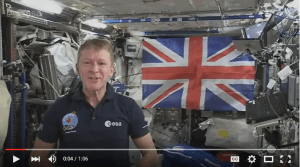
 s powerfully of the incredible results that partnership and collaboration between old enemies USA and USSR can bring. And why not all the other deadly foes in the long term being able to live in such an inspiring way too?

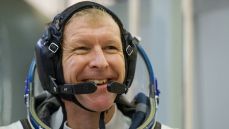
 Fast becoming a national treasure, Professor Brian Cox is also all over the telly and radio, partly because of the ISS rocket launch and partly because the media can’t leave him alone. You can catch this hyperactive, extra-special scientist best on Twitter – @ProfBrianCox. What with his live stage show at the Apollo, BBC star gazing live, his broadcasts on the Infinite Monkey Cage, appearances wherever his BBC contract forces him to turn up and then some, it’s a wonder he has time to be a scientist. But he has, and perhaps more than any other scientist of the current generation, he’s made a science career cool, sexy and a happening place to be.
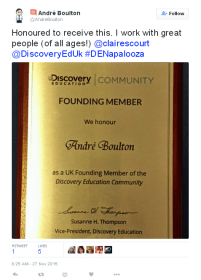 Head of Boys ICT, Andre Boulton returned from the DENSI camp in Washington, full of new ideas and experiences to share, and represented us at the DENapalooza on HMS Belfast last month, where he was presented with his founding member plaque for the UK Discovery Education Community.
 we allowed them to eat their lunch in lessons, or make other completely inappropriate choices. But good schools don’t, and moreover when it comes to using technology, can illustrate time and again how it can aid learning in ways previously we could not consider. Here’s

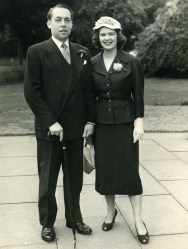 were at the time reserved for monks of the associated Abbey.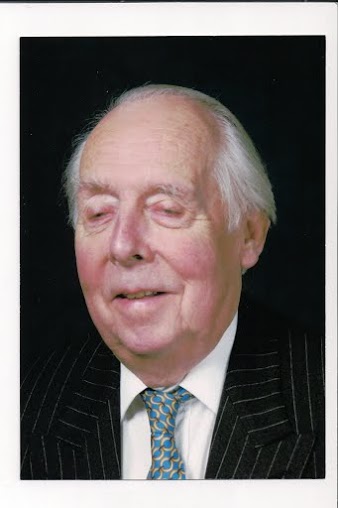
 It’s quite obvious that pilots and air traffic controllers need to be very alert, not just because there are thousands of planes up there in the airspace, but because there is so much more now to concern them.
 terror. What we as a nation did then brought us much international regard later on. Likewise, largely because of the remarkable 1993 film starring Liam Neeson, Schindler’s List, 7 times Oscar winner, we have learned that brave men and women living in Nazi occupied territories that assisted in the successful evacuation of Polish-Jewish refugees. The film depicts the real life story of Oskar Schindler’s life in Krakow, where as a businessmen he managed to save the lives of 1200 jews, by providing them with work in his ceramics factory. The close of the film shows Schindler travelling to the West away from the advancing Russians, hoping to surrender to the Americans. Wikipedia’s entry close on the film says this:


 A Principled view