“If we knew what we were doing, it would not be called research, would it?” – A manifesto beyond 2015.

There is no way Albert Einstein could have known where his research into Newtonian mechanics would take him into Space-Time, particle theory, the motion of molecules and that of the Universe. Reflecting on his life after the second world war, he had this to say “If we knew what we were doing, it would not be called research, would it?” Einstein spent most of his life working out how the chaos of the Universe was ordered, and pleasingly for us all his great work stood the test of time.

For the last 5 years, education in England has slowly been beset by educational change on change, to the extent now that everything we are currently working on for school-age children could be in a state of flux. At state primary school level, the National Curriculum has been renewed, but without a nationally agreed framework for its assessment and measurement of progress. Years 2 and 6 are currently required to follow the old English Maths and Science curricula, which is compulsory, though the levels used there-in are discredited. DfE have all sorts of transitional documents out there describing the next year’s curriculum to 2016.  At secondary school, the new national curriculum framework published in December 2014 describes the curriculum to be followed from September 2014. Need I write on? When change is so breathless that the framework around which careful construction is required is published after the start date, you know something has gone aglay. Government masks its ineptitude by stating that these curricula are statutory and must be followed by all state schools.

The GCSEs programmes for English, English Literature and Maths change this coming September 2015, as do most all A level subjects, though Drama, Geography, Languages wait a year and Maths gets to wait until 2017. Ways of grading are changing, GCSE from A*-G to 9-0, and A levels from modular AS+A2 to terminal A level at the end of 2 years. Not only are we to have a complete alpha-numeric soup of qualifications over a period of 3 years, but since the DfE have made it quite clear that the new qualifications are going to be more rigorous (harder), in the basket of qualifications we will also have apples, oranges, pears and such like.

DfE have of course tried to leaven the pain, by suggesting that during these transition years, the percentage of pupils gaining a new Level 4 or higher in English will be the same as those that would have gained a grade C or higher under the old system.  So not only are the exams to get harder, but in order to ensure fairness, candidates will not need to achieve as well as we might expect they would have to, given the more demanding nature of the challenge. Which of course means that once the old exams are through, we won’t be able to compare the next year’s cohort performance with the previous year, because the pass standard will be toughened.

The earliest that education research teams are going to be able to deploy statistical measures anew to compare one cohort to another is from 2018 0nwards. In research terms for independent research teams at for CEM centre, NFER, Institutes of Education and so forth, we are currently moving close to a Black Hole. Yes they can see and collect data from exam candidates at Key stage 2, 4 and 5 but each subject has been ‘pulled’ in one way or another to the extent that meaningful comparisons will not be available.

Within our national schools at the same time, the government has further destabilised provision by changing how schools are run, the money they receive, their mechanisms of government, the freedoms with which they can appoint staff (qualified or not), and whether these curriculum regulations apply to them. The product lines are Local authority schools v academy schools (stand-alone or trust groups), be they selective, comprehensive and secondary modern, free schools and university technical colleges. The  majority of these schools now report directly to the DfE. It is no surprise that the National Audit office (that watchdog of govt financial probity) has just declared (21 January 2015) DfE account “neither fair nor true”. In an extremely rare move, our public spending watchdog, has issued an “adverse opinion” on the department’s financial statements, indicating that it does not trust the accuracy of the DfE’s figures and is unable to assess whether it is providing value for money. The NAO said auditors had identified a level of “error and uncertainty” in the DfE financial statements that was “both material and pervasive”. The comptroller and auditor general Amyas Morse, who is head of the NAO, said the DfE’s failure to provide statements that gave a “true and fair view” of the financial activity of its organisations meant it was not meeting the requirements of parliament.

So there we have it. Within the state education sector, its controlling government department for Education and the treasury (let alone independent research teams)  have no chance of knowing whether its experiments with curricula and examinations are going to work until 2019 at the very earliest, and the watchdog that can actually can check something, the spending of our taxes, has every right to be deeply troubled. English state education has been put under the most extraordinary reforms, at break neck speed and at at time when the school population is exploding in most areas of the country. What a Big Bang lies in store?

Private schools within the Independent Schools Council family sit on the side and can only watch and protect their own from the incredibly damaging fall-out from such legislative, statutory and regulatory change.  We would not wish this on our worst enemies, and most of the state schools we work with are actually friends in partnership with provision. As a group of 1300+ schools, ISC has prepared on our behalf a manifesto for the parties moving forward toward general election. Entitled

“ISC 2015 Manifesto – It is time to reset the relationship with independent schools in the UK”

it is a statement of the goals, beliefs and aims of ISC schools. Now independent schools stand ready to reset the relationship; they want to be seen for what they really are and what they can offer for the benefit of all children in this country. The eight constituent associations of ISC have each agreed the manifesto and are fully behind its aims.

Claires Court sits with its mission very close to the ideals of this manifesto, which starts “We believe in: Breaking down barriers: the mission of all schools, whether state or independent, is to educate children to achieve their full potential; any barriers, real or perceived, between the two sectors are counterproductive; Social mobility: independent schools are and will be key contributors to social mobility; unlocking the potential of all children and young people benefits our society as a whole. The whole manifesto downloads from the link above or http://goo.gl/4wBQfw.

Anyone who has read my blog, or has listened to me speak or met me in person, can’t miss both my passion for education and for the pupils for whom I am responsible and my deep belief in the value of evidence-based education. In a school which has been in the same family ownership for 55 years, having had a leadership role for 34 of those years, I suspect I feel best placed to be able to reflect on the best value brought about by long term systemic development. One of the things Einstein struggled with is that the Universe (be that macro or micro) is beset by innumerable variables. Even though he gave us the greatest insight we could possibly have into gravity, we still don’t what it is really, can’t tough or explain it, though it affects everything we do on this planet.

In like manner with children, we know what they are like and love them beyond measure, and know we need to treat everyone as an individual. Whilst we can package them up and average them out, that’s not the same as ensuring that ‘Every child matters’. What we must not do is use ‘hindsight’ to manage education, which is of course what both Michael Gove and Nicky Morgan have done this parliament, recalling what worked for them in schools and imposing it on a country. I have no problem with being told that ‘all children by age 11 must know their 12 times table’, (Nicky Morgan, 1 Feb 2015 – http://www.bbc.co.uk/news/uk-31079515) but it’s the reductionist nature of such claptrap that causes me to have lost complete respect for the current ministers.

I’ll leave you with a final poster meme of our Albert, that perhaps suggests where I might place the current members of parliament in the evolutionary tree:

Posted in Uncategorized | 1 Comment

How not to save the Petrified Forest… a sideways look at Government School League Tables

In a belated effort to protect the Petrified Forest in Arizona, the Navajo Indian curators decided to put large signs up around the desert edge reminding visitors that “At the current rate of fossil theft by visitors, the Forest will completely disappear within 25 years”.  Soon after the signs went up, heard at the edge was the following conversation, from one visitor to her boyfriend:

Soak up the silence … Monument Valley belongs to the Navajo Nation. Photograph: Jean-Pierre Lescourret/Corbis = The Guardian

“Well, we’d better take our souvenirs now then.”

Thursday morning, 29 January 2015, and the air waves are full of critics and apologists alike for the latest raft of Secondary school statistics, published today.  Here’s the BBC take on that.

What is quite clear is that there is no real connectivity for the country with these tables for GCSE performance and tables of previous years. Some years back, the Department for Education (oversees English schools), OfSTED (inspects English state schools) and Ofqual (regulates qualifications, examinations and assessments in England) encouraged state schools to take up the lead of many independent schools to swap UK coursework GCSEs/BTECs for terminal international GCSEs.  So state schools did. The  DfE forced UK exam boards to swap coursework for mini-exams during the 2 year course, and these controlled assessments prove to be a ghastly innovation, as pupils entered a 2 year period in which they might face over 100 assessment exams for their GCSEs, Given there are about 300 working days for GCSE, in effect this meant students were taking an exam abut every 4 days.

Faced with no UK alternative, more schools moved some or all of their subjects to the iGCSE route, where assessment is solely by one or two long exams at the end of the 2 year period. Guess what – teachers and pupils liked this, because it meant the 2 years permitted subject knowledge and skill development to occur before a sensible period of 6 weeks revision, prior to critical and judgemental assessment could take place in the May/June of Year 11 (in the UK students 17th year of age). Guess what – standards rose in such schools, because the cut and mow was far more appropriate for adolescent development.

At the same time, the Secretary of State for Education (the politician who leads the DfE) of the day, Michael Gove decided that the English GCSEs needed to lose their course-works (wef Summer 2014) and controlled assessments completely (wef Summer 2017 – Art, Drama and Technology are 3 exceptions), and become terminal examinations like their iGCSE cousins –  the bulk of change to commence later this year, 2015 for Maths and English and the others follow suit next year.

Brilliant, what’s not to like? The removal for example, in English the Speaking and Listening coursework components of English GCSE  results in the grade achieved for English simply reflecting the candidate skills in reading and writing. Now that’s not quite so perfect for pupils and schools reared within a climate where all 4 English skills were valued and promoted.  Inevitably, English GCSE pass rates fell in Summer 2014, with a knock on effect for schools overall record of passing 5 GCSEs including English and Maths. In addition, DfE removed iGCSE English as being an appropriate qualification – so those schools with 100% of candidates taking iGCSE English have dropped like a stone to 0% gaining 5 or more GCSEs.

Some schools chose to pursue both iGCSEs (which are examined in January as well as June) and UK GCSEs, recognising that the new English GCSE was likely to adversely affect some in their cohort. It is alleged that the government also required the exam boards to manipulate statistically pass rates at C and above to ensure that fewer gained a C, in part to demonstrate that the exams were getting more demanding. In my school’s case for example, after 2 major appeals (2011 & 2012) in successive years over the statistical manipulation of pass rates, we have chosen to add both iGCSEs for Maths and English as additional cover for our pupils, to smooth their passage through very turbulent times.

At the time of writing, the DfE have just published the 2014 league tables, and I can see neither the English nor Maths iGCSEs reported that our pupils gained last summer at the end of their GCSE course, so they don’t appear in our GCSE success statistics.

As with hundreds of other schools, state and independent, across the country, we are incensed that the government publication of our GCSE results 2014 bears no relationship or accuracy to the actual results our children received this Summer. Some 40% of all examinations taken in independent schools use the iGCSE, and the DfE’s decision to exclude English and Maths iGCSE as valid indicators of performance means that for some schools, such as Eton ad St Mary’s Ascot, the DfE report 0% gaining 5 or more A*to C GCSEs. In our case, because we use a mix of the 2 qualifications, our actual results for gaining 5 or more GCSEs including English and Maths are 76.5, not 59% as stated.  The 2013-14 Achievements Court Circular is currently with the printers and will travel home with our pupils next Friday.  The Achievements brochure carries a detailed breakdown of all of our examination results this year, as well as the previous 4 years of data from 2010 for comparison purposes.

As we still have a mix of subjects using traditional GCSEs, at least we are not reported at ground 0%. But the local and national press will nevertheless report large moves in the swings and roundabouts of school performance, with potential reputational damage for all involved. As for the independent sector, approximately 40% of all GCSE exams sat are as iGCSEs – you can see the ISC information sheet on that here: Year-11-Results-2014.  The accurate figure for the percentage of candidates gaining 5 or more GCSes graded A* to C is 86%, and you can see those figures, accurate for all ISC schools in 2014 as reported to  DfE here, on the ISC site.

I am sure we will be reported as providing for our children well, with the 5 or more statistic showing we are well ahead of the basement level (40%).  But that’s simply not the point.  It really is very senseless for the DfE to capture the vast amounts of data on schools, and then each year, change the rules about what actually should be published, and then sound off about how well their statistics are reflecting a country’s efforts to realign for the 21st century against the tiger competitive economies of the far east that are said to educate their children so much more effectively than the UK.  Actually what Britain hears from those economies in Europe and the Far East is that their very rigour in technical examinations is destroying the creativity in their students that modern economies require.  They are sending delegations to England to see the best of what we offer and enquire how our schools (such as Claires Court) are able to juggle both academic needs with intellectual and creative skill development. Just 12 months ago we had some 150 teachers from Sweden here to explore how teaching and learning worked in a digitally empowered institution.

It is difficult to believe DfE could make things worse, but they have. As a result of the Gove reforms, DfE/Ofqual have insisted that practical examinations in Science are removed from the A level programme, because they believe the terminal only exam will give us greater rigour/make the exams harder, such exams to start next year. This week, in a speech to the Carlton club, Gove’s successor, Nicky Morgan has called for Ofqual to put these practical exams back into the A levels, because of the significant pressure from Universities and employers alike demanding that the outcome from A levels must be more than just an exam result – a successful A level student should also have strong laboratory-based practical skills. Not surprisingly, the exam boards are digging their heels in now, because after 2 years of argument with Ofqual, they have last month received approval for their new A level course, whereby the practical skills are embedded in the end of course exams, which are to examine much harder technical and mathematical skills than hitherto.  When the people in charge of education run the system like a push me-pull you train, is it any wonder that those ‘spectators’ to the politics decide to take their school into a different qualification framework that has remained stable for decades.

I am told the Navajo quickly took their signs down, when they saw an dramatic increase in theft from their ‘Petrified Forest’.  You don’t improve peoples’ behaviour by making them fearful of the future. People learn to do better things because that which is important is valued, time after time, season after season, generation after generation. Claires Court exists as both an Academic Institution, in which knowledge, skills and the ability to pass exams are nurtured and as an Educational Community in which all  are supported, pupils, teachers, parents and their families to a greater end goal than ‘pilfering’ – oh, and we don’t want a petrified Educational forest in the first place!

Posted in Uncategorized | 2 Comments

I am Claires Court

People in Place de Republique gather round tributes to those that were killed - Guardian news

People in Place de Republique gather round tributes to those that were killed – Guardian news

The brutal murders of some 17 people last week in Paris has caused much outrage over the globe, yet another incident in a global war between those that consent to living in pluralist liberal societies and those that wage jihad against what they see as decadent non-islamic values.  World leaders descended upon Paris on Sunday, to walk in solidarity with President Holland and as company for 1.5 million citizens who marched through Paris in protest against extremism, themselves shadowed by millions more across the rest of France and throughout the world. As a sense of balance developed through the week, it was not just the 8 Charlie Hebdo journalists whose lives were mourned, but also the muslim, Ahmed Merabet, shot at point blank range by one of the 2 hooded gunmen, one of three Policeman shot that day, the 4 jewish shoppers who also died in a Parisian supermarket the same day. Whatever faith, nationality, occupation – if you stood in the way, your life was forfeit.

The atrocity has quickly informed teaching and learning at Claires Court, discussions about the morality of war and peace, both in assemblies and lessons. Making sense of tragedy may not be possible, but translating information and questions into learning experiences is what assists us in building an understanding in our children of the moral choices that both individuals and communities need to make to ensure we have a civil society. And because we already have a complex curriculum, ‘Je suis Charlie’ will compete with other sources such as ‘Ich bin ein Berliner’ and ‘The Christmas Truce’, in which our older children are asked to identify with those involved and then contrast those feelings against the other opinions of the day. You can follow here a link to a Senior Boys assembly given this morning, in which Year 10 Historians juxtaposed Sainsbury’s use of the 1914 Trench Football event ( a symbol of something deemed good a century after the event) against the Establishment’s suppression at the time, because German warships had shelled the North Sea coastal towns of Whitby, Hartlepool and Scarborough, giving rise to 137 people killed and 592 injured, mostly civilians.

Independent School Regulations changed this January 2015, placing the promotion of fundamental British Values at the front of all school curricular provision in our schools. Whilst it is interesting to note that at Claires Court we are very clear about the values that underpin what we do, I’m not quite clear that FBVs (by which they are now known) are actually ‘frightfully British’, if you get my drift. Free peoples across the world value democracy, the sovereignty of their parliaments, the rule of law, the independence of the judiciary, individual liberty, and mutual respect and tolerance of those with different faiths and beliefs. This last November, we faced the choice of the Scottish people to secede from the United Kingdom – that would have been a very un-British act, and actually what price UKIP and the Scottish National Party holding the balance of power come the 8th May 2015?

What has been interesting as a Reporting Inspector for ISI is to recognise in my training last week in the new regulations that our job is actually to look out for practices that might seek to undermine FBVS, not actually worry about its overpromotion at all. In short we are not to overly concern ourselves with what people say, but make sure that a broad and balanced view is taken on people’s civil and individual liberties. And because the laws of our land apply to all people, whatever their age, stage, abilities, gender or sexuality, we must look to ensure those are properly addressed.  I quote from the Regs: “Article 9 of the European Convention on Human Rights guarantees freedom of thought, conscience and religion, and religion or belief is a protected characteristic under the Equality Act 2010. However, teachers and schools must ensure their conduct recognises their responsibilities under those duties to others. Teachers are expected to respect the rights of others and to respect those with different beliefs; expressing a view in an unprofessional way that involved singling out pupils on grounds of sexuality, or presenting extreme views without balance on a topic such as marriage for same sex couples, would be considered inappropriate”.

As Academic Principal it’s my role to stand by the will of parliament and its people to ensure that we as a school do everything in our power to ensure we educate within an environment that both respects others, their rights and beliefs, whilst ensuring that we actually propose views quite strongly on matters of right and wrong and give our pupils the opportunity to take a long hard look at that. My job is not to look for a mechanistic approach to this, to ensure that all the ticks match all the boxes, but to show that a balance is achieved over time. During my headship of 33 years, I have seen a very good deal of British terrorism arising from within, as well as more recent horrors inflicted upon us by those of similar criminal intent from other countries.

Social media messages called for Lassana Bathily to be recognised for his bravery.

Social media messages called for Lassana Bathily to be recognised for his bravery.

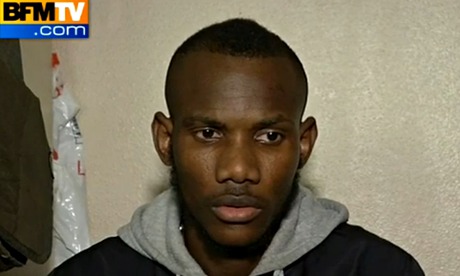
One of the better messages arising from last week’s terrorism event was that spoken by President Netanyahu of Israel in Paris on Sunday, when he praised Lassana Bathily, the Muslim shop assistant in the Kosher supermarket, originally from Mali, in west Africa, for risking his own life to save so many in the Supermarket by hiding them in the basement freezer and then leading them to safety. Not only have the wider community also joined in the praise, but an international appeal supported by many across Europe made to President Holland to grant Mr Bathily French citizenship.  For indeed, it was not as a citizen of France he had acted, but because of common humanity. And it is for humanity as a whole, pretty much visible within my school it must be said, all faiths and none, ability, colour, gender, race, sexuality and age certainly most varied that I am prepared to identify myself and my school with. Apart, we are divided and separated by our differences; together, we can really be our ‘best selves’- hence the ‘I am Claires Court’ title of this blog.

Posted in Uncategorized | Tagged , , , , | Leave a comment

“Everything’s already been said, but since nobody was listening, we have to start again.” Gide

I recently read a straight talking blog by Barry Smith that made me laugh out loud and made my day. You see I think teaching is really hard and that education is the most complex of industries. And to be good in teaching, to be paid for it as a professional demands of individuals that we practise hard to get better. My metaphor is golf. As I don’t have time to practise and begrudge even more paying for lessons, I have been looking for that golf video, magazine, hardware ball, club or swing-aid to bridge the gap. And guess what, ‘it’ does not exist – there is no substitute for 10,000 hours under the gaze of someone who knows what to look for.

As I have now been teaching one way or other for 40 years, I can claim to have exceeded 10,000 hours of work by more than somewhat.  To keep the golfing metaphor up, I have moved well into the established professional sphere and with that in mind, and look to the seasoned pro’s before me for inspiration. Perhaps this from Jack Nicklaus:

  • ‘Resolve never to quit, never to give up, no matter what the situation’.

Or from Arnold Palmer:

  • ‘The Road to success is always under construction’.

Perhaps the best known is from Gary Player

  • ‘The harder you work, the luckier you get’.

This Autumn term, we have certainly all worked harder than even our busy schedules might have suggested; competitions, festivals, fixtures, shows, concerts, a multitude of events for both young and old. Somewhat unfortunately for me personally, I ‘crashed’ metaphorically and had to bed-rest for 2 days in December, missing Art on the Street, the major way we sponsor/support Arts in Maidenhead.

Surfacing from the duvet, but still useless for anything worthwhile, I caught up on some reading around education matters. It seems from the briefings around Nicky Morgan, Education secretary, that she is not best pleased with her predecessor’s ongoing interference in her department’s affairs. As chief whip, Michael Gove is to advise David Cameron on all matters on the run up to the general election in May. And part of that briefing must be to highlight the government’s successes in Education since 2010. And therein lies the problem, because this unproven, radical agenda to nationalise education under the academies’ and ‘free schools’ programme will take a decade to prove itself. In the meantime, reducing local authority powers to the bare minimum for the coordination of special needs management, whilst disabling their ability to build schools where they are required, has already ensured a catastrophic loss of capability, knowledge and experience within our Town Halls. Perhaps that is what is intended, because local authority infrastructure is expensive, and often managed by different political parties and thus at variance to the views of the national government of the day.

So here we are, on the cusp of 2015, a time when Resolutions To Do Things Better are made.  Here’s my 6 ideas on how we might collaborate more effectively across the political and educational spectrum over the next 12 months.

1.  Support the development of a (Royal) College of Teaching, along the lines of the other Royal Colleges that assist in informing their profession, such as Surgery, Psychiatry, Pathology, Music and Art. We can’t always agree on what works best, but we can build a body of professional knowledge and evidence that supports teacher and curriculum development within the UK.

2. Focus schools  once  again on the  importance  of being both Academic institutions and Educational communities in the wider sense. Children deserve educational provision that  encompasses a broad remit, that qualifies them for their next steps in education through academic endeavour and includes opportunities for acquiring new skills and developing them to a very high level.

3. Put an upper limit on the League table success – such that above that the vanities of small differences don’t continue to drive school leaders on the futile quest to be ‘the best’. So for example, if at primary level the target is for 85% of children to be both literate and numerate to a bench mark assessment, acknowledge that the schools do that, but not report the stats beyond meeting the target comfortably (say +5%). This then permits schools that make the target then to utilise what resources remain to after school clubs and activities and so forth.

4. Giving the right for 1 boy and one girl from any sixth form to access an Oxbridge place, subject to appropriate A level success, and separately a Russell group place, and separately medical school would ensure that those institutions would naturally collect from the broadest talent pool and ensure an elevator effect for those most capable on societies fringe.

5. Build a coalition of support in the Fortune 500 companies and in public service to ban the provision of unpaid internships, and commit to the provision of paid internships that follow the rules in 4 – in short, opening up experience to the widest possible talent pool. We are not going to be able to solve the access issues that have become even more polarised to the most fortunate in our society over the past 5 years, but we can at least strive more effectively to do better.

6. Dramatically upsize the training and support available for qualified graduates to switch into medicine and the science/technology disciplines. Graduate debt is at such a scale now that only those who are wealthy can contemplate the second degree. Yet University is often wasted on the young and mature entrants will almost always be more focussed and committed to their chosen vocational career and we need those extra skills more than ever.

What is interesting for me as I watch our undergraduates  prepare for a life of employment after University is their sheer breadth of skills they are able to deploy into the market place. Most can speak very comfortably, they know how to persevere and be  stoic when things don’t go their way, they’ll take risks and turn their hand to something new, and above all they’ll travel to take up the  opportunity. Here’s a recent extract from a past pupil my wife Jenny and I taught in the Eighties, Gary Kung,  whose  family had emigrated to the UK from Hong  Kong to find for their family brighter opportunities in the UK.

“I was the pupil who played the piano well, and who started using a keyboard at Claires Court during the school play.Back then your youngest son was only a baby, and Mr. Gobs was the music director, Mr. Porter was teaching French, and Mr. Wells and yourself teaching Biology. Attached are a couple of pictures of me in 1989, and one last month, with my family. I moved from Hong Kong to the UK in 1984, and my English was very poor then. I can’t thank you enough for providing the chance for me to study at your school, where I matured and thrived. I then studied at Wellington College Crowthorne for the A levels. After graduating from studying medicine at The University Of London in 1998, I went back to Hong Kong and never came back.I am now a general doctor, married with 2 girls of 4 and 7”.

1085 Garry w the principal of Claires Court college

Gary Kung with Wildingsx3

There were no entry exams Gary could have passed in 1984 for secondary school; he was  a very talented young pianist,  but English and Maths were certainly not strong, and other learning in UK subjects almost non-existant. 5 years with us allowed Gary to become fluent in English and sufficiently academic across the curriculum to pass his GCSEs well. Without our own Sixth Form in those days, Wellington provided a natural choice for his Sixth Form, clearly (despite scholarship support)  a further severe financial challenge for his parents, but one that has so obviously paid off in the long term. Gary’s early successes at Claires Court were in performing in public, and Richard Gobs, our DoMusic in  those  days made sure Gary was continued to be challenged throughout his time with us, becoming a virtuoso soloist by age 16+. If we had focussed solely on the academics, then Gary would have not even reached first base. But Gary knew how to work, he used his experience and diligence from practicing piano to very good effect to master mathematics and sciences, and he knew how to use failure to motivate himself to succeed next time. Now Dr Kung, I have no doubt that he believes in the Player mantra linking hard work to luck. Yes, we all need a break from time to time, but when it came for Gary Kung, he worked hard to make the most of the opportunity!

Since Gary’s time, achieving places at Medical school for those suitably qualified has become increasingly difficult, and this rationing of provision is doing no-one any good at all, least of all the NHS that remains starved of doctors and has to trawl the other nations of the world to keep our Health Service staffed.  That clearly cannot be sustainable for us, or indeed moral in terms of robbing other  countries  of the doctors and health workers they need. Hence my call in suggestion 6 for a major expansion in post graduate access courses. I guess nothing will happen until after the next election, but I can but hope. In the meantime, Gary is visiting with his family over Easter, and I look forward to catching up with him and his family then, 25 years on since we last met!


Posted in Uncategorized | Tagged , | Leave a comment

2014 in review – A Principled view

The WordPress.com stats helper monkeys prepared a 2014 annual report for this blog.

Here’s an excerpt:

The concert hall at the Sydney Opera House holds 2,700 people. This blog was viewed about 9,200 times in 2014. If it were a concert at Sydney Opera House, it would take about 3 sold-out performances for that many people to see it.

Click here to see the complete report.

Thanks for reading my Blog this year. Here’s hoping that what I have to say in 2o15 is as regularly read!  If there is one blog I’d like to highlight from this last year, it is “You have only failed if you have given up; until then it is called learning”.

Best wishes to all

James

Posted in Uncategorized | Tagged | Leave a comment

What we can learn from other parents – Michael Rosen, Margaret Goldthorpe and Anne Atkins.

At the start of the Autumn Term 2014, the Guardian Newspaper ran an article on Michael Rosen, Poet, former children’s laureate, broadcaster and scourge of the Coalition government, to coincide with the publication of his latest book, Good Ideas: How to be Your Child’s (and Your Own) Best Teacher.  The article is worth the read, here, covering in a few hundred words both Rosen’s own life story and the reasoning behind why he felt it was time to write anew on parenting.  I suspect he is so much luckier than most parents, given the 40 years of practice he has had been a Dad, and as a result much more relaxed now perhaps than he was with his first born. Indeed as the article alludes, his second son Eddie died, aged 18, of meningococcal septicaemia in 1999, and we are left in no doubt that father Rosen faced grief full on at that time.  It left him very much believing that with your children, “What do you do every minute, every hour… that’s what matters.”

Michael Rosen’s book is deeper than this, not just about living life for the moment, but being there with your children, catching them when their curiosity is piqued and running with them to explore ideas and celebrate the learning that follows. I share the same philosophy, and in terms of behaviour agree with author Margaret Goldthorpe in similar vein, when she reminds us that we should ‘catch children being good and praise them for that’. Margaret writes for schools rather than parents, helping teachers understand how to build better relationships both within school and with parents, so it’s not quite so easy to highlight one book that says it all. However, her ‘Stay Cool in School’ helps those working with 7-11 year olds how to put across some difficult messages, such as ‘handling the desire to show off’ or learning ‘to admit we were wrong’. What I like about this book is that the core messages come through understanding the issues that Jesus Christ highlighted through his ‘Sermon on the Mount’.

‘Stay Cool in School’ does not require the children to have Christian beliefs. But at a time when we are challenged to be espouse British values, it is no bad thing to have a look at the underlying christian beliefs that underpin our society.  Having a better understanding of the way Jesus of Nazareth said we should live is no bad thing around Christmas time, very much a time when children are curious about belief and faith.  Whether it be for adults or children, it’s no bad thing to consider the moral and ethical implications of Jesus’ advice for our lives in 2015, and help guide us in choosing the kind of politics we want our country run by, following May’s general election.

It’s Christmas Eve as I write this blog, stimulated by a wonderful article written by Anne Atkins, on why she is looking forward to a school christmas dinner up in Durham, where her daughter Rosie sings as a chorister at Durham Cathedral. No adult here by the way, Rosie is of school age and following in a very strong family tradition of singing for her supper, schooling and all. You can read that article here, in which we learn how Anne’s grandfather and father, herself, and now both husband and children are bound together by a tradition of caroling through the generations. What Anne highlights as part of her article is that Rosie could not have followed in her family’s tradition of singing at King’s College Cambridge, because that is a male only choir, true of many other great choral foundations. As a result, Rosie Atkins has had to travel 200 miles North to ‘earn her living’ at the Chorister School, in Durham Cathedral’s back yard.

Anne Atkins spoke at our Speech Day at the start of this last term, and gave us 3 bits of advice for the future – 1.  Dare to dream your dreams! 2. Let your dreams develop! 3. Never, never, never, never give  up! She clearly runs her family fortunes by these, or otherwise neither Roise or Mum would be looking forward to Christmas dinner on Christmas Day at school. I know just how ridiculously hard it is to train a voice to be good enough for cathedral choir; it’s not something that happens to a child, any more than does great acting, sportsmanship or academic achievement. What works for many is that that path to success has been trod before by members of the family, be they parents, grandparents or even more distant relatives up the family tree.

There can be no better time for most of our families than Christmas, a time when generations do indeed come together, if not in person, then enabled by the extraordinary developments of technology over the past 20 years or so, via web, app, twitter and webcam. What Rosen, Goldthorpe and Atkins show us in common is that wisdom comes through experiences, bitter or sweet, and not necessarily in equal measure. What their own experiences teach us about parenting is that there are no easy answers, but a pretty decent set of route maps visible to those that want to use one.

And finally…if there is one other Blog post of mine I’d want you to read before the close of the year it is this one: “You have only failed if you have given up. Until then, it is called Learning”. You see, Christmas comes with all sorts of family games and competitions, when some of the family members can’t understand why they keep hitting the snake (rather than the ladders) or run out of digital lives  or can’t quite get their Q to hit the Triple letter score. And I know, from that same generational experience that Anne Atkins refers to, that it is only a matter of time and practice before the ladders, lives and scrabble of life become available for those who strive.  Perhaps 2015?


Posted in Uncategorized | Leave a comment

‘An idea can turn to dust or magic, depending upon the talent that rubs against it’ – Matsuo Basho, 1644-1694

As this Autumn term 2014 closes, it does so with newsletter, publications and reports galore for parents and pupils to read and enjoy.  Some of the creative writing in the Christmas edition of Scribblings is quite extraordinary, capturing in very different ways the ideas around remembrance.  As the Sporting Court Circular shows too, the sheer range and diversity of achievements by our pupils within sport last year raises the heart beat and takes my breath away – and I am just reading the prose, not participating in any way.

At the close of 2014 our community is some 1010 pupils and 200+ staff, working so successfully that we provide living testament to our belief that there is excellence within every child, whatever their starting points. We don’t select on artistic or creative ability and yet we are celebrating national awards holders in these fields. There is no reason for so many of our sportsmen and women to be selected for county and/or regional representation, other than they really do want to train hard, acquire the skills and put them to the test.

What the staff, be they teachers, coaches, instructors, administration or grounds staff show is an overwhelming dedication to the school, not because we ask them to show that, but because there is within our school a moral imperative to give every child that personal attention we know will make a difference.

And by way of celebration of our staff and what they can do, please enjoy watching this short video of the Senior Boys School Staff Choir at the end of term Carol Service. All of the rehearsal is done in their own time, led by John Carr, our data manager, whose skills ensure boys and girls, young and old, receive reports published out of our database.  He is a remarkable musician, and digital film maker as well.  John is seen conducting the choir, having set up the cameras in the church prior to the service. Behind every successful man is an even more successful woman, and the Senior Boys Director of Curriculum, Pauline Carr, was also on hand to ensure the cameras behaved! Senior Boys’ Director of Music, Adrian Roach also deserves enormous credit, for providing an environment in school where singing is seen to be really cool, for being open to all kinds of music trends emerging amongst students and the wider world, and for being in the forefront and leading the digitising of our provision. Two of Adrian’s pupils are now in the staff choir, Lucy and Hannah Wardman, as of course is Adrian himself, second right.

CC-StaffChoir

O Magnum Mysterium – Victoria


As the 17th Century Japanese Poet identified, ‘An idea can turn to dust or magic, depending upon the talent that rubs against it’.  So to in schools, we need both children and staff to be open to the ‘concept’ of excellence, even though at the outset, neither will not really know what the outcome might resolve itself to be. If we were just to concentrate on Literacy and the STEM subjects, as so much rhetoric currently coming out of DfE and politicians mouths, then that would be a surefire guarantee we would have no music, no art, no creative or dramatic life. I love the fact that we are renowned for our Science, Technological and Mathematical provision, and that many children go on to pursue these disciplines at A level and University beyond. But with so much talent in every child, it really does fulfill our mission to ensure that we surface every bit of magic that lies therein.

Have a great break and see you in 2015!

Posted in Uncategorized | Leave a comment

A perfect storm is brewing…

A perfect storm is brewing within the Education community around English curriculum assessment, examination, marking and reporting. Michael Gove probably lost his job directly because of it, and his successor, Nicky Morgan is already in trouble over it with the Parliamentary Education Select Committee.

If you do not already know, everything in English national assessment terms has been changed. National curriculum levels have been scrapped because long-term research identified no lasting improvement in standards. Primary school training courses abound on assessing without levels, whilst Ofsted is now making it clear that marking and assessment methods are to be changed/reduced. At secondary level, GCSEs are in turmoil, with new grading systems and ‘fatter’ English and Maths subjects coming in next September, the rest to follow in 2016. Out with grades A* to G, in with grades 10 to 1, with 4 being the equivalent of a C. Most state secondary schools reacted by shortening their pre-GCSE programmes to Years 7 and 8 only, with GCSE courses starting in Year 9 and early takes in Year 10. But the DfE now insists GCSEs can only be taken at the end of Year 11! Many A Levels are also changing from September 2015 (Geography and others in 2016, Maths in 2017). When the subjects change, they are decoupled from the AS Levels taken at the end of Year 12, so that students are to be examined on 2 years’ work by terminal written exam. In the midst of this chaos, the government has now changed its league table structures for January 2015, and changed them again for January 2016. A considerable number of GCSE subjects are no longer to be counted, such as our own iGCSE English exam, even though they are and will remain accepted in England and all over the world. You simply could not make it up.

As Academic Principal of Claires Court, I am steering us clear of the turmoil. Having abandoned the National Curriculum 7 years ago, we are now adept at measuring attainment, progress and effort as was independently confirmed at inspection last March – http://www.clairescourt.com/files/CC_REPORT_with_cover_2014.pdf. Sections 3.27 to 3.31 describe how well we were doing then, and we have continued to develop our processes carefully. What we are not going to do is leave the English national examinations system (GCSE and A levels) not least because universities and employers in this country understand them as do all higher education institutions in Europe and America. Above all, as a nation we understand the framework, we have grown up with choice at 16 and the reduction of subjects studied in the Sixth Form. That flexibility means that our 18+ year olds are already becoming pretty specialist in what they know and can do really well. Accountants, scientists, medics, linguists, designers and actors all find their niche at this stage, and it also means that in-degree work placements and exchanges with other seats of learning and industry powerhouses can be arranged easily

If your child is in Early Years to Juniors at Claires Court, we have adjusted our reports significantly to reflect more accurately how your child is performing within his/her curriculum and against the Claires Court Essentials. At secondary level, our use of Attainment gradings for subject will continue, because they align closely with how we see performance mapping onto GCSE and A Level outcomes later on. We have reduced the content of the Year 7 to Year 9 December reports to ensure teachers and pupils spend more time on curriculum activity and skill development. For those pupils with learning differences and difficulties, their individual education plans will continue to be updated each term, to keep our focus on specific improvement clear. Early in the new year, our revised offer for GCSEs, old and new, will be published to assist Year 9 pupils and parents with option choices, and meetings to support parents in those choices are planned for early February. Even though our 2015 Sixth Form handbook is already published, we will update this shortly to reflect any changes made necessary by the roll-out of the new A Levels. As with the vast majority of our publications and policies, you will find them on our website either in the ‘Parent Area’ or under the ‘Academic’ tab.

We’ll continue to keep watch as those that steward our national qualifications bicker and argue and fail to act in a timely manner. We are supposed to be teaching a totally new harder Chemistry A level  syllabus  next Autumn, but that has still to be released because QCA want to toughen up the Maths component of it substantially.  AS with the new Maths A level (delayed until 2017 now), you can’t just toughen up requirements at A level without  permitting the time for toughening up below in Years9, 10 and 11. And therein lies the rub; just because central government has decided it wants our 16 year olds to compete more  strongly  against those in Shanghai, doesn’t mean to say that degree of progress is possible. A generation ago, just 8% of children went to University, now it is closer to 50%. That’s a better measure of real progress, with the vast majority of new well paid jobs emerging at the graduate level.

Posted in Uncategorized | Leave a comment

What do we need to know? Legendary producer John Lloyd thinks he knows…

The remarkable mind that brought you QI, Blackadder and Spitting Image asks one of the world’s simplest but most significant questions – what do we really need to know? What should we teach our children, and what important information should all adults have at their disposal? Legendary producer John Lloyd turns his curiosity to knowledge itself, and questions whether intelligence is really all it’s cracked up to be.

Posted in Uncategorized | Leave a comment

If you want to go fast, travel alone. If you want to go far, travel together.

I used this phrase at the end of the summer term 2014, to highlight that our work as a school is always more effective in the long run when we work in consort. Currently we are mid-term, with a whole lot of work well under construction, and with no real reason to say more than that. Rather like a building mid construction, there will be stages such as ‘laying the foundation stone’ and ‘topping out’ though put simply, the building’s finished when it’s finished.

We are midst stream with our plans for a new school campus at Claires Court Junior Boys. We have partners in our work, including our architects PRP, our project managers Synergy, and our current site investors Berkeley homes. IMSB have proposed a hospital development on some 8 acres of our land at Maidenhead Thicket, and if fulfilled will provide valuable financial help for our new school. At the time of writing, a local gossip site quotes a variety of opinions which suggest that we have failed planning permission and/or that the Hospital have pulled out.

To set the record straight, we have continued to work in considerable detail on our new school designs for our expanded site at Ridgeway. The RBWM planning office have let us know that they cannot deal with our application any earlier than early spring next year.  In the meantime, RBWM planning is working full pelt to establish its building and planning strategy for 2015 and beyond. It is required to build some 900 houses a year for the next 10 years, it has proposed bringing some green belt sites into consideration, including some of our property of Cannon Lane, and that consultation is due to end early December.

In keeping our planning strategy options open at this stage, we give ourselves time to see how local and central government are going to confirm how further construction is to be brought on for Maidenhead, and we expect our final planning application to take this plan into account. In the meantime, we are completely committed to our current sites, and we continue to make investments on all three sites to maximise the educational provision for our pupils.

CCJB+In January 2015, it will become clearer how best we can realise our project to unite the school campuses. We will continue working on our new designs for teaching, learning, arts and sports for our new campus, and shortly into the new year, we will have completed those designs ready for making our planning application. Watchers of our work will be able to trace change via our consultation site, http://www.clairescourt-consultation.co.uk/index.html, and via our on-going mailings from the school offices.

The estimated opening of the new school continues to be September 2017, and remains achievable within our revised planning application schedule. Plans of this scale and importance take time and care to bring to fruition, and will continue to require good will from all of those we work with to ensure we achieve the very best for our school. Should the timescale slip, then the next date of opening will be September 2018. Whatever happens for the future, it also remains our clear priority to run the current school sites as effectively and efficiently as possible. We will maintain their fabric to the very high standards for which we are renowned.  We’ll not only want to travel together in order that we can go far, but we’ll also not spoilt the ship for a hap’orth of tar!

Posted in Uncategorized | Tagged , , | Leave a comment