“We are spiritual beings having a human experience” Pierre Teilhard de Chardin

In UK Education we get a chance to reflect on new beginnings twice a year, because of course the start of the academic is divorced from the calendar by 4 months. This separation does allow me as a school leader 2 bites of the cherry, and so here goes.  Hold that thought…

…as it happens my https://jameswilding.wordpress.com/2013/09/11/a-pig-flying-through-the-air/ post was the most read of my words last year, and continue to be digested by those who visit anew each day. In part, its popularity won’t actually be down to my words, but those I link to, such as former Children’s Poet Laureate Michael Rosen and Professor of Education, Bill Boyle. M Rosen continues to ‘flame’ at Michael Gove and his acolytes, whose logic bears no reason, and in all probability are causing the greatest damage to education since the emancipation of education in England.

The fuller quote I lead into 2014 is “We are not human beings having a spiritual experience. We are spiritual beings having a human experience.” Pierre Teilhard de Chardin

My own staff are probably used to my mantra that we only exist because we offer an academic education. Yes we play sport, we make music, we create great art, we nurture and provision for at least 8 hours a day and for many perhaps rather more like 10 or 12 hours. But that wrap-around is precisely that. At the core of the Claires Court essentials lie the development of a whole host of questions and challenges through which the child gains knowledge, skills and insights into the world in which they are very much part of. Education is just that (from the Latin), a process by which we lead out of the child the adult they are to become – in modern eduspeak, the leading out of the successful learner.

In previous writings, I hope I have identified that the major research organisations of the world continue to spot that the most successful schools are those that blend the need to ensure that each learner develops successfully, within a school environment in which the extraordinary nay impossible seems  to move within reach.  And what makes the latter happen in successful schools is the construction of a whole school experience for the child’s time therein that holds true to the cause.

Schools are absolutely at the heart of socialising the community therein, but by no means the only way that learners become engaged or inspired. But I ask you “How many knew you could ‘flop’ at High Jump until Dick Fosbury showed us you could?” And that is what you find within great classrooms each day; boys and girls showing to each other skills and crafts beyond their ken until surfaced. And that’s where great teachers are to be found; most of the time not leading from the front with ‘chalk & talk’, but working with their children as a lead learner, discovering anew, and showing excitement and passion as they master and memorise, peruse and take in all to be covered that day.

Where MG and his ilk go wrong is to suggest that it is competition that makes learning happen. Because it does not. Competition is how to hone skills acquired to achieve peak performance, but it is not how we learn anew. “Does the English test side coming back from Australia need some more competition just now?” you might hear me ask.  Absolutely not, and it is the very failure of our Test team, and the success of the Australians in the same series that points us at where great learning happens.

Classrooms, be they cricket nets or nests of chairs & tables, outdoors or in, are places in which children need to feel secure and able to learn. Our charges are not animals to be herded and trained like showponies or carthorses to be prepared for the work we have identified for them for the future. That’s where de Chardin’s revelation is so helpful, because each one of us is a spirit personified in human form (and I am not going all religious on you now).  You can’t corale spirit, in fact you can’t touch it, but you know when it’s there and equally when it is not. Sometimes a brave face hides the hurt therein; in many ways it’s the small parts of school time that make a child’s experience of school so much better. The quiet words with those alongside as they await assembly to begin, or when lunch is underway, or the acts of kindness from/to others that cause the spirit to glow and grow.

Most obviously, for those who are successful at school, MG argues that they need greater challenge; ‘Exams need to be harder so that the thrill of succeeding is greater’ or some such tosh. What’s he is right about is that at public exam level, our exams need to be fit for purpose and achieve consistency of qualification from one year to the next. None could argue that motoring on the roads in 2014 is rather harder than 1964, so it should be no surprise that we have extended the demands on the ‘learner’ driver during their training period as well as in the test itself.  We don’t argue that the driver needs to be on the race track at any stage, in fact advice is often the opposite, and we don’t have prizes for the ‘winners’ and they don’t ‘take all’.  I am all for profit-related pay, but for all in the education team, not just for the man of the match. The best that happens in my school is the smallest of actions, be that the return of a mislaid coin or hold of door open, and what monetises that, and all the thousands of other small acts of learning each day is the culture that we enable through service to each other above self.

Despite the appalling weather that is causing such hardship and heartache around the country, I feel really very optimistic about education local to me for 2014. Above all, it is the holistic development of the child, challenged and encouraged in equal measure at every stage of their ‘growth’ in school that will ensure their spiritual, social, moral and cultural development is as rich as it needs to be to sustain them as humans in a complex world. Along the way, qualifications and achievements will arise and surprise, they’ll witness as well as perform deeds of such daring do it, and in such way take all of our breaths away, and help our spirits soar.

Posted in Uncategorized | Tagged , , , , , | Leave a comment

Shared New Years resolution courtesy of Mark Twain via Lauren Laverne

@laurenlaverne: NY resolution 2014 c/o Mark Twain: “Let us endeavour to live so that when we die even the undertaker will be sorry”
Shared via TweetCaster

Posted in Uncategorized | Leave a comment

‘Defeat, failure, loosing, falling on your ass, are the only things, that can teach you how to win’ – Andy Murray

The relentless focus over 2 decades by politicians and educationalists on school improvement measures is laudable, because we all want school to be successful places of learning. Andy Murray’s take on ‘how champions learn’ challenges that notion somewhat; it could be argued that our greatest experts in success are rather too often mavericks to the accepted wisdom that it’s the linear process up the ladder of success the learner needs to pursue. And though there are plentiful examples of successful children becoming so as adults too, I sense that perhaps this is how to grow successful academics, not a recipe for how to do the same for every adult vocation, skill and craft.  What is clear is that we simply don’t surface enough great tennis players or for that matter sportsmen and women more generally through normal routes involving a traditionally balanced education.

Now, I don’t think the answer is to cut History or Art or subject, but to provide more of the extra aspects and keep the curriculum well blended. All too often the athlete pulls up lame, or the singer’s throat is sore and so forth. It’s at times like these that the other dimensions come back into play, to capture interest and provoke thought. And no where is that more obvious than when meeting young choristers at Cathedral choir schools.

We know and accept this fact for dancers, for musicians, for choristers, for performers – for these we need to provide a skewed curriculum enhanced with the skill we want to develop. Watching The Choir last night (Sunday 22 December), we saw workplaces choirs face their finals in the beautiful surrounding of Ely Cathedral, and receiving some coaching by the choristers of Kings School based there. The young boys and slightly older girls were clear coherent and incisive in their advice “Sing to the one person at the back of the Cathedral and let the walls do the rest” said one.

Andy Murray talks about defeat and failure being essential elements of learning how to win. He’s wrong when he says they are the only ones, after all if that were the case, why would he have chosen Ivan Lendl as his coach. Being mentored by the great and the good also includes a modicum of inspiration too. If life was only about grazed knees we’d all give up tomorrow; it’s when grazed knees are gained during a learning journey to a place we want to be is when we learn to strive!

Anyway, if you didn’t know, Claires Court has a workplace choir, lead by our data manager John Carr. Together with Pauline Carr, our director of curriculum, they make a fine husband and wife team on camera too, so we have some good evidence of the Claires Court Staff Choir in action – most recently at one of our end of term Carol services.  Here they are in full flow at St. Lukes Church Maidenhead, singing John’s own arrangement of Jesus Christ, the Apple Tree.

Not surprisingly the Staff Choir inspires our school community old and young alike, for they are doing something we can’t do, and certainly couldn’t envision unless the staff showed us how. That’s the surest way of growing successfully as a learner; see something you simply couldn’t imagine and be inspired by that experience to learn how to! Oh, and learn to take the knocks along the way, because if learning journeys were easy and without pain, then no-one would want to travel that way in the first place.

Posted in Uncategorized | Tagged | 3 Comments

Good or Bad Education – An End of Year Review 2013

One of the Journalists I admire most is Ben Goldacre. Back in the day when the paperboy (most likely one of our own sons it must be said) trudged up the driveway to chez Nous to drop off a copy of the daily Guardian, on receipt I would quickly flick through the pages to see if Ben had reported on an aspect of Science, reported in the press or journals in some way. Its headline was Bad Science.

For those not aware of the Goldacre Oeuvre, it needs to be pointed out that he is not universally liked. Over the last decade or 2 of his work, he has managed to attract the wrath of big pharmaceutical companies and of other stake holders in the medical world. Read more here – http://www.badscience.net/about-dr-ben-goldacre/

It must be said that I have tried to book him for speech day, but his agent (and Ben) tell me he is too busy. That’s a good thing, because Ben and his work needs to be out there and in public. In short, he is the independent principled reporter doing that thing that gives journalism a good name – turning over the rocks and exposing corruption wherever it occurs.  And not just in Medicine.

In their book, Bad Education, Debunking Myths in Education,  Philip Adey and Justin Dillon debunk  many of the educational myths currently supported by those who don’t know better.  You can buy your own copy of their book here – and as the Amazon website states – “This book asks awkward questions about these and many other sacred cows of education. Each chapter tackles a persistent myth in education, confronting it with research evidence and teasing out any kernel of truth which may underlie the myth.”

http://www.amazon.co.uk/Bad-Education-Debunking-Myths/dp/033524601X. Suffice it to say that on publication I bought 10 copies and force-fed my senior managers with it. That’s a good thing by the way; as the legendary researcher John Hattie’s work exposes, direct instruction is enormously powerful. But I digress. ImageBen Goldacre’s book Bad Pharma:How Drug companies Mislead Doctors and Harm Patients, he explains how all that happens. Today in my in box popped up a post-publication sequel from Mr Goldacre, and it makes sobering reading – in short things are not getting better.

Now as someone who writes about education, I’ll cease publicising stuff about another sector of public interest, and revert to words on Education. Messrs Adey and Dillon do us all a great service, by surfacing current knowledge on what research evidence indicates about best practice. But like all books, their work is based in the past, not the present. Education is now such a political football that researchers the world over now await the latest government dictat and policy statement, and then almost before the ink is dry on the parliamentary order or OfSted memo, teams of researchers set out to investigate what’s happening in the classroom as a consequence and report back.

And what’s good for us who run schools is that there are just as many heads and classroom practitioners awaiting the very first soundbite from that research, to check our status and position accordingly. Have a look at Larry Ferlazzo’s website just to get and insight into what I mean in this regards – the man is a legend of the ether.

Closer to home, Tom Sherrington at King Edwards Grammar School, Chelmsford does a pretty good job too, making a principled stand against the tide of authoritarian hogwash, http://headguruteacher.com/2013/12/19/taking-stock-of-the-education-agenda-part-2/ being his most recent example. I was moved to comment on his latest post “I read your blogs in awe and sorrow. Awe because your values seem so clear and driven by the professional integrity absolutely necessary when the education currency has been so debased by the false gold of political expediency.And equally because as a genuinely independent headteacher of an avowedly broad ability school in the private sector, I see formerly great state schools being reduced to empty husks by the pressure to conform to the 2 legs good 4 legs bad theologies you speak of.”

Tom was kind enough to ping back ‘Thanks James. I recognise that sorrow…but I remain hopeful that the tide is turning. Albeit slowly!’

At the close of the year, I think it is worth restating that for our school, Education works because we have clear Aims, Values, Characteristics we know need to be admired and a principled framework established within which to operate.

The Key Values of Claires Court are:

  • Responsibility for ourselves

  • Respect for others

  • Loyalty to our School

  • Integrity above all

We aim for our pupils to pursue and acquire:

  • a modern relevant education

  • a love of learning

  • a range of life skills – academic, social, musical, creative and sporting

  • a strong spiritual and moral character

We call our Learning Philosophy the Claires Court Essentials. These cover the entire age range of the school, and are developmental in their approach. They are underpinned by leading research outcomes, identified by John Hattie and other world researchers as the best way of proceeding in education.

Plus…

  • We recognise the importance of building confidence and self–esteem in each of our young people, and to prepare them for the next step in their schooling

  • We work in partnership with parents and guardians to help our pupils achieve their full potential

  • We promote an understanding of the need for care and consideration for others within our community and the wider world

These final 3 bullets no longer sit in our aims, hardwired as they are in everything we do and promote. Sure Thing, we can’t please everyone every time, but that’s because their concerns aren’t that we miss these targets, but simply that our hairshirt might sit less comfortably than they would wish.

As readers of my blog and/or watchers of our newsletters may know, we have had an extraordinary end of term, in both school development and pupil achievement terms. We have been able to identify a possible complete renewal of the school and envision how that might be funded without cost to parent tuition fee on our 50+ acre campus by our Junior boys school, Ridgeway. At the same time, to have one of this year’s GCSE students, Amber Hill be voted as BBC Young Sports Personality of the Year brings particular pleasure and resonance to a school leader who makes it pretty plain to anyone who chooses to listen – we don’t select our pupils on ability on entry, but what we do try to do is help our young children look to the future and achieve beyond the imagination. Here’s a simple set of slides from an assembly at the start of the last academic year, one in which we celebrated that 2 past pupils had competed in the London Paralympics – http://goo.gl/DrXJhB. Almost 2 years ago I took a senior school assembly focussing on our forthcoming charity week, the talk being entitled, Normalising the Extraordinary – http://goo.gl/3vidWa.

Arguably one of the most powerful educational tools in the box is building in children the ability to hear and make verbal their inner voice. I have no doubt that anyone listening to Amber Hill on TV last Sunday evening couldn’t help but be impressed by her simple, straightforward grounded comments. ‘Cool as a cucumber’ is Amber, and she needs to be in her chosen sport of skeet shooting.

And for a child to develop their inner voice, their teacher must be very careful in what they do and say. Successful learning comes from missing the target hundreds of times, but only just. In educational terms this is what is understood by the Russian psychologist, Lev Vygotsky who developed the concept of the Zone of Proximal Development, often understood to refer to the way in which the acquisition of new knowledge arises through the skill of the teacher placing the next step within reach of the learner. In recent years, in state schools it has been required to show that every learner makes progress every lesson, a methodology imposed with little research to indicate that it would work. It seems blooming obvious that ‘no child should be left behind’, but that’s not the same as requiring every child to stay up with the pacemaker. Education isn’t linear and learning specifically is not. We can all remember the striving to achieve the unachievable, and great teachers make that struggle evident, not invisible.

This summer not only did Amber shoot in World Championships, but her contemporaries Ellie Rayer played Hockey for England whilst Josh Harris and Rory Kempson rowed for England in the Home Countries regatta. Their fellow students, from the junior boys school, Nikolai Hinterreither and Ethan Bains–Gillespie, were selected to play Chess for England for the next 7 years, until they are 18 years old. For a school to graduate 6 internationals in one summer is quite an achievement, and for one of those to be voted BBC Young Sports Personality of the Year is beyond our wildest imaginations. And that’s what our school programme sets out to achieve for our young people; we are modest when we state we wish them to reach their potential, but what we know is that their potential is far beyond their own belief system when they join our school.

If you were able to listen to Amber speak last Sunday evening, on receiving her award from Clare Balding, you hear our school talk – straight, no-nonsense, unassuming. It is by small steps that might journeys are made, it is by striving and failing and having another go that we can develop the character that underpins success. That’s what brings me to work each day, and a promise to find for each child the chance to excel, not in things the government wants, but that which has grown within their own heart.

Posted in Uncategorized | Leave a comment

End of Term Newsletter December 2013

Herewith our end of term Newsletter. Enjoy.

Posted in Uncategorized | Leave a comment

Claires Court Achievements commentary 1 December 2013

 This article written to accompany the Achievements & Results Court Circular, to be published Tuesday 7 January 2014

http://goo.gl/6gNB5N

The Registrar is often asked by prospective parents “Why is your last Inspection document so old?”, noticing as they do its date of February 2008. The answer remains very simple – we are an independent school known to be good, with excellent pastoral care and extra-curricular provision, and in terms of many of outcomes for children, outstanding for a school of our size. This means that we don’t have to be inspected frequently, but our time is now up and when the Inspectors visit, they will see from the many and diverse achievements listed evident in this series of Court Circular publications looking back on 2012-13 that we have developed yet further our reputation for providing outstandingly for our pupils.

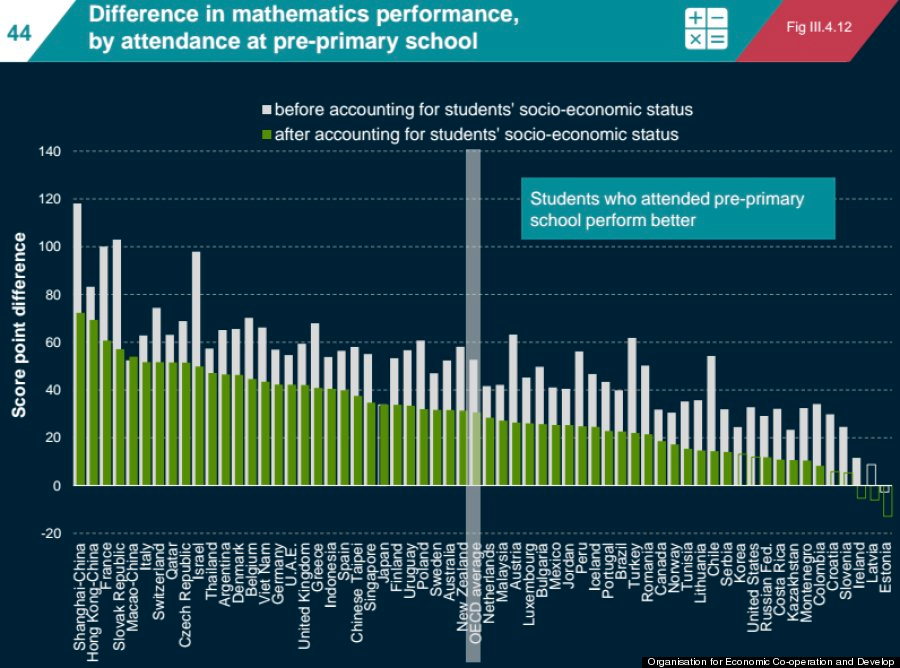
Throughout the development of Claires Court as an educational institution, the individual child has been at the heart of our planning. Entering the school from Nursery has no selection criteria, being automatic for those that choose us as their Junior school. This may impose a breadth of ability on us in these lower years, but it’s not one that concerns us. Our benchmarking agency is CEM centre, University of Durham, and we send them our data on pupil performance on entry into the school at Reception, and we use that data, and follow-up assessments to monitor pupil progress up through the school, all the way to A level. Published in 2008, “The first seven years at school” research report by Professor Peter Tymms and his co-workers at CEM/Durham made it quite clear that the most important years for educational progress to be made are those in the first 3 – that’s Reception, 1 & 2, though of course appropriate interventions by skilled teachers higher up the school continue to make a difference all the way through. The critical 2 main foci for attention must be Mathematics and Reading, and though developing Vocabulary is important, its contribution to the child’s future success is not so important.

What the research made crystal clear was that progress is very varied from one year to the next, fundamentally down to the critical importance of the adult working with the child at schools, namely the teacher. For children to make progress every year, the teacher has to ensure that the key interventions are made week by week, term on term. Building on that research, we have continued to provision the use of specialist staff to support the Form teacher in their role, and it is so rewarding for example to witness the real joy our children show at the learning of modern languages. Frankly, the introduction of Mandarin into the mix of French, German, Latin and Spanish in the primary phase has stepped up the process of language acquisition even more. In short, our children in the junior years are really best placed to make the most progress, given the year by year focus on the core subjects, amplified by specialist staff who support the form teacher in those interventions.  And prepare them we do, for a range of secondary destinations with the skills and interests that will nourish their development into their teenage years.

The research has another major key finding though;

“Not only does this analysis underline the importance of looking at progress year on year but it also highlights the value of taking the long view. An effective school must surely be the school which has a long term positive impact on its pupils and this may not be the same as relative attainment at the end of the last year. The analyses presented in this paper suggest that large gains in a single year of schooling are likely to have just a little impact in the long run.

It is the cumulative effect of the whole school experience which matters.”

And that’s why we have every confidence that the vast majority of our children developed in our junior schools are going to do even better with us in the Secondary and Sixth form years. Given our clear values Responsibility, Respect, Loyalty and Integrity, how could I as Academic Principal, look existing parents in the eye and say “I am sorry, your child is no longer good enough for the school?” It’s true of course that we can’t be the right school for every child, particularly those who require intense resources to support specific difficulties, be they academic or behavioural. What is the case though is just how well our Claires Court Essentials are a best fit now for the secondary phase.  As with the early years research, we know it is essential that it’s at the first three years of secondary that the most progress can be made. There are deep and profound differences between the specialist subjects the soon-to-be teenage learner encounters in years 7 and 8. And Intelligence is diverse, dynamic and distinct too, with no child being the same. Through our breadth of provision, through the children working with specialist staff on a question based curriculum, we enable Years 7,8 and 9 to develop their developed abilities still further. I am a great fan of the educationalist, Sir Ken Robinson, who repeatedly blames school for their narrow focus, and has this to say on the matter: “…how our education system is outdated and is based on a hierarchy wherein most useful subjects for a job are considered to be the most important and academic ability, which has really come to dominate our view of intelligence because the universities designed the system in their image”. Over the past three years, we have dramatically developed our curriculum to include those skills and talents we believe are needed for the future, to develop and nurture our students’ creativity. Here’s Sir Ken again: “In fact, creativity, which I define as the process of having original ideas that have value, more often than not comes about through the interaction of different disciplinary ways of seeing things.”

That’s why we attach to our curriculum so many empowering visits to museums and galleries, travel into the natural world for field trip and research, and provide specific problem-based learning opportunities for collaboration and research. This marks Claires Court out as significantly different from so many other schools, because we set out to provide that whole school experience that CEM centre research states is essential for effective education. Sir Ken also assures us that we are right, stressing: “the importance of an educational system which nurtures the gift of the human imagination and ensures that children have brighter futures and better tomorrows. Clearly, for a brighter future, education needs to appreciate the true value of human imagination and nurture it”. As one of the earliest adopters of cloud-based technology, we have given to our pupils a whole host of tools that ensure they can research, add value, modify, imagine and re-purpose solutions to problems. It is only with the arrival of these tools that genuine collaboration has been possible on a daily or even minute by minute basis. Co-workers don’t need to be in the same room to be on the same page and problem! And because the tools are universal, visible and usable on any computer platform, there are fewer excuses for not being able to participate – which kids being kids will always happen.

Claires Court as a community did not appreciate we were going to lead the way in digital literacy and computing, but we now do. In 2010, we created three things; a vision for how schools can integrate their entire productivity backbone, how teachers and pupils can access anytime, any where both the tools to be productive and the information to go with it, and developed a training programme from beginner to certified trainer in tools for the job that will serve the individual in good stead anywhere and in any language in the globe.  Now that’s some success, and I guess why Google and Samsung are happy to encourage us to this day. The video Samsung produced of our work here has been shown across the globe, and we welcome visitors to the school to explain how this success has been engineered. As 2014 beckons, we have over 450 Chromebooks, 200+ PCs and work stations, 100+ Macbooks and netbooks deployed in the school, and commence a formal trial on the additional use of Samsung tablets in January. I really don’t think it’s about the technology by the way; tools are just that. It’s about the development of proper young craftsmen who has the vision to make choices, and does so – the written form one day, a video the next, drawings and cartooning the third.

One of our students, Joe Reeve, has written us an App so that our digital space, “The Hub” can be added as an extension to the Chrome browser, making it available in one click for quick reference. That’s both neat and ingenious, and I am sure more Apps are on their way from our community of learners. There are commercial Apps out there that now rank schools, and about 5000 secondary schools in the UK, state and private. Now Apps aren’t necessarily going to take all a school’s successes into account, but our aims is to be in amongst the top 10% or so for academic success. Of course we could push our children solely down the ‘academic curriculum’ path, but for most, they haven’t come to Claires Court to be nurtured solely this way. That’s why we are also known for Art, Drama, Public Speaking and Citizenship, Sports and our work with those less fortunate.  Mr Andy Giles and Mrs Rogers run our Sixth Form of 110 or so students with great skill and passion. In his exit survey each year, Mr Giles finds that Year 13 rate their experience with us in the 90%+ satisfaction level. No, even at this level, we don’t select out our weaker pupils – they are as welcome as the most able to give of their best in their A level studies. And the telling evidence from CEM centre on our A level performance in the Summer of 2013, is that our students do far better than their abilities would predict – “It is the cumulative effect of the whole school experience which matters”.

So please don’t belittle the academic achievements you read herein. As the award of the Whitbread prize to recognise the best achievements for a GCSE pupil in an ISA school  to Gabriella Lindley shows, it was not just the A*s that counted – her all round achievements, for herself, for her school and for others in need are what counted. And for her contemporary George Monk, I commiserate – 9A* and 4 As really not quite enough this year! With so many candidates with a history of arriving at Claires Court for their secondary education having failed their 11+ and being told they weren’t good enough – their excellent results are a formal and public endorsement that what we do and the way we do it works.

So dear Reader, enjoy the edition of our Achievements brochure when it is published (any time soon), and read it with the following in mind. If we deselected our weaker pupils, then we could publish better results. But they wouldn’t be better for those deselected. We haven’t become the school we are disrespecting those who learn differently. We have supported some amazingly gifted and talented children this year, whose successes are writ large across our various publications. As our BAFTA winning former pupil, Rupert Houseman pointed out to us at Speech Day – “I came to Claires Court age 11, shortly after learning I was severely dyslexic, and Claires Court taught me how to read and write. It makes me really laugh out loud that I make a living reading and write and get paid for it.  I could never have dreamed in my wildest dreams I would get paid to read out loud.  And that’s thanks to you guys here, I could never have done that without you, and that’s why I am here today!”.

James Wilding

! December 2013

Posted in Uncategorized | Leave a comment

Weekly Digital Newsletter Monday 9 December 2013 – Creating a Learning Community in 2014

http://goo.gl/7AaUZY

Introduction

The ISANet project was conceived 5 years ago, during the ISA Autumn Study conference at Warwick in November 2008. At the time, Technologist Ian Nairn  and I had been working on raising awareness in our schools of the value of digital assets in education, and Ian Yorston (Director of Digital strategy at Radley College) had begin to push the concept of ‘Use your own phone’, highlighting that reality that technology good enough for research could be in every child’s pocket already, what with the arrival of 3G to phones. Over that first year, I discovered a whole host of educational social networks, most notably the English Companion, which now sports over 41,000 members from across the globe.

In that first 12 months, I discovered the power of Twitter and Google Apps for Education. The crowd-sourced book #movemeon highlights really powerfully how simple teaching ideas can collected using Tweets. I was invited to show Executive Council in February 2009 some of my ideas, and because of the power of the ‘Cloud’ I still have that presentation visible to this day – http://goo.gl/c28qrr.

Moving on

After 5 years, I have developed my ideas in many ways. I have discovered that it is far more difficult to move practice on by example, however honourable one’s intentions. What works best is to take the ‘Collaborative planning approach’ – Together, all achieve more. I have been introduced via Twitter, Google Teacher Academy, Reader Chris Watkins and Professor Pete Dudley to inspirational non-judgemental ideas, through which remarkable developments can happen. Running and developing one school for 32 years is as best a way as any I can advise to guide how to get the best out of people – it is all about the personal and professional development of adult educators as lead learners that makes the biggest single improvement we seek for our children. My philosophy has to be nuanced by experience and context (I own my place of work), but I hold mainly to the principles of Appreciative Enquiry (AI) – please read this short intro from John Hopkins School of Education.  NFER had a look at this in 2009, and report very favourably – except if the project is reviewing problematic social phenomena.

Getting to the point

I have loved leading the ISANet project for the 5 years it’s been alive, and have now written to ISA Executive Council to think about the longer term benefits that the establishment of such a Learning community would bring to the Association. As the Headmaster of Eton College, Anthony Little makes clear in this week’s Mail on Sunday “The teachers of the future will need to be flexible, innovative pioneers – keeping pace with the technological skills of their pupils. They also must have the virtues of traditional schoolmasters and schoolmistresses – whose vocations lie in their commitment to the development of pupils as rounded, contributing members of society”

Summary

I quote Tony Little again: “This is a tall order and will need exceptional people. The future of our nation depends on it”.  Now I am not so certain about the nation, but I am certain about Claires Court and the broader group of schools with which we work in ISA.  We have to accept that the people we have got are the best people, and then work with them to plan, check, praise and plan. Our teaching staff are renowned for keeping their children’s personal development central to their work, and our very strength is the longevity of our teachers’ employment with us, their deep knowledge of what we do and why it works. We have lead this digital revolution in our school with courage and common sense. It was Thomas Edison who suggested that the Movie would kill the book, and that simply hasn’t happened. Indeed as I have made clear in our end of term newsletter, Speaking, Reading and Listening remain the three skills most needed to be developed in our children, whatever their age. Just because I can flip open my Chromebook or iPad and search for ‘stuff’, that ease of access through technology makes me no more able to read and interpret that stuff than in the past. Indeed the illusion of technology is that more than often than not it marks us out as brighter than we actually are.  What Tony Little and I share is a passionate belief that technology is here to stay and we need to embrace it willingly. As we do at Claires Court, every day. 

Community bytes of the week – who does what in your school?

Community bytes of the week – are you listening to the children?

The 28 Funniest Notes Written By Kids In 2013 – The future leaders of America are starting out on the right tiny foot. Now it might just be me, but these howlers etc. could only have been written on the far side of the pond? Yes? Here’s 2 of the 28:


Community bytes of the week – if only educators had a memory, they would remember!


Community bytes of the week – if it wasn’t for the elves, we wouldn’t have SANTA


Google’s elves have woven his winter work into Google Maps engine, and although the maps wont come live until Christmas Eve, they have opened up a portal to Santa’s village so we can all have a good look around. http://www.google.co.uk/intl/en_uk/santatracker/

One final newsletter of 2013 due out next Monday. In the meantime, keep working this week at the Hour of Code – a real chance to engage children in the best of programming.


James Wilding

jtw@clairescourt.net

jameswilding.wordpress.com
 

Posted in Uncategorized | Leave a comment

Weekly digital Newsletter 2 December 2013 – It’s Mr Spoc, stupid!

The Leaning Tower of PISA 

There is an awful lot going on in education at the moment, and that’s throughout the world. Tomorrow Tuesday, we all get to be beaten up a little more when the OECD/PISA people declare the rankings of the world’s teenagers as seen in tests for 15 year olds. There are of course more articles than ever before about how a non -standardised set of tests can hold governments across the globe in thrall. Some are in favour, and some against. The most level headed just worry, because for example here in the UK, whatever the stats, they fear that the government will use them to justify their expressed position. http://goo.gl/Z7QFbr takes you to a balanced article by Peter Wilby in last week’s Guardian.   But make no bones about it – the PISA results are leaning on everyone pretty heavily this time round. What happens for example if, Finland’s (everyone’s darling) results drop…?  If you don’t want balance, and enjoy reading Professor Heppel on this stuff, here he is: http://www.heppell.net/pisa/


The new MOOCs – UK University courses

This week, the Best of British Universities launched their Massive Open Online Course programme, known as Future Learn. The picture illustrates the INTRODUCTION TO ECOSYSTEMS THE OPEN UNIVERSITY,

and as the advert says “Gain an understanding of the natural world and how the web of life works, with illustrations from around the world”. And there’s a great video highlighting what the course has to offer. I love the fact that the voices are mainly from this side of the pond. It’s a 6 week course, 3 hours a week, and if I wasn’t working, I’d hop on board.  

You can read about all the new courses starting just now – https://www.futurelearn.com/coursesSo just in case you have missed all the rhetoric, these MOOCs are appearing all over the world, mainly free for students to pursue, and I guess very much vanity advertising from the leading muscular graduate centres of excellence.  So many people want to say they have ‘studied at Harvard’ that more people have signed up for a Harvard MOOC this year than have ever been to the University proper. But just in case you thought you had things under control, Harvard have now opened their SPOC courses.  These are Small Private On-Line courses, developed by those colleges in the US that went MOOC early, and now recognise they could test the water for smaller, focussed and paid-for private courses, on-line of course so access is easy if you don’t live nearby.

And now Mr SPOC!

In 1922, Thomas Edison declared, “I believe that the motion picture is destined to revolutionize our educational system and that in a few years it will supplant largely, if not entirely, the use of textbooks.”  Well Mr Edison could not have been more wrong, and actually no-one is predicting that for face-to-face University courses this time around. We are seeing a huge intellectual outreach now, because these higher seats of learning can, because technology enables it and because if they don’t they could be left behind. As Sean Coughlan, BBC News education correspondent writes today – these kind of feel like Russian Dolls in Education – one sitting inside another.

Google MAPS go 3D

I have had some real fun over the weekend, playing with PREZI and Google Maps. You can see the outcome here – it’ll not really make any sense, but I like the way you can place a Google Map at the base of the presentation and tell a story by placing objects and signs and pictures on top. I discovered in addition that Google Street view how has 3D – that’s opening up a whole new strand of innovation possible, but for what purpose I have yet to work out.

The point of the assembly was a mix of tech, events and programming bits and pieces. The old teacher shown was Mr Radford, my first Maths teacher and later, my first headteacher. All the graphics were found by searching the Web, a real startling example of the view that ‘once it’s out there, you’ll never get it back’. The 6th Form party from 10 years ago is a hoot – Taplow cricket club if I am not mistaken. And the final web browser thing is a small joke I made at my audience’s expense. I suggested to them that past pupils rather than leave the school, can end up in your browser bar as an App, and they can code for you extensions such as ‘The Hub’ and ‘The ISANet’. The former pupil concerned is Joe Reeve, who visits now on Thursdays to help senior boys learn how to code Apps, and here is one he wrote that you can use to add the ISANet as an App extension to your Chrome browser.You just have to click on it when in Chromebrowser and it will add it as an Extension to pop open from your browser bar when you want.

https://chrome.google.com/webstore/detail/isanet/dkofekkbafekihmmioimblfpiepolgmj

The Visuwords Graphical Dictionary and Thesaurus

This is a really neat spiders web of a Dictionary meets Thesaurus meets Mindmap – lots of fun – http://www.visuwords.com/fullscreen/ Try typing in words and see the maze of outcomes, and the treatment of same in really good linguistic ways.

New things coming – Kickstarter

They say that “We’re a home for everything from films, games, and music to art, design, and technology. Kickstarter is full of projects, big and small, that are brought to life through the direct support of people like you. Since our launch in 2009, 5.3 million people have pledged $900 million, funding 52,000 creative projects. Thousands of creative projects are raising funds on Kickstarter right now”. Who had ever thought they’d try to fund an interactive game in a virtual world based on the Novels of Jane Austin – well really. Here’s the video cartoon animation thingy.

And finally, the Interactive Advent Calendar

http://www.advientos.com/ have a free build-your-own one to send to your friends.  Probably still got time for one now if you get building one quickly!

All being well, I’ll be back in print next Monday. In the meantime, let me know if you want any specific aspect covering and I’ll see what I can do.

Posted in Uncategorized | Leave a comment

Burns Supper 2014

I am delighted to announce the forthcoming event: Claires Court Burns Supper, Saturday 25 January 2014 in aid of the Tours Club – 6.30-11.30 pm in the Junior Boys Sports Hall, Cannon Lane, SL6 4QQ. 
Booking for the event is now open, http://goo.gl/G9KJv, with a link to the full menu here.
The main beneficiaries of this evening will be the Touring Sports sides, though other Tours groups within the School can make application to the Claires Court PTA for support funds, for equipment/kit, entertainment funds for the tourists and associated support where appropriate. The Bar will open at 6.30 pm, canapés served from 7pm, Addressing of the Haggis 8pm followed by main
meal, fruit and cheese board, various entertainments, live music/disco and dancing to 11 pm. Carriages 11.15pm Hall closes at 11.30pm.
The price of the Tickets is £25 each, £45 a couple, and £220 a table of ten.
Alternatively, please ring Mrs Whetton, School Secretary at Claires Court to reserve a place 01628 411470
Do come and join us for a lively and entertaining evening!

Posted in Uncategorized | Leave a comment

Weekly digital Newsletter Monday 25 November 2013 – the Selfie edition

All about ‘me’

A ‘Selfie’ is a type of self-portrait photograph, typically taken with a hand-held digital camera or camera phone. …

It’s interesting to note that ‘Selfie’ has been voted Oxford Dictionary’s word of the year last week. The arrival of the internet and web 2.0 tools has made self-publishing in every guise very much easier to achieve (ahem – note this blog for example), but the almost universal acceptance that they’re a good thing somewhat beats me. When Pope Francis does a selfie this summer, what chance have the rest of us! Selfie’s aren’t new of course, and predate the Internet. I couldn’t possibly comment, but I think the arrival of the photocopier all those years ago introduced other cheeks people possess to public view. I digress…

Time covered the topic of ‘Selfies’ back in September; state-side you can always find a psychologist it seems who will talk rehashed mumbo-jumbo on demand, and so please welcome Dr. Andrea Letamendi, a clinical psychologist and research fellow at UCLA: “Self captured images allow young adults and teens to express their mood states and share important experiences,” says. As tweens and teens try to form their identity, selfies serve as a way to test how they look, and therefore feel, in certain outfits, make-up, poses and places. And because they live in a digital world, self-portraits provide a way of participating and affiliating with that world.”  ACtually the article does pose some interesting questions about the emergence of Selfies and their pervasive presence on social media. Teenagers are more likely to indulge in risk taking behaviour if they see pictures of their friends and others they admire indulging in smoking, looking drunk, getting close up and personal.

Read more: Why Selfies Matter | TIME.com http://healthland.time.com/2013/09/06/why-selfies-matter/#ixzz2lbaHFg8u

I typed ‘Best selfies of 2013’ into Google image search and found some pretty famous people self-publicising:>

And of course, bearing in mind my employer-responsibilities, we do always go and have a look at the pages of new, incoming staff’s Facebook pages and Tweets, just to check out their ‘public profile’. It’s amazing what a Google search will show up as well. :o) Big brother!

More from the psychologists about growing pains

Another head whose blog I read is Andy Falconer, up at St Olave’s in York. He signposted a really nice article by Clinical psychologist Professor Tanya Byron in The Times on 16 November about how she feels children are increasingly suffering from anxiety and depression due to pressure from parents. Here’s her 14 points to take note of, if you are a parent, or perhaps even a teacher looking to check out your own thoughts in child management:

  1. Trust the school to place your child in the best group for their ability.

  2. Let them do their own homework, unless they ask for help.

  3. If you have to tutor a child for a school, it might be the wrong school.

  4. Not every experience has to be a learning experience.

  5. Embrace failure.

  6. Don’t praise them for results, praise them for effort.

  7. Help your children to value themselves for who they are, not their achievements.

  8. Don’t force them to play violin, if their passion is pottery.

  9. Curb your anxiety if you don’t want anxious children.

  10. Let them take risks

  11. Encourage boredom.

  12. If you play with them, play.

  13. Ensure they get enough good quality sleep.

  14. Don’t schedule their lives.

Sexting – Selfies gone wrong

The excellent Paul Hay (here’s his Selfie – and now an approved ISA consultant) delivered our annual seminar on Internet Safety for Parents this evening (Monday 25 November) to a mixed audience of primary and secondary parents. His children are still of an age to consider him beyond boring, but remain a mine of info for his work. For example, teenagers regard ‘Sexting’ by which friends send sexually explicit images of themselves to their friend/s as a completely ‘normal behaviour if you are close’. Ouch. Makes me think I am my Benedictine headmaster bemoaning the arrival of Flower power in the late sixties. In those days, sex was entirely illegal for teenagers to think about, but smoking tobacco with your housemaster every night after supper in pipes or cigars was normal behaviour. As was being thrashed. This emerging normalisation of the abnormal needs very direct treatment by schools – read more here: http://www.bbc.co.uk/news/magazine-25000800

Other sound bytes from the last week

The ISANet Unconference went really well on Saturday in Maidenhead – as one delegate wrote “Having attended two other ISA Meetings in the last five days both of which were exceedingly boring and kafkaesque in their content. The thought of travelling to Maidenhead filled me with dread. How wrong could I be! People spoke about teaching and learning. We examined ideas that we could actually put into use in our classrooms. I listened in awe as teenagers demonstrated programmes that used all of my limited cognitive ability.  Please thank all involved. It was a great day out as it rekindled the passion that I once had for teaching.”

Conference outcomes are assembling on our dedicated website – http://goo.gl/gcKA9

The ISANet had its own web extension App created at the Unconference to work on your laptop with the Chrome browser.  Here’s a movie… http://goo.gl/cMpeVw and overleaf….

Here’s young CC Google mentor, Joe writing up for me what he has created:

“I’m not sure how much information you want… Let me know if you want more detail!

  1. Create Manifest.json file (configuration file)

  2. Create an HTML file with dimensions of 720px by 480px

    1. Just contains an iframe (simple ‘web browser’) which points to http://isanet.ning.com/

  3. Download icon file from the website and add that in the Manifest.json (config) file

  4. Go to chrome://extensions

    1. Enable developer mode

    2. Load unpacked extension

    3. Test!

  5. Once testing is complete, package extension from extension page and put everything into a zip

  6. Go to https://chrome.google.com/webstore/category/apps and click gear icon in top right, developer dashboard

    1. Non Google Devs need to pay $5 to become one

    2. Add new item

    3. Select zip file

    4. Upload

    5. Set information

    6. Publish”

Honestly, like our other delegates at the event, I felt very much as Andre Previn heard on the Morecombe and Wise show “All the right words, but not necessarily in the right order”.

Any way, here goes all – using Chrome browser, please follow this link, and it will take you to the Chrome Store and offer you the opportunity to acquire for your browser a pop-up for the ISANet – in other words, you can find us even more easily, and show us off as the first App Extension ever created for the ISANet. I find it takes a couple of moments to pop open. Next week, we’ll have a nice little icon for it. Next month, a californian start-up will offer Joe riches beyond his wildest dreams, and he’ll be lost to British computer gaming and CC.

And finally

I am continually impressed by the quality output from this website, authored by Sam Ross. Here’s her latest post from the troubled teenaged perspective. Takes some reading. http://www.teenagewhisperer.co.uk/pleasegive-us-our-time/

Many thanks for your support for the past 5 years – yes this specific ISANet project has celebrated its 5th Birthday – and I continue to hope that my rantings about the digital and educational into the ether assist in bringing cheer and information in equal measure to a staff room near you.

James Wilding

jtw@clairescourt.net

jameswilding.wordpress.com
Posted in Uncategorized | Leave a comment