
Most of the readers of my blog will be very well aware that things get better step by step. My first car bought whilst I was at Leicester University, in the summer of 1972 was a Ford Popular 100E (1960 model as in photo below), replacing my Honda 75 motor scooter. Travelling the 100 miles each way to Uni to get home on the Honda, open to the elements in a dreadful winter was no fun at all, so replacing that with a car, with some heating and room for 3 friends was life changing. The ‘Pop’ was by all measures a dreadful car, not capable of going faster than the scooter, and when travelling up hill, the windscreen wipers would crawl to a halt, running as they did on the air intake manifold. As for acceleration, 0-60 mph was only possible downhill, and over 30 seconds. Where GB car ownership now is beyond any recognition of those times, who knows what we will be in 50 years from now, yet it’s likely to be approximately the same space and size for 4 or 5 humans to use.

The same can be said of so many sports; in my times, GB sports have moved from participation to world leading, and these improvements have not occurred by luck, but through the careful and systematic research, starting with the question ‘Why?’ David Brailsford ‘reinventing the wheel’ is nicely described in this Harvard Business Review , in which he explains how the ‘podium principles’ for success were broken down into strategy, human performance and continuous improvement. In Bounce (2010), Matthew Syed gives so many examples on why practice makes perfect, not least by repeating the mantra practice makes perfect! Because GB sport has learned these lessons, in almost all areas of sporting endeavour we are right up there, hence our place as number 2 in the Olympics.
You won’t be surprised to hear that critics of the classroom suggest that it has not changed over the past 200 years’ designed as it was for the industrial age to create automatons for the factory floor. Images of the Victorian classroom are placed alongside those of the 21st-century classroom, where now in the AI age it is suggested that little is to be learned by gathering knowledge; what we need are the many and various transferable skills to meet the multiple challenges of the post-industrial world, where machines will replace all of our working careers. Such ideas are worth exploring, testing and indeed seem enticing. At the time of my graduating, us new young things were enticed by the idea that our improving wealth would give us more leisure time, happy families and a world of ‘perfect’. So we know how that’s worked out – not!
Certainly, at my school, we’ve adopted all the podium principles suggested by Brailsford, embraced most of Syed’s psychological and philosophical standpoints, and in every area of our school lives, we’ve seen the marginal gains arise for the children. We’ve learned the lessons of too much screen time; we know that children must learn how to be bored, how to build resilience by failing and enjoyed/admire hugely seeing the extraordinary successes of 18 Ukrainian refugees over 3 years, with little knowledge of the Roman alphabet and spoken English on arrival to the UK, be able to graduate to secondary school, sixth forms and Universities with academic results that most families would say ‘I’d take that!’
I was intrigued this week when watching a short BBC news clip on Otters, once considered vermin and almost exterminated by vicars and game keepers up to the time I was at Uni. Now they are welcomed back into rivers across the countryside, with some care of course, because they’ll eat you out of fish House and Home in a trice. As with humans, otter pups are intensely curious, and they need be stimulated and enabled to roam, through which they learn all the necessary skills for successful adulthood. It’s just the same for children. Before the age of 5 or 6, learning happens most successfully by play, in a cohort, working together and learning how to socialise. You check out Maslow’s hierarchy of needs to see how success starts, understand the steps taken here, each won through marginal gains. From then onwards, the way we organise our higher thinking skills requires some formalised teaching, not least to keep the child’s emotional development in harness with their intellect – see Bloom’s taxonomy for more on this. Originally shown as a pyramid, I prefer Bloom’s intellectual development in the shape of a 20th-century light bulb because when working with others, we know when our own or their light bulb moment happens – a marginal gain switching on the ‘wow’ and ‘wonder’ and ‘I get it’ moments!
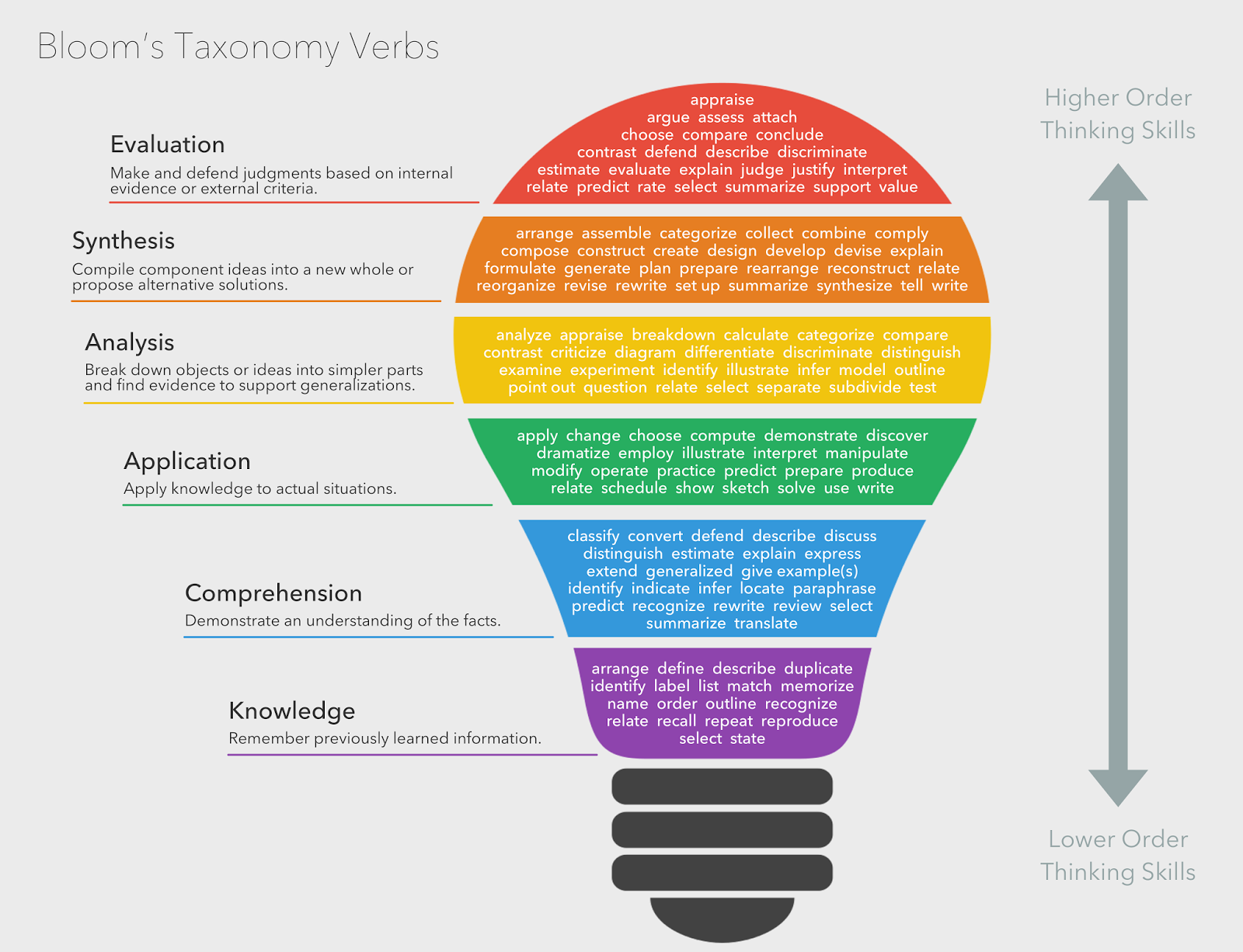
Whether Bloom, Brailsford, Maslow or Otters, it’s clear the adult coach has their place to steer improvement to happen Yet necessary to that struggle is peer group socialisation, intervention when that’s not going right, teaching to lift the child over the knowledge and skills barriers that are counter-intuitive, ‘parenting not friending’ when managing the household and above all, not putting one’s brain on the shelf and letting others, including AI, carry the load and not bother learning the skills ourselves. I’m intrigued by the latest research that highlights that children need to learn to write physically before using a modern keyboard and computer. Back in the day, whether using paper & pen or typewriter, you had to think about your writing before hardcopy simply because, whether be ink from the pen or the ribbon, once on the paper the mark was permanent. Now, you don’t need to trouble yourself because the screen is a friend to correction. Using such a modern screen, it seems the child can’t remember what they wrote 2 or 3 sentences before, and within about 10 minutes after the work is complete, the work done has been completely forgotten.
Taking the time to do things well encourages the world of marginal gains, and such practice makes perfect, and after much repetition, practice makes permanent. From brain surgery, through cycling to table tennis, it turns out it’s never about talent (5%), it’s perspiration (95%) – fired of course by curiosity and the desire to improve one’s own performances and seeking, if not a podium finish, at least the self-actualisation of a job done well. And most of the time, that needs a peer group of about 20, of people of about the same age and interests. As indeed the ancient Syrians knew 9 centuries ago, as we’ve discovered from the archaeologists uncovering the ruins of their towns, they found classrooms. And that clearing of the dirt to reveal the evidence beneath can only be done, brush stroke by brush stroke, with common purpose and understanding, that classrooms were just big enough to house a teacher and 20 learners. Well, who knew that?

 A Principled view