Changemaking in this Diamond era – how to meet the challenge!

This Wednesday, I spent the morning with Robert Hardman, journalist and author, providing insight on how independent schools are meeting the multiplicity of challenges brought on by a change in government, taxation, employer costs in a wider landscape of falling birth rates and demographic change. 

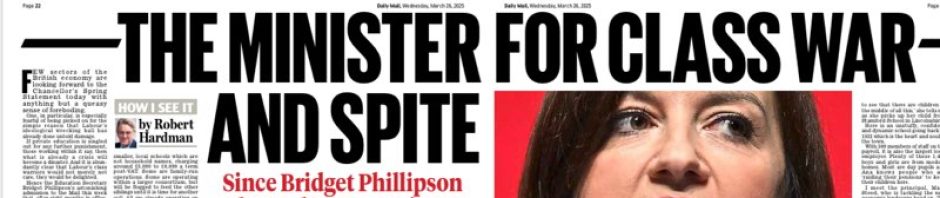
Robert left us circa noon to travel over to meet with Mark Steed, Principal of Stamford Endowed Schools, a much older foundation but one with similar challenges of going co-educational, in their case throughout the organisation. Robert’s interest was sparked by Mark’s letter1 to the Daily Telegraph on Monday, in which he announced the closure of the school’s German department and cancellation of Latin teaching at A-level, directly caused by the introduction of additional costs of VAT and NI. The article was due to be published in the Daily Mail this Saturday, but is now scheduled for 22 March 2025.

Over two hours talking to one of the country’s leading writers was of course both a great privilege as well as responsibility. Robert had done his research on our school really well, read my recent blogs and quickly got to the heart of what the school stands for. He was interested in both what parents thought of the school and asked for in terms of demands and future plans. Our parents’ honest, supportive, yet critical, eye helps us every year prepare tighter and more focussed plans for the future. Whilst he knew of our broad appeal and growing reputation both for academic success and sporting excellence (now a top 100 sports school in the UK), he quickly appreciated just how much we have worked with Maidenhead and the wider community. The town has been helped of course by the regular presence in the LSH Vitality Index top 10 for places to work and live (link) and the clear importance we attach to working with the council, the Chamber of Ccommerce, the arts and sports communities, not just winning awards, but providing a home for much needed activities in term and over the holiday breaks.

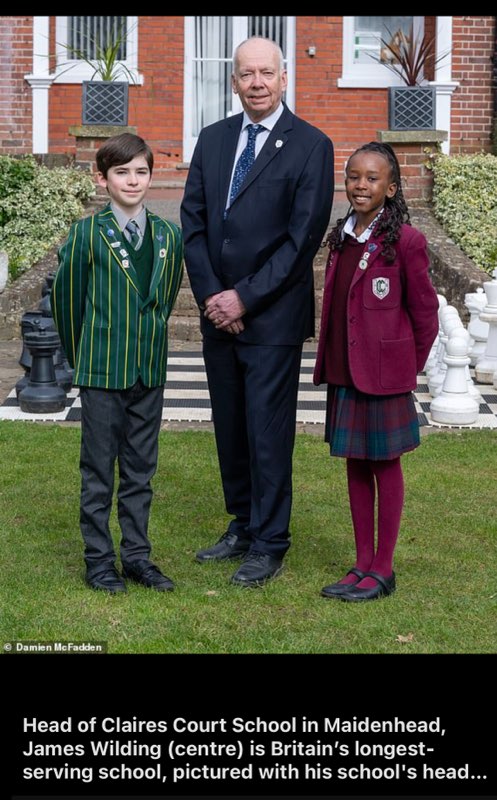
My reputation being the longest serving headteacher in the country sparked wider discussion on my colleagues in leaderships specific efforts, for example on how the needs of juniors for an active childhood with academics being mixed with forest school and sport; Robert spoke to our Junior Head Boy and Head Girl, replying coherently to him on what they enjoyed and what they looked forward to – morning work followed immediately by… the 6 aside football competition in which they were both playing for Claires Court Juniors against teams from 17 local schools that very afternoon! Recognising our lead in the use of digital technologies, he was particularly keen to hear of our growing push to take our children ‘off-grid’ and help parents consider more urgently the need for a ‘Smartphone-free childhood’. My own article on the positive use of AI in schools and the cautionary tales around endorphin release were published in the ISA National Journal this week (here).

Harry and Amaya visibly demonstrated the growth of our boys and girls into independent, well-spoken, thoughtful young people, very evident on Wednesday morning through their conversation and conduct (and captured by a newspaper photographer who just kept snapping); I’m looking forward to see which photos make the national press because these days it’s all about telling the story visually. I’m with Mark Steed in making sure the public readership of the national press realises that what Claires Court and Stamford offer comes with enormous financial sacrifice to parents. We were very clear to the press that the children should not be used in the conflict caused by the rapid introduction of huge new taxes that will call into question the viability of school subjects, programmes and of the institutions themselves. 

With the help of the two junior pupils, our staff and our Head of Marketing, I think we were able to convey the magic of the triangle we work in: parents, teachers and community with children at the heart of all that we do. Of course, the central point of the meeting was to highlight the great damage being visited across the education sector by the reckless and precipitately introduced taxation levies to a sector that has brought excellence to English education, now transported across the world through the development of similar schools on all four continents (over 400 opening each year).

That soft power, bringing the strengths of our style of education delivered in the English language, doesn’t match military power but has undeniably immense influence (55 world leaders educated in the UK). These are definitely diamond-hard times for us all, yet using that same metaphor, we can take best advantage by understanding the strengths of the ‘gems’ we work with in our school; being both the children and adults working for common cause, the flaws we find we know add interest and value and help set us well to face the future.

The Government is killing off Latin in schools” (“Letters”, The Daily Telegraph, Monday, 10 March 2025)

SIR – The Government’s policies are not only closing Latin departments in the maintained sector (“Et tu, Keir? Starmer accused of hypocrisy over school Latin ban”, report, March 8).

Independent schools, faced with the loss of charitable business rate relief and higher employer national insurance contributions, are being forced to cut costs. Sadly, many schools can no longer afford to offer A-level subjects with a small uptake, and many are closing these departments. The imposition of VAT on school fees aside, the Autumn Budget put more than £900,000 of additional costs on to our budget for next year here at Stamford.

We are closing the German department and will no longer offer Latin A-level. We have battled hard to keep Latin GCSE. The Government’s approach to British education is nothing short of vandalism.

Mark Steed
Principal and CEO, Stamford School
Stamford, Lincolnshire

Posted in Possibly related posts | Tagged , , , , | Leave a comment

Acts of Purpose – why teachers come to school.

It’s a year since our PTA AGM 2024, and we’ve just held our update for 2025. Over the past 12 months, during one of the more unstable periods of world history I’ve experienced, I’ve significantly changed my focus as a school leader, leaving the minutiae of running the secondary section of my school to another (thanks Steve) to focussing on the big picture work of being a school principal facing the many challenges now reaching the shores of Claires Court Schools Ltd. I’ll publish the AGM update after the event, because there’s an  incredible new facility opening as part of the celebrations tomorrow.

The electorate in the UK voted in a Labour government intent on raising funds to benefit the state education system by adding VAT to tuition fees from January, removing business rates relief from schools that are charitably constituted from April and clobbering employers with the lowering of National Insurance, raising its rate and increasing minimum pay rates. If that’s not enough, a further Act is being considered by Parliament which will change further the face of state education, introducing yet more change, churn and central control. In 2 weeks time, parliament will almost certainly be asked for approval to change more statutes to claw back money from the public spend to increase the public purse as the country gears up to face its international responsibilities in the light of decisions made by the new Republican President in the US.

Confucius (551–479 BCE) as a scholar and teacher and lived in a chaotic and violent time in China. He wished to see peace and harmony restored and a return to order. Despite the passing of time and the umpteen centuries, humanity has chosen hate, conflict and personal gain over love, peace and harmony. In 2025, we see even our perception of what is true being twisted on Live TV in the White House, an object lesson reminder of what went wrong in the 1930s when the League of Nations ignored the threat of the rise of Fascism in Europe. We do well now to remember what Confucius introduced all those centuries ago, that being the value of Teachers and the vocation we have when called to the classroom. 

I’ve 2 brothers, former pupils in their twenties whose time in schools assisted them in forming their choices for University and their career path beyond. After Uni, James went to Sandhurst to become a soldier, and last year James’ troop were tasked to provide a demonstration to the King of their bridging capability as part of His Majesties State visit to Germany, seen here talking to his Majesty. James is heavily involved with 23 Amphibious Engineering Squadron, Royal Engineers as a Lieutenant in charge of his Troop of 30-plus Men and Women permanently based in Germany, and was subsequently deployed to Poland as part of “Dragon24” and “Steadfast Defender” the biggest NATO exercise in 30 years. 

His brother Oliver followed on after A levels 2 years later, and chose a completely different route, inspired by biology and geography field trips here at school, he studied Marine Biology at Plymouth University and from there has made a successful career as a wild-life photographer – a more recent film being with Disney and National Geographic…. in ‘A Real Bugs Life’!

The Director had him appear in a very cold pond in the film as Disney/National Geographic actually wanted a Marine Biologist in the water, which saw him individually named in the credits!

Here’s a sample of the photographer’s skill:

More recently, Ollie has been working with Orcas and pilot whales who have similar social structures, forming strong, long-term bonds between mother and offspring, and he’s hoping to film them care-giving between the species, a real possibility.

Every day in school I run with my brother Hugh, I remain acutely aware just how complementary our skills are. Where I find the current direction of education so depressing is that the focus seems to be on levelling down not up, making more similar rather than valuing individuality and those best schools that do this, in the state or independent sector simply aren’t being visited by the current Secretary of State for Education, Bridget Phillipson MP, because we model a completely different way by which excellence can be achieved by valuing diversity not homogeneity. 

The story of brothers Wilding and Moore spans 50 years of course. They are but 2 of hundreds of tales I see every day in school, which cause my ‘hope arising’, my cheerleaders being the children in whom bright new lights are dawning. I’m with so many other national headteachers in standing for inclusion and wisdom in all we do. We are teachers; Confucius is known as the first teacher in China who wanted to make education broadly available and who was instrumental in establishing the art of teaching as a vocation. Please stand with us, work with us and listen. Teachers know stuff, we don’t need yet more Acts of Parliament, just more Acts of Purpose – whether that be in being in an army brigade or film crew – the world is both a safer and exciting place because of the skills they’ve chosen and put to such good use.

Confucius would indeed say “Wheresoever you go, go with all your heart!”

Posted in Possibly related posts | Tagged , , , , | Leave a comment

Special Report: Navigating AI Relationships

I’ve recently written articles for Education press journals about our school’s own engagement with AI and its purposeful use in education, and in the research space I have become very aware of the growing concerns that parents specifically have for the amount of screentime they permit their children to have after hours. For me, there is a huge difference between TV screen time with family and Smartphone usage, which now enhanced by AI tools is bringing in worrying levels of addiction and isolation.

This special report provided by SchoolTV is a reminder for parents on what to look for and focus on. More generally, Special Reports not only address current day issues that are of troubling to parents and schools, but they also link back to previous editions of SchoolTV. This gives parents a more well rounded approach to understanding the issues concerning today’s children and young people. In turn, this should then assist parents in deciding which is the best course of action to take to deal with any matters of concern.

Access to Claires Court School TV is via the school’s parent hub on the website, one of the buttons on the central panel https://www.clairescourt.com/parent-information/parent-hub,

A Special Report: Navigating AI Relationships

Despite governments globally moving towards raising the minimum age for social media access due to mounting concerns about the negative effects on youth mental health and wellbeing, there’s now an even newer challenge on the horizon – the rise of romantic and companion AI bots. These virtual companions are becoming increasingly popular with young people, raising serious questions about privacy, ethics, and the future of relationships in the digital age.

The rise of AI-powered relationships is offering a new frontier in human interaction. Initially emerging in the gaming world, AI companionship has evolved into mainstream culture, with apps providing personalised experiences that range from platonic friendships to romantic encounters. These interactions can blur the boundaries between real and virtual relationships, creating confusion and potential psychological harm.

Criminologists warn that children as young as 12 are accessing dating apps, often bypassing age restrictions, exposing them to sexual content and predatory behaviour. Researchers have also found that many adolescents are turning to virtual partners for validation, risking unhealthy emotional attachments that can affect real-life relationships.

As AI reshapes social dynamics, it’s crucial to stay informed and engaged. While AI can enhance education and creativity, it also presents challenges around privacy, mental health, and misinformation.This Special Report will help you foster an open dialogue and balanced approach to help young people navigate this evolving digital landscape.

We hope you take time to reflect on the information offered in this Special Report, and as always, we welcome your feedback – via the heads, school nurses, school secretaries or via form staff of course.

If you do have any concerns about the wellbeing of your child, please contact the school for further information or seek medical or professional help.

Here is the link to your special report:
https://clairescourt.uk.schooltv.me/wellbeing_news/special-report-navigating-ai-relationships

Posted in Possibly related posts | Tagged , , , , | Leave a comment

“The day that changed my life” – Andrew Watson

It’s Friday afternoon, 21 February 2025. Eight days ago, I attended Andrew Watson’s funeral service at St James the Less, Stubbings. The event was so oversubscribed that the church and parish centre (with a live broadcast) were full, and there was standing room only outside. The service was a remarkable showcase of his life, not just because of the size of the congregation but also because of the incredible epitaph his sister Victoria gave that brought home to us all the remarkable impact Andrew had made in the 54 years of life spent alive with us. Since Andrew’s service and following conversations with friends at the wake and elsewhere, I feel I can add just a little more to the notes Andrew might have made of his time at CC.

During Andrew’s time as a child, he attended Ridgeway (the name of our junior school back then) and then Claires Court Seniors, and I had the good fortune to teach him. Though he left to continue his secondary studies at Reading Bluecoat, in those days our Junior to Senior split took place at the end of Year 5, giving students the time to enjoy a full preparatory education to age 13, and thus sit and (hopefully) pass into the senior school of their choice after 3 years of separate specialist subject education. French and Latin were on the menu, where the standards required by the most demanding of schools at 13+ were close to the current curricular demands giving rise to a grade 4 at GCSE. Those 3 years of prep. school, still in grey shirts and shorts at the outset meant that the programme was demanding and left really quite a range of children unable to access the curriculum. By way of illustration, a typical longer History essay question might ask “Choose two significant events from the 20th century and explain why they were important.”

Andrew was no slouch, and at any given stage during his education with us, he would always show he was often the best amongst equals. That’s not the point of my writing this blog, no, not at all. The thing with Andrew is that there was always something more going on in the lesson than just his attention to the demands of the teacher. Some 25 years later, I came across the research “The Hidden Lives of Learners” written by Graham Nuthall and published in 2007. It’s a highly influential book in education, based on Nuthall’s extensive research into how students learn in the classroom. In short, Nuthall’s research suggests that teachers are often unaware of a significant portion of what’s happening in their classrooms from the perspective of the children within. Put bluntly, we only know the 5%, the rest is beyond our ken. While the “5%” figure is a popular takeaway message, it’s more of a powerful illustration of the gap between teacher perception and student experience than a precise measurement.

Nuthall’s work emphasizes that students are constantly constructing their own understanding, engaging in complex social interactions, and experiencing a range of emotions that teachers may not fully perceive. This “hidden life” of the learner encompasses their thoughts, feelings, motivations, and interpretations of the learning environment. Because of this, teachers might only be consciously aware of a small fraction of what each student is experiencing. This realization that there’s a vast and often unseen world within the classroom, comprised of the individual and collective experiences of the children as a group. Ross Morrison McGill highlights the 3 worlds Nuthall uncovered really well in this short video:

Working with classes 4 to 6 (now Years 6 to 8) back in the ’80s, boys like Andrew made it abundantly clear to us all that far more was going on than we considered in our adult vision. I remember one particular occasion when Kenelm England, Latin teacher and of a similar age to me lost his temper with his class. Known as Eggy to all, it was that day that Andrew suggested ‘Eggy had cracked his shell!’ Andrew’s theatre was the schoolyard, where umpteen different games and sports were invented to pass the time of day. When one game palled’ another would be invented to renew the competition.

Whilst during our adult lives, our paths rarely converged, I became very aware of Andrew’s impact on the family, company and sporting life. I hope to share with a wider readership Victoria’s Eulogy to her brother, but for now, I ask you to jump over to Andrew’s own blog, Watto’sWords. Andrew and his brother Nicholas who followed his steps into Claires Court, suffered from Cystic Fibrosis, a genetic disorder that sadly and inevitably leads to a premature death. Despite the ever-present threat that lungs could fail, Andrew lived a life that daily brimmed to overflowing.

In his diary entry, The day that changed my life! By Andrew Watson | May 18, 2018, Andrew highlights and celebrates the day when he was given a life-saving lung transplant. The entry makes compelling reading, perhaps a little more sombre now that, just under 7 years on, in early January this year, Andrew suffered from a relapse to his health, and died shortly afterwards 18/19 January. His parents Allen & Laraine Watson were incredibly supportive of our school whilst their boys passed through our hands, and we’ve stayed in touch professionally too, because Allen’s skills as a surveyor have assisted us in making a variety of planning applications thereafter.

A day in early May 2017………………….

It was early morning and the first intravenous drugs of the day were already making their way into my veins, when there was a knock on the door. It was unusual for another knock so soon; it was too early. I knew the routine as I had been in this solitary hospital room for ten weeks. Please read on…

Posted in Possibly related posts | Tagged , , , , | Leave a comment

Half-way through the academic year, it’s Valentine’s Day and a good chance to be positive!

As we enter the Spring half-term, everyone who works in education feels that the darkest days of winter are behind us and that the toughest new work of the year has been covered. 

The rounds of parent-teacher evenings and consultations have largely been completed, and lots of fruitful discussions have emerged. The added benefit of conducting the parental attitudes questionnaire to run alongside these means we have as good an objective take on the school’s progress being made over the first six months. 

What’s exciting about the moment is that for all elements of the school, we have anticipation being rewarded and yet much more perspiration to exert to pull off the major victories. 70% of the Sixth Form University offers are in, and many students aim at academic programmes that contain a vocational element, equipping themselves for the world of work they see beyond a degree.  For those that like to measure form, here’s a sample of what’s being aimed for through UCAS, and what the grades needed are:

Durham University A*AA – Chemistry, History

Exeter University – AAA – Geography

University of Leeds – AAA – Architecture

University of Nottingham – AAA – Industrial Economics

University of Manchester – AAA – International Management

Cardiff University – AAA – Law

University of Bath – AAB – Chemistry

University of Liverpool – AAB – Physiotherapy

Royal Holloway – AAB – Psychology

University of Edinburgh – BBB – Earth Science and Physical Geography

What underpins the quality of those offers is the strength of GCSEs already obtained.  As we’ve been working Year 9 through their option choices,prior to starting their GCSE programme in June, they must target the subjects they enjoy and in which they are prepared to work hard. The latest curriculum review being promoted through parliament echoes the points made by the Chief Inspector of Schools, Sir Michael Wilshaw 10 years ago, encouraging the need for breadth and diversity in education at this stage.

Throughout our options the artistic, creative and applied programmes exist too, and for those courses prior to University offers a Foundation year is needed, to develop far more deeply the physical skills needed for craft-based options. For those really interested in technical areas such as engineering/computer science and financial services, apprenticeships prove to be very attractive alternatives for both students and employers, the former avoiding tuition fee debt, the latter recruiting young talent to be developed as the specific industry requires. It’s important to note that Claires Court is renowned for the quality of how we manage our provision, most recently being notified that we are now in Top 200 Sports Schools, a table created by School Sports Magazine.

The photo in the Header is taken 59 years ago, the Claires Court Pantomime that year  (1966) being Sleeping Beauty, the cast aligned on the Town Hall stage in Maidenhead. I play the part of Harry the Huntsman, the handsome hero, and appear in the brown wig, just above the longbow. My mother, Josephine, was the stage manager and costumier, and she had a real thing about wigs! My father, David was the scriptwriter and director, and the scripts those days often had double meanings, lost on the actors but enjoyed hugely by the parents in the audience for the night. I remember all the shows I was in, the rehearsals, the missed lines and the generosity of the audiences, great times it must be said and a reminder of how important the arts are to a school. 

Already firmly fixed in my diary is to attend the Year 5/6 musical production of ‘Bugsy Malone’, which as with all Junior productions directed by Mrs Emma Stevenson will be an absolute epic. Set in the Speakeasies of the Twenties during prohibition in the United States, it’s a school favourite, casting children playing adult roles in a whimsical, exaggerated version of the gangster world. It works on every level, highlighting the values of friendship, creativity and determination, and yet Bugsy Malone also gives us the chance to talk about the real-life consequences of behaviour like breaking the law!

Like the stage shows of the 60s and the 20s, here at school, we have so much enterprise and entertainment underway. The last elements of the Astro are being laid next week, officially opening on 7 March, alongside our PTA AGM. Thanks to parents’ generosity, we have new stage curtains being erected in the Junior Sports Hall, so they’ll be on show for the Bugsy run later in March. At College, as the photo below shows clearly, the foundations of the new Sixth Form Pavilion are being laid. Across the school, both the ‘dry’ and ‘wet’ sports are nearing league finals, heads and team championships, and we look in really good shape.

Junior Sports https://x.com/CCJuniorSports

Senior Boys Sport https://www.instagram.com/clairescourtsport/

Senior Girls Sport https://www.instagram.com/ccgirlsschoolsport/

Rowing https://www.instagram.com/clairescourtschoolboatclub/

Outdoor Education (including sailing) https://www.instagram.com/ccoutdoored/

Have a great half-term and see you on the other side!

Posted in Possibly related posts | Tagged , , , , | Leave a comment

Proprietorial governance in times of change

All Independent Schools exist by permission of Parliament, and are responsible to the DfE for meeting what are known as the 8 Regulatory Standards (the regs) covered by the 2019 Guidance plus a plethora of policies for which we are to have due regard. Ultimately, individual proprietors are responsible for ensuring standards are met. Where the ‘owner’ is replaced by a Governing Body, it still remains for the new proprietor (the board) to take responsibility, an incredibly important protection for the Heads and their staff.

As proprietors, my brother Hugh and I also choose to be key workers in the school, covering administration and academics respectively, hence the titles Administrative and Academic Principals. It is required of us to ensure that the school’s leadership has the necessary skills and resources to enable the heads and colleagues to meet both the regs AND the aims, key values and offers of the school. We choose to employ professional experts who advise the school in matters of governance covering law, accountancy, finance & pensions, alongside visiting consultants who bring their insights in academic, health & safety, safeguarding, planning & building areas to complete (and complement) the knowledge and experience the Principals have gained over their 40+ years in post.

The evolving landscape of single-sex education in the UK is governed by DfE guidance, and where secondary schools choose to offer single-sex education because of the clear benefits for both girls and boys, we are required to provide comparable facilities and opportunities for both genders. As a consequence, the significant building investments in facilities including the refurbishment of both main secondary teaching wings, the provision of new Design & Technology, Food & Nutrition, and computer science classrooms concludes with the construction of new music and fitness centres this summer. To have completed this work within the 3-year time period has been a significant achievement for all involved.

Regulations keep moving, and most UK readers will have seen the immense fuss being created by the increasing poor attendance in the state sector across the country. Claires Court is required to report attendance information to RBWM and then DfE, and today’s figure shows that in the year to date, we are @94.6%  which, as we’ve been midst ‘of winter bugs, Covid and all sorts’, is on target to be 95% or more (5* performance). Thank you, parents & guardians, you’ve done your bit, and well done to our nurses too for offering that professional yet sympathetic voice and diagnosis when appropriate. It is interesting too to see the public discourse on the mobile phone ‘good/bad dialogue’; the issue is well managed in many schools (handed into school for safekeeping during the day for under 15s).  Screen time on scrolling clickbait videos and interpersonal relationships connected via social media are the current generational problems after hours (and not just for teenagers). Whilst we can’t prevent phone access at home, the school’s provision of secure, protected Chromebooks for 12+ years now is a remarkable success story for CC.

One of the advantages of my age and experience is that as well as serving on national and regional ISA Headteacher groups, I get asked to connect with some of the people with power and influence who are or may be driving public policy. Yesterday, I met up with Professor Francis Green, a social economist at UCL, whose work led to the Labour Party’s manifesto promise to levy 20% VAT on all private school fees. I spent a useful hour with the Professor, and he has taken the point that policymakers and those impacted need to meet to consider the outcomes of the policy now its negative impact on private school viability is becoming more visible. 

Later yesterday and still in London, I met as part of the Association’s Equality, Diversity and Inclusion committee in the offices of the Independent Schools Council, a really forward-thinking group who are well ahead of the government on assessing the impact of policy and the provision of successful education in England and informed by colleagues working elsewhere in Europe and the USA. 

A good finish to the day was to return to school to attend the Juniors Parents evening to 6 pm and then the Senior Boys event to 8 pm. Genuinely it is with great pleasure that I ‘man the tea urn’ and catch up with parents, and it’s always good to hear how we are doing, ‘what’s going well’ and ‘even better if!’ What made the day perfect was catching this video from broadcaster and commentator, Ana Boulter, whose leading mission right now is to assist the government in changing its policy on VAT, and to use the authority of senior headteachers in the country to make her case. As Boulter proposes Wilding and Birbalsingh to share the job of sorting out education for the private and state sectors, I thought, dear reader,  to draw it to your attention… 

These are indeed times of change, yet ‘twas ever thus, and as the header, this week shows the early spring sunshine rising over Claires Court fields circa 7.45 am, we do need to look to the future and make sure our well-laid plans are realised for the benefit of pupils, parents and teachers. After half-term, I’ll be publishing the outcomes from the Parents Questionnaire 2025, and of course, will be inviting parents and guardians to offer their insights to aid our direction for 2026-2030. We couldn’t possibly have guessed Covid 19, Austerity and a Labour Government this time 5 years ago – does anyone have a crystal ball that works a bit better now?

Posted in Possibly related posts | Tagged , , , , , | Leave a comment

Academic Principal’s notes – 31 January 2025 

In my closing messages at the end of last term, I was delighted to share with you the Principal’s Court Report, covering the last two years formally highlighting some key milestones and achievements. If you missed the link to the digital report, you can find that here, and if you would like a hard copy, please pick one up from the school office or the check-in desks at any of the forthcoming parents’ evenings. 

I also wrote the following:

If there is One Thing you can do for Claires Court over the break…It’s to pass on in your friendship groups and communication channels just how positive our school remains about the future ahead for our children. The Carol services at the end of term were true celebrations of how we collaborate and how musical and choral scholarship continues to grow across the years. All the many plans we continue to develop have your children at the heart of why we come to work and what we do. As we highlighted in our previous communication, we will continue to work on business efficiencies, develop further our existing relationships and work on new out-of-school partnerships to bring additional revenue in too. 

Firstly, thank you for your ongoing recommendations and introductions of new families and pupils to the school; we have welcomed many new joiners from Juniors to Seniors last term and have registered more to join in the summer term and beyond.   

Taking into account the increased pupil numbers , together with the scheduled business efficiencies we continue to make and plan for the future, , the Principals do not want to increase fees for September 2025. However, whilst we intend to offer the current school fees for September 2025, we have to remain very cautious.   -One of the elements to consider when evaluating is that the Chancellor of the Exchequer gave no prior warning to business about the tax hikes she introduced at her last budget; the current media speculation is that further tax changes are inevitable.  The Chancellor is set to make her Spring Statement on 26 March and we will update you further over the Easter break. 

We do draw heart though that the Law Lords have decided that an early hearing of the legal challenge to the Government’s VAT on fees policy is required. This will take place in the High Court between 1 and 3 April. Lord Pannick KC, representing the six families who brought the claim, supported by the Independent Schools Council (our trade body), will claim the introduction of the tax on fees impedes access to education at independent schools and is incompatible with the right to education as per Article 2 of the First Protocol of the European Convention on Human Rights. Lord Pannick will also argue the policy infringes Article 14 of the Convention because it causes unnecessary and discriminatory harm to certain categories of children. Throughout the country, state and independent schools are providing the evidence Lord Pannick needs to support the case being presented, made even stronger by the bizarre benefit (announced this week) being given to the US military to benefit from VAT-free fees, but not permitted to our own military or those European families choosing to use their own nations’ schools based in the UK. 

As Academic Principal, I have remained at the forefront of the campaign ‘Education not Taxation’ group. I find the rhetoric regarding the fact that schools enjoyed a tax loophole disingenuous. The imposition of VAT is a new tax levied on private schools and state further education colleges. In addition, all charity schools are affected by the additional loss of 80% business rates relief, though as Claires Court already pays both corporation tax and full business rates, we’ve factored these into our costs previously. These changes, coupled with the increase in employers’ National Insurance contributions are clearly causing considerable damage across the private school sector, and we can but feel great sympathy for the families of schools now forced to close, such as Highfield Prep School here in Maidenhead and its sister in Belsize Park, The Village School for Girls. These changes have also seriously impacted both Eton End School in Datchet and High March School in Gerrards Cross, which have changed ownership structures as a consequence. 

Through this active work, I’ve connected with Ana Boulter, BBC presenter through her active campaigning against the new tax. If you have not discovered Ana’s channel, please do check her out here – https://www.youtube.com/@anaboulterTV.. Next week I am working in the ISC buildings with our Association on allied matters, and also meeting with one of the Labour Party’s strongest supporters of this policy, Professor Frances Green, UCL. It’s only by working such hard yards that we can seek to open up the Government to discuss more openly the negative aspects of this policy. Parliament is alive with discussions in both Houses, and our sector is getting much more cross-party support for the great work we do for education in the UK and worldwide. 

And finally – looking forwards… Monday 3 February Building works commence for the installation of a new pavilion to provide the central examination space for the Sixth Form during public examinations from May to July, as well as a recreation and study area for their use from September onwards. The schematic below shows the artist impression of the building view from the playing field:

February Half-term Our official sign-off of the new Food Technology facility by Modual Aspects takes place, with their attention switching to the installation of the new Music School scheduled for Summer 2025. 

Friday 7 March Save the Date – the Claires Court PTA AGM followed by the Official Opening of our MUGA at CCJ – timings to follow.

Our PTA President, Phyllis Avery MBE will be leading the AGM during the school lunch break, sandwiches for all attendees, with reports from the various sections and elections for next year’s officers. After the AGM, we are delighted that our various talented sports stars across the school are to demonstrate their skills to the full, officiated by Steve Rider, Sports Commentator and great friend of  ours.

I  hope parents and guardians are able to join us for the PTA AGM, to learn of the major new projects we have received contributions to commence, and to celebrate the amazing support our Trustees and PTA Chairs bring to these fundraising efforts for the school. 

Dolly Parton is not perhaps the most likely person I should quote when completing my notes to parents, but “The magic is inside you, there ain’t no crystal ball” hits the consciousness smack between the eyes. When I see what’s happening all around the school and beyond and through the magic of the school‘s App, Claires Court’s students and staff are showing their magic everywhere, in the classroom, on the playing fields and on the water, in the wider community and at international conferences and presentations. If you don’t have the App yet, please download it – there’s a reminder by the hour of us #CCMakingHistory.

Posted in Possibly related posts | Tagged , , , , | Leave a comment

“The longer I live, the more convinced am I that this planet is used by other planets as a lunatic asylum.” – George Bernard Shaw

A NotebookLM discussion on this blog can be found here: https://schl.cc:443/gz

The header picture this week shows the ‘beautiful disaster’ that was the Musk SpaceX Starship coming down over the Gulf of Mexico America last Thursday. Characterising any weekly blog by a suitable title that captures the news headlines of the moment and translates for a local audience is really difficult, made especially so the declaration of a ceasefire in Gaza over the weekend, then Monday commencing as it did with the spectacular show that was Donald Trump’s inauguration and the week progressing with the local politics of Britain and Europe being as fractious as ever. It’s a wonder that the Universe has actually tried to remind us that seeking some alignment across the world of humanity’s problems might be a good idea, and so has given us the night sky spectacular of a 6 ‘planetary parade’ as a reminder.

So down to Education business this week. Leaving aside the immediate and ongoing dispute between the Government’s imposition of an unfair new tax being imposed on private school tuition fees, I bring to the fore the parliamentary work commencing around the Children’s Wellbeing and Schools Bill, introduced on 17 December, now being examined by parliamentary committee since Tuesday, and it’s quite clear from every point of view that the bill is not going down well. Headteacher Katherine Birbalsingh’s letter in the Observer summed-up the problem from her state-side position brilliantly, with each section including the question “What problem were you trying to solve”. You can read the whole 4 pages of her letter here, in which she highlights the genuine good news available in schools that the government could be celebrating, yet it chooses to legislate against.

In summary, funding special opportunities in state schools to study Latin is a great idea, as is establishing ‘Computing hubs’ so why cut the funding halfway through the academic year and close the courses. Giving state schools the freedom to tweak the curriculum to encourage diversity and creativity to suit their intake works really well, so why forbid that and impose a strict, universal diet on all? Across England, we are currently working through and embedding the curriculum changes implemented 5 years ago, at a great cost in time and money. As a consequence, we’ve seen our primary and secondary outcomes rise up the international league tables and for reading literacy the English lead the Western world. Why spend precious energy, political capital and parliamentary time on destroying the reforms that led to this success? Across the country, the government programmes to recruit graduates into the teaching profession are failing, yet the school-based programmes have been a great success, so why forbid them to continue or try to reduce teacher pay? We know state school attendance has become a real problem, but the best schools use uniforms, badges, ties and kits to create a sense of belonging and value – why forbid such well-understood strategies, used so well by sports teams etc.?

Regular readers of my Blog know I’ve been offering the Secretary of State help for 18 months now, even when she was in opposition. Phillipson apparently has booked now an opportunity for KB to meet at the DfE, but that’s a ‘show reaction’ to the bad press she’s received in recent weeks. For the government, the press is only going to get worse, with Secretary of State for Health, Wes Sweeting wishing to shut down SEND funding for children with both physical and learning differences, and the HMRC insisting on taxing SEND tuition fees as shown on invoices, with Local Authorities in return refusing to repay schools for the ‘tax lost’, because they’ve already gone down the route of giving personal budgets to parents, which of course were always ‘without VAT’. Because I know that no-one in government will read letters, I’ve taken to ‘vlogging’, my latest on this issue can be found below:

The Rt Hon Bridget Phillipson MP attended BETT2025 this week on Wednesday, at the same time as my colleague Jawad Laouira, Deputy Head Academic at Juniors, where Meryln Mind (an American AI company that Claires Court has been working with for 3 years) were showcasing their latest offering, Merlyn Origin, for which Jawad and ICTteacher/school photographer, Chris Rowan created this intro film. Well, the film was incredibly well received and a packed Tech-in-Action audience of educators from many different countries were able to question Jawad and the rest of the panel, including VP Merlyn Jason Mayland and UK Partner, Ian Nairn. The message that the panel shared was that there is a real depth of Learning Science behind what Merlyn is helping teachers achieve in their classrooms and in addition Merlyn saves teachers circa 15% of time every lesson. We’ve also found our children are able to interact directly by voice with Merlyn, and as a consequence, we are seeing a direct improvement in the accuracy of their oral questioning. Wins all round.

My closing message to this blog is pretty obvious really. When GBS originally wrote of the Lunatics, that was well before I was born. I can’t find a precise date, but we are talking about the time of the rise of the fascist dictators in Europe and the chaos that brought. Despite all, humans managed to develop antibiotics, modern conveniences such as the Hoover, the motor car, and above all of course, Sliced Bread, packaged and promoted in the UK as early as 1928! I’ve loved watching the latest series of ‘Inside the Factory’ on BBCTV, with Paddy McGuiness. The Warburton’s loaf factory in which he used to clean the machines at the start of his employment packs 1.4 million loaves a year. That’s progress for sure, and as a nation, our food is secure through major companies doing what they know best. Paddy like me worries about his children, and I just wish Bridget would work with major schools like mine – of course, we are always ready to learn, but we do start from a very strong position of knowing what we do.

Posted in Possibly related posts | Tagged , , , , , , | Leave a comment

“Everything that needs to be said has already been said. But since no one was listening, everything must be said again.”André Gide.

I was saddened to hear this Wednesday of the closure of one of our local independent schools, Highfield, part of the long-term network of provision for families in Maidenhead and the surrounding area. Highfield’s owners, Chatsworth Schools, have made it clear that the combination of declining school roll, imposition of the new tax of VAT on school tuition fees and the increase in employer contributions to National Insurance have been the cause of the closure. Chatsworth schools have asked us to provide support where we can, and of course, we will do our level best to support those children and parents as they seek a suitable next step for their education.

I chose the quote by André Gide, possibly the greatest French writer of the 20th century, because it seemed so apt in the current circumstances. When new governments enter power, as the Labour Party did last Summer, they have the opportunity to deliver their mandate to the electorate, but they also do bear the responsibility for the wellbeing of all children concerned, specifically of course because they are from where our future wealth and prosperity are going to arise. I have been representing the voice of our sector as strongly as I can, in person in parliament, in writing, canvassing and even most recently via video on X. Whilst there seems great strength in the arguments we have given about the inappropriate speed and longer-term unfairness of this tax, it is clear that political dogma is to rule.

As last week’s post makes clear, and the publication of our own community questionnaire to parents and guardians early next week enables further, I do accept that we have to get on with the new ‘réalité’. But that’s not to say we should lose empathy for those caught up in the ‘blight’ that government policy is causing in our sector, and Maidenhead as a town is all the poorer for the closure of a school that’s been here a century. And we as its neighbour will do all we can to make real for its girls, should they join us, their school’s motto “Empower. Discover. Succeed”.

Posted in Possibly related posts | Leave a comment

“Welcome to a New Year at Claires Court – Making our mark in 2025”

A NotebookLM conversation about this blog can be found here: https://schl.cc:443/gs and below.

The header image for this week’s blog, shows Claires Court’s 48 acres of playing fields to be found off Cannon Lane on the driveway into school. The photo doesn’t really give the scene full justice; -5 degrees Celsius, the frost crisp and even, taken on Friday morning 10 January 2025, from one of our ‘breakfast club’ families on the way in. We’ve always been incredibly conscious of the requirement to provide that longer school ‘envelope’ for the day, and now we have unpredictable road chaos everywhere, it’s probably a lifesaver for many working parents required to return to the office every day!

These fields have heralded a remarkable development for the school, not just because of their scale, but because they host a huge and diverse range of other community sports groups, winter and summer, and are now registered for use for four local cricket sides in the Thames Valley leagues this coming April. It’s nice to know that these facilities are now put to good use over the year, providing homes for a wide range of community groups who help pay for the provision that our own children already enjoy.

Other physical projects to be completed over the next few months:

  • January – Tarmacing and carpeting of the MUGA at Juniors, official opening 7 March 2025;
  • February – Installation of a Flexitent social area for parents at Juniors, funded by the PTA;
  • Spring and Summer, investment in music and drama facilities at Juniors, thanks to a generous donation received through the PTA Foundation;
  • Easter – installation of a new Pavilion for the Sixth Form, initially for public exam use and then as an additional study centre;
  • Summer – new Music Centre at Senior Boys, new PE/Sports Fitness centre at College for Senior Girls and Sixth Form;
  • Planning application to cover the replacement of the Drama ‘Shed Theatre’ and adjacent facilities at Senior Boys.

Whilst our physical development ideas do not end there, the above signals the completion of projects currently as part of the school’s overall development plan to date. 

As Principals, Hugh and I are being naturally very cautious of the planning of future investment, because of the choice of the Labour Government to impose VAT on our tuition fees, a direct cost to parents of course, and the consequential need for the school to ensure tuition fees to not rise any more than absolutely necessary. We await with great interest the outcomes of the judicial review of the legality of the imposition of this tax; nevertheless, the school must continue to consider our next steps for the benefit of our children, young people, staff and parents. At this stage, I feel it important to explain quite how we arrived at our current set of outcomes.

As our original plan to develop the school onto one site was refused in 2020, our challenge since has been how to reestablish a new focus and direction. The Court Report 2022-24 published last month highlights many of our achievements, so I won’t reiterate them here. Suffice it to say that we moved from a #NewCampus to #MaidenheadIsOurCampus and as a consequence have set our sights on improving all three school sites in Maidenhead and establishing even more mutual relationships within sports, the arts, ecology and the wider community.

Making our mark in 2025 is not just about physical building, and perhaps even more importantly, it’s about ensuring we continue to develop our education, health and care offer for all age ranges so that we continue to see everyone thrive, strive and as appropriate overcome the difficulties and hurdles that they encounter along the way. So much of the narrative under the new government carries the warning label of ‘Blame Game’, as if nothing good has come of the past quarter of a century in the country. As all informed commentators keep highlighting, we’ve really had enough time spent on consultations and reviews, we’ve plenty of actions recommended for those in service to get on with. After all, Claires Court may have encountered some roadblocks, but we haven’t just stood still and wrung our hands.

Writing in 2025 may very well be considered a different process, given that we have paper, pen, screen, voice and AI to assist, but children must not jump the developmental steps needed on the journey to conscious competence. 20 years ago, Professor Pat Preedy and I worked together with our association to highlight the absolute requirement for the children’s nursery space to include sufficient outdoor play and playmat activities to ensure that the primitive reflexes controlled by the brain stem we are born with are suitably overwritten by cortical activity in the brain. These adaptive responses develop during the neonatal period and integrate over time as the brain matures. They are present for survival and development in the early months of life. Physicians and therapists commonly use these to assess the integrity of the central nervous system. In this video produced six years ago, Pat talks about the failure of the current EYFS assessment and profile; she’d won the DfE over to commence the reform she recommended  in 2019/20, redundant as a consequence of the pandemic then. Claires Court, and other good schools with whom Pat has worked, have made the changes recommended in the book she co-wrote, Early Childhood Education Redefined.

In 2025 we know that not only must parents permit their children to crawl and struggle, and NOT cause to walk upright in bouncers, but we also know that too much contact with ‘screen time’ means children won’t develop the 3-dimensional grasp of the world they need, and that their state of excitement created by the over-release of endorphins can in due course lead to other unexpected differences in their physical, social and emotional development. At school, whilst we have thoroughly embraced the introduction of screen-based learning and the use of AI, our early adoption has been matched by clear consideration of the other needs children still have as they go through school. Movement for learning and making their mark on paper are both essential in slowing down the child’s intellectual response so they consider the ‘why, how and what’ they wish to do and say.

The new curriculum review will be welcomed by the state sector, as it has been deprived of the funding needed to provide universally across the country for the wider full funding of a truly broad curriculum. No one really will welcome any immediate changes to the upper secondary and sixth form examination syllabi, partly because we are just now gathering the evidence for the outcomes of the new 2017-2019 examination changes (largely positive), and we need wider society to decide whether it is going to re-introduce the wider pathways into adult skill development in addition to undergraduate education at University. The latest political decision (October ’24 budget) to place a higher cost by way of pay and higher tax on youth employment is already causing the delay in the growth needed of employer-based apprenticeships, so both government and employers must resolve the current impasse. Apparently many in their twenties are both crippled by debt and inertia that the state is funding their unemployment – that’s not a recipe for future success.

Claires Court’s curriculum will continue to develop, embrace and promote the best of academic know-how, with the parallel requirements to build the opportunities to use the physical, collaborative and entrepreneurial skills they need, coupled with a school-wide sense of belonging, engendered by “Your place is here”. Again the Court Report speaks to these developments too; at Junior level leading as we have in the trialing of the use of AI in the classroom, adjacent to the success we have had ‘out in the woods’ with Forest School, at senior level with the growth of the CCF and Paddling centre on Boulter’s Island.

To conclude, whilst there is much to do, as the Academic Principal leading Claires Court, I know it’s my duty to keep the school on its ambitious programme to the best we can be for everyone in the school, a ‘challenging space’ yet ‘safe place’. Next week sees us launch our annual questionnaire for our parent & guardian community. I look forward to hearing what our customers think of what we have been able to do and have in mind for the future. Watch this space!

Educational footnote: In academic terms, we’ve known for 7 millennia that classrooms need to welcome about 20 children to the space for teachers to lead their instruction. Since those early marks made in clay 5000 BCE and beyond, we’ve learned that the actual process of writing, drawing, painting, and making music all cause the growth of intellect and imagination. The first known writer in clay by name in history was a woman: Enheduanna. She received this name, which means “high priestess, ornament of heaven” in Sumerian, upon her appointment to the temple of the moon god in Ur, a city in southern Mesopotamia, in present-day Iraq The first book discovered written during Sumerian times is the Epic of Gilgamesh, part man, part god, now over 4000 years old, and the video below does rather highlight the extraordinary imagination of humans so long ago.

 The Epic of Gilgamesh started out as a series of Sumerian poems and tales dating back to 2100 B.C., but the most complete version was written around the 12th century B.C. by the Babylonians. The story was later lost to history after 600 B.C.E. and it wasn’t until the mid-19th century that archaeologists finally unearthed a copy near the Iraqi city of Mosul. Since then, scholars have hailed the 4,000-year-old epic as a foundational text in world literature. Link

Posted in Possibly related posts | Tagged , , , , | 2 Comments