“Building a better Britain.”

An open letter to our Prime Minister, the Rt. Hon. Theresa May MP.

Dear Theresa,

Firstly, on behalf of the Claires Court community, may I congratulate you on becoming the Prime Minister of the United Kingdom.  You have been Maidenhead’s only MP ever, since 1997; before then, the constituency used to be shared with Windsor, whose castle of Royal residence for reasons of history and heritage somewhat overshadows our larger suburban town to its north.

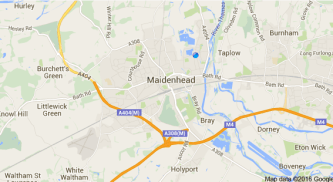
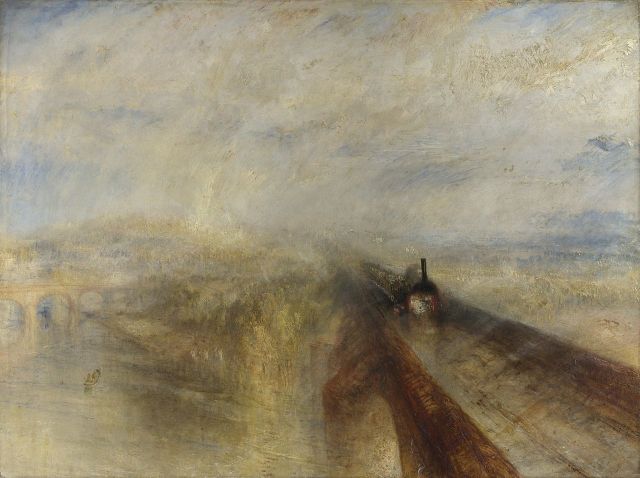
MaidenheadMapMaidenhead…perhaps Maydenhead now…has developed into the town we know, because of its central importance as a transport hub in the South East. The River Thames, navigable at Maidenhead, was the way long distance transport of goods and chattels could take place. The Bath Road, in its heyday carrying almost 100 coaches a day fed, watered and stabled, the large stone bridge over the River cutting the journey time down considerably than on the old route south of Windsor. Brunel’s great bridge over the Thames permitted trains to thunder in ‘Rain, Steam and Speed’ as depicted by J.M.W. Turner in 1844, in a painting that captures both bridges. And of course now, the presence of many of the world’s leading companies are based in the area, assisting us in the use of the superfast, broadband digital highway that now spans the globe.  I have learned this over the past 4 days from one of our 12 groups of Year 10 students researching how their lives are shaped and changed by the circumstances around them. It seems very odd to mention this,  coinciding as it has done with such a period of tumultuous change for you!

turner_-_rain_steam_and_speed_-_national_gallery_file

Maidenhead’s 2 bridges over the River Thames, as depicted in “Rain, Steam and Speed” by J.M.W Turner (1775-1851), to be found in the National Gallery, London.

I watched you speak on the TV on Wednesday night.  You called our country to attention, you asked us to believe that your government will show it has listened to the outcomes of the recent referendum.  Central to your message, you had this to say:

“We will do everything we can to help anybody, whatever your background, to go as far as your talents will take you.”

Prime minister, you know our school well; you have visited on a number of occasions, presented prizes and awards, been interviewed by our BBC school reporters, listened to our pupils across the age range and shown us, as you have so many other in our constituency, that you take your responsibilities as our local MP seriously and with goERAyerod humour.  Here are you being interviewed by Ellie Rayer back in 2011, then aged 13, talking about your pride on bringing to the town a local minor injuries clinic, the value of local sports clubs for the development of our youth and the value of volunteering to the health of our local area.

Ellie went on to become our Head Girl, is now studying Sport Science at Loughborough University, and plays international hockey for England. She is one of many children who have emerged from our broad ability independent school, whose core ambition matches yours for your government, to do everything we can to develop the talents in our young people. Ellie was back at school this week, volunteering  with other former pupils in the summer vacation, to give back to the school and wider community.  They are doing as you have asked them to, inspired by your clear sense of purpose.

72785499_130923seymour23We have had other fantastic visitors this week, meeting differing groups of our children dependent upon age and stage. At our secondary girls sports celebration on Monday night, Dr Natalie Seymour, hockey international, triathlete and now professional iron man encouraged our girls to take every opportunity and have no regrets. Dr Seymour’s day job as a clinical psychologist is spent in urban London with some of the most damaged young men of our times, helping them come to terms with their illness and showing them their road to recovery.

row-img_3541-copy-300x200At our junior girls prize giving, Julia Immonen, founder of the Sport for freedom charity inspired our girls to sit up, take notice and do something special to resist the growing presence of modern day slavery that our economy can’t help but encourage. Young people can be trapped into car wash work, begging on the streets, or working in sweatshops. How could the girls not be inspired when someone like Julia speaks to them about her own challenge to row the atlantic, which she did so successfully in 2011, in order to highlight the blight of human trafficking. .

At the Junior boys prizegiving, you would have been so proud of the 160 boys summer musical, an original production written by their teacher, Linda Stay, in which they sang loud and clear about the need to learn to treat others, boys, girls, those unclear of their gender, of all colours, faiths and nationalities as equal and to converse with them and make a better society.  You have been brave enough to choose a new Secretary of State for Education, Justine Greening, not just because of being the first SoS drawn from a comprehensive background.  It was Justine who tweeted only last month this celebration of her own domestic circumstances:

Greening tweet

I can’t tell you how important this statement is, to the British values agenda we are proud to deliver here in school.  Those predecessors in the Department of Education, recently Nicky Morgan, and before her Michael Gove, have said lots of pious soundbytes, but they have collaborated in undermining most that teachers and pupils hold dear, that being to work together for success and to take pride in their community.

JMSThe headmaster of our Junior School, Justin Spanswick, spoke on Wednesday this week of the extraordinary damage wrought on our state primary schools. Now almost 50% of our children have failed to achieve the target expected of them for English and Maths.  “Was that their fault?” he asked. “Certainly not”, he continued, and then explained that the sudden change in ground rules for assessing what’s needed to pass was not caused by the teachers or the children, but by the Secretaries of States misplaced trust in whim and fancy, rather than grounded in pedagogic evidence and academic understanding. This unnecessary mania for testing is set to reach new lows when the new Year 7s could be asked to resit these tests to ensure that catch up with the standards required. That’s 50% of them, Theresa, and that would add insult to injury.

A range of experienced guests judged the year 10’s extensive group project work work on the way they might rise to meet the challenges of the modern era. The winning boys entry was from a combined Drama and Music group, subjects not considered in anyway important enough to be included in the Ebacc measure Mr Gove and Mrs Morgan have pedaled as being vital to the health of our education economy for the future. What made the entry so remarkable was not just the excellent blend of modern technology and  performance skills on show, but the text they based their project on, that being the last published yet uncompleted work of William Shakespeare, “The Book of Sir Thomas More”. In a series of speeches written by Shakespeare 400 years ago, Thomas More makes the argument for the humane treatment of those being forced to seek asylum by being expelled from their home land. Just read here how bad our reputation was as a place of asylum for Immigrants from Northern Lombardy (Italy) travelling over to England in 1517.

“Nay, anywhere that not adheres to England, shakespeare

Why, you must needs be strangers, would you be pleas’d
To find a nation of such barbarous temper
That breaking out in hideous violence
Would not afford you an abode on earth.”  You can read more here.

What is remarkable about the way we encourage our pupils to work is that they create beauty and depth from ‘chaos and ignorance’, not just spout a litany of cant that I know annoys you so much.  It is with reason that Ken Clarke has made unguarded remarks about you being a “bloody difficult woman”.  As the press have all made clear this week,  you loathe any sense of impropriety in public service, of sloppy and self-serving behaviour leading to injustice.  If I may take you back to Shakespeare for a moment, we do have some really hard work to do to impress Europe that we are not a nation of racist bigots, and sadly in recent years, the cronies in government have let down so many.  We all know you have done your best to include women into careers in parliament, and forced your own party to recognise its ‘nasty’ face.  As Prime Minister, I do encourage you to keep on this tack, as we know only you have the courage and spine to deal with it.

Theresa, there are some that say this Independent school cannot speak for all of education, because by our very nature we are ‘exclusive’, requiring of our parents that they pay fees, beyond the reach of most.  Our Nursery is of course open access to all, and many of the parents of the other 1000 children, many being nurses, policemen, shopkeepers and teachers like me, might reply that “these costs are choices we make for the benefit of our children, because first above all for anyone must be an outstanding education”. This independent school is training 15 teachers currently, we have vocational education and apprenticeships seen as important here as A levels and University entry. We commence our undergraduate programme in September, in partnership with the University of Winchester, so we can develop even more key workers as experts in Childhood Studies. Claires Court is a microcosm of all that is fine and noble in English education, perhaps as our area is too, with its rivers, industries, natural beauty and business bustle.  We’d love to help more, from all financial backgrounds, but as we are like Maidenhead itself as a constituency, the first school of our kind, our ‘newness’ does not give us the resources to reach everyone.

As a conservative, you were not voted for by those whose ballot spoke for Liberal Democrat, or Labour or other political hue. But you have made it clear that whatever the majority vote, you are going to represent that majority view.  It’s not just that ‘Brexit means Brexit’, but that you plan to champion those “left behind”, people struggling financially who voted to leave the EU because they didn’t see how things could get worse.  In educational terms, honestly, I am so pleased you have come to power because we in education have been traduced by that loathing of ‘experts’ that Michael Gove used to such good effect in the referendum. I understand perhaps as well as any that you are both willing to listen and change your mind to well reasoned argument.  Please permit us to help, to demonstrate and to be part of the nation’s solution for education. I have no doubt that if you could include our sector as an offer for all of our children, standards would indeed rise immeasurably.

In conclusion, I don’t expect you to concentrate on this small beacon of excellence you know well in your constituency any time soon. But as and when you turn your attention to education, as you so surely will, I’d ask you to remember us here back at Claires Court, and that we continue to model effectively that any good school can look after the whole of the children, can focus on building character first, establish a modern values system that transcends faith and class, culture and nationality, whilst still concentrating on delivering world class academic results and sporting success. As world skeet champion, Amber Hill goes off to represent Claires Court, Maidenhead, Great Britain in the Olympics in Brazil, you and I will both be supporting her ambition to bring back Gold. And we know that she stands every chance, because she has worked at her skills for many years, and she now has the opportunity to express her talents to the full.

We have our own challenges of course now, as we set out to expand and consolidate our school on one campus.  In normal times, we’d have expected you to have shown up and taken an interest, because you so often do, but we will forgive you this once; last weekend had its own priorities! But in case you missed all news, our neighbours and community reacted both with excitement and caution. Our nearest neighbours have to cope with our need for change, and we’ll respect their views and work hard to convince them that all is not to become a mudbath and traffic jam.

In conclusion, as with so many things, it’s an ill will that blows no good, and the circumstances leading to the self-destruction of both the Cameron administration and the Corbyn opposition have opened the door for your ‘kind’ of administration.  The news tells us you are building a very new government, and we have every faith that you will take this opportunity.  We wish you good luck and God’s speed. You’ll need both of course, and some extra friends in addition from time to time. You know where to find us if you need our help.

All best, James


Posted in Possibly related posts | 3 Comments

Claires Court win the Fawley Cup at Henley Royal Regatta

CCBC2016hrrMedalsThe Henley Standard published this report of the race shortly after it was raced at 3.50pm on Sunday 3 July 2016.

FAWLEY 3.50 Claires Court Sch. vs The Windsor Boys’ Sch. – A local Maidenhead / Windosr derby between two school boy quads. A tough 7 minutes for these boys. Quality sculling from both crews as they come along the Island.

At the Barrier the crews are neck and neck with the boats surging in unison. A very mature performance from both crews, stroke for stroke.

Previously won by Sir William Borlase school, Claires Court are aiming to make this the thrid major winin a row. Claires Court have a slight advantage by about 2fft on the Berkshire station, at Fawley but then Windsor boys push through at Upper Thames. The lead swaps as they trade the lead within 10 strokes.

At the Remenham Club the crowds are yelling and Claires Court gain an advantage again.

CCBC2016hrrHitting the wall of sound at Enclosures both crews increase the rate. Claires Court push through to a length lead. Can Windsor boys respond? Claires Court seize the initiaitive at the Grandstand and push through to the line. Both crews lift again in the last 30 strokes of the race and Claires Court hold on to the length distance they gained. Gladitorial racing at its best.

Claires Court Sch. beat The Windsor Boys’ Sch.

The Claires Court Quad comprised:

Finlay Gronmark at Stroke, Jonathan Cameron at 2, Alex Richardson at 3, and Oliver Costley at bow. Coaches Tom Jost and Chris Clarke.

This Claires Court Quad has also won the School’s Head at Putney and the National School’s Cup at Dorney, winning the coveted ‘Triple’ crown.

Following the event, in  the subsequent GB trials, Findlay and Oliver won selection to the final GB junior squad – Jonathan and Alex are already at that level.

I can only express the entire school community’s admiration for the work of these boys and their coaches. In 2012, under the new Rowing Development plan, we targeted one of these titles to be achieved within 4 years. To win all 3 is extraordinary!

Posted in Possibly related posts | Leave a comment

Consultation – not Presentation

Claires Court opens its junior school’s doors on Friday afternoon 2pm t0 4pm to our own parents and on Saturday from 10am to 2pm to our neighbours, to consult with them on our proposals for the future development of our school on a one site solution.

Posted in Possibly related posts | Leave a comment

Sovereignty v the Economy

Thursday 23 June was polling day in the EU referendum. As I write this post at 5am on Friday morning, 24 June, the votes are not all in but the United Kingdom has voted to leave the European Union, by an expected margin of 52% Leave against 48% remain.

Secondary pupils were able to post their poll via the school ‘Hub’.  The turn out was small, circa 25%, but their vote was overwhelmingly in favour of ‘Remain’.  Here’s the pie chart of the outcome:

CCPoll2362016

The young boys and girls of course were not Childternable to vote in the ‘real’ referendum, unless they were 18 years of age. As it happens, in terms of the geographical areas of the country in which our pupils live,  their vote followed in the main how our local constituencies voted. The majority vote went to remain in RBWM, Wycombe, South Oxfordshire, Chiltern and Wokingham. South Bucks, Slough and Bracknell Forest voted to leave, giving us a pictorial spread of our school’s catchment area looking as opposite.

The detail spread of voting went as follows:

RBWM etc

It’s a short post this; early in the morning and a sense of ‘awe’ has struck me.  In this Royal Borough, we have clearly voted as Clinton’s aide and campaign campaign strategist James Carville coined “It’s all about the Economy stupid”.

Well clearly it is not, as far as the country is concerned. 48% consider that, but the turn vote of an extra 4% think it differently. JM Barrie had his Peter Pan say “To die would be an awfully big adventure”. I do sincerely hope that those that lead our country from this day forth have amazing navigation skills, as they pilot our country into such uncharted waters, because to say that we are to face uncertain times is very much an understatement. We are a Sovereign nation, and as things turn out, that’s the route we have chosen, to be distinct from our neighbours and separate in our future. So be it.

Anyway – as life goes on:

Claires Court Old Boys Cricket match is taking place tonight Friday 24 June from 5.45pm at our Taplow playing fields.

Saturday 25 June – Claires Court PTA Summer Fete at Claires Court Junior Boys from 12 noon to 4pm.

Hopefully see you there, and of course happy to talk to anyone about our own exciting journey, announced in this week’s Maidenhead Advertiser. That is a big story too!

CCNewschool


Posted in Possibly related posts | Leave a comment

Banners – #Remain and ‘The Great Outdoors’

#Spoiler alert – Most of this post will be history after Midnight 23 June 2016

I can’t be the only one that feels something significant is expected of the great British Public today, Thursday 23 June. There are banners in the Town, and posters in home windows – and wall to wall coverage in the Press on the TV and Radio. The debate around the Referendum on Britain’s choice to #remain as part of the EU or to #brexit hit full crescendo last week; only to be silenced in mid step by the appalling murder of a member of our Parliament, Jo Cox. The method by which her death came about is too gruesome for me to write without better evidence – let’s permit wikipedia to suffice:

“On 16 June 2016, Cox was shot and stabbed multiple times in Birstall, where she had been due to hold a constituency surgery. She died from her injuries about an hour later. A 52-year-old man who self-identified as a white nationalist[6]was arrested in connection with the attack”

Much has been written around the circumstances leading up to her murder, of appalling abuse she received via any media outlet you care to mention, threatening her life for months. Her bravery in the face of such hostility it seems is shared by many of our MPs; their standing ovation for Mrs Cox in Parliament on Monday this week testament to their understanding that they had shared their work space with one ‘incredible’ fellow member, whose humanity for all in the world so obviously shone through in everything that she said, did and wrote about. #Respect.

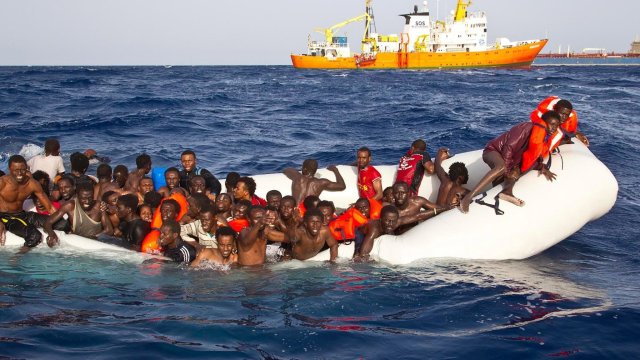
My personal decision for Thursday has always been to #Remain. It’s not that I can’t see the angle that the #Leave campaign take on the matter.  I simply don’t see that any of our current problems we face can be sorted by leaving the very good company of our fellow citizens of the European  Union. The mass migration across the world we currently witness won’t cease globally just because Britain exits from the EU. Currently, the British border is the other side of the channel, and if we were to leave Europe, then the border comes to our side of the Channel.  Hurrah – at a stroke we close the Refugee camp in Calais.  And reopen it in Dover, Folkestone and environs. Inevitably I know we will take a huge financial hit, and there’s no need for us to reduce our GDP by 20/30/40 billion, just to stop paying Europe £8 billion or so.  Simon Schama CBE is an English historian specializing in art history, Dutch history, and French history. He is a University Professor of History and Art History at Columbia University, New York, a Brit, and his article I have linked to with the picture above is worth reading for the clarity of argument he gives for us remaining in Europe – as a beacon of tolerance.

Alongside the  honest Brexiteers, there are some really very nasty bed-fellows to boot, some of them inside political parties of a persuasion I can’t trust, plus some fascist nationalists and criminal thugs  whose other ‘policies/beliefs’ disturb me greatly.  The #Remain campaign juxtaposed Farage and his party’s nasty advert showing a queue of 2015 migrants alongside similar memes from the Nazi regime of

the ’30s. They too had no time for immigrants, foreigners, those of faith, those of none, those whose sexuality differed from the norm, for the sick, the disabled, the old and the weak. And for the last 80 years Britain has been brave enough to think differently. Education, Health, Care, Tolerance and Inclusion have been the bywords for what stands for the British values we are asked to hold dear – indeed we have to teach them really fully in our schools, so that radicalisation of a different kind is not aided and abetted.


Whether you be ‘for’ or ‘against’, we will be the wiser for this campaign. Our individual vote, for once, will be counted as such. And we have surfaced all the grossest lies and untruths that our society holds as ‘truths’.  I don’t like what we have seen, and neither do so many others, and I for one believe that a more tolerant society will emerge. After all, (and I believe them to be men of their word), neither Boris nor Nigel actually believe we are diminished by the diversity of the many nationalities that live in Britain in 2016.

Talking of Banners Advertising Good Things – here’s ours: \|/

CaptureAnd we need a breath of fresh air come Friday, once all the electioneering and all that stuff is done. From 11am on Friday, Chair of CCJB PTA, Emma Robertson and her team are assembling our PTA Summer Fete – ‘The Great Outdoors’ for Saturday 25 June from 12 noon. Everybody whose anybody in our school will be there, we hope, as will some amazing Gundogs and their keeper, so please if you are free and local to Maidenhead, feel free to come along and enjoy an amazing afternoon of British Country fete. Licensed bar, Pimms tent, BBQ and all things British are on show, stalls run by the boys and girls and all.

By all means ask us for a Souvenir wrist band, if you wish – just £2 on the door to gain entry.

PTA Arm Band1

And finally … Old Boys Cricket  … Friday 24 June from 5.30pm

On Friday evening, 5030 pm onwards the older ‘old boys’ are playing the younger ‘ old boys’ at our Taplow playing fields, SL6 0NR, Phoenix & Claires Court Sports Club, Institute Road Taplow. Messrs Wilding Jnr and Hammerton are leading out the old and young alike, in a smash and grab limited overs game.

Oldest boys:

Tom Wilding
Will Ballantyne
Simon Ball
Donald Pike
Gareth Miller
Michael Walters
Piers Morgan
Patrick Randell
Patrick Bose
Martyn Goddard
Brad Pennington

Umpires:
Alan Sibley
Trevor Sharkey


Posted in Possibly related posts | 1 Comment

Work matters – linking the worlds of Education and Employment.

I am delighted to announce that Claires Court has received The Education 2
Employment Award, a nationally recognised accreditation for our work in providing

E2Eaward

  • High Quality, impartial careers guidance to all pupils;
  • Encouragement to our pupils to develop professional values whilst in education with us;
  • Ensuring our pupils are well prepared for the next stage of their employment, self-employment or training.


This excellence in Careers provision at Claires Court is not new; we have offered all Year 10 independent careers reports for at least 25 years now, which assist in summarising on an individual level where pupils talent, interest and aspirations might take them in terms of further and higher education and/or the world of work. The report itself is provided by Cambridge Occupational Analysts, COA for short, and you can read more about their work here.

3 Year’s ago, the cross party House of Commons Education Select committee made it clear that the government’s removal of Careers Education from local authorities had backfired completely, leading to a  “worrying deterioration” in the overall standard of careers advice.  The Connexions Careers service was reduced from providing human visits to schools and advice clinics, to an on-line website – the National Careers Service.

Such reductionism is almost always the outcome of spending reviews, in short authorising a substantial reduction in the quality of service because ‘new ways’ of working can provide. As the then  chair of the Education committee Graham Stuart said: “”We want a face-to-face guidance to be available to all young people as an integral part of a good quality careers service. They deserve and should receive far better support than current arrangements generally allow.”

Our Careers Adviser, Helen Cole, is a senior sector professional working within Careers Education, and is linked to all of our heads of year and attends many of the parents evenings involving Years 9 and above.  Helen and I both feel that independent careers education is essential in supporting children enter adulthood with a great chance of enjoying happy and fulfilled lives, and like many who work with us, Helen has been part of the expert independent visitors team for many years now.  Helen directly works with our children during Year 9 when they are making subject choices for  GCSE and every year thereafter.  The Careers Report debriefing at the start of Year 11 is a really important piece in the jigsaw, often perhaps the first time that parents and children have worked together to review what the child’s ‘data metrics’ say.

Back to the E2E award; it lasts for 3 years, and permits us to advertise that our provision is of the highest quality. We are already looking to see how to move greater ownership from adults to children in developing their career pathway, and enterprise education is one of the key responsibilities Assistant headteacher Steph Rogers carries within Claires Court. Of course many of our Sixth Form leavers seek to go on to enjoy elite University education, but there is a significant minority that know they need to go to work for their next step. This is not because they won’t get the grades; far from it. What the students are seeking to do is start earning, learn more whilst they work and perhaps look at further vocational qualifications en route. After all, with that University experience likely to give rise to a £40k debt, there’s plenty of incentive for talented youngsters to avoid that cost if the world of work wants them badly. And increasingly, work is stating just that; “some to us with your A levels and we’ll help you qualify whilst working!”

For those interested in reading more on what makes careers education so vital in schools, here’s Dr Adam Marshall, Executive Director of Policy and External Affairs at the British  Chambers of Commerce writing in a recent Education Magazine:  “No one wins if we have a generation of young people lost to unemployment, or an inadequate talent pool for UK companies”.  Page 18 if you are interested.


Posted in Possibly related posts | Leave a comment

From ‘Au revoir les enfants’ to ‘Reservoir dogs’

So much of what we do in Education is ‘Lost in translation’, such that nice ideas get completely ruined when well meaning ‘experts’ turn them from an inspiring notion to a received wisdom that everyone has to follow and then be examined to test how well they learned the work.  The National Curriculum was such an idea, one whereby children in England could be guaranteed a minimum entitlement of subject coverage and breadth of opportunity. Prior to the late ’80s, what children studied in school varied quite widely until they chose their subjects for O levels or CSEs, and even then there was a pretty

1991 politicos

Ken Clarke in the foreground, May 1991 © Neil Turner

wide range of educational experiences on offer. The arrival of GCSEs in 1986 meant that we could group all children under 1 banner at this higher level, and the rest of the National curriculum arriving pretty soon afterwards united the whole country. And then  the then Education Secretary Kenneth Clarke messed it all up by enforcing national testing from age 7. 25 years on, and the papers and news media run full pages talking about parents striking and children’s education and mental health suffering  because of the ‘straight-jacket’ of teaching to the test at primary school, implemented by teachers who fear for their jobs if their classes don’t perform to the required standards.

There’s a nice urban myth around which I like, very much along the ‘Lost in translation lines’, which goes as follows: Not even Quentin Tarantino has given a plausible explanation for the naming of his seminal gangster movie ‘Reservoir Dogs’, first screened back in 1992.

During Tarantino’s days working in Video Archives, a video store in Manhattan Beach, California, he developed encyclopedic knowledge of video films, and recommended films to his clients, including a film by Louis Malle, “Au revoir Les Enfants” , a fateful story set in a boarding school in occupied France  during the Second World War.  On trying to recall the film title later on, the name had morphed from ‘Au revoir les enfants’ to ‘Reservoir Dogs’.  There might be similar sound patterns, but the feeling the listener hears is dramatically different.  Reservoir Dogs is a 1992 American neo-noir crime thriller film that depicts the events before and after a botched dia

reservoir-dogs-reservoir-dogs-13198957-1600-1200

Oh, and everyone dies in it too!

mond heist. The film was the feature-length debut of director and writer Quentin Tarantino, and stars Harvey Keitel, Michael Madsen, Steve Buscemi, Chris Penn, Lawrence Tierney and Tim Roth. Tarantino and criminal-turned-author Edward Bunker have minor roles. It incorporates many themes that have become Tarantino’s hallmarks—violent crime, pop culture references, profanity, and nonlinear storytelling*.  


Closing this blog, just before our May half-term in 2016, I’ll stay with the Louis Malle film title of the myth above. The last thing I want  to see as childrau-revoir-les-enfantsen work through their primary years is a loss of the bright eyes and love for learning that I see each day in school.  It’s true children don’t mind being tested, so long as no-one uses the results of such testing to compare them with others and then ‘do them down’.  It’s certainly the case that in the wrong hands, children rapidly lose a love of learning, indeed leave their childhood and enter that early adolescent stage of choosing to be uncooperative because actually the classroom has nothing in it for their learning. Beware setting our young learners on the exit strategy ‘Goodbye, children’, because they’ll never recover that innocence of learning that permits children to try anything and attempt everything!

austins_butterfly_main
If you’d like to watch children being amazed by their own learning, please watch this video, ‘Austin’s butterfly‘.

If you want to watch an amazing deconstruction of why almost  everything dylan-william-conferenceeducation has tried over the last 20 years has failed, spectacularly, then please watch Professor Dylan Wiliam’s lecture at the Schools Network in 2011.  His talk opens with “If we are serious about improving education, we have to stop people doing good things” – definitely worth a watch.

*Wikipedia

Posted in Possibly related posts | Leave a comment

#ProjectLiteracy – the Pen is Mightier than the Sword

Alphabet of Illiteracy (1)

In the main, this week’s post are not my words. I have encountered a remarkable cartoon film (see bottom of the blog), which captures the essence of the world’s ills in 26 letters of the Alphabet. What’s even more remarkable, is that this short film also breaks through all those taboos which otherwise I might find difficult to talk to parents and children about, or indeed write down in a blog such as this.

It seems that 757 million people cannot read my blog, not because they do not have access to the internet, because they do (Over 4 billion people have access to mobile phones, rather more than double the number who have access to running water, would you believe?). Sadly, they can’t read my words, because they can’t read. I’ve borrowed the following paragraphs from the http://www.projectliteracy.com/ website.

“Project Literacy is a global movement convened by Pearson* to make significant and sustainable Screenshotprojectliteracyadvances in the fight against illiteracy so that all people – regardless of geography, language, race, class, or gender – have the opportunity to fulfill their potential through the power of words.  

Illiteracy is a global problem, stretching from the USA to Uganda, from Europe to Cambodia and everywhere in-between. It matters because these small tasks quickly become big problems. Illiterate people are more likely to be poor, they can’t get educated, can’t participate in political activities or help with economic development; and sadly their choices in life are far too limited.

Project Literacy brings together a diverse and global cross-section of people and organisations to help unlock the potential of individuals, families and communities everywhere with the power of words. Together, we will make significant and sustainable advances in literacy over the next five years so that by 2030, no child will be born at risk of poor literacy.

But we need your help, too, even if it’s just reading an article, sharing it with your friends and maybe making a pledge to get involvedIt’s up to you; it’s up to all of us, to help make illiteracy a thing of the past.”

Anyway, settle yourself down, put the volume up and enjoy a compelling 2 minutes watch. If you are not moved to react, to make a difference quickly, I’d be very surprised. If only by sharing the information onwards, as I am doing by ‘posting’ today, you can add to world peace.  Now click on the picture and take relearn your alphabet.

YouTubePL

Let’s make no bones about it though – if we can increase the literacy levels of the world by 100 million people, that’s 20% only of those who can’t read, we’d would do more for world peace than all the armies of the world could ever do.

The Pen is Mightier than the Sword”

Edward Bulwer-Lytton

Pearson* – I am deeply indebted to Rod Bristow, President, Pearson Uk and his colleagues for introducing this initiative to ISA schools and other national organisations within Education this week.  Multinationals in a global world can easily acquire a tarnished reputation, but in creating an urgency around the need to raise base-line international literacy levels, I have no doubt Pearson’s intentions are entirely honourable. 

Posted in Possibly related posts | Leave a comment

Wherever law ends, tyranny begins

The following article is written to sit alongside a variety of secondary and sixth form assemblies I am giving currently about the rights of man and the needs for a civil society, and that they are not perhaps the same.

“Wherever law ends, tyranny begins.” These words, written byTyranny John Locke, philosopher, in 1689, begin a proposition around which all of us are reminded that we are under “the sovereignty of the law”.

It is by the customs and practices of the law that we all live and thrive, and just societies need the rule of law for justice and order to prevail.  This usually arises by the state ensuring that the judiciary are independent of its work, such that government can also be held accountable for its actions.

A just society also needs a dependable civil service, in order to provide and maintain a degree of services for society that provide order and safety. Taxes need to be paid reliably and honestly, traders held to account should they debase the flour or market dishonourably, and the rights of the individual balanced against the needs of the wider society. How houses and roads get built, new industries and technologies deployed are all part of a process that society needs to regulate. Within this civil service come things such as health services, education, community care and such like.

Of course we also require secure police  and armed forces, to ensure that internal and external threats to our ordered lives are managed and defended as aps appropriate. In many ways this is as important as the other two; uniformed forces may arise before the rule of law and the civil service, but they should not be diminished in the hope that we live in a perfect world, because we don’t.  As internal and external violence to our society are as evident now as they have ever been, we need authorised muscle to be available for our protection, and accountable of course should it exceed its authority.

2016 has continued the trend that ‘British Society’ is not as good as we would wish it to be.  The latest findings of the new inquest into the Hillsborough disaster published this week show that one of our police forces and the ambulance services of the day failed in their duty of care to protect those in attendance at the football match.  The report revealed “multiple failures” by other emergency services and public bodies that contributed to the death toll.  Many news organisations most notably the Sun and the Times acted disgracefully at the time, blaming drunken hooliganism as the cause and singling out Liverpool supporters specifically, and for a time we, the public, believed the headlines. I could say much more, or indeed point out other scandals still running, such as neglect of child abuse in many of our cities by the authorities, or the way national government has failed this nation of tax payers through permitting the offshoring of wealth by the richest and most powerful of individuals and corporations.  The latest High Street demise of BHS leaves us all with the very uncomfortable feeling that one man’s ocean-going liner is another 11,000 employees pension fund.

Back in 1987, Margaret Thatcher famously declared that there was no such thing as society, and that the rights of the individual were paramount. From that day onwards, our society has moved this way, to promote the rights of the individual, to the extent that we have seen really very rapid acceptance of new rights and accommodations that previously were unheard of.  Gay marriage and same-sex parenting are 2 obvious examples, and honestly I see these developments as being signs of a healthy society, not evidence of progress towards barbarism. All my adult life I have actively promoted the liberal rights agenda, been in membership of a political party that supported same (the Liberal Democrats) and funded my membership of Amnesty International and Greenpeace as a way of assisting the support of a more just world order and society.  Just now, I fear I have not influenced one agenda specifically strongly enough, that of the need above all to have a civil society.

In education, health, policing and the defence forces we are seeing the wholesale dismantling of the civic organisations that manage this provision for our local areas and nation as a whole, and the neutering of local and national parliament to have a say in such on-going provision. Much is being made of the national financial deficit we find ourselves in past the Banking crisis of 2007, but the solutions now being imposed are not fundamentally about cost savings.  The proposed academisation of all 28000 state schools is clearly much more expensive than leaving the schools where they are, for example.  The replacement of local and national control over police and education through the election of police and crime commissioners and the appointment of regional school commissioners encourages us to believe that individuals are better at managing our needs than organised groups of local citizenry, be they councillors or school governors. The transfer of our armed defence from paid professionals to a larger group of territorial volunteers is about cost saving of course, in the same way as may happen with the police or those in community care.  The removal of the rights of those poorest in our society to receive legal aid, or disability allowances from the disabled are in similar vein. What’s so confusing is that all is happening simultaneously, under the pretext that the elected government have the authority of a general election win. In reality, the victory was by the slimmest of margins, and those now in power are not choosing to recognise their responsibilities to represent all in the country not just the minority that voted for them.

At a time when so much of our civil and ordered society is under threat from those whose vision is blighted by their own rhetoric and prejudices, I for one feel it important to make public and constant my serious objections to the appalling speed at which change without evidence is being wrought on our communities.  There are indeed good and noble members of parliament in government today, and their voices of dissent are audible.  The Select committees and House of Lords are doing their best to hold the executive to account, bringing back for inspection and scrutiny matters that need just that, but the Parliamentary year is not actually long enough to cover the 52 weeks of ‘collar’ feeling’ we need.

It is interesting to note just how many state and independent fellow professionals are highlighting that the current tyranny of ‘Do as you’re told’ by our executive government is causing great damage.  3 decades ago when the police were not the transparent organisations they are becoming now, both the newspapers and the public at large took hookline and sinker the story those in power wanted us to believe. Likewise now, a new tyranny hell-bent on change at all costs is trying to remove the scrutiny of the ‘law’ on its works. Parents to be removed from school governance, services to be distanced from the local authorities, employees to be redunded from the civil service to disempower it – I could go on and on.

Another of John Locke’s quotes is “We are like chameleons, we take our hue and the color of our moral character, from those who are around us.” I know we need a powerful citizenship working within a civic society that does it duties for those therein.  It was the case 327 years ago and is still this day.  Locke was writing at the outset of the Age of Enlightenment during the 18th Century – Wikipedia reminds us that the Enlightenment included a range of ideas centered on reason as the primary source of authority and legitimacy, and came to advance ideals such as liberty, progress, tolerance, fraternity, constitutional government and ending the perceived abuses of the church and state. Here’s hoping a sense of reason resurges across the country over forthcoming weeks and months; choosing the dismantle the UK’s agreed structures with its partners in Europe would be another disaster in the making, and at least in that regards we have some political leadership on show!

And finally…Locke 2


Posted in Possibly related posts | 4 Comments

‘Screenagers’ – a 21st century film about the digital ‘Silent Spring’ affecting our children

ScreenagerGRAPH

The graph above identifying the arrival of the term ‘screenager’ in literature shows just how modern a term it is. The peak in the early noughties might be attributable to the popularity of the band ‘Muse’ and their song of the same title published in 2001. As the Oxford English dictionary explains, the phrase is used to describe that  human aged between 13 and 25, and identifies that in recent decades they have become connected 24/7 to the emotional world around them through the screens they carry in the palms of their hand.

screenagers-image_webAcross the pond in the United States, a major and remarkable new film is doing the rounds, limited to responsible screenings in school halls, community centres and such like, so that families can attend and take on board the powers and dangers now confronting all with the ubiquitous technology of ‘screens’.  The film ‘Screenagers’  (trailer)   was made by Dr Delaney Ruston, who decided to make it to affirm the importance of helping children find balance in our tech filled world. The film provides a vehicle to bring parents, educators and children together for post screening discussions so change can happen not just in our homes but in our schools and communities.

“Screenagers is a very balanced, sympathetic and sane look at the way millions of teens are struggling with phones and games and technology in general. In part by letting the teens themselves speak about their own concerns and solutions, Screenagers is deeply affecting, too.”  Dave Eggers, Best-Selling Author, Publisher and Education Activist

I have read  a lot around this subject, though not yet watched the film, and have requested of Dr Ruston permission to show ‘Screenagers’ here in the UK at Claires Court. American schools and communities face difficulties some years ahead of us, often because their technology moves ahead of ours in terms of pace and opportunity (high-speed broadband and 3G for example). The film’s impressive testimonials highlight that it would add well to the mix of advice and support we already offer parents, by providing for the whole family an opportunity to discuss the  problems our young people face, and seek solutions actually which otherwise won’t be found.

During the teenage and early twenties’ years, we are most alive emotionally, when heart ad118affb28e9cdb7bdfb76ac26158b0rules head and impulsive behaviour is rapidly rewarded by social ‘high-fives’ and  peer encouragement.  It is at this time that we are most susceptible to our first real burst of clinical  depression, and 50% of us will suffer such mental illness by age 25. The picture is worse for girls, with the female gender suffering by a 2:1 ratio.   Those who ‘catch’ depression early, say by age 13, are more likely to have repeat bouts, each more serious than the previous.  On each occasion those who suffer feel they are the cause of their problem and don’t want to bother their parents with their issues.  In short, not receiving treatment the first time lends itself to repeat bouts in the near future.

In my own school community, we do everything we can to promote positive  mindsets in our young people. Physical activity is an impressive antidote to feelings of low esteem. Our pro-social behaviour approach, school values, emphasis on education not examination, drop-in counselling and engagement with talking, mindfulness and willingness to challenge irrational beliefs are all ways we seek to identify early those who might be struggling with mental illness.  Food is available throughout the day, and one should never undervalue the importance of cake in our lives (and we don’t). Honestly, we try to be the school with a smile on its face every minute of every day.

failureThe trouble is, this is not enough. Teenagers feel emotions really strongly, far more personally than we as adults. As our school’s values guru, Margaret Goldthorpe reminds us every time she visits, it’s almost inevitable we adults disempower and demotivate the young people around us.  Parents and teachers seem so very successful, cool and in control, and whilst children admire that, often they don’t feel able to come up to our expectations. We may offer them affirming homes and relationships with adults, but  as they crave independence to learn this for themselves, they are confronted in the flesh and on screen by endless examples that they are  not up to ‘scratch’.  This negative propaganda about teenage failure is absolutely everywhere, perhaps even promulgated by my writing this blog. The politicians who talk about education and our schools continue to highlight just how ‘weak’ our children are in comparison with their peers in other countries, and guess what, our children take that on board and stress about it lots.  Just look at today’s stories of headteachers ‘quitting’ because of ‘factory farming’ pupils, whilst our Prime Minister defends controversial plans to force all state schools in England to become academies, saying it is time to “finish the job”.  Honestly what job – the destruction of our children’s mental health perhaps?

The initial cause of teenage mental turmoil comes from the stress the child’s emotional systems come under. These stressing agents include all forms of bullying and abuse, drugs such as alcohol and nicotine, as well as physical violence. Most of our children don’t face these, but other subtler forms cause almost as much stress. Simple nutrition has a massive impact upon the developing brain, and the memory box of the exercising 11 year old is bigger than that of their sedentary peer*.  Those who choose to diet increase the likelihood of cognitive impairments for similar reasons in their adolescent years. The aggressively hostile school, in which children have education done to them rather than be informed partners in their own learning provides a consistent non-validating environment, particularly to those who see themselves as vocational rather than academic learners. Sport is barely available, and the new state curriculum of academic ‘Progress 8’ subjects only exacerbates the loss of creative release in doing something for themselves. Other pressures such as exams, sexual identity, relationship difficulties, significant illness or loss of a friend or family members all start impacting upon mental well-being, and all these stressors cause the arrival of emotional turmoil, leading to depression.

Our brain has two main areas of cognitive function, the cortex which provides for the logical conscious brain, and the amygdala (part of the mid brain) which handles our emotional system. The neural systems connect far more  securely from amygdala to cortex than visa versa, so your logical brain can’t turn off your emotions. It’s even worse for the screenagers, because their neural systems start rearranging during this period so substantially that young people cannot even express in words how they feel!

We have ignored youth mental illness for years, because we have not fully understood its roots, and because actually in a loving family home and away from the social pressures of their peers, youngsters have been able to regress to childhood and be honest with their parents and family.  Those of us who have seen our children go through University and beyond still see the therapeutic effects that exists for our young adults as they come ‘home’.

This new ‘screenager’ period has seen the pressures grow much more rapidly, because of course the  ‘screen’ is always with them, constantly chirruping its siren call that on the other side better things are going on. And it’s not just passive viewing, but active social engagement and activity happening, often taking the user into risk-taking behaviours that cannot be ‘erased’.  It’s one thing to take a drink or ‘grope’ another behind the bike shed, quite another to ‘snap-chat’ a potential love interest with a permanent unsuitable picture.  As the latest survey of young lives highlights, the majority have engaged in such activities, leaving themselves vulnerable in so many ways.

I am full of admiration for this generation of young people. In the main, they are so much silentspringmore conscious of the need to be healthy, to stay away from alcohol, tobacco and drugs.  They want to do well by school and family. When they are very young, so many have been presented with the screen, large and small, as a way to better themselves, find out more and become independent learners, as well as have fun and play games. None of us want to blame our young people for the predicament we are finding them in.  But hear you this; the epidemic of mental illnesses in the United States that triggered Dr Ruston to make her film last year is an object lesson to us all, a digital version of ‘Silent Spring’ which back in 1962 informed the world that the life saving, mosquito killing pesticides were quietly and lethally destroying our living world.  And if we are not careful, we are permitting the digital equivalent to happen in 2016; and it’s not the screen itself that’s the problem, but the relentless and needless escalation of unnecessary pressure of all kinds on children whose limbic systems simply are not up to the job, and can’t help but shut down.

dr_harry_barry-224x300*For a detailed exposition by an expert in this field, watch Dr Harry Barry’s Youtube lecture  – Depression and the Screenager


Posted in Possibly related posts | Leave a comment