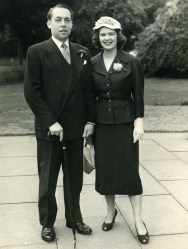
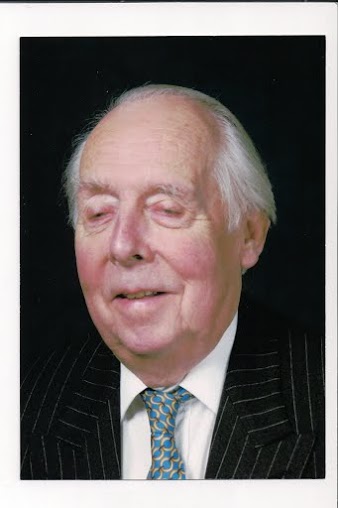
David Francis Wilding, School proprietor, energetic educational entrepreneur and co­founder of Claires Court School

I am indebted to my brother Hugh, fellow Principal at Claires Court for the following post on our Dad, who died on Friday 27 November 2015.

David Wilding, who has died aged 89, was, together with his first wife, Josephine, founder of Claires Court School in Maidenhead, Berkshire. Born at the family home in Ealing on 15 March 1926, he was immensely proud throughout his life that his birthday was also the “Ides of March”, the day that Julius Caesar was assassinated. He was the younger son of Hugh Munro Wilding and Hilda Mary (née Cantopher). While his father was a company secretary and his grandfather a surgeon in general practice, the particular branch of the Wildings included former headmasters of the grammar schools at High Ercall, Shropshire and Evesham, Worcestershire, and notably James Wilding, headmaster and proprietor of Cheam School from 1805 to 1826. Of greater interest to the pupils he taught later, a second cousin was Michael Wilding, the film star and second husband of Elizabeth Taylor.

Following the footsteps of his older brother, Patrick, David was educated at Ealing Priory School which he entered in September 1934. Aged only 17, he went up to King’s College, London (KCL) in 1943 to read History. Shortly after his “call­up” in March 1944, he learnt that Patrick had been killed in action near Perugia in Italy while serving with the Rifle Brigade. After officer training at Sandhurst and with the Life Guards, David was commissioned into 3rd Royal Tank Regiment (3 RTR). In early 1946, he joined 3 RTR in DFWGermany (which had reached Flensburg near the border with Denmark at the time of the German surrender) commanding a troop of 4 Sherman DDs. A keen cricketer of some ability, he was soon playing for “The Ironsides”, a composite side drawn from the four Royal Tank Regiments then stationed in Germany. In January 1948, he resumed his studies at KCL where he was taught by another recently returned from war service, Michael (later Sir Michael) Howard (founder of the Department of War studies at KCL and later Regius Professor of Modern History at Oxford University). It was during this time at KCL that David met another History student, Josephine Mary Thurley, whom he married in August 1950 after graduating BA with honours.

After a year working in London’s East End as a salesman for Powers­Samas, a British manufacturer of accounting and tabulating machines, David was encouraged to return to his old school (renamed St Benedict’s in 1948) as a teacher in the Middle School, eventually becoming its effective deputy headmaster. During the war years, David had experienced problems with his night vision and in 1954 these were diagnosed as the inherited, degenerative eye disease, Retinitis Pigmentosa. The prognosis of 12 years of sight before blindness was to be one of the spurs that led him to consider starting his own school; another was that the headship positions at St Benedict’s Dad and Mumwere at the time reserved for monks of the associated Abbey.
On 19 September 1960, he and Josephine opened the doors of Claires Court Preparatory School for Boys to the first 19 pupils (of whom two were their own sons); the 20th pupil joined at the beginning of October. Their venture quickly established itself, offering a day and boarding education based on Roman Catholic values and preparing boys aged from 61⁄2 to 13 years for their senior schools. The roll rose to 54 by the end of the first academic year and to 84 at the beginning of the second. Further expansion took numbers to 160 by 1965 and 185 by 1970. As boarding numbers increased so extra capacity was added but the real growth was in day pupils as the Thames Valley boomed between 1960 and 1980 and Maidenhead’s population burgeoned.

In order to secure further acceptance by becoming a member of one of the associations of independent schools’ heads, it was necessary for the school to be “recognised as efficient” by the Secretary of State for Education. Inspection by HMI to establish this took place in February 1964 when the Reporting Inspector observed that “The school has made a good start and promises to develop well” and described David as “[conducting] the school with energy and insight and is himself a very able teacher.” The all­important formal “recognition” from Whitehall followed, at the first time of asking, in June 1964 and David, as Headmaster, was duly elected to membership of the Incorporated Association of Preparatory Schools (IAPS).

In the 1970s, the Wildings took the decision to discontinue boarding and the main boarding house, Ridgeway, was converted to accommodate the younger age range of boys. This freed space at the Ray Mill Road East site to allow the introduction of a Senior Department in 1976 and a curriculum leading to GCE O­level at age 16. Pupil numbers continued to rise, from 280 in 1980 to 435 ten years later. In 1985, David and Josephine extended their partnership to include their two sons, Hugh and James. Following Josephine’s death in 1988, David stepped back from day­to­day duties in 1989 and retired to Norfolk, withdrawing from partnership with his sons in 1996.

Although registered blind in the 1970s, the removal of cataracts restored some useable vision and in 1984 he answered an appeal by Berkshire Blind Society and the Lions’ Club of Maidenhead for volunteers to help establish a talking edition of the Maidenhead Advertiser based on cassette. As a consequence, he organised editing teams drawn from Claires Court’s teaching staff, the Maidenhead Catenian Circle (of which he was a founding member) and Maidenhead Drama Guild among others and allowed Ridgeway to become the headquarters of the Maidenhead and District Talking Newspaper Association as well as becoming its Chairman for a time.

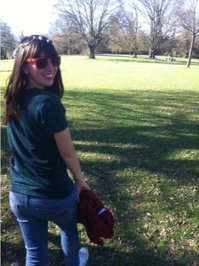
DFW as grandadOn retirement in 1989, David moved to Letheringsett, Norfolk with his second wife, June. An inveterate and skilful organiser, in 1996 he and June established Holt Blind Club, a charity under the auspices of the Norwich and Norfolk Blind Association. He also found time to take an interest in the local Probus Club and played frequently in the blind section of Holt Bowls Club. From this distance, David kept a keen interest in the further development of Claires Court, as well as playing host to many friends and wider family whose company was always very welcome to his home in the Glaven valley. In particular, as one who had enjoyed amateur dramatics as a student, he took great delight in organising theatre parties (which had to include his grandchildren) to the Pantomime, wherever it took place! He travelled widely in Europe and Canada and played an active part in the parishes of St Andrew’s, Letheringsett and latterly St Peter’s, Blakeney until his sight failed completely in recent years.

In 1950 he married, first, Josephine Thurley. They had two sons. Josephine died in 1988. He married, secondly, in 1989, June Hoy (née Thompson). June died in 2002. His third wife, Susan Sergeant (née Walmsley formerly Willmott), whom he married in 2004, survives him with his two sons, six grandchildren and a great­ grandson.

David Wilding, born 15 March 1926, died 27 November 2015


Posted in Possibly related posts | 2 Comments

Keeping life in perspective

“We can complain because rose bushes have thorns, or rejoice because thorn bushes have roses.” Abraham Lincoln

Since my last blog about the refugee crisis, appalling tragedies in the Lebanon, France and Mali have taken place. Because we hear so often about indiscriminate violence in parts of the middle east and africa, the shock value has been diminished. Not so that of the Paris bombings, not just because of the extraordinary and callous nature of the crimes, but also because of the apparent failure of the various European security forces to react to very good and timely warnings of intelligence.

I returned to work last Monday and set about notifying all in our community by email that we were having to reassess the risks around our various trips and residentials planned for the next few weeks. In consulting with my colleagues in leadership, I had to bear in mind not just what was safe to do given the change in circumstances, but what was morally right as well. As our Prime Minister made clear at the time, to give into to terror is an admission of defeat.

The trouble is of course, that as an individual, I can be brave, and stand shoulder to shoulder with others in our country and community. That’s a legitimate choice I can make, and down to me. It has certainly been more awkward to consider how best to act when the government risk factors get lifted to the highest level, because of course I am authorising decisions that affect others, both adults and children. So in postponing a planned trip to Lille, on the very edge of the man-hunt for one of the missing terrorists from the Paris assaults, whilst it seemed highly unlikely anything would happen, it is quite a comfort subsequently to receive advice from government that travel to France at this stage is unwise.

As the days progress, we find that our day trips to London and elsewhere have resumed safely. It is still much more difficult to manage evening visits, simply because our own community at school is expressing considerable concern and disquiet as well. The consequences, should an incident happen are too terrible to think about; like many other schools and colleges, we have to think not just of our students but of our staff as well, who themselves have their safety and those of their families to consider as well.

Lincoln’s aphorism helps perhaps give a suitable perspective to the problems we face; we have been reintroduced to the notion that life actually has rather too many barbs about it for comfort just at the moment. As time passes and the security forces enable us to feel a greater sense of safety, I am sure our sense of adventure will grow once more. But for the time being, I’ll stay cautious for our adults and children, because I do take my responsibilities to care and safeguard others really seriously.

Posted in Possibly related posts | 1 Comment

21st Century Learning – “Whoever saves one life saves the world entire.”

For most people wherever they are in the world, this is a time of greater uncertainty than usual. For those of us based in the UK, so long as we stay at home, then perhaps the unexpected is largely explainable. But any traveler going abroad now faces a world in which a very good deal is not yet know. I copy alongside an infographic from the Daily Mail reminding pilots of the places they cannot fly over once leaving our shores; lots of red and big bold lines makes the image seem really quite threatening.  It’s quite obvious that pilots and air traffic controllers need to be very alert, not just because there are thousands of planes up there in the airspace, but because there is so much more now to concern them.

The growing threats caused by instability around the world  is bringing severe challenges to learning communities, such as those found in schools, colleges and universities. Rolling out here at Claires Court amongst our staff and for use with our pupils is work wrapped around the ‘Prevent’ strategy, through which we hope we can raise our community’s consciousness and ability to respond to the ideological challenge of terrorism and the threat from those who promote it. I quote further from the government’s own Prevent publication: “In doing so, we must be clear: the ideology of extremism and terrorism is the problem; legitimate religious belief emphatically is not. But we will not work with extremist organisations that oppose our values of universal human rights, equality before the law, democracy and full participation in our society. If organisations do not accept these fundamental values, we will not work with them and we will not fund them”. 

The introduction to this document was written by the Home Secretary, Theresa May MP, our own representative for Maidenhead in the House of Commons. She has a challenging job, made less easy I dare say since she has to manage substantial ongoing change in the Police Force, to take costs out whilst maintaining or indeed enhancing the provision of law and order. I see Police Forces are beginning to deploy drones to assist with law enforcement along with other high performance technologies such as heat seeking and movement detection. Such rapid technology change will require new skills to be acquired, not just a reduction into lowly paid security guard work, and there’s the rub. Are our security forces of the calibre to be trained? Where once we had policemen patrolling our streets, we now have council uniforms with full fluorescent flashes to cover this mundane activity. So long as we are a law abiding society, that’ll work I guess.  But I fear the plans to cut back even more sharply on our public services just now are ill-judged, and here’s why.

Seeing now the settling of very substantial groups of Syrian and other nationality refugees in other European countries, training educational communities to look out for needles in a hay-stack (spotting radicalisation) seems very much off the mark. Austria, Germany and Sweden are preparing local towns for a mass influx of hundreds and thousands, displaced children and lone adults, as well as families or friends, This new population is going to be there into the medium/long term. As one headline this week (again from the Mail on-line) makes clear, “First of 750 migrants arrive in tiny German village with a population of just 102 (including a neo-Nazi councillor) bracing itself for 700 PER CENT population hike”.
Read more here.

In the living memory of the oldest German citizens, these mass migrations they are seeing now are on a similar scale to those that arose at the end of World War 2. Some 2 million Germans for example left Czechoslovakia, and on most borders in the Baltic and the Balkans between 10,000 and 20,000 Germans were being unceremoniously ousted from their adopted homes.  Some 500,000 alone had to leave Yugoslavia. At the same time of course, the departing Germans left homes, land, jobs etc. needing to be filled; the Russians now in occupation of Poland forcibly removed 2 million to the west, whilst moving almost as many Ukrainians and Belorussians eastwards to take up the work available in the USSR. Anyone able to move to the ‘free’ world west of Germany did, some 900,000, and the UK took its fair share.  For example, the ex-pat  polish population local to Maidenhead and Slough grew heavily as a result.  I’ll not extend the History lesson further – feel free to read more on this BBC refugee article; suffice it to say my own father’s post war experiences as a tank commander in Germany included witnessing the mass repatriation movements both west and east.

I take seriously my responsibilities to ensure that our school community learns and understands how to manage the risks we face from unprecedented terrorist threats, and to do our best to prevent radicalisation in the first place. However, because the political damage would be so great, currently I see no leadership from our government or parliament in how we are going to assist the northern hemisphere with the largest forced migration seen this century,  bigger even dare I say than that of the Second World War.

The EU predict some 3 million refugees will be with us in Europe by this time next year, and ‘batten down the hatches and don’t let them in’ simply won’t work as an educational message for the children in our school and in the UK more generally. There are vast numbers of displaced children alone who will need care and accommodation. We have precedent set on our country’s willingness to assist refugee children. In the 9 months prior to the outbreak of the second world war, the UK accepted 10,000 Jewish children from the Nazi regime (Kindertransport), and as events turned out, most were the only members of their family to survive the Holocaust that then swept through the Jewish community during Hitler’s rein of terror. What we as a nation did then brought us much international regard later on. Likewise, largely because of the remarkable 1993 film starring Liam Neeson, Schindler’s List, 7 times Oscar winner, we have learned that brave men and women living in Nazi occupied territories that assisted in the successful evacuation of Polish-Jewish refugees. The film depicts the real life story of Oskar Schindler’s life in Krakow, where as a businessmen he managed to save the lives of 1200 jews, by providing them with work in his ceramics factory.  The close of the film shows Schindler travelling to the West away from the advancing Russians,  hoping to surrender to the Americans. Wikipedia’s entry close on the film says this:

“As a Nazi Party member and war profiteer, Schindler must flee the advancing Red Army to avoid capture. The SS guards have been ordered to kill the Jews, but Schindler persuades them not to so they can “return to their families as men, not murderers.” He bids farewell to his workers and prepares to head west, hoping to surrender to the Americans. The workers give Schindler a signed statement attesting to his role saving Jewish lives, together with a ring engraved with a Talmudic quotation: “Whoever saves one life saves the world entire.” Schindler is touched but is also deeply ashamed, as he feels he should have done even more”.

I am actually much more challenged by the impending Refugee crisis soon to be with us. No amount of technology, nor the smooth words of politicians will hide from our country the very real challenge it will be asked to face to engage with and support the relocation of its fair share of 3 million refugees. Unless I am very much mistaken, the statistics already show we are relocating some 600,000 a year into the UK, and if in public we don’t accept the refugees, we’ll be having to home those in Europe displaced by that refugee flood nevertheless. It happened before in my parents’ life time, and it’s coming back now. I wonder who will deserve the plaudits this time?

“Whoever saves one life saves the world entire.”

Posted in Possibly related posts | Leave a comment

Britain: Hysterical Nation

Britain: Hysterical Nation – http://huff.to/1Lv5sFn

Posted in Possibly related posts | Leave a comment

Educating the heart…

Listening to the radio, I heard recently that wisdom is lost to the young because they cannot see. I was somewhat taken aback by this statement, because my regular contact with children at Claires Court provides me with an awful lot of evidence to the contrary. It’s fair to say that children’s experience is driven very much by their family, school, faith and community channels; for example, if they spend their Sunday mornings at Mini Rugby for 7 years, their thinking about the purpose of Sunday is going to be very different from those that go to Morning Service or Shul. Nevertheless, the vast majority of the children here reach out to support and protect others in ways that are typical of the generosity of young minds. However, I do see problems. Firstly, as children enter their adolescent years, their growing desire for independence from the adult ideas that surround them does become noticeable. Separately, there is a paucity of agenda of many adults who lead education who seem to focus solely on the academic outcomes for children, without thinking about the broader skill base learners need to acquire in order to live successful lives as independent adults.

Others speak in similar negative ways – here’s the Dalai Lama’s take on the matter: “Real change is in the heart, but in modern education there is not sufficient talk about compassion,” the Dalai Lama told a conference entitled Educating the Heart held in Vancouver, British Columbia, during his 2015 fall tour of North America. “Through education, through training the mind and using intelligence, we can see the value of compassion and the harmfulness of anger and hatred.”  You can find a much fuller article by Melvin McLeod on the Dalai Lama’s thinking on UK tour here.

I guess I am particularly lucky to work in a family of some 370+ independent schools where the education of the whole child is paramount, where year by year our biannual conferences focus on that common language that brings educators into the profession, to teach, to make a difference, to lead learning for all not just for those that find it easy. As Chair of Professional Development for ISA, I have made it my mission to promote the essence that underlies successful education, to place children at the heart of what we do and support their growth of intellectual and spiritual development using tools honed by evidence and ethics. The latter is important by the way, as we do not permit corporal punishment for example as many of the more successful far eastern education systems still do.

It’s interesting to distinguish what I mean by children at the heart, and what perhaps others pejoratively describe as child-centred theories of education. I am not connected for example to the principle that children need to learn at their own speed, for if that were true, we would not have age-related boundaries for driving, alcohol usage and sex, and we know that intellectual development is only part of the growth in wisdom we see as adolescents mature. Emotional intelligence is important too, as is the ‘fledging process’ that human families take their children through as they seek to leave home and set up home for the first time. The genuine success the English Middle class have in using the University destination for 3 years is really notable; as a country we are much more successful in graduating our own children (as measure in the conversion time to degree award and chronological age of graduation) compared with our counterparts in the USA and Europe.  In short, there is a dynamic balance between pace of education and achievement; many more able children need time too to catch-up before moving on. This is Singapore’s positive gift to the world, ‘do less, and do it better, and don’t move on until that’s so’.

Years ago, one of the great Professors of Education, Tedd Wragg of Exeter University was contracted by Singapore to identify why their students were so good at passing Accountancy part 1 and so bad at passing part 2s. Part 1 was all about adding up the spreadsheet on a business (let’s say a leisure centre, his example),and part 2 was a test of the advice the accountant could give the business based on the evidence the numbers showed. To his audience (ISA Annual conference 1990s) this came as no surprise, experienced as many of us were in educating multiple nationalities in our school. There is something innately British about being a shopkeeper, and our children almost from the very start are taught how to set up and run businesses. Nursery schools around the land have make-believe as part of the children’s play, and this is embedded in the Early years Foundation stage and we should be hugely proud as a nation that we have this as our starting point.  Singapore noted that from an early age their own curriculum was jam packed with content at the expense of skill acquisition, reacted really positively to Professor Wragg’s advice, and we can all reap that benefit of the changes they made for example to their maths programme now.

Back in April of 2010, the Icelandic volcano of Eyjafjallajokull erupted with such ferocity that Europe’s airlines were grounded for 6 days. Claires Court had just returned to work for the summer term and our Boys Reception classes had just started using their new outdoor garden, complete with hundreds of wooden blocks. Within minutes of their occupation, and unrelated to any adult intervention, the boys were building roads across the bark laden floor in an East West location. “What are you doing, chaps?” asked the Head, Jeff Watkins. “Building runways, so the airplanes can land safely” came the reply. This is brilliant anecdotal evidence that children can see challenges the rest of us can’t and respond and learn. We don’t have to proscribe the learning opportunities available, though do need to prescribe that we have breadth, diversity and challenge.

The danger is that external pressures on teachers and school leaders to ensure they perform and deliver against targets becomes the reason why they come to work. The measurement of outcomes at the expense of process is one of the great corrupting features visible in education and we are served very badly if schools are monetised by these principles. The growing permanent exclusion of unwell children from more successful schools for fear their presence damages their educational statistics is well known in England, and as one of the more influential state headteacher think tanks, the Headteachers Round Table make clear, schools need better accountability systems than just counting who gets the best pass rates in national exams.

It’s Fireworks night at Claires Court on Saturday, SL6 4QQ, and we expect as ever a fantastic turnout of our community for our first mass bash of 2015-16. Year 10 and 11 are very much in charge of the extra fundraising stalls, and we have interesting innovations from the STEM club and Young Enterprise to experience. For the first time we have Metcalfe*’s skinny popcorn to run alongside our Children’s film showing and live Rugby World Cup. Yep, I might be OK about children’s empathy for other’s less fortunate, but I am not yet convinced all are completely sound on sweet and sticky.

*www.metcalfesskinny.com

Posted in Possibly related posts | Comments Off on Educating the heart…

Principal for the Day – my work through the eyes of a boy aged 13 and three-quarters…

It is a well know fact that the Headteachers within Claires Court have on occasion had their ‘lives’ auctioned to the highest bidder at the PTA Summer Ball; and my esteemed colleagues have then returned to the ranks whilst their ‘Headteacher for the Day’ has ruled the roost. To be frank, nothing as yet has gone wrong; the displaced headteacher has stayed close to the new incumbent, and made sure that only good things have happened as outcomes from their tenure.

For the first time in June 2015, the role of Academic Principal was also in the Auction room, and pleasingly (for my ego at least) it sold really well. The winning bid was for Nathan, aged 13 and three-quarters, and on Tuesday 29 September, Nathan was able to take up his role for the day. Nathan visited all three of our sites and all divisions; it was most noticeable that he felt most at home with the Year 9 girls, who captured him at lunchtime and squirrelled him into a Biology lesson for the afternoon. I must confirm that at no stage during my career have Year 9 girls, or indeed any other group of children captured me for an afternoon, so more power to them for their powers of persuasion.

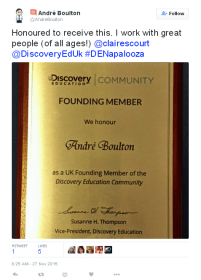
The day commenced at Senior Boys, with Nathan (AP4D) acquiring a suitable ‘Voldemort’ style Gown to give him a sense of my normal ‘noble and dignified air’ (ahem), prior to travelling across Maidenhead to present to Mr Rowan at CCJB a case of Samsung tablets for his work with computing and digital literacy. AP4D then worked with Year 6 as they practiced their manoeuvres prior to acting as Open Day guides, before returning to SB to take part in a video morning with the team from Discovery Education. Pleasingly Discovery Education were content to video me asking of the AP4D his views on the role, as well as his use of digital technologies. I hope to post a clip of the interview once it has been processed by their crew.

We then ‘teleported’ via my iQ to College, where Year 5 girls awaited to share with the AP4D their practice for Harvest Festival for Thursday and of course Lunch. Meanwhile, I was sent back to SB with some female Discovery ambassadors so they could be interviewed, so I am less aware perhaps of the antics  of my ‘doppelganger’.  In my absence it appears AP4T was persuaded to award the Head of Sixth Form and his team substantial pay rises, and to command that a regular commemorative day off named in Nathan’s honour was to be founded.

The AP4D then encountered my brother Hugh, Administrative Principal at Claires Court, and both enjoyed a photocall.  At the end of the day, I ‘chauffeured’ Nathan home to meet with his proud parents, who had not in their wildest hopes for Nathan seen him appointed as a headteacher at such a tender age.  Actually, that’s why they bid for the ‘placement’ at the Summer Ball in the first place.

A short film of Nathan’s day can be found here – a mash-up from the real APs camera!

P.S. Sadly for the Head of Sixth Form, those salary changes were reversed the next morning, and AP4D’s annual holiday has been permanently rained off.

Short video of Nathan, Academic Principal for the Day

Posted in Possibly related posts | Tagged , , | Leave a comment

“You are not here merely to make a living.” Woodrow Wilson “You are, like the rest of us, likely to fail.” Susanne Thompson

The full quote by Woodrow Wilson, 28th President of the United State (1913-21) is “You are here in order to enable the world to live more amply, with greater vision, with a finer spirit of hope and achievement. You are here to enrich the world, and you impoverish yourself if you forget the errand.”  He spoke these words well before his time as President , whilst Professor at Princeton, then not a fully fledged University, when speaking the annual address to the College fraternity. Now as then, these are remarkable words for young people to hear, as it helps fashion in their imaginations some shape to ambition and enterprise.

susanne_thompson-04 (2)We have just celebrated our Secondary Schools Speech Day, and been won over completely by a 21st Century educator, this one a Vice President of Discovery Education, an enterprise somewhat different and in terms of scale, somewhat larger it must be said than Princeton of yore. Our guest speaker was Susanne Thompson, teacher, facilitator, mentor and from the Northern states rather than the South as Wilson was. Speaking to some 1200 of our community gathering of pupils, students, faculty, parents and guests, Susanne held us spell bound.  “Please raise your hands if you have failed!” she asked of us. Dutifully, we all raised our hands. She did not draw our attention to the great and wonderful things we were capable of doing, but to the many and various daily failures to which we managed to succumb.

Citing by pictorial quotation in her talk she reminded us of the very many career failures of Michael Jordan, of Thomas Edison’s mantra that he had but found 10,00 ways that did not work, that a google search on celebrating failure throws up almost 40 million ways so to do, and perhaps my favorite, J.K. Rowling’s take “It is impossible to live without failing at something, unless you live so cautiously that you might as well not have lived at all – in which case you have failed by default.”

Honestly, as Susanne met each of the prize winners by hand, she made them feel very special, for that moment in the spotlight, one could see a very real connection of interest in the learner. Children and adults know that they are likely to ‘fail’ much of the time, and that can weigh us down, stifle ambition and kill curiosity. Her closing thoughts for us were to remember to fail forward; “that’s the way to ensure you make progress”.

It might seem odd to you, dear reader, that I mix the thinking from two Americans separated by 120 years. What was so obvious yesterday was that Susanne Thompson was assisting her great forebear in the mission to open our children’s eyes to what was possible, as exemplified by their many and various successes. “Carry on, learn from the wonderful examples around you and take your failures as lessons to help you succeed further in the future.”

At the close, Susanne confided in us (a personal message it must be said, each just for our own hearing); “My father was Scottish, my mother was English” she said. And suddenly she was in our hearts, to take home at Claires Court, ‘one of us’, to nourish our future days, sometimes to learn from our failures I guess, and more often I hope to build our future successes.

Posted in Uncategorized | Leave a comment

Bells, Whistles and Doing the day job…

Please come back shortly when this blog is published.

Last week’s is below \|/

Posted in Uncategorized | Leave a comment

Building Learning Power – welcome back to Claires Court – where the grass is always greener.

It has been a funny old holiday, drier than other summers I can remember, yet colder than most in recent years. Perhaps the Principals are to blame; in commissioning Agripower to seed some 15 acres of our new fields adjacent to CCJB, we took a calculated risk that a June sowing might get caught in drought and need overseeding later in the year. So dry had been May, that we had been able to sift almost all the stones and lay them under an almost perfect tilth of 20 cm or so. The seeds were drilled, and lo, as if Noah had called for the rain, it fell from the sky. Not it must be said as a deluge, which would have washed all our good work away, but just enough every few days to support the growth of a wonderful sward of the finest playing field.

DSC_0435

We have just treated it with a mix of weed and autumn nutrient, to keep the grass growing, and to kill the pea and dandelion that seemed to enjoy the conditions just as much. The photo shows the 2 cricket squares (just) sat gently in a wonderful rolling landscape.

MBecksmithThe wonderful thing about summer is that we also reap other rewards from our work. Here’s Matthew Becksmith, one of our new graduates just down from Durham University with a 1st class honours degree BSc (Geography) writing about his year to come:

“After an internship with PwC  in their Pensions Audit department in the Reading office last summer I received a job offer from them, which I have deferred to a September 2016 start. So in the meantime I’m having a post-uni gap year, currently working at the Belgian Arms in Holyport to earn some money before heading to Canada in November to be a ski instructor in Whistler for the winter. If I’ve got any money left I hope to travel in Central America next summer before cracking on with the ACA accountancy qualification next Autumn.”

Matthew’s brother Adam was one of the Year 13 students completing their A levels this summer. Adam gained straight A grades and is off to study at Bristol University, and really was quite an extraordinary pleasure to meet his parents on results day. His parents were extraordinarily proud that both boys have become such outstanding adults, and not just because they have got the grades, but because they have done so in such style. 2 brothers, both unexpected leaders of their generation, completely different in the way they get on with life, yet set for exciting futures both.

EllieYou’ll hear more next week as we run up to Speech Day, of our Head girl and boy, Ellie Rayer (England U23 Hockey international, now studying at Loughborough (yes back already for Hockey training) studying Sports Science, and George Monk (3xA*) off to read Chemistry at Oxford and of so many more outstanding characters off in the main to higher education, though some to work as well, for which they are well suited. We enjoyed our best ever series of A level results this Summer, with 53+% gaining A*, A and B. I know I bang on about being a broad ability school and all the benefits that brings, and here’s the proof once more that we would not have been a better school if we had deselected the bottom half to give us 100% A*, A and B.

Only one 8’s crew a year can boast being British Rowing’s National Champions, and here’s Chris Clarke and the Claires Court crew that won the blue ribbon event at Strathclyde at tCC8 2015he end of July. Walking around school today, meeting the boys for the first time since their regatta win, it was rather touching to find they still had their medals in their pocket. Pinching themselves they were, even 6 weeks since their victory. With three of the boat club winning international selection for England or GB, it’s no surprise the crew still seemed to be walking on water.

Welling1

If all seems green, one wonderful old girl of the school bit the dust this Summer. Our Wellingtonia, planted we think in 1853, started showing severe signs of distress 2 years ago, and this summer started dying back quite badly. The old damWelling2e started leaning even more dramatically towards the school, so sadly, we had to scale her for the first time and gently, carefully lower down to the ground. Here’s that process half way through, and you can see the obvious difference in vigour on the sides of the tree. The good news is that I have saved the odd branch and plan to make multiple table mats from the wood – not much good for anything bigger, being a wide grain wood prone to warp and bend, but a happy memory for those of us that spent our childhood years under its cover.

Round about results time this August, the Claires Court Shed Theatre made its debut in the West End, with 10 performances of ‘From Morn ’til Night’, the story of Vincent Van Gogh’s life as told through his letters. It’s a play developed by Maggie Olivier, Head of Drama, from original ideas developed last year and now worked up into a really commercial offer. l1Her colleague Rob Bowen played the adult Van Gough, Elliot Stokes his younger self, Dom Crayden as Paul Gauguin, and brilliant support given by Danny Cornell, Will Ansell and Vickie Morrish. For me though the 2 actors who almost matched Mr Bowen’s brilliance and shared the best supporting rolls were Charlie Tuck and Hannah Wardman – indeed it’s difficult to believe that there were not real stars in the making at the Leicester Square Lounge Theatre. The set design by Lucy Wardman and Lighting and sound by Callum Plain were grand enough to stir the imagination, but so subtly changing that they disappeared as we lost ourselves in the intenseness of the theatre, as Van Gough slipped in a madness beyond repair.

And finally, we have returned to school, adults and children, refreshed in the main from a rest from our endeavours. Our Academic Faculty of teachers, instructors and allied learning professionals number some 150, and we filled Norden Farm on Tuesday morning for our back-to-work get-go. The best hour and more was given over to Professor Guy Claxton of Kings College and Winchester Universities, taking the lid off how learning really happens, and assisting us in tweaking the Claires Court Learning Essentials to build even better learning power. (BLP). Honestly, there is no better inspiration than someone such as Professor Claxton to validate our work and yet show us our next steps along the way to ensure our pupils graze on our elysian fields even more successfully. Professor Claxton will be back with us to support the embedding of such ideas even more fully into our work. “You do need to find ways of helping children struggle; not by ignoring them, but by insisting they use the various tools at their disposal before putting up their hands and being helpless.” Here’s on of his ideas to set you thinking…

three-before-me

Posted in Uncategorized | Leave a comment

When Education fell under the spell of Mumbo-Jumbo…and was last seen disappearing from sight

11 years ago, Frances Wheen published ‘How Mumbo-Jumbo conquered the world’, his seminal debunking of the ‘new’ thinking of the Dot.Com boom and moral confusion arising from twaddle peddled by politicians. I have the paperback edition in my hands as I write, and the back page credits include:

  • ‘This joyous, exhilarating, angry and deadly assault on the march of unreason…Once an almost sense the ghost of Orwell eagerly egging him on’ The Guardian
  • ‘Wheen cuts a Jonathan Swift-like swathe through the bullshit that threatens to clog our minds’ Daily Mail
  • ‘You have a choice: either read it or pre-emptively shred your brain in anticipation of the coming darkness’ Independent on Sunday

In my anticipation that you would rather read this short blog for a little more enlightenment than pick up the 300+ pages of Wheen’s dissection of the political and populist chicanery of the nineties and early noughties, perhaps a quick glimpse at this short Guardian set of 10 exemplars at the time might help you return to my musings quite quickly – http://www.theguardian.com/books/2004/feb/03/top10s.modern.delusions. Take a quick peek and once you have, pop back to read on…

You’re back – great – anything strike you as still relevant today? Is Religion assisting in solving the world’s problems? The market is rational; should we model China’s economic route to stability? Educated westerners would never shoot big game with crossbows for fun, would they? Governors would not ‘take over’ a school to radicalise its children? We can bomb those we fight into submission? Illegal immigration arises from the UK having too generous a welfare state?

Let’s have a quick look at the scene in Education in August 2015. Secretary of State for Education, Nicky Morgan has suggested to teachers that they could ease their workload by not answering emails after 5pm. And loads of other garbage like that. Such as  ‘Teachers waste too much time marking and preparing lessons’. Her minister for school reform, Nick Gibb insists that text books are essential for better learning. Excellent, except of course this government has changed every secondary and Sixth Form subject and method of examining at the same time; where’s the benefit in suggesting there is no better way to service the modern motor car, yet suggestibg purchasing a Haynes’ guide for the Austin Allegro. It gets worse; the England cricket team has just retained the Ashes;l well done them, though I wonder how many attended English state schools? If only private schools would share more of their DNA…as if that’s the answer, which it is not.  The way to solve this country’s literacy problem is to commit that every 8 year old will be enrolled to their local library and be inspired by celebrity role models/authors like David Walliams to show Europe the way. Why is that hoping to work, except for Walliams, whose children’s fiction books are printed and ready to fly off the shelves.

At almost every level in Education, the next steps don’t start from where the country is now, because rather like ISIS in Syria, those in charge are destroying wholescale the infrastructure that previously has secured egalitarian access to services and solutions. The trouble is, this destruction of structures follows the previous regime for 20 years which had imposed a totalitarian approach to learning for so long that many adults entering the profession in 2015 are content to subscribe themselves to the ‘Do as you were done by’ approach, because to disobey means to attract the wrath of management and opprobrium of the inspectorate.

As Government cutbacks  accelerate away, Libraries on towns are closing wholesale, and/or hours reduced beyond reason. Schools and Music Hubs across the country find their permanent Music staff are being reduced to temporary part time roles, music lessons and events dramatically cut to beyond the bone. At a time when child and adolescent mental well-being and resilience have never been under greater threat, school nurses are so thin on the ground as to be invisible, hidden probably by the vast queues seeking to access adolescent clinical health services. When Girlguiding highlights just how serious these issues are,  sit up and take notice,  as they highlight the deeply depressing pressure on girls to conform to body type and firm. This week’s report by the Children’s  Society in which they publish their latest survey of happiness concludes that only children in South Korea are less happy out of 15 nations. It’s no surprise that many are confused when the DfE so often

emphasises that Asian children do so much better at school than English and the BBC runs a faux experiment that seems to prove Chinese ways of working are more effective in a state comprehensive in Hampshire. Child suicide is not just a real concern in South Korea; Japan sees ghastly numbers choose this each September when school restarts.

So when did the Mumbo-Jumbo takeover? It was not the imposition of the National Curriculum, or even the testing of the end of key stage outcomes that started the rot, back in the ’90s. It was the publication of school data as part of a league table culture that began the slow and insidious movement of ‘bad education’ within the key stage. The arrival of national literacy and numeracy hours to ‘focus’ children and teachers on the importance of these 2 subjects, and the movement of that focus up through KS3 and KS4 seriously damaged teaching pedagogies to the core. Suddenly everyone within a key stage had to be assigned a target grade for the end of the key stage; learning had become linear, and government expected every child to move up the grades (by 2) as cars do through the gears. But children are not machines, and cognitive development happens in ‘spurts’; worse still children born later in the year were expected to make as much progress as the oldest. All are forced to start school in the September after they are 4, even though there is no educational evidence that starting education as a cohort is better than when children are ready via drip feed.

Many articles written this week highlight that endless assessment from the start of secondary school, the requirement that every child be seen to make progress every 20 minutes in lessons, coupled with the obligatory target setting has removed for most children ‘joy’ during their school days. ‘Furthermore, girls in England came bottom in terms of happiness with body confidence, self-esteem and appearance. On the whole, children in England have low levels of satisfaction with four major aspects of life – relationship with teachers, their body, the way they look and their self-confidence’. Marc Smith, Huffington Post. Children of all ages are consistently confronted with the hypocrisy of the adult country in which they live, no more obviously than Ashley Madigan website encouraging from the advertising hoardings that ‘adultery’ works. Not I suspect what is meant by the concept ‘Sharing DNA’. How can we encourage a better understanding of morality and tolerance of others when the core subject that delivers same, RS is not given any status at all in the EBacc for state schools at end of GCSE?

What amazes me as that in terms of curricular and examination balance, we had actually got it about right some 10 years ago, but the incessant focus on league tables for individual schools, coupled with unprecedented press interest made it inevitable that leadership, management and teaching in schools started ‘gaming’ subject choice or ‘cheating’ the assessments, both in course work and their successor controlled assessments on a grand scale. Successive governments have reduced the role of local authorities to  a shadow of their former selves; but to advocate as the Conservatives do now that every secondary school should leave local authority control, become an Academy and report to the DfE directly shows extraordinary faith in a fascist approach for which there is no evidence of success. There was a time when both the Depart of/for Education and Her Majesties Inspectorate had a strong reputation for being wise and independent of the politicians and parliament, thus ensuring that change was managed with care and consideration.  Writing at the time of the GCSEs publication last Thursday DfE replied to a Daily Telegraph article that there is no need for drastic change, as the system is evolving. “We have radically overhauled GCSEs to ensure each one plays a valuable role as part of a broad and balanced curriculum that equips young people with the skills and knowledge they need to realise their potential,” a spokesman says.

So for most then, this radical overhaul by DfE is at the very expense of the ‘broad and balanced’ curriculum they suggest they are promoting. What price a creative industry, if the only ‘creation’ is in passing exams. Where are the artists, actors, musicians and sports stars in the state sector going to come from if the only way they are valued is through participation in national testing and making the grafe?  DfE are now introducing a new measure to show how well secondary schools are doing; it’s known as Progress 8, and guess what, it identifies that children should study 8 subjects at GCSE, with double value being given for following Maths and English. Include English Lit, and that double counts as well. By the time you have added in 3 sciences, an MFL and either Geog or History, you have your 8, so you can see why schools are not going out of their way to promote subjects 9, 10 and 11. After all there exists no bonus for schools in doing that, so good bye to real breadth after all.

It will not surprise you, dear reader (if you have stayed with me that is), that the government continues to state that it wishes to give all  of its schools the advantages that independents like Claires Court enjoy, ones that research makes quite clear convey huge advantage to those we educate. Our success is not built on privilege or better DNA. Here’s my Mumbo-Jumbo-free 6 of the best list of what is needed.

  1. Provide funding that stays with the child and covers their needs, all of them, through their educational journey, through work and play, sport and leisure, in sickness and in health
  2. Engage parents as partners and mean it; ensure the day is short enough so parents can enjoy part-time school when the children are young, but long enough so there exists the option of a one-stop shop for parents who work, and children who need the safety of school to get their homework done or rehearse or play can do so. Extending hours works, but not as a mandatory requirement.
  3. Develop a teaching profession that is valued for its expertise in providing for all an inclusive and nourishing education. Lose immediately any notion that bonus-pay works in education, and use such funds to better promote in-service training and research. Play the long game, don’t value oxymoron  ‘fixes’.
  4. Technology is not the answer, ever, to making school better. Investment is needed of course, in equipment, resources and staffing. There’s no such thing as a magic bullet; so don’t waste time looking for it. But we can agree what works, so once that’s sorted, stick by the choice for all. Keep phones off; children do not need to be connected all of the time and nor do adults.  Successful social interaction between people in schools gives rise to the greatest successes.
  5. Teachers need time in school to plan, reflect and share best practice. Children learn to succeed through challenge and failure, not making progress every 20 minutes. As Singapore Education has found, don’t let children fall behind, and reduce curriculum content so there’s time to ensure they can’t. Don’t make work harder until all of an age can meet the challenge, stretch don’t break, and use your more able to assist those who learn less readily. Don’t let headteachers and leadership leave the classroom too easily; the profession is called Teaching after all.
  6. The classroom has looked like the classroom for millennia. That’s not a sign of a thing that’s bad, but actually indicative of a successful space that has stood the test of time. Teachers can teach, but must give time for learning to happen, of skills as well as facts, and for the acquiring of attributes, such as leadership, service, collaboration and interest in research. Teachers must also be diverse in what they do; of course be lead specialists in subject disciplines, but be willing to graze more generally to support the co-curricular and to improve themselves as practitioners for social improvement.

I’ll conclude this lengthy post with a summary of Francis Wheen’s closing remarks in Mumbo-Jumbo:

“Those who refuse to learn from experience and strive to discredit the rationalism that makes such enlightenment possible are not only condemning themselves to repeat the past. They wish to condemn us all to a life in darkness”

Posted in Uncategorized | 1 Comment