World Mental Health Day, observed on 10 October each year, is a global initiative that highlights the importance of mental health to overall well-being.
It serves as a timely reminder of the critical role families and educators play in supporting young people’s mental health. This day is not only about reducing stigma, but also about strengthening awareness, encouraging open conversations, and ensuring young people know where to turn to for support. By acknowledging World Mental Health Day we can help reduce stigma to build more compassionate and supportive environments.
I am sharing this extra Blog to empower friends and families to give some more attention to matters of well-being, and just because people look healthy, appearances are deceiving.
Parents and caregivers play a central role in shaping the mental health of their children. World Mental Health Day is an opportunity to pause and reflect on the pressures young people face in today’s world and how we can best support them. Whether it’s helping them find balance between school, technology and rest, encouraging open conversations about feelings, or modelling healthy coping strategies ourselves, taking small steps at home can make a big difference. By engaging with resources and discussions on this day, families can strengthen their understanding of mental health and contribute to a culture where seeking help is seen as a sign of strength, not weakness.
SchoolsTV are our partners in the provision of excellent advice to parents and families. SchoolTV have just been awarded Mental Health Organisation of the Year in Australia! I have every expectation that their reach will soon be across the whole of the UK, in part because of the quality of the advice they offer, all published on our website here – https://clairescourt.uk.schooltv.me/and because the access to good clinical advice on working with children is just so poor.
One of the outstanding practitioners in this field is Dr Emma Woodward, a child and adolescent psychologist, and her short video as part of World Health Day 2025 is really worth a watch.
This supplementary advice, covered in her TED talk 2 years ago, helps provide advice for parents and other adults on matters of Trauma, that emotional response to a terrible event that can manifest in a range of emotional and physical symptoms, with the potential to develop into a mental health condition like PTSD if symptoms persist. In school, we are noticing a slow and steady rise in this field. I quote below the questions and beneficial answers she gives so well:
“How can we create a future fit for human flourishing through practical psychology for generations to come? Dr Emma Woodward will shed light on this question through her talk on healthy trauma-informed responses that can benefit all ages. Dr Emma Woodward is a leading expert in trauma-informed practice and child development. A respected and sought-after trainer and facilitator, she is also a frequent media commentator on topics to do with child and adolescent development and trauma-informed principals. Her passion lies in understanding how we can use our knowledge of human behaviour to create a future fit for human flourishing for generations to come.”
For additional resources and further information on World Mental Health Day, visit the Mental Health Foundation website.
Thursday 18 September saw the 2025 scholars and their families presented with their awards, for academic excellence, for the Arts and Sports and for those who are excellent in the round. Those present included new entry and long-serving families to the schools, covering in the main Years 7 to 9. In the address I gave to the 48 scholars and accompanying adults, I highlighted of course the success the young people had achieved in winning the scholarship, yet that it meant something more to them and the school. I quote verbatim below:
”Now to business – Scholarship is a word that is rarely used, and perhaps often misunderstood.
What this means at Claires Court is this:
Scholarships are awarded based on merit, such as academic achievement, artistic or sporting talent, or specific subject potential. Please note that for you young people, it’s not a REWARD – in a sense, you haven’t done anything yet! We have every expectation that, whatever your award, you recognise that you have entered a performance pathway that will, no doubt accelerate your knowledge and skill acquisition. As we celebrate with Holly Hatch and Gareth Wellen at the close of today’s celebration, our leading GCSE students now moving on from Year 11 into A level studies, they have been a major influence on the other students in their Year and the school more generally, and we hope you will have the same extraordinary effect on the school as you move through as Claires Court Scholars.”
This week, for both Senior School open days, Steve Richards presented to over 100 families in attendance that Claires Court was founded by my parents, that my brother Hugh and I are still fully involved in the school, but that in addition, our prospective parents would see on their tour around the school, young people who really were proud of their school, aware of the myriad of opportunities available to them every day, and clearly perhaps very conscious that they were already achieving so much more than they could ever have imagined prior to entry.
Of course at some point in the future, the 2 founding pupils (Hugh and I) will no longer be around, yet the school will be, with its ongoing aims and values being retained because of their fundamental value in what makes Claires Court the school it is. Yet the school has to be pioneering in its approach for education all the time, as what works now will certainly hit ‘cracks and potholes’ in the way ahead, a route for the ‘futures’ as yet unknown to us all.
The headteachers and I are really proud of the close relationships we build both with the children and young people in our care, but also with the parents & guardians that support their sons and daughters and our wider school community so strongly. One great recent example has been the enthusiasm and determination of our younger families to ensure their primary age children enjoy a SMARTphone-free childhood. Hosting the inaugural group of 60+ heads from RBWM at our Junior school highlighted that ‘Now was the time to act’, and it’s so good to see that message proliferate not just in our local authority but across the country as a major groundswell of parental opinion covering the next few years of their families lives so well.
For older students and us adults, the world of the SMART phone cannot be ignored, providing as it does a route to so many services required in life, and not just because we are now a cash-free society. Prime Minister Starmer announced today the need to have a digital identity card for citizens permitted to work in this country, and frankly since I no longer have a bank locally and need to access NHS services via an App, the reality of their universal use is evident to us all.
I’ve received the video released this week by the SMARTphone free pressure group in the USA. It’s a powerful message to us all; whatever the benefits of our digital economy, our children need the best protection they can get from the families they live amongst. Here’s an example of just how dynamic famly attention needs to be to the dangers let loose when young children are presented with such a device.
And finally, very many thanks to Marliyn Hawes, Freedom from Abuse for her powerful and hard-hitting presentation on the wider challenges that now exist in navigating young people through the turbulent waters of adolescence. What makes the difference between the childhoods of parents and those older generations beyond and the young of 2025 is the the sheer mobility of society and immediacy of access to knowledge and experiences that were usually ring fenced by geography and community.
In my family history there are ancestors from Essex/East End who were transported to Australia for criminal activity, but kept local and out of sight from the rest of the country. As a boy, I remember seeing the appalling photos of children in flames during the Vietnam war, and of the civil war of the ‘Troubles’ in Northern Ireland. Yet they weren’t sent to the screen in my hands, but arrived perhaps in a colour supplement delivered first to my parents who with some care might have talked me through the stories. That’s the major difference now, and why managing the access to the world of troubles so sharply expressed in the video above is an essential part of the dynamism that schools and families need to embrace.
Ending on a high note about our pupils at Claires Court, whether they be the scholars winning awards last week or the wider school on show yesterday and today, they clearly just love that the continuity between schools is welcomed, and gives them the skills to express their voice, support their school and enjoy so many of the opportunities around them, very much beyond my wildest dreams from 1960, when I first started at Claires Court!
Current events around the world, and with specific reference to this week’s visit of the President of the United States as well as peace talks around the Gaza crisis and the war in Ukraine, reminds us all that progress around problems (and finding their solution) can’t be made unless all parties are included in the conversation. As the general title of my blog suggests (A Principled View), should not we all call a spade a spade to remind people of the work that has to be done? Perhaps not, and that’s where Diplomacy comes in! It’s as unwise to gloss over the challenges as it is to call out that it’s a ‘bloody shovel’.
Over my time as a headteacher, I’ve carried to staff meetings a small figurine, see below, identifying that, as often as not, someone has had to ‘suck it up’, go the hard yards and ‘Grin & Bear It’. It’s been really useful to carry this ‘GBI’ statue, some times associated with a bottle of pop or Amazon voucher, because when all said and done’, a colleague or team has stood up and carried a significant load, unexpected to either their job description or pay grade. Inevitably this is the diplomatic view to take, to appreciate the support has been given and to recognise the pain and inconvenience that came with it.
I don’t support that King Charles and the Royal Household had too many options when last Summer the Prime Minister encouraged him to invite ‘The Donald’ for the Royal Visit just witnessed. Over the 2 days of Red Carpet, treatment, including the fly past, the parachute jump, the Castle banquet and umpteen photo calls, it’s clear that both King and President have confirmed the that the close relationship between both countries is of vital importance, and probably not just to us, but the wider world as well. Sure there were legitimate protests around the country, for some the sycophancy, for others the blind eye being turned to previous acts, to yet more the failure to act with determination to stay the hand of Putin or Netanyahu spoke of ‘empty promises, never to be fulfilled.
Sir Winston Churchill had an alternative view on Diplomacy, highlighting that if the outcome of such discussions were to be a victory for the ‘home team’, then the work to be done had to be result-focused. The reality of our country’s situation at the time was that Neville Chamberlain glossed over the problem; after signing the Munich Agreement with Adolf Hitler, which allowed Germany to annex the Sudetenland in exchange for a promise of no further territorial expansion, Chamberlain declared “Peace for our time” on September 30, 1938, after signing the Munich Agreement with Adolf Hitler, which allowed Germany to annex the Sudetenland in exchange for a promise of no further territorial expansion. We know how that went, as a year later, the Second World War broke out! See the poster at the bottom, which expresses Churchill’s approach really well.
In whatever life you lead, be that private or public, and wherever you are in the hierarchy of life itself, being sure your voice is heard is really important. You can measure the quality of the people you are working with by whether they are open to listening and hearing your point of view. It’s the nature of life that the parties could disagree, yet the quality of the discussion will always highlight the there has been clarity of purpose and that the respect for both parties has been maintained. Prior to the assassination of Charlie Kirk, the American political activist, in support for Trump’s MAGA campaign expressed some pretty extreme views which many would take great exception to. I’d watched his various debates with students from the Cambridge Union, exceptional short exchanges of views, from which I suspect we’d have to declare a draw when time was called. What I do respect is that Kirk was prepared all the time to debate the issues, to pursued and take the hit if he lost the argument on the day.
Kirk’s murder was completely unacceptable, as all such crimes across the world are. The subsequent further polarisation of views clearly show we are now further away from developing a consensus around the way our collective societies should behave. I am deeply concerned by the extreme left’s Fabian views of the direction of travel they wish, that being the peaceful takeover of our values led, meritocratic, democratic society and its replacement by a socialist society, believing that all private property is theft and that we are best being ‘nationalised’ to a common view point. Their coat of arms carries a ‘Wolf in Sheep’s clothing, so we need to very afraid, because their activist sit at the heart of the current Labour government,
Opinion polls show that more generally that the voice of the right wing is now dominant, with Reform led by Nigel Farage leading the way. The promises they bring are as likely to be as hollow as those that Labour expressed as they sought power (save the NHS and Smash the Gangs) or as they were by the Brexiteers a decade go as they sought to persuade us that leaving the EU would save us billions, to be directed to save the NHS and permit our economy to grow so much more rapidly. The reasoned middle way has ‘disappeared’ for the time being, and it seems we are returning to the potential bankrupt ideas of the 1970s and 1990s.
So why am I writing this political take in an Academic’s blog usually reserved for Education matters? It’s quite clear that the expected nursery and school provision of services to parents and children are now hitting the ‘requirements to change’, without reasoned discussions or even inclusion of the related parties affected. Changes to VAT, funding for nurseries & Ofsted inspection reports, new education acts to renationalise state academies and review the SEN funding for those with additional needs to reduce the current spend dramatically are all taking place WITHOUt consultation. The latter are not manifesto promises, yet the DfE snowplough moves relentlessly onwards and the politicians defending them publicly defend their ‘improvements’, in the the face of the sector’s growing anxiety that the outcomes are going to be so much worse for the children in our care.
As senior, sector professional, I will keep calling this out. At its best, the Department for Education has done and will continue to develop a system for education the envy of the world. Yet, with politicians changing the rules daily, trumpeting like Chamberlain did 60+ years ago that all is well, keep calm and carry on, to be fair, I’ll side with Winston Churchill. I just hope there is someone out there in authority that wants to listen to me.
Most of the readers of my blog will be very well aware that things get better step by step. My first car bought whilst I was at Leicester University, in the summer of 1972 was a Ford Popular 100E (1960 model as in photo below), replacing my Honda 75 motor scooter. Travelling the 100 miles each way to Uni to get home on the Honda, open to the elements in a dreadful winter was no fun at all, so replacing that with a car, with some heating and room for 3 friends was life changing. The ‘Pop’ was by all measures a dreadful car, not capable of going faster than the scooter, and when travelling up hill, the windscreen wipers would crawl to a halt, running as they did on the air intake manifold. As for acceleration, 0-60 mph was only possible downhill, and over 30 seconds. Where GB car ownership now is beyond any recognition of those times, who knows what we will be in 50 years from now, yet it’s likely to be approximately the same space and size for 4 or 5 humans to use.
The same can be said of so many sports; in my times, GB sports have moved from participation to world leading, and these improvements have not occurred by luck, but through the careful and systematic research, starting with the question ‘Why?’ David Brailsford ‘reinventing the wheel’ is nicely described in this Harvard Business Review , in which he explains how the ‘podium principles’ for success were broken down into strategy, human performance and continuous improvement. In Bounce (2010), Matthew Syed gives so many examples on why practice makes perfect, not least by repeating the mantra practice makes perfect! Because GB sport has learned these lessons, in almost all areas of sporting endeavour we are right up there, hence our place as number 2 in the Olympics.
You won’t be surprised to hear that critics of the classroom suggest that it has not changed over the past 200 years’ designed as it was for the industrial age to create automatons for the factory floor. Images of the Victorian classroom are placed alongside those of the 21st-century classroom, where now in the AI age it is suggested that little is to be learned by gathering knowledge; what we need are the many and various transferable skills to meet the multiple challenges of the post-industrial world, where machines will replace all of our working careers. Such ideas are worth exploring, testing and indeed seem enticing. At the time of my graduating, us new young things were enticed by the idea that our improving wealth would give us more leisure time, happy families and a world of ‘perfect’. So we know how that’s worked out – not!
Certainly, at my school, we’ve adopted all the podium principles suggested by Brailsford, embraced most of Syed’s psychological and philosophical standpoints, and in every area of our school lives, we’ve seen the marginal gains arise for the children. We’ve learned the lessons of too much screen time; we know that children must learn how to be bored, how to build resilience by failing and enjoyed/admire hugely seeing the extraordinary successes of 18 Ukrainian refugees over 3 years, with little knowledge of the Roman alphabet and spoken English on arrival to the UK, be able to graduate to secondary school, sixth forms and Universities with academic results that most families would say ‘I’d take that!’
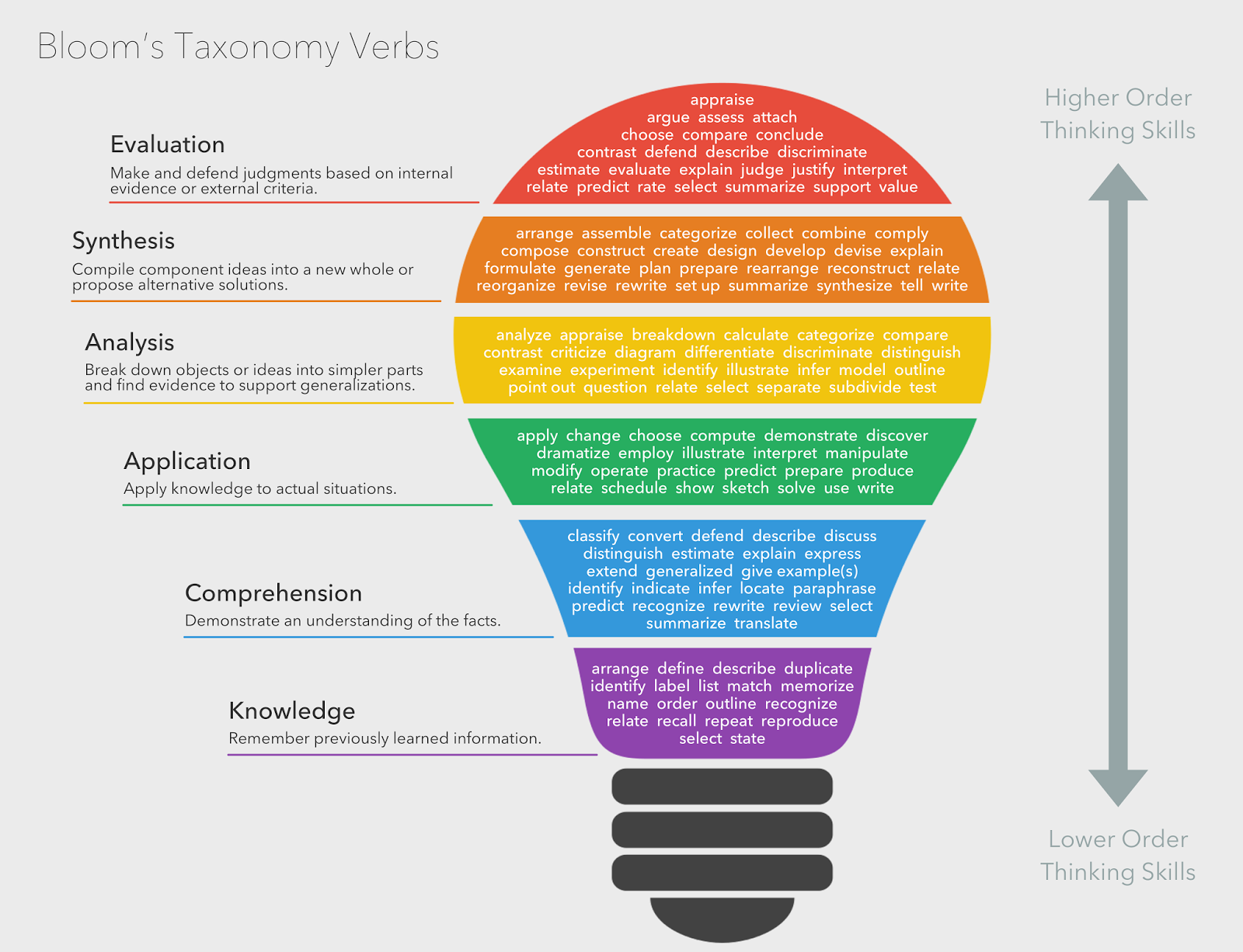
I was intrigued this week when watching a short BBC news clip on Otters, once considered vermin and almost exterminated by vicars and game keepers up to the time I was at Uni. Now they are welcomed back into rivers across the countryside, with some care of course, because they’ll eat you out of fish House and Home in a trice. As with humans, otter pups are intensely curious, and they need be stimulated and enabled to roam, through which they learn all the necessary skills for successful adulthood. It’s just the same for children. Before the age of 5 or 6, learning happens most successfully by play, in a cohort, working together and learning how to socialise. You check out Maslow’s hierarchy of needs to see how success starts, understand the steps taken here, each won through marginal gains. From then onwards, the way we organise our higher thinking skills requires some formalised teaching, not least to keep the child’s emotional development in harness with their intellect – see Bloom’s taxonomy for more on this. Originally shown as a pyramid, I prefer Bloom’s intellectual development in the shape of a 20th-century light bulb because when working with others, we know when our own or their light bulb moment happens – a marginal gain switching on the ‘wow’ and ‘wonder’ and ‘I get it’ moments!
Whether Bloom, Brailsford, Maslow or Otters, it’s clear the adult coach has their place to steer improvement to happen Yet necessary to that struggle is peer group socialisation, intervention when that’s not going right, teaching to lift the child over the knowledge and skills barriers that are counter-intuitive, ‘parenting not friending’ when managing the household and above all, not putting one’s brain on the shelf and letting others, including AI, carry the load and not bother learning the skills ourselves. I’m intrigued by the latest research that highlights that children need to learn to write physically before using a modern keyboard and computer. Back in the day, whether using paper & pen or typewriter, you had to think about your writing before hardcopy simply because, whether be ink from the pen or the ribbon, once on the paper the mark was permanent. Now, you don’t need to trouble yourself because the screen is a friend to correction. Using such a modern screen, it seems the child can’t remember what they wrote 2 or 3 sentences before, and within about 10 minutes after the work is complete, the work done has been completely forgotten.
Taking the time to do things well encourages the world of marginal gains, and such practice makes perfect, and after much repetition, practice makes permanent. From brain surgery, through cycling to table tennis, it turns out it’s never about talent (5%), it’s perspiration (95%) – fired of course by curiosity and the desire to improve one’s own performances and seeking, if not a podium finish, at least the self-actualisation of a job done well. And most of the time, that needs a peer group of about 20, of people of about the same age and interests. As indeed the ancient Syrians knew 9 centuries ago, as we’ve discovered from the archaeologists uncovering the ruins of their towns, they found classrooms. And that clearing of the dirt to reveal the evidence beneath can only be done, brush stroke by brush stroke, with common purpose and understanding, that classrooms were just big enough to house a teacher and 20 learners. Well, who knew that?
As we reflect on the past year and look towards the promising horizon of “Claires Court Futures 2025,” it is with immense pride and profound gratitude that we present this annual report. Claires Court’s journey has always been one of ambition and adaptation, a spirit that has been tested and triumphed in recent years. Just five years ago, our ambitious plans for a new campus at Maidenhead Thicket faced national planning hurdles, swiftly followed by the unprecedented challenges of the COVID-19 pandemic, with our school community navigating closures and the transition to online learning for extended periods. Yet, it is precisely in overcoming these adversities that the true strength and resilience of Claires Court has shone brightest.
The remarkable achievements of our students, particularly those who began their secondary education in lockdown – our “Pandemic Year 7s” now flourishing at GCSE, and those in Year 13 whose school careers were equally interrupted – stand as a testament to their unwavering spirit and our dedicated support. We are thrilled to report that our GCSE and A-level results have not only recovered but have risen back to the highest levels we could possibly expect. Beyond academic excellence, our pupils have garnered national recognition across athletic pursuits, performing arts, and community involvements, showcasing a holistic development that truly defines the Claires Court experience. This success reinforces our fundamental belief that while we maintain a strong reputation for fostering elite scholarship, we equally regard each child as an individual with immense potential, nurturing their strengths and even uncovering “unknown unknowns” that ignite lifelong passions. This ethos was powerfully demonstrated by the successful integration and remarkable progress of Ukrainian refugees into our school community, many of whom arrived without knowledge of the Roman alphabet or English language, yet three years on, have passed public examinations and matriculated for further and higher education. This is the strength of Claires Court: not to deselect or decline, but to welcome children, because ‘their place is here’.
Our vision for Claires Court Futures 2025 extends to a significant reimagining of our existing campus to meet the specifications for a fully balanced program for boys and girls. We are committed to offering ‘Diamond provision,’ ensuring high-quality facilities that are commensurate with our high aspirations, though not necessarily identical in every respect. A cornerstone of this vision has been the successful unification of our Junior boys and girls onto a single campus at Ridgeway. We are incredibly proud of the two years they have spent working together, fostering a junior community that feels fully cohesive and vibrant. Furthermore, we have meticulously modelled and adapted the junior curriculum to encompass not only key features of literacy, numeracy, and physical development, but also a rich array of creative aesthetic and outdoor learning activities, including our popular Forest School. Myriad summer activities across all our sites further underscore the school’s flourishing state. Looking ahead, we have secured the necessary planning permissions for the final steps in developing our Senior School boys and girls facilities, particularly in music, drama, and physical education capacities, and now focus on securing the finances to complete these crucial enhancements.
The School’s commitment extends far beyond the campus walls, actively forging relationships and making a significant impact within the wider community. Our co-curricular, before and after school, and residential programs have expanded to their fullest extent, providing unparalleled opportunities for our students. We have cultivated strong partnerships with many of Maidenhead’s major sports clubs, Norden Farm Arts Centre, and the National Sports Centre, Bisham Abbey. We are particularly excited about our next steps: partnering with Redroofs School for the Performing Arts to introduce Level 3 BTEC qualifications in Musical Theatre, Dance, and Drama into our Sixth Form, broadening our reach and offering diverse pathways for artistic talent. Our support for the development of new waterways linking the River Thames to Maidenhead town centre, and the establishment of our own kayaking and canoeing centre – accessible also to adults for acquiring waterman skills – exemplifies our dedication to community enrichment and skill development. Internally, we have proactively addressed considerable societal challenges, working across all age groups to highlight and change behaviours, calling out misogyny, and teaching children from all backgrounds to aspire, develop ambition, resilience, an interest in others, and above all, to serve their school community and the wider nation. It is inspiring to see our students contemplating futures in public service, the military, and critical fields like artificial intelligence and medical sciences.
Claires Court recognises the limitations of a narrowly focused English curriculum that often prioritises academic achievement as the sole measure of success. While we excel in this, we embrace a broader, more holistic approach. Beyond traditional A-levels, we offer a diverse array of respected co-curricular and co-academic programs, including the Extended Project Qualification (EPQ), BTEC National Certificates and Diplomas, and other Level 3 qualifications such as Food Technology from the Welsh board. Our goal is not solely to prepare students for Russell Group universities and the professions beyond, but also to keep their artistic and creative flair alive, preparing them for a wide range of foundation courses, university degrees in advertising, fashion, theatre, or commercial activities, and valuable apprenticeships. This open and welcoming approach, embracing boys and girls from different backgrounds, enriches our community life. Our young people can no longer prepare for just one career, and need a far wider palette of skills and interests to assist in making their way successfully in the futures they will face.
In an ever-changing world, we are committed to educational innovation, particularly through the thoughtful integration of technology. We have invested significantly in developing our adult teaching faculty, with experts like Victor Allen, Marlyn Hawes, and Finn O’Regan providing training to ensure our staff remain at the cutting edge of educational practice. Critically, Claires Court has embraced Artificial Intelligence at the heart of our work, utilising tools like Merlyn Mind at Junior level and Google Workspace, Gemini, and NotebookLM at Secondary School. This strategic adoption of AI has empowered our staff to manage their workload more efficiently, develop new and innovative learning methods, and ultimately benefit our children. We are proud to have made a significant contribution to its adoption in the UK, USA, Eire, Europe and the Middle East. Furthermore, recognising the current crisis in adolescent mental health, we are steadfast in providing an environment with sufficient time in the working day that fosters genuine friendships and social interaction, helping children navigate the complexities of growing up in a digital age, learning to trust, communicate, compete, and forge effective pathways into adulthood.
Looking to the future, we acknowledge the considerable challenge posed by austerity and taxation on families’ ability to fund independent education. To ensure Claires Court remains affordable to the vast majority of parents seeking a broad, holistic education for their children, we are forging strategic partnerships with community groups to bring additional revenues into the school. In terms of new recruitment of children for the future, our goal is to attract enough boys and girls each year, aiming to keep our maximum class size at 20 and GCSE groups at around 16. It’s an important balance we need to strike, with classes large enough for competition, small enough for individual attention, and with full agreement that the core values we stand for are adopted by all. We also offer flexible entry and exit points, from a few years in Reception or Junior School, a full secondary education commencing from Year 7 as well as a warm welcome for children switching from middle schools that graduate at the end of Year 8. Adding transition programmes for external students that need to flesh out their GCSE qualifications, and creating Foundation program years beyond Sixth Form to allow students to perfect skills in arts, theatre, dance, and sports have commenced well, and these can only enrich what Claires Court stands for as a leading centre of education. Both Principals of Claires Court, my brother Hugh and I, remain incredibly ambitious for our school. We carry our responsibilities with utmost fidelity, profoundly supported by our outstanding heads, deputies and senior leadership teams across all three sites, who manage the day-to-day running of our exceptional education. Their commitment to the future is as serious as their dedication to the past, and we continually test our success through the invaluable insights of external visitors, who help us identify areas for even greater improvement. The boys and girls of all abilities know their place is here with us. With the continued support of our community, our talented staff, and our forward-thinking strategies, we look forward to the future with huge enthusiasm, confident that Claires Court will continue to flourish and shape exceptional young individuals for many generations to come.
At the close of this Academic Year 2024-25, I’ve sought to summarise the lessons I’ve learned over the last 12 months, In Blog 1 advised “Speak truth, build and give trust”, Blog 2 “Show up on time, know the text and have an idea” and to close “Be Curious, Not Judgemental”. The quote is attributable to the American poet, Walt Whitman, yet I gathered it from a wonderful scene from Ted Lasso, in which the American football coach surprises a pub audience that he can play darts really well. The endearing point of the scene is that, as so often in life, those who think they know often underestimate the skills and talents of those around them, or in his case, of a foreigner from the US knowing anything about the pub game of darts, let alone being able to throw triple 20, triple 20 and bull in a set of 3. Fortunately, you don’t need to subscribe to Apple TV, the scene in question is here.
As I have written to parents in my end of term letter, here, my brother and I could not be more proud of Claires Court’s achievements, where the support of our parents and guardians lies at the heart of every occasion. Outside of the limited catchment area of our day school in the Eastern Thames Valley, few know of the school, unless they move in one of our common circles of influence. Therein lies the rub, because it is expected that such schools have only one or 2 areas in which they shine, their chosen specialities. Claires Court covers the age range 2-18, so it might be thought that we don’t work to scale, yet with 981 on school roll as school closed yesterday, taught by 173 teachers, with additional learning support, nurses, school administrators and all, that’s a powerful faculty that do understand teaching, learning and welfare very strongly indeed.
Newspapers like judging schools, providing league tables and the like, yet have no mechanism at all how to judge schools that choose not to select their entry on ability. I feel a little uneasy to highlight that the Telegraph rates Claires Court as ‘poor value’, suggesting that’s because we don’t have a squash court, golf course, stable or theatre, and apparently, to cap it all, we don’t row. Of course, I have written to ben.butcher@telegraph.co.uk, the journalist concerned, but as with Labour MPs, I’ve had no reply and expect to get none. This is no lonely lament; it’s true for all the inclusive independent schools in the country, including Millfield and Royal Hospital School, which I mention because we’ve been in competition with them recently in national finals for tennis and sailing, respectively. Of course, I’d love to find us named in the ‘Tatler’ or ‘Muddy Stilettos’ awards of the year, but that requires us to pay a very large sum of money, and that get’s ‘trumped by the school’s leading key value of Integrity. We continue to promise our parents to keep our costs down, and to spend all we can to maintain the quality of provision, teaching, learning and access to both opportunities and support as necessary. Many years ago, Australia produced a value-added measure for its schools, which showed how successful a school’s students were 4 years on. Did the progress the young people made during their education get maintained as they left university? For us, that’s an indicator we follow really carefully, and from September 2025 plan to add post-Uni support for our alumni, because even if the majority graduate with 1sts or 2/1s, there is no guarantee of a job afterwards.
The EdTech community are curious, and follows what we do at Claires Court with considerable interest. First school in the UK to the cloud with what is now known as Google Workspace (2012), then first in the World outside the US with Merlyn AI in the Junior Classroom (2021), it’s going to be a real challenge for the school to move forwards with promoting a SMARTphonefree childhood whilst embracing all the lessons that need to be gathered around Agentive AI and how to use those tools intelligently. These seem very similar to me to the challenges provided by the arrival of the motor car over 160 years ago, when in 1865, the Liberal government of Lord Palmerston passed the Locomotive Act, soon to become known as the Red Flag Act, with the extraordinary stipulation that any self-propelled road vehicle had to be preceded by a person walking at least 60 yards ahead, carrying a red flag. With all the benefits of hindsight, the Red Flag Act, according to one writer, “effectively stopped innovation in powered road transport in Britain for over a quarter of a century”.
In common with other thinkers in this area, I’ve been very aware of the dangers of TV, video games, phones & tablets upstairs in children’s bedrooms for decades. Circa 2000, I suggested to parents that they leave a basket at the bottom of the staircase in which the family phones were deposited rather than follow everyone upstairs. It prove to be particularly helpful, because the text messaging that preceded WhatsApp, Snapchat and Messenger were already proving to be toxic, and the kids needed to escape even then! As a school we’ve chosen to leave X as a vehicle, and we know that some 50% of our parents already shun social media, other than the local social groups on WhatsApp or Signal. It’s fair to say that no-one trusts Elon Musk, owner of X, but I do have a high regard for Meredith Whittaker, President of the Signal Foundation, which owns the Signal App. In March this year, she spoke about the real danger of adults just giving permission to AI to unite all their applications using their AI assistant, describing the user as being willing to put ‘their brain in a jar on the shelf’. To reduce the need for parents to use interactive Social Media, we post Flickr albums too on the school website, because everyone does like a good photoshoot!
So, inline with staying curious, I’ve kept a close eye all year on Bridget Phillipson, Secretary of State for Education, who continues to ignore my calls for engagement and collaboration. Her latest pronouncement on getting children ready for school, which requires “4-year-olds to sit still so they can learn”, shows a breathtaking ignorance of the Early Years Foundation stage, and has once again opened up howls of disbelief from experts in the field. I quote parenting specialist Kirsty Ketley, who makes this crystal clear: ‘The issue isn’t that these kids aren’t ready for school, it’s that schools often aren’t ready for them. It’s not just that they can’t sit still. It’s that so many of them don’t know how to play. They can scroll an iPad and smartphone independently, but when it comes to real, independent, curious, creative play… no idea. We’ve taken away the space for it. We’ve filled every moment with screens, schedules, and adult direction and then wonder why kids can’t settle in Reception. And for neurodivergent children? It’s even tougher. If we’re serious about school readiness, we need to bring back unstructured, imaginative play, build classrooms that work for all children, not just the neurotypical ones, and above all support parents instead of judging them.
We have whole books written in recent years to assist us in the field of education, perhaps the best one in the field (if a little dated) is Daniel Willingham’s “When can you trust the experts? How to tell Good Science from Bad in Education”. Where all the advice books fail is to assist parents in getting out of the swamp once they are stuck in the middle, without a boat or paddle. That’s been particularly difficult as the emergence of really anxious children is now at such volumes that children and adolescent mental health services (CAMHS) are overwhelmed. The key is always to work together, to find common ground, build future enthusiasms and not be dictated to be the ‘it’s not fair’ initial reaction of the child. Life truly is not fair, and we have to be realistic. In England, we always have an opportunity to reset the child-school relationship at the juncture of primary and secondary, and it’s in this area that senior schools can be particularly insensitive, loading children with 3 hours of homework a night and expecting parents to carry the burden. Where parents can be particularly helpful is in the encouragement of reading, and if not of text only, with picture books too, and to supplement those by listening to tapes, made just as easy now as in the last century using Yoto players for example. Whether reading or listening, there is a benchmark time of 20 minutes that allows for vocabulary to pass from short-term memory into the long-term, and that builds attention spans and concentration. Likewise, where schools have given up teaching handwriting, suggesting that the keyboard makes handwriting irrelevant, they are having to put into place handwriting recovery plans because the very act of fine motor control helps build neural networks across the brain that increase the child’s agility to recall information and manipulate objects in 3 dimensions. It’s no accident that my school has stayed closely involved with managing dyslexia in the classroom. It’s not an SEN but a different way of thinking, and many dyslexics, as they move into adult life, find their creative ways of thinking are highly valued.
And finally, of course, I am proud that our Year 9 boys made national news last week through the saving of a man’s life on the River Thames, an unexpected addition to their successful DofE Bronze Expedition award. Critics of our sector blame us because many state school children don’t have the same opportunity to learn these practical skills, and attach yet another ‘privilege’ label to us as a consequence. As the headlines in the Yachts and Yachting magazine made clear this month, this is where Claires Court truly understands why being a really active partner in the local community, investing in and sharing facilities and opportunities, puts that criticism in the bin, by running a regatta for all comers over the weekend.
Secretary of State Bridget Phillipson and her Labour constituency MPs refuse to visit schools like ours, stating that they are there to provide support for the state sector only. So they will stay ‘Judgemental’, of schools like ours, of families like ours, of communities like ours, and ignore the many and varied opportunities that a collaborative partnership could bring to benefit all. As with the Red Flag decision 160 years ago, whilst this government remains in power, they will effectively stop innovation in children’s education, health and welfare for the foreseeable future and damage the young people they purport to represent for their lifetime.
In this second of my 3 blogs written to summarise my world of work over the last year, I am building on the core words of advice I set out last week for politicians to consider: “Speak truth, build and give trust”. It’s quite clear that there is conflict around the globe, and the tensions within our own country and society are very evident too. When the Chancellor of the Exchequer is sat in the House, tears streaming down her face, she became easy prey for the pundits, and that’s not fair. We have no idea what is going on in people’s private lives, and I admire her for sticking to her promise to support the Prime Minister at Question Time. Being absent would have been even more damaging to her professionally.
Tom Hanks has expressed on a number of occasions the reasons for his success, being a simple philosophy of life given to him (at age 20) by the director Dan Sullivan – you can see that here. My audience of parents, educators and fellow professionals will have seen the Hanks’ advice for life expanded by so many and in every walk of life, I won’t expand it further. But what’s important is to understand that it’s not just a ‘turn up’ motto – much more ‘know what you’re about and add value’ instruction.
The full professional information on schools can be found on the Get Information About Schools government website, GIAS, and the info on Claires Court Schools Ltd. can be found here. As the listed Headteacher/Principal is James Wilding, there is no escaping my responsibilities, and you’ll know I take them very seriously. Over the past 10 days of arts, athletics, cricket, drama, music, social events and sport, it might be easy to suggest I haven’t been worrying about the academics, but the truth is of course I do. Whatever else, parents will choose our school because we have a clear curriculum designed to educate, inspire and bring out the best for each child as well as for the cohort as a whole. We cannot escape our responsibilities to generate the ambition to collaborate, to highlight that there is a greater good to be achieved and that in reaching for the stars, we’ll generate future leaders willing to play their full part in times to come.
School ‘climate’ is everything, and I am deeply proud of both the way our values underpin everything we do and yet in terms of forward thinking, both in our approach to learning and the use of new digital tools, we’ve always been on the pioneering edge of what do next whilst retaining the best. The letter we have sent to all Claires Court families about supporting the Smartphone-Free-School approach across the Royal Borough will come as no surprise to our own parents, as we’ve been navigating that approach for many years now, and without asking parent to embrace the cost of a pouch as well. All Tolkien fans will know that Gollum’s fascination for his ring is likely to become just the same when students use ‘pouches’ yet keep their mobile near them; it’s far better that they see such devices either left at home or put in a common class bin, because separation is very much part of the therapy needed. It’s far too easy to ‘doom scroll’, and that’s not an addiction young developing minds ever need to acquire.
Of course, we’ve got to be realistic, and for purposes of medical health and tracking, mobiles will continue to have their uses, and for the time being, the adult world can no longer work without one. Yet once boys and girls enter our school and feel the energy of their fellow pupils and staff, they do quickly understand the imperatives we place on doing the right thing right, and rules are followed well. Above all, they appreciate that almost anything is possible given the opportunities available to talk, chat and build human relationships. Take the Year 7 & 8 drama festivals this week, for example. Parents who’ve never seen ‘Trestle Masks’ in use could not have imagined their girls performing Macbeth, Hamlet, The Tempest or Romeo & Juliet with such control on stage, or their sons being able to perform Commedia dell’Arte or slapstick comedy as an ensemble.
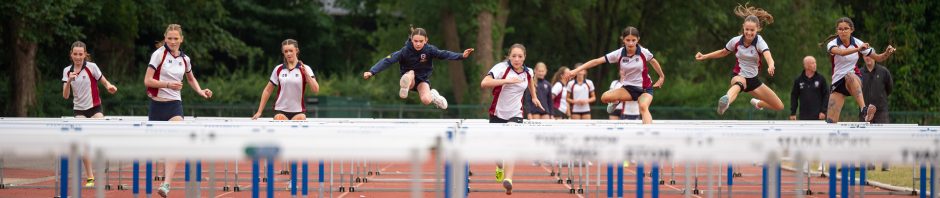
As the headline photo shows from the Girls’ sports day, that’s not just one athlete showing she can hurdle, but a race-full. The boys’ tennis team claimed 3rd place in the National Schools Tennis finals this last weekend, beating Millfield. We’ve had 3 crews at Henley Royal Regatta this week, the boys’ eight and 2 quads, and they fully look the part – and we have the Brit champs to come!
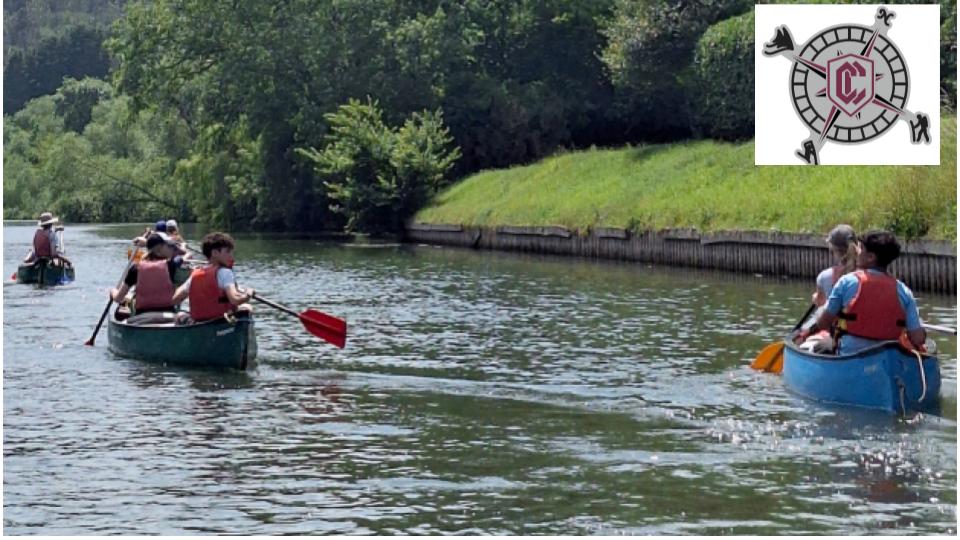
It’s simply not just about competition, and being the best. There are times when I am genuinely blown away by the spontaneous acts of our students, when throw into emergency situations and they react so amazingly well. Take the example of the Year 9 boys who encountered a drowning man in the river 2 weekends ago, whilst on their Bronze Award paddling expedition. Whilst paddling south of Wallingford, midway through their expedition, they heard a call for help from a capsized canoeist. The struggling man had flipped his canoe between two moored river boats and had drifted between a raised jetty. The boys immediately rushed to his aid and radioed Mr Wragg and Mr Campbell-Starkey to let them know.
First on the scene were two students, Harrison McNamee and Felix Gregan.In the time it took for Peter Campbell-Starkey to paddle over to the exhausted man, Harrison had already exited his boat and helped the man cling to the jetty. The boys also fashioned a makeshift stirrup using a rope, allowing the man to keep his head above the water. You can read the whole news article here.
All students involved successfully completed their Bronze DofE expedition, a testament to their resilience and values instilled by the programme. The boys’ bravery was also recognised by Head of Seniors, Steve Richards, who awarded them all the ‘Claires Court Compass Award for outstanding achievement’ at assembly.
The various graduation assemblies are still to come of course, though our eyes are still on the prize. 81 Year 12s Future Focus week from Monday has them pursuing those possible Tom Hanks’ triggers: “What possible career ahead might work best for me!” CEO of Transform Society, James Darley is leading the thinking across the following ideas:
AI in selection – included in the session the context of gamification;
Career Resilience – a key skill that ALL students need – explains what it is and gives some coping strategies for when you get knocked back;
Future of Work – a fascinating session where they are shown what is being predicted as the future of work and get students to give feedback via Mentimeter
Graduate Market – the reality of the graduate market – where the jobs are and what you need to do to get employed in the future!
Year 13 life at Claires Court comes to a close with 86 students pretty much aligned for where they might be showing up in the Autumn. In addition to winning undergraduate apprenticeships at the Bank of England and L’Oreal, I can highlight 40 different University destinations, including the great cities of Bath, Birmingham, Durham, Edinburgh, Exeter, Manchester, Nottingham, Oxford, Leeds, Liverpool, Sheffield, Southampton and… San Diego! Their highlights reel from school will carry all the other stripes that come from taking the opportunities here, whether that be DofE awards, LAMDA and Music grade exams or of course the natural kindness that sits as the central marker of a young adult that can truly make a difference!
As we reach the conclusion of this academic year, I’m writing 3 blogs to summarise all the joys, fears, pains and hopes that have populated my world of work as Academic Principal. This first is largely a wrapper around an email I wrote this week to our 3 local MPs in Maidenhead (Lib Dem), High Wycombe (Labour) and Beaconsfield (Conservative). As you can read here – https://schl.cc:443/gZ – I’ve highlighted to all 3 that our local education ecosystem (state, private & otherwise), built up over the past 7 decades is now facing extraordinary if not existential threats from the government. I’ll leave you to read the detail, but I feel I have tried to place in the hands of our local MPs some facts and realities that might help arm them when speaking in Parliament to those that have forgotten how to tell the truth. I’ve already had one ‘holding’ reply, but positive in terms of reaching out to the Secretary of State for Education, Bridget Philipson. Bridget is already aware of my concerns and multiple offers to help, but has declined to engage to date.
Education works when those involved, whether teacher or learner, feel confident that the process being pursued is worth it. Claires Court Athletes learn how to run, how to challenge, how to believe and so dip their head as they cross the line, even when they’re 8! It’s Sports Day season, I’ve seen enough already to know it’s true. Change the sport, use a hard or soft ball, racquet or bat, blade or rudder and we are still there at the top of the game. Yet none of this is possible unless we try.
It’s post GCSE (Wednesday ) and A level (Thursday) Prom week, a thing that did not exist when I was young. Friendship’s hard, they need work, effort, and having a common aim has encouraged pretty much the whole 2 cohorts to join in making a celebration happen, the assessment ‘job’ done. Meeting on the 2 evenings in question (Moor Hall, Cookham & Wycombe Heights GC respectively), I’m seeing young people and their teachers aggregate with all full respect for each other, and display a mutual, perhaps extraordinary gratitude for travelling in company with such success.
The current Year 11 cohort’s secondary education commenced in #lockdown, an impossible time yet of course normal for them “doesn’t everyone start secondary school this way” normalising perhaps the absurdity of the uniqueness of the event. In both groups I met with both young men and women who had joined 3 years ago from Ukraine, knowing not our language, culture or even alphabet. Now, academically strong, they can look forward to settling into Sixth Forms or University. “Surrey” sparkled one, “the offer is BCC and I’m on for AABB”. A leader of our tennis squad in Year 13, having won his match up on day 2 of 4, this taking our squad into the semifinals of the UK schools LTA cup was down to celebrate with his friends, facing an early Uber tomorrow at 5.30am. His face shone “Sir, if we win tomorrow, we get to go to Brazil for the World Finals!” Oh but to dream this big!
As Oompah, I enjoy all the benefits of the grandchildren, but can give them back at the end of the day. I’m immensely grateful for the pioneering work of younger parents and Mrs Kirby, Head of Juniors and my colleagues there, who’ve not just braved the concept of creating the possibility of a SMARTphone-free childhood, but pioneered the use of AI in the classroom too. It seems a paradox to unite both ideas, but we must. Born of a generation that watched their families smoke themselves to death, I never wanted that for mine. As Sam Altman (CEO, ChatGPT) makes clear, “It’s weird that even knowing ChatGPT, Gemini etc. exist has created blind trust in AI , and that’s what is causing it to grow so fast – People want fast answers, even if they’re wrong!”
Like many very experienced educators, I’ve seen the cohorts of adults over time go through ‘school’. I was one of the ‘baby-boomers’, my teaching began with the ‘latchkey’ generation, my children now perhaps sit as core ‘millenials’ as they were taught by me and lately of course we’ve seen the start of GenZ looking at nursery. Whilst the entire group may share a common love of say Robbie Williams and “Angels”, there’s likely to be staggeringly different views over drinks, foods, medias and technologies. There always has been such differences, such as those in my childhood not allowed a telly, but they’re nothing like as polarising as they are now. ‘Schooling’ by its very name describes that growing up requires conforming to a norm, not pick’n’mix. ‘Helicopter’ parenting shifts the dial and the arrival of ‘Snowploughs’ is already creating havoc ‘Stateside’, and the exam boards in the UK report growing disputes over the ‘fair’ interpretation of their access arrangement rules.
William Shakespeare would be 461 if he was still alive. In his works, almost every ill of the present day can be found, and whether comedy or tragedy, that old man continues to inspire the generations to come. In ‘Measure for Measure’, the synopsis makes Angelo rule as a religious tyrant, try to manipulate a nun to sleep with him, is foiled, and ultimately punished. It sounds a tragedy, is a comedy, and has an epic series of moral conclusions that bear study in 2025. Those in current political life across the world would do well to check out the Bard. As the quote makes clear, if we can speak truth, build and give trust, the likelihood is that fear and anxiety will truly ease. I’ll conclude with a poem by another man, John Donne writing during the same time as William:
No man is an island, Entire of itself, Every man is a piece of the continent, A part of the main. If a clod be washed away by the sea, Europe is the less. As well as if a promontory were. As well as if a manor of thy friend’s Or of thine own were: Any man’s death diminishes me, Because I am involved in mankind, And therefore never send to know for whom the bell tolls; It tolls for thee.
Claires Court is one of over 1400 private schools who form part of the Independent Schools Council.
The ISC Board met on Wednesday, 18 June. Below is the statement that was issued by ISC to all schools at 12 noon the next day. As you can see, the ISC Board has voted not to appeal against the judgment. You can find their explanation below my next 5 paragraphs of commentary.
My view is that the change in Tax treatment for Tuition fees makes no sense to the parents now having their fees increased, to the school finance offices that now have their work made perhaps 30% more complex so as to treat all the different shades of tax exemption and tax at 0% in order to calculate the tax to be paid to the VAT man and how much to claw back or indeed to the wider education sector that;s not going to see any of the money raised come their way.
The tax change is causing some great, historic schools to close, and where there are not local state sector alternatives, so the education authority concerned (and there are several) have to work out how they are to fill the gaps. The acceleration in closures has come, 4 last week, and this means that adults and communities have lost work, presence, pride in what they do and loss to local providers, retail and services. Many local authorities have no places for the displaced secondary children, and it was the local authorities that initially begged the government not to impose VAT too early that have to clear up their mess. And that’s more to clear up in addition to the incredible crisis in Special Educational Needs and Education Welfare services.
The government know that they may have won the specific case but not the deeper argument. There’s no crowing from the specific politicians concerned. 6,500 new teachers are not coming into the state sector, the significant transfer of pupils from private to state means the net cost of education to the government has grown and the madness of suggesting instead that it’s going to help the state to build lots more houses by the Prime Minister makes him look even more foolish.
For the past 10 years and more, the country has cried out for stable, sensible leadership from the government of the day. Instead, they gave us NHS and Education reform, they gave us Brexit, they’ve even tried to modernise the armed forces and build HS2. I look back to the successes of the London Olympics in 2012, and thanks to the Sutton Trust, we know that 24 of Team GB’s 65 medalists, or 37%, were educated at private schools. We can smile too that Queen Elizabeth (home education), Danny Boyle (Direct Grant) and Daniel Craig (Sixth Form Grammar) all were educated too in a manner this Education Secretary abhors. It’s the very success of the diversity in Education that the United Kingdom offers that has made our education sought after across the world – but sadly, one lesson this government is unlikely ever to learn.
The judgment in the High Court case, backed by the Independent Schools Council, was handed down last Friday. As you will know by now, the three judges ultimately dismissed the case, alongside two other cases brought by Education Not Discrimination and Christian Concern.
Since the judgment, the ISC Board has been considering its next steps carefully. There are grounds for appeal, though the advice received by lawyers has been that this would be an uphill battle.
After careful consideration, the ISC Board has decided against supporting an appeal.
We felt it was right that this unprecedented tax on education had its compatibility with human rights law tested. However, having now made our arguments in court, we did not wish to put further resource into an appeal that would, in general terms, tread the same ground. Our focus remains on supporting children, families and schools – something we are more easily able to do without the constraints of protracted court proceedings.
Although the outcome last week was not what had been hoped for, there were nevertheless many positives that ISC will be carrying forward from the judgment, both in public messaging and behind-the-scenes lobbying.
Independent education is protected
During the court hearings, government lawyers argued that human rights law did not stop the government from abolishing independent education in its entirety if it wished to (although there was no suggestion this was a current policy position). This assertion was firmly rejected in the judgment, which was clear that human rights law protected the freedom to establish independent schools.
Children’s rights were affected
The judgment reaffirmed that the right to independent education is protected under the European Convention on Human Rights (Article 2 Protocol 1), as is the right to non-discrimination (Article 14). It also affirmed that changes to the structure or cost of education can engage these rights. In the case of VAT, the Court found that the policy did interfere with the rights of pupils and, on the face of it,had a discriminatory impact on certain cohorts of pupils. Having reached that conclusion, however, it was ruled that such interference was lawful as it was within the “margin of discretion” that Parliament enjoys when making such policies.
Challenging inaccurate rhetoric
Throughout its submissions, the government repeatedly referred to the decision to levy VAT on fees as the abolition of a “tax break”. The High Court described this as more of a slogan than a legal description and chose instead to describe the measure as a “tax change”. This more neutral language strips away what the court described as “presentational” labels, with the focus instead on the substance of the measure and the impact on children and families.
An acknowledgment of diversity within the sector
The case considered the circumstances of a wide variety of claimants in different types of independent schools and with very different backgrounds. Two areas of particular concern – provision for children with special educational needs and disabilities (SEND) and the impact on Charedi Jewish schools – were given serious attention by the judges. Even though the Court did not mandate an exemption for these vulnerable groups, its acknowledgement of them, added to its highlighting of the systemic failures within SEND, validates what many in the sector have been saying for years.
A framework for holding the government to account
While the Court accepted that the government’s revenue forecast of £1.5 billion annually was based on a rational process involving the Office for Budget Responsibility (OBR), it did not delve into whether that analysis was comprehensive as well as rational. ISC will continue to hold the government to account – both publicly and privately – on the claims politicians have made and to challenge them where the rhetoric is not being matched by reality, action or funding.
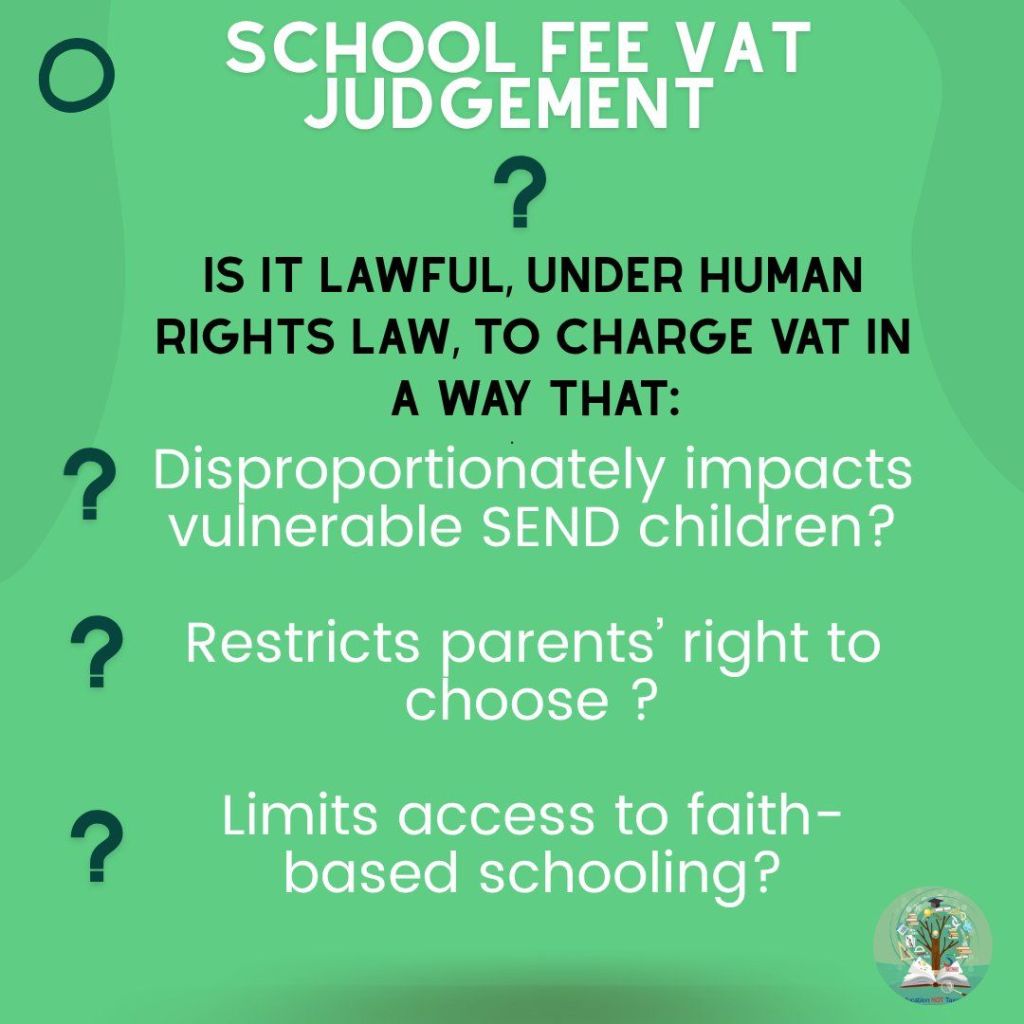
The challenge the High Court judges had to determine is best summarised by the poster statement below; the High Court has concluded that, despite the difficulties the Government’s VAT policy will cause schools and families, it has not breached the Human Rights Act.
I received several statements from the Associations to which we belong. Though the Court recognised that while the policy does engage the claimants’ rights under Article 2 of the First Protocol of the Act, A2P1 (the right to education), it also said that the European Court of Human Rights recognises that states have a broad margin of discretion in this sphere to make a series of policy choices about the organisation of the educational system, some of which are likely to be controversial. As a result, the High Court has dismissed all claims.
The Independent Schools Council (ISC) is taking the lead on communications on behalf of the associations. All schools and their membership associations are disappointed with this outcome, not least because of the incredibly intrusive and insensitive introduction of the policy without careful consideration of its longer-term impact on individual families, schools and the nation’s wider education system. Irrespective of the validity of the policy, the government’s
From my position as Principal, in the short term, this decision does clear the way forward and enables us to have certainty for our wider business plans to expand the school’s activities wider into the community. Now we are permitted to rent out our facilities and build wider partnerships with many of our supporting sports clubs, defraying costs whilst at the same time as improving facilities is a win-win. A judgment supporting in part the claimants’ case would inevitably have caused the government to make an appeal, leaving us in limbo for a further 12 months or so. Everything we are doing internally is to review our various needs to bear down on costs whilst retaining the quality and reach of our education provision.
This in no way justifies the current government’s current deeply held conviction that private education should not exist, nor the casual reference to the (apparent) sums of money to be raised from the VAT claimed from our parents. From the initial claims (by the Chancellor) that the money would be used to recruit 6,500 teachers, to fund breakfast clubs in primary schools or now (by the Prime Minister that it will help build new houses for the future, funds paid by working families should be put to the specified use intended, not waved around like a ‘Loadsamoney’ windfall by a latter day Harry Enfield.
The high court judgement calls out the Labour government for using slogans rather than precise, more measured language.
13. The claimants, in their written and oral arguments, submitted that the challenged provisions have the effect of imposing VAT on educational services, when such services have never been subject to VAT before. The Government parties, by contrast, refer throughout to the removing of an exemption or “tax break”. This was, in our view, more a slogan than a legally significant description. We prefer to speak more neutrally of a “tax change”. The compatibility of this change with Convention rights depends on its substance, not on any label attached to it for presentational purposes.
Perhaps and most importantly of all, the high court in its judgement has made it as clear as it can that the government cannot ban private education. I quote”
“Does a measure which impedes access to private education engage A2P1 at all?
At one stage in the oral argument before us, Sir James for the Government parties submitted that the margin of appreciation accorded to states under A2P1 to choose how to configure their educational systems was wide enough to permit them to prohibit private schools altogether. That submission was, in our judgment, wrong. The Court in Kjeldsen drew attention at [50] to the importance attached by many contracting states (as apparent from the travaux préparatoires) to the “freedom to establish private schools”. That the right conferred by A2P1 includes such a freedom, subject to regulation by the state, can also be seen from the Commission’s decisions in Jordebø and Verein Gemeinsam Lernen. If it is not within a state’s margin of appreciation to prohibit private schools altogether, a regulatory measure which had the same practical effect would presumably impair the very essence of the right. We therefore consider that the Government parties were wrong to submit that A2P1 has no relevance at all to measures which affect access to private schools.
Here’s the Guardian’s summary:
“The high court has dismissed a wave of legal challenges against adding VAT to private school fees in the UK, saying the government’s decision was a rare example of Brexit freedoms.
The judges said that adding 20% to private school fees would not have been possible under EU law, stating: “This is therefore one respect in which the UK’s exit from the EU has increased the scope of parliament’s freedom to determine policy.” Other newspapers exist.
For the next few weeks, all in the education sector will have to take stock of what this judgement means, coupled with the spending review announced by the Chancellor on Wednesday 11 June. The full review indicates growing pressure on the delivery of special needs support in the state sector, aligned with a lower than expected investment in Education overall. The good news for Claires Court is that we have the last 4 weeks of term ahead, with a myriad of events and opportunities ahead for both children and adult to collaborate and celebrate the life our school community enjoys when it is in session. There are so many things in life that we can’t control, it’s best we ‘readiate the sunshine’ when we can and enjoy the warmth whilst it’s here.






 A Principled view